
A SOP Template for Retail Store Cleaning provides a standardized framework to ensure consistent and thorough cleanliness across all retail locations. It outlines specific cleaning procedures, schedules, and safety protocols to maintain a hygienic environment for both customers and staff. Using this template helps improve operational efficiency and uphold brand reputation through high-quality maintenance practices.
Daily opening cleaning checklist.
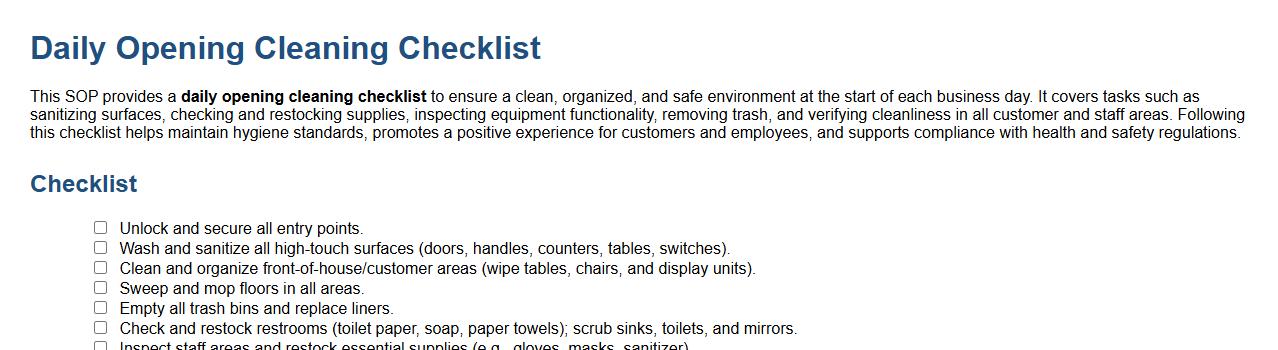
This SOP provides a daily opening cleaning checklist to ensure a clean, organized, and safe environment at the start of each business day. It covers tasks such as sanitizing surfaces, checking and restocking supplies, inspecting equipment functionality, removing trash, and verifying cleanliness in all customer and staff areas. Following this checklist helps maintain hygiene standards, promotes a positive experience for customers and employees, and supports compliance with health and safety regulations.
Floor sweeping, vacuuming, and mopping procedures.
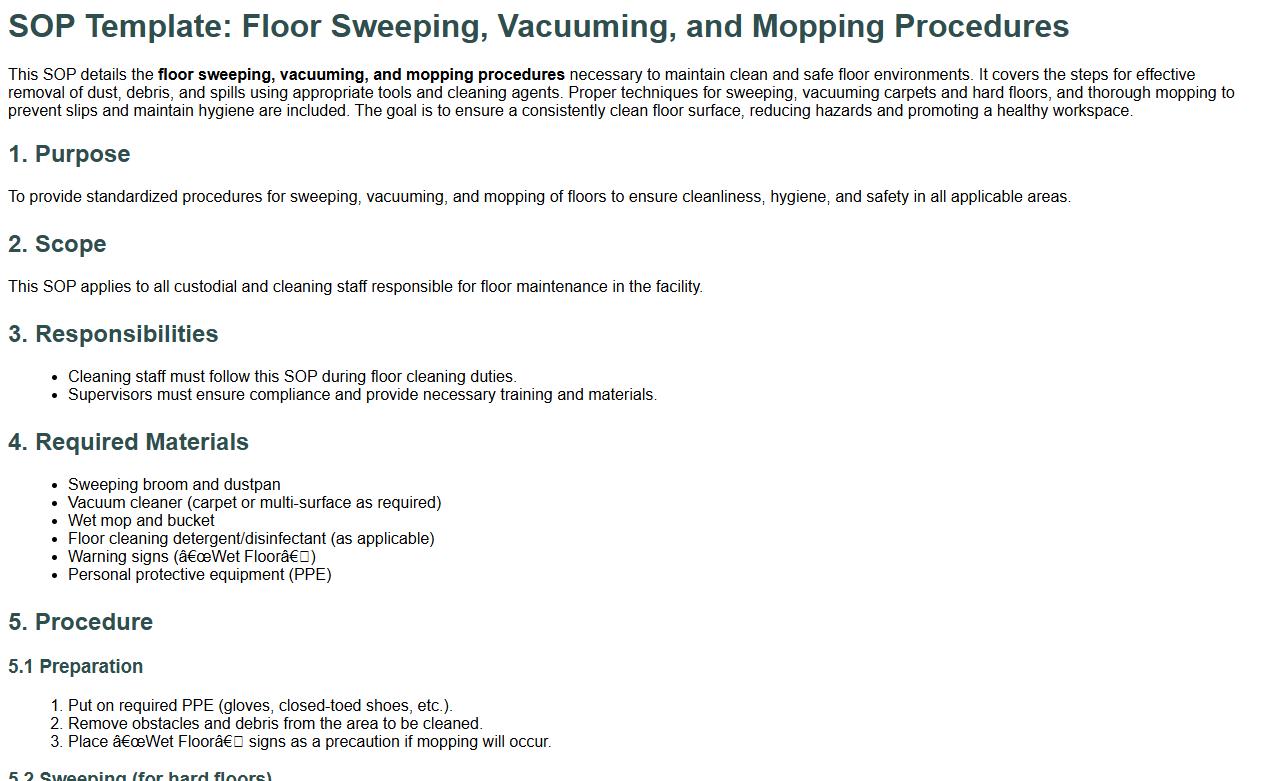
This SOP details the floor sweeping, vacuuming, and mopping procedures necessary to maintain clean and safe floor environments. It covers the steps for effective removal of dust, debris, and spills using appropriate tools and cleaning agents. Proper techniques for sweeping, vacuuming carpets and hard floors, and thorough mopping to prevent slips and maintain hygiene are included. The goal is to ensure a consistently clean floor surface, reducing hazards and promoting a healthy workspace.
Sanitizing high-touch surfaces and fixtures.
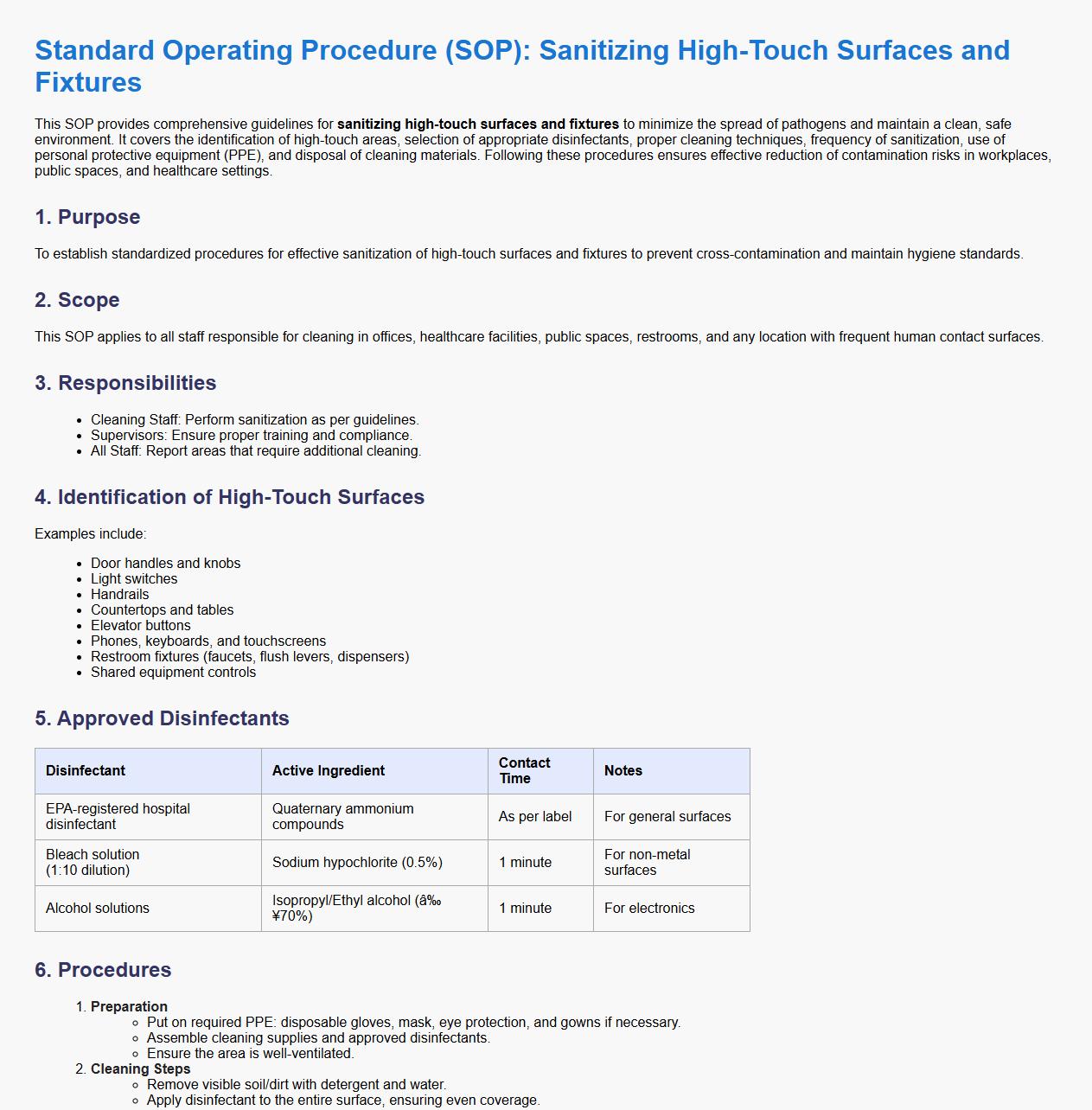
This SOP provides comprehensive guidelines for sanitizing high-touch surfaces and fixtures to minimize the spread of pathogens and maintain a clean, safe environment. It covers the identification of high-touch areas, selection of appropriate disinfectants, proper cleaning techniques, frequency of sanitization, use of personal protective equipment (PPE), and disposal of cleaning materials. Following these procedures ensures effective reduction of contamination risks in workplaces, public spaces, and healthcare settings.
Restroom cleaning and disinfection guidelines.
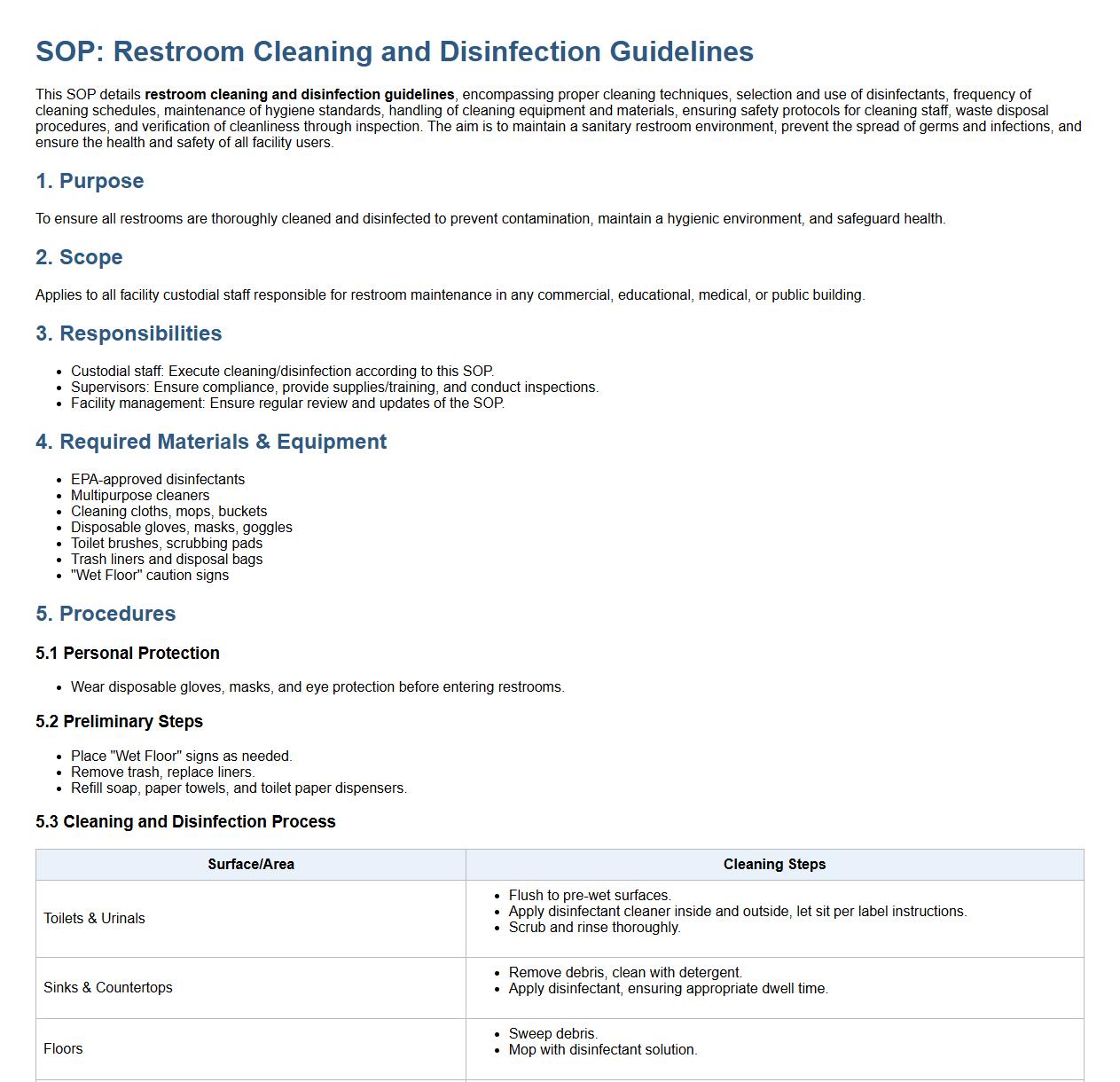
This SOP details restroom cleaning and disinfection guidelines, encompassing proper cleaning techniques, selection and use of disinfectants, frequency of cleaning schedules, maintenance of hygiene standards, handling of cleaning equipment and materials, ensuring safety protocols for cleaning staff, waste disposal procedures, and verification of cleanliness through inspection. The aim is to maintain a sanitary restroom environment, prevent the spread of germs and infections, and ensure the health and safety of all facility users.
Window, glass, and mirror cleaning protocol.
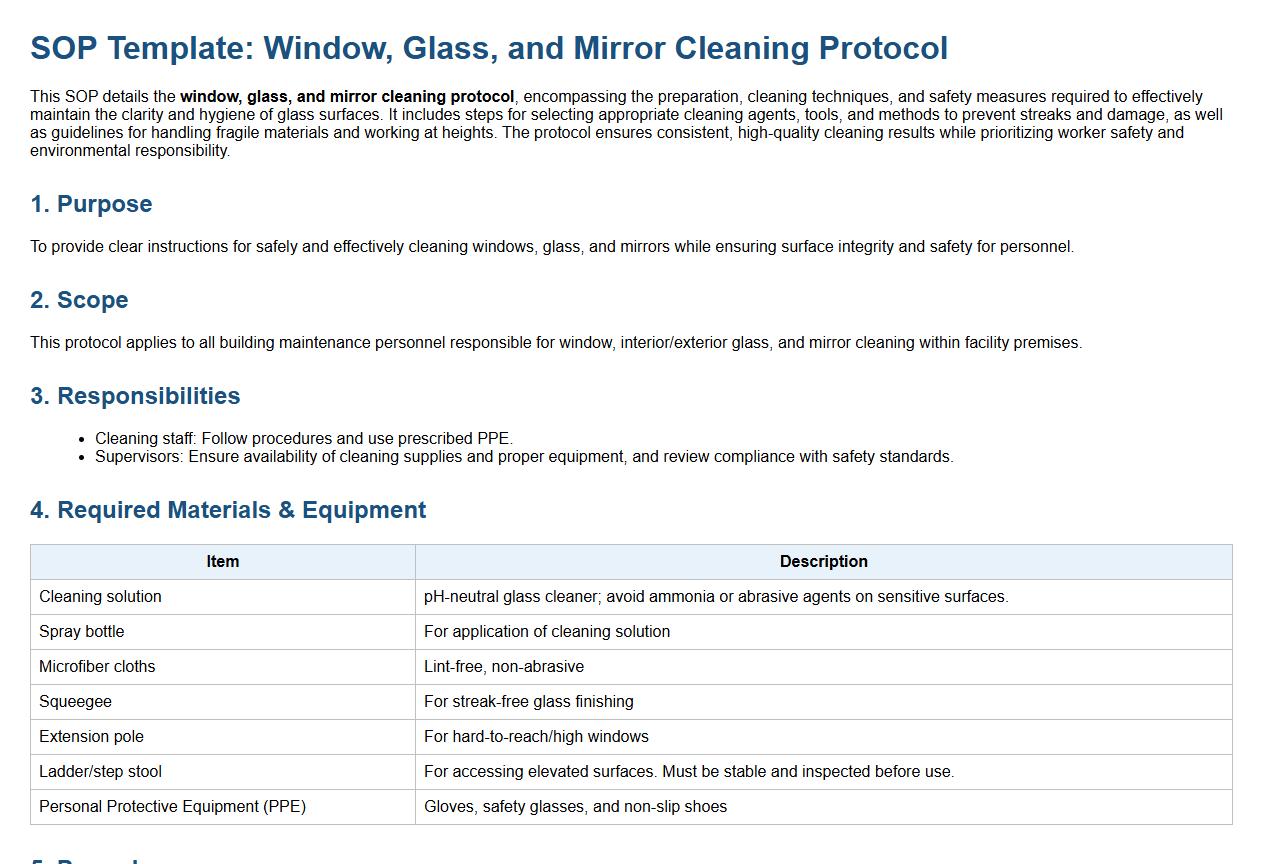
This SOP details the window, glass, and mirror cleaning protocol, encompassing the preparation, cleaning techniques, and safety measures required to effectively maintain the clarity and hygiene of glass surfaces. It includes steps for selecting appropriate cleaning agents, tools, and methods to prevent streaks and damage, as well as guidelines for handling fragile materials and working at heights. The protocol ensures consistent, high-quality cleaning results while prioritizing worker safety and environmental responsibility.
Shelving and display dusting instructions.
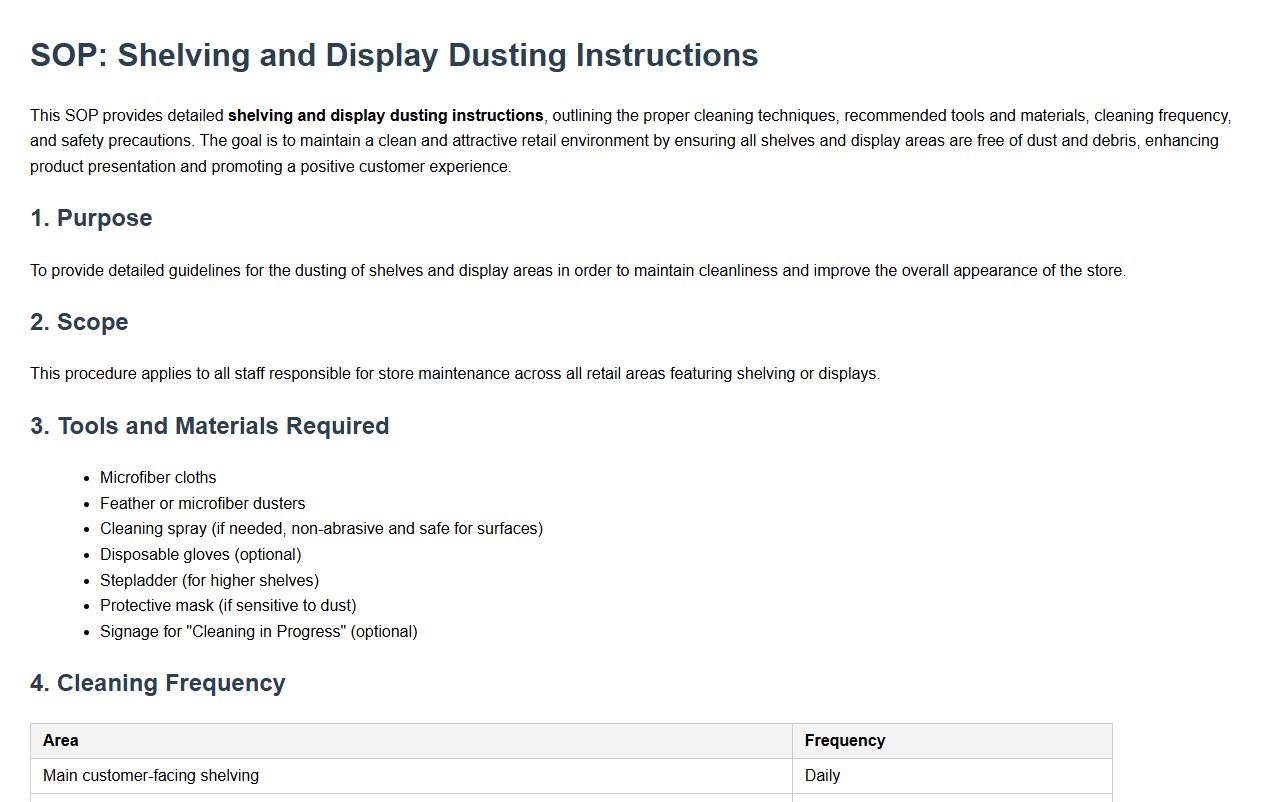
This SOP provides detailed shelving and display dusting instructions, outlining the proper cleaning techniques, recommended tools and materials, cleaning frequency, and safety precautions. The goal is to maintain a clean and attractive retail environment by ensuring all shelves and display areas are free of dust and debris, enhancing product presentation and promoting a positive customer experience.
Trash removal, disposal, and bin sanitation.
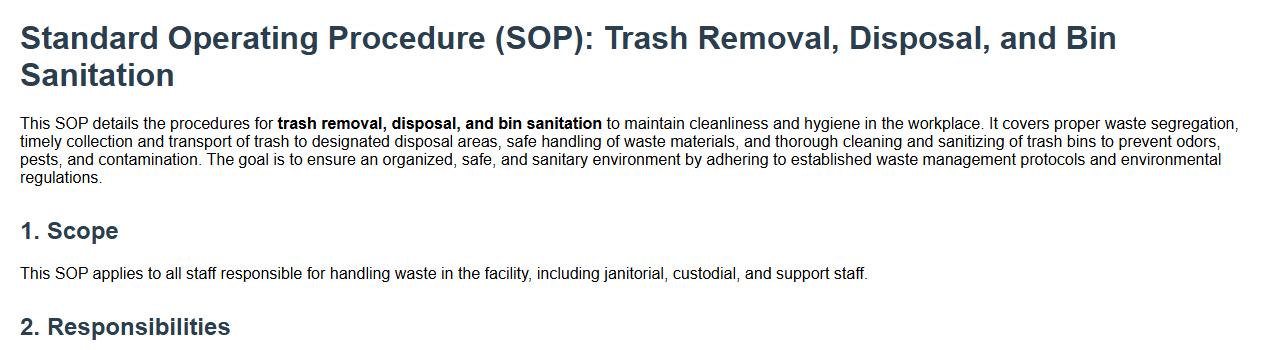
This SOP details the procedures for trash removal, disposal, and bin sanitation to maintain cleanliness and hygiene in the workplace. It covers proper waste segregation, timely collection and transport of trash to designated disposal areas, safe handling of waste materials, and thorough cleaning and sanitizing of trash bins to prevent odors, pests, and contamination. The goal is to ensure an organized, safe, and sanitary environment by adhering to established waste management protocols and environmental regulations.
Stockroom and back-office cleaning process.
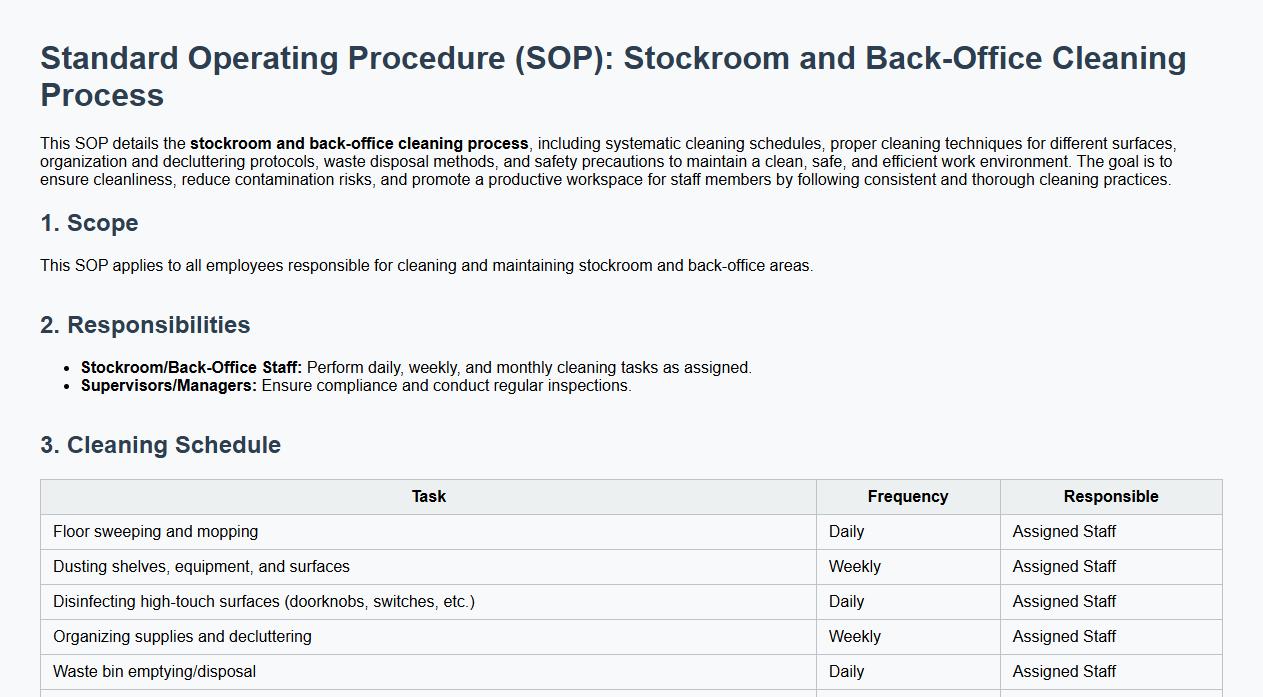
This SOP details the stockroom and back-office cleaning process, including systematic cleaning schedules, proper cleaning techniques for different surfaces, organization and decluttering protocols, waste disposal methods, and safety precautions to maintain a clean, safe, and efficient work environment. The goal is to ensure cleanliness, reduce contamination risks, and promote a productive workspace for staff members by following consistent and thorough cleaning practices.
End-of-day closing cleaning checklist.
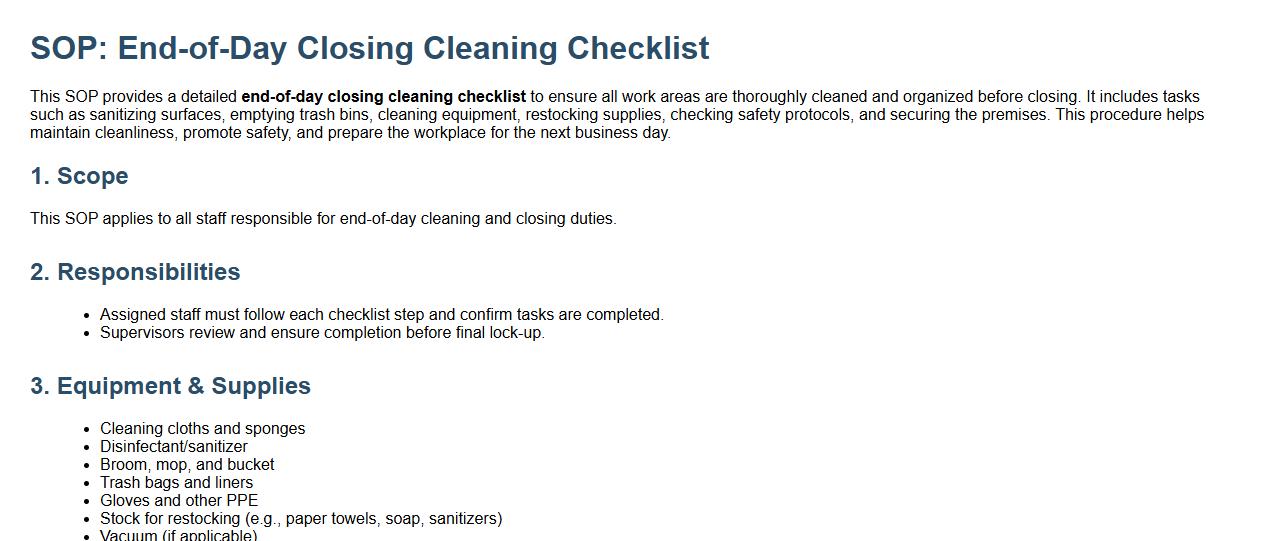
This SOP provides a detailed end-of-day closing cleaning checklist to ensure all work areas are thoroughly cleaned and organized before closing. It includes tasks such as sanitizing surfaces, emptying trash bins, cleaning equipment, restocking supplies, checking safety protocols, and securing the premises. This procedure helps maintain cleanliness, promote safety, and prepare the workplace for the next business day.
Incident reporting and escalation procedure for cleanliness issues.
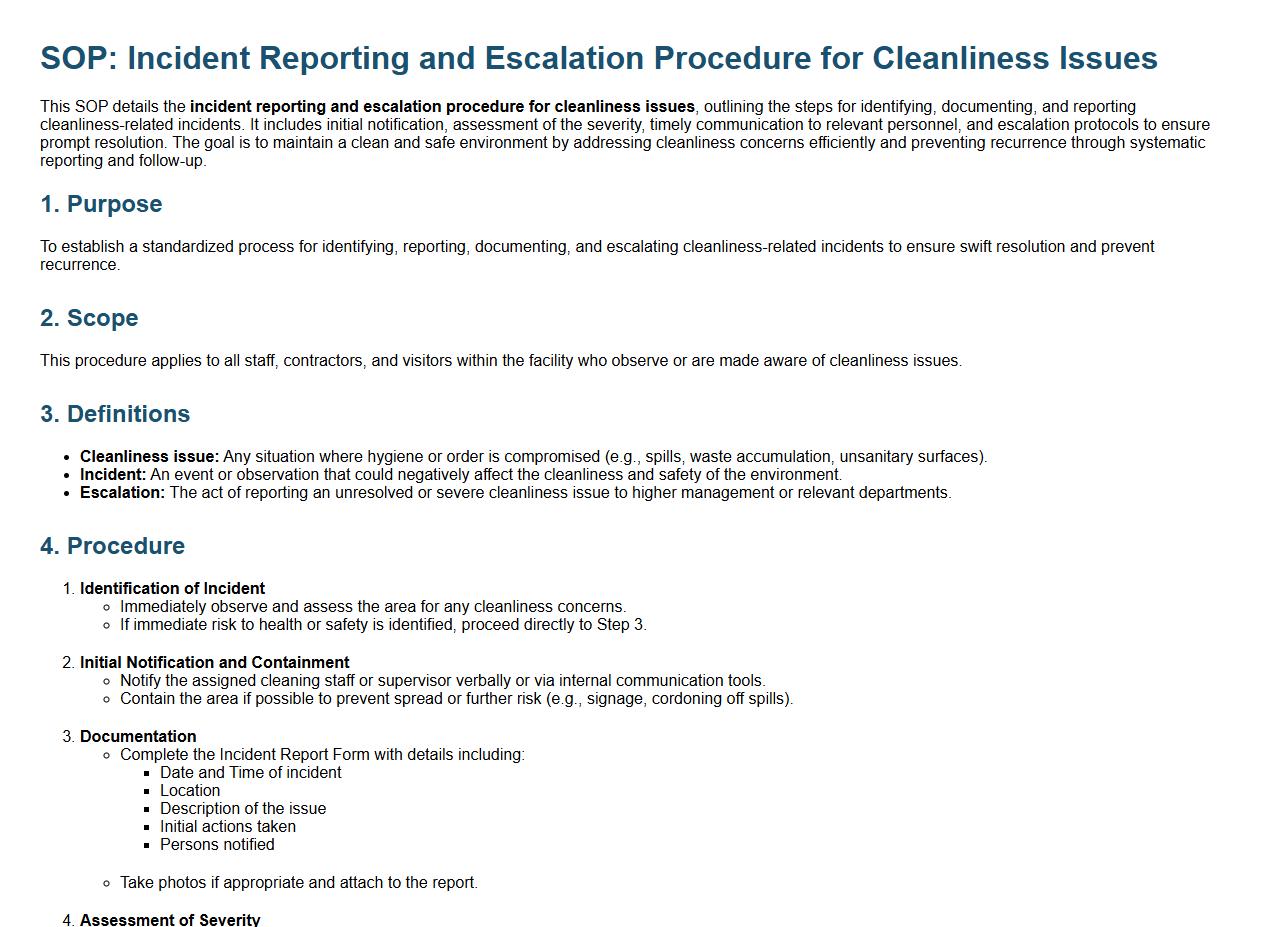
This SOP details the incident reporting and escalation procedure for cleanliness issues, outlining the steps for identifying, documenting, and reporting cleanliness-related incidents. It includes initial notification, assessment of the severity, timely communication to relevant personnel, and escalation protocols to ensure prompt resolution. The goal is to maintain a clean and safe environment by addressing cleanliness concerns efficiently and preventing recurrence through systematic reporting and follow-up.
What are the key objectives outlined in the SOP for Retail Store Cleaning?
The key objectives in the SOP include maintaining a clean and safe shopping environment for customers and staff. It emphasizes the elimination of dirt, dust, and contaminants that can affect product quality and store appearance. Additionally, the SOP aims to ensure compliance with health and safety regulations through consistent cleaning practices.
Which areas of the retail store require daily, weekly, and monthly cleaning as per the SOP?
The SOP specifies that daily cleaning focuses on high-traffic zones such as entrances, checkout counters, and restrooms. Weekly cleaning covers detailed tasks like shelving dusting, floor scrubbing, and window washing. For monthly cleaning, it includes deep cleaning of HVAC vents, inventory storage areas, and less accessible fixtures.
What personal protective equipment (PPE) is mandated for cleaning staff in the SOP?
The SOP mandates that cleaning staff must wear gloves and masks to protect against chemical exposure and airborne particles. Additionally, safety goggles and aprons are required when handling strong cleaning agents. These PPE requirements safeguard employee health during routine and intensive cleaning operations.
What procedures should be followed for the safe handling and disposal of cleaning chemicals according to the SOP?
The SOP instructs that all cleaning chemicals be stored in labeled, ventilated areas away from customers and food products. Staff must follow mixing instructions precisely to avoid harmful reactions and always use PPE during chemical handling. Disposal procedures involve using authorized waste containers and complying with local environmental regulations to minimize hazards.
How does the SOP define and document the process for cleaning high-touch surfaces?
The SOP defines high-touch surfaces as areas frequently contacted by customers and staff, including door handles, shopping carts, and payment terminals. It requires cleaning these surfaces multiple times per day with approved disinfectants to reduce germ transmission. Documentation must detail the time, staff responsible, and products used for each cleaning session.