

A SOP Template for Retail Employee Onboarding provides a structured and consistent process to efficiently integrate new hires into the retail environment. It outlines key training steps, company policies, and role-specific responsibilities to ensure employees are well-prepared and aligned with organizational standards. This template enhances productivity and reduces onboarding time by offering clear guidance for both managers and new staff.
New hire orientation and introduction to company culture.
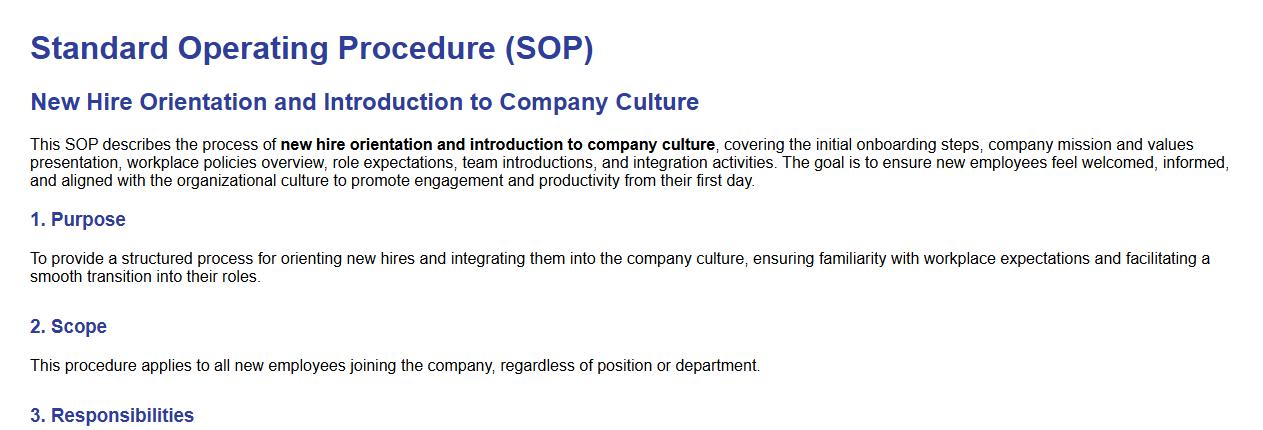
This SOP describes the process of new hire orientation and introduction to company culture, covering the initial onboarding steps, company mission and values presentation, workplace policies overview, role expectations, team introductions, and integration activities. The goal is to ensure new employees feel welcomed, informed, and aligned with the organizational culture to promote engagement and productivity from their first day.
Completion of required HR documentation and payroll setup.
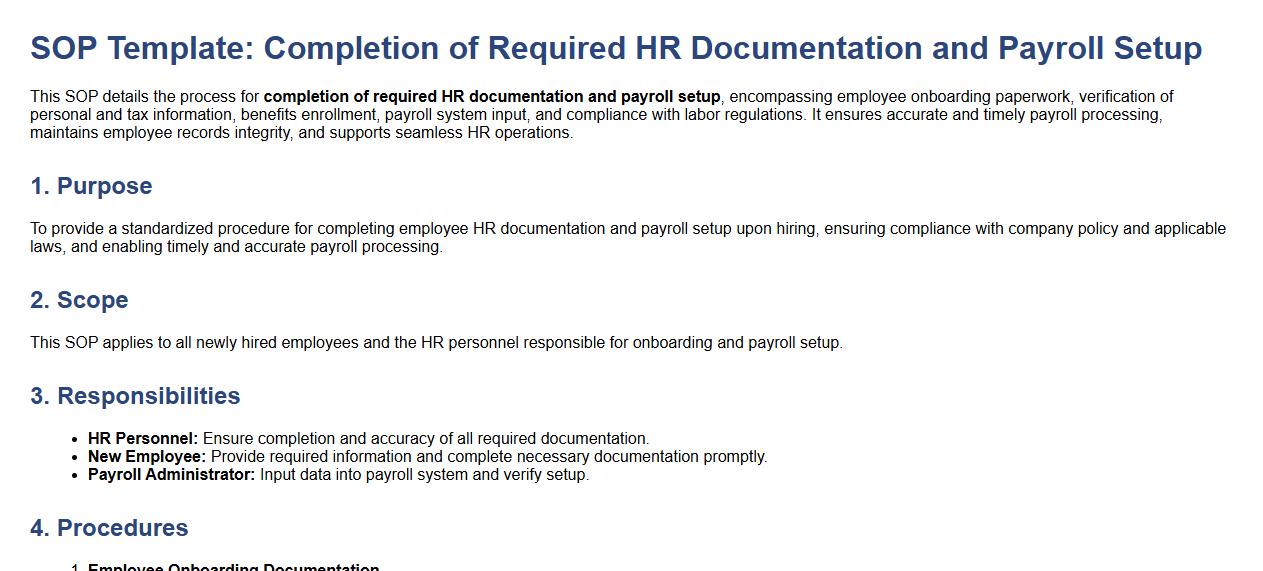
This SOP details the process for completion of required HR documentation and payroll setup, encompassing employee onboarding paperwork, verification of personal and tax information, benefits enrollment, payroll system input, and compliance with labor regulations. It ensures accurate and timely payroll processing, maintains employee records integrity, and supports seamless HR operations.
Uniform and dress code guidelines.
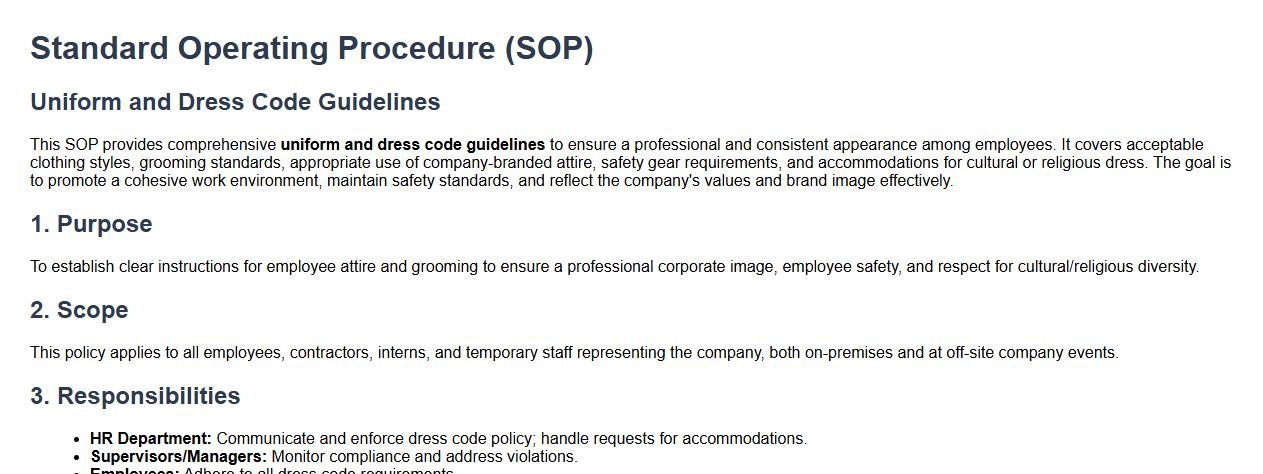
This SOP provides comprehensive uniform and dress code guidelines to ensure a professional and consistent appearance among employees. It covers acceptable clothing styles, grooming standards, appropriate use of company-branded attire, safety gear requirements, and accommodations for cultural or religious dress. The goal is to promote a cohesive work environment, maintain safety standards, and reflect the company's values and brand image effectively.
Detailed store layout tour and departmental overviews.
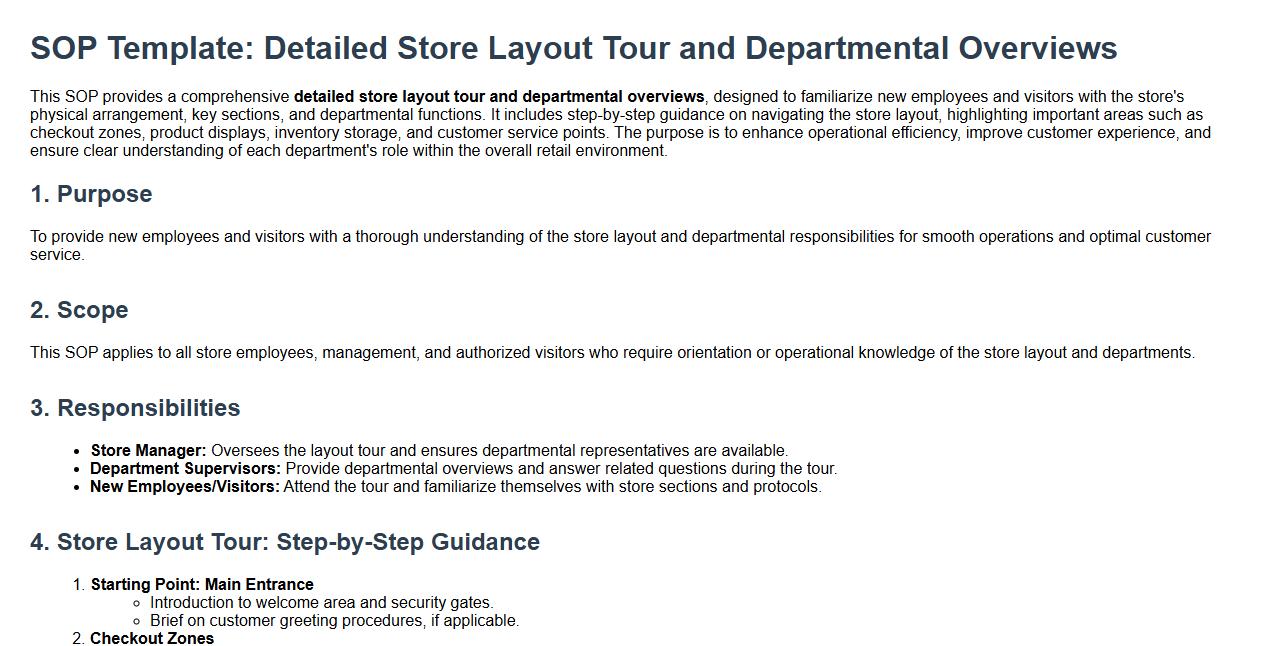
This SOP provides a comprehensive detailed store layout tour and departmental overviews, designed to familiarize new employees and visitors with the store's physical arrangement, key sections, and departmental functions. It includes step-by-step guidance on navigating the store layout, highlighting important areas such as checkout zones, product displays, inventory storage, and customer service points. The purpose is to enhance operational efficiency, improve customer experience, and ensure clear understanding of each department's role within the overall retail environment.
Health, safety, and emergency procedures training.
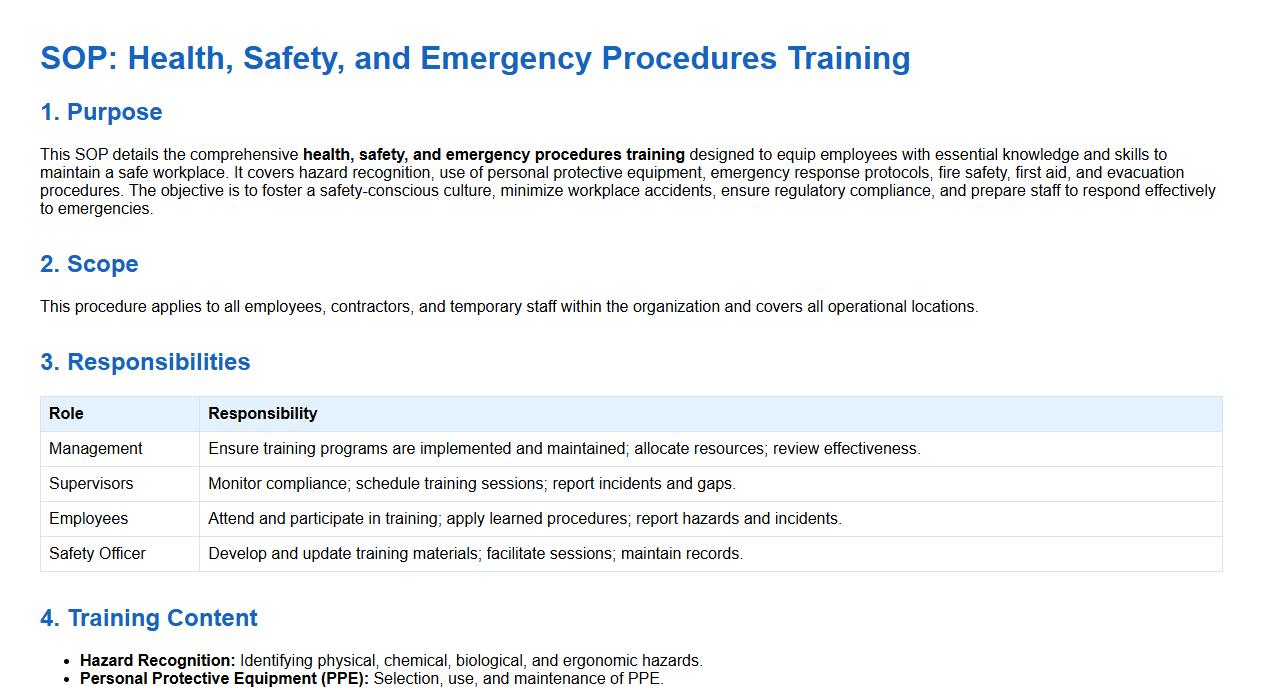
This SOP details the comprehensive health, safety, and emergency procedures training designed to equip employees with essential knowledge and skills to maintain a safe workplace. It covers hazard recognition, use of personal protective equipment, emergency response protocols, fire safety, first aid, and evacuation procedures. The objective is to foster a safety-conscious culture, minimize workplace accidents, ensure regulatory compliance, and prepare staff to respond effectively to emergencies.
Point of Sale (POS) system operation and transaction protocols.
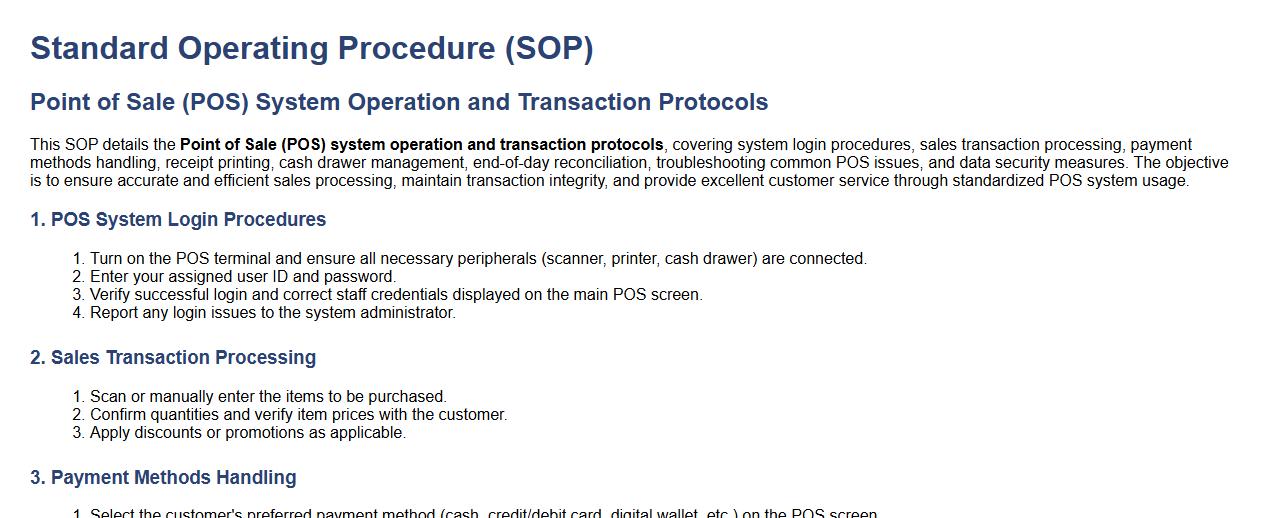
This SOP details the Point of Sale (POS) system operation and transaction protocols, covering system login procedures, sales transaction processing, payment methods handling, receipt printing, cash drawer management, end-of-day reconciliation, troubleshooting common POS issues, and data security measures. The objective is to ensure accurate and efficient sales processing, maintain transaction integrity, and provide excellent customer service through standardized POS system usage.
Customer service standards and communication techniques.
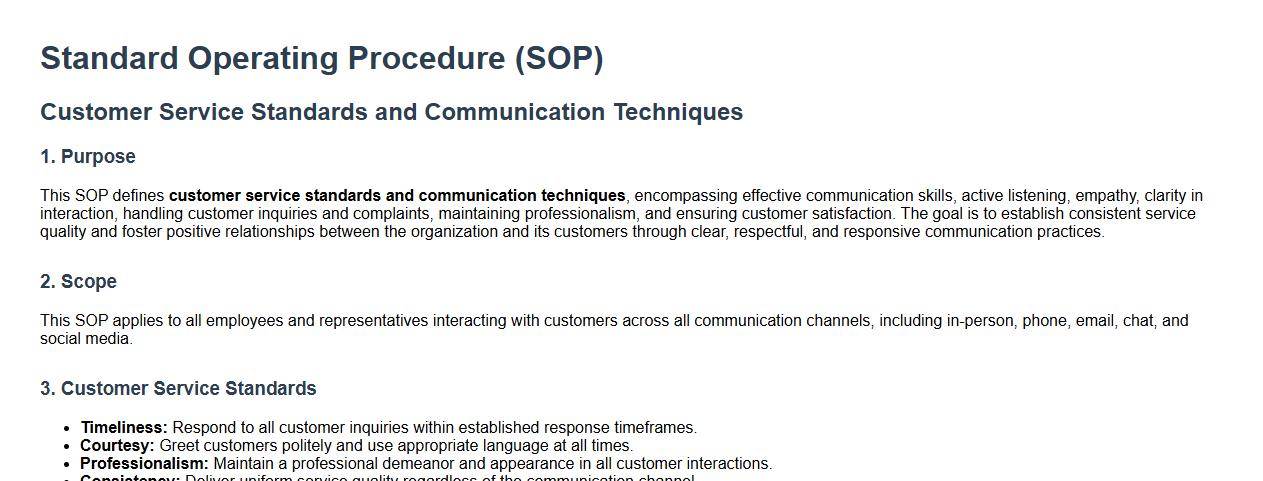
This SOP defines customer service standards and communication techniques, encompassing effective communication skills, active listening, empathy, clarity in interaction, handling customer inquiries and complaints, maintaining professionalism, and ensuring customer satisfaction. The goal is to establish consistent service quality and foster positive relationships between the organization and its customers through clear, respectful, and responsive communication practices.
Product knowledge training and inventory handling procedures.
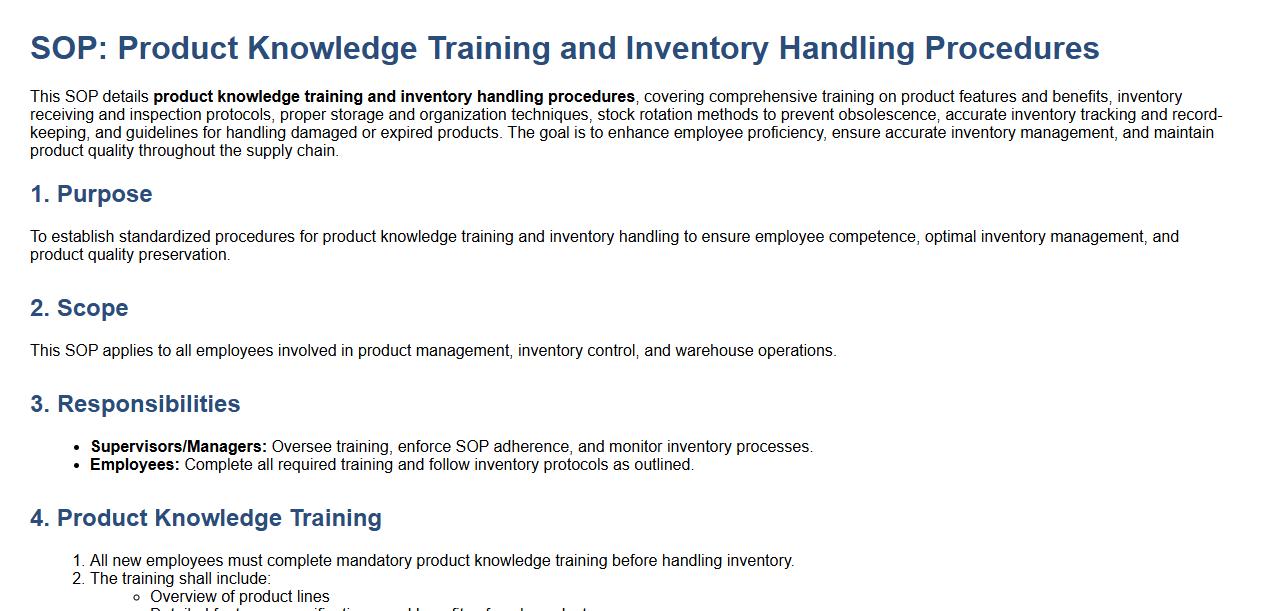
This SOP details product knowledge training and inventory handling procedures, covering comprehensive training on product features and benefits, inventory receiving and inspection protocols, proper storage and organization techniques, stock rotation methods to prevent obsolescence, accurate inventory tracking and record-keeping, and guidelines for handling damaged or expired products. The goal is to enhance employee proficiency, ensure accurate inventory management, and maintain product quality throughout the supply chain.
Store opening, closing, and cash handling routines.
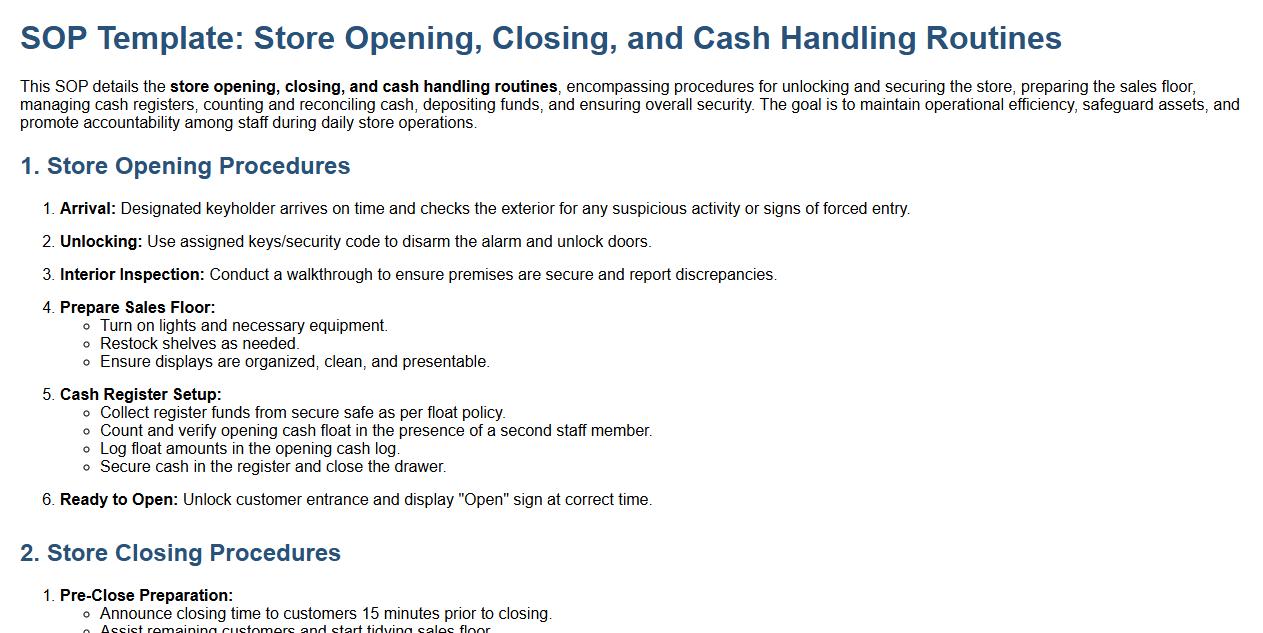
This SOP details the store opening, closing, and cash handling routines, encompassing procedures for unlocking and securing the store, preparing the sales floor, managing cash registers, counting and reconciling cash, depositing funds, and ensuring overall security. The goal is to maintain operational efficiency, safeguard assets, and promote accountability among staff during daily store operations.
Performance expectations, feedback process, and ongoing training schedule.
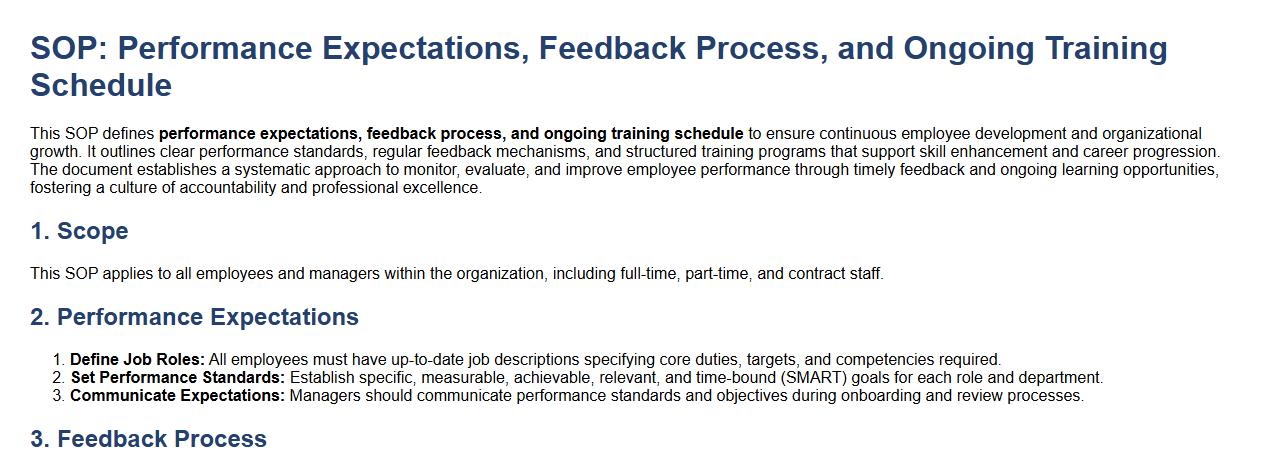
This SOP defines performance expectations, feedback process, and ongoing training schedule to ensure continuous employee development and organizational growth. It outlines clear performance standards, regular feedback mechanisms, and structured training programs that support skill enhancement and career progression. The document establishes a systematic approach to monitor, evaluate, and improve employee performance through timely feedback and ongoing learning opportunities, fostering a culture of accountability and professional excellence.
What key objectives does the Retail Employee Onboarding SOP aim to achieve?
The Retail Employee Onboarding SOP aims to streamline the integration of new hires into the retail environment efficiently. It focuses on ensuring that employees understand company policies, culture, and job expectations from day one. Additionally, the SOP seeks to enhance employee retention by providing a structured and supportive onboarding experience.
Which specific roles and responsibilities are outlined for managers during the onboarding process?
Managers are tasked with overseeing the orientation, training, and integration of new retail employees. They must ensure clear communication of job duties and facilitate necessary introductions within the team. Additionally, managers are responsible for monitoring progress and providing feedback to support employee development during onboarding.
What are the mandatory compliance and documentation requirements detailed in the SOP?
The SOP mandates collection of essential legal documents, tax forms, and proof of eligibility as part of the onboarding process. It requires verification of compliance with company policies and relevant labor laws. Accurate documentation ensures both regulatory adherence and protection for the organization.
How does the SOP define and structure the training modules for new retail employees?
The SOP outlines a modular training approach covering product knowledge, customer service, and safety protocols. Training is scheduled progressively to allow hands-on experience alongside theoretical learning. This structure supports comprehensive skill development tailored to retail operational needs.
Which performance evaluation methods are specified for onboarding assessment in the SOP?
The SOP specifies using regular check-ins, feedback sessions, and competency assessments to evaluate new employee performance. These methods help identify areas for improvement and confirm readiness for full job responsibilities. Continuous evaluation ensures a successful transition from onboarding to routine work.