

A SOP template for retail sales promotions outlines standardized procedures to effectively plan, execute, and evaluate promotional campaigns in retail settings. It ensures consistency, compliance, and clear communication among team members, enhancing the overall success of sales events. Using this template helps streamline operations and maximize promotional impact across various retail channels.
Promotion planning and objectives setting.
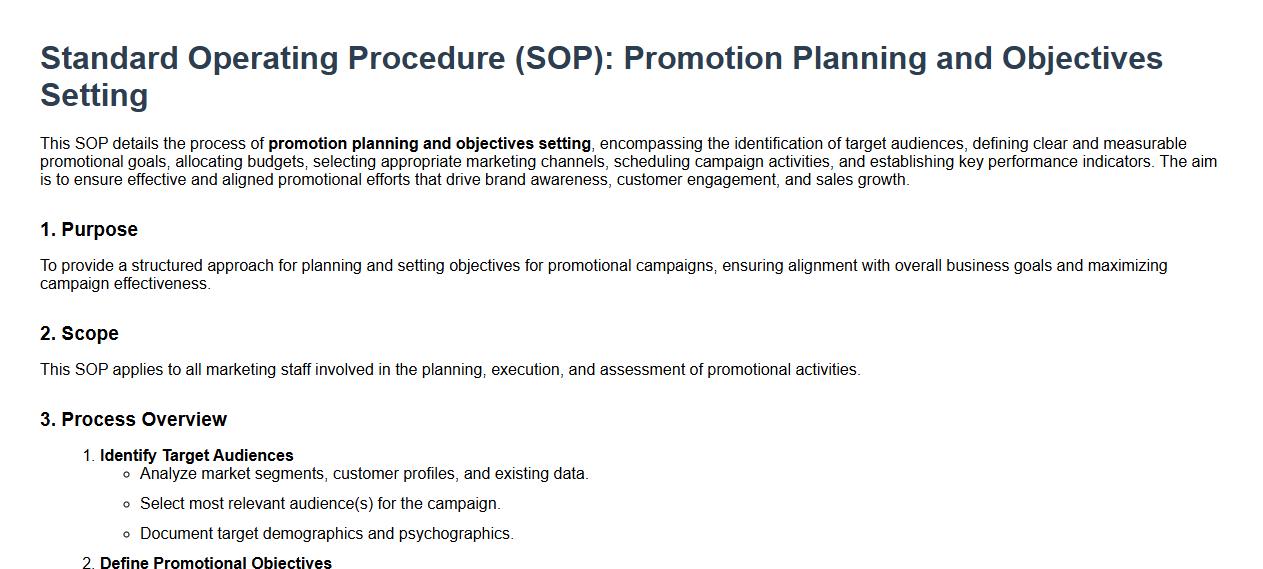
This SOP details the process of promotion planning and objectives setting, encompassing the identification of target audiences, defining clear and measurable promotional goals, allocating budgets, selecting appropriate marketing channels, scheduling campaign activities, and establishing key performance indicators. The aim is to ensure effective and aligned promotional efforts that drive brand awareness, customer engagement, and sales growth.
Product selection and inventory allocation for promotion.
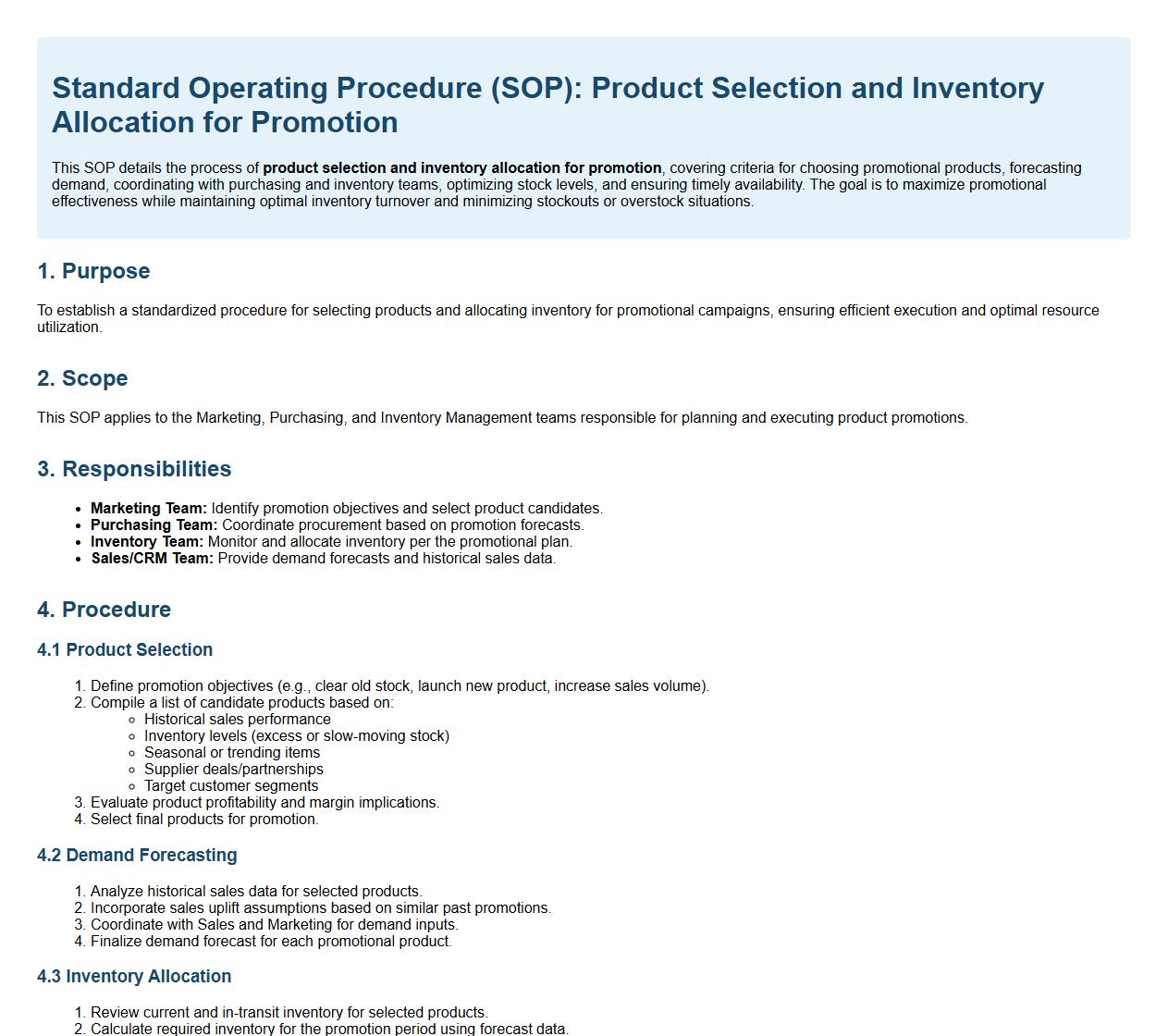
This SOP details the process of product selection and inventory allocation for promotion, covering criteria for choosing promotional products, forecasting demand, coordinating with purchasing and inventory teams, optimizing stock levels, and ensuring timely availability. The goal is to maximize promotional effectiveness while maintaining optimal inventory turnover and minimizing stockouts or overstock situations.
Pricing strategies and discount structuring.
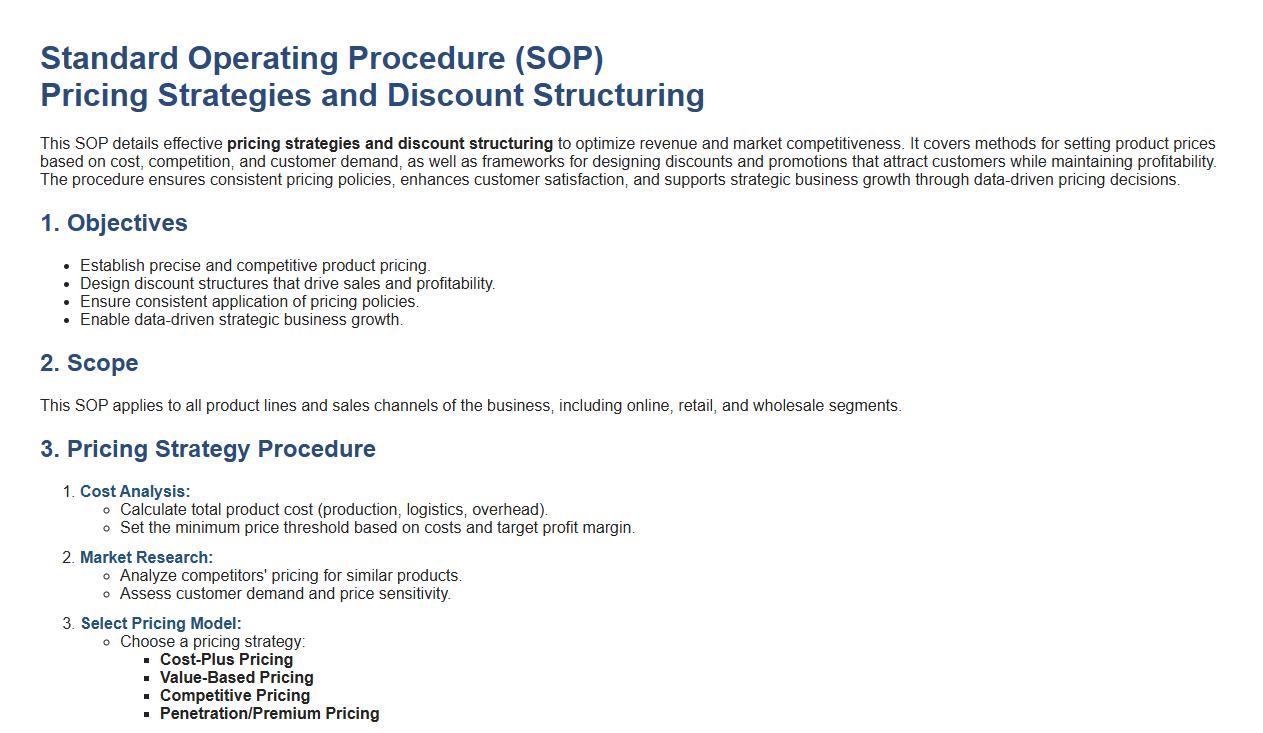
This SOP details effective pricing strategies and discount structuring to optimize revenue and market competitiveness. It covers methods for setting product prices based on cost, competition, and customer demand, as well as frameworks for designing discounts and promotions that attract customers while maintaining profitability. The procedure ensures consistent pricing policies, enhances customer satisfaction, and supports strategic business growth through data-driven pricing decisions.
In-store visual merchandising and display setup.
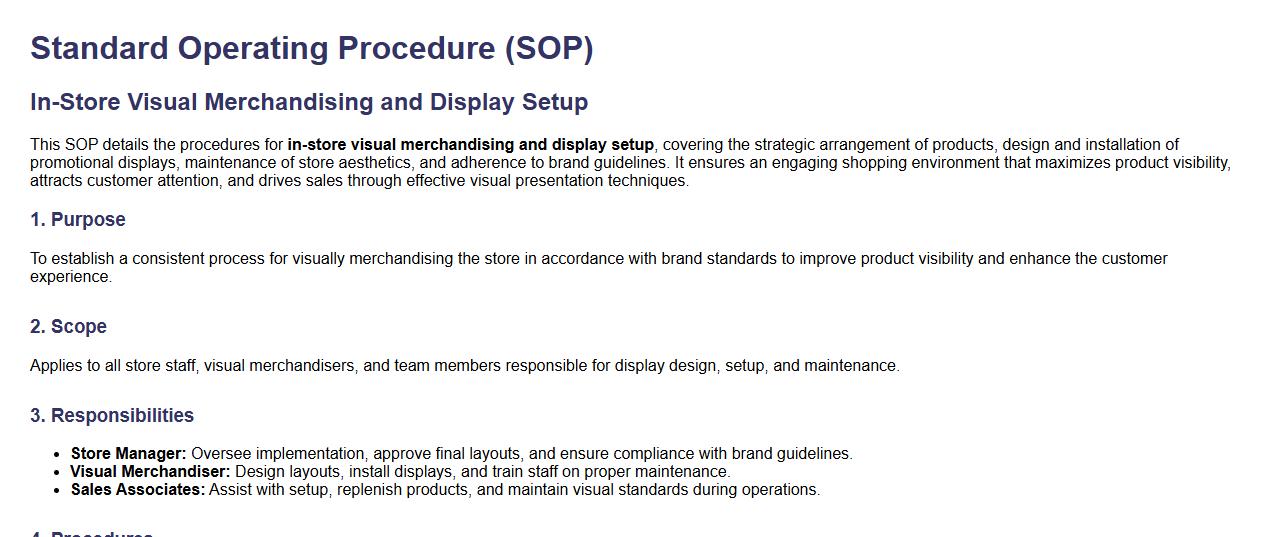
This SOP details the procedures for in-store visual merchandising and display setup, covering the strategic arrangement of products, design and installation of promotional displays, maintenance of store aesthetics, and adherence to brand guidelines. It ensures an engaging shopping environment that maximizes product visibility, attracts customer attention, and drives sales through effective visual presentation techniques.
Promotion team briefing and staff training.
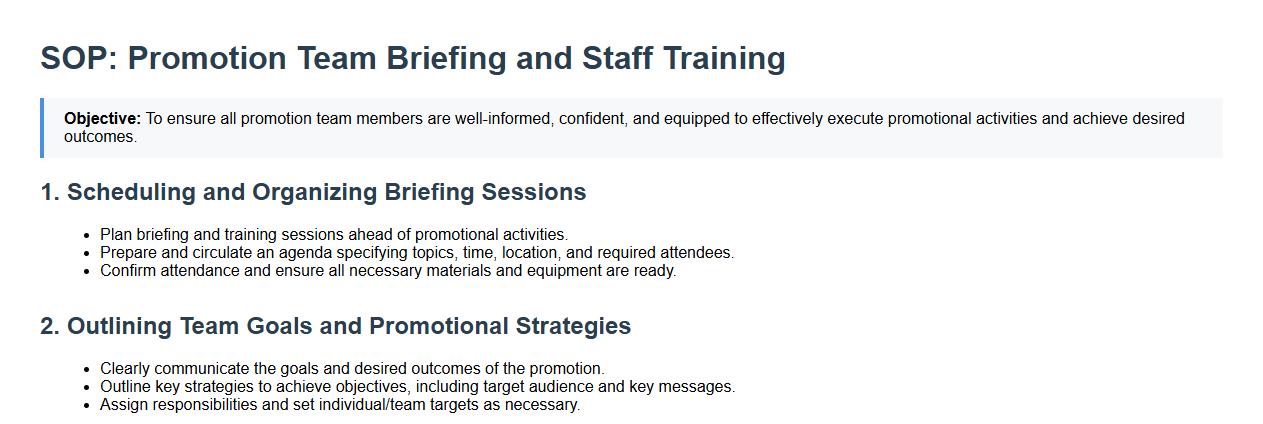
This SOP details the procedures for promotion team briefing and staff training, including scheduling and organizing briefing sessions, outlining team goals and promotional strategies, delivering product knowledge and marketing techniques, conducting role-specific training, encouraging team collaboration and communication, assessing staff understanding and performance, and providing continuous support and feedback. The objective is to ensure that all promotion team members are well-informed, confident, and equipped to effectively execute promotional activities and achieve desired outcomes.
Point-of-sale (POS) system configuration and testing.
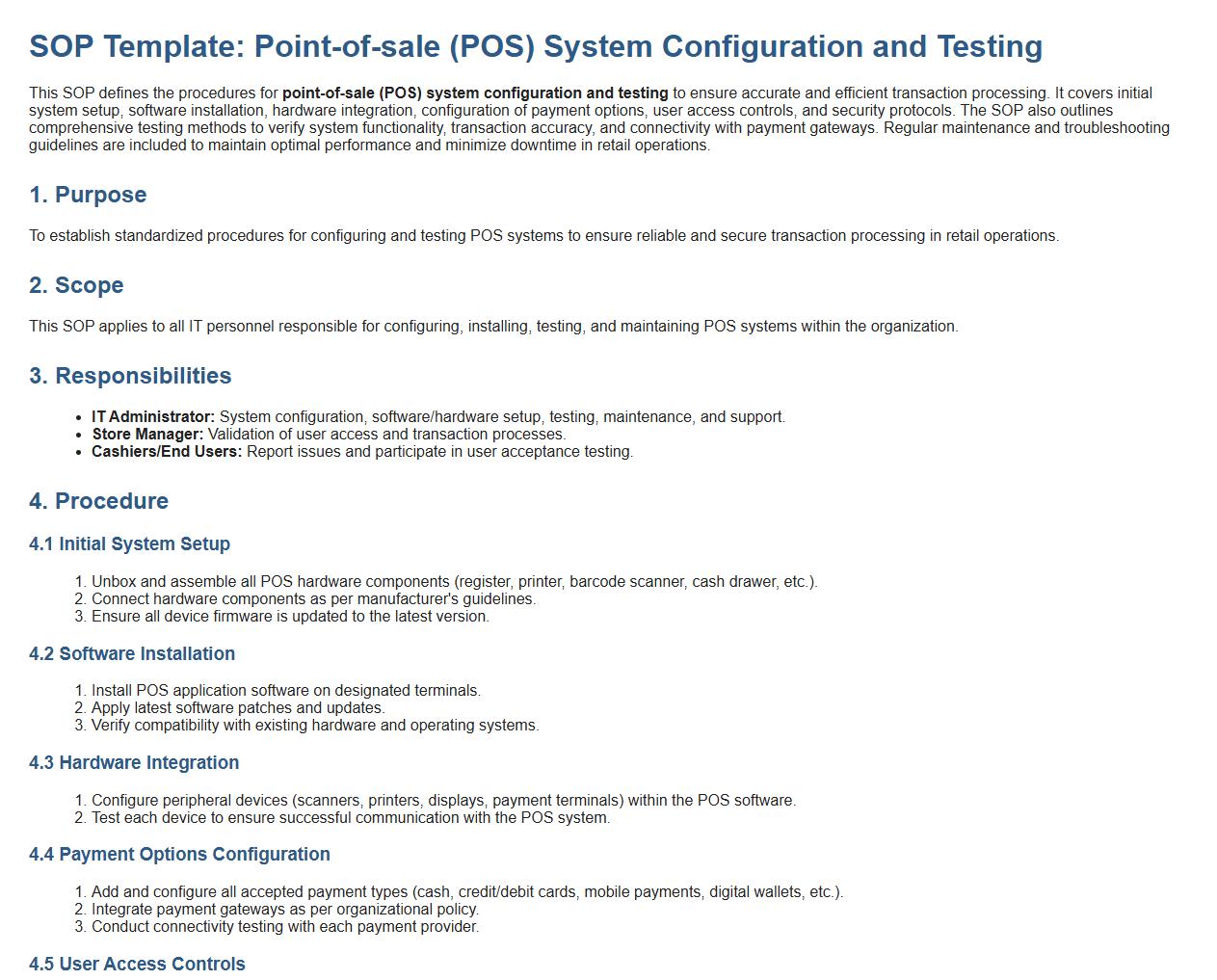
This SOP defines the procedures for point-of-sale (POS) system configuration and testing to ensure accurate and efficient transaction processing. It covers initial system setup, software installation, hardware integration, configuration of payment options, user access controls, and security protocols. The SOP also outlines comprehensive testing methods to verify system functionality, transaction accuracy, and connectivity with payment gateways. Regular maintenance and troubleshooting guidelines are included to maintain optimal performance and minimize downtime in retail operations.
Customer communication and marketing collateral distribution.
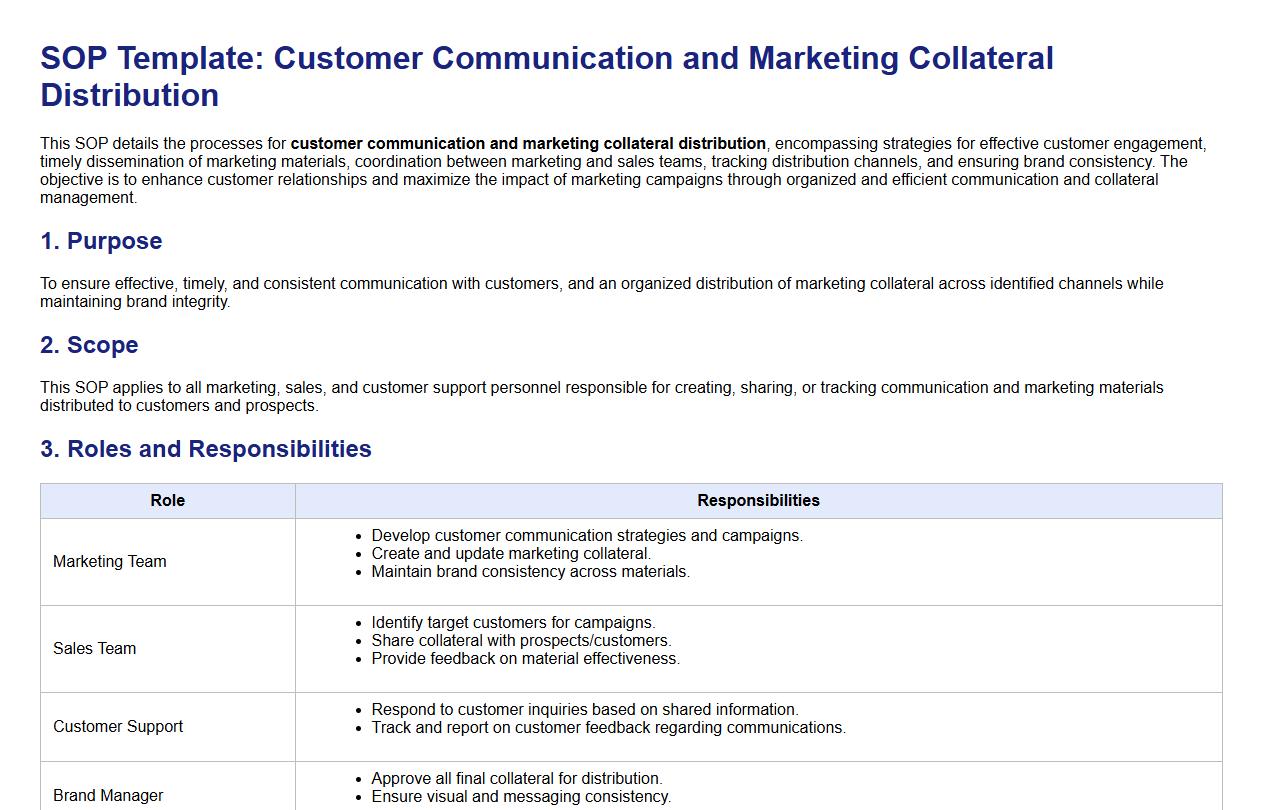
This SOP details the processes for customer communication and marketing collateral distribution, encompassing strategies for effective customer engagement, timely dissemination of marketing materials, coordination between marketing and sales teams, tracking distribution channels, and ensuring brand consistency. The objective is to enhance customer relationships and maximize the impact of marketing campaigns through organized and efficient communication and collateral management.
Promotion period monitoring and performance tracking.
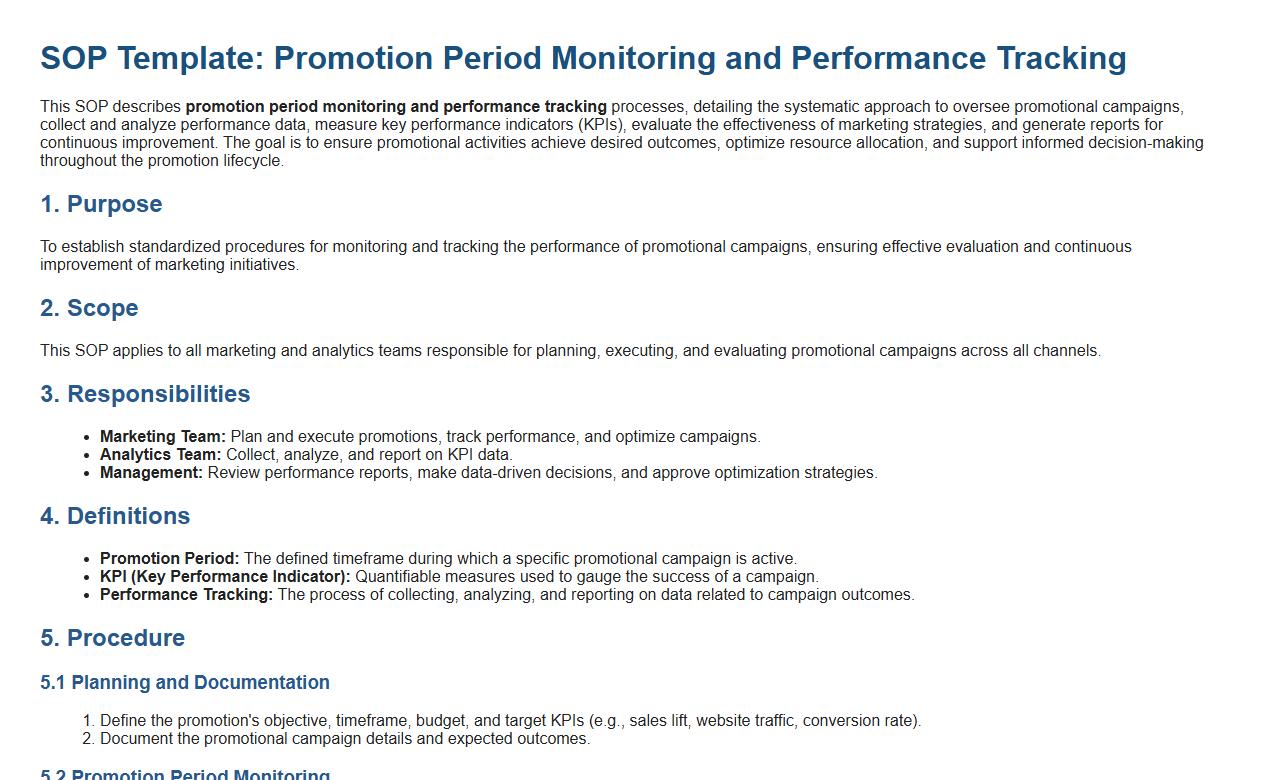
This SOP describes promotion period monitoring and performance tracking processes, detailing the systematic approach to oversee promotional campaigns, collect and analyze performance data, measure key performance indicators (KPIs), evaluate the effectiveness of marketing strategies, and generate reports for continuous improvement. The goal is to ensure promotional activities achieve desired outcomes, optimize resource allocation, and support informed decision-making throughout the promotion lifecycle.
Handling customer feedback and complaints during promotions.
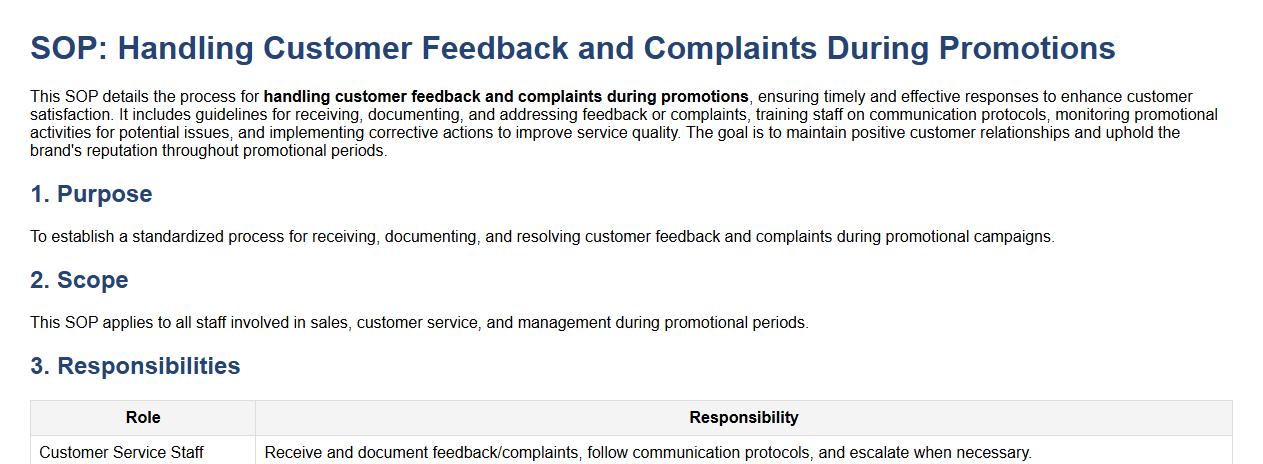
This SOP details the process for handling customer feedback and complaints during promotions, ensuring timely and effective responses to enhance customer satisfaction. It includes guidelines for receiving, documenting, and addressing feedback or complaints, training staff on communication protocols, monitoring promotional activities for potential issues, and implementing corrective actions to improve service quality. The goal is to maintain positive customer relationships and uphold the brand's reputation throughout promotional periods.
Post-promotion analysis and reporting.
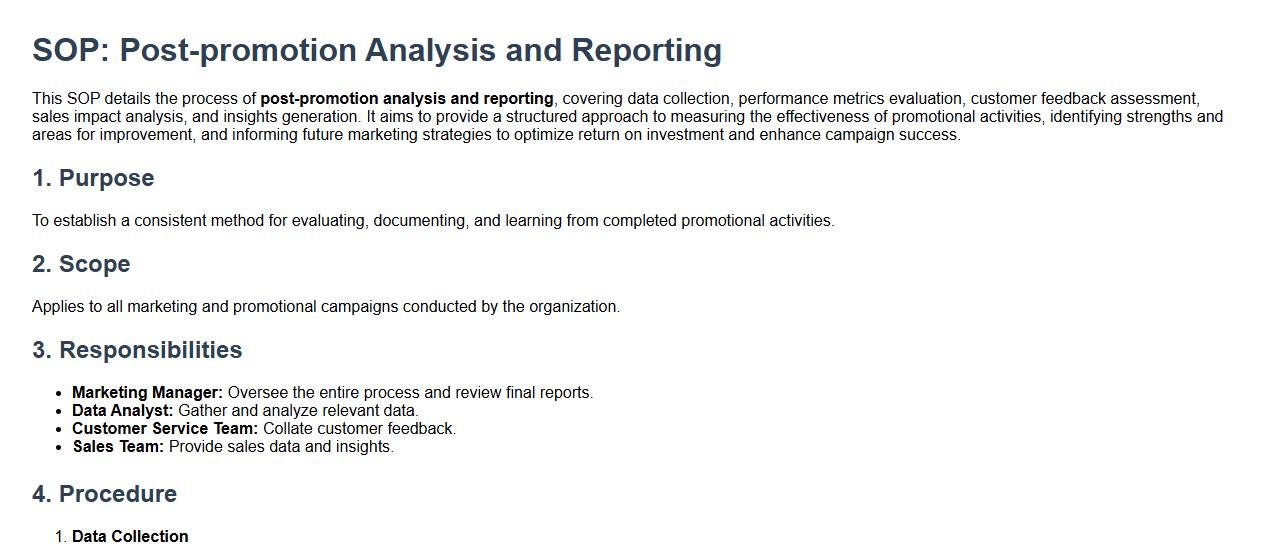
This SOP details the process of post-promotion analysis and reporting, covering data collection, performance metrics evaluation, customer feedback assessment, sales impact analysis, and insights generation. It aims to provide a structured approach to measuring the effectiveness of promotional activities, identifying strengths and areas for improvement, and informing future marketing strategies to optimize return on investment and enhance campaign success.
What are the main objectives outlined in the SOP for Retail Sales Promotions?
The main objectives of the SOP focus on driving customer engagement and increasing sales through strategic promotions. It emphasizes enhancing brand visibility while maintaining consistent customer experience across multiple retail channels. Additionally, the SOP aims to ensure promotions are executed efficiently, meeting organizational goals.
Which steps must staff follow when initiating a sales promotion according to the SOP?
Staff must begin by submitting a detailed promotion plan including target audience, product scope, and timeline as outlined in the SOP. Next, they are required to coordinate with marketing and inventory teams to ensure adequate stock and promotional materials. Finally, staff must update the sales platform and communicate the promotion to all relevant stakeholders before launch.
What compliance and approval processes are mandatory before launching a promotion per the SOP?
The SOP mandates obtaining formal approval from the sales manager and finance department to confirm budget alignment and pricing strategy. All promotions must comply with legal regulations and internal company policies, including advertising standards. A compliance checklist must be completed to validate that every aspect of the promotion adheres to mandatory guidelines.
Which key performance indicators (KPIs) are defined in the SOP for evaluating promotion success?
The SOP highlights KPIs such as sales uplift percentage, customer acquisition rates, and average transaction value during the promotion period. Customer feedback and redemption rates of promotional offers are also tracked to assess engagement levels. These metrics provide a comprehensive overview of the promotion's effectiveness and areas for improvement.
What documentation and record-keeping procedures does the SOP specify for each promotion?
The SOP requires thorough documentation including promotional plans, approval forms, and sales reports to be securely stored for audit purposes. Records of inventory adjustments and customer feedback must also be maintained for post-promotion analysis. This systematic record-keeping ensures transparency and facilitates continuous improvement in future campaigns.