
A SOP Template for Retail Staff Training provides a structured framework to ensure consistent and effective onboarding and skill development. It outlines step-by-step procedures for training new employees, covering customer service, product knowledge, and store policies. This template enhances operational efficiency and maintains high standards across retail locations.
New employee orientation and onboarding procedures.
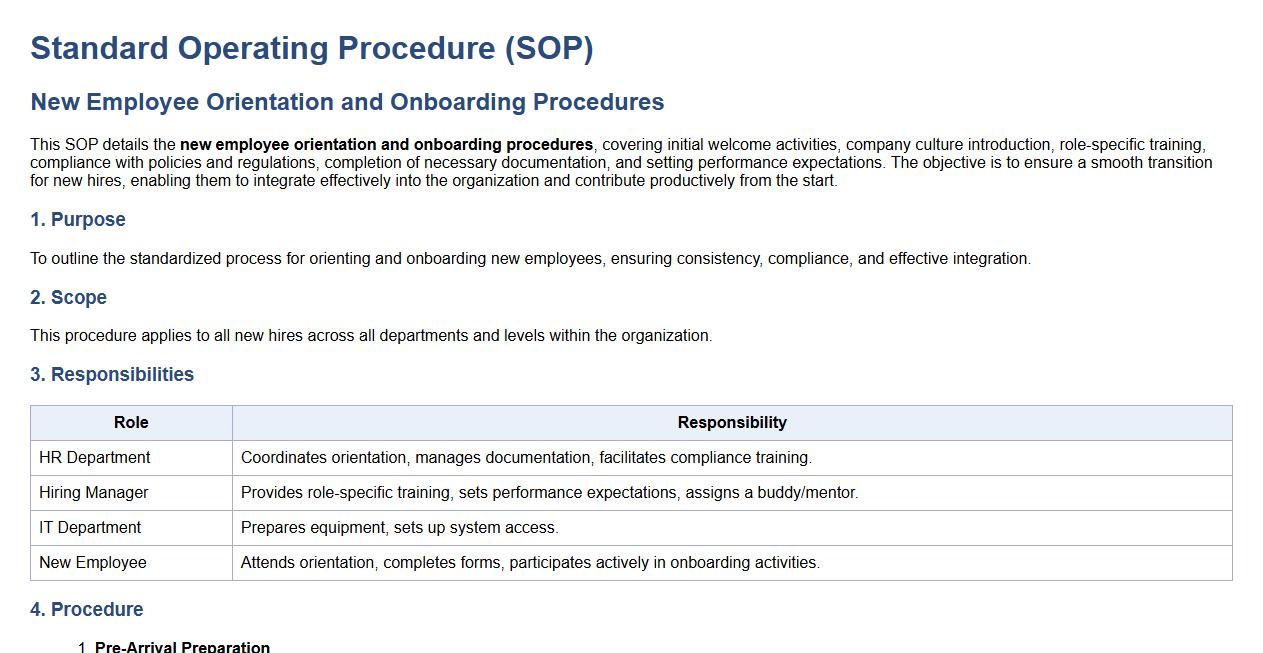
This SOP details the new employee orientation and onboarding procedures, covering initial welcome activities, company culture introduction, role-specific training, compliance with policies and regulations, completion of necessary documentation, and setting performance expectations. The objective is to ensure a smooth transition for new hires, enabling them to integrate effectively into the organization and contribute productively from the start.
Customer service and complaint resolution protocols.
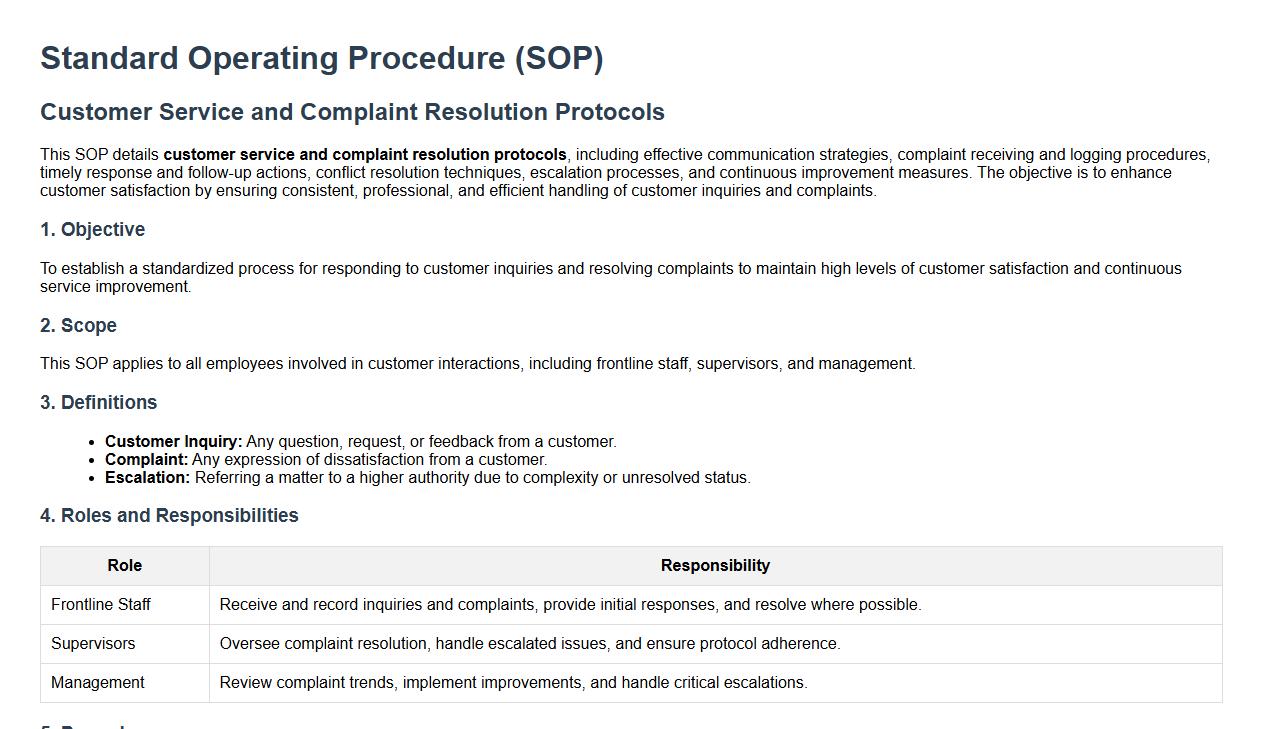
This SOP details customer service and complaint resolution protocols, including effective communication strategies, complaint receiving and logging procedures, timely response and follow-up actions, conflict resolution techniques, escalation processes, and continuous improvement measures. The objective is to enhance customer satisfaction by ensuring consistent, professional, and efficient handling of customer inquiries and complaints.
Cash handling and point-of-sale operations.
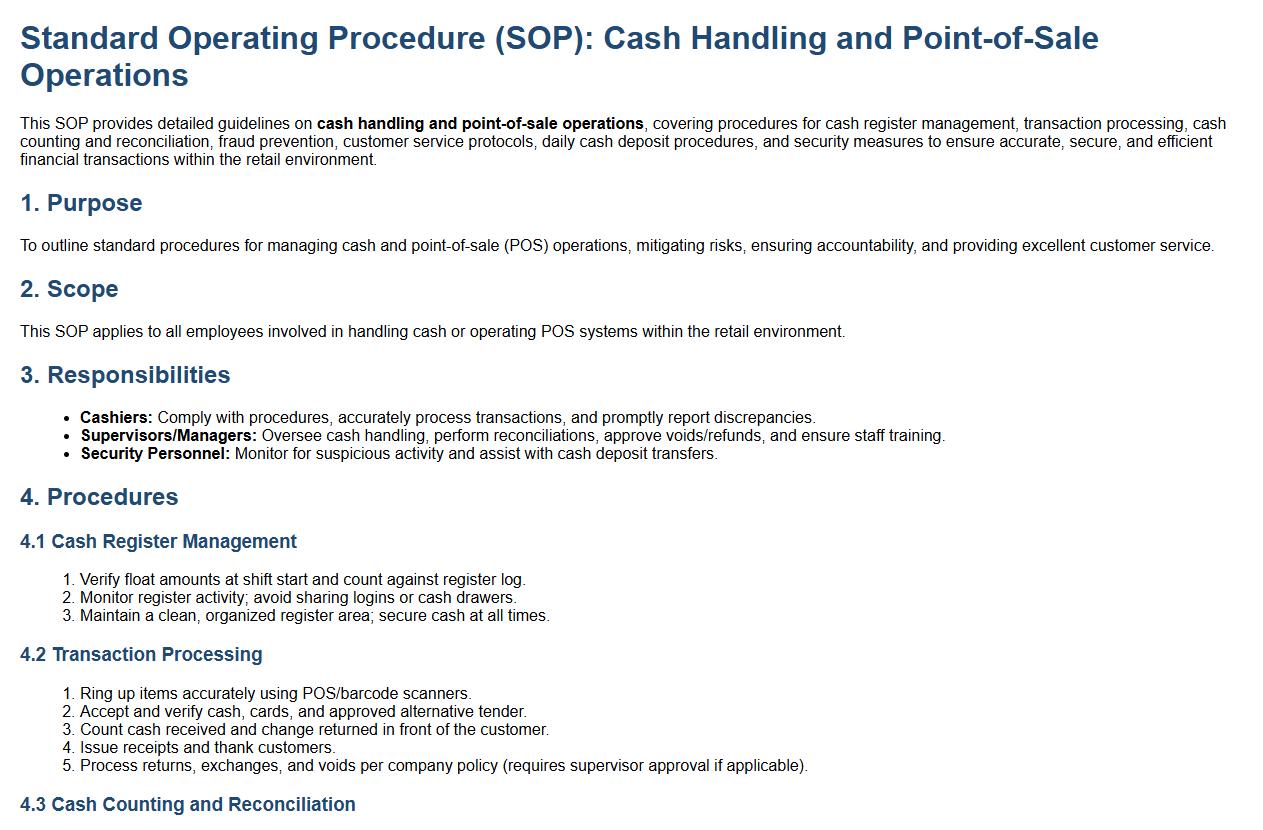
This SOP provides detailed guidelines on cash handling and point-of-sale operations, covering procedures for cash register management, transaction processing, cash counting and reconciliation, fraud prevention, customer service protocols, daily cash deposit procedures, and security measures to ensure accurate, secure, and efficient financial transactions within the retail environment.
Store opening and closing procedures.
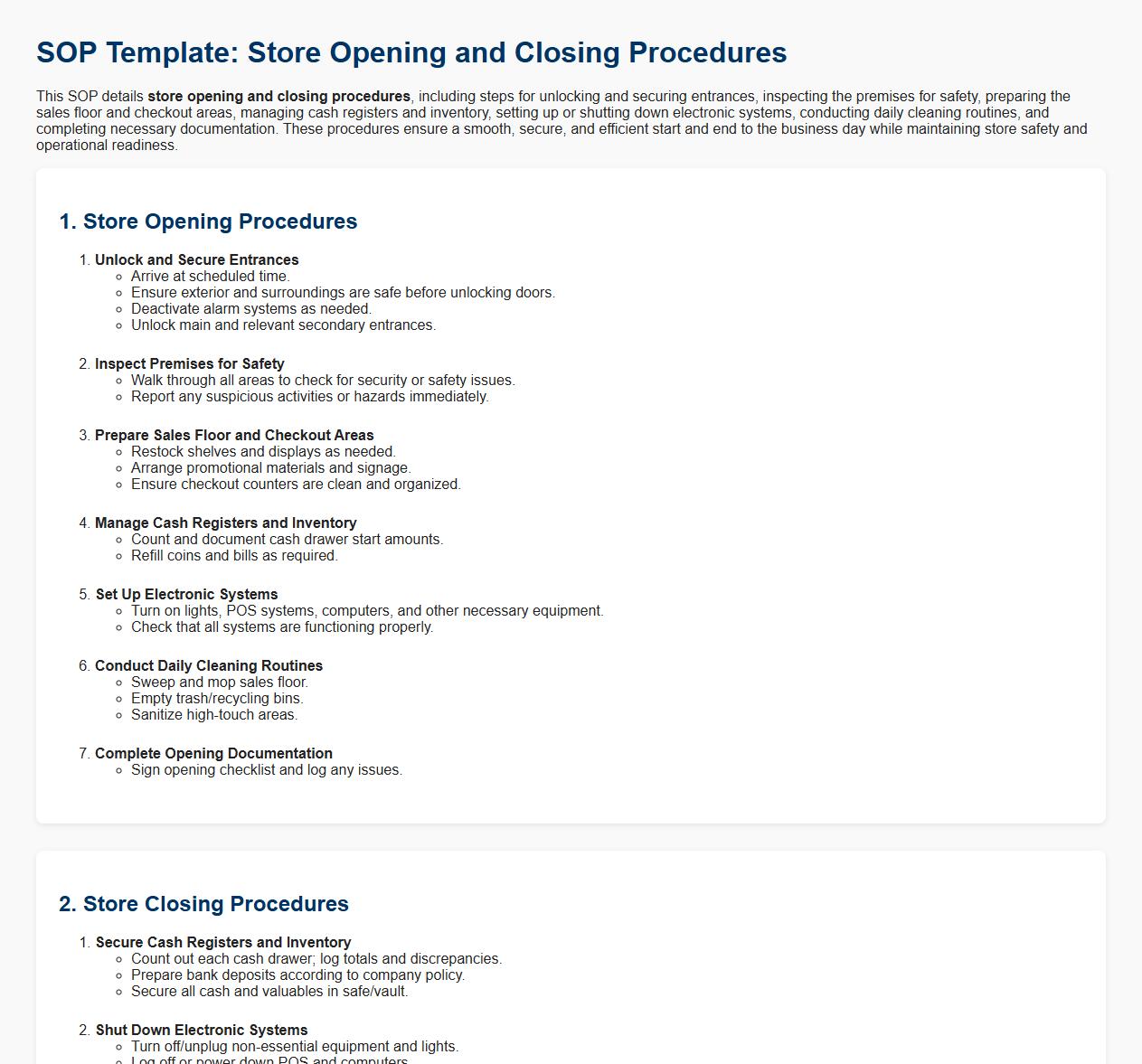
This SOP details store opening and closing procedures, including steps for unlocking and securing entrances, inspecting the premises for safety, preparing the sales floor and checkout areas, managing cash registers and inventory, setting up or shutting down electronic systems, conducting daily cleaning routines, and completing necessary documentation. These procedures ensure a smooth, secure, and efficient start and end to the business day while maintaining store safety and operational readiness.
Product knowledge and upselling techniques.
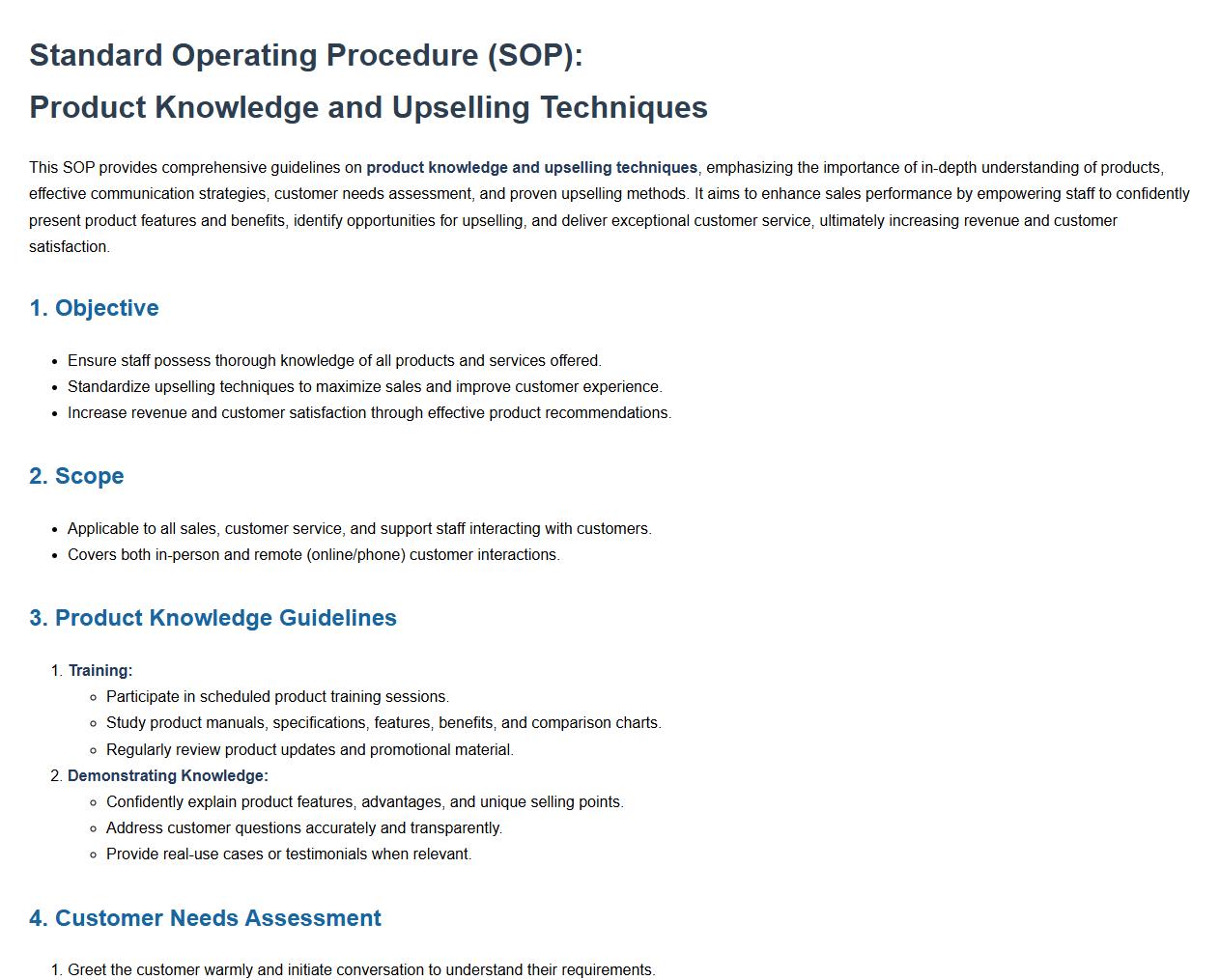
This SOP provides comprehensive guidelines on product knowledge and upselling techniques, emphasizing the importance of in-depth understanding of products, effective communication strategies, customer needs assessment, and proven upselling methods. It aims to enhance sales performance by empowering staff to confidently present product features and benefits, identify opportunities for upselling, and deliver exceptional customer service, ultimately increasing revenue and customer satisfaction.
Visual merchandising and display standards.
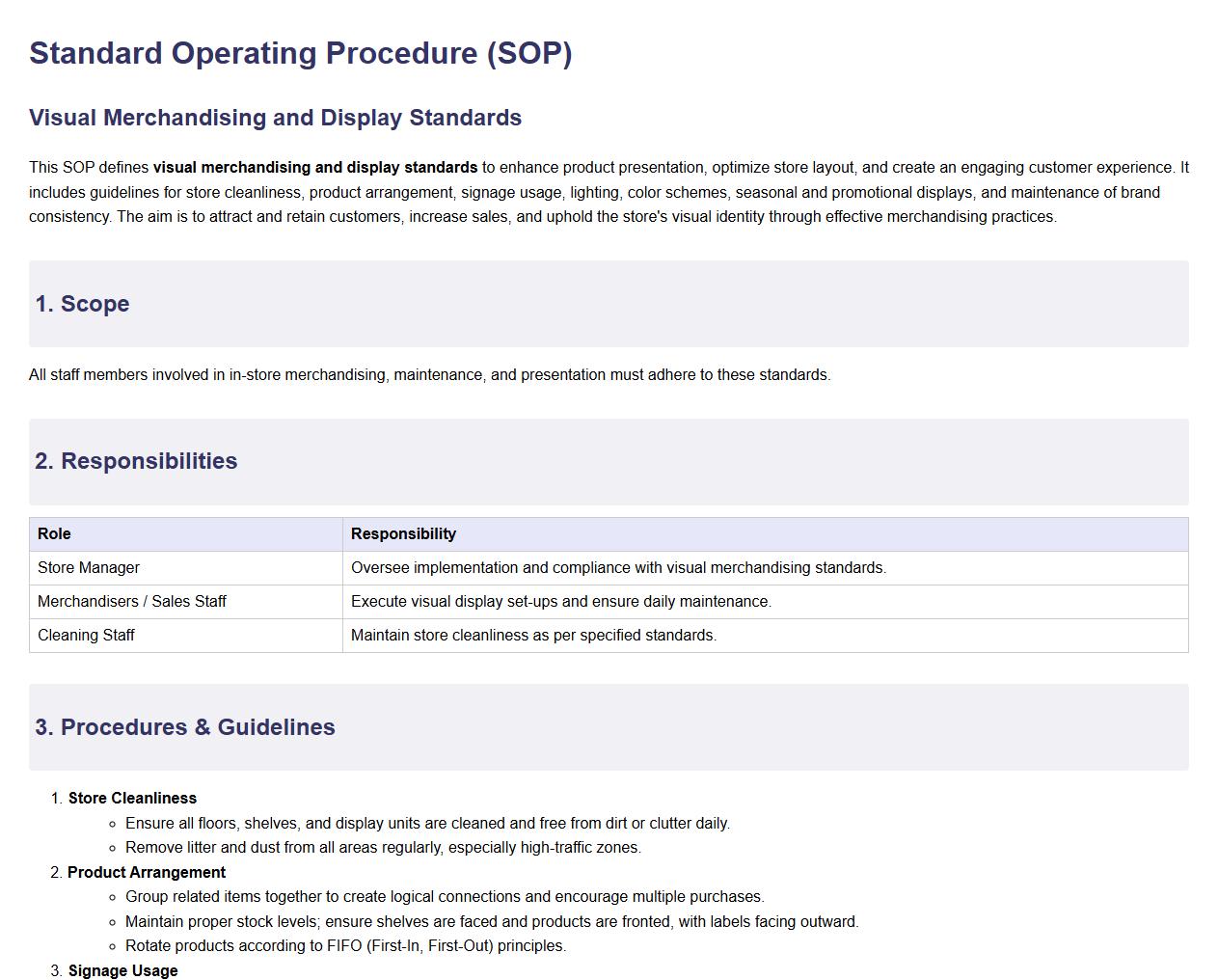
This SOP defines visual merchandising and display standards to enhance product presentation, optimize store layout, and create an engaging customer experience. It includes guidelines for store cleanliness, product arrangement, signage usage, lighting, color schemes, seasonal and promotional displays, and maintenance of brand consistency. The aim is to attract and retain customers, increase sales, and uphold the store's visual identity through effective merchandising practices.
Inventory receiving, storage, and stock replenishment.
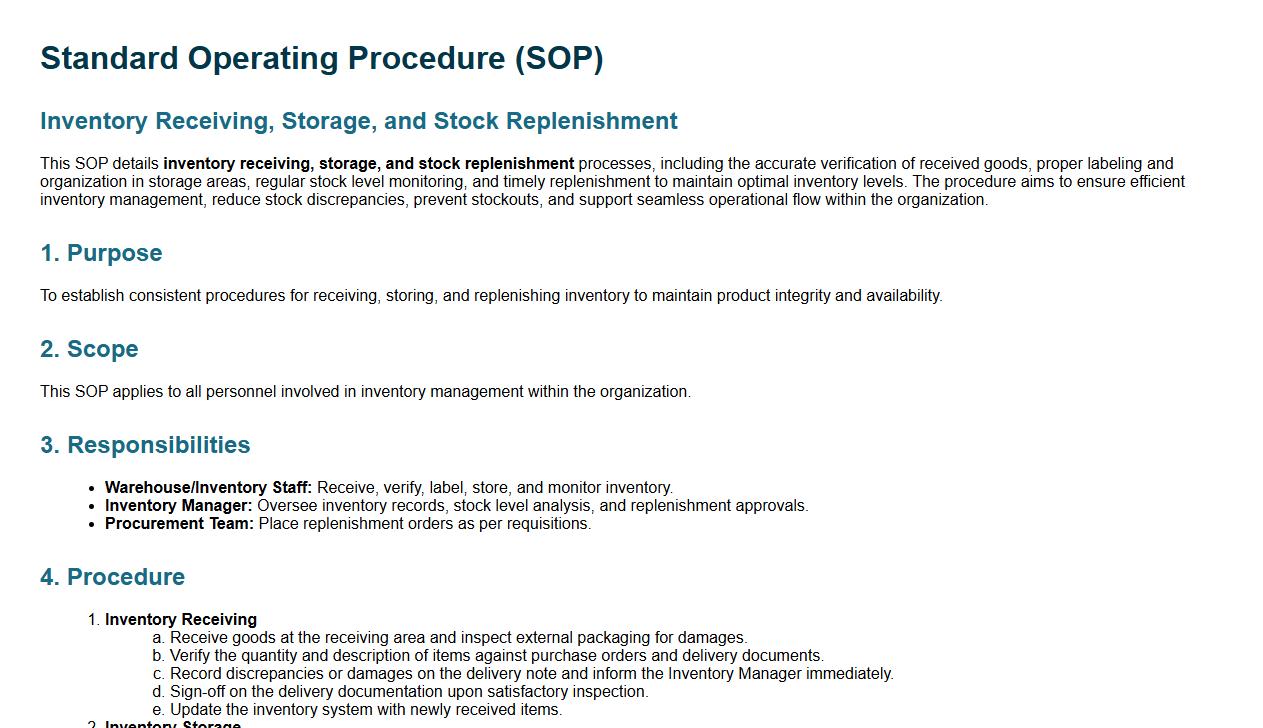
This SOP details inventory receiving, storage, and stock replenishment processes, including the accurate verification of received goods, proper labeling and organization in storage areas, regular stock level monitoring, and timely replenishment to maintain optimal inventory levels. The procedure aims to ensure efficient inventory management, reduce stock discrepancies, prevent stockouts, and support seamless operational flow within the organization.
Health, safety, and emergency response protocols.
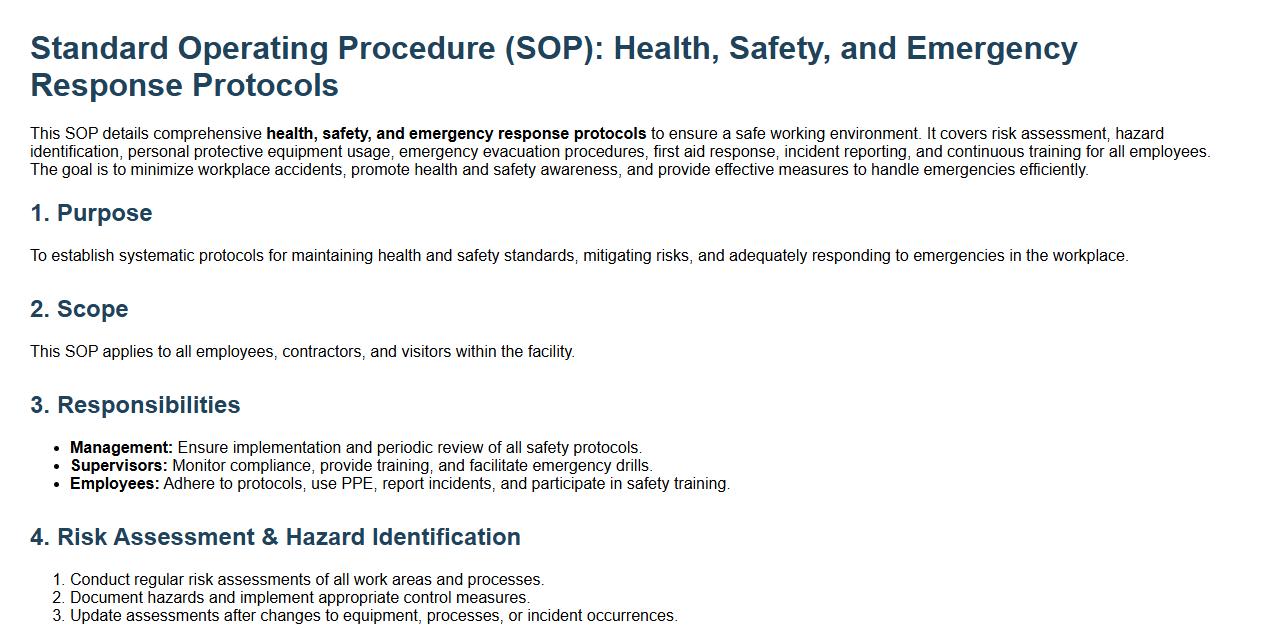
This SOP details comprehensive health, safety, and emergency response protocols to ensure a safe working environment. It covers risk assessment, hazard identification, personal protective equipment usage, emergency evacuation procedures, first aid response, incident reporting, and continuous training for all employees. The goal is to minimize workplace accidents, promote health and safety awareness, and provide effective measures to handle emergencies efficiently.
Cleaning, sanitation, and waste management.
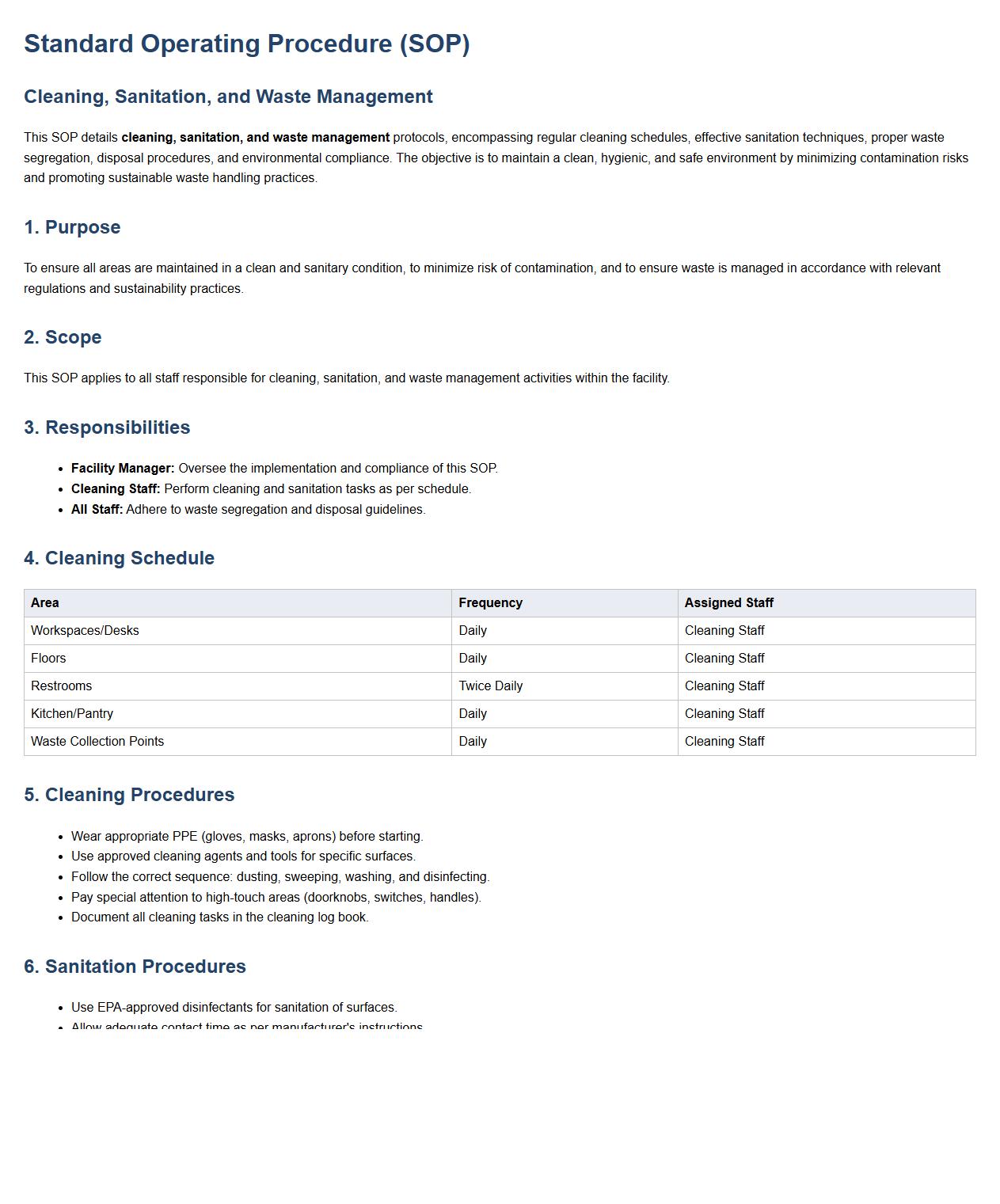
This SOP details cleaning, sanitation, and waste management protocols, encompassing regular cleaning schedules, effective sanitation techniques, proper waste segregation, disposal procedures, and environmental compliance. The objective is to maintain a clean, hygienic, and safe environment by minimizing contamination risks and promoting sustainable waste handling practices.
Staff scheduling, attendance, and time-off requests.
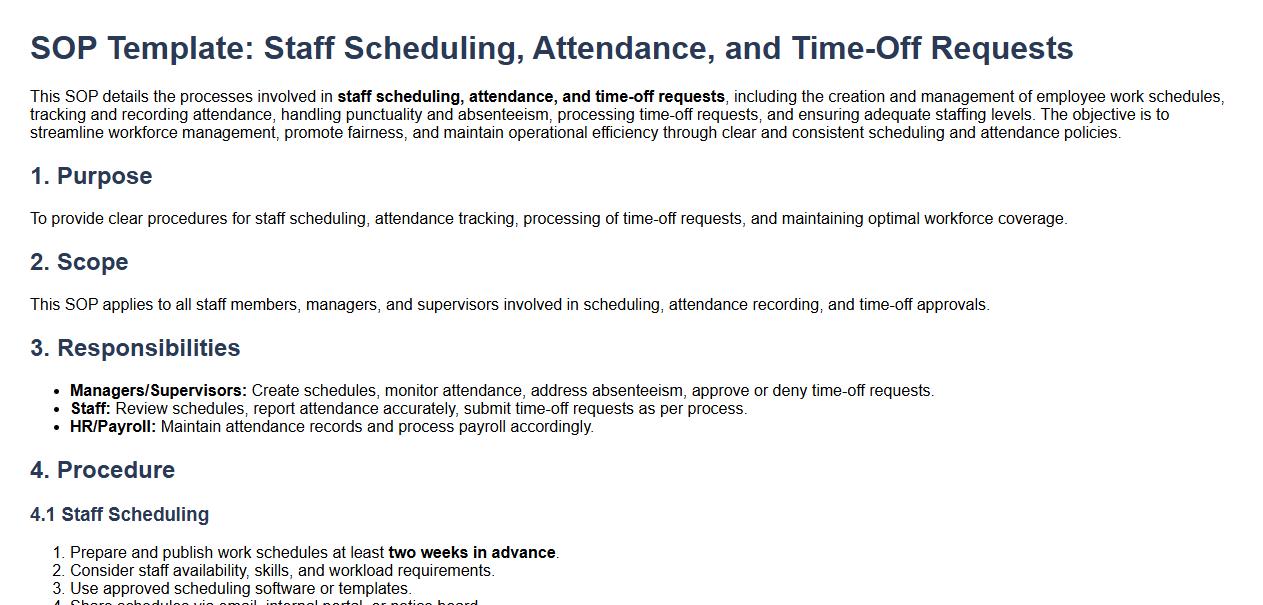
This SOP details the processes involved in staff scheduling, attendance, and time-off requests, including the creation and management of employee work schedules, tracking and recording attendance, handling punctuality and absenteeism, processing time-off requests, and ensuring adequate staffing levels. The objective is to streamline workforce management, promote fairness, and maintain operational efficiency through clear and consistent scheduling and attendance policies.
What is the primary objective of the SOP for Retail Staff Training?
The primary objective of the SOP for Retail Staff Training is to ensure consistent and high-quality service across all retail locations. It aims to equip staff with the necessary skills and knowledge to meet customer expectations effectively. Additionally, the SOP seeks to standardize training methods to enhance employee performance and satisfaction.
Which procedures must retail staff follow during customer interactions according to the SOP?
Retail staff must adhere to a structured communication protocol during customer interactions, starting with a courteous greeting and active listening. They are required to provide accurate product information and resolve inquiries promptly and professionally. Following up with customers and ensuring their satisfaction is also emphasized in the procedures.
What are the documented steps for handling product returns and exchanges in the SOP?
The SOP outlines clear steps for processing product returns and exchanges, beginning with verifying the receipt and product condition. Staff must document the return reason and update inventory records accordingly. Finally, the SOP mandates issuing refunds or replacements promptly while maintaining records for quality control.
How does the SOP define the process for onboarding new retail staff members?
The SOP defines the onboarding process as a structured series of activities including orientation, initial training, and mentorship. New employees are introduced to company policies, product knowledge, and customer service standards. Continuous assessment and feedback are integral parts of the onboarding to ensure successful integration.
What quality assurance measures are specified in the Retail Staff Training SOP?
The SOP specifies quality assurance measures such as regular performance evaluations and customer feedback analysis. It mandates periodic refresher training sessions to keep staff updated with the latest procedures. Additionally, mystery shopping and audits are used to maintain high service standards and identify improvement areas.