

A SOP Template for Retail Merchandising provides a structured framework to streamline merchandising processes, ensuring consistency and efficiency in product display and inventory management. This template outlines step-by-step procedures for stock replenishment, planogram compliance, and promotional setups to optimize the customer shopping experience. Implementing a standardized SOP helps retail teams maintain visual standards and achieve sales targets effectively.
Merchandise planning and assortment selection.
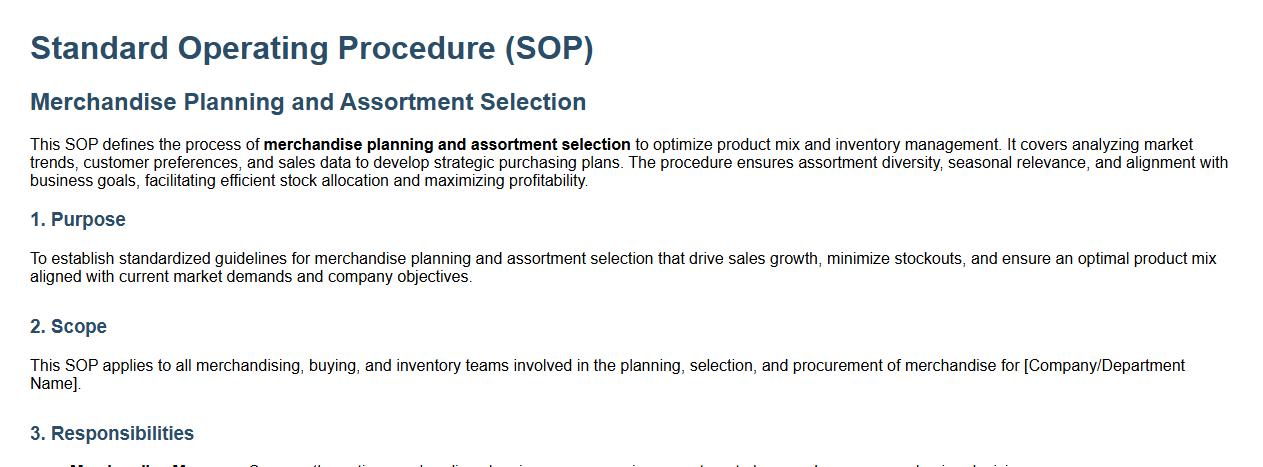
This SOP defines the process of merchandise planning and assortment selection to optimize product mix and inventory management. It covers analyzing market trends, customer preferences, and sales data to develop strategic purchasing plans. The procedure ensures assortment diversity, seasonal relevance, and alignment with business goals, facilitating efficient stock allocation and maximizing profitability.
Inventory management and stock replenishment procedures.
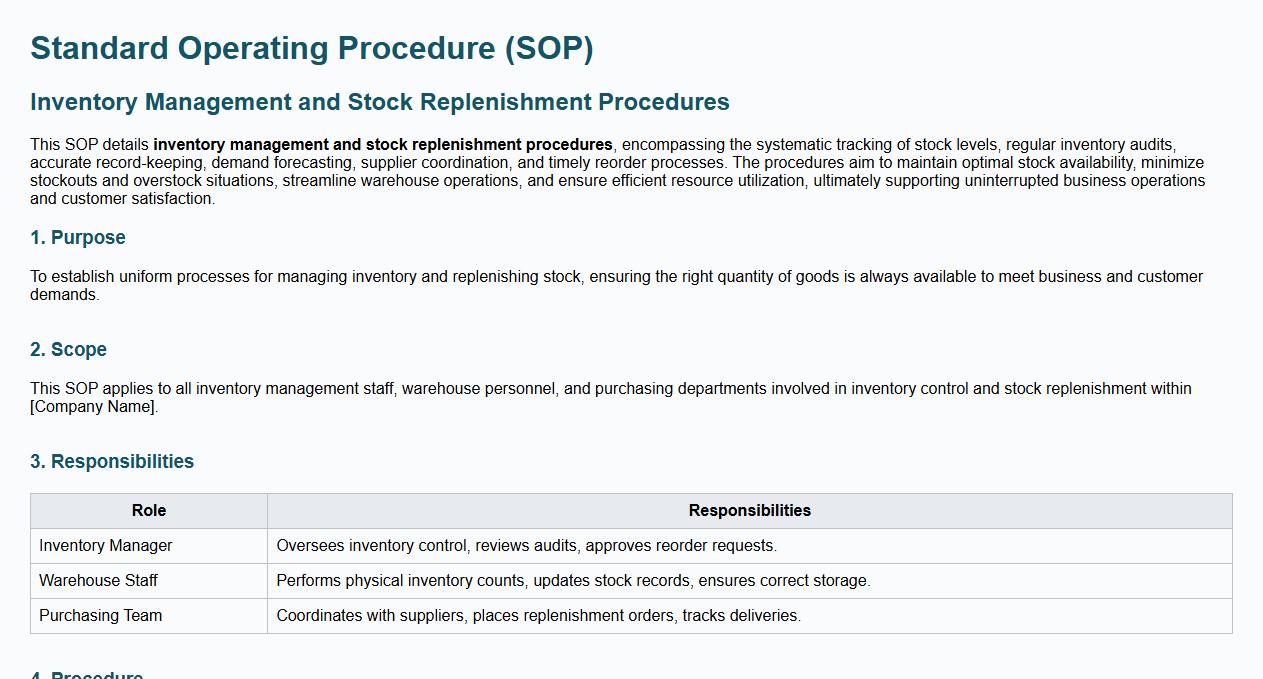
This SOP details inventory management and stock replenishment procedures, encompassing the systematic tracking of stock levels, regular inventory audits, accurate record-keeping, demand forecasting, supplier coordination, and timely reorder processes. The procedures aim to maintain optimal stock availability, minimize stockouts and overstock situations, streamline warehouse operations, and ensure efficient resource utilization, ultimately supporting uninterrupted business operations and customer satisfaction.
Visual merchandising setup and display guidelines.
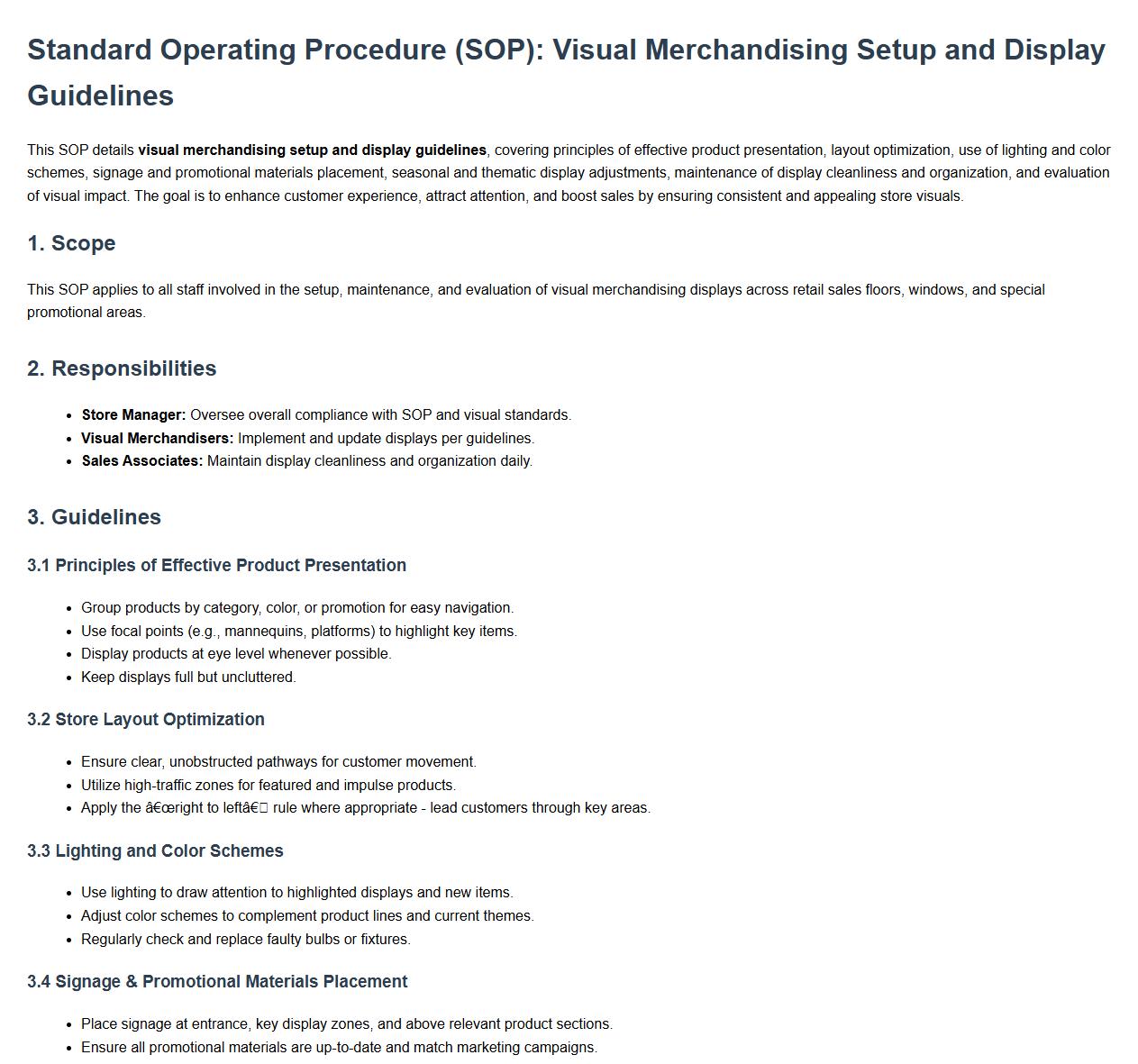
This SOP details visual merchandising setup and display guidelines, covering principles of effective product presentation, layout optimization, use of lighting and color schemes, signage and promotional materials placement, seasonal and thematic display adjustments, maintenance of display cleanliness and organization, and evaluation of visual impact. The goal is to enhance customer experience, attract attention, and boost sales by ensuring consistent and appealing store visuals.
Product pricing and labeling standards.
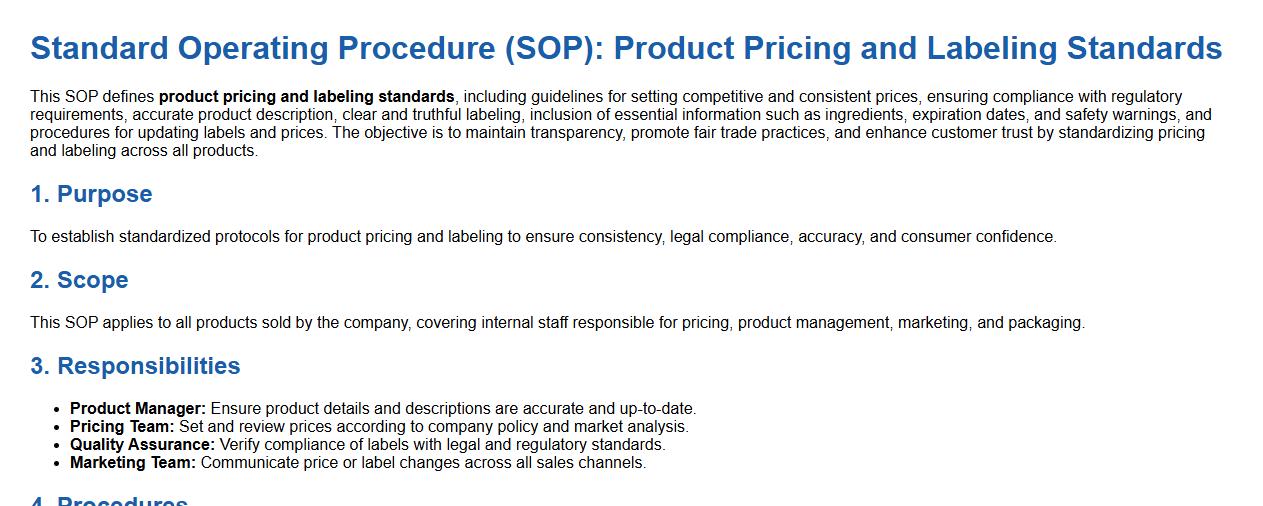
This SOP defines product pricing and labeling standards, including guidelines for setting competitive and consistent prices, ensuring compliance with regulatory requirements, accurate product description, clear and truthful labeling, inclusion of essential information such as ingredients, expiration dates, and safety warnings, and procedures for updating labels and prices. The objective is to maintain transparency, promote fair trade practices, and enhance customer trust by standardizing pricing and labeling across all products.
In-store promotional activities and execution.
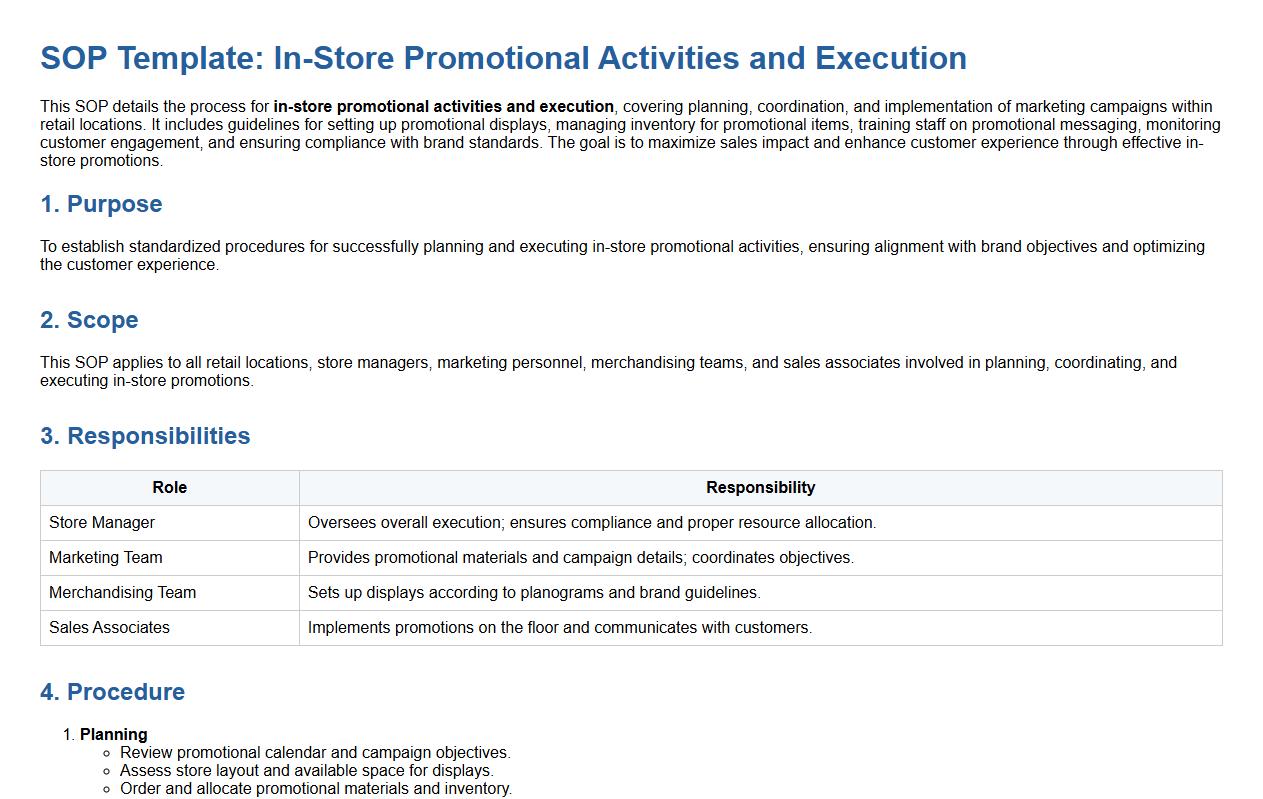
This SOP details the process for in-store promotional activities and execution, covering planning, coordination, and implementation of marketing campaigns within retail locations. It includes guidelines for setting up promotional displays, managing inventory for promotional items, training staff on promotional messaging, monitoring customer engagement, and ensuring compliance with brand standards. The goal is to maximize sales impact and enhance customer experience through effective in-store promotions.
Stock receiving, verification, and storage protocols.
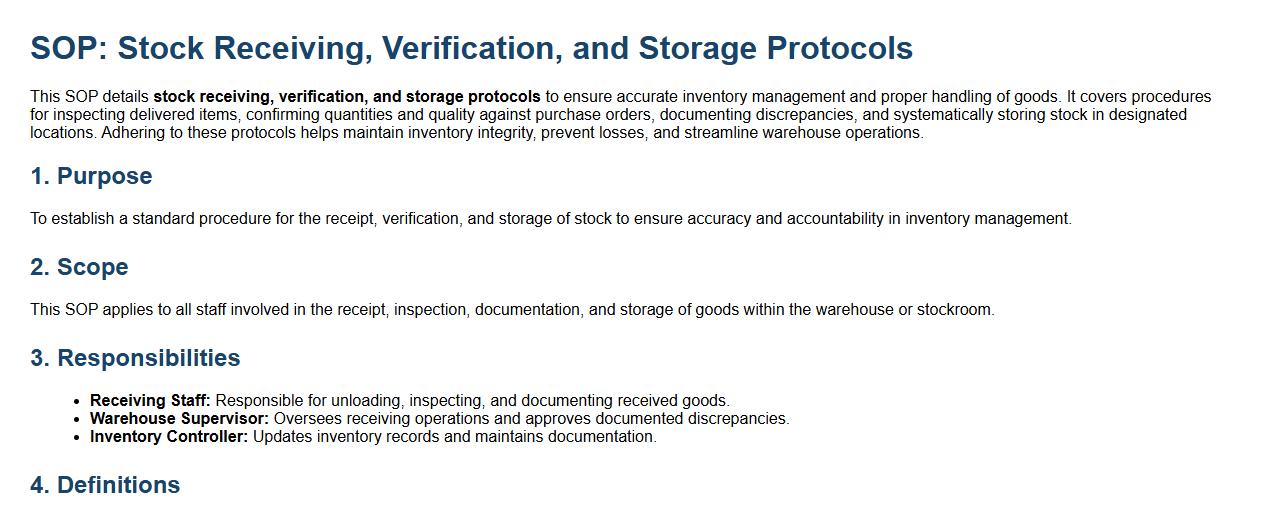
This SOP details stock receiving, verification, and storage protocols to ensure accurate inventory management and proper handling of goods. It covers procedures for inspecting delivered items, confirming quantities and quality against purchase orders, documenting discrepancies, and systematically storing stock in designated locations. Adhering to these protocols helps maintain inventory integrity, prevent losses, and streamline warehouse operations.
Loss prevention and security measures.
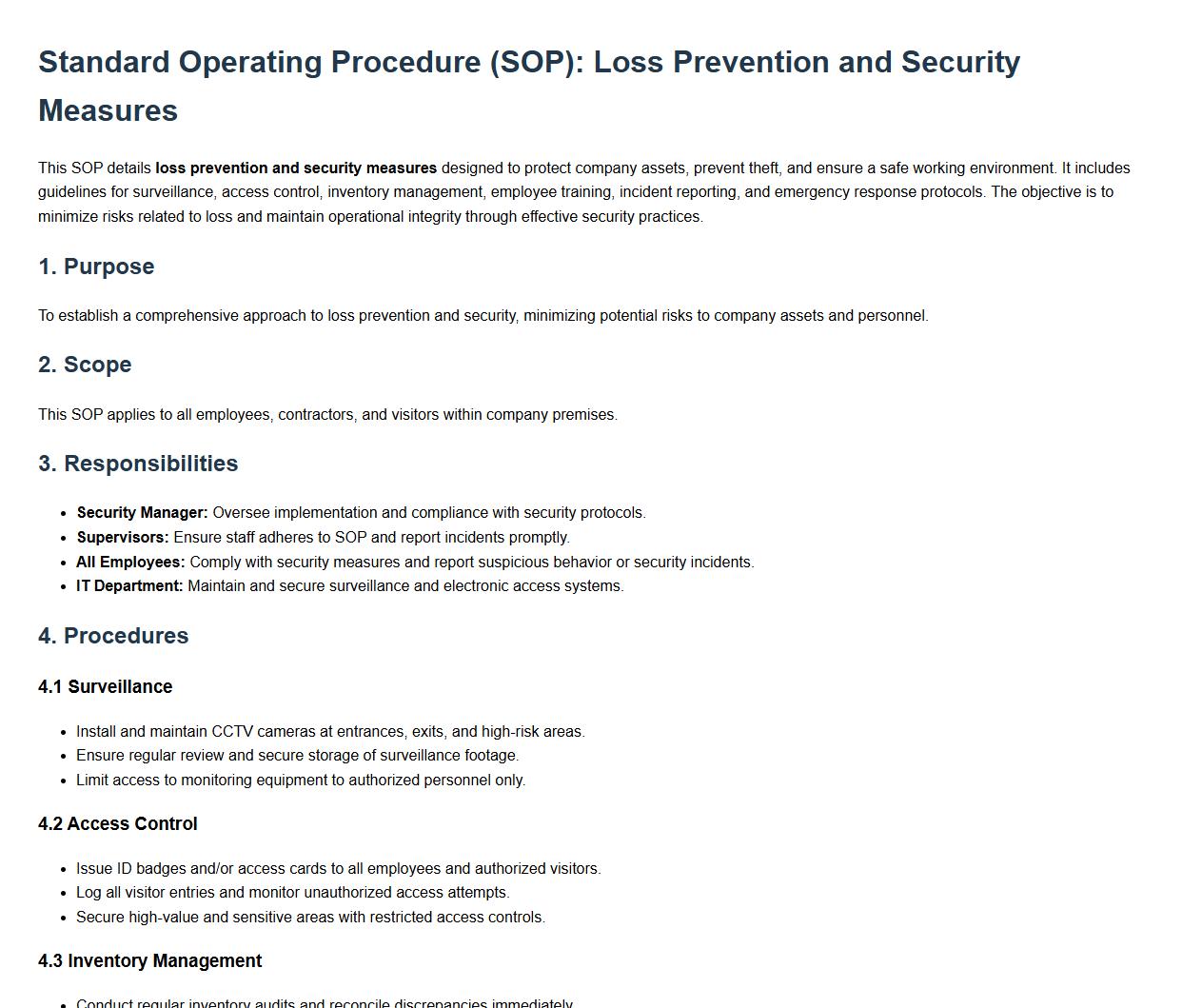
This SOP details loss prevention and security measures designed to protect company assets, prevent theft, and ensure a safe working environment. It includes guidelines for surveillance, access control, inventory management, employee training, incident reporting, and emergency response protocols. The objective is to minimize risks related to loss and maintain operational integrity through effective security practices.
Shelf organization and product rotation procedures.
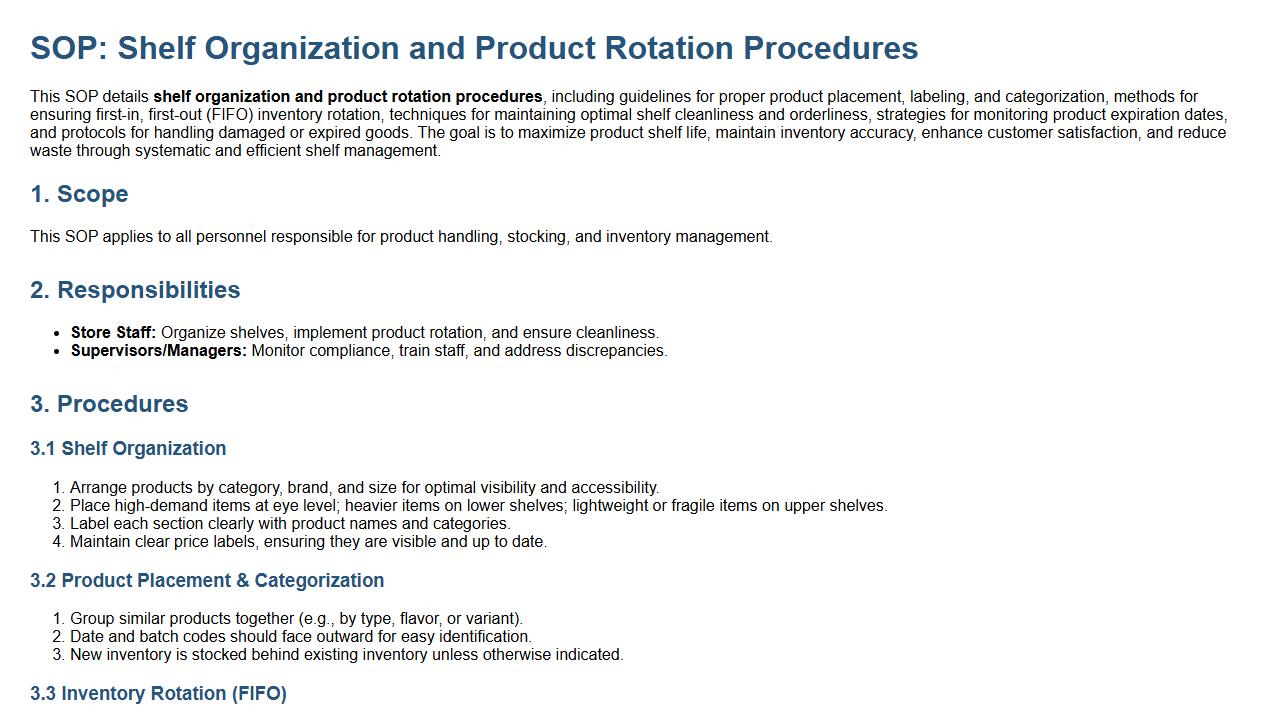
This SOP details shelf organization and product rotation procedures, including guidelines for proper product placement, labeling, and categorization, methods for ensuring first-in, first-out (FIFO) inventory rotation, techniques for maintaining optimal shelf cleanliness and orderliness, strategies for monitoring product expiration dates, and protocols for handling damaged or expired goods. The goal is to maximize product shelf life, maintain inventory accuracy, enhance customer satisfaction, and reduce waste through systematic and efficient shelf management.
Customer service and complaint resolution steps.
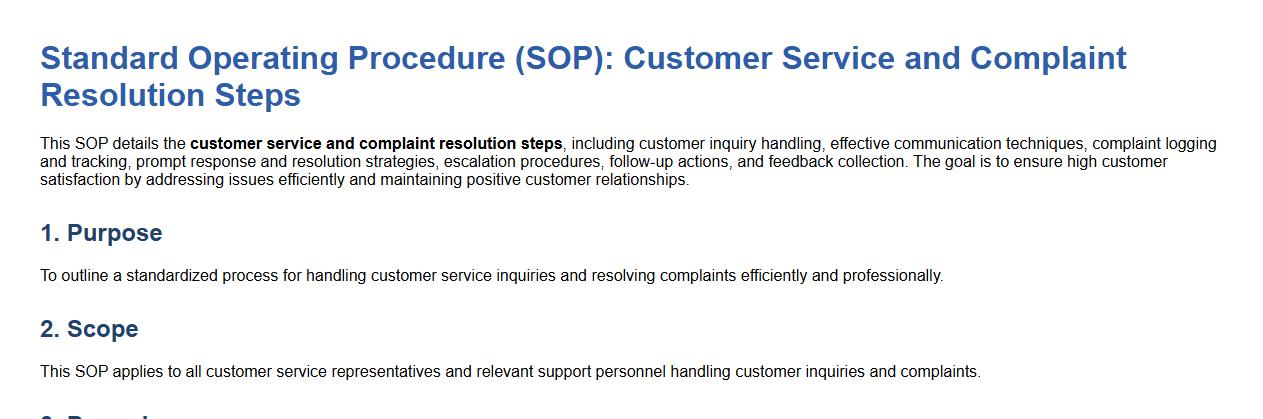
This SOP details the customer service and complaint resolution steps, including customer inquiry handling, effective communication techniques, complaint logging and tracking, prompt response and resolution strategies, escalation procedures, follow-up actions, and feedback collection. The goal is to ensure high customer satisfaction by addressing issues efficiently and maintaining positive customer relationships.
Daily sales reporting and end-of-day reconciliation.
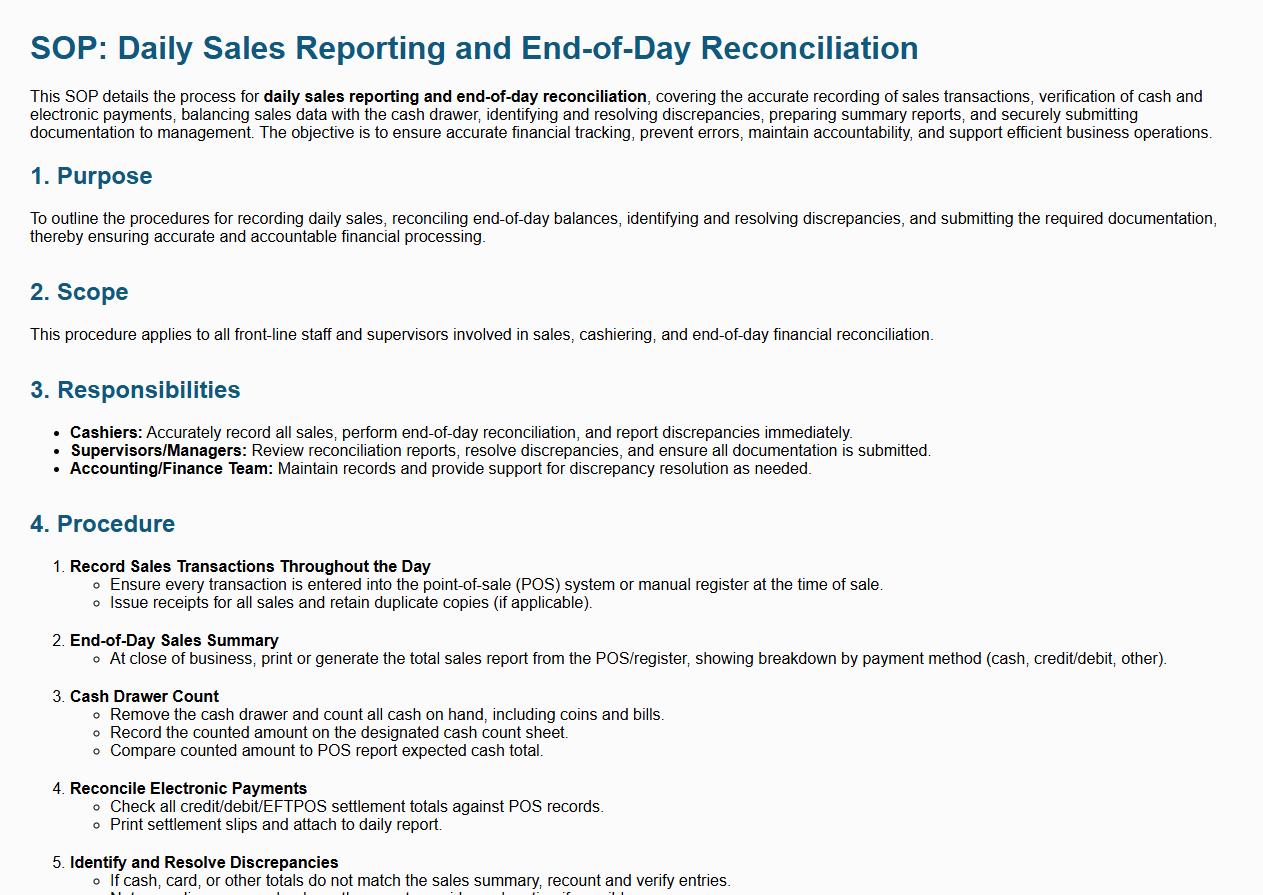
This SOP details the process for daily sales reporting and end-of-day reconciliation, covering the accurate recording of sales transactions, verification of cash and electronic payments, balancing sales data with the cash drawer, identifying and resolving discrepancies, preparing summary reports, and securely submitting documentation to management. The objective is to ensure accurate financial tracking, prevent errors, maintain accountability, and support efficient business operations.
What key objectives does the SOP for Retail Merchandising aim to achieve?
The SOP for Retail Merchandising primarily aims to establish consistent operational standards across all retail locations. It seeks to enhance product visibility and maximize sales through effective merchandising strategies. Additionally, the document strives to ensure customer satisfaction by maintaining a professional and appealing store environment.
Which roles and responsibilities are clearly defined within the SOP document?
The SOP outlines specific roles and responsibilities for store managers, merchandisers, and sales associates to promote accountability. Each role has designated tasks, such as inventory checks, product placement, and compliance monitoring. Clear delegation helps streamline merchandising efforts and maintain store efficiency.
What standardized procedures are outlined for product display and shelf management?
The SOP specifies standardized procedures for arranging products to optimize consumer engagement and convenience. It includes guidelines on shelf layout, pricing display, and stock rotation to keep merchandise fresh and appealing. These procedures help maintain uniformity across retail outlets and support brand image consistency.
How does the SOP address compliance with brand guidelines and visual standards?
The SOP emphasizes strict adherence to brand guidelines and visual standards to uphold corporate identity. It details the appropriate use of logos, color schemes, and signage in merchandising displays. This ensures that all retail locations present a cohesive and professional visual experience to customers.
What methods for reporting and resolving merchandising issues are specified in the SOP?
The SOP includes structured reporting methods for identifying and documenting merchandising problems promptly. It outlines escalation procedures to involve supervisory staff for timely resolution. This approach minimizes disruptions and maintains the quality of the retail merchandising environment.