

A SOP Template for Retail Safety and Security provides a structured framework to ensure consistent implementation of safety protocols and security measures in retail environments. It outlines clear procedures for managing emergencies, preventing theft, and maintaining a safe shopping experience for both customers and staff. This template helps retail businesses enhance risk management and compliance with industry standards.
Incident reporting procedures and documentation.
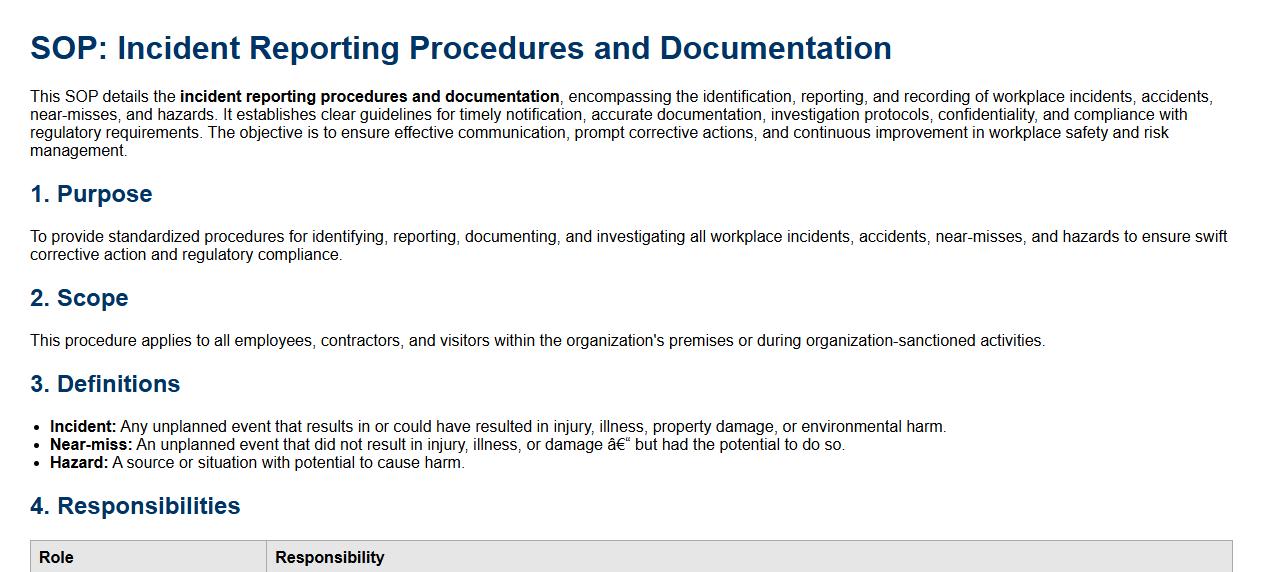
This SOP details the incident reporting procedures and documentation, encompassing the identification, reporting, and recording of workplace incidents, accidents, near-misses, and hazards. It establishes clear guidelines for timely notification, accurate documentation, investigation protocols, confidentiality, and compliance with regulatory requirements. The objective is to ensure effective communication, prompt corrective actions, and continuous improvement in workplace safety and risk management.
Store opening and closing security protocols.
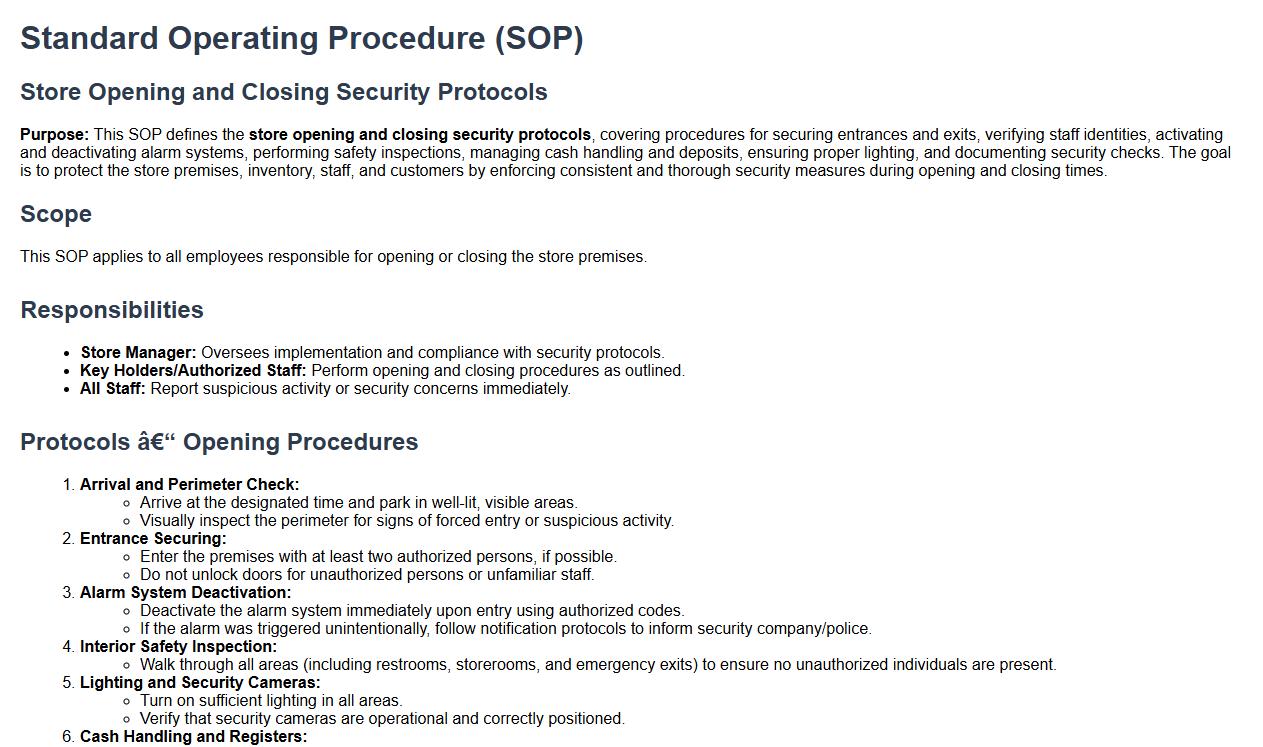
This SOP defines the store opening and closing security protocols, covering procedures for securing entrances and exits, verifying staff identities, activating and deactivating alarm systems, performing safety inspections, managing cash handling and deposits, ensuring proper lighting, and documenting security checks. The goal is to protect the store premises, inventory, staff, and customers by enforcing consistent and thorough security measures during opening and closing times.
Cash handling and register operation guidelines.
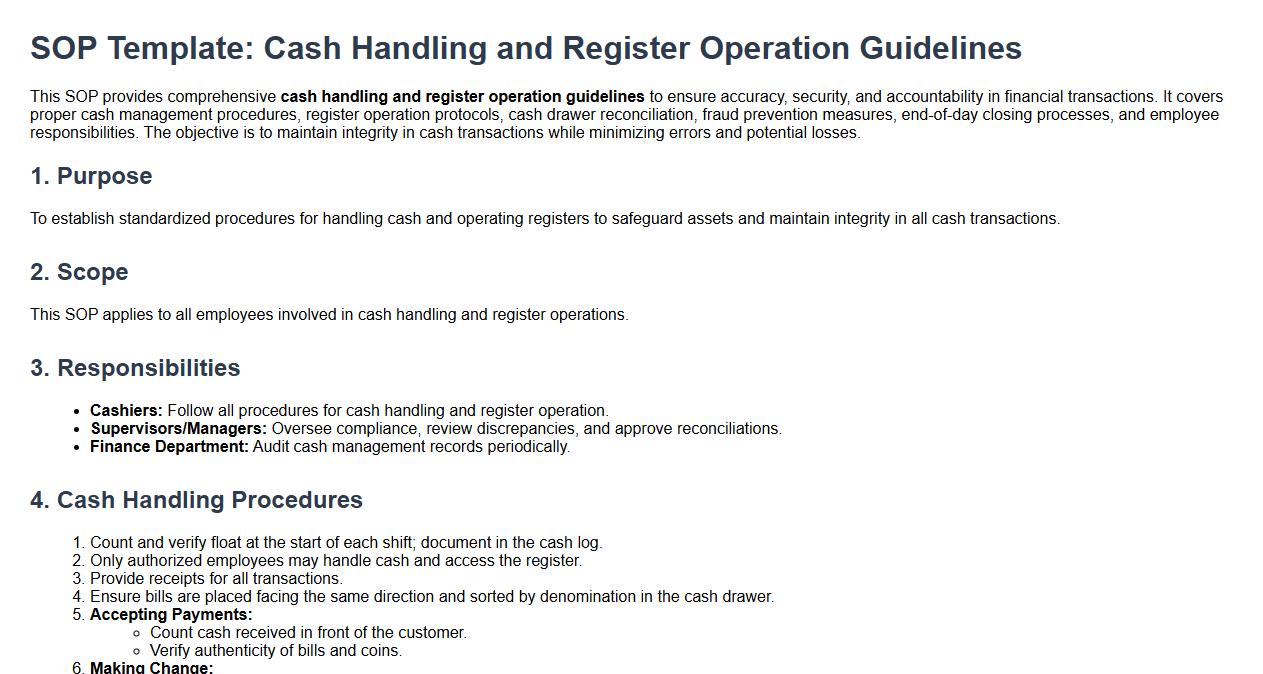
This SOP provides comprehensive cash handling and register operation guidelines to ensure accuracy, security, and accountability in financial transactions. It covers proper cash management procedures, register operation protocols, cash drawer reconciliation, fraud prevention measures, end-of-day closing processes, and employee responsibilities. The objective is to maintain integrity in cash transactions while minimizing errors and potential losses.
Shoplifting and theft prevention measures.
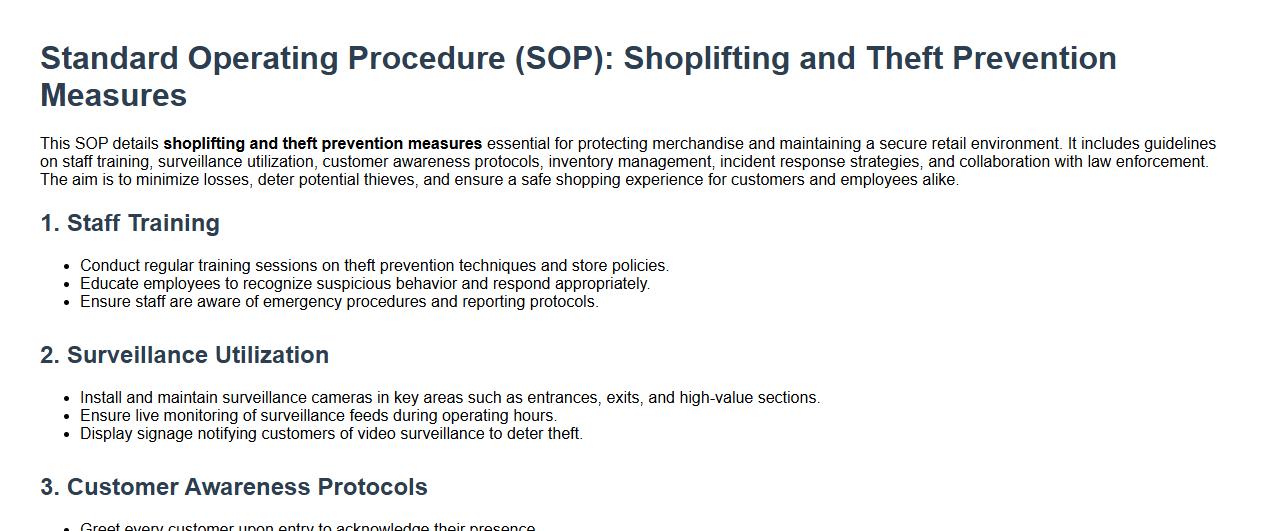
This SOP details shoplifting and theft prevention measures essential for protecting merchandise and maintaining a secure retail environment. It includes guidelines on staff training, surveillance utilization, customer awareness protocols, inventory management, incident response strategies, and collaboration with law enforcement. The aim is to minimize losses, deter potential thieves, and ensure a safe shopping experience for customers and employees alike.
Emergency response and evacuation steps.
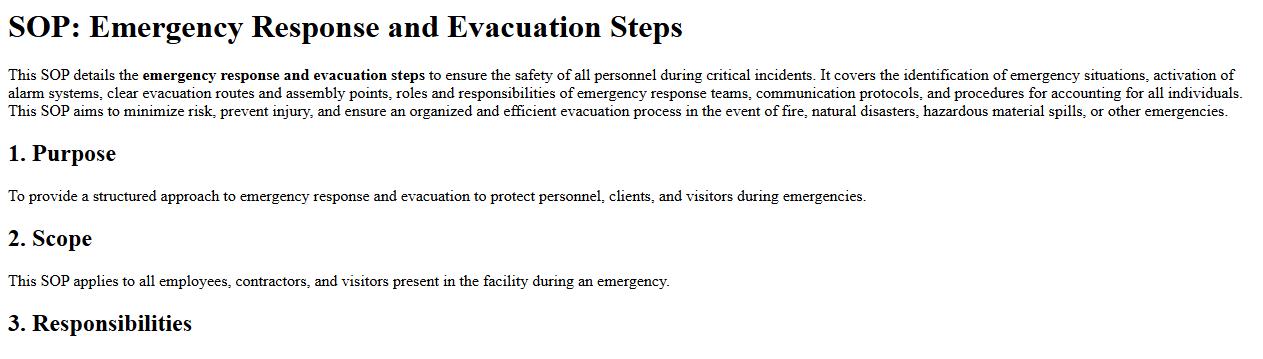
This SOP details the emergency response and evacuation steps to ensure the safety of all personnel during critical incidents. It covers the identification of emergency situations, activation of alarm systems, clear evacuation routes and assembly points, roles and responsibilities of emergency response teams, communication protocols, and procedures for accounting for all individuals. This SOP aims to minimize risk, prevent injury, and ensure an organized and efficient evacuation process in the event of fire, natural disasters, hazardous material spills, or other emergencies.
Employee identification and access control.
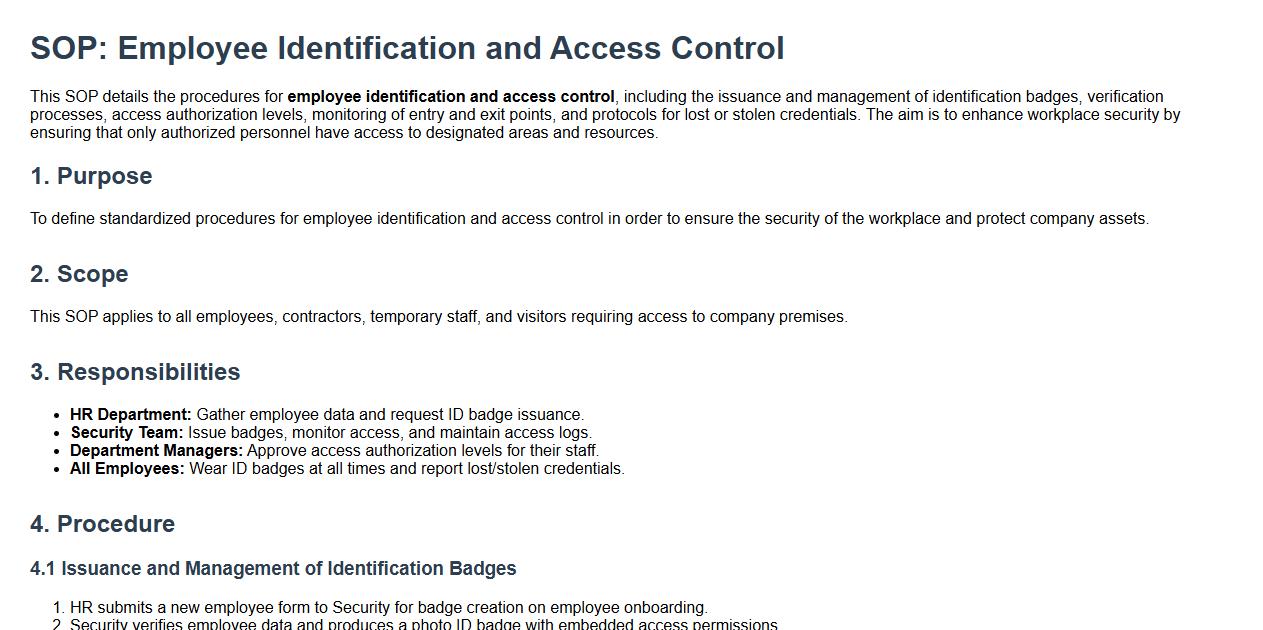
This SOP details the procedures for employee identification and access control, including the issuance and management of identification badges, verification processes, access authorization levels, monitoring of entry and exit points, and protocols for lost or stolen credentials. The aim is to enhance workplace security by ensuring that only authorized personnel have access to designated areas and resources.
Surveillance system monitoring and maintenance.
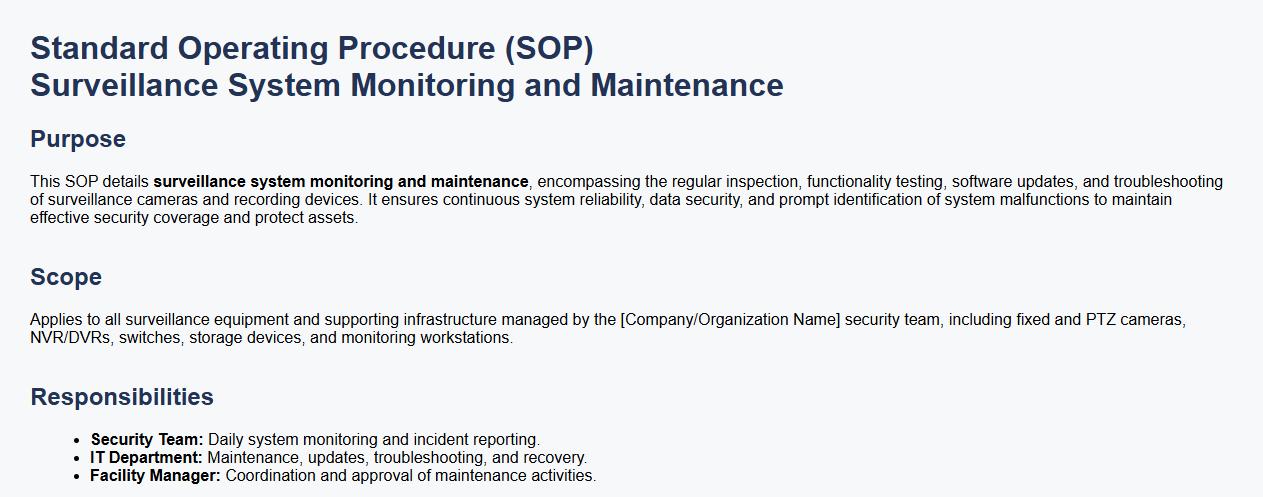
This SOP details surveillance system monitoring and maintenance, encompassing the regular inspection, functionality testing, software updates, and troubleshooting of surveillance cameras and recording devices. It ensures continuous system reliability, data security, and prompt identification of system malfunctions to maintain effective security coverage and protect assets.
Hazardous material handling and storage.
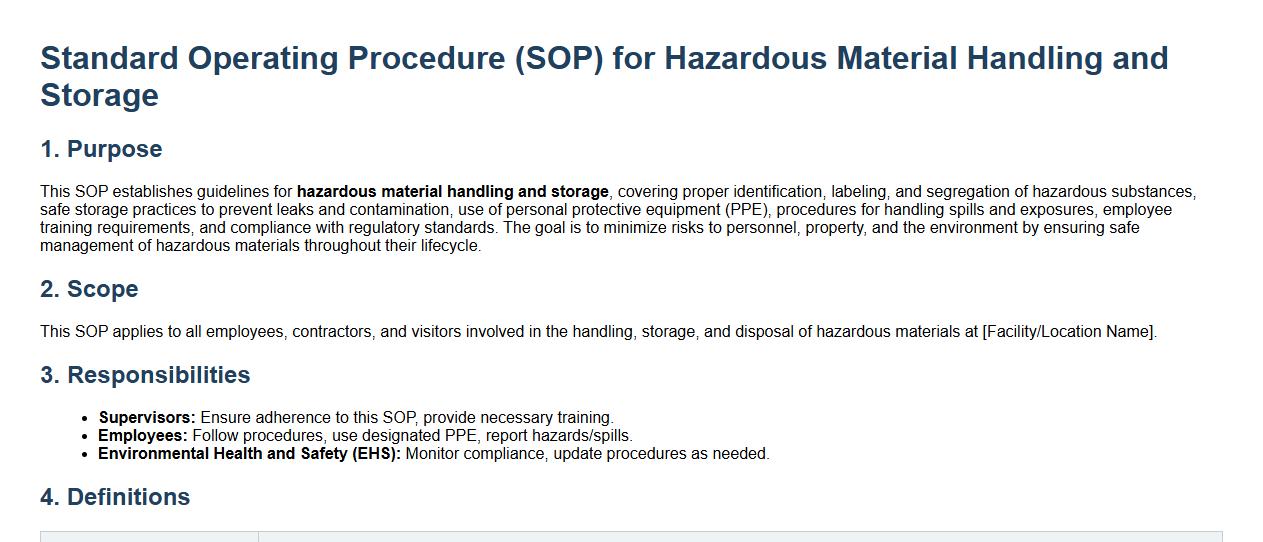
This SOP establishes guidelines for hazardous material handling and storage, covering proper identification, labeling, and segregation of hazardous substances, safe storage practices to prevent leaks and contamination, use of personal protective equipment (PPE), procedures for handling spills and exposures, employee training requirements, and compliance with regulatory standards. The goal is to minimize risks to personnel, property, and the environment by ensuring safe management of hazardous materials throughout their lifecycle.
Routine safety inspections and hazard reporting.
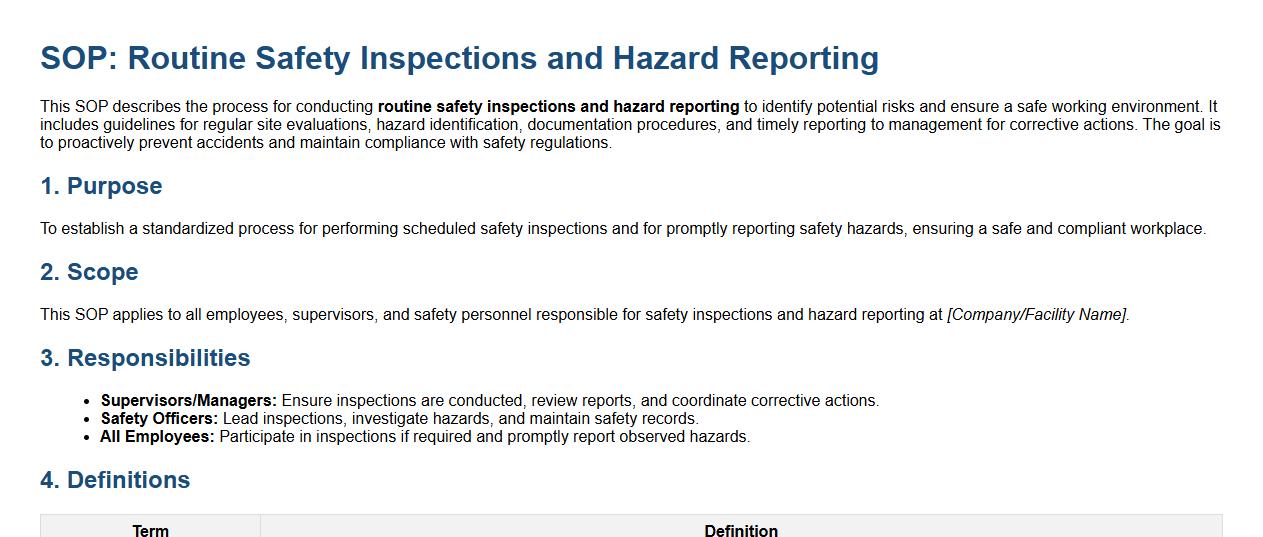
This SOP describes the process for conducting routine safety inspections and hazard reporting to identify potential risks and ensure a safe working environment. It includes guidelines for regular site evaluations, hazard identification, documentation procedures, and timely reporting to management for corrective actions. The goal is to proactively prevent accidents and maintain compliance with safety regulations.
Customer and staff accident procedures.
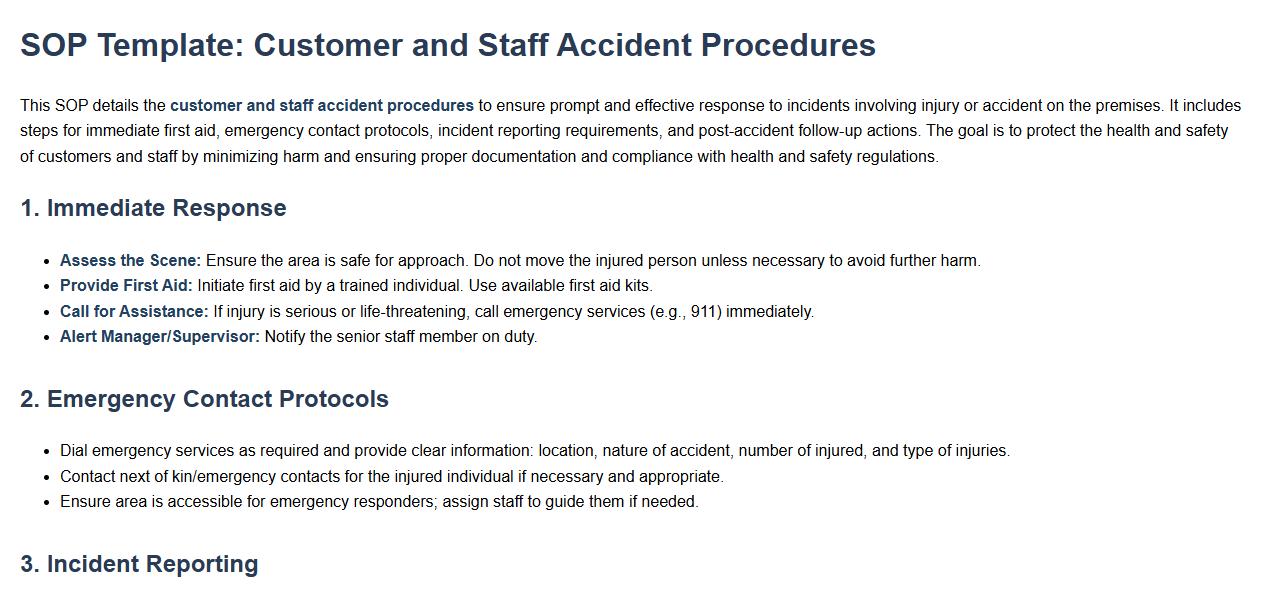
This SOP details the customer and staff accident procedures to ensure prompt and effective response to incidents involving injury or accident on the premises. It includes steps for immediate first aid, emergency contact protocols, incident reporting requirements, and post-accident follow-up actions. The goal is to protect the health and safety of customers and staff by minimizing harm and ensuring proper documentation and compliance with health and safety regulations.
What key procedures are outlined in the SOP for handling in-store emergencies and evacuations?
The SOP emphasizes immediate activation of the emergency response plan upon detecting a threat. Clear instructions include notifying authorities, guiding customers and staff to safe exits, and assembling at designated areas. Regular drills and communication protocols ensure a swift and coordinated evacuation process to minimize risks.
How does the SOP address protocols for loss prevention and incident reporting in retail operations?
The SOP mandates continuous monitoring through surveillance and employee vigilance to enforce loss prevention strategies. It outlines a systematic approach for documenting and reporting incidents promptly using standardized forms. Detailed procedures ensure all incidents are investigated thoroughly to prevent recurrence and safeguard assets.
What are the specified employee responsibilities for maintaining retail safety according to the SOP?
Employees are required to follow safety guidelines strictly and participate actively in safety trainings and drills. The SOP assigns roles such as monitoring hazards, reporting unsafe conditions, and assisting in emergency situations. Maintaining a vigilant attitude towards workplace safety is crucial for overall store security.
How does the SOP detail access control and visitor management within retail premises?
The SOP enforces strict protocols for granting access only to authorized personnel and verifying visitor identities. Visitor sign-in procedures and issuance of badges help monitor and control premise access. Surveillance and regular audits are conducted to maintain a secure environment and prevent unauthorized entry.
What steps are included in the SOP for conducting regular safety audits and compliance checks?
The SOP schedules routine inspections to assess adherence to safety standards and identify potential hazards. It specifies using comprehensive checklists to evaluate store conditions, equipment, and employee practices. Follow-up actions are mandated to address issues, ensuring ongoing compliance and safety improvement.