
A SOP Template for Retail Store Cleanliness ensures consistent maintenance of hygiene standards by outlining daily cleaning tasks and responsibilities. This template helps staff follow a systematic approach to disinfect surfaces, manage waste, and keep display areas tidy. Implementing this SOP enhances the shopping environment, promoting customer satisfaction and safety.
Daily store opening cleanliness checks and reset.
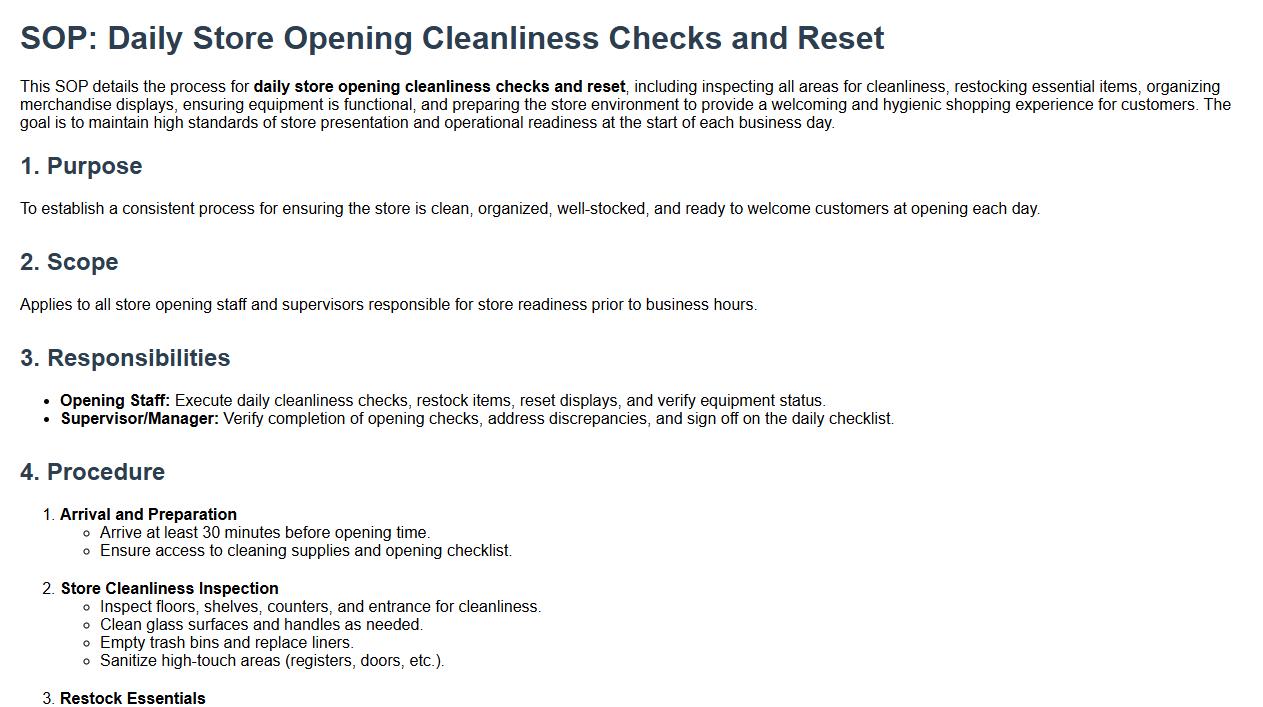
This SOP details the process for daily store opening cleanliness checks and reset, including inspecting all areas for cleanliness, restocking essential items, organizing merchandise displays, ensuring equipment is functional, and preparing the store environment to provide a welcoming and hygienic shopping experience for customers. The goal is to maintain high standards of store presentation and operational readiness at the start of each business day.
Hourly sales floor sweeping, dusting, and spot cleaning.
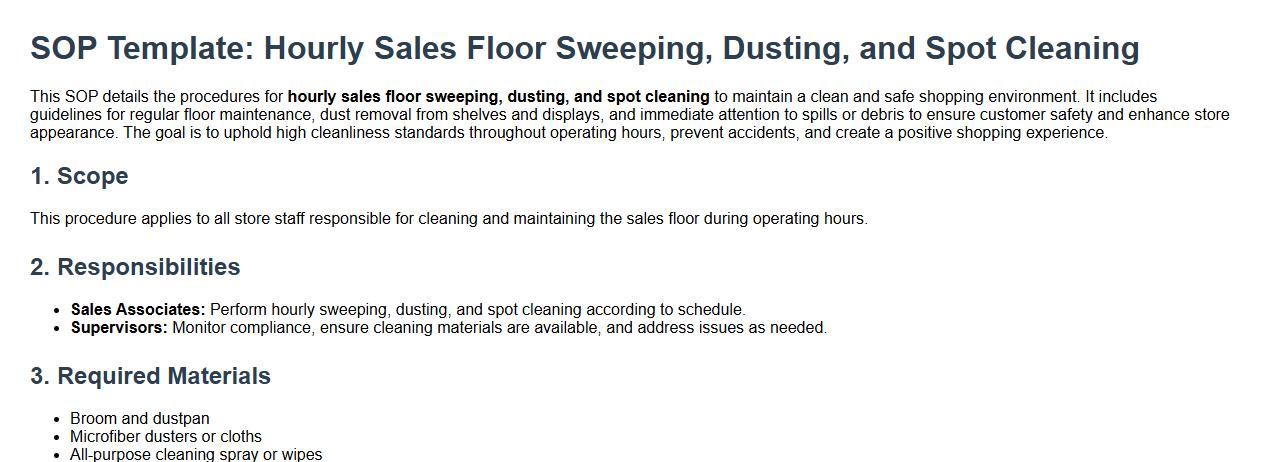
This SOP details the procedures for hourly sales floor sweeping, dusting, and spot cleaning to maintain a clean and safe shopping environment. It includes guidelines for regular floor maintenance, dust removal from shelves and displays, and immediate attention to spills or debris to ensure customer safety and enhance store appearance. The goal is to uphold high cleanliness standards throughout operating hours, prevent accidents, and create a positive shopping experience.
Restroom cleaning schedule and sanitation checklist.
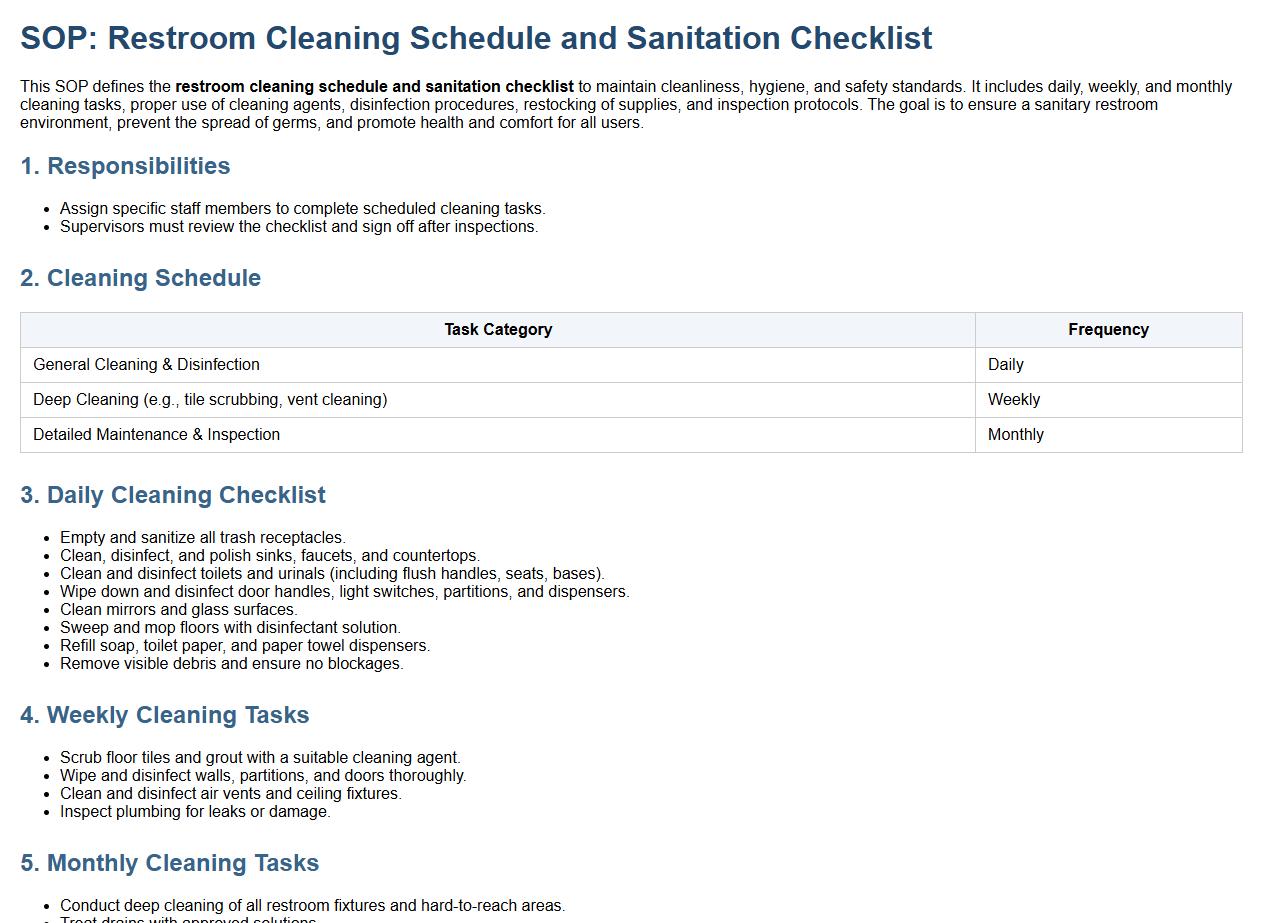
This SOP defines the restroom cleaning schedule and sanitation checklist to maintain cleanliness, hygiene, and safety standards. It includes daily, weekly, and monthly cleaning tasks, proper use of cleaning agents, disinfection procedures, restocking of supplies, and inspection protocols. The goal is to ensure a sanitary restroom environment, prevent the spread of germs, and promote health and comfort for all users.
Trash removal, disposal procedures, and waste segregation.
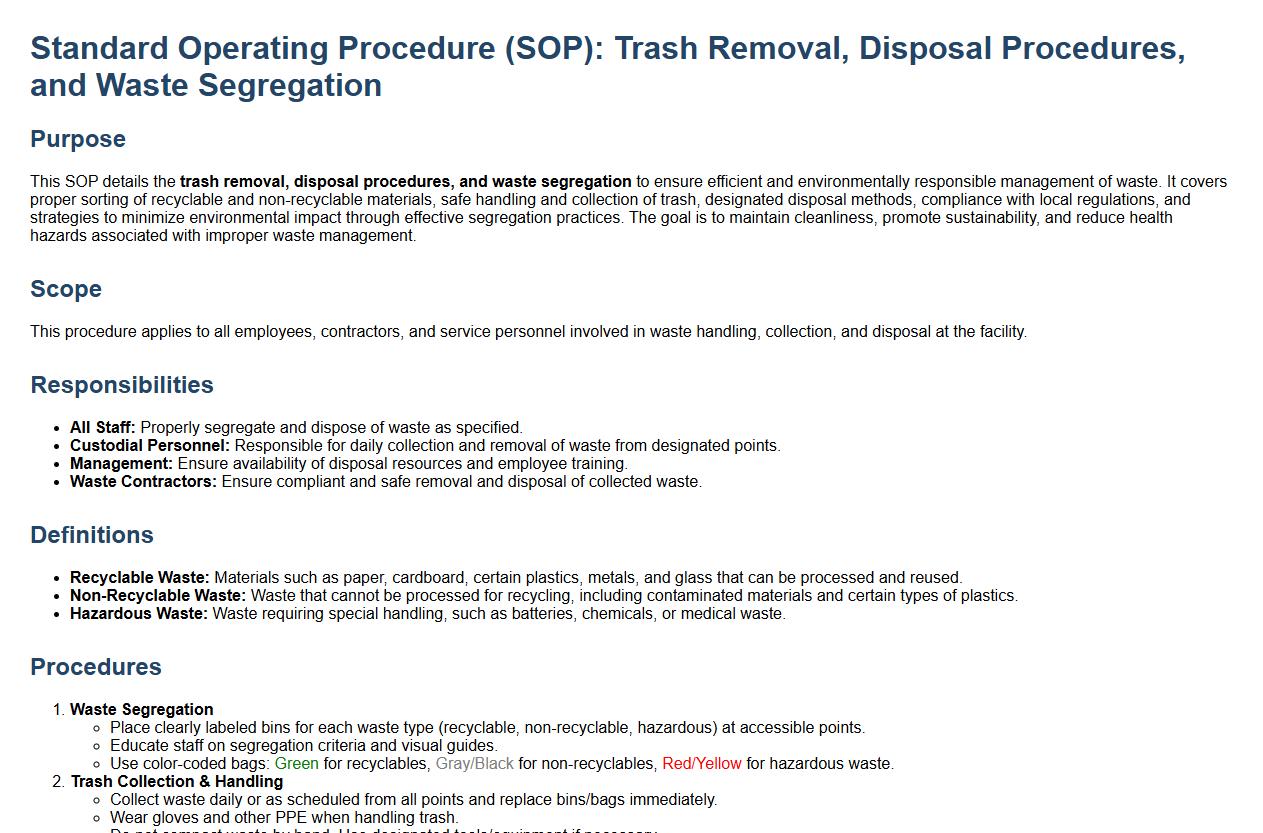
This SOP details the trash removal, disposal procedures, and waste segregation to ensure efficient and environmentally responsible management of waste. It covers proper sorting of recyclable and non-recyclable materials, safe handling and collection of trash, designated disposal methods, compliance with local regulations, and strategies to minimize environmental impact through effective segregation practices. The goal is to maintain cleanliness, promote sustainability, and reduce health hazards associated with improper waste management.
Sanitization of high-touch surfaces (doors, counters, payment terminals).
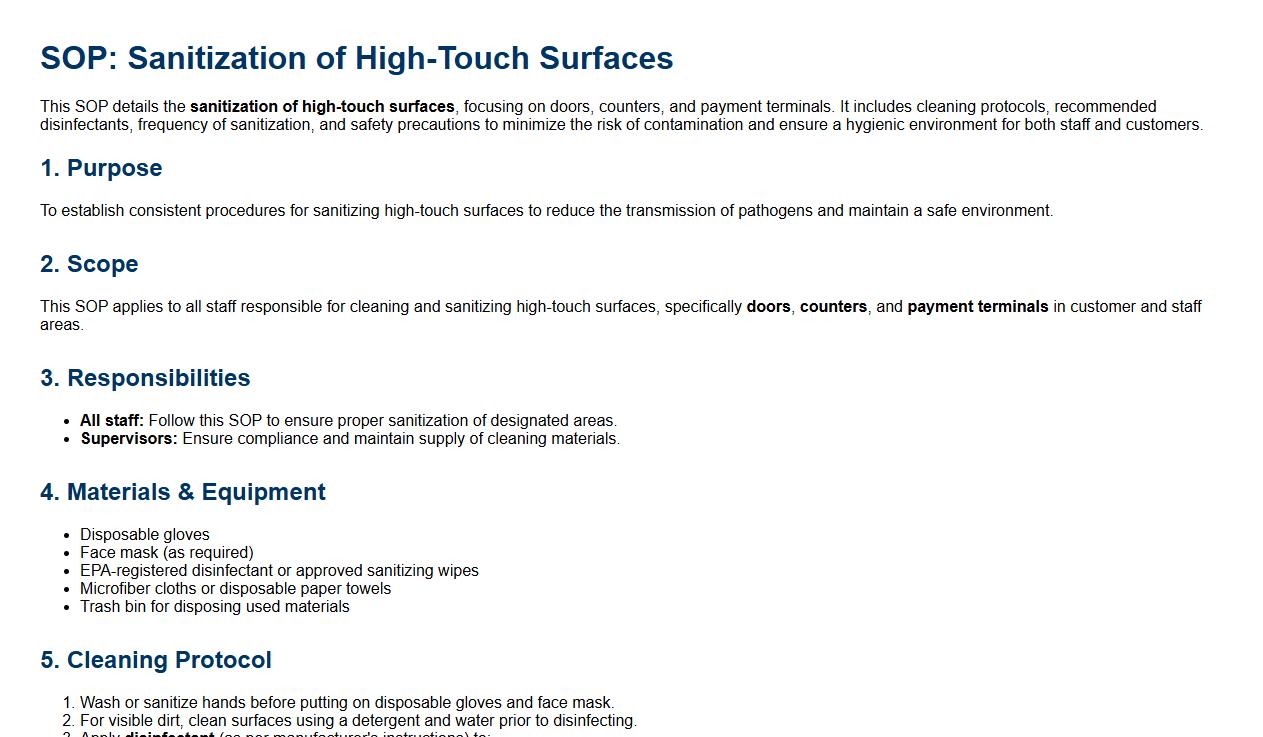
This SOP details the sanitization of high-touch surfaces, focusing on doors, counters, and payment terminals. It includes cleaning protocols, recommended disinfectants, frequency of sanitization, and safety precautions to minimize the risk of contamination and ensure a hygienic environment for both staff and customers.
Stockroom and back-office cleaning protocols.
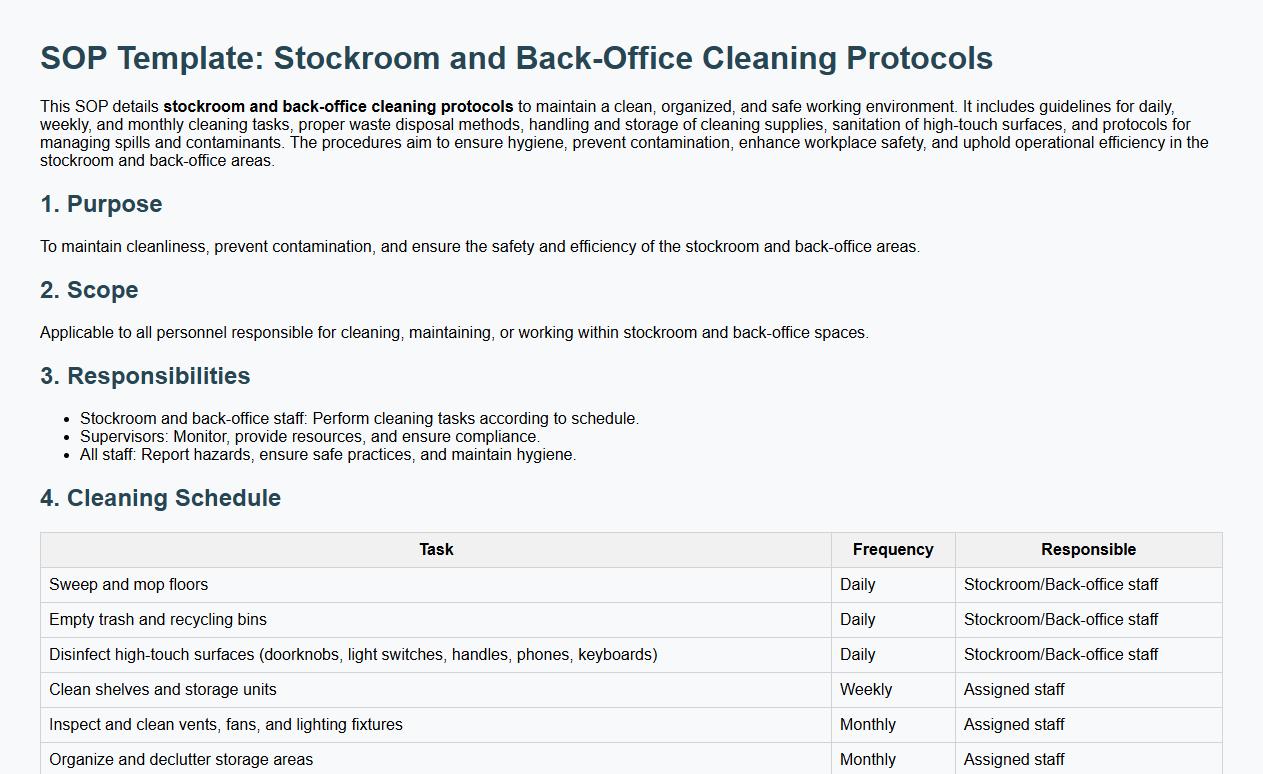
This SOP details stockroom and back-office cleaning protocols to maintain a clean, organized, and safe working environment. It includes guidelines for daily, weekly, and monthly cleaning tasks, proper waste disposal methods, handling and storage of cleaning supplies, sanitation of high-touch surfaces, and protocols for managing spills and contaminants. The procedures aim to ensure hygiene, prevent contamination, enhance workplace safety, and uphold operational efficiency in the stockroom and back-office areas.
Guidelines for cleaning and disinfecting shopping baskets/carts.
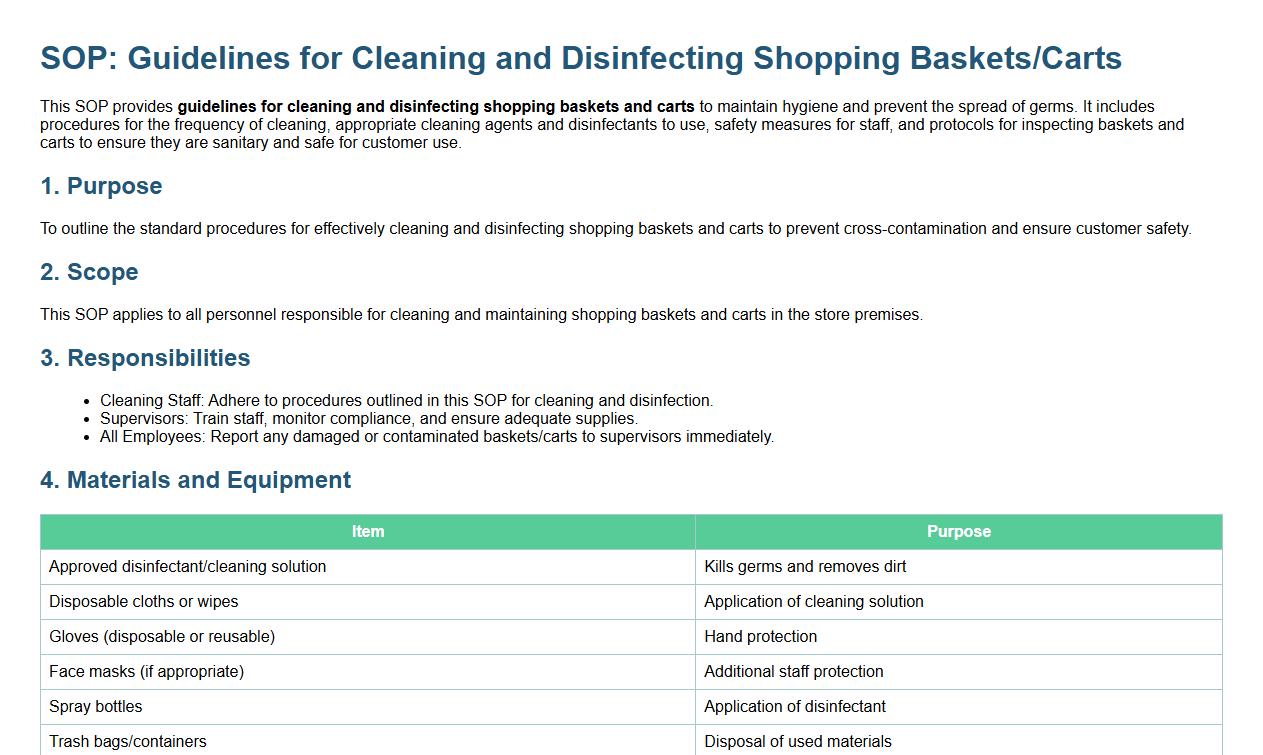
This SOP provides guidelines for cleaning and disinfecting shopping baskets and carts to maintain hygiene and prevent the spread of germs. It includes procedures for the frequency of cleaning, appropriate cleaning agents and disinfectants to use, safety measures for staff, and protocols for inspecting baskets and carts to ensure they are sanitary and safe for customer use.
Product display shelf dusting and spill management.
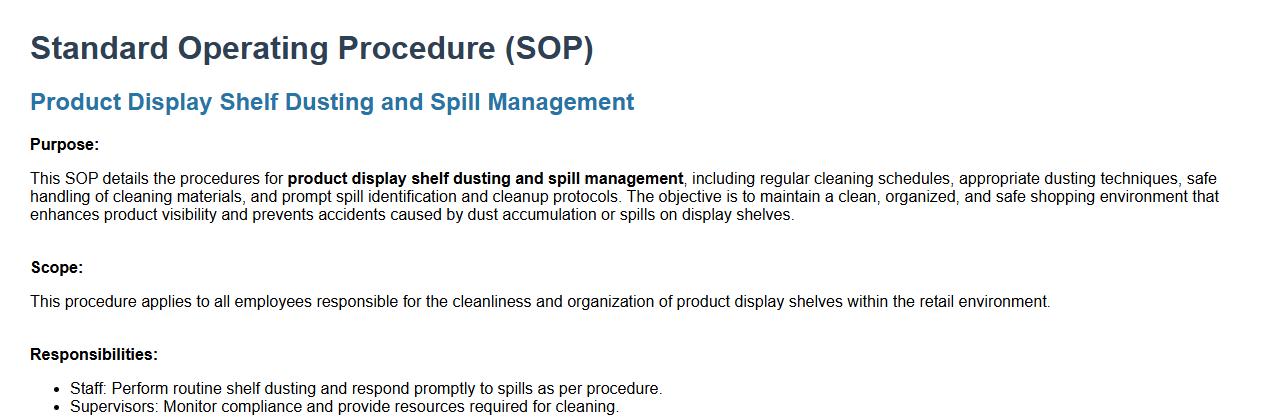
This SOP details the procedures for product display shelf dusting and spill management, including regular cleaning schedules, appropriate dusting techniques, safe handling of cleaning materials, and prompt spill identification and cleanup protocols. The objective is to maintain a clean, organized, and safe shopping environment that enhances product visibility and prevents accidents caused by dust accumulation or spills on display shelves.
End-of-day deep cleaning routine and security checks.
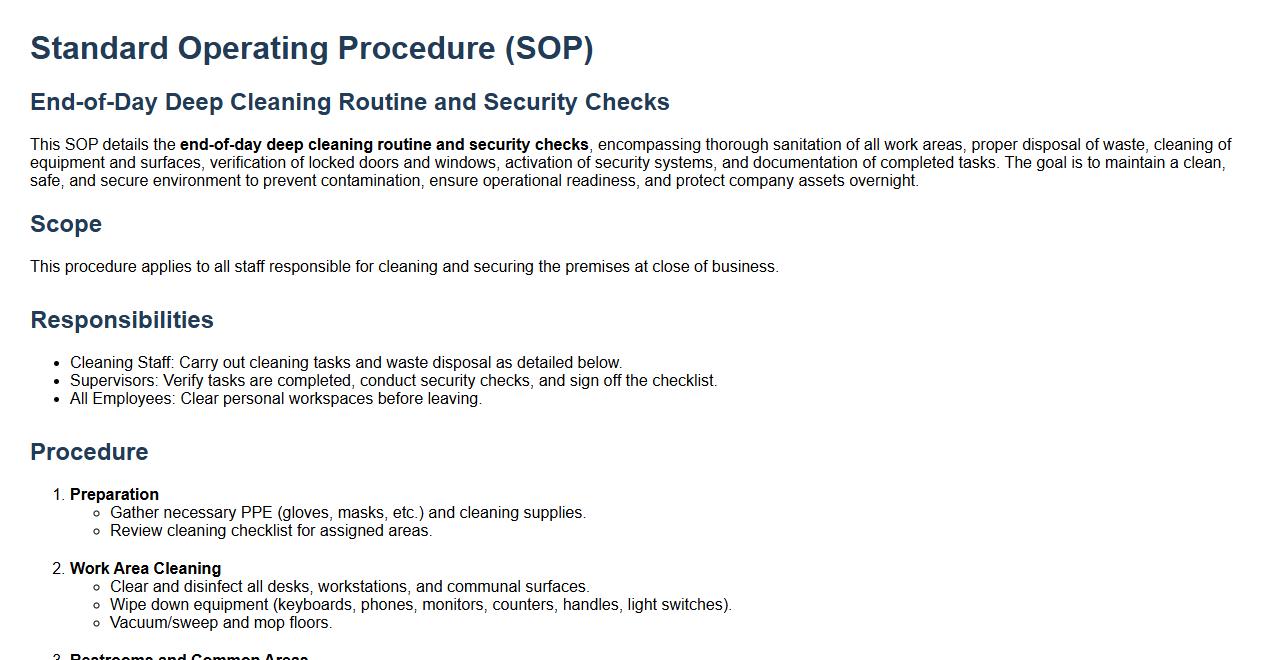
This SOP details the end-of-day deep cleaning routine and security checks, encompassing thorough sanitation of all work areas, proper disposal of waste, cleaning of equipment and surfaces, verification of locked doors and windows, activation of security systems, and documentation of completed tasks. The goal is to maintain a clean, safe, and secure environment to prevent contamination, ensure operational readiness, and protect company assets overnight.
Incident reporting and corrective action for cleanliness issues.
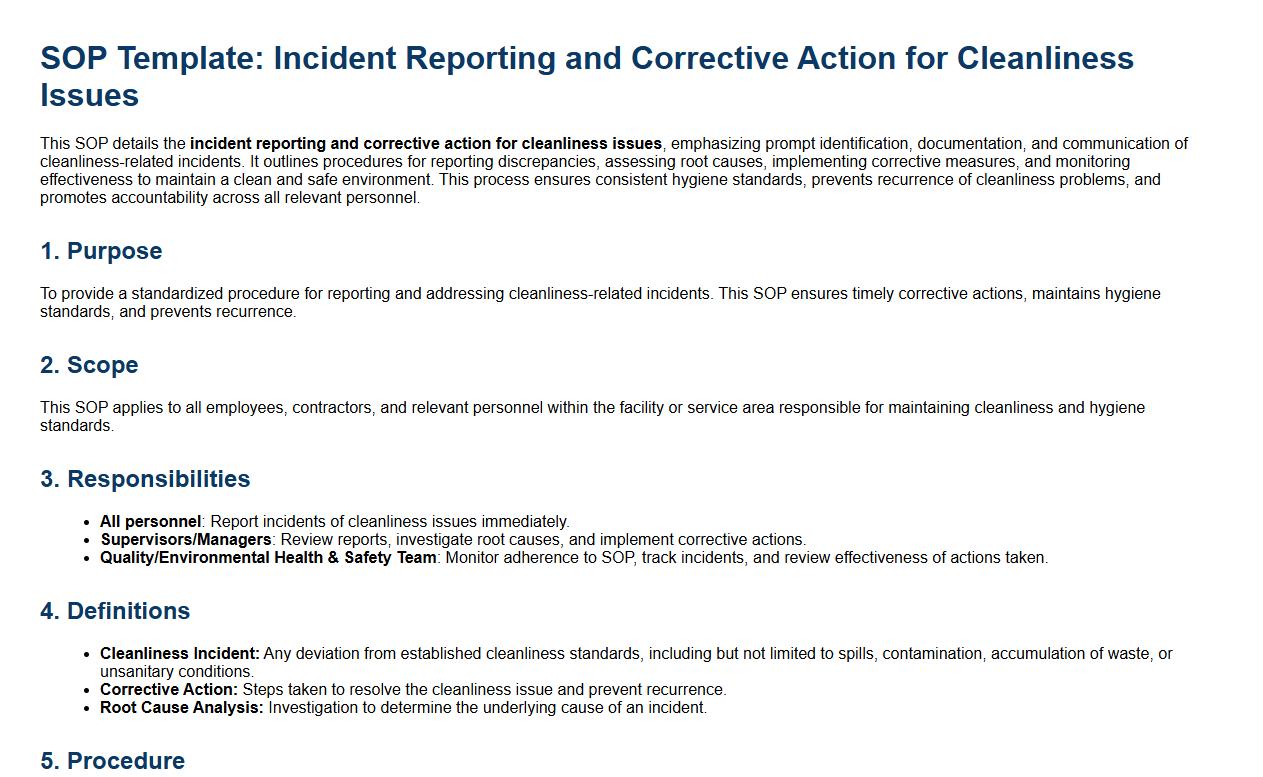
This SOP details the incident reporting and corrective action for cleanliness issues, emphasizing prompt identification, documentation, and communication of cleanliness-related incidents. It outlines procedures for reporting discrepancies, assessing root causes, implementing corrective measures, and monitoring effectiveness to maintain a clean and safe environment. This process ensures consistent hygiene standards, prevents recurrence of cleanliness problems, and promotes accountability across all relevant personnel.
What are the key objectives outlined in the Retail Store Cleanliness SOP?
The key objectives of the Retail Store Cleanliness SOP focus on maintaining a hygienic and safe shopping environment. It aims to enhance customer satisfaction by ensuring the store is consistently clean and presentable. Additionally, the SOP supports compliance with health and safety regulations to prevent any potential hazards.
Which specific cleaning tasks and areas are prioritized in the SOP?
The SOP prioritizes cleaning tasks such as sanitizing high-touch surfaces, restocking cleaning supplies, and floor maintenance. Key areas include entryways, checkout counters, restrooms, and shelves. Emphasis is placed on regularly disinfecting areas with heavy customer traffic to reduce the risk of contamination.
What are the defined roles and responsibilities for store staff in maintaining cleanliness as specified by the SOP?
Store staff are assigned specific responsibilities including routine cleaning, monitoring supply levels, and reporting hazards. Managers oversee the enforcement of the SOP and ensure training is provided for proper cleaning procedures. Each staff member must adhere to their designated tasks to maintain a clean and safe store environment.
What frequency and schedule for cleaning activities are established in the SOP?
The SOP defines a detailed cleaning schedule varying from hourly tasks to daily and weekly deep cleaning. High-priority areas require frequent attention throughout the business hours. This structured timeline ensures consistent cleanliness and addresses all necessary maintenance efficiently.
What compliance and documentation procedures are required according to the SOP?
The SOP mandates thorough documentation to track cleaning activities and ensure accountability. Compliance with health standards is verified through regular audits and checklists completed by staff. Proper record-keeping facilitates prompt action on any identified issues and supports continuous improvement.