

A SOP Template for Retail POS Operations provides a clear and consistent framework for managing point-of-sale transactions efficiently. It outlines step-by-step procedures to ensure accuracy, security, and excellent customer service during sales processing. This standardized approach helps minimize errors and streamline daily operations in retail environments.
Opening and closing procedures for POS terminals.
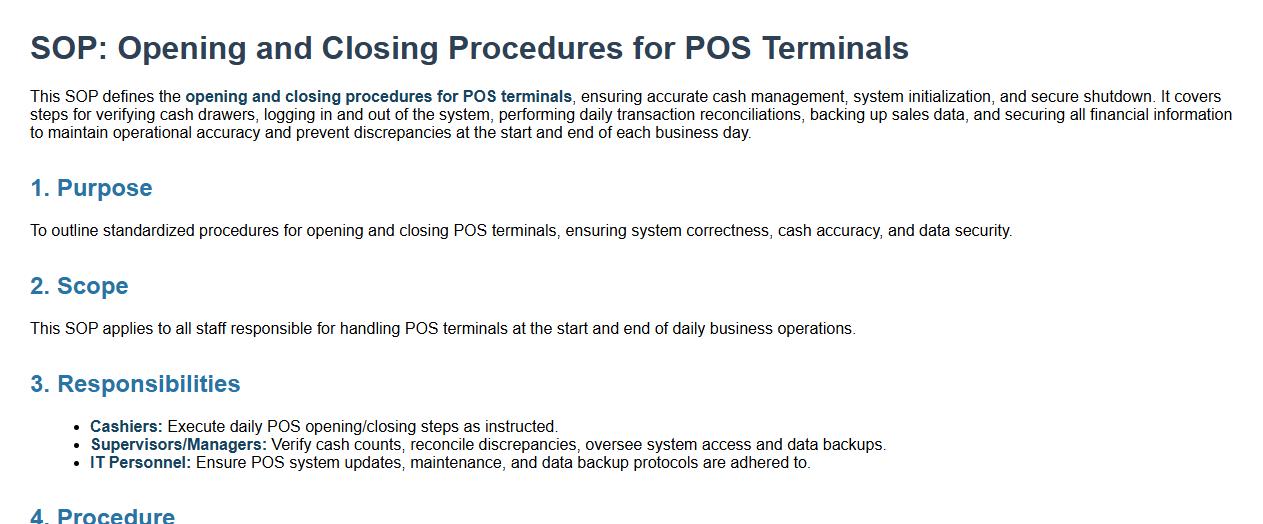
This SOP defines the opening and closing procedures for POS terminals, ensuring accurate cash management, system initialization, and secure shutdown. It covers steps for verifying cash drawers, logging in and out of the system, performing daily transaction reconciliations, backing up sales data, and securing all financial information to maintain operational accuracy and prevent discrepancies at the start and end of each business day.
Cash handling and reconciliation protocols.
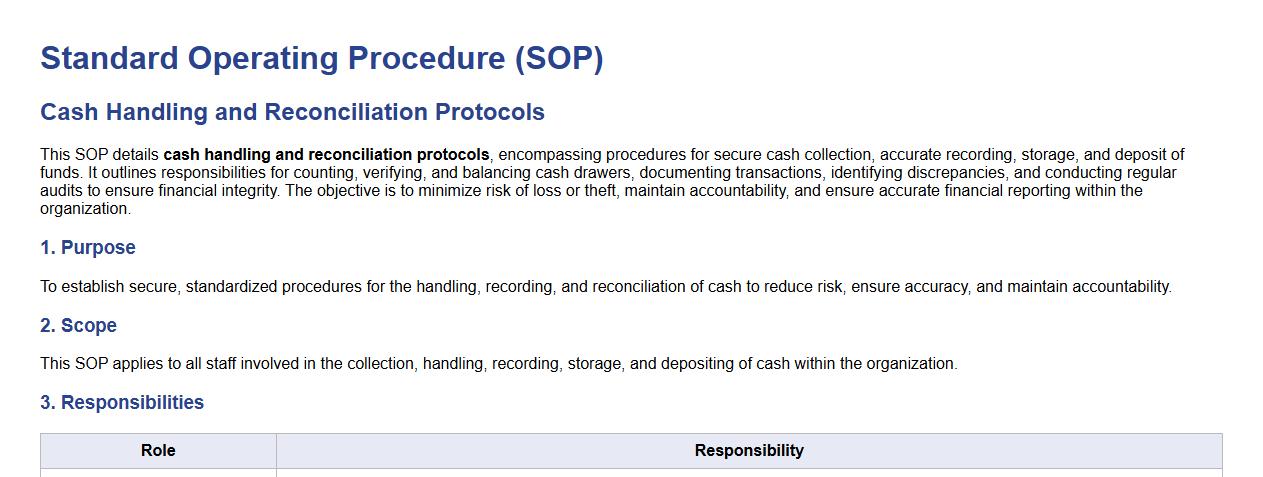
This SOP details cash handling and reconciliation protocols, encompassing procedures for secure cash collection, accurate recording, storage, and deposit of funds. It outlines responsibilities for counting, verifying, and balancing cash drawers, documenting transactions, identifying discrepancies, and conducting regular audits to ensure financial integrity. The objective is to minimize risk of loss or theft, maintain accountability, and ensure accurate financial reporting within the organization.
Customer transaction processing steps.
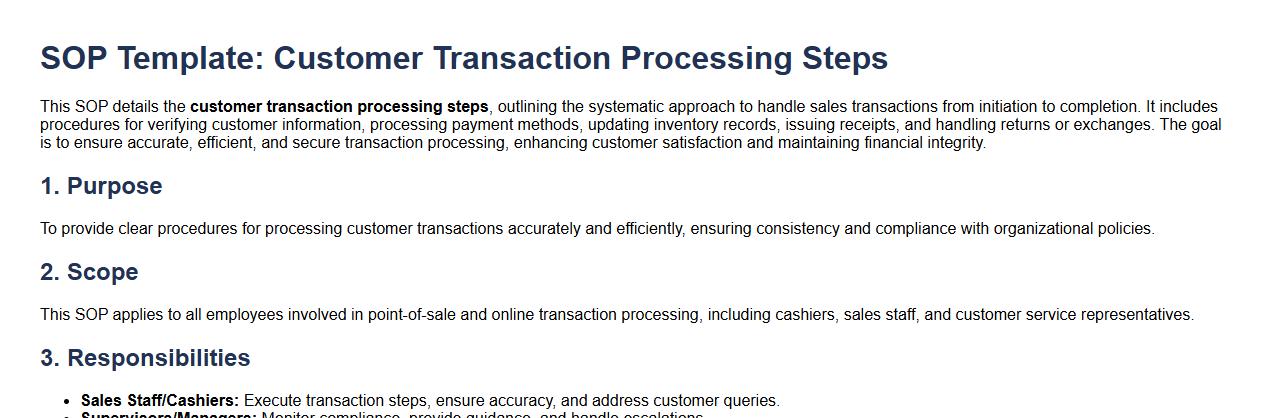
This SOP details the customer transaction processing steps, outlining the systematic approach to handle sales transactions from initiation to completion. It includes procedures for verifying customer information, processing payment methods, updating inventory records, issuing receipts, and handling returns or exchanges. The goal is to ensure accurate, efficient, and secure transaction processing, enhancing customer satisfaction and maintaining financial integrity.
Product return and exchange procedures.
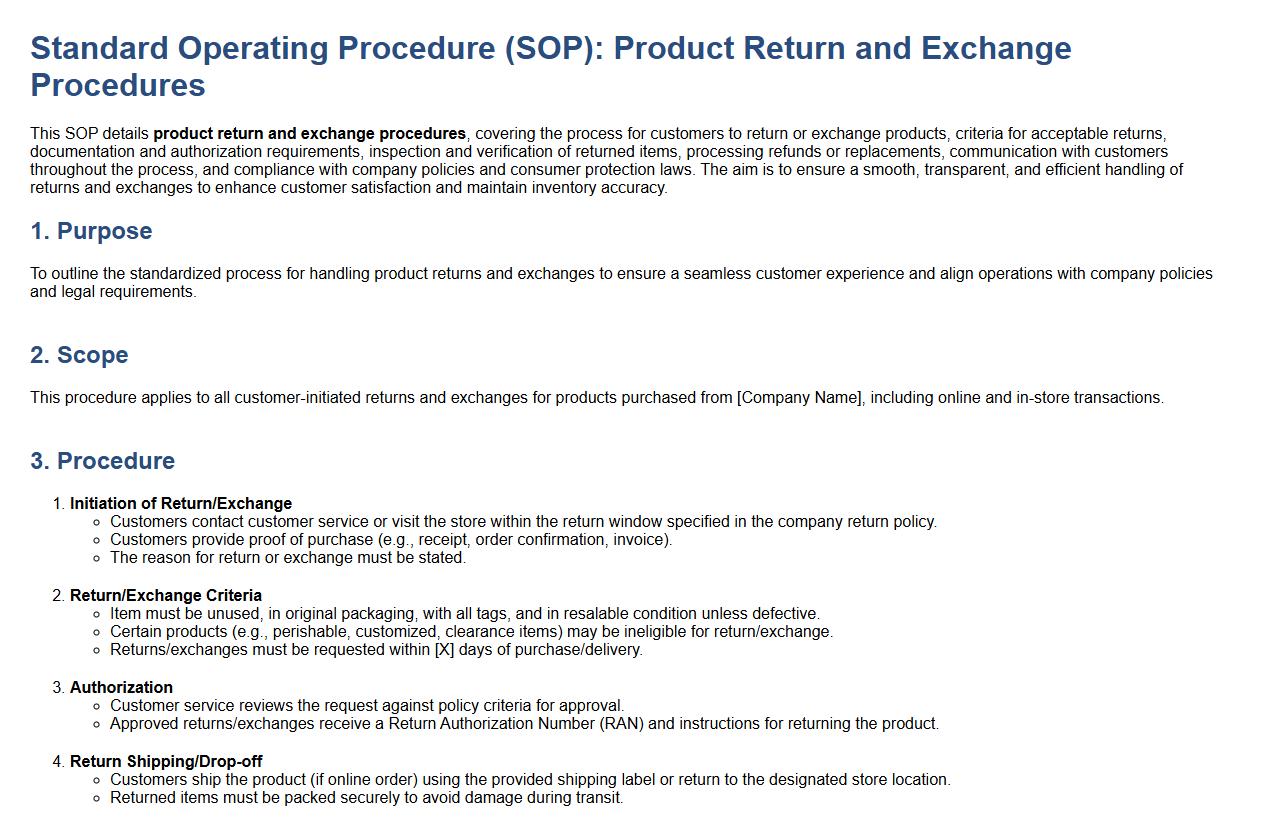
This SOP details product return and exchange procedures, covering the process for customers to return or exchange products, criteria for acceptable returns, documentation and authorization requirements, inspection and verification of returned items, processing refunds or replacements, communication with customers throughout the process, and compliance with company policies and consumer protection laws. The aim is to ensure a smooth, transparent, and efficient handling of returns and exchanges to enhance customer satisfaction and maintain inventory accuracy.
Inventory scanning and stock adjustment guidelines.
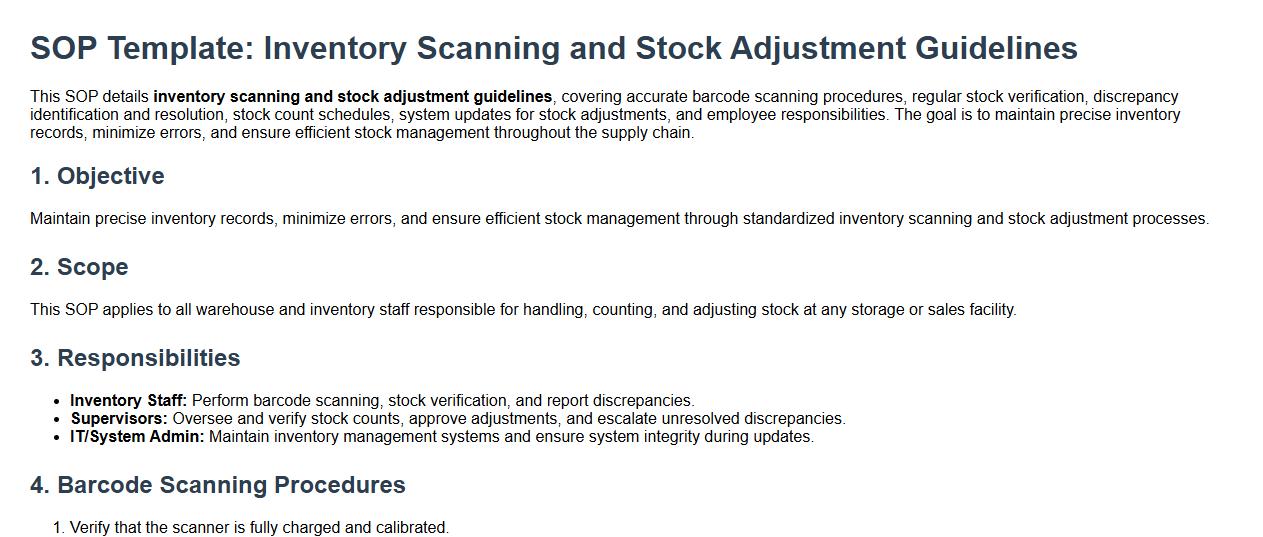
This SOP details inventory scanning and stock adjustment guidelines, covering accurate barcode scanning procedures, regular stock verification, discrepancy identification and resolution, stock count schedules, system updates for stock adjustments, and employee responsibilities. The goal is to maintain precise inventory records, minimize errors, and ensure efficient stock management throughout the supply chain.
Discounts, promotions, and loyalty program application.
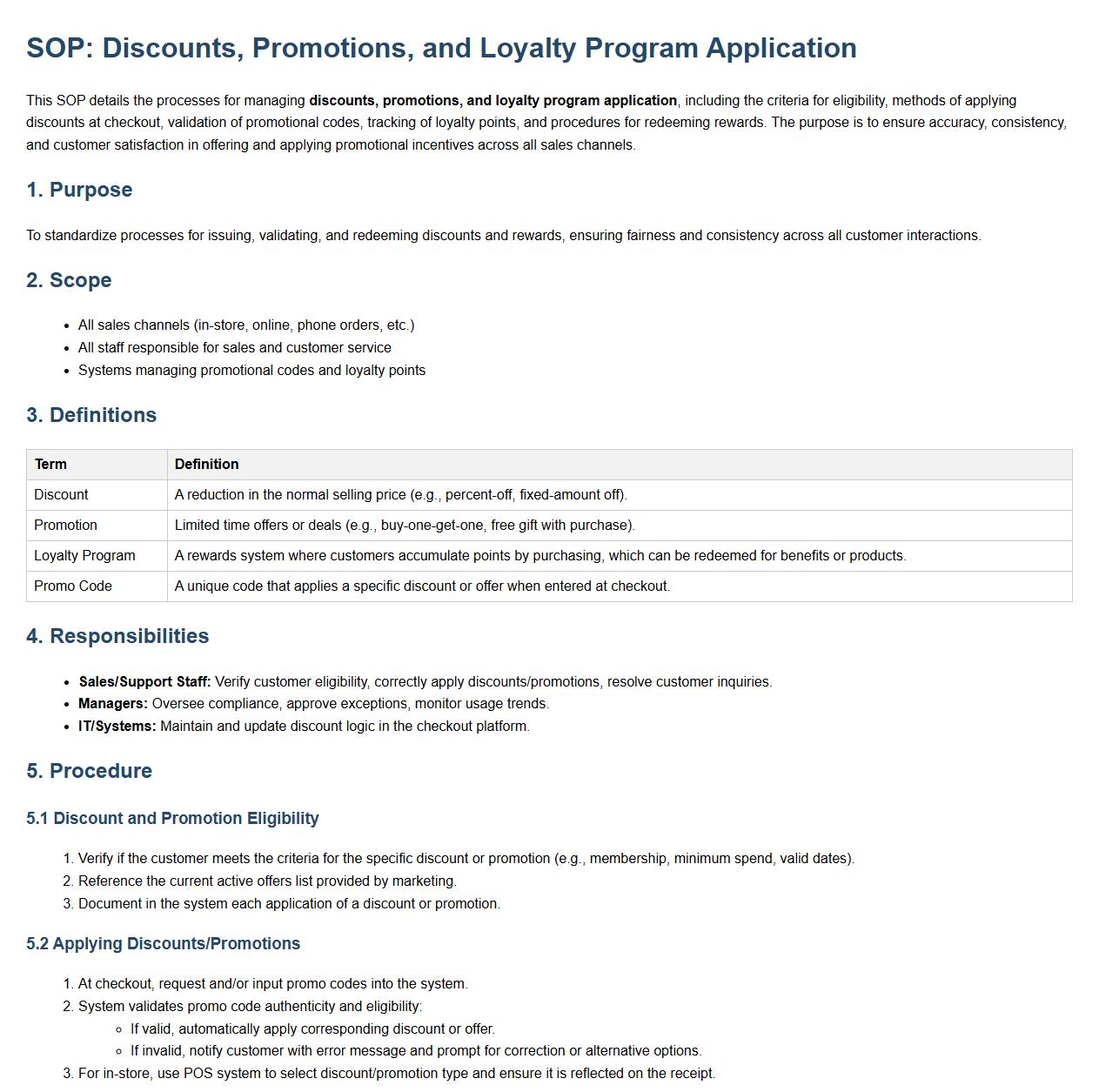
This SOP details the processes for managing discounts, promotions, and loyalty program application, including the criteria for eligibility, methods of applying discounts at checkout, validation of promotional codes, tracking of loyalty points, and procedures for redeeming rewards. The purpose is to ensure accuracy, consistency, and customer satisfaction in offering and applying promotional incentives across all sales channels.
Payment method acceptance and troubleshooting process.
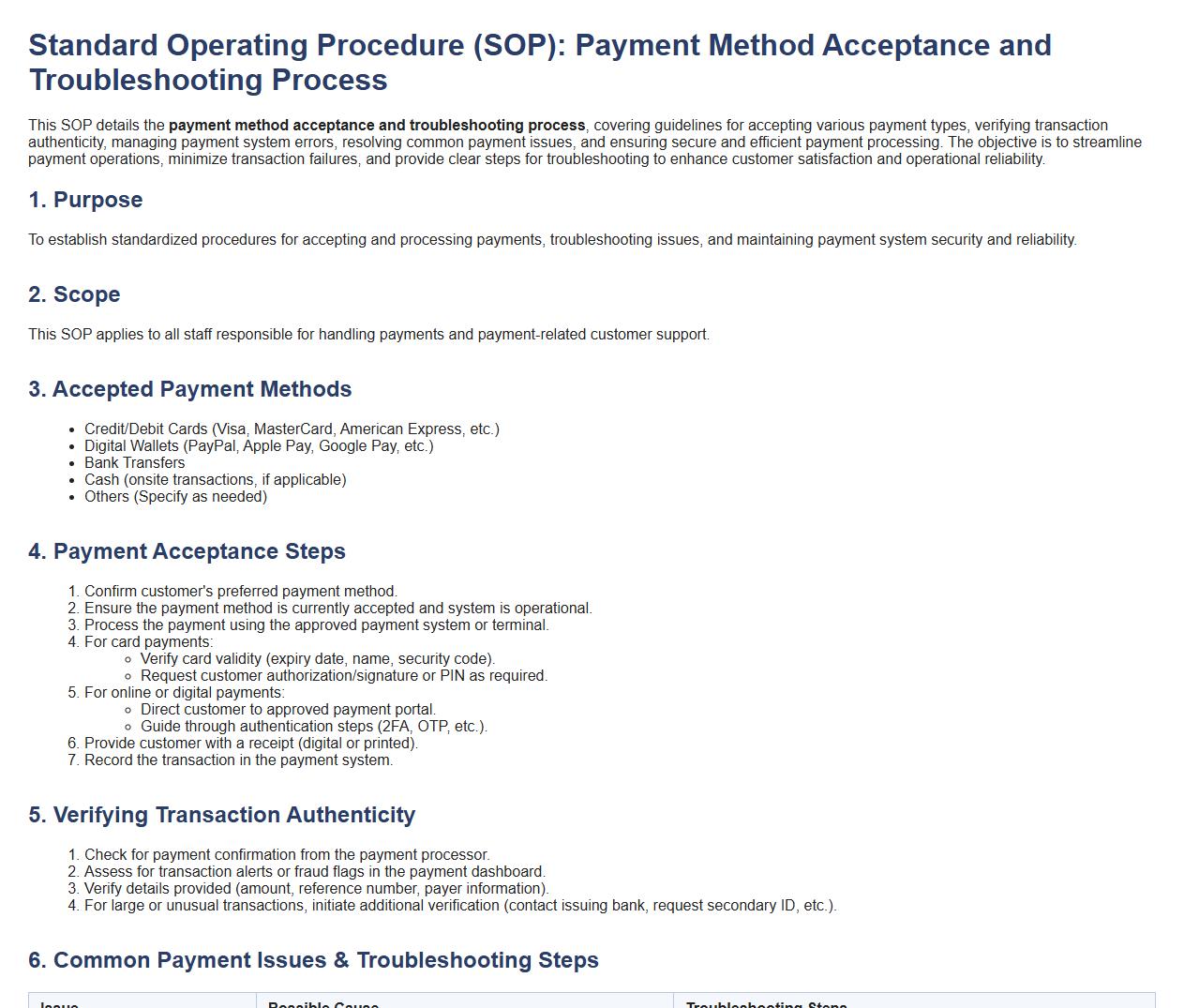
This SOP details the payment method acceptance and troubleshooting process, covering guidelines for accepting various payment types, verifying transaction authenticity, managing payment system errors, resolving common payment issues, and ensuring secure and efficient payment processing. The objective is to streamline payment operations, minimize transaction failures, and provide clear steps for troubleshooting to enhance customer satisfaction and operational reliability.
POS equipment maintenance and issue escalation.
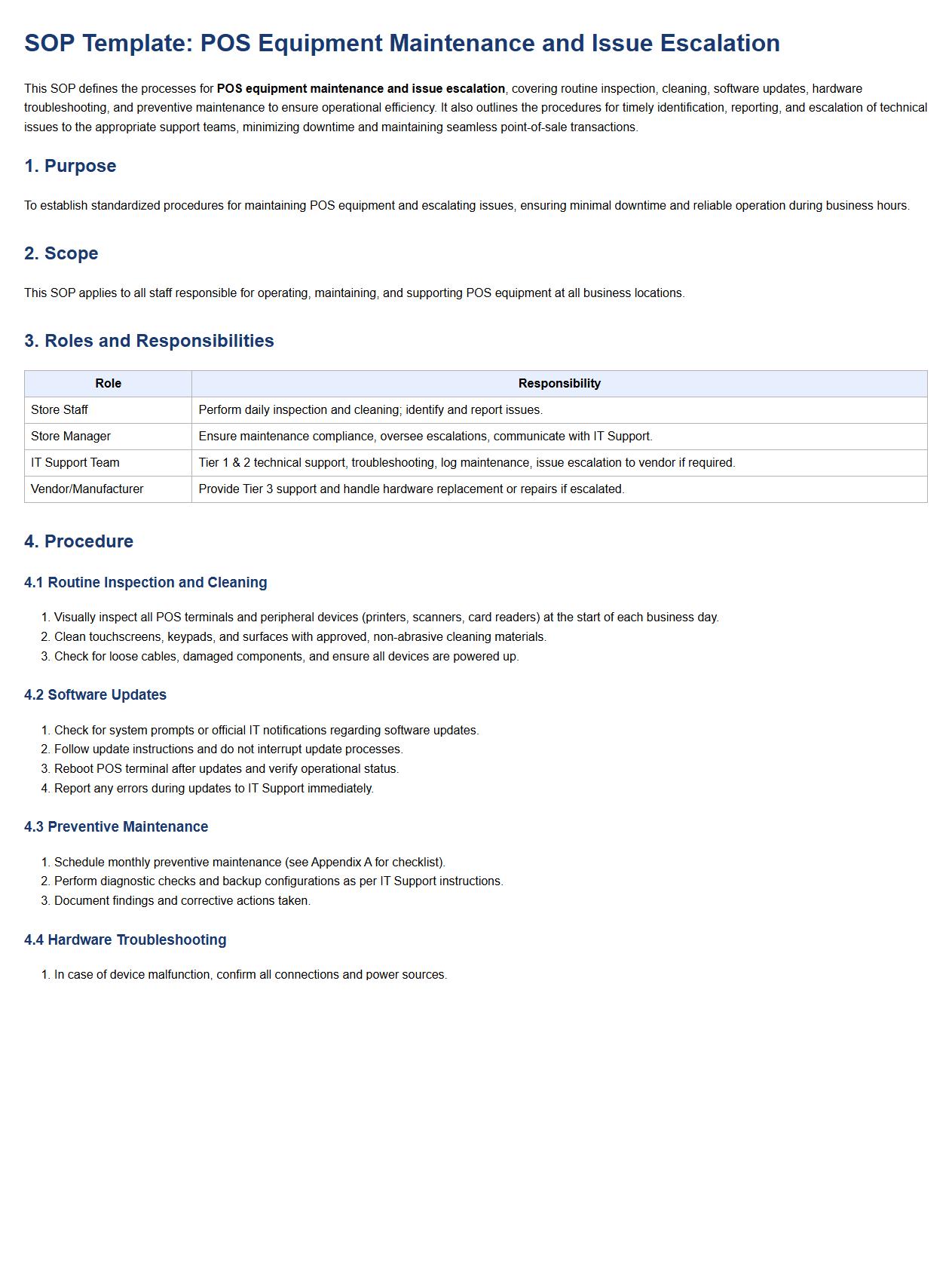
This SOP defines the processes for POS equipment maintenance and issue escalation, covering routine inspection, cleaning, software updates, hardware troubleshooting, and preventive maintenance to ensure operational efficiency. It also outlines the procedures for timely identification, reporting, and escalation of technical issues to the appropriate support teams, minimizing downtime and maintaining seamless point-of-sale transactions.
Data privacy and customer information protection.
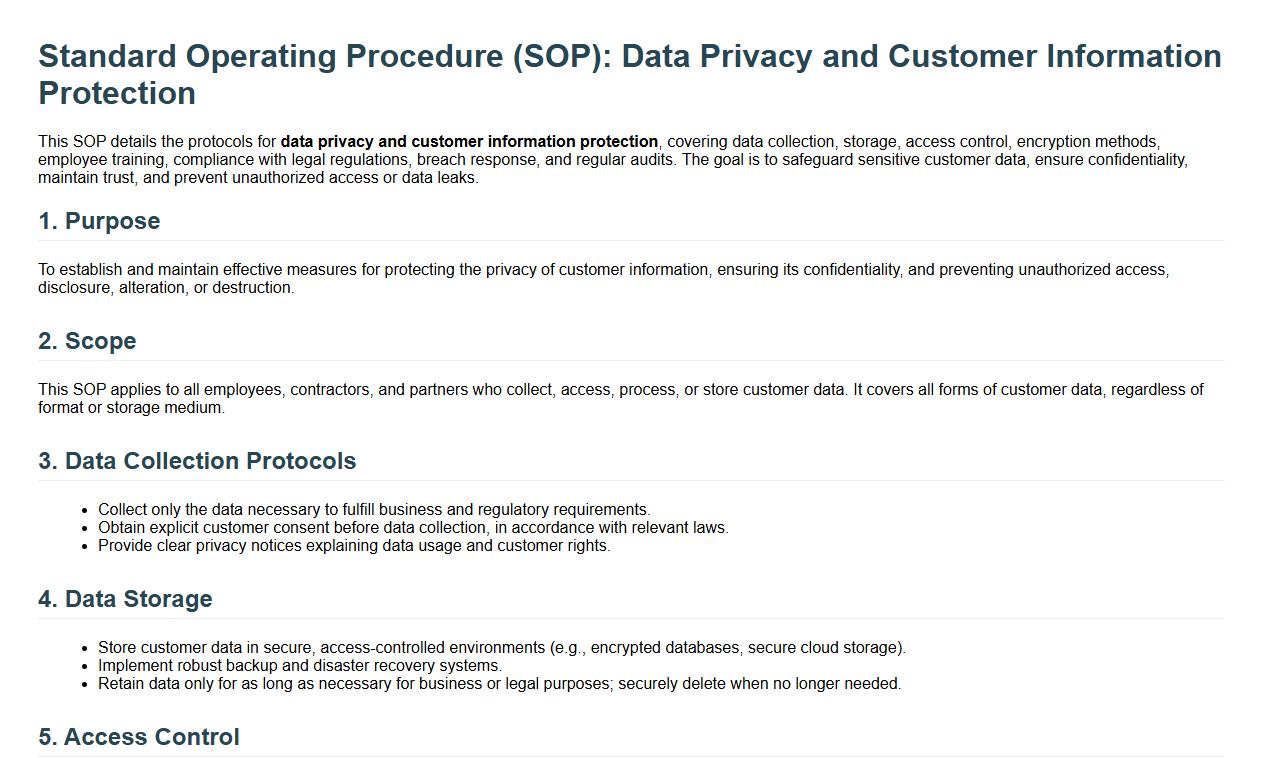
This SOP details the protocols for data privacy and customer information protection, covering data collection, storage, access control, encryption methods, employee training, compliance with legal regulations, breach response, and regular audits. The goal is to safeguard sensitive customer data, ensure confidentiality, maintain trust, and prevent unauthorized access or data leaks.
Daily sales reporting and record-keeping protocol.
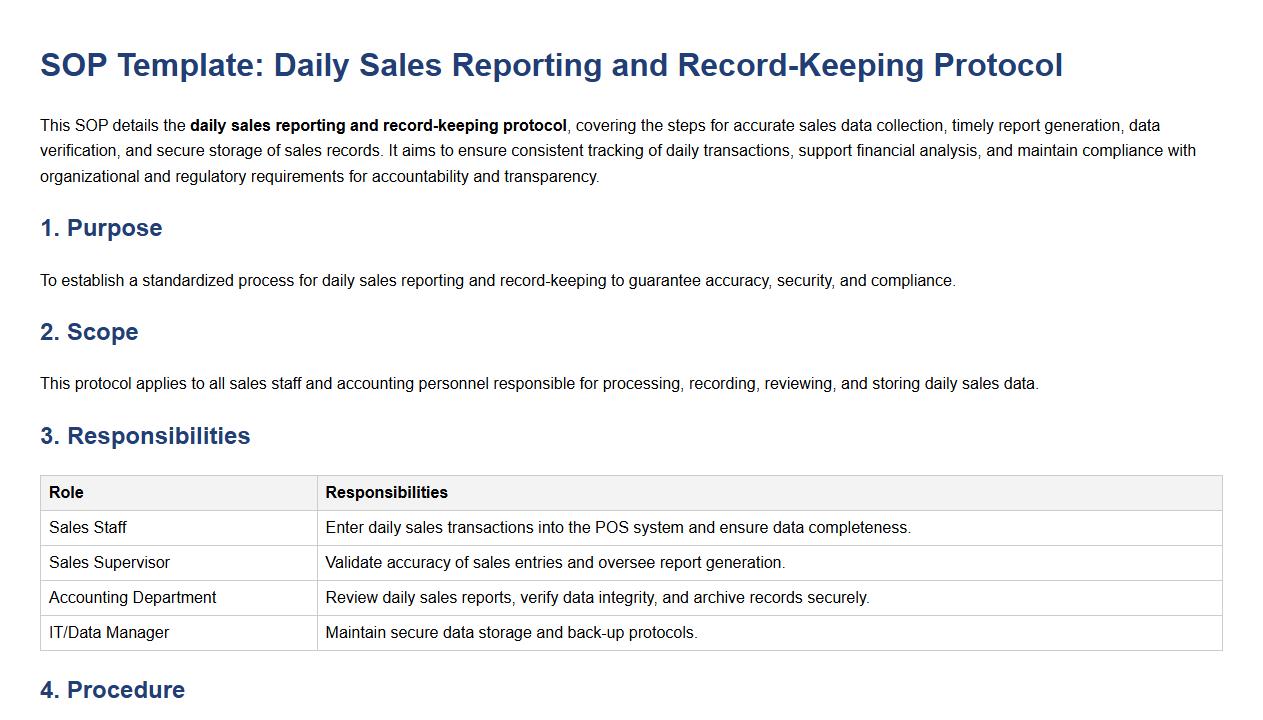
This SOP details the daily sales reporting and record-keeping protocol, covering the steps for accurate sales data collection, timely report generation, data verification, and secure storage of sales records. It aims to ensure consistent tracking of daily transactions, support financial analysis, and maintain compliance with organizational and regulatory requirements for accountability and transparency.
Essential Steps in the SOP for Processing Sales Transactions at the Retail POS
The SOP outlines a step-by-step process for efficient sales transactions at the retail POS, beginning with the proper scanning of items and verification of prices. It emphasizes the importance of confirming payment methods and accurately entering transaction details. Finally, the SOP mandates providing the customer with a receipt and ensuring the sales data is correctly recorded in the system.
Ensuring Accurate Handling of Returns, Exchanges, and Refunds in POS Operations
The SOP mandates verifying the original purchase through receipt and transaction history before processing any returns, exchanges, or refunds. It requires clear documentation of reasons for the transaction and the approval of authorized personnel. Additionally, the SOP enforces updating inventory records and adjusting sales data to maintain accuracy.
Protocols for Cash Management and End-of-Day Reconciliation According to the SOP
The SOP requires strict adherence to procedures for cash handling, including counting cash at the start and end of shifts. It specifies detailed steps for reconciling cash drawers to ensure all transactions are accounted for. End-of-day tasks include generating sales reports and securely depositing cash to prevent discrepancies.
Security Measures for User Authentication and POS Access Controls in the SOP
The SOP emphasizes the implementation of strong user authentication protocols, such as unique login credentials for all POS operators. It restricts access to sensitive functions based on user roles to prevent unauthorized activities. Additionally, the SOP outlines regular review and updating of access permissions to enhance system security.
Procedures for Troubleshooting and Reporting POS System Issues Detailed in the SOP
The SOP provides a clear protocol for identifying and troubleshooting common POS system malfunctions, including software errors and hardware failures. It guides employees to document incidents thoroughly and escalate unresolved issues to technical support. The SOP also stresses the importance of timely reporting to minimize disruption and maintain operational continuity.