
A SOP Template for Healthcare Facility Management provides a structured framework to standardize operations, ensuring compliance with health regulations and enhancing patient safety. This template outlines essential procedures for maintenance, sanitation, emergency response, and equipment management within healthcare settings. Implementing such a template improves efficiency and minimizes risks associated with facility management in medical environments.
Facility cleaning and disinfection protocols.
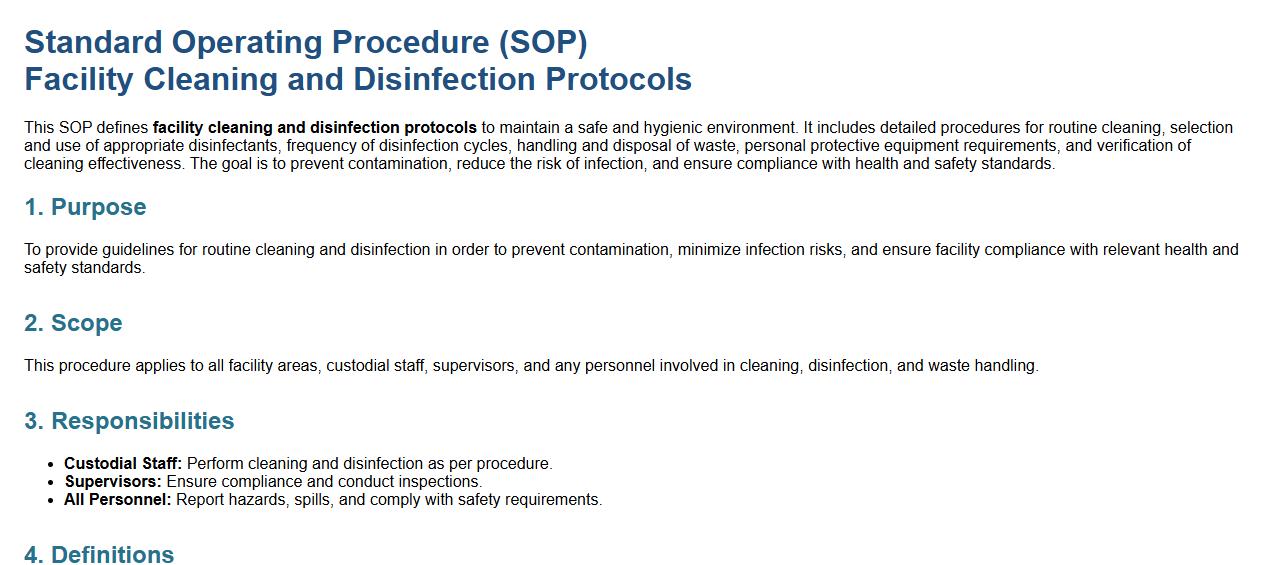
This SOP defines facility cleaning and disinfection protocols to maintain a safe and hygienic environment. It includes detailed procedures for routine cleaning, selection and use of appropriate disinfectants, frequency of disinfection cycles, handling and disposal of waste, personal protective equipment requirements, and verification of cleaning effectiveness. The goal is to prevent contamination, reduce the risk of infection, and ensure compliance with health and safety standards.
Patient admission and discharge procedures.
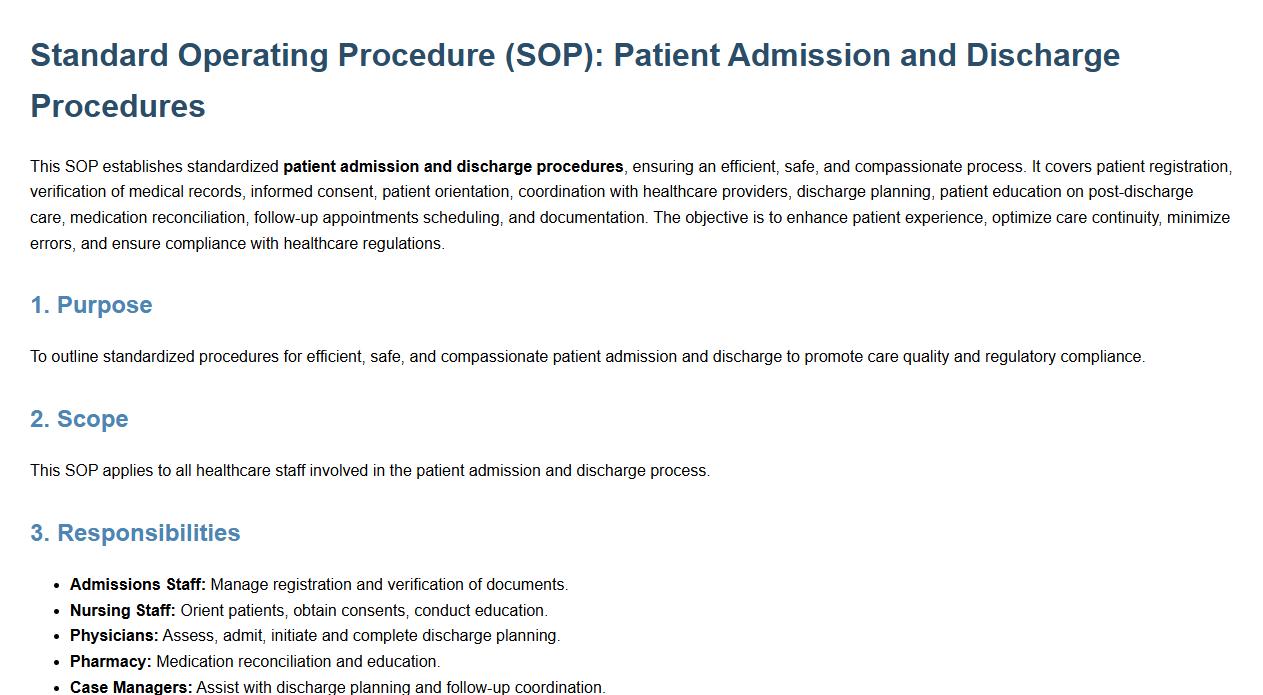
This SOP establishes standardized patient admission and discharge procedures, ensuring an efficient, safe, and compassionate process. It covers patient registration, verification of medical records, informed consent, patient orientation, coordination with healthcare providers, discharge planning, patient education on post-discharge care, medication reconciliation, follow-up appointments scheduling, and documentation. The objective is to enhance patient experience, optimize care continuity, minimize errors, and ensure compliance with healthcare regulations.
Emergency response and evacuation plans.
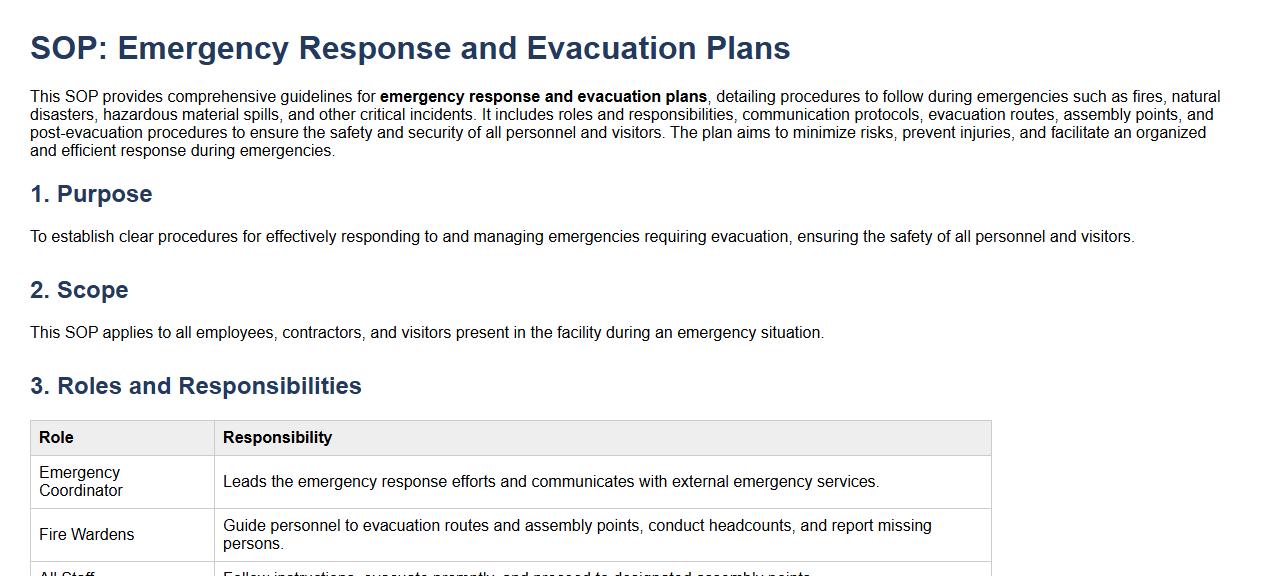
This SOP provides comprehensive guidelines for emergency response and evacuation plans, detailing procedures to follow during emergencies such as fires, natural disasters, hazardous material spills, and other critical incidents. It includes roles and responsibilities, communication protocols, evacuation routes, assembly points, and post-evacuation procedures to ensure the safety and security of all personnel and visitors. The plan aims to minimize risks, prevent injuries, and facilitate an organized and efficient response during emergencies.
Medical equipment maintenance and calibration.
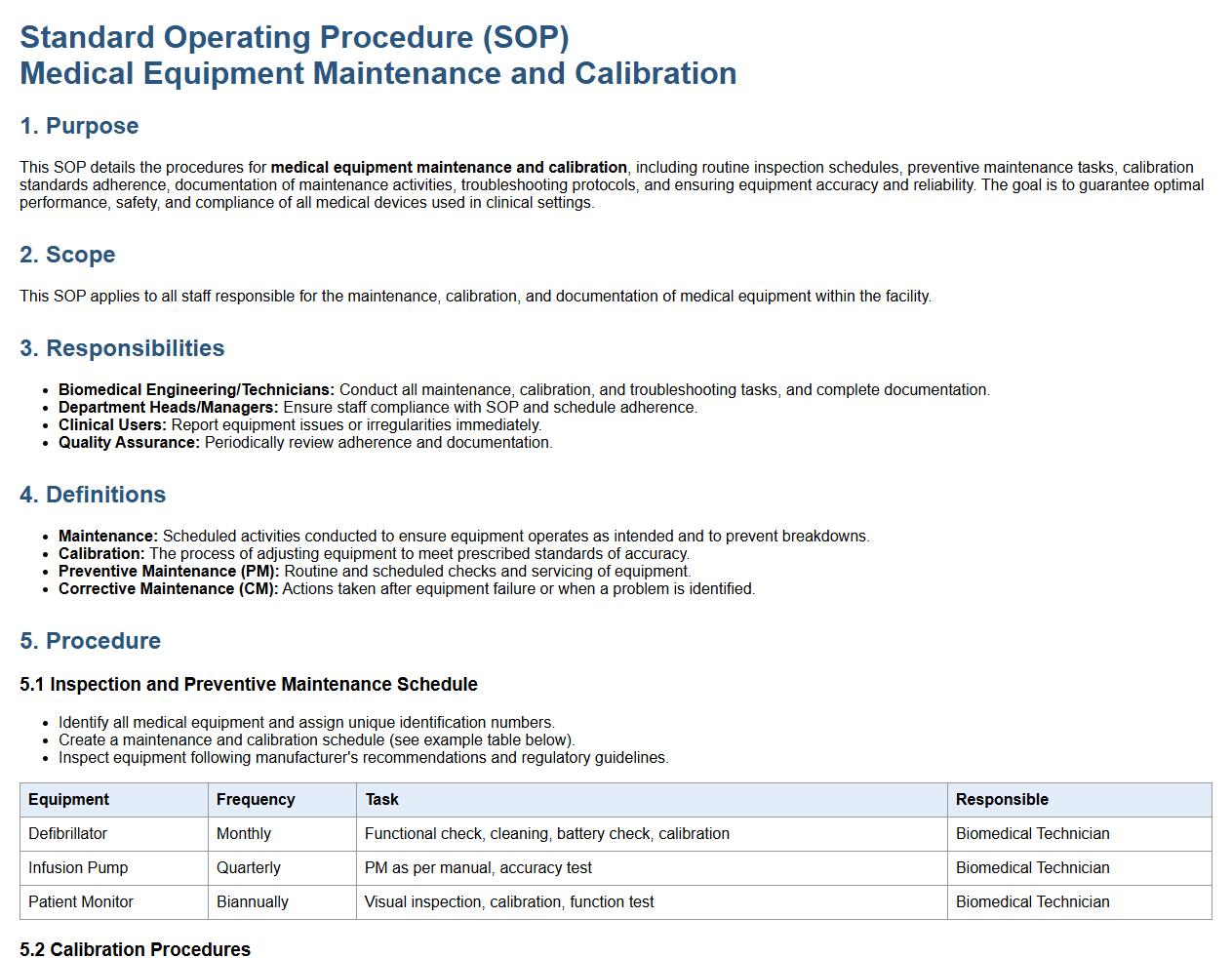
This SOP details the procedures for medical equipment maintenance and calibration, including routine inspection schedules, preventive maintenance tasks, calibration standards adherence, documentation of maintenance activities, troubleshooting protocols, and ensuring equipment accuracy and reliability. The goal is to guarantee optimal performance, safety, and compliance of all medical devices used in clinical settings.
Waste management and hazardous materials disposal.
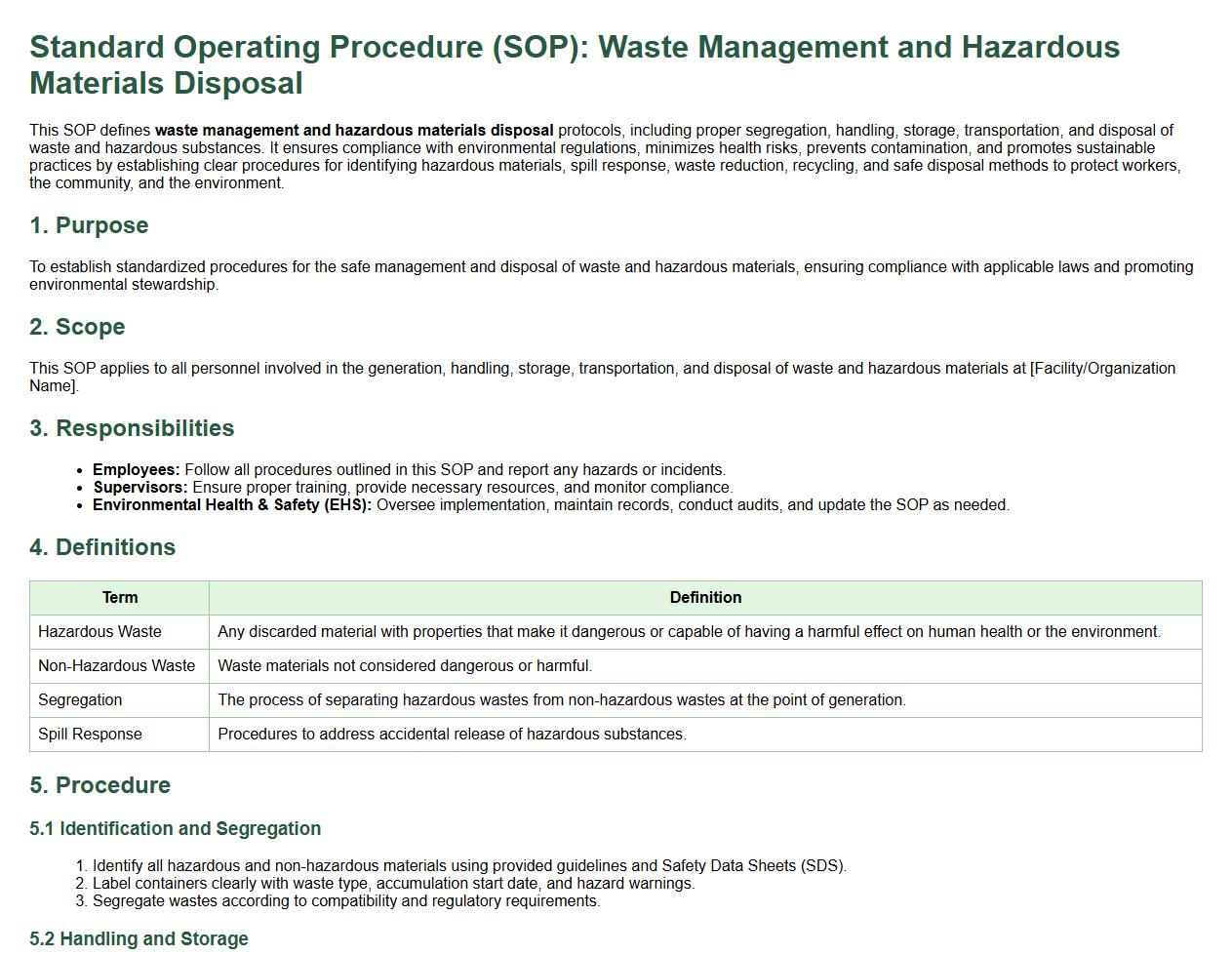
This SOP defines waste management and hazardous materials disposal protocols, including proper segregation, handling, storage, transportation, and disposal of waste and hazardous substances. It ensures compliance with environmental regulations, minimizes health risks, prevents contamination, and promotes sustainable practices by establishing clear procedures for identifying hazardous materials, spill response, waste reduction, recycling, and safe disposal methods to protect workers, the community, and the environment.
Staff shift scheduling and attendance tracking.
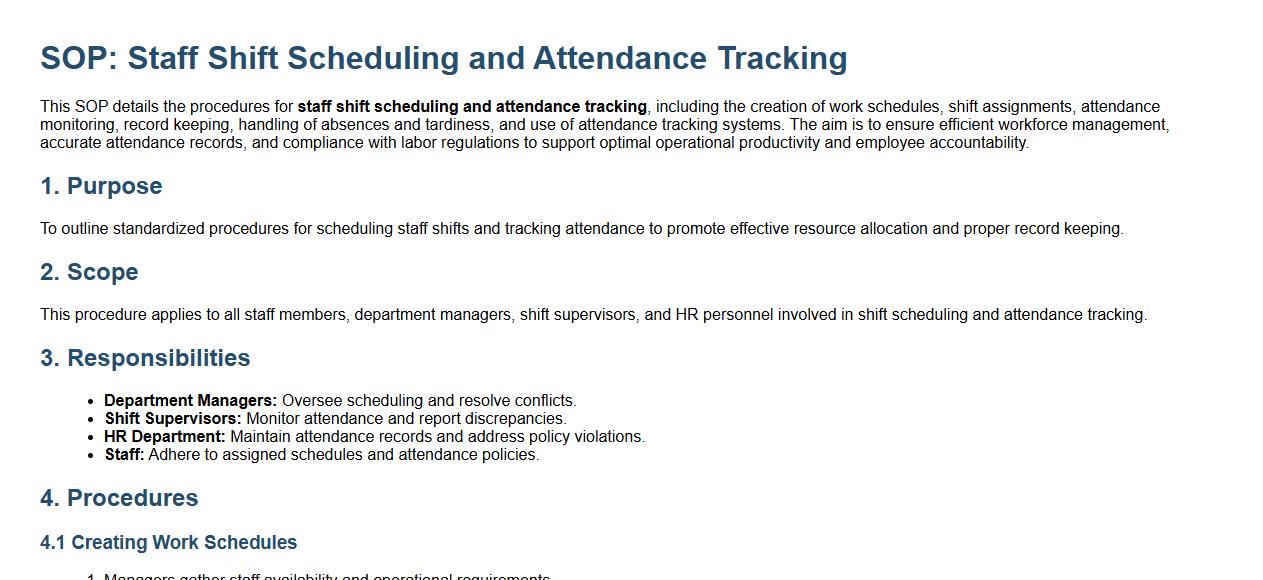
This SOP details the procedures for staff shift scheduling and attendance tracking, including the creation of work schedules, shift assignments, attendance monitoring, record keeping, handling of absences and tardiness, and use of attendance tracking systems. The aim is to ensure efficient workforce management, accurate attendance records, and compliance with labor regulations to support optimal operational productivity and employee accountability.
Infection prevention and control measures.
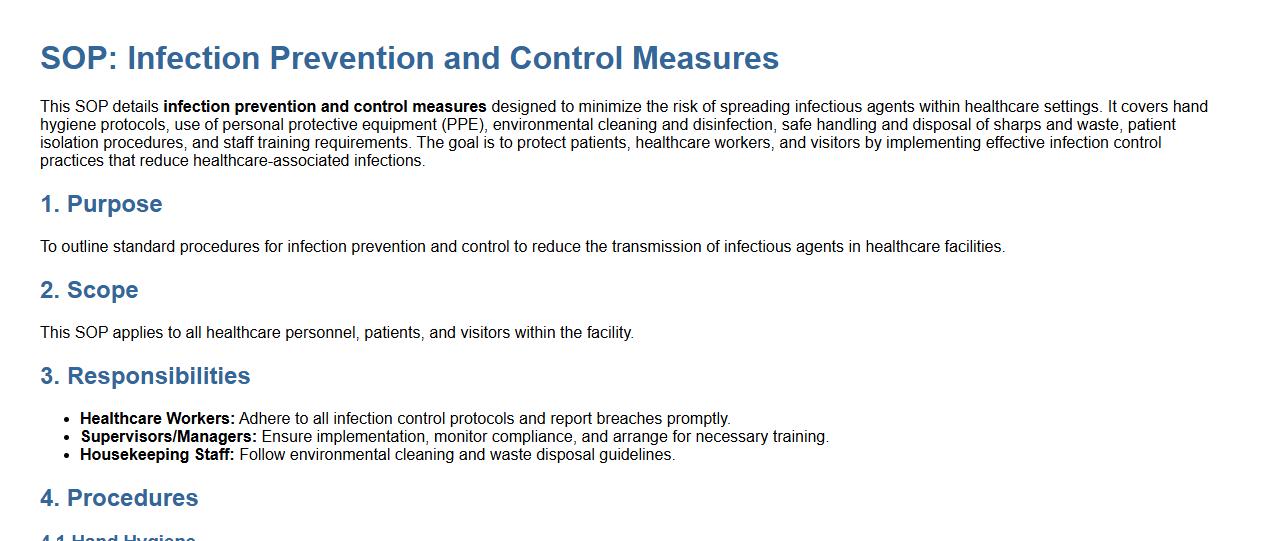
This SOP details infection prevention and control measures designed to minimize the risk of spreading infectious agents within healthcare settings. It covers hand hygiene protocols, use of personal protective equipment (PPE), environmental cleaning and disinfection, safe handling and disposal of sharps and waste, patient isolation procedures, and staff training requirements. The goal is to protect patients, healthcare workers, and visitors by implementing effective infection control practices that reduce healthcare-associated infections.
Visitor access and security management.
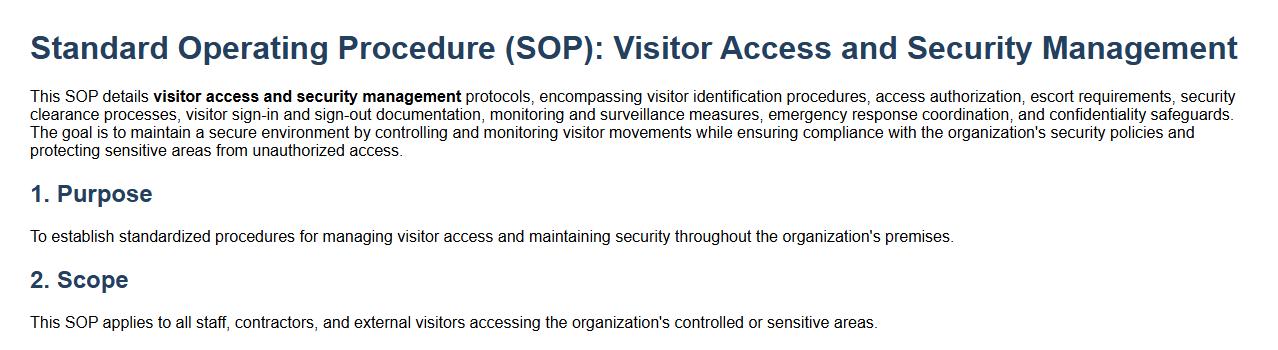
This SOP details visitor access and security management protocols, encompassing visitor identification procedures, access authorization, escort requirements, security clearance processes, visitor sign-in and sign-out documentation, monitoring and surveillance measures, emergency response coordination, and confidentiality safeguards. The goal is to maintain a secure environment by controlling and monitoring visitor movements while ensuring compliance with the organization's security policies and protecting sensitive areas from unauthorized access.
Medication storage and administration guidelines.
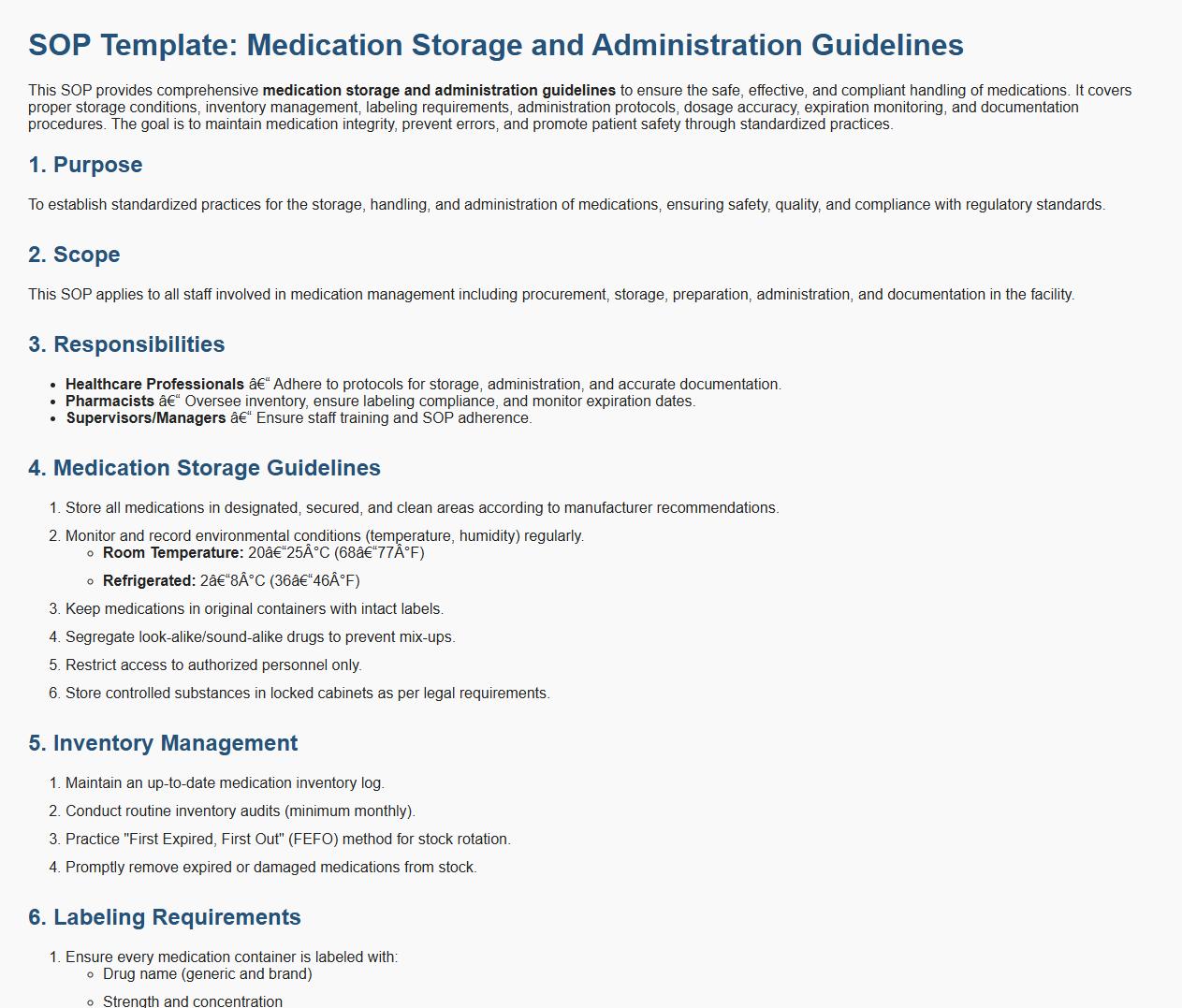
This SOP provides comprehensive medication storage and administration guidelines to ensure the safe, effective, and compliant handling of medications. It covers proper storage conditions, inventory management, labeling requirements, administration protocols, dosage accuracy, expiration monitoring, and documentation procedures. The goal is to maintain medication integrity, prevent errors, and promote patient safety through standardized practices.
Facility maintenance and repair reporting system.
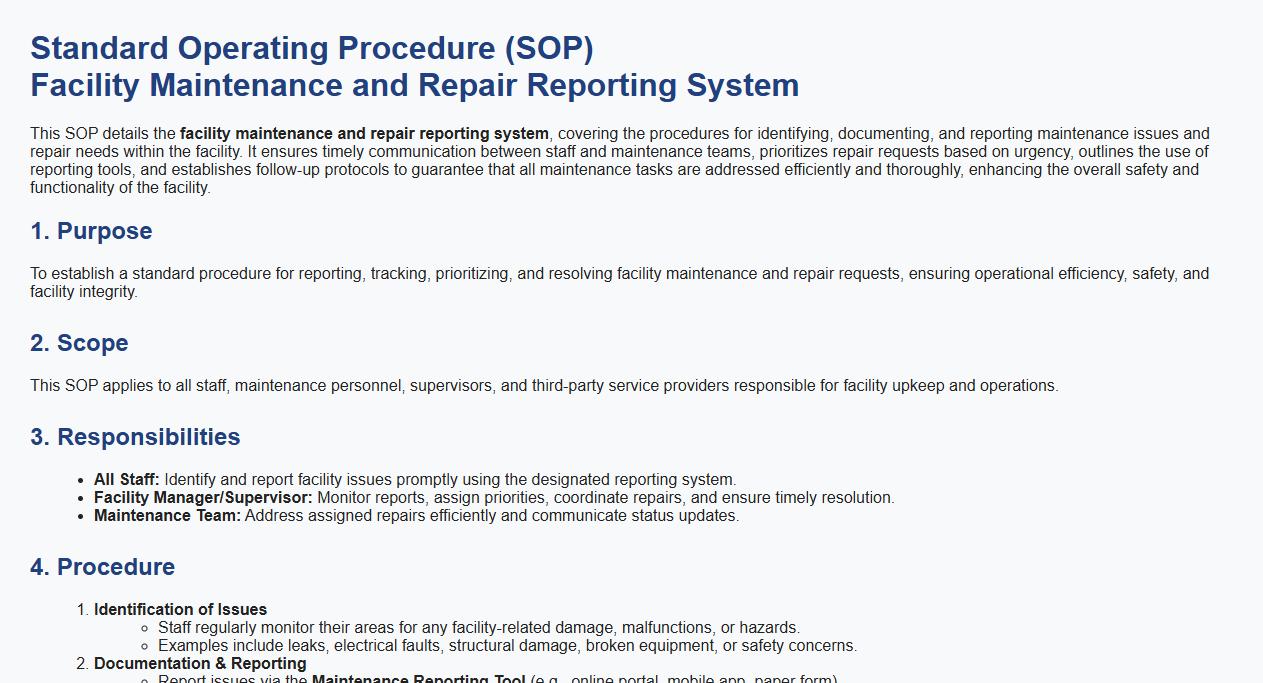
This SOP details the facility maintenance and repair reporting system, covering the procedures for identifying, documenting, and reporting maintenance issues and repair needs within the facility. It ensures timely communication between staff and maintenance teams, prioritizes repair requests based on urgency, outlines the use of reporting tools, and establishes follow-up protocols to guarantee that all maintenance tasks are addressed efficiently and thoroughly, enhancing the overall safety and functionality of the facility.
What are the key components required in a standard operation protocol (SOP) for healthcare facility management?
A standard operation protocol (SOP) for healthcare facility management includes components such as facility maintenance, safety guidelines, and compliance procedures. It must also cover equipment handling, staff responsibilities, and documentation processes. These elements ensure smooth and consistent facility operations.
How does the SOP ensure compliance with safety and regulatory standards in healthcare facilities?
The SOP incorporates safety and regulatory standards by aligning with local, national, and international healthcare regulations. It provides clear instructions for routine inspections, hazard identification, and corrective actions. This structured approach minimizes risks and enforces adherence to legal requirements.
Which procedures for infection control are specified in the healthcare facility management SOP?
The SOP specifies infection control procedures such as sterilization protocols, waste management, and hand hygiene practices. It mandates the use of personal protective equipment (PPE) and outlines cleaning schedules for high-touch surfaces. These measures are critical to preventing healthcare-associated infections.
What protocols does the SOP outline for emergency response and disaster management?
The SOP outlines emergency response protocols including evacuation plans, communication strategies, and resource mobilization. It details roles for staff during disasters and procedures for maintaining critical services. This ensures preparedness and rapid response to minimize harm during emergencies.
How does the SOP define roles and responsibilities for facility staff during routine and critical operations?
The SOP clearly defines roles and responsibilities by assigning specific tasks to staff based on their expertise and operational needs. It outlines accountability measures for both daily routines and critical incidents. This clarity supports effective teamwork and operational efficiency.