
A SOP Template for Infection Control in Hospitals provides a structured framework to ensure consistent implementation of hygiene practices and protocols. It outlines detailed procedures for cleaning, sterilization, and the management of infectious materials to minimize hospital-acquired infections. Clear documentation within the template helps staff maintain compliance with health regulations and improve patient safety.
Hand hygiene protocols and compliance monitoring.
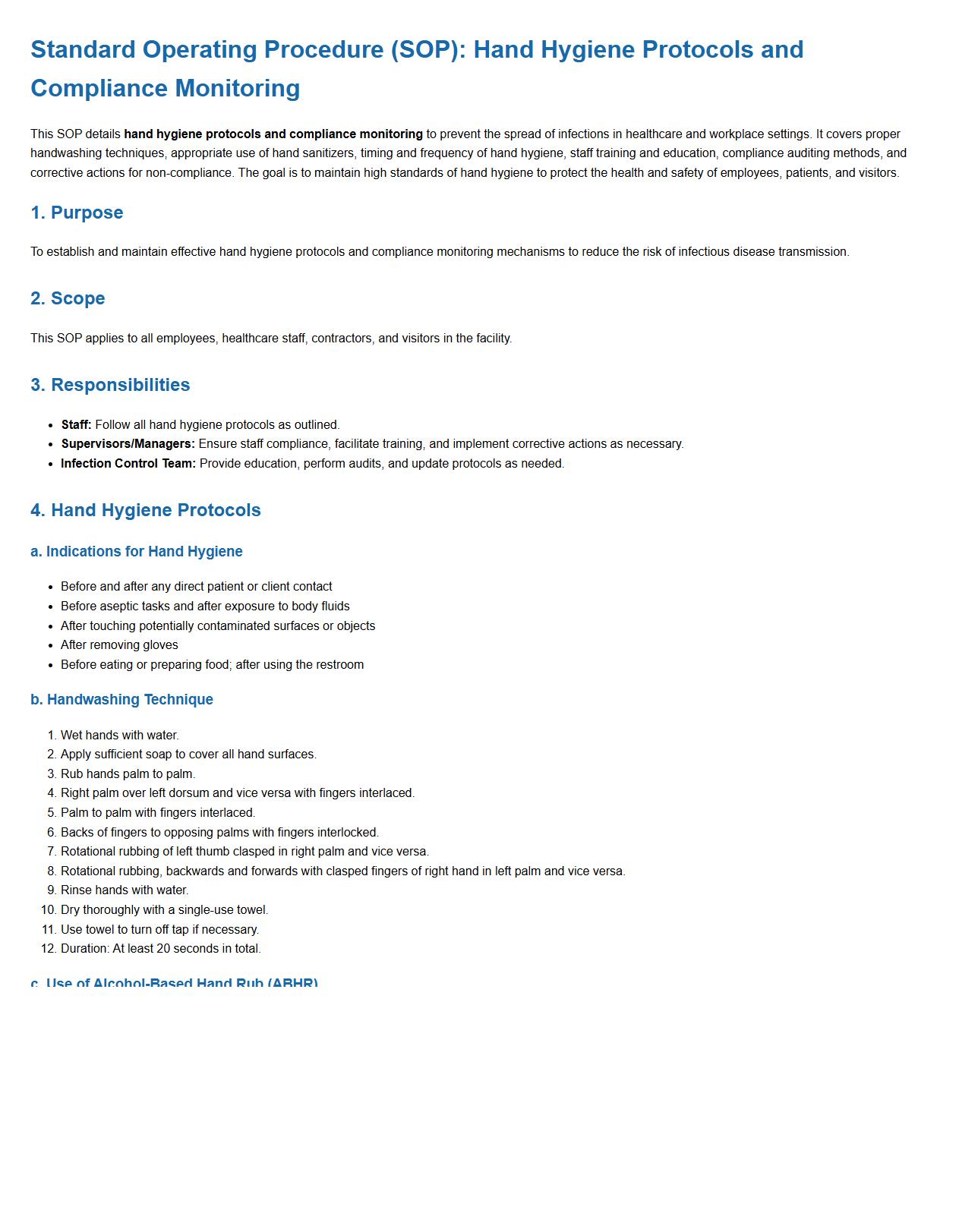
This SOP details hand hygiene protocols and compliance monitoring to prevent the spread of infections in healthcare and workplace settings. It covers proper handwashing techniques, appropriate use of hand sanitizers, timing and frequency of hand hygiene, staff training and education, compliance auditing methods, and corrective actions for non-compliance. The goal is to maintain high standards of hand hygiene to protect the health and safety of employees, patients, and visitors.
Personal protective equipment (PPE) usage guidelines.
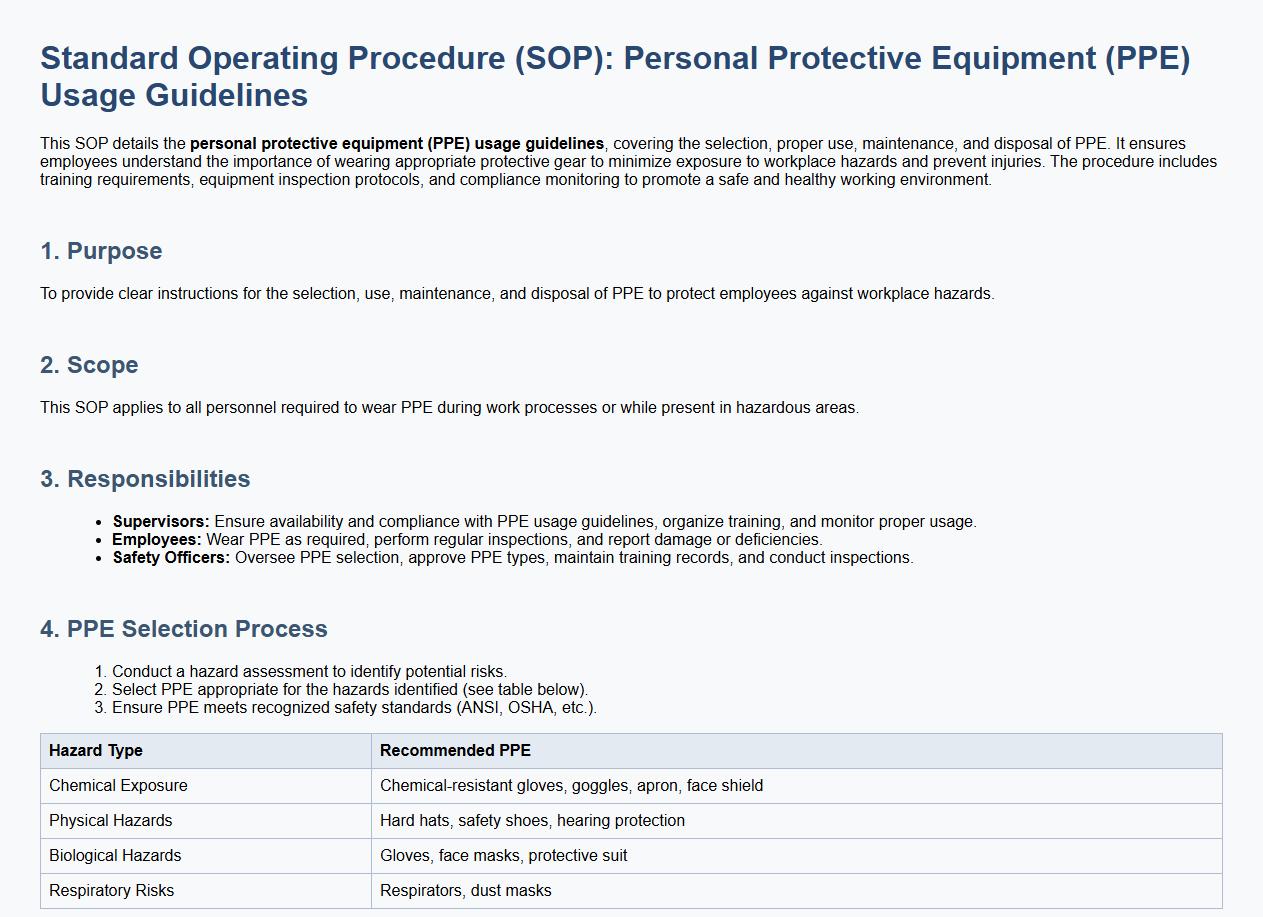
This SOP provides comprehensive personal protective equipment (PPE) usage guidelines, detailing the selection, proper use, maintenance, and disposal of PPE to ensure the safety and health of employees in various work environments. It aims to minimize exposure to hazards by enforcing mandatory PPE protocols, training employees on correct usage, and monitoring compliance to reduce workplace injuries and illnesses.
Environmental cleaning and disinfecting procedures.
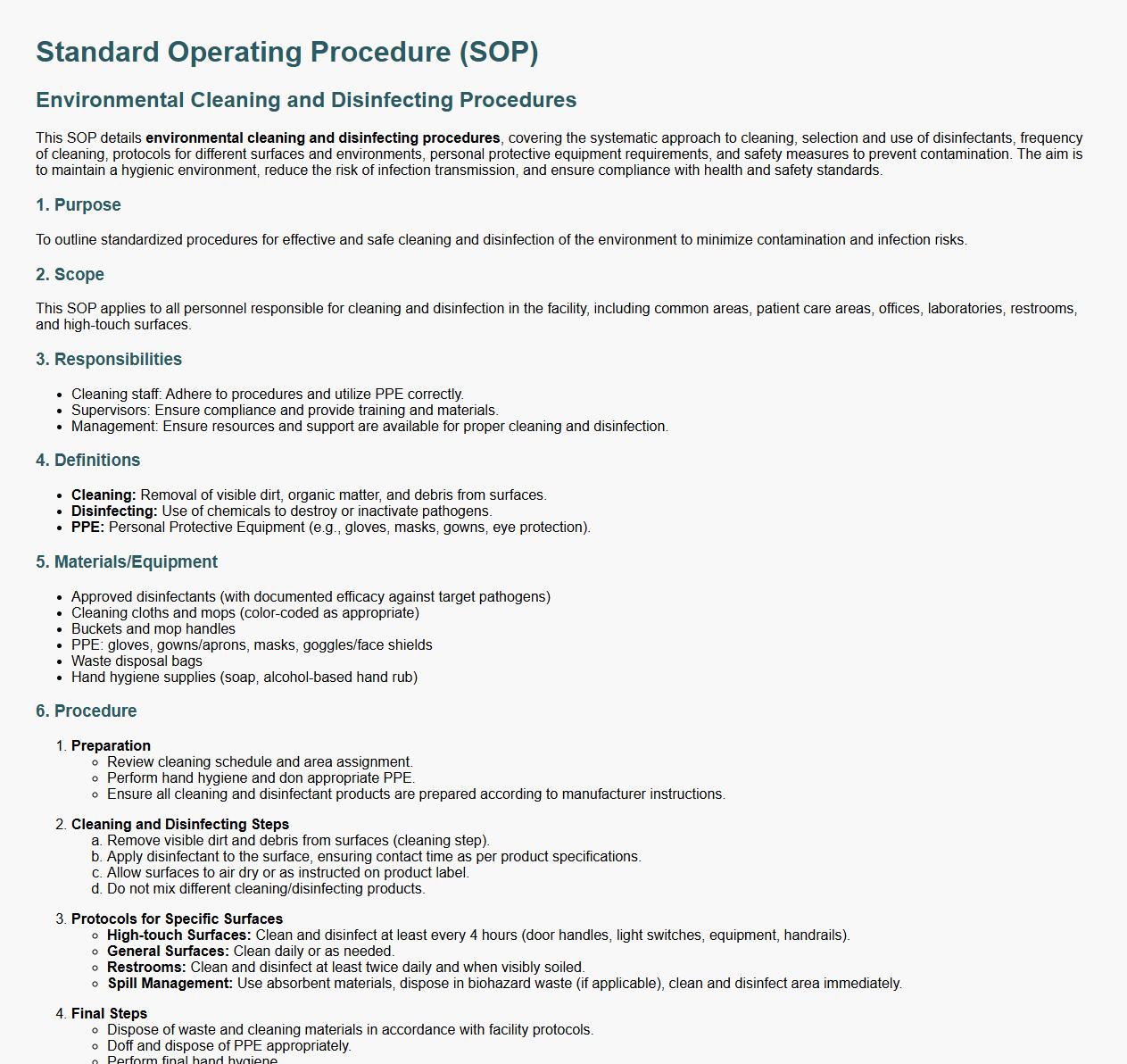
This SOP details environmental cleaning and disinfecting procedures, covering the systematic approach to cleaning, selection and use of disinfectants, frequency of cleaning, protocols for different surfaces and environments, personal protective equipment requirements, and safety measures to prevent contamination. The aim is to maintain a hygienic environment, reduce the risk of infection transmission, and ensure compliance with health and safety standards.
Isolation precautions and patient cohorting.
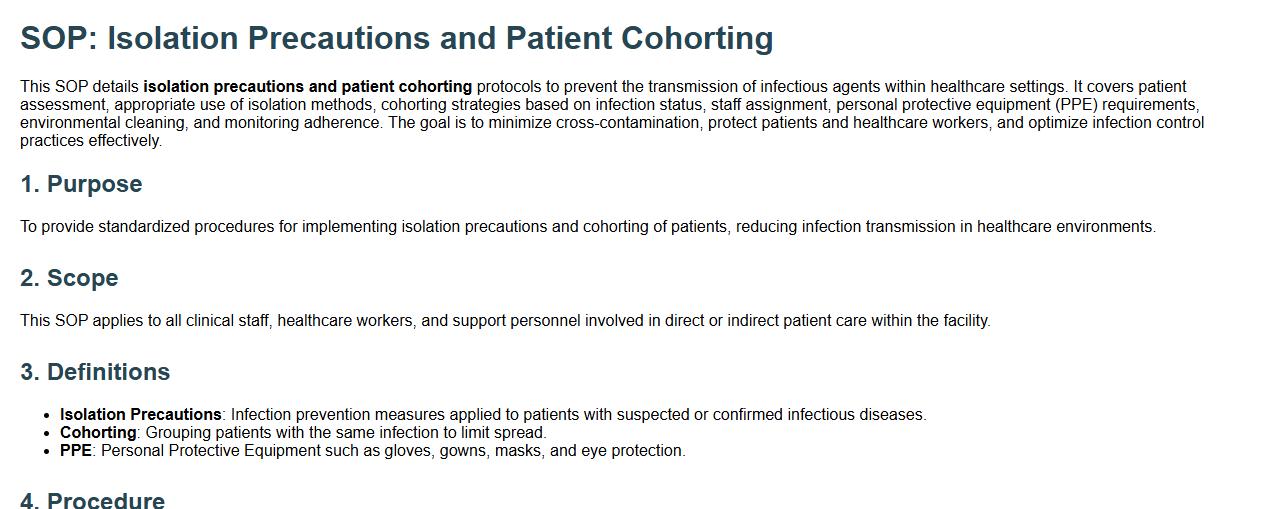
This SOP details isolation precautions and patient cohorting protocols to prevent the transmission of infectious agents within healthcare settings. It covers patient assessment, appropriate use of isolation methods, cohorting strategies based on infection status, staff assignment, personal protective equipment (PPE) requirements, environmental cleaning, and monitoring adherence. The goal is to minimize cross-contamination, protect patients and healthcare workers, and optimize infection control practices effectively.
Waste management and disposal of infectious materials.
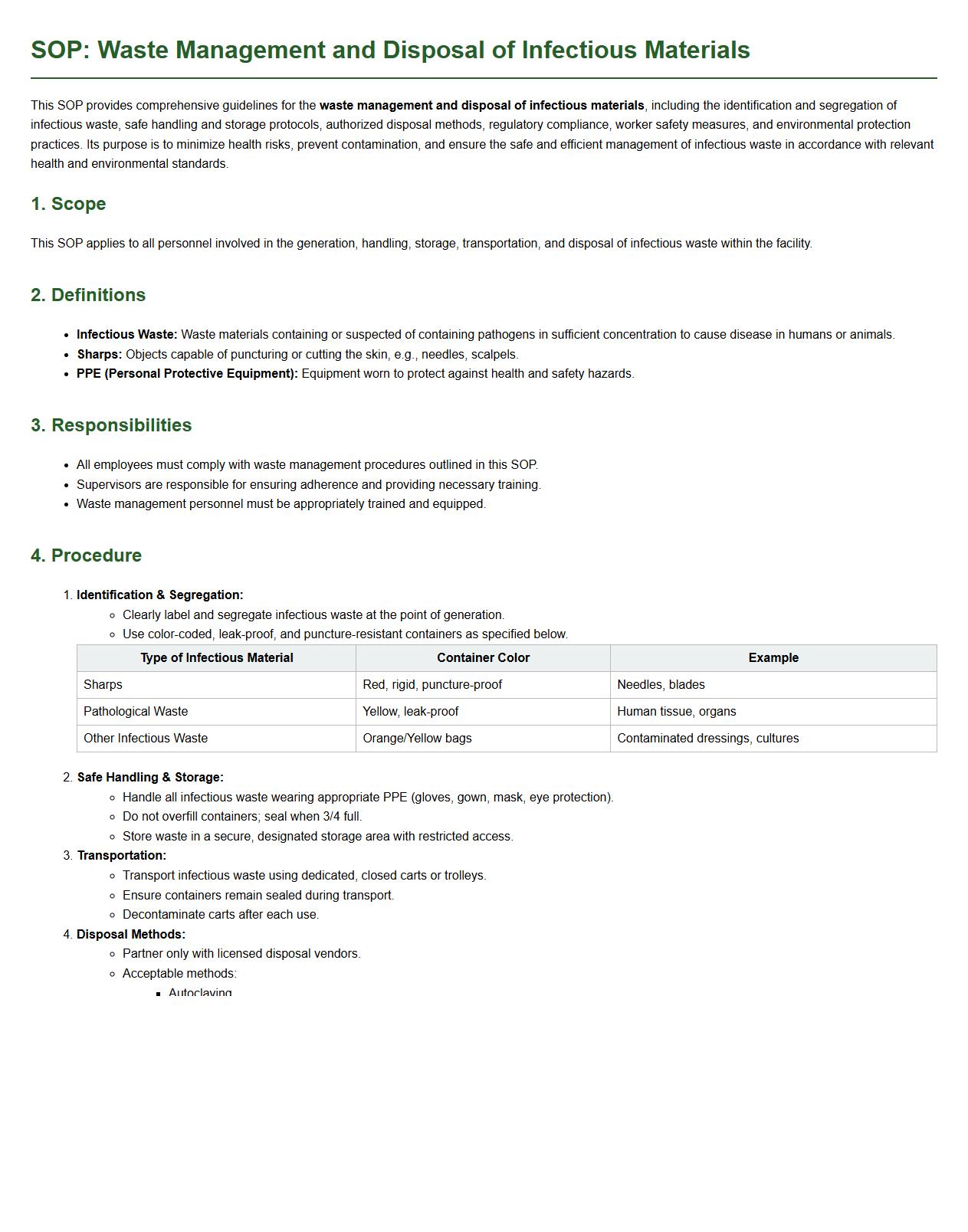
This SOP provides comprehensive guidelines for the waste management and disposal of infectious materials, including the identification and segregation of infectious waste, safe handling and storage protocols, authorized disposal methods, regulatory compliance, worker safety measures, and environmental protection practices. Its purpose is to minimize health risks, prevent contamination, and ensure the safe and efficient management of infectious waste in accordance with relevant health and environmental standards.
Sterilization and disinfection of medical instruments.
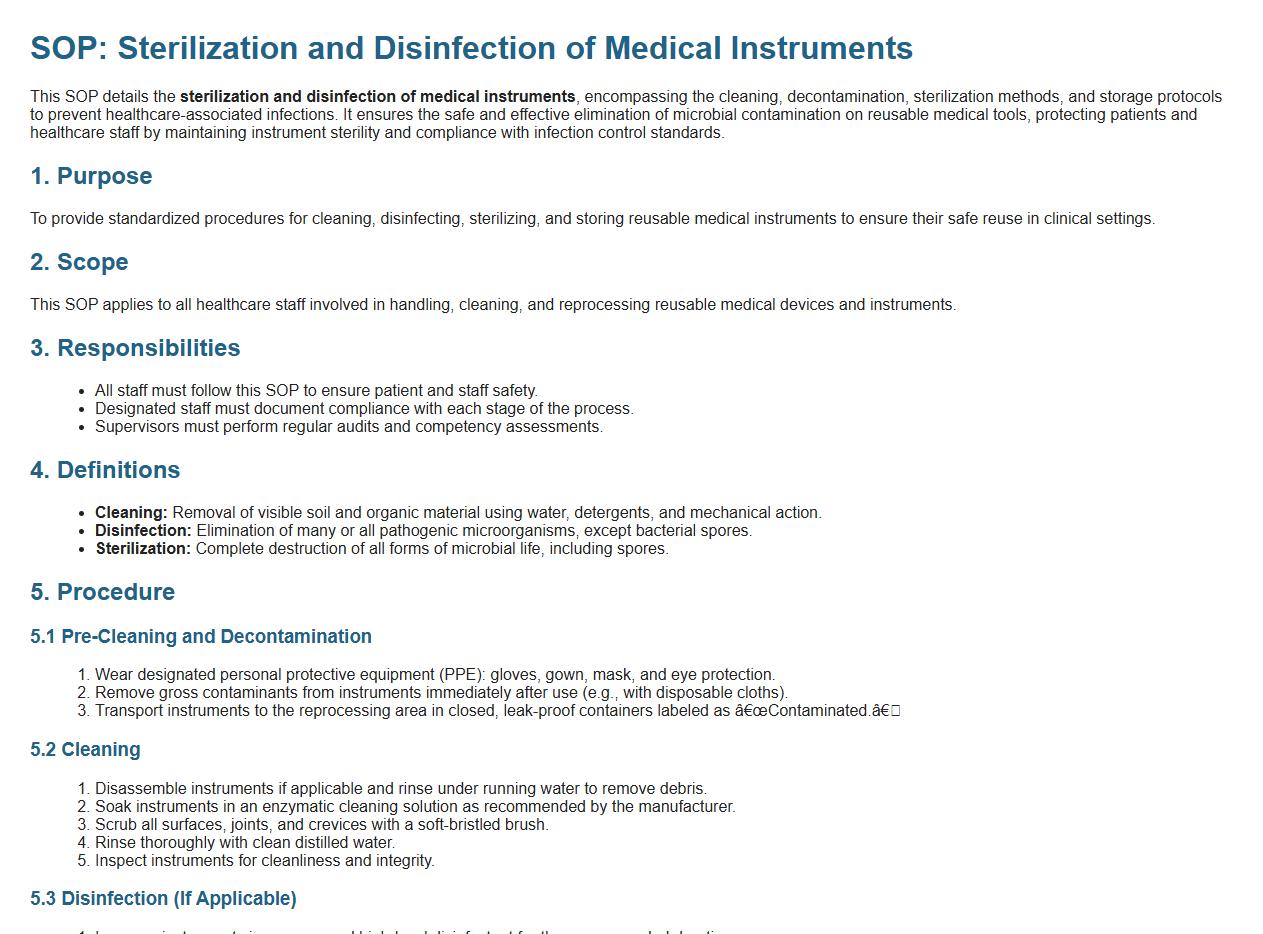
This SOP details the sterilization and disinfection of medical instruments, encompassing the cleaning, decontamination, sterilization methods, and storage protocols to prevent healthcare-associated infections. It ensures the safe and effective elimination of microbial contamination on reusable medical tools, protecting patients and healthcare staff by maintaining instrument sterility and compliance with infection control standards.
Screening and management of healthcare-associated infections (HAIs).
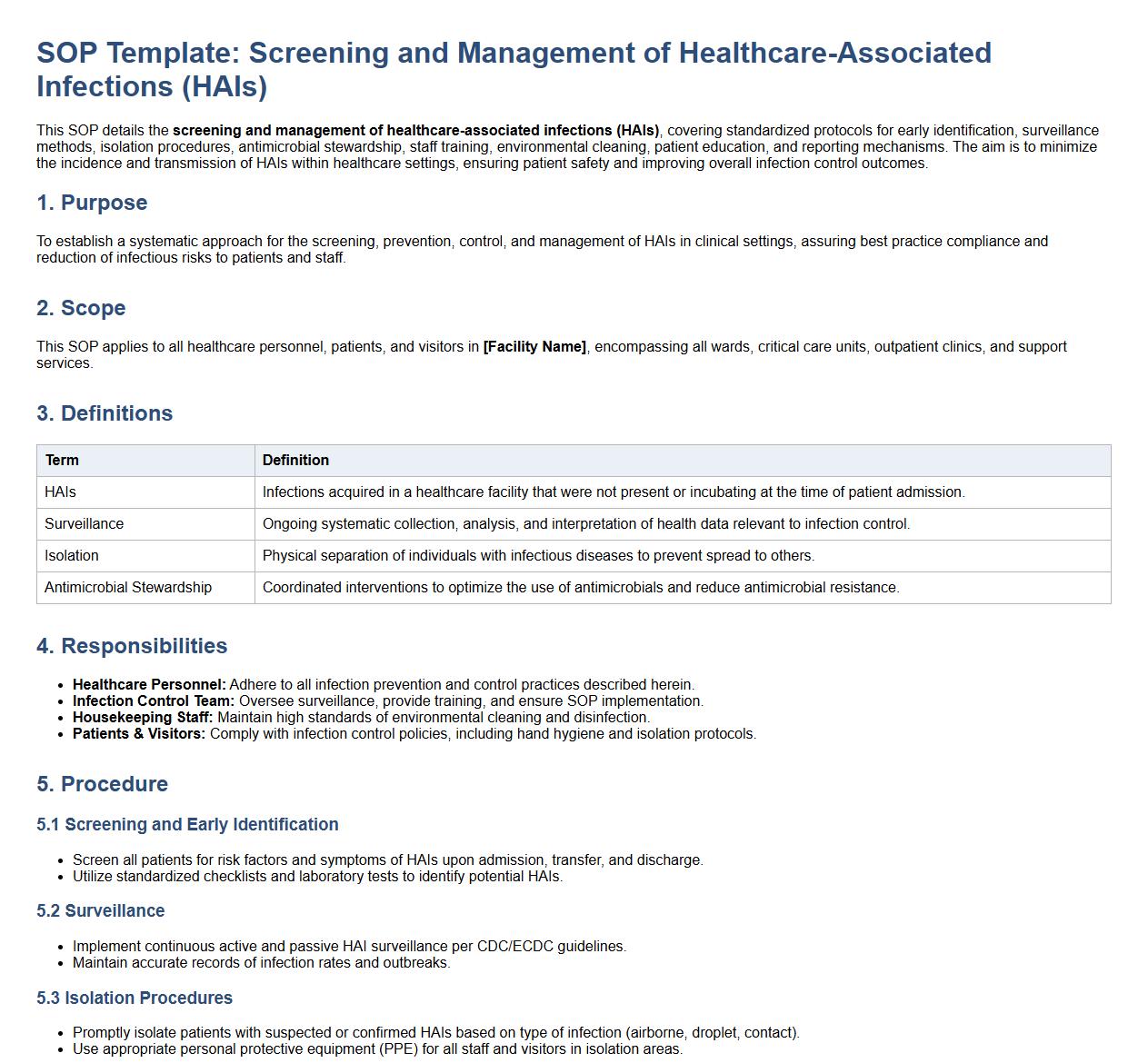
This SOP details the screening and management of healthcare-associated infections (HAIs), covering standardized protocols for early identification, surveillance methods, isolation procedures, antimicrobial stewardship, staff training, environmental cleaning, patient education, and reporting mechanisms. The aim is to minimize the incidence and transmission of HAIs within healthcare settings, ensuring patient safety and improving overall infection control outcomes.
Visitor policies and access control in high-risk areas.
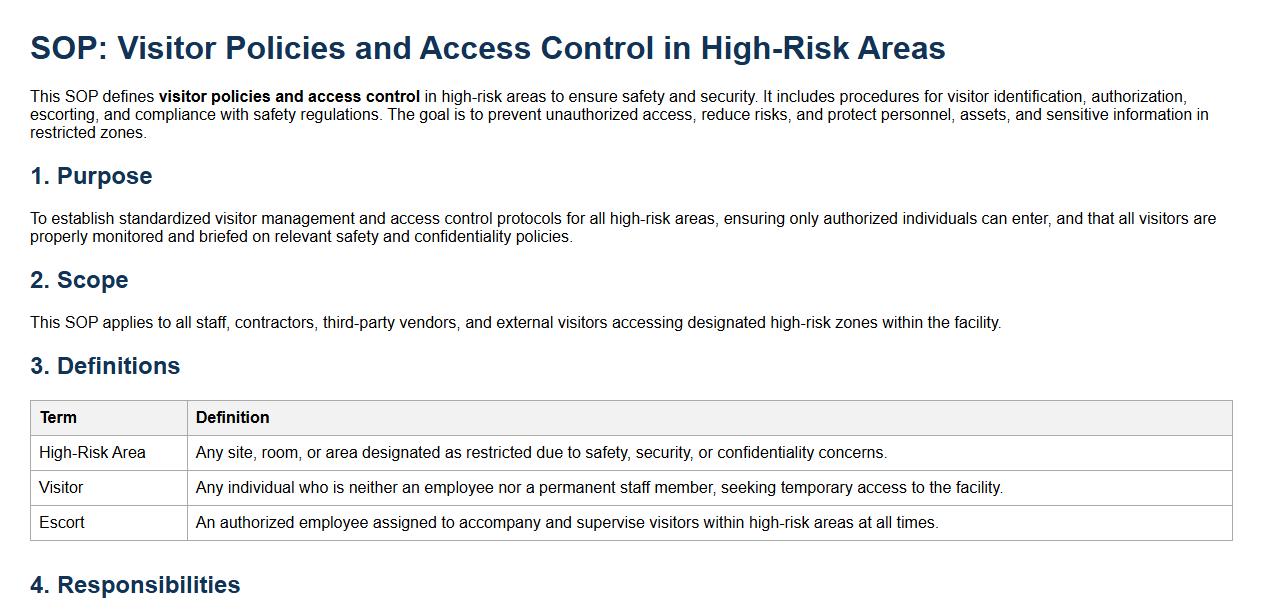
This SOP defines visitor policies and access control in high-risk areas to ensure safety and security. It includes procedures for visitor identification, authorization, escorting, and compliance with safety regulations. The goal is to prevent unauthorized access, reduce risks, and protect personnel, assets, and sensitive information in restricted zones.
Staff training and competency assessment on infection prevention.
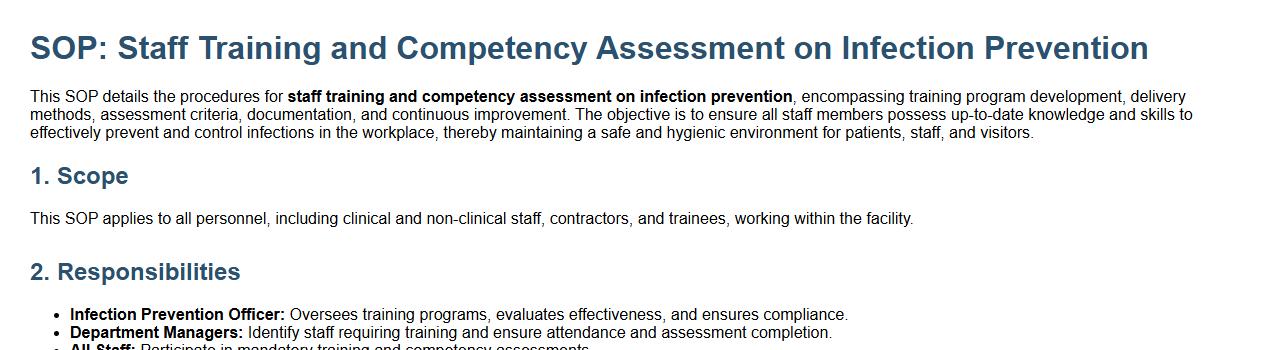
This SOP details the procedures for staff training and competency assessment on infection prevention, encompassing training program development, delivery methods, assessment criteria, documentation, and continuous improvement. The objective is to ensure all staff members possess up-to-date knowledge and skills to effectively prevent and control infections in the workplace, thereby maintaining a safe and hygienic environment for patients, staff, and visitors.
Outbreak investigation and reporting procedures.
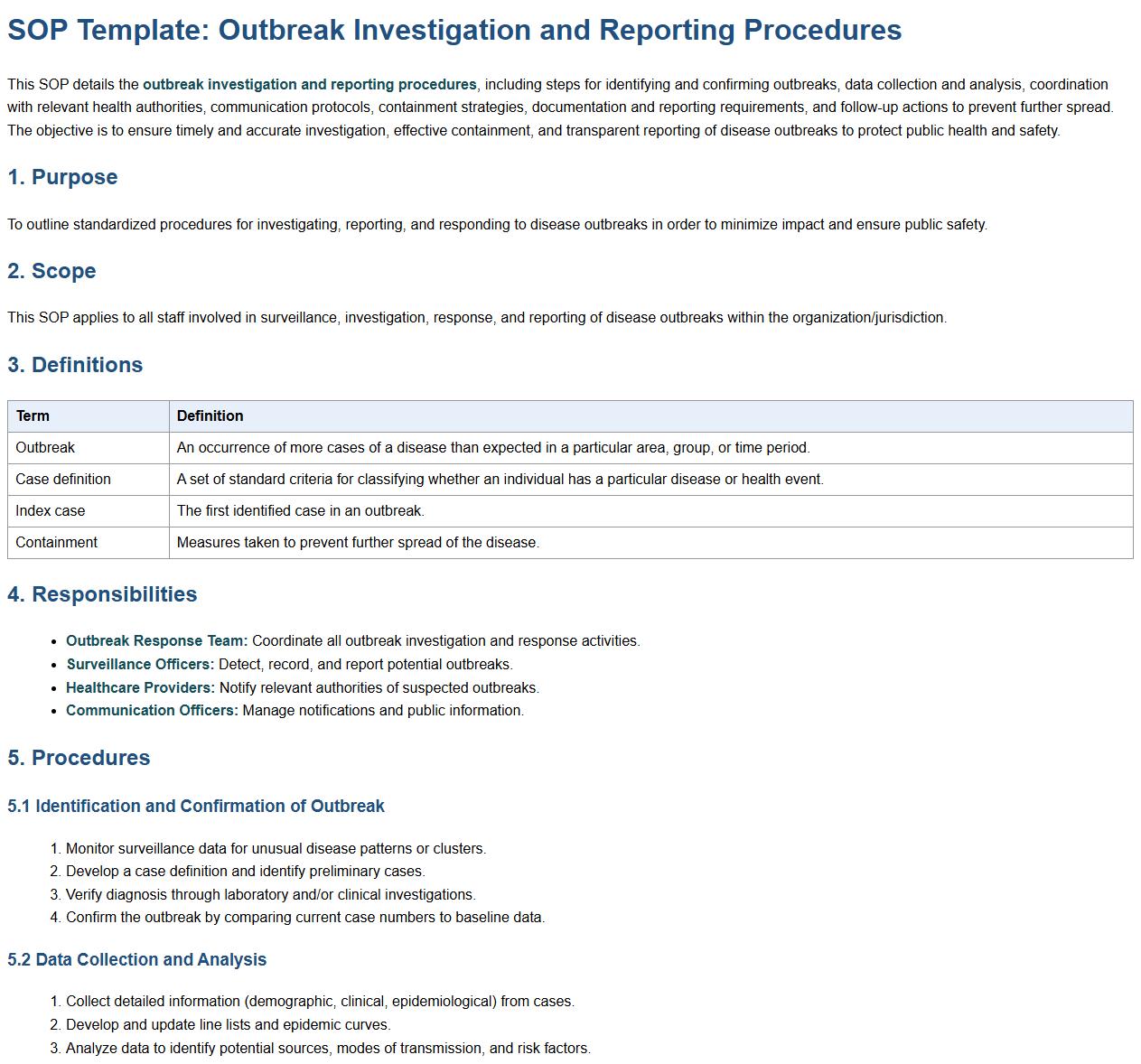
This SOP details the outbreak investigation and reporting procedures, including steps for identifying and confirming outbreaks, data collection and analysis, coordination with relevant health authorities, communication protocols, containment strategies, documentation and reporting requirements, and follow-up actions to prevent further spread. The objective is to ensure timely and accurate investigation, effective containment, and transparent reporting of disease outbreaks to protect public health and safety.
Main Objectives Outlined in the SOP for Infection Control in Hospitals
The primary objectives of the SOP focus on minimizing the spread of infections within hospital settings. It establishes clear guidelines to protect both patients and healthcare workers from infectious agents. Promoting a safe and hygienic environment remains the core goal of the SOP.
Standard Precautions Required for All Healthcare Workers
According to the SOP, all healthcare workers must adhere to standard precautions such as hand hygiene, use of gloves, and respiratory hygiene. These precautions are essential for preventing transmission of infections in healthcare settings. Compliance with these basic infection control measures is mandatory at all times.
Procedures for Managing and Disposing of Infectious Waste
The SOP specifies strict protocols for segregation, collection, and disposal of infectious waste to prevent contamination. Infectious materials must be handled using color-coded bins and treated before final disposal. Proper adherence to these waste management procedures is critical for infection control.
Use and Maintenance of Personal Protective Equipment (PPE)
The SOP mandates the correct use of PPE, including masks, gloves, gowns, and eye protection, based on exposure risk. It also outlines guidelines for routine cleaning, disinfection, and safe disposal of PPE to ensure effectiveness. Proper PPE maintenance protects healthcare workers and minimizes infection risks.
Protocols for Reporting and Managing Hospital-Acquired Infections (HAIs)
The SOP requires immediate reporting of any suspected or confirmed hospital-acquired infections to infection control teams. It details steps for investigation, containment, and treatment to prevent further spread. Timely management of HAIs is crucial for maintaining a safe healthcare environment.