
A SOP Template for Clinical Equipment Sterilization provides a standardized guideline to ensure consistent and effective sterilization processes in healthcare settings. This template outlines key steps, safety protocols, and quality control measures to prevent contamination and infection. Using a clear and detailed SOP Template for Clinical Equipment Sterilization enhances compliance with regulatory standards and promotes patient safety.
Preparation and inspection of clinical equipment pre-sterilization.
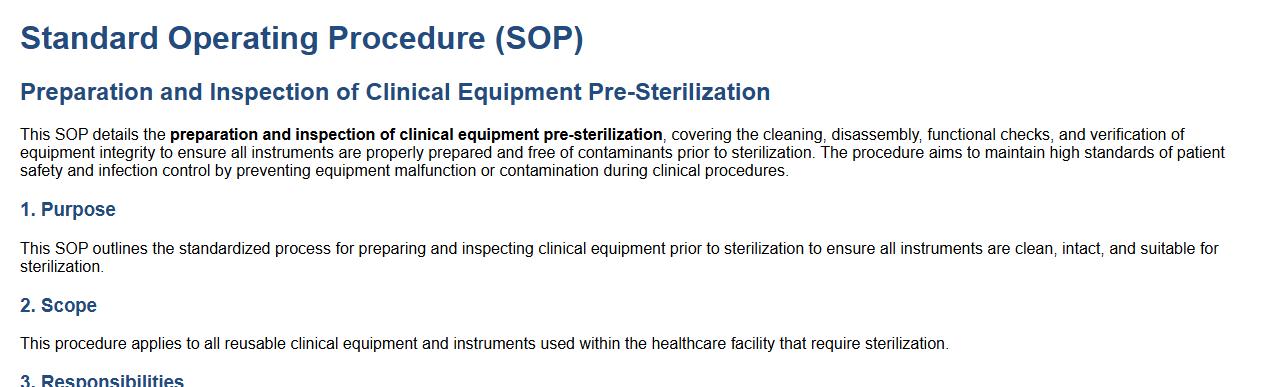
This SOP details the preparation and inspection of clinical equipment pre-sterilization, covering the cleaning, disassembly, functional checks, and verification of equipment integrity to ensure all instruments are properly prepared and free of contaminants prior to sterilization. The procedure aims to maintain high standards of patient safety and infection control by preventing equipment malfunction or contamination during clinical procedures.
Personal Protective Equipment (PPE) usage requirements.
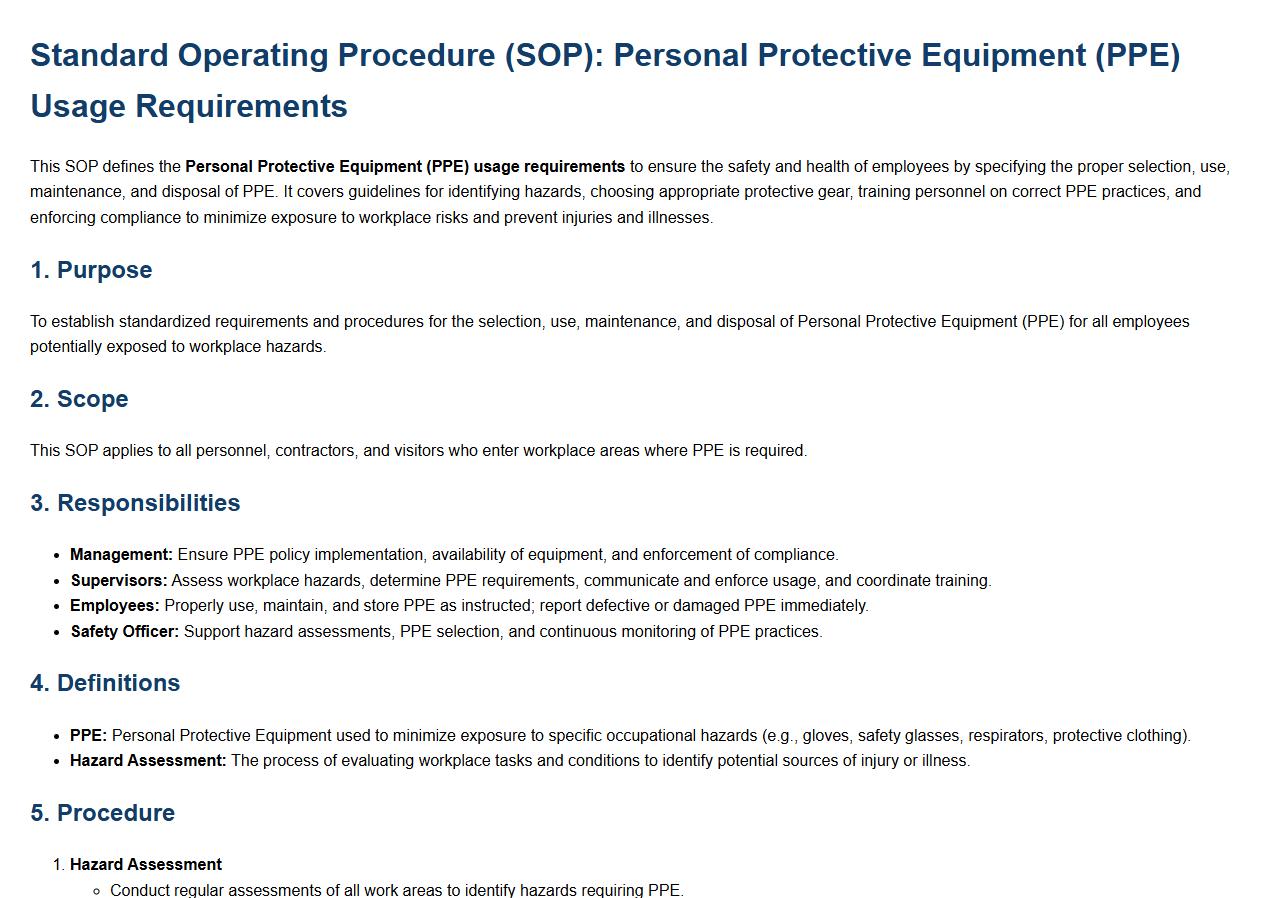
This SOP defines the Personal Protective Equipment (PPE) usage requirements to ensure the safety and health of employees by specifying the proper selection, use, maintenance, and disposal of PPE. It covers guidelines for identifying hazards, choosing appropriate protective gear, training personnel on correct PPE practices, and enforcing compliance to minimize exposure to workplace risks and prevent injuries and illnesses.
Dismantling and cleaning procedures for reusable equipment.
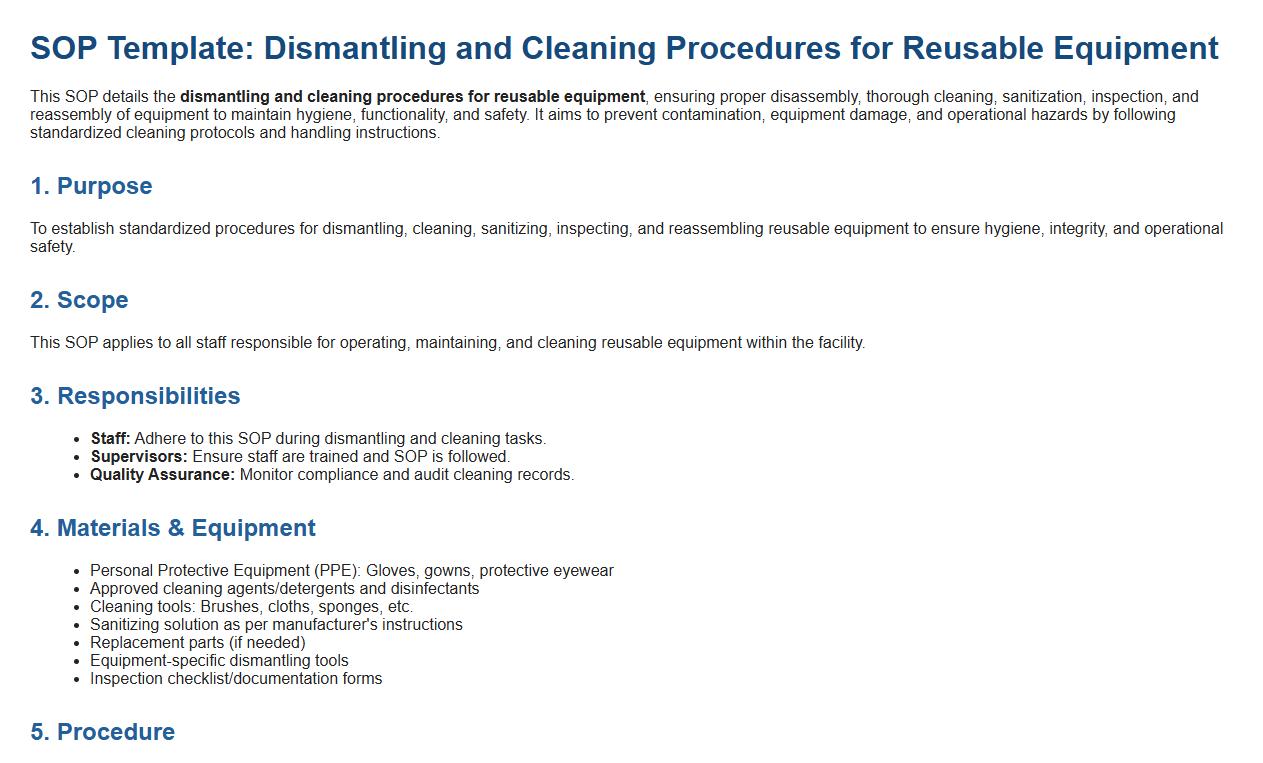
This SOP details the dismantling and cleaning procedures for reusable equipment, ensuring proper disassembly, thorough cleaning, sanitization, inspection, and reassembly of equipment to maintain hygiene, functionality, and safety. It aims to prevent contamination, equipment damage, and operational hazards by following standardized cleaning protocols and handling instructions.
Approved cleaning agents and disinfectants for specific equipment types.
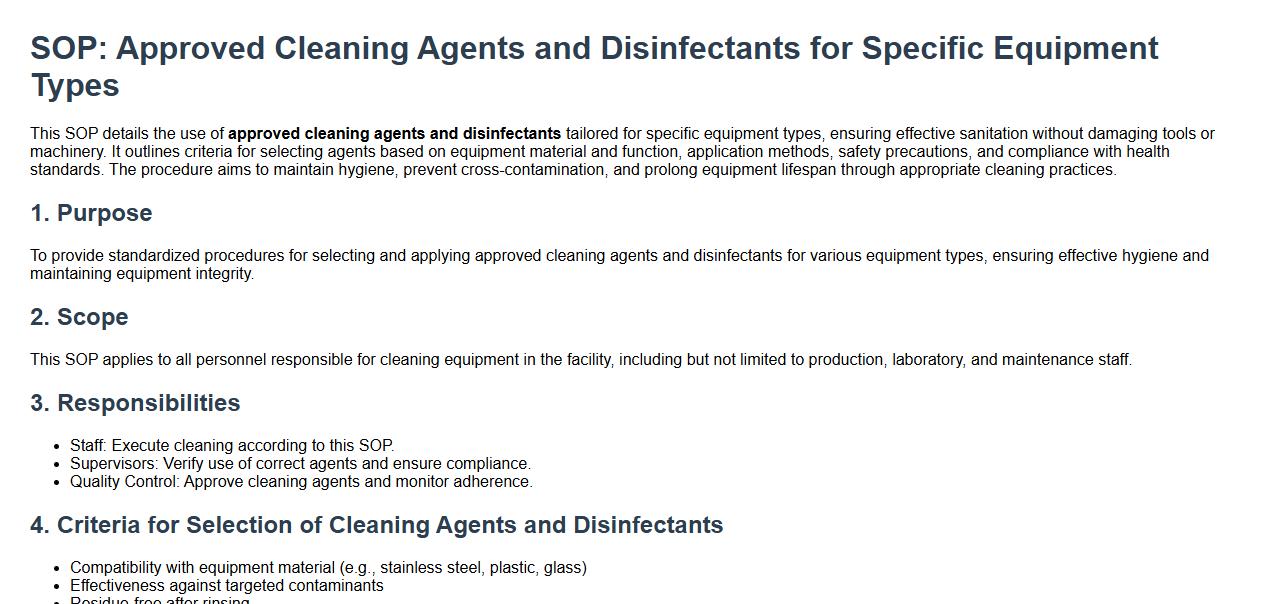
This SOP details the use of approved cleaning agents and disinfectants tailored for specific equipment types, ensuring effective sanitation without damaging tools or machinery. It outlines criteria for selecting agents based on equipment material and function, application methods, safety precautions, and compliance with health standards. The procedure aims to maintain hygiene, prevent cross-contamination, and prolong equipment lifespan through appropriate cleaning practices.
Ultrasonic cleaning process guidelines (if applicable).
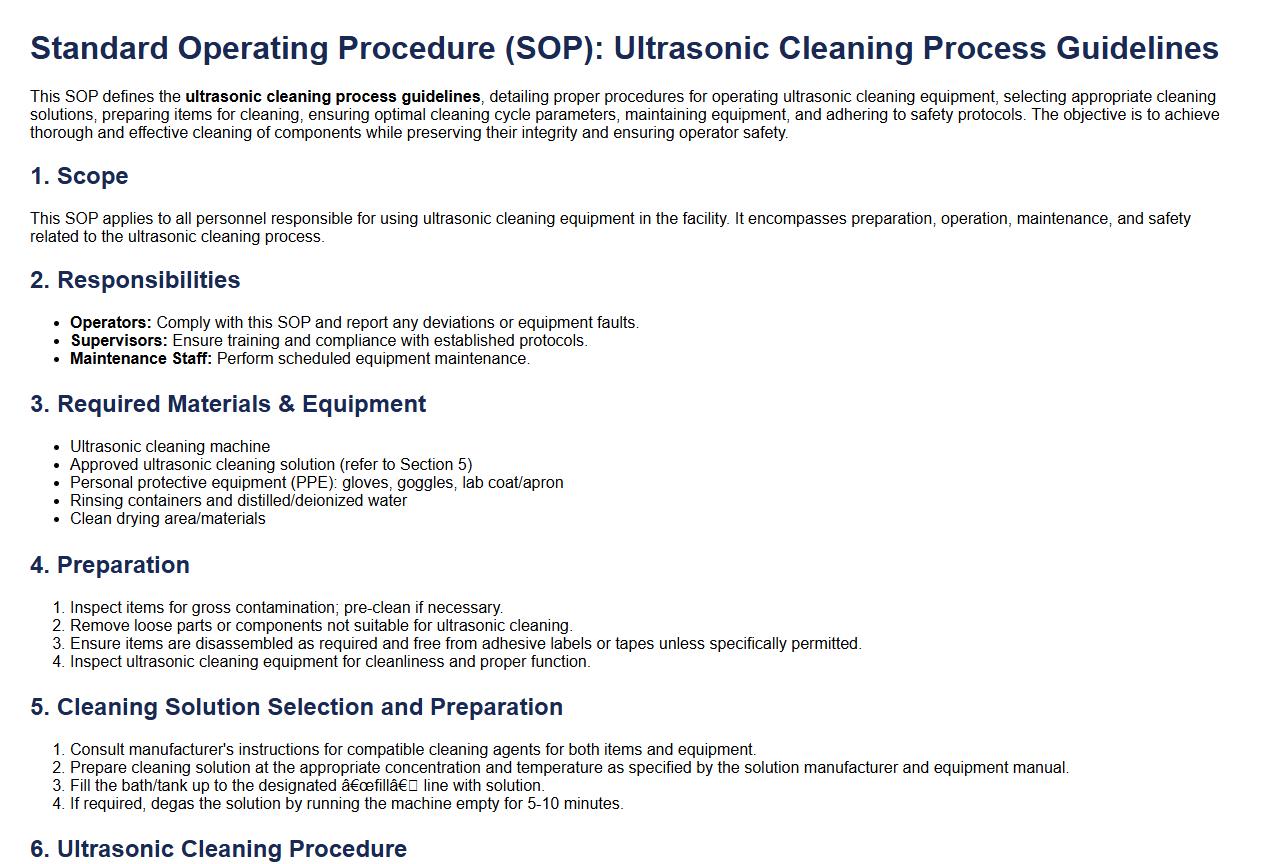
This SOP defines the ultrasonic cleaning process guidelines, detailing proper procedures for operating ultrasonic cleaning equipment, selecting appropriate cleaning solutions, preparing items for cleaning, ensuring optimal cleaning cycle parameters, maintaining equipment, and adhering to safety protocols. The objective is to achieve thorough and effective cleaning of components while preserving their integrity and ensuring operator safety.
Autoclaving or sterilizer machine operating procedures.
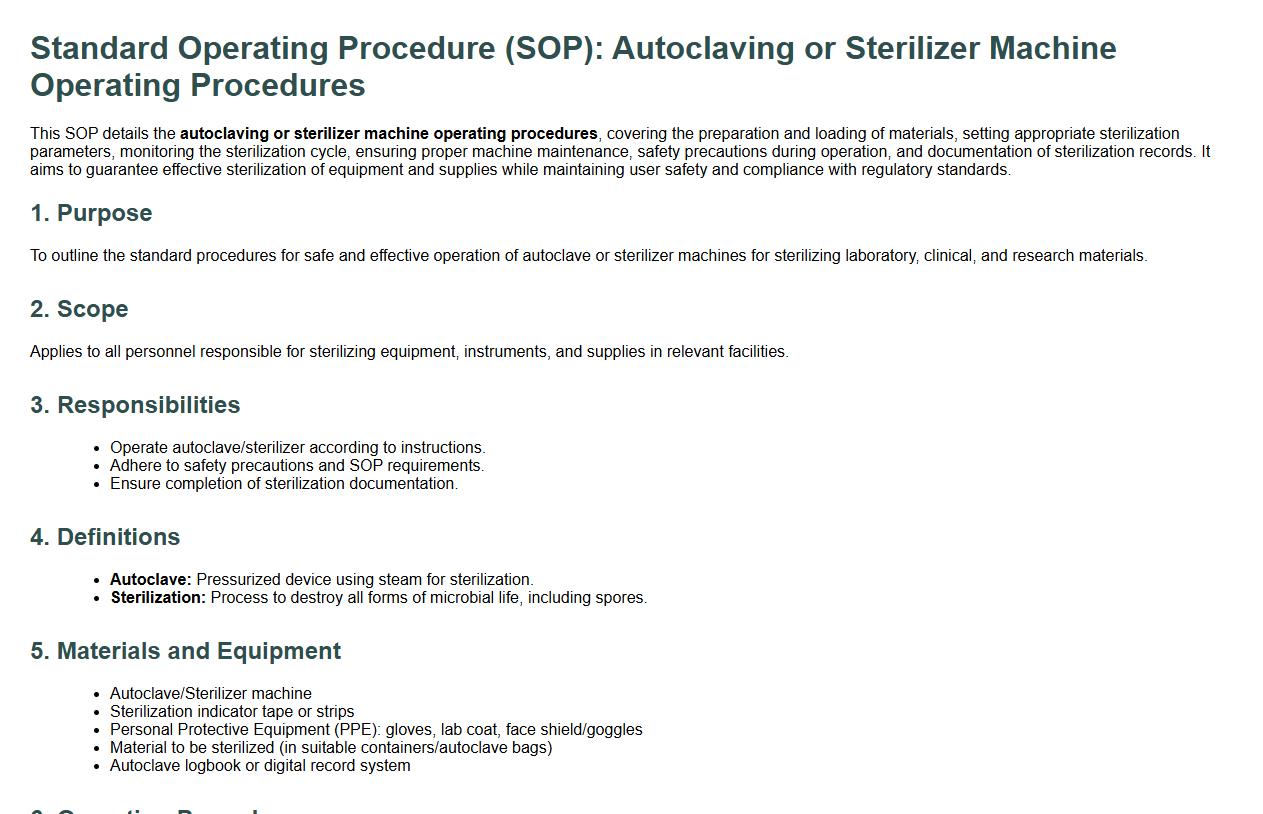
This SOP details the autoclaving or sterilizer machine operating procedures, covering the preparation and loading of materials, setting appropriate sterilization parameters, monitoring the sterilization cycle, ensuring proper machine maintenance, safety precautions during operation, and documentation of sterilization records. It aims to guarantee effective sterilization of equipment and supplies while maintaining user safety and compliance with regulatory standards.
Sterilization cycle monitoring and documentation.
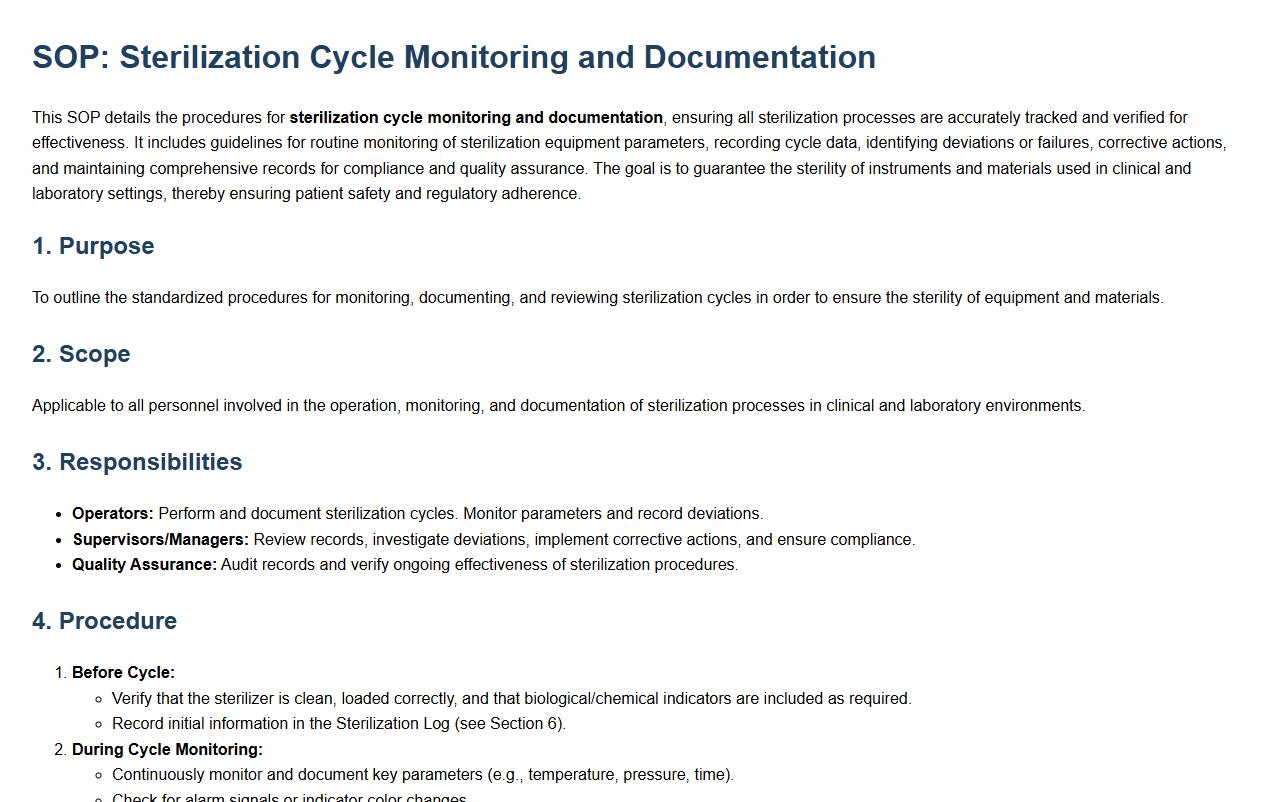
This SOP details the procedures for sterilization cycle monitoring and documentation, ensuring all sterilization processes are accurately tracked and verified for effectiveness. It includes guidelines for routine monitoring of sterilization equipment parameters, recording cycle data, identifying deviations or failures, corrective actions, and maintaining comprehensive records for compliance and quality assurance. The goal is to guarantee the sterility of instruments and materials used in clinical and laboratory settings, thereby ensuring patient safety and regulatory adherence.
Post-sterilization handling and storage protocols.
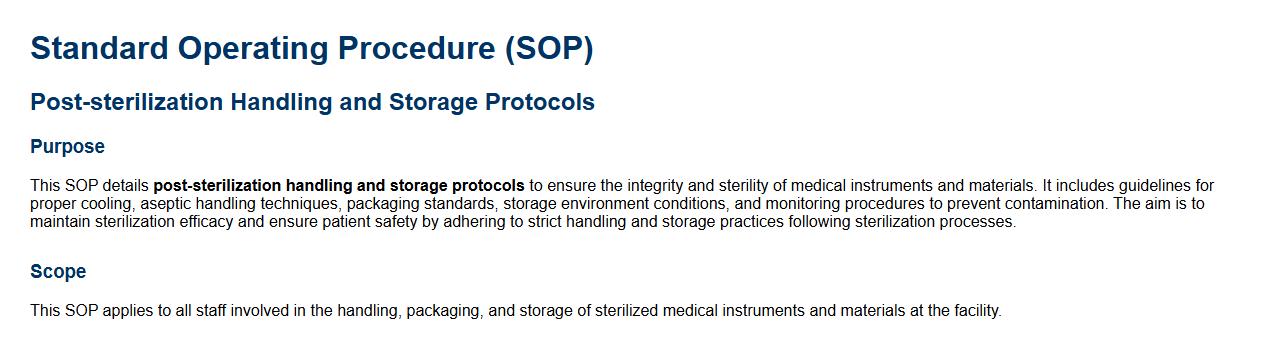
This SOP details post-sterilization handling and storage protocols to ensure the integrity and sterility of medical instruments and materials. It includes guidelines for proper cooling, aseptic handling techniques, packaging standards, storage environment conditions, and monitoring procedures to prevent contamination. The aim is to maintain sterilization efficacy and ensure patient safety by adhering to strict handling and storage practices following sterilization processes.
Management of sterilization failures and corrective actions.
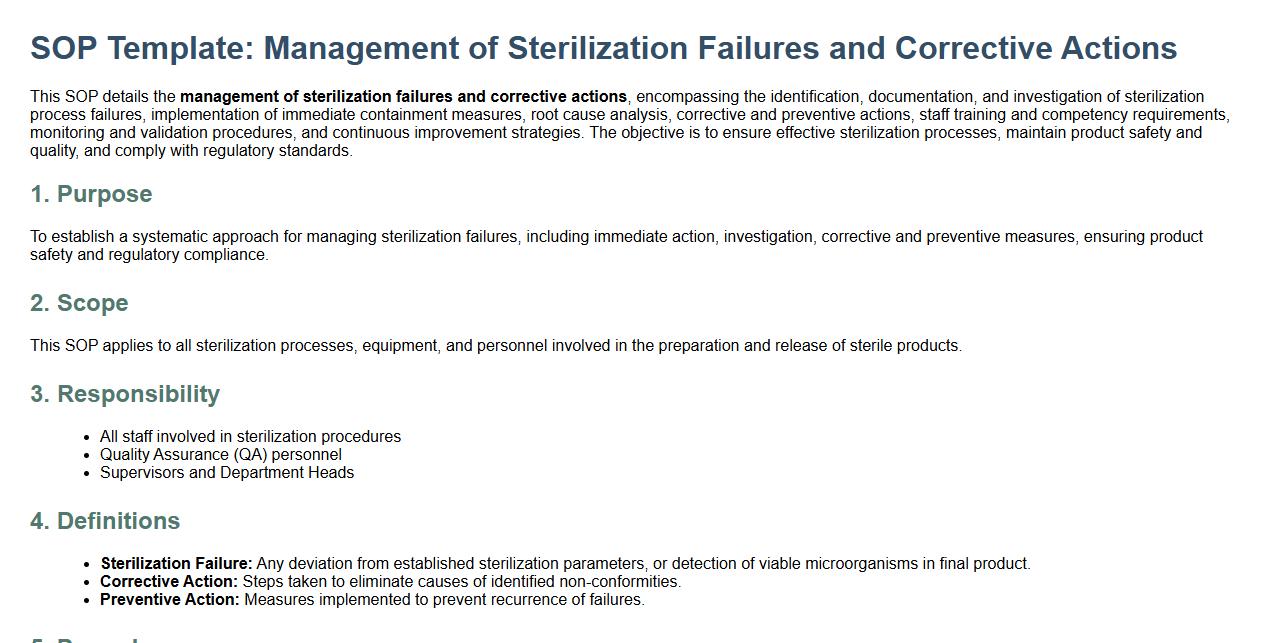
This SOP details the management of sterilization failures and corrective actions, encompassing the identification, documentation, and investigation of sterilization process failures, implementation of immediate containment measures, root cause analysis, corrective and preventive actions, staff training and competency requirements, monitoring and validation procedures, and continuous improvement strategies. The objective is to ensure effective sterilization processes, maintain product safety and quality, and comply with regulatory standards.
Record-keeping and traceability of sterilized equipment.
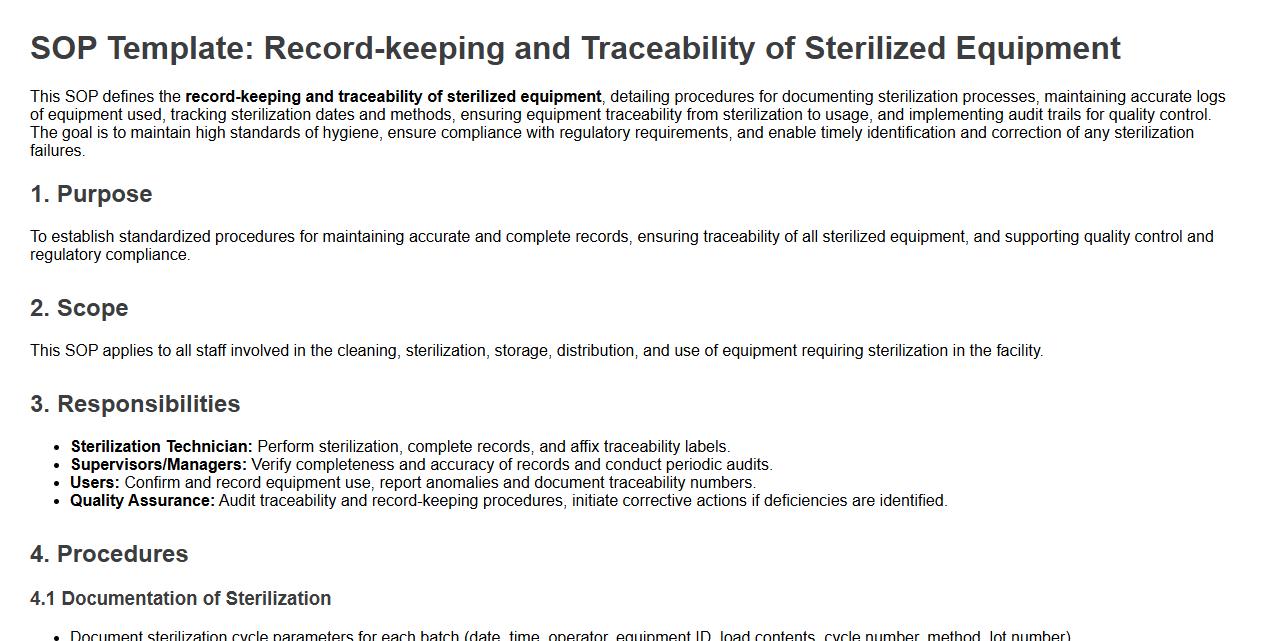
This SOP defines the record-keeping and traceability of sterilized equipment, detailing procedures for documenting sterilization processes, maintaining accurate logs of equipment used, tracking sterilization dates and methods, ensuring equipment traceability from sterilization to usage, and implementing audit trails for quality control. The goal is to maintain high standards of hygiene, ensure compliance with regulatory requirements, and enable timely identification and correction of any sterilization failures.
What is the purpose and scope defined in the SOP for Clinical Equipment Sterilization?
The purpose of the SOP is to ensure the effective sterilization of clinical equipment to prevent infection and maintain patient safety. It defines standardized procedures to be followed by healthcare staff for consistent and safe sterilization practices. The scope includes all medical devices and instruments used in clinical settings that require sterilization before reuse.
Which types of clinical equipment are covered under this sterilization SOP?
The SOP covers all reusable clinical equipment that comes into contact with sterile body sites or mucous membranes, including surgical instruments, endoscopes, and dental tools. It also includes single-use devices subjected to sterilization during special circumstances. Equipment that does not require sterilization but only cleaning and disinfection is explicitly excluded from this SOP.
What steps are specified for pre-cleaning and preparation before sterilization?
Pre-cleaning involves the removal of visible soil and organic matter using appropriate detergents and mechanical action such as brushing or ultrasonic cleaning. The equipment must be thoroughly rinsed and inspected for damage or residual debris before proceeding. Proper packaging or wrapping is mandated to maintain sterility during and after the sterilization process.
What sterilization methods and parameters are mandated by the SOP?
The SOP mandates approved sterilization methods such as autoclaving (steam under pressure), ethylene oxide gas, and low-temperature plasma sterilization. Critical parameters include specific temperature ranges, exposure times, and pressure levels tailored to each sterilization technique. Validation through biological and chemical indicators is required to ensure sterilization efficacy.
How does the SOP outline documentation and record-keeping requirements for sterilization cycles?
The SOP requires detailed documentation for every sterilization cycle, including date, time, operator, load content, and method used. Records must also include the results of biological and chemical indicators to confirm sterilization success. These logs are maintained securely and made available for audits and quality control assessments.