

A SOP Template for Pre-Surgical Patient Preparation ensures a standardized approach to patient care before surgery, outlining essential steps such as medical evaluations, patient education, and necessary documentation. This template enhances safety, reduces risks, and improves communication among healthcare providers. Following a well-structured SOP promotes consistency and compliance with hospital protocols.
Patient identification and confirmation of surgical procedure.
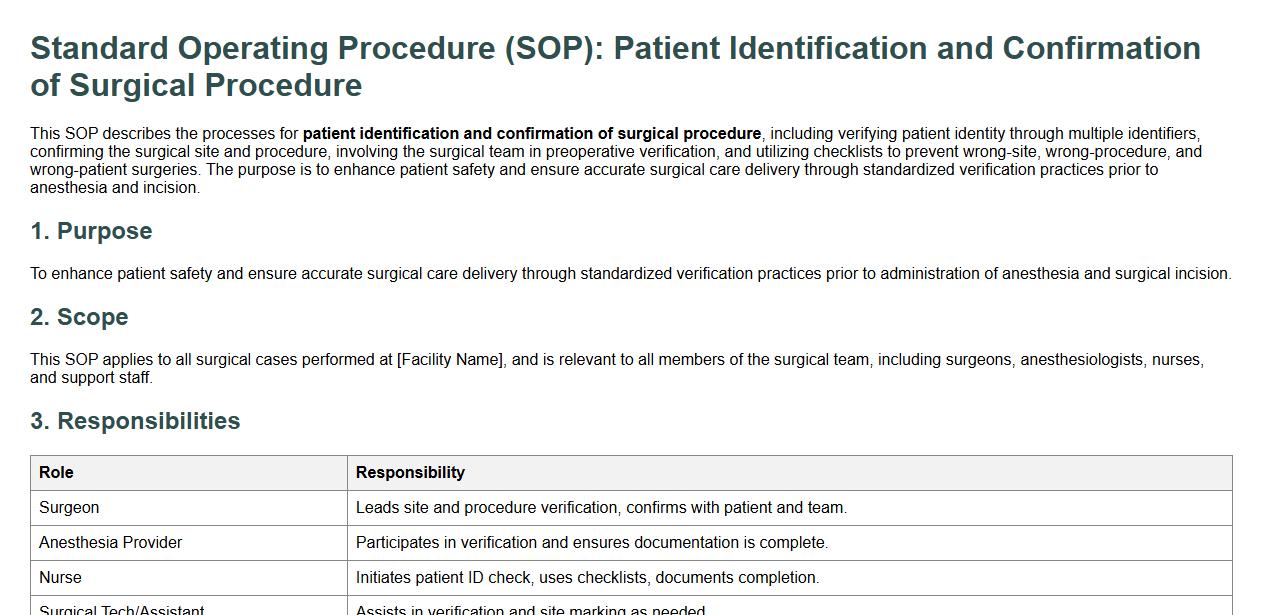
This SOP describes the processes for patient identification and confirmation of surgical procedure, including verifying patient identity through multiple identifiers, confirming the surgical site and procedure, involving the surgical team in preoperative verification, and utilizing checklists to prevent wrong-site, wrong-procedure, and wrong-patient surgeries. The purpose is to enhance patient safety and ensure accurate surgical care delivery through standardized verification practices prior to anesthesia and incision.
Verification of patient consent and medical history review.
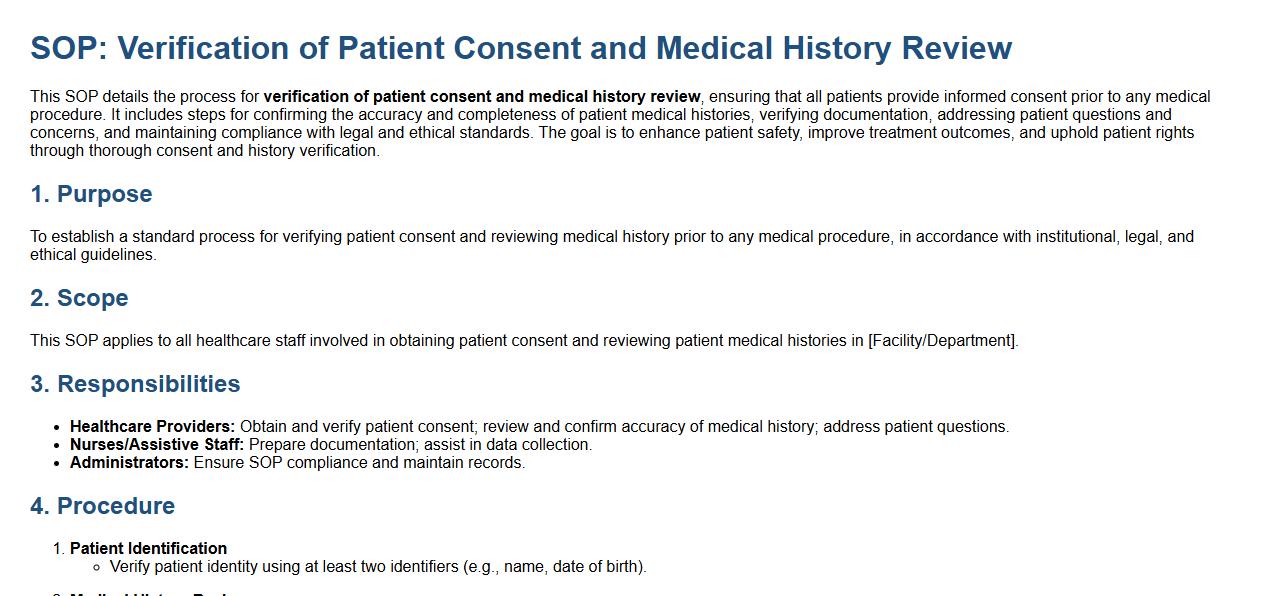
This SOP details the process for verification of patient consent and medical history review, ensuring that all patients provide informed consent prior to any medical procedure. It includes steps for confirming the accuracy and completeness of patient medical histories, verifying documentation, addressing patient questions and concerns, and maintaining compliance with legal and ethical standards. The goal is to enhance patient safety, improve treatment outcomes, and uphold patient rights through thorough consent and history verification.
Pre-operative fasting and dietary restriction guidelines.
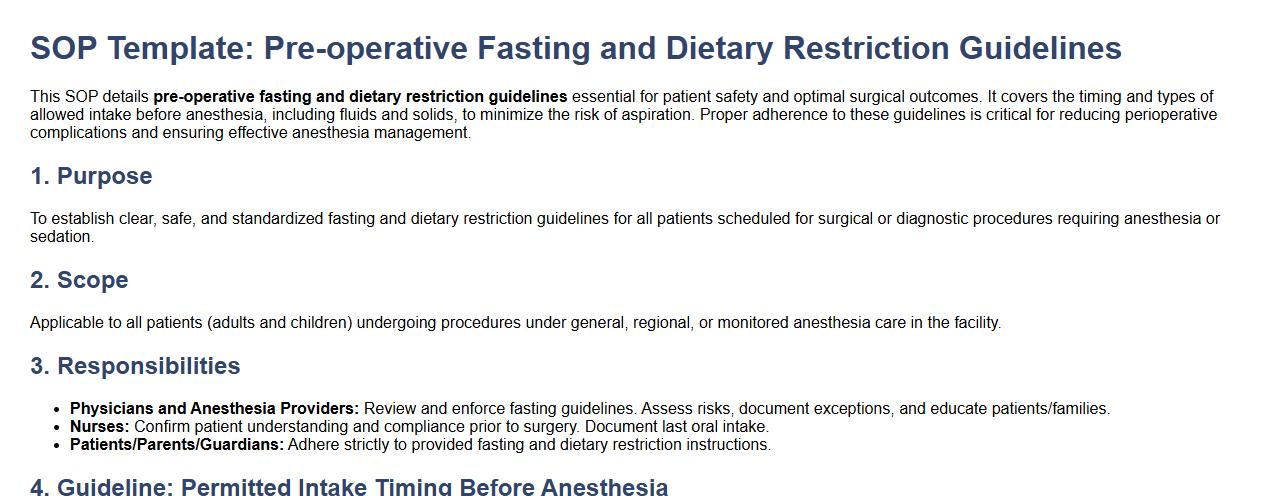
This SOP details pre-operative fasting and dietary restriction guidelines essential for patient safety and optimal surgical outcomes. It covers the timing and types of allowed intake before anesthesia, including fluids and solids, to minimize the risk of aspiration. Proper adherence to these guidelines is critical for reducing perioperative complications and ensuring effective anesthesia management.
Allergy and medication reconciliation process.
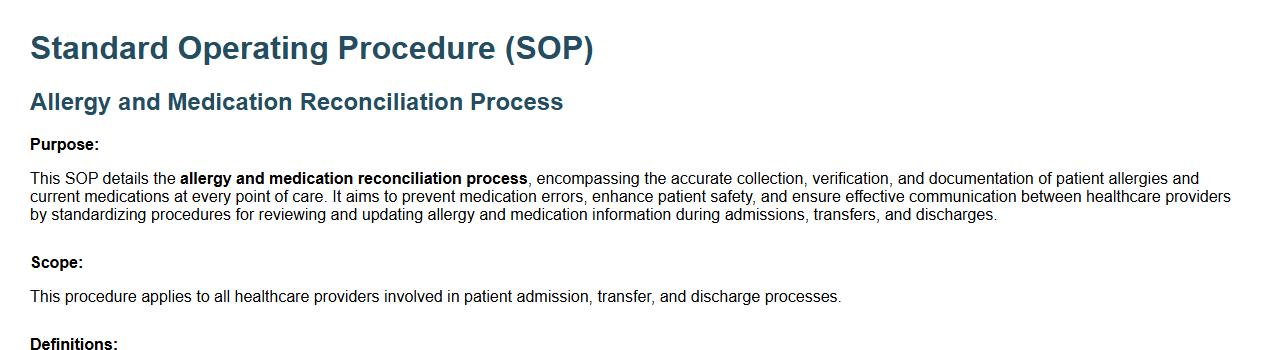
This SOP details the allergy and medication reconciliation process, encompassing the accurate collection, verification, and documentation of patient allergies and current medications at every point of care. It aims to prevent medication errors, enhance patient safety, and ensure effective communication between healthcare providers by standardizing procedures for reviewing and updating allergy and medication information during admissions, transfers, and discharges.
Vital signs assessment and documentation.
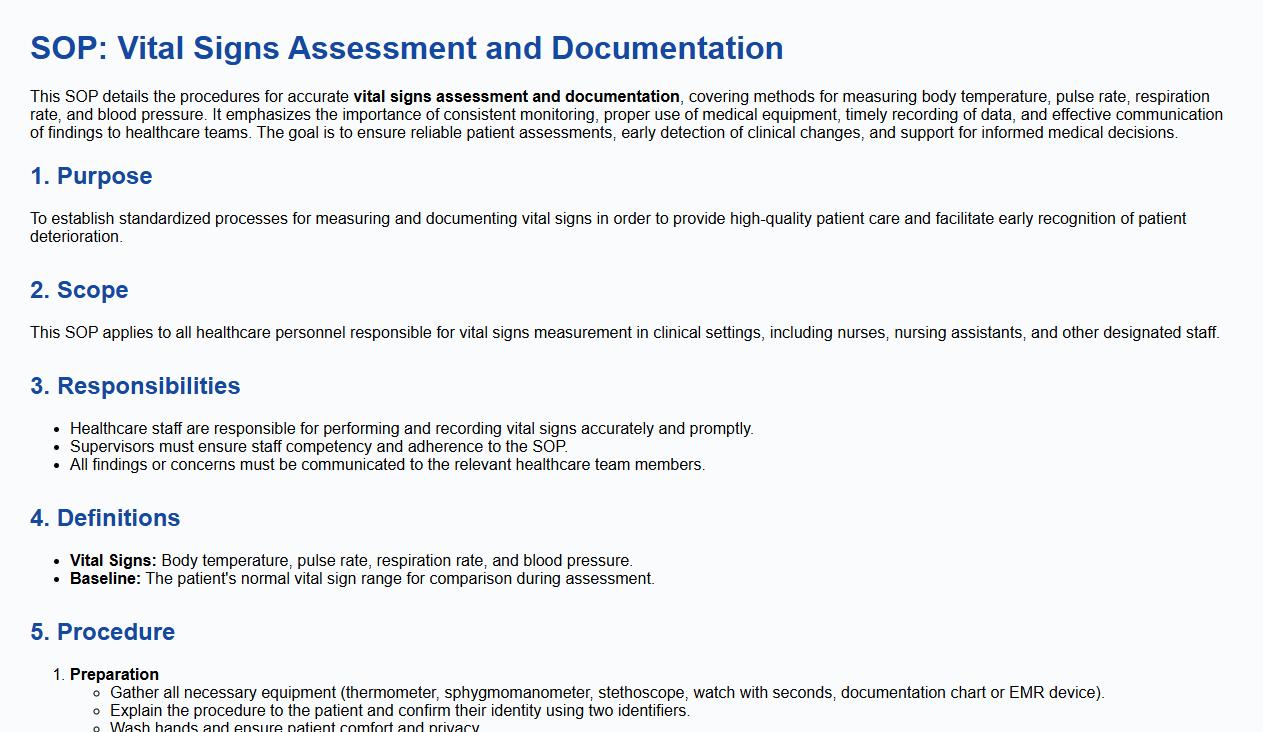
This SOP details the procedures for accurate vital signs assessment and documentation, covering methods for measuring body temperature, pulse rate, respiration rate, and blood pressure. It emphasizes the importance of consistent monitoring, proper use of medical equipment, timely recording of data, and effective communication of findings to healthcare teams. The goal is to ensure reliable patient assessments, early detection of clinical changes, and support for informed medical decisions.
Pre-surgical site preparation and marking protocol.
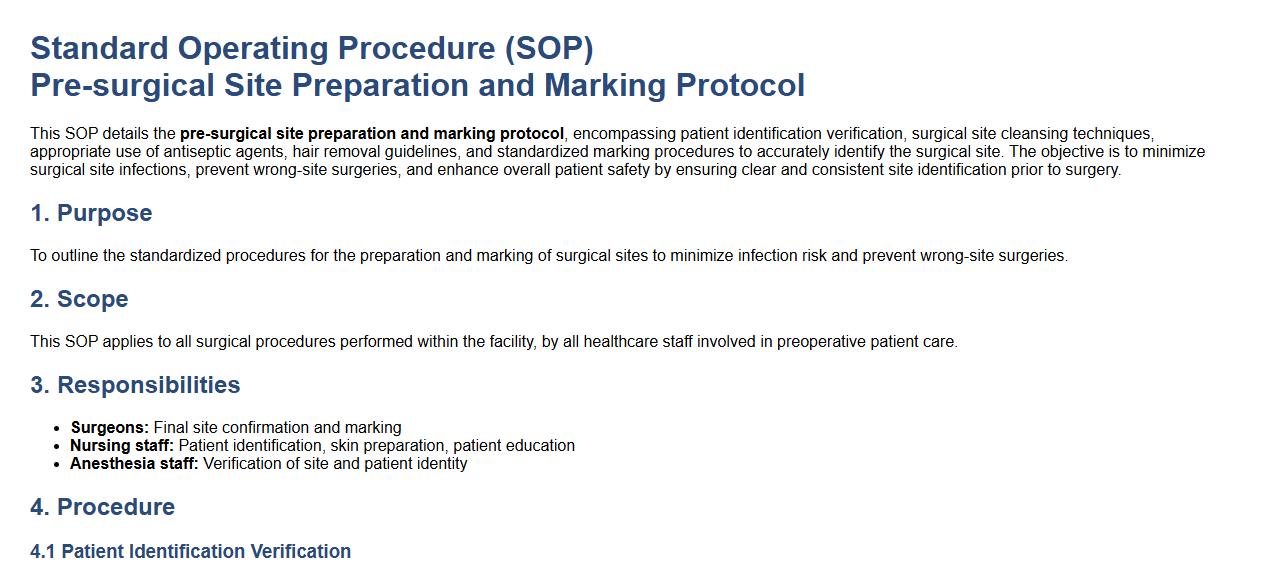
This SOP details the pre-surgical site preparation and marking protocol, encompassing patient identification verification, surgical site cleansing techniques, appropriate use of antiseptic agents, hair removal guidelines, and standardized marking procedures to accurately identify the surgical site. The objective is to minimize surgical site infections, prevent wrong-site surgeries, and enhance overall patient safety by ensuring clear and consistent site identification prior to surgery.
Administration of pre-operative medications.
This SOP details the administration of pre-operative medications, covering patient assessment, medication selection, dosage calculation, timing of administration, monitoring for adverse reactions, documentation requirements, and communication with the surgical team. Its goal is to ensure safe and effective preparation of patients before surgery to optimize outcomes and minimize risks.
Patient gowning and removal of personal items.
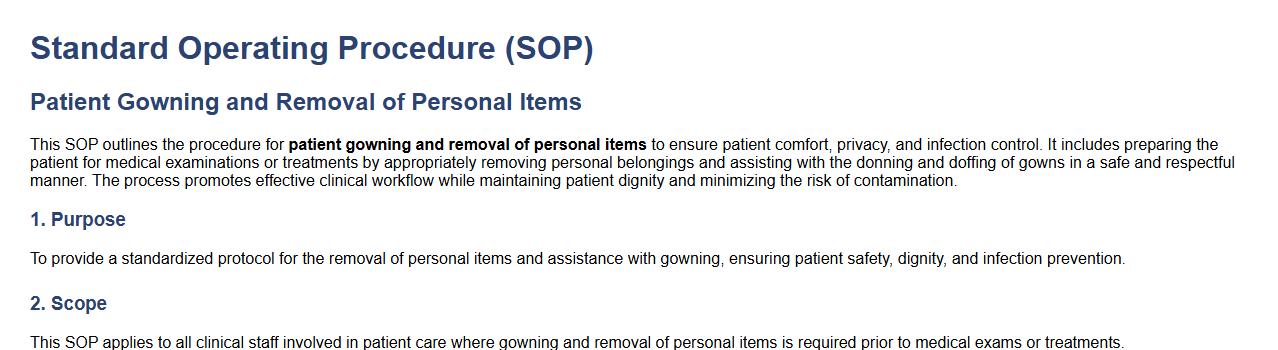
This SOP outlines the procedure for patient gowning and removal of personal items to ensure patient comfort, privacy, and infection control. It includes preparing the patient for medical examinations or treatments by appropriately removing personal belongings and assisting with the donning and doffing of gowns in a safe and respectful manner. The process promotes effective clinical workflow while maintaining patient dignity and minimizing the risk of contamination.
Infection prevention and hand hygiene procedures.
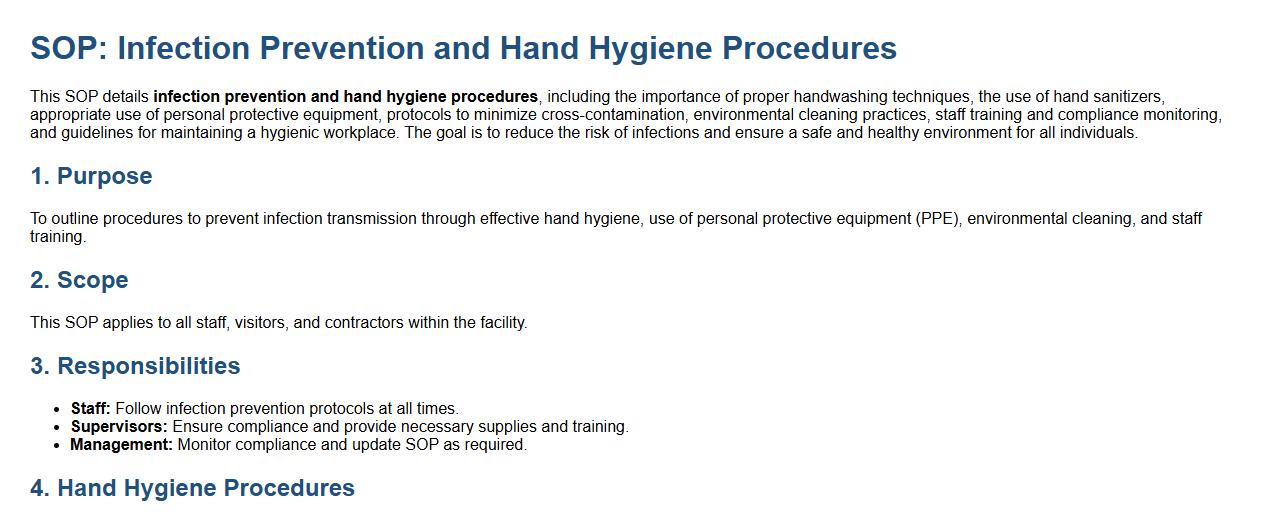
This SOP details infection prevention and hand hygiene procedures, including the importance of proper handwashing techniques, the use of hand sanitizers, appropriate use of personal protective equipment, protocols to minimize cross-contamination, environmental cleaning practices, staff training and compliance monitoring, and guidelines for maintaining a hygienic workplace. The goal is to reduce the risk of infections and ensure a safe and healthy environment for all individuals.
Transfer and handoff communication to surgical team.
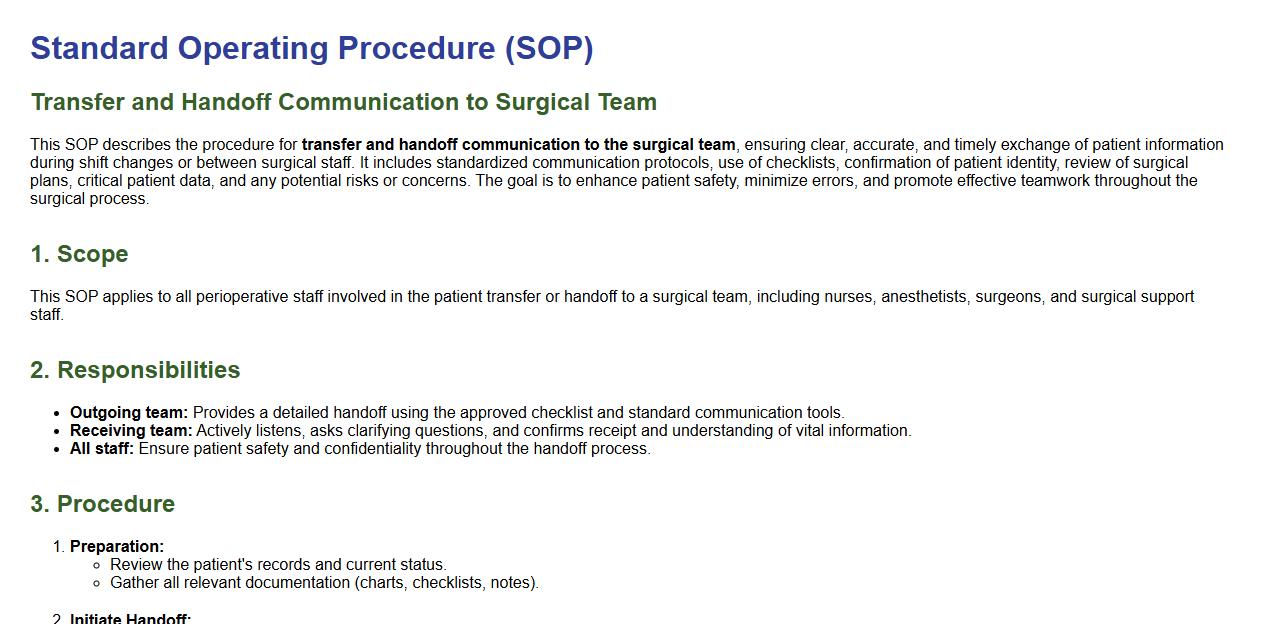
This SOP describes the procedure for transfer and handoff communication to the surgical team, ensuring clear, accurate, and timely exchange of patient information during shift changes or between surgical staff. It includes standardized communication protocols, use of checklists, confirmation of patient identity, review of surgical plans, critical patient data, and any potential risks or concerns. The goal is to enhance patient safety, minimize errors, and promote effective teamwork throughout the surgical process.
What are the key steps outlined in the SOP for verifying patient identity before surgery?
The SOP mandates a two-step patient identity verification process before surgery. This involves checking the patient's ID bracelet and confirming personal details verbally with the patient. Additionally, the surgical team cross-references these details with the surgical consent form to ensure accuracy.
How does the SOP address the management and documentation of allergies and pre-existing conditions?
The SOP requires thorough documentation of all known allergies and pre-existing medical conditions in the patient's record. Staff must verify this information through patient interviews and medical history reviews. Any identified allergies or conditions must be clearly communicated to the entire surgical team to prevent adverse events.
Which pre-surgical hygiene and site preparation measures are mandated by the SOP?
The SOP specifies rigorous pre-surgical hygiene standards including the use of antiseptic washes by patients prior to surgery. It also dictates that the surgical site be cleaned and disinfected thoroughly with approved solutions. Hair removal, if necessary, must be done using sterile clippers rather than razors to minimize infection risk.
What protocols does the SOP specify for pre-operative fasting and medication administration?
According to the SOP, patients must adhere to strict pre-operative fasting guidelines to reduce the risk of aspiration during anesthesia. Medication administration protocols require review and adjustment of current medications in consultation with anesthesiologists. Clear documentation of fasting times and medication instructions is essential to ensure compliance.
How does the SOP ensure informed consent and patient education prior to surgery?
The SOP emphasizes obtaining informed consent through detailed discussions about the surgical procedure, risks, benefits, and alternatives. Patient education materials are provided to enhance understanding and support decision-making. Lastly, the consent process is documented thoroughly to verify that the patient voluntarily agrees to the surgery.