

A SOP Template for Patient Intake Process standardizes the steps to efficiently collect patient information, ensuring accuracy and compliance with healthcare regulations. It outlines clear procedures for verifying personal details, insurance information, and medical history to streamline patient registration. Implementing this template enhances patient experience while reducing errors and administrative delays.
Patient appointment scheduling and confirmation.
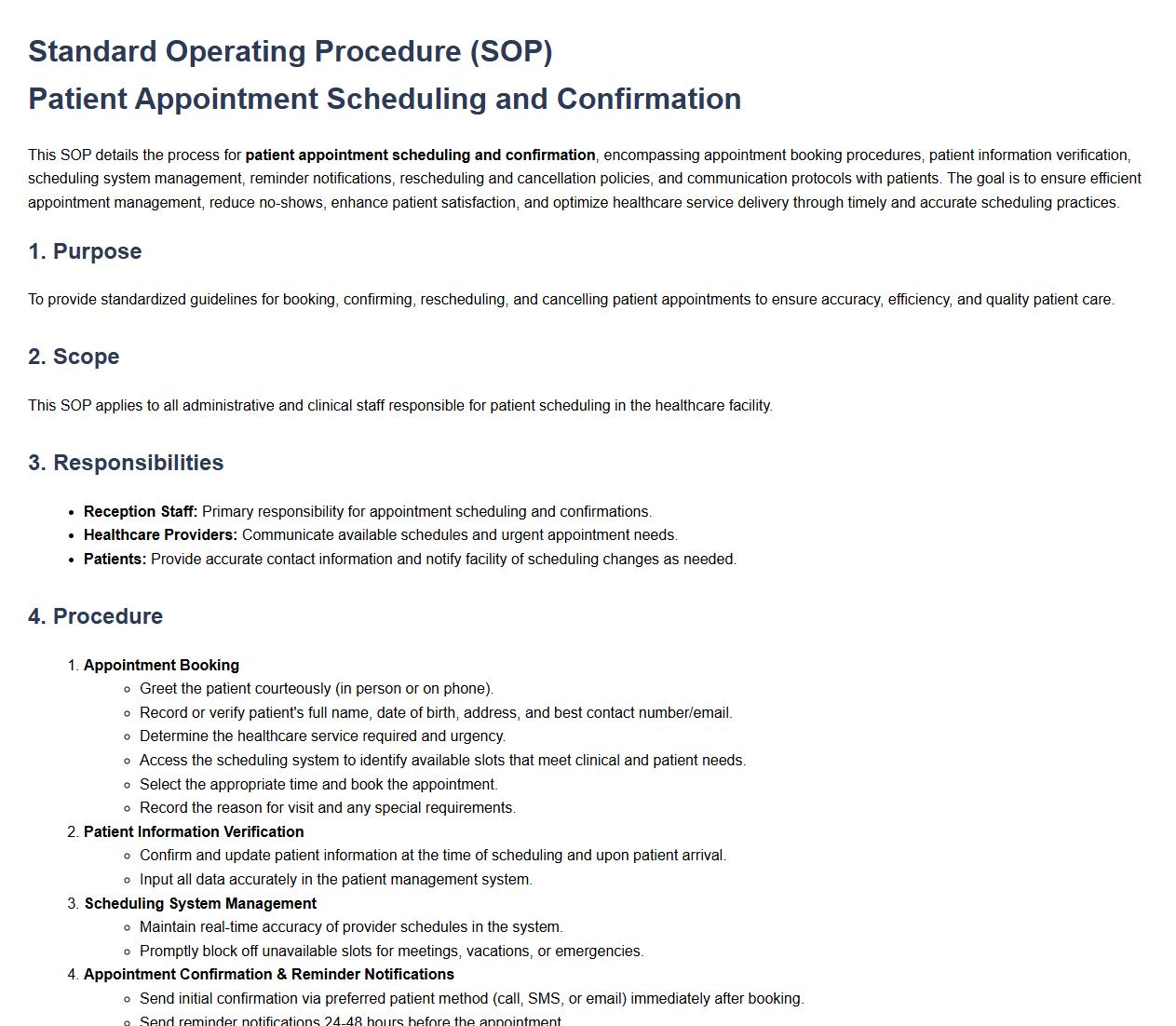
This SOP details the process for patient appointment scheduling and confirmation, encompassing appointment booking procedures, patient information verification, scheduling system management, reminder notifications, rescheduling and cancellation policies, and communication protocols with patients. The goal is to ensure efficient appointment management, reduce no-shows, enhance patient satisfaction, and optimize healthcare service delivery through timely and accurate scheduling practices.
Patient arrival and check-in procedures.
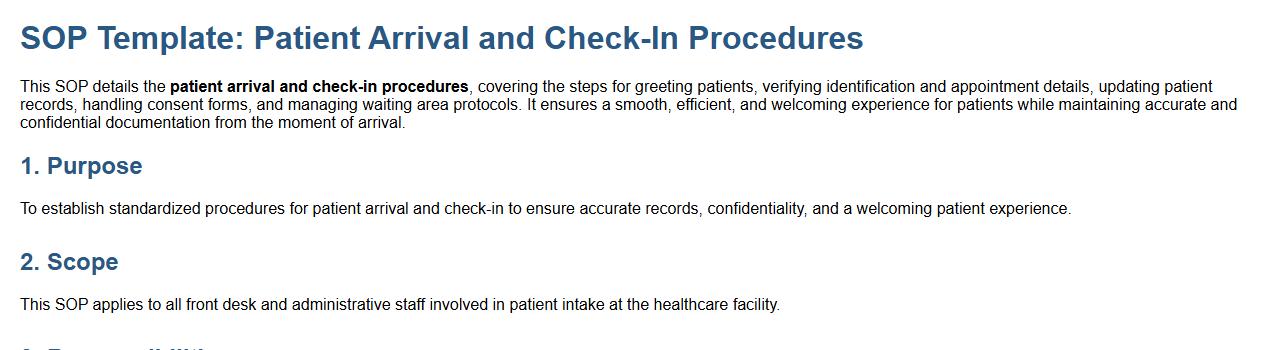
This SOP details the patient arrival and check-in procedures, covering the steps for greeting patients, verifying identification and appointment details, updating patient records, handling consent forms, and managing waiting area protocols. It ensures a smooth, efficient, and welcoming experience for patients while maintaining accurate and confidential documentation from the moment of arrival.
Verification of patient identity and insurance details.
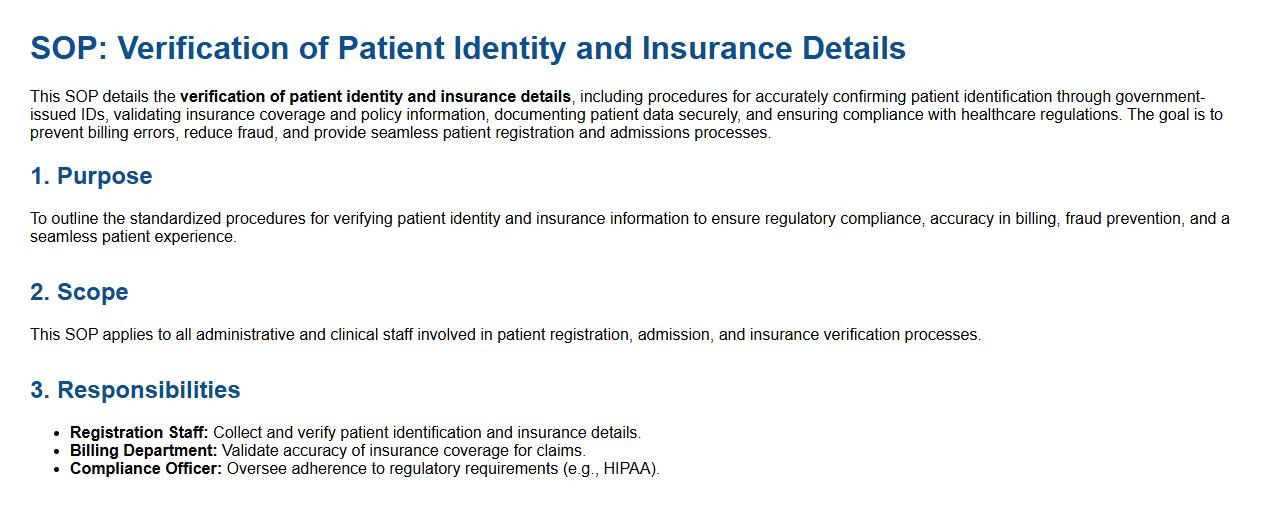
This SOP details the verification of patient identity and insurance details, including procedures for accurately confirming patient identification through government-issued IDs, validating insurance coverage and policy information, documenting patient data securely, and ensuring compliance with healthcare regulations. The goal is to prevent billing errors, reduce fraud, and provide seamless patient registration and admissions processes.
Collection and documentation of patient medical history.
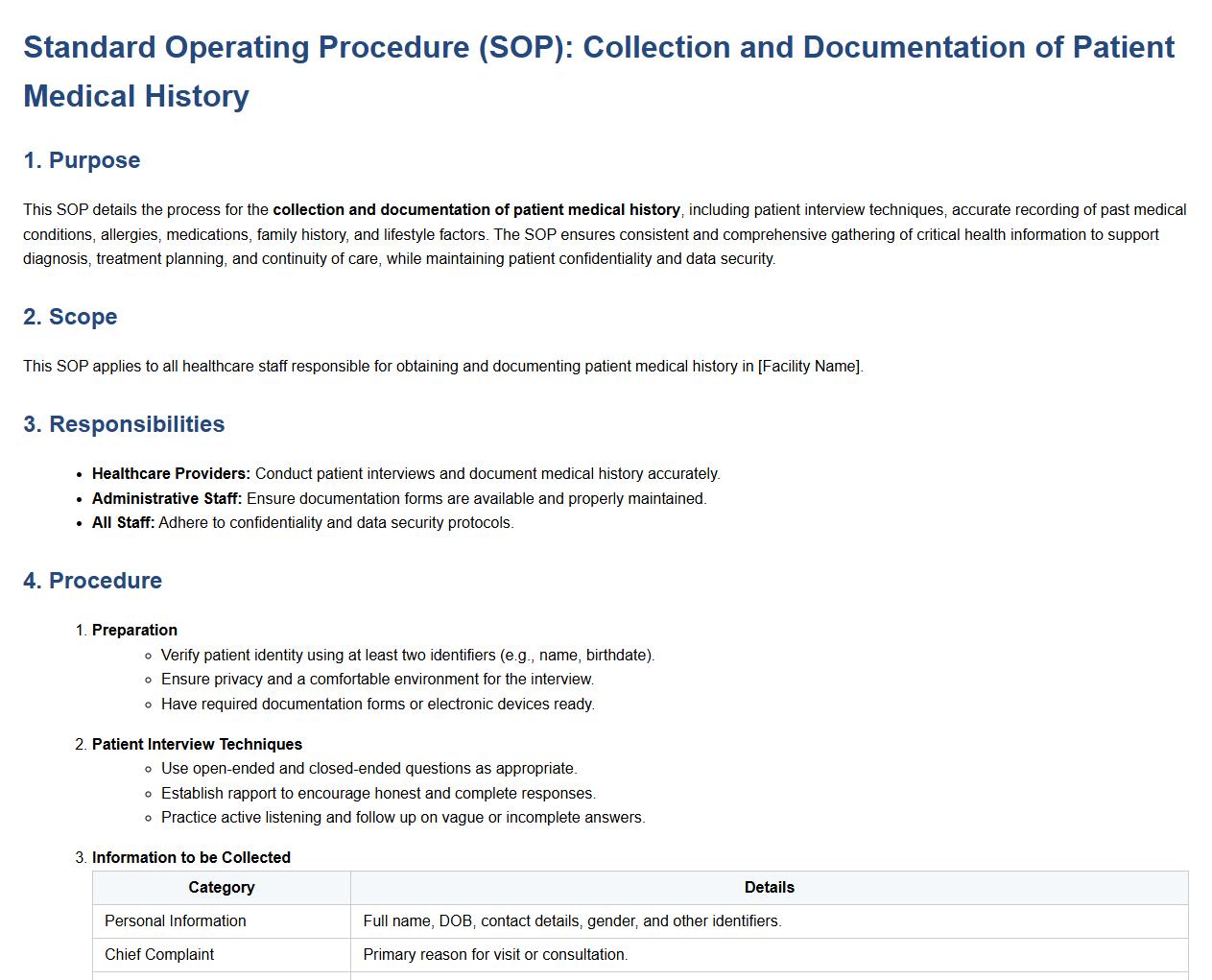
This SOP details the process for the collection and documentation of patient medical history, including patient interview techniques, accurate recording of past medical conditions, allergies, medications, family history, and lifestyle factors. It ensures consistent and comprehensive gathering of critical health information to support diagnosis, treatment planning, and continuity of care, while maintaining patient confidentiality and data security.
Consent form distribution and signature collection.
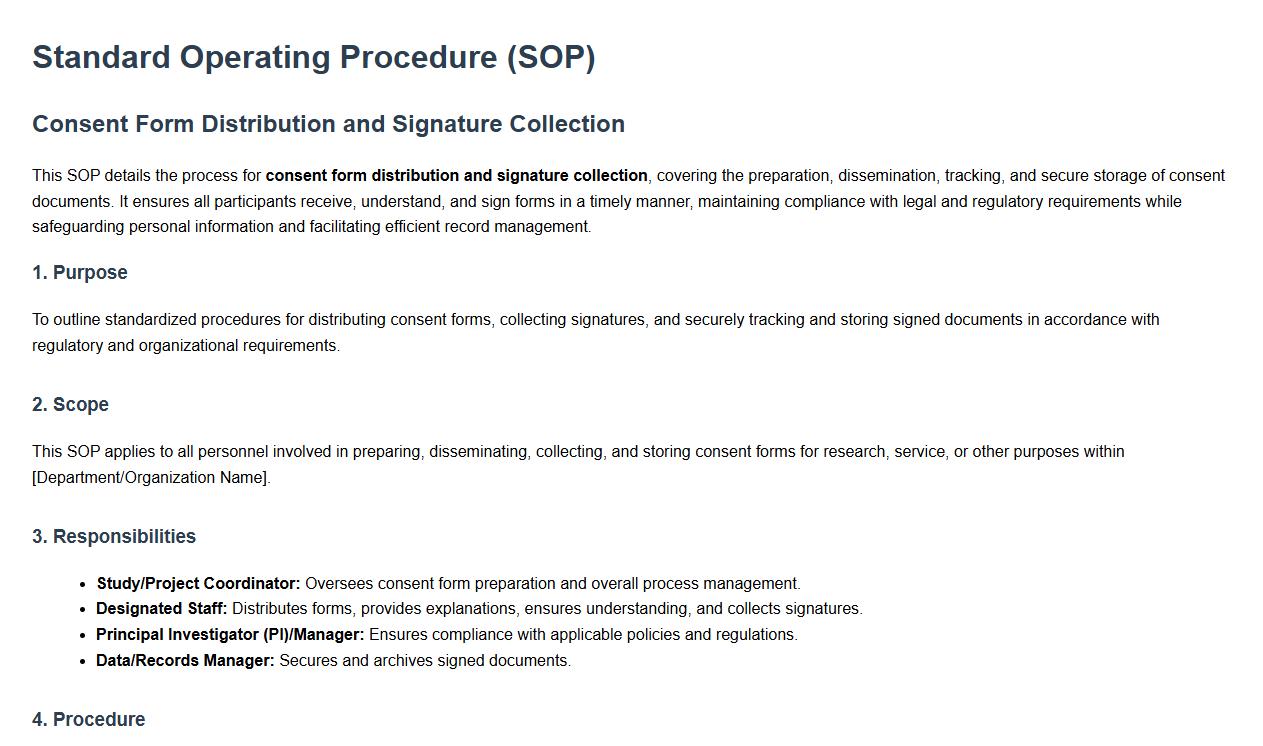
This SOP details the process for consent form distribution and signature collection, covering the preparation, dissemination, tracking, and secure storage of consent documents. It ensures all participants receive, understand, and sign forms in a timely manner, maintaining compliance with legal and regulatory requirements while safeguarding personal information and facilitating efficient record management.
Initial patient assessments and vital sign recording.
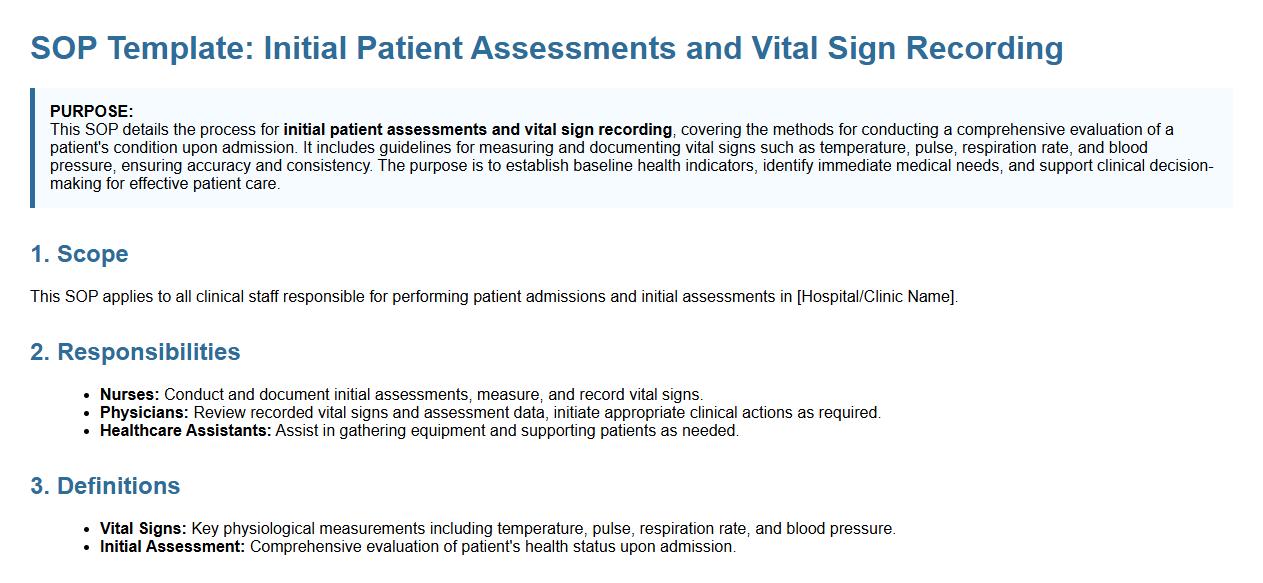
This SOP details the process for initial patient assessments and vital sign recording, covering the methods for conducting a comprehensive evaluation of a patient's condition upon admission. It includes guidelines for measuring and documenting vital signs such as temperature, pulse, respiration rate, and blood pressure, ensuring accuracy and consistency. The purpose is to establish baseline health indicators, identify immediate medical needs, and support clinical decision-making for effective patient care.
Electronic health record (EHR) data entry protocols.
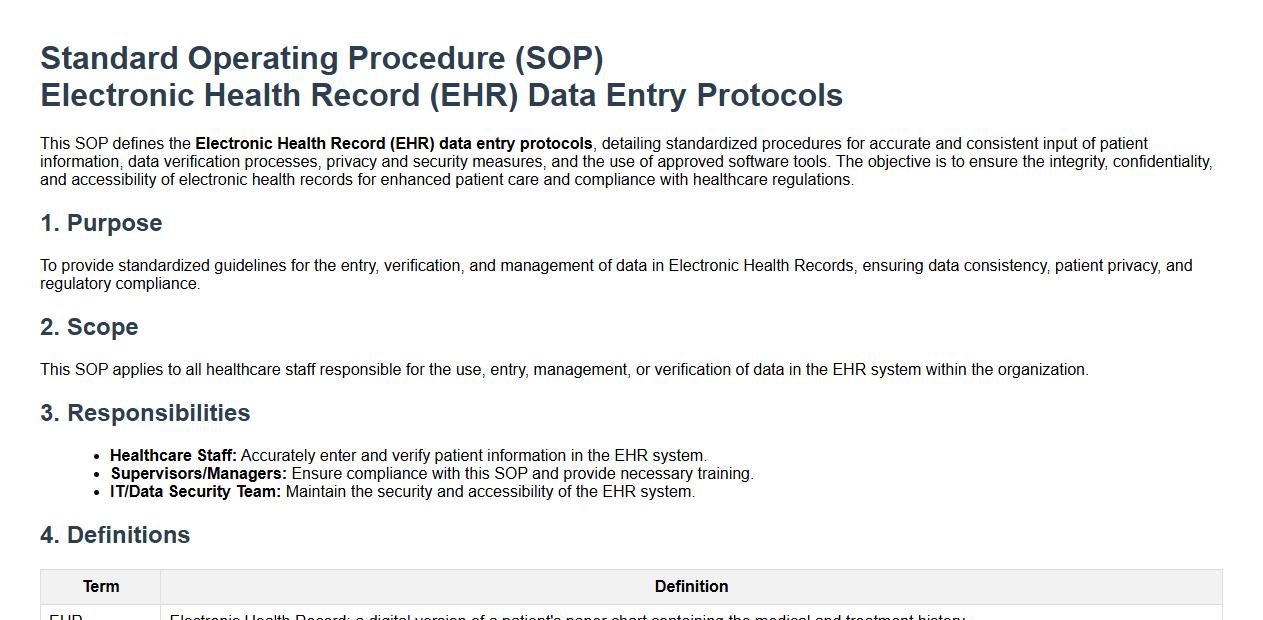
This SOP defines the Electronic Health Record (EHR) data entry protocols, detailing standardized procedures for accurate and consistent input of patient information, data verification processes, privacy and security measures, and the use of approved software tools. The objective is to ensure the integrity, confidentiality, and accessibility of electronic health records for enhanced patient care and compliance with healthcare regulations.
Patient privacy and HIPAA compliance steps.
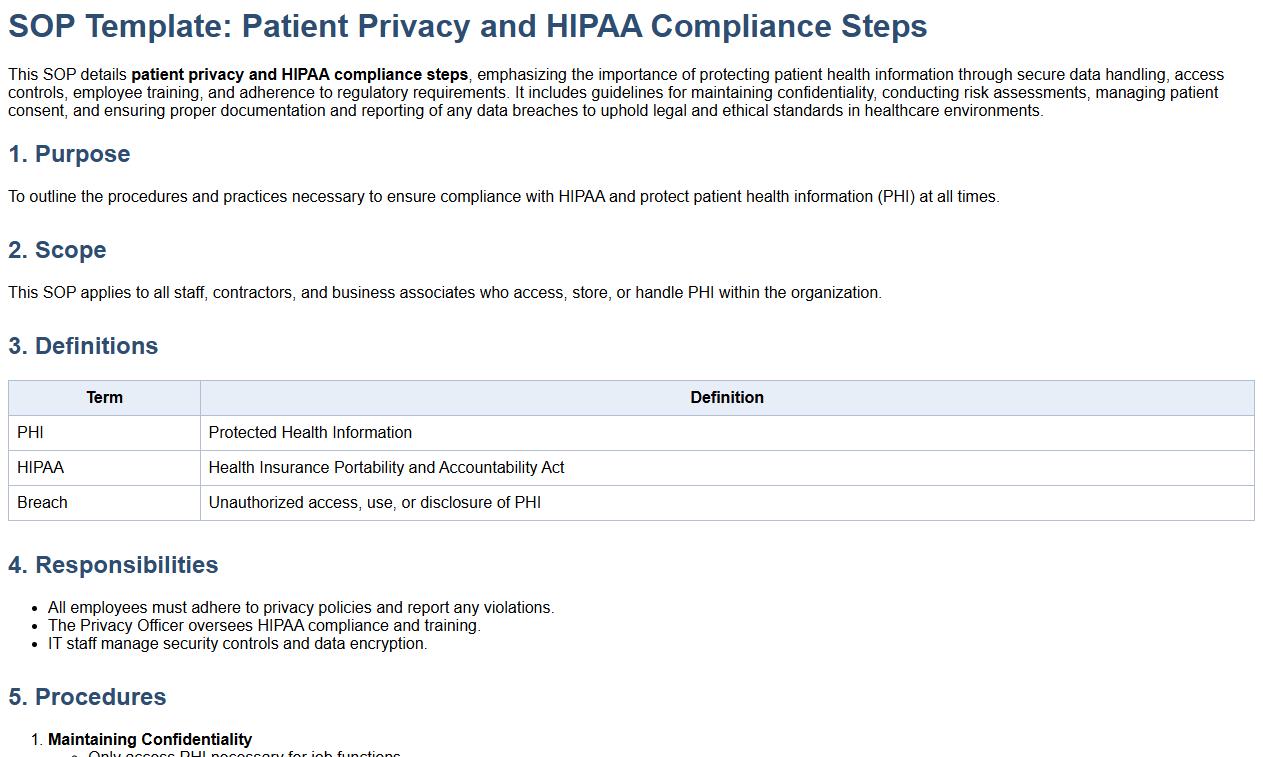
This SOP details patient privacy and HIPAA compliance steps, emphasizing the importance of protecting patient health information through secure data handling, access controls, employee training, and adherence to regulatory requirements. It includes guidelines for maintaining confidentiality, conducting risk assessments, managing patient consent, and ensuring proper documentation and reporting of any data breaches to uphold legal and ethical standards in healthcare environments.
Triage and assignment to appropriate healthcare provider.
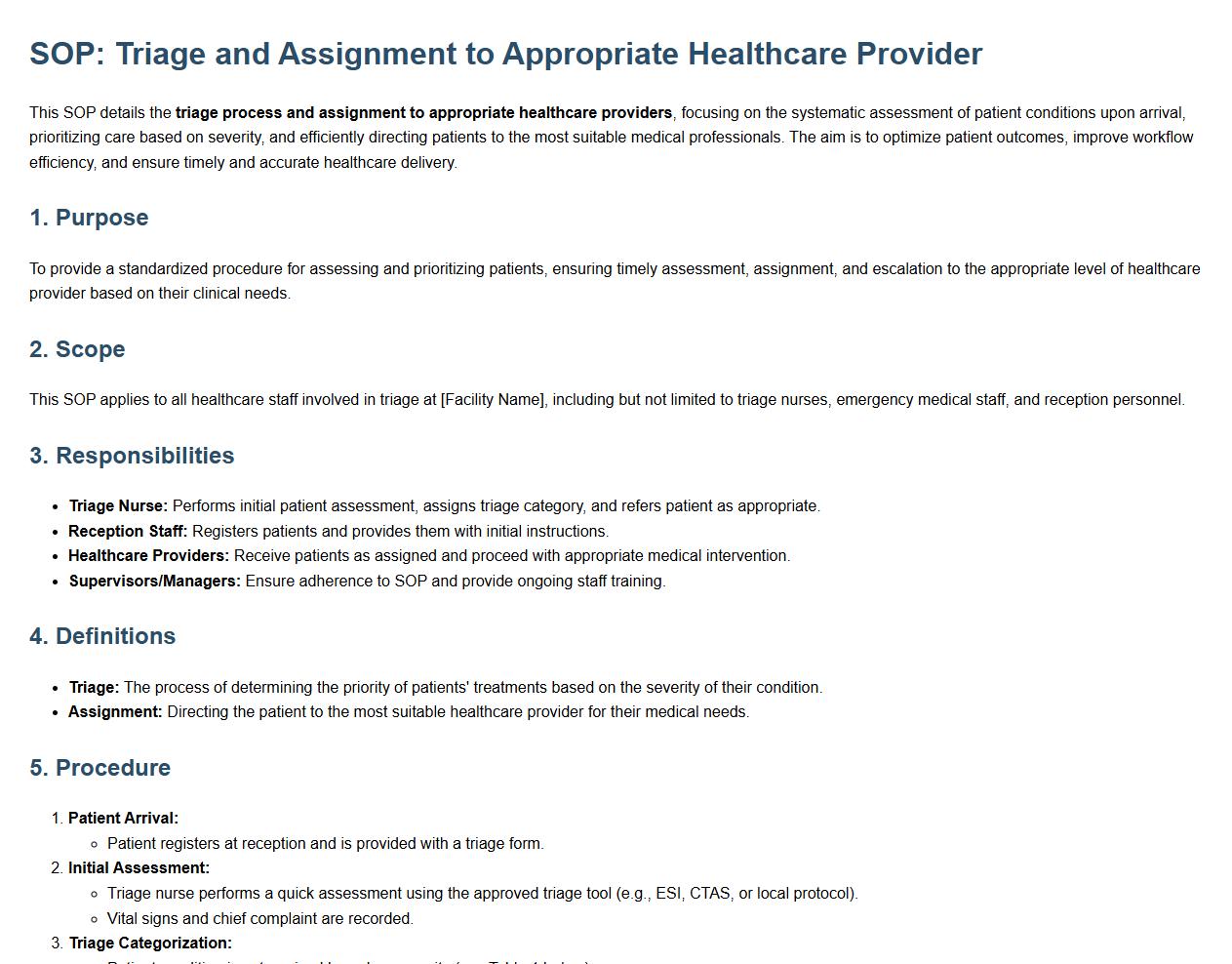
This SOP details the triage process and assignment to appropriate healthcare providers, focusing on the systematic assessment of patient conditions upon arrival, prioritizing care based on severity, and efficiently directing patients to the most suitable medical professionals. The aim is to optimize patient outcomes, improve workflow efficiency, and ensure timely and accurate healthcare delivery.
Patient flow management and communication procedures.
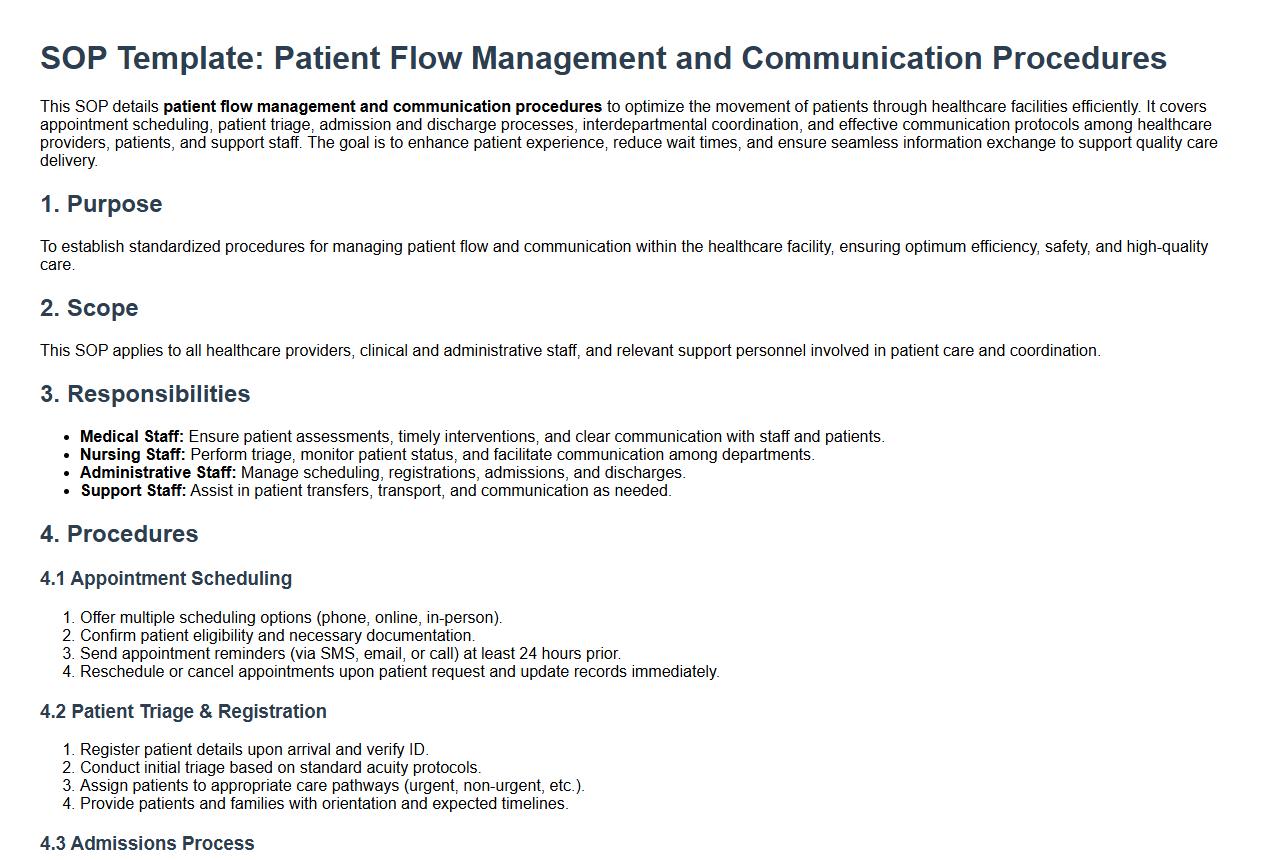
This SOP details patient flow management and communication procedures to optimize the movement of patients through healthcare facilities efficiently. It covers appointment scheduling, patient triage, admission and discharge processes, interdepartmental coordination, and effective communication protocols among healthcare providers, patients, and support staff. The goal is to enhance patient experience, reduce wait times, and ensure seamless information exchange to support quality care delivery.
Required Steps for Verifying Patient Identification During Intake
The primary step in verifying patient identification is to request a government-issued photo ID. Next, the patient's name and date of birth are confirmed against the provided identification document. Lastly, a unique patient ID number is generated or verified to ensure accurate record matching.
Standardized Forms and Documentation for Patient Admission
The SOP mandates the completion of a patient admission form to collect essential personal and contact information. Additionally, a consent for treatment form must be signed by the patient or guardian. Insurance details and emergency contact forms are also required to ensure comprehensive documentation.
Protocols for Collecting and Recording Patient Medical History and Vital Signs
The SOP requires the collection of a comprehensive medical history including allergies, medications, and previous conditions. Vital signs such as blood pressure, heart rate, temperature, and respiratory rate must be taken using calibrated equipment. All data must be accurately recorded in the patient's health record immediately during intake.
Responsible Personnel for Updating and Maintaining Patient Records
According to the SOP, the intake nurse is primarily responsible for updating patient records during the intake process. Medical administrative staff verify that all documentation is complete and accurate. Continuous updates during the patient stay are handled by assigned healthcare providers to maintain data integrity.
Infection Control Measures to Follow During Patient Intake
The SOP emphasizes strict adherence to hand hygiene protocols using sanitizer or handwashing before and after patient contact. Personal protective equipment (PPE) such as gloves and masks must be worn as per infection risk assessments. All surfaces and equipment must be disinfected regularly to minimize cross-contamination during patient intake.