

A SOP Template for Emergency Response in Healthcare provides a structured framework to ensure timely and efficient action during medical emergencies. It outlines clear roles, communication protocols, and step-by-step procedures to enhance patient safety and minimize risks. Implementing this template helps healthcare facilities maintain compliance with regulatory standards and improve overall emergency preparedness.
Activation and notification procedures for emergency situations.
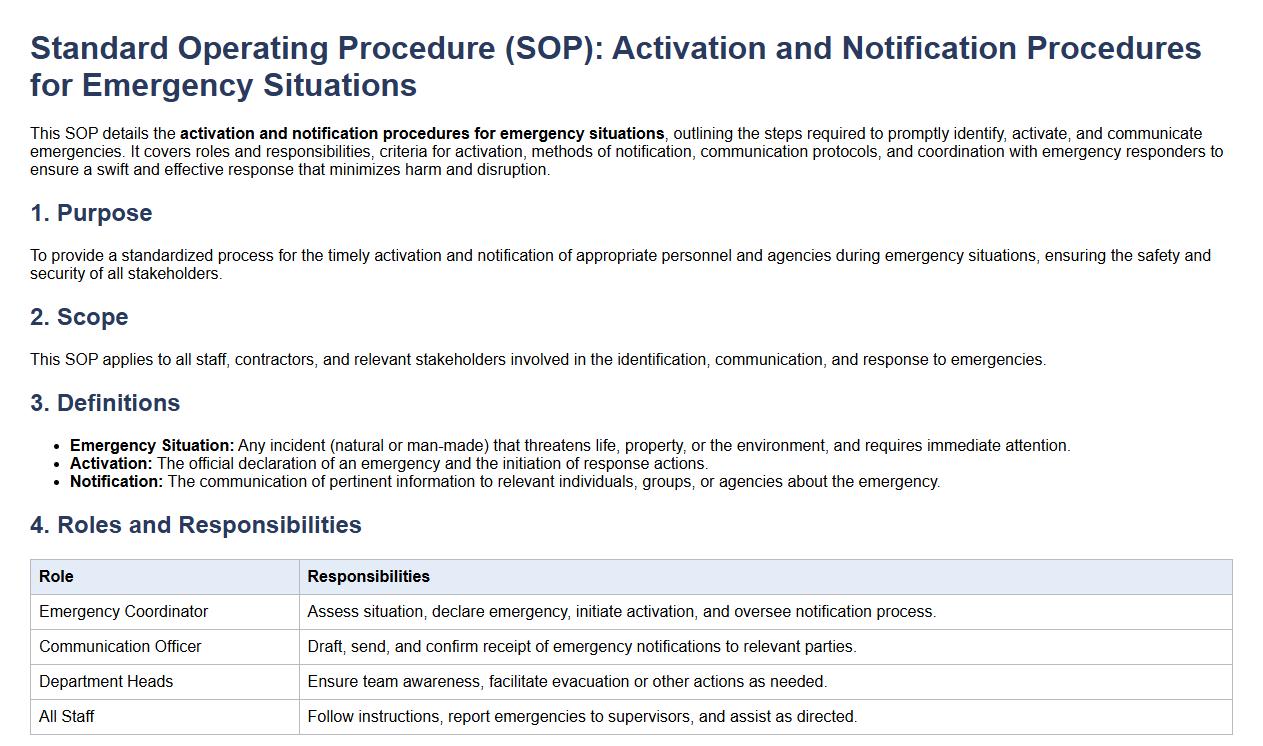
This SOP details the activation and notification procedures for emergency situations, outlining the steps required to promptly identify, activate, and communicate emergencies. It covers roles and responsibilities, criteria for activation, methods of notification, communication protocols, and coordination with emergency responders to ensure a swift and effective response that minimizes harm and disruption.
Triage and initial patient assessment protocols.
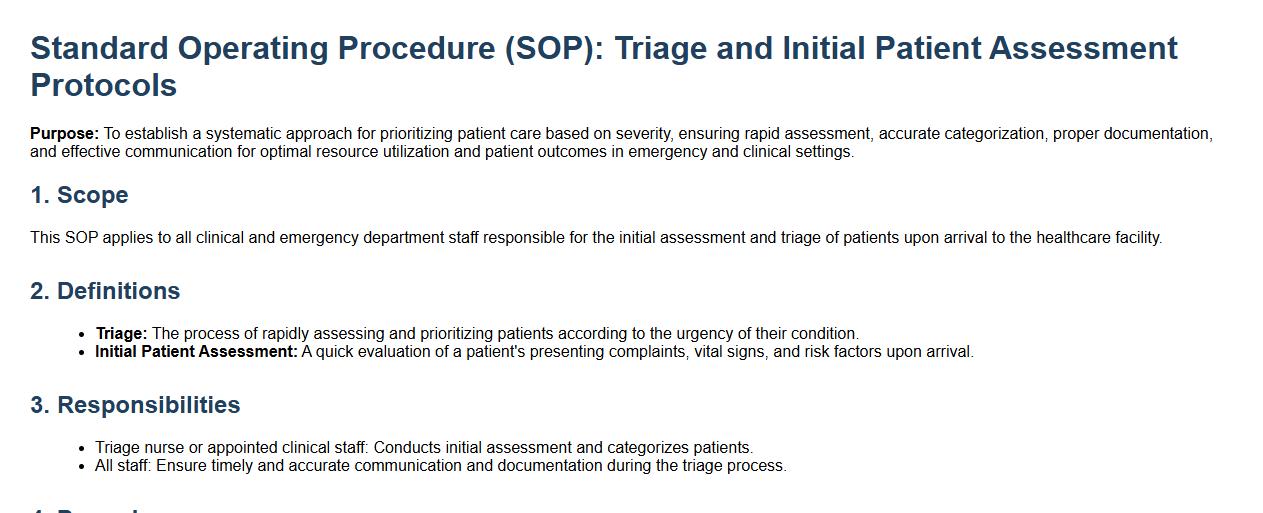
This SOP details the triage and initial patient assessment protocols, outlining the systematic approach for prioritizing patient care based on the severity of their condition. It includes guidelines for rapid assessment upon arrival, categorization of patients according to urgency, documentation procedures, and communication protocols to ensure timely and effective treatment. The purpose is to maximize resource efficiency, improve patient outcomes, and ensure consistent and accurate initial evaluations in emergency and clinical settings.
Communication flow and chain of command guidelines.
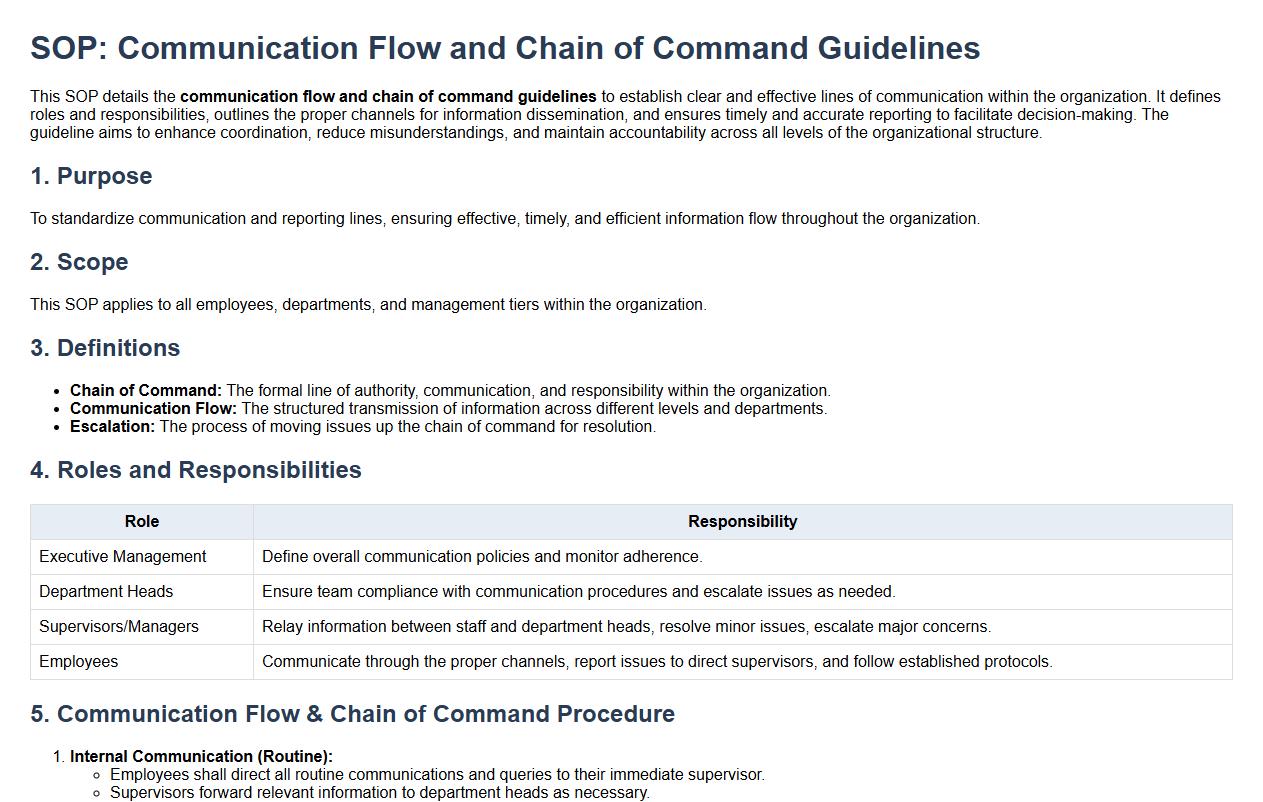
This SOP details the communication flow and chain of command guidelines to establish clear and effective lines of communication within the organization. It defines roles and responsibilities, outlines the proper channels for information dissemination, and ensures timely and accurate reporting to facilitate decision-making. The guideline aims to enhance coordination, reduce misunderstandings, and maintain accountability across all levels of the organizational structure.
Patient evacuation and transport procedures.
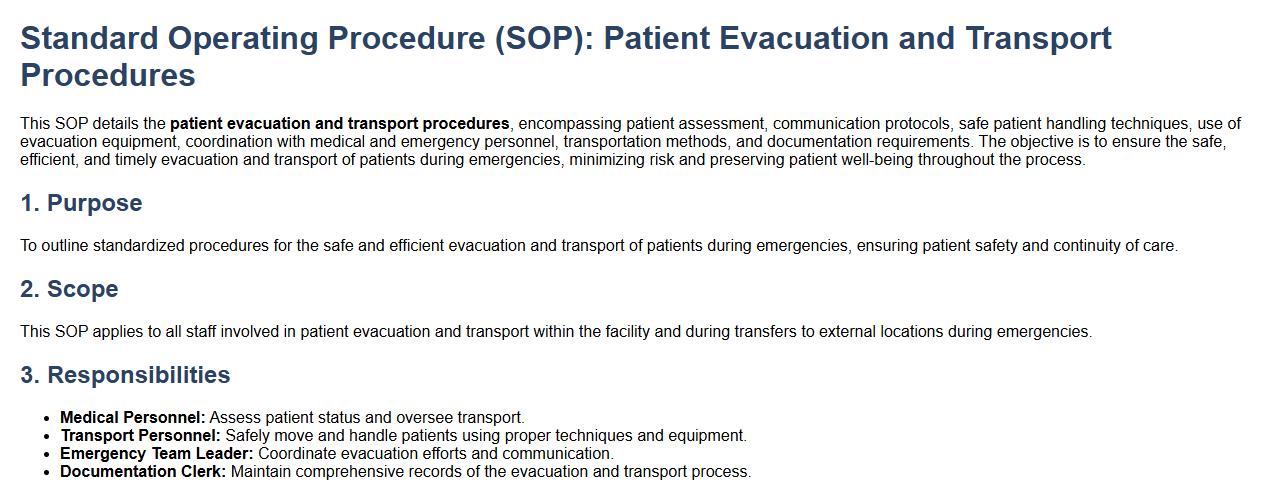
This SOP details the patient evacuation and transport procedures, encompassing patient assessment, communication protocols, safe patient handling techniques, use of evacuation equipment, coordination with medical and emergency personnel, transportation methods, and documentation requirements. The objective is to ensure the safe, efficient, and timely evacuation and transport of patients during emergencies, minimizing risk and preserving patient well-being throughout the process.
Allocation and mobilization of emergency resources and equipment.
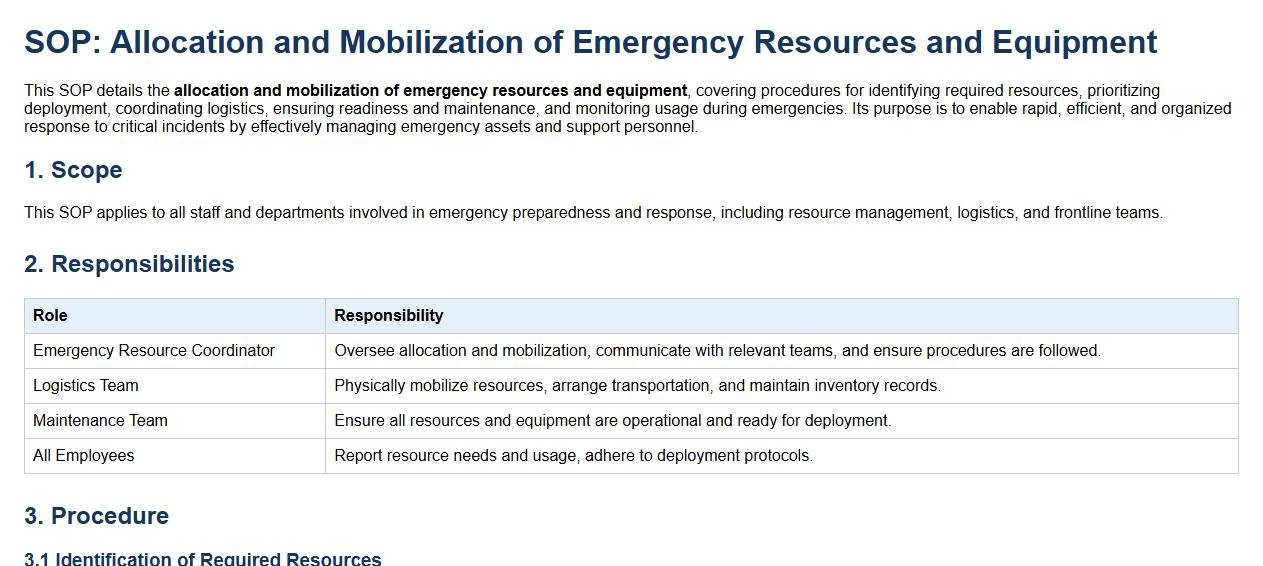
This SOP details the allocation and mobilization of emergency resources and equipment, covering procedures for identifying required resources, prioritizing deployment, coordinating logistics, ensuring readiness and maintenance, and monitoring usage during emergencies. Its purpose is to enable rapid, efficient, and organized response to critical incidents by effectively managing emergency assets and support personnel.
Roles and responsibilities of emergency response team members.
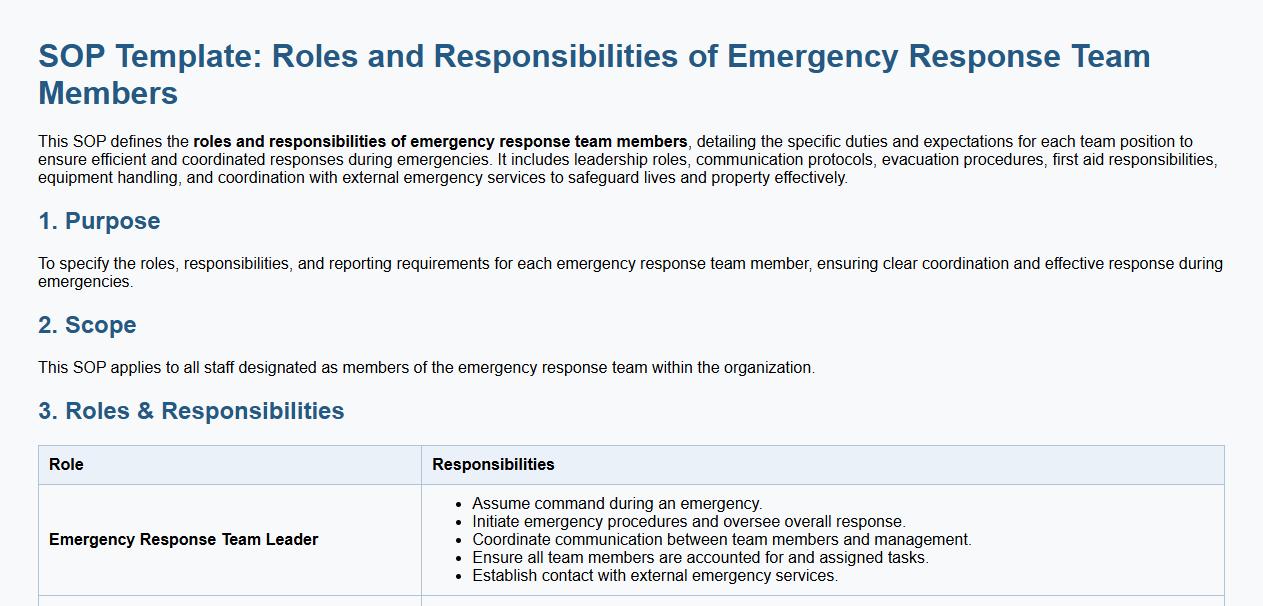
This SOP defines the roles and responsibilities of emergency response team members, detailing the specific duties and expectations for each team position to ensure efficient and coordinated responses during emergencies. It includes leadership roles, communication protocols, evacuation procedures, first aid responsibilities, equipment handling, and coordination with external emergency services to safeguard lives and property effectively.
Infection control and personal protective equipment (PPE) protocols.
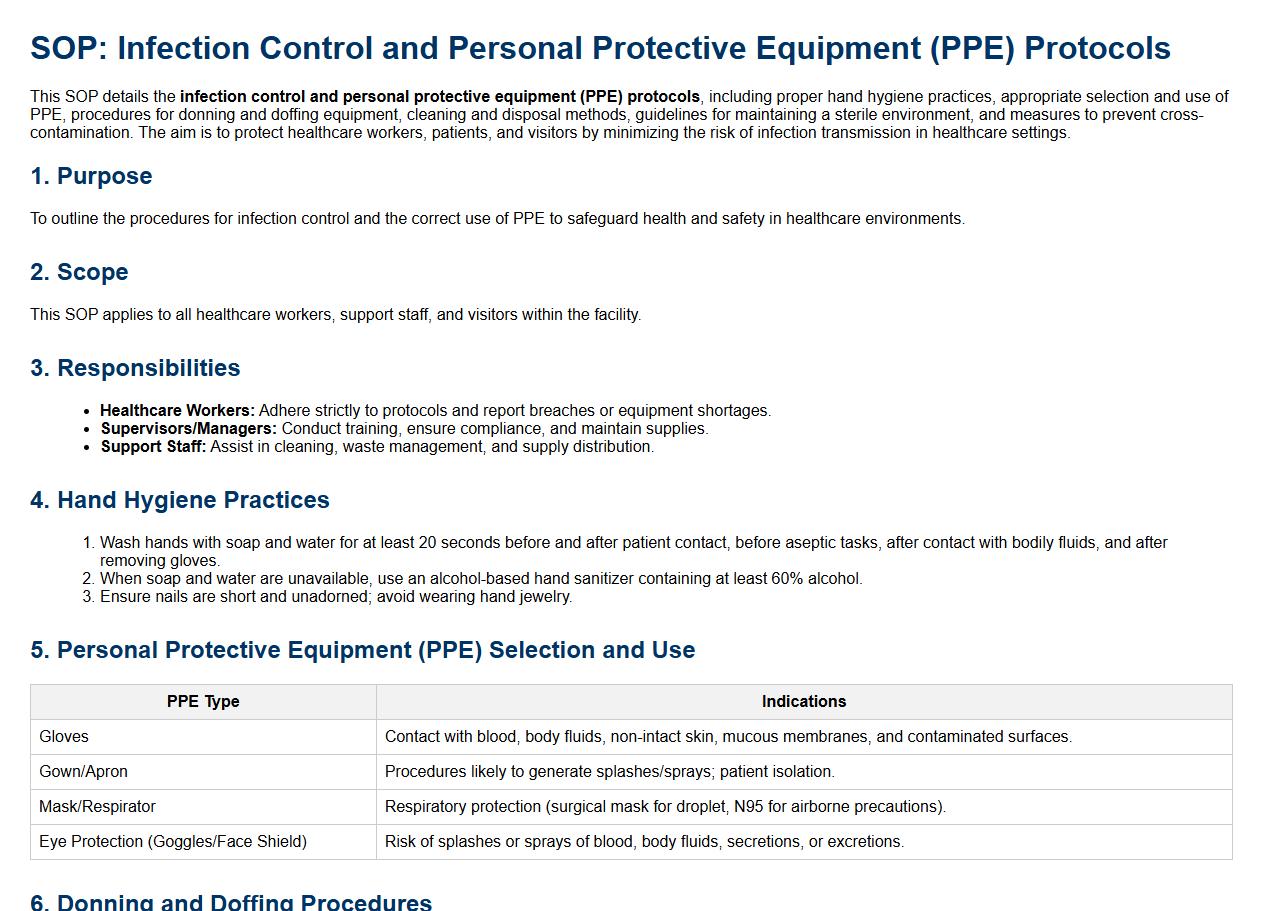
This SOP details the infection control and personal protective equipment (PPE) protocols, including proper hand hygiene practices, appropriate selection and use of PPE, procedures for donning and doffing equipment, cleaning and disposal methods, guidelines for maintaining a sterile environment, and measures to prevent cross-contamination. The aim is to protect healthcare workers, patients, and visitors by minimizing the risk of infection transmission in healthcare settings.
Coordination with local authorities and external emergency services.
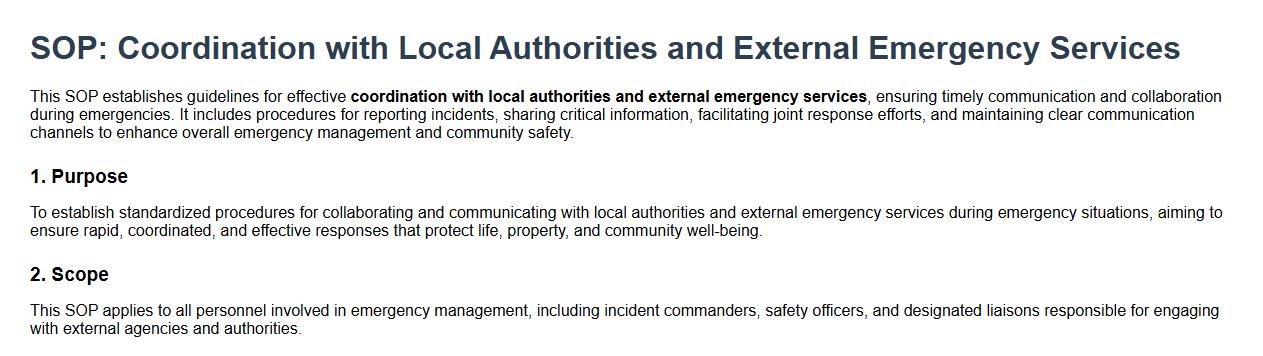
This SOP establishes guidelines for effective coordination with local authorities and external emergency services, ensuring timely communication and collaboration during emergencies. It includes procedures for reporting incidents, sharing critical information, facilitating joint response efforts, and maintaining clear communication channels to enhance overall emergency management and community safety.
Documentation and incident reporting requirements.
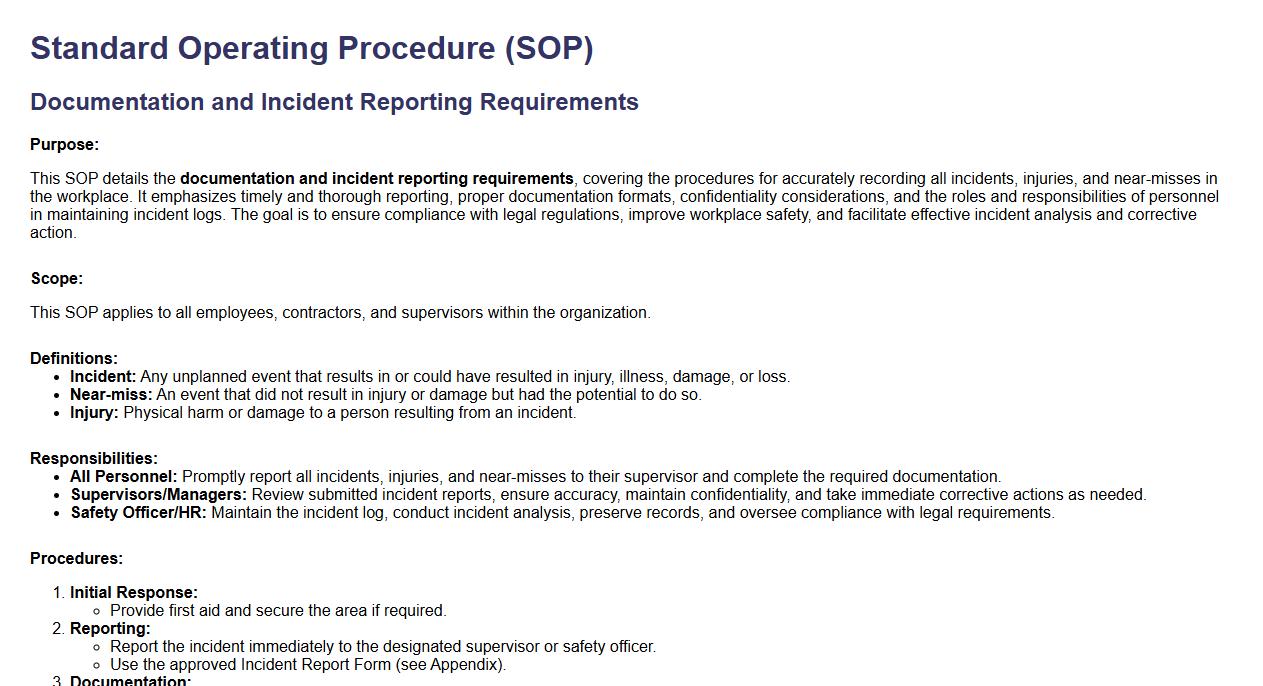
This SOP details the documentation and incident reporting requirements, covering the procedures for accurately recording all incidents, injuries, and near-misses in the workplace. It emphasizes timely and thorough reporting, proper documentation formats, confidentiality considerations, and the roles and responsibilities of personnel in maintaining incident logs. The goal is to ensure compliance with legal regulations, improve workplace safety, and facilitate effective incident analysis and corrective action.
Post-incident debriefing and review processes.
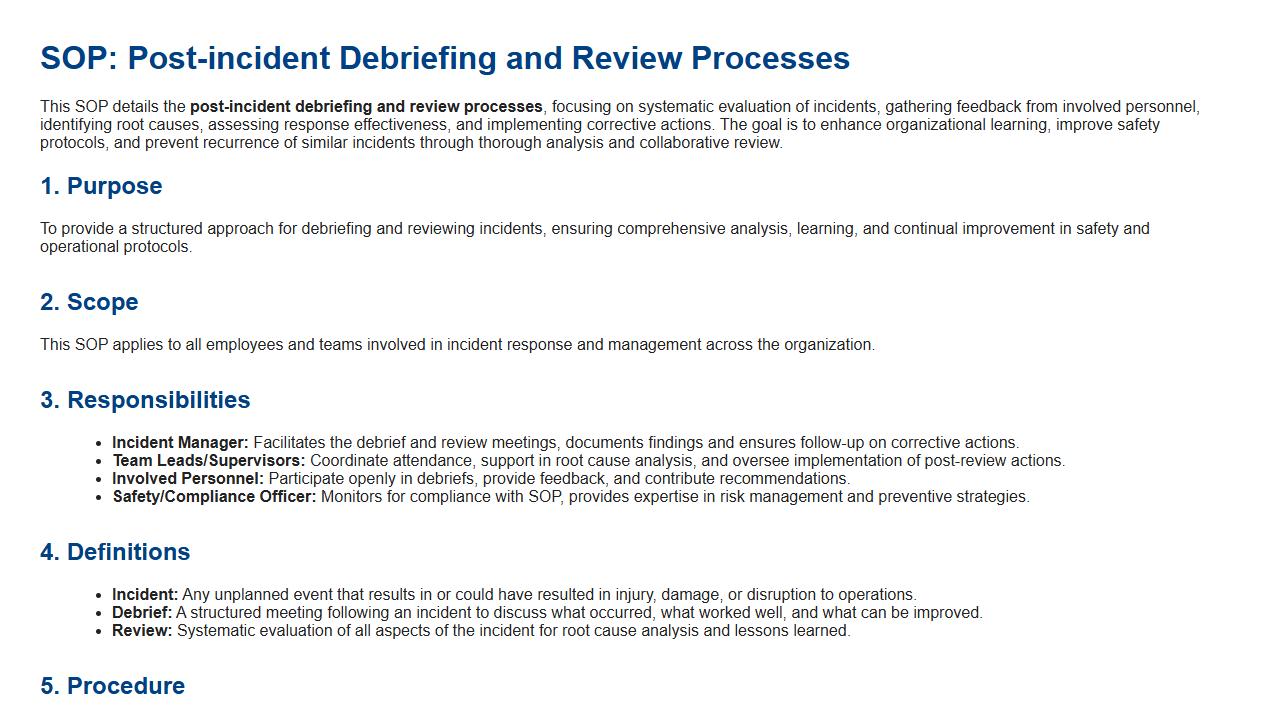
This SOP details the post-incident debriefing and review processes, focusing on systematic evaluation of incidents, gathering feedback from involved personnel, identifying root causes, assessing response effectiveness, and implementing corrective actions. The goal is to enhance organizational learning, improve safety protocols, and prevent recurrence of similar incidents through thorough analysis and collaborative review.
What are the immediate actions required upon activation of the emergency response SOP in a healthcare setting?
Upon activation, the emergency response SOP mandates immediate assessment of the situation to ensure patient and staff safety. Quick notification to the designated emergency team is critical to initiate response protocols. Securing the area and activating appropriate alarms are among the first essential steps to contain the situation.
Which personnel roles and responsibilities are defined in the SOP for various emergency scenarios?
The SOP clearly assigns specific roles and responsibilities to healthcare staff, emergency coordinators, and support personnel. Each role is tailored to different emergency scenarios such as fire, medical crises, or natural disasters. These definitions ensure efficient task delegation and accountability during a crisis.
How does the SOP outline communication protocols during a healthcare emergency?
Effective communication is emphasized through centralized information flow protocols within the SOP. It mandates use of predefined communication channels and regular updates to all stakeholders. Clear guidelines for internal and external communication help minimize confusion and misinformation.
What specific procedures does the SOP mandate for patient safety and evacuation?
The SOP includes detailed patient safety and evacuation procedures such as triage, secure transport routes, and use of safe assembly points. It also prioritizes vulnerable patients to ensure their protection during emergencies. Staff training on these procedures is a key operational requirement.
How does the SOP ensure coordination with external emergency services and regulatory compliance?
The SOP outlines protocols for timely notification and collaboration with external emergency services, including fire departments and medical responders. It also integrates regulatory standards to ensure full compliance with healthcare laws. Regular drills and audits are conducted to maintain readiness and adherence.