

A SOP Template for Telemedicine Services provides a structured framework to ensure consistent and efficient delivery of virtual healthcare. It outlines standardized procedures, patient communication protocols, and compliance requirements specific to telemedicine platforms. Proper implementation of this template enhances quality care, reduces errors, and supports regulatory adherence in remote medical consultations.
Patient registration and identity verification procedures.
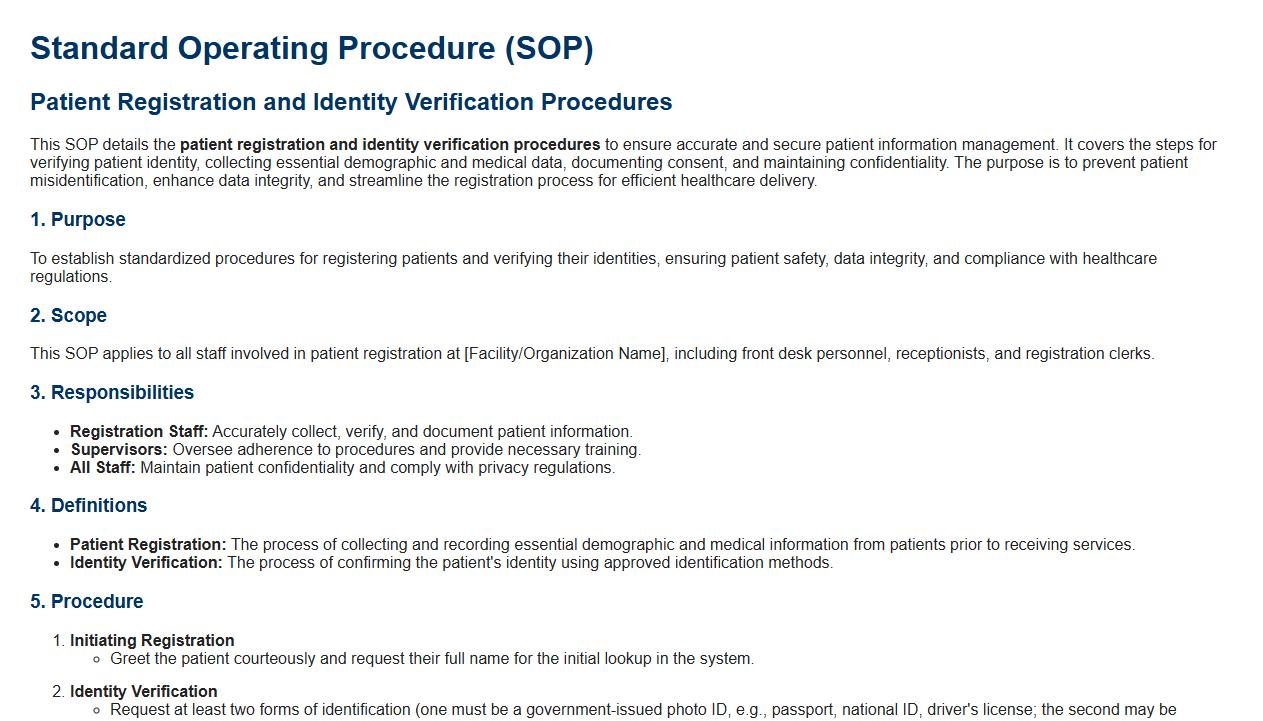
This SOP details the patient registration and identity verification procedures to ensure accurate and secure patient information management. It covers the steps for verifying patient identity, collecting essential demographic and medical data, documenting consent, and maintaining confidentiality. The purpose is to prevent patient misidentification, enhance data integrity, and streamline the registration process for efficient healthcare delivery.
Appointment scheduling and management guidelines.
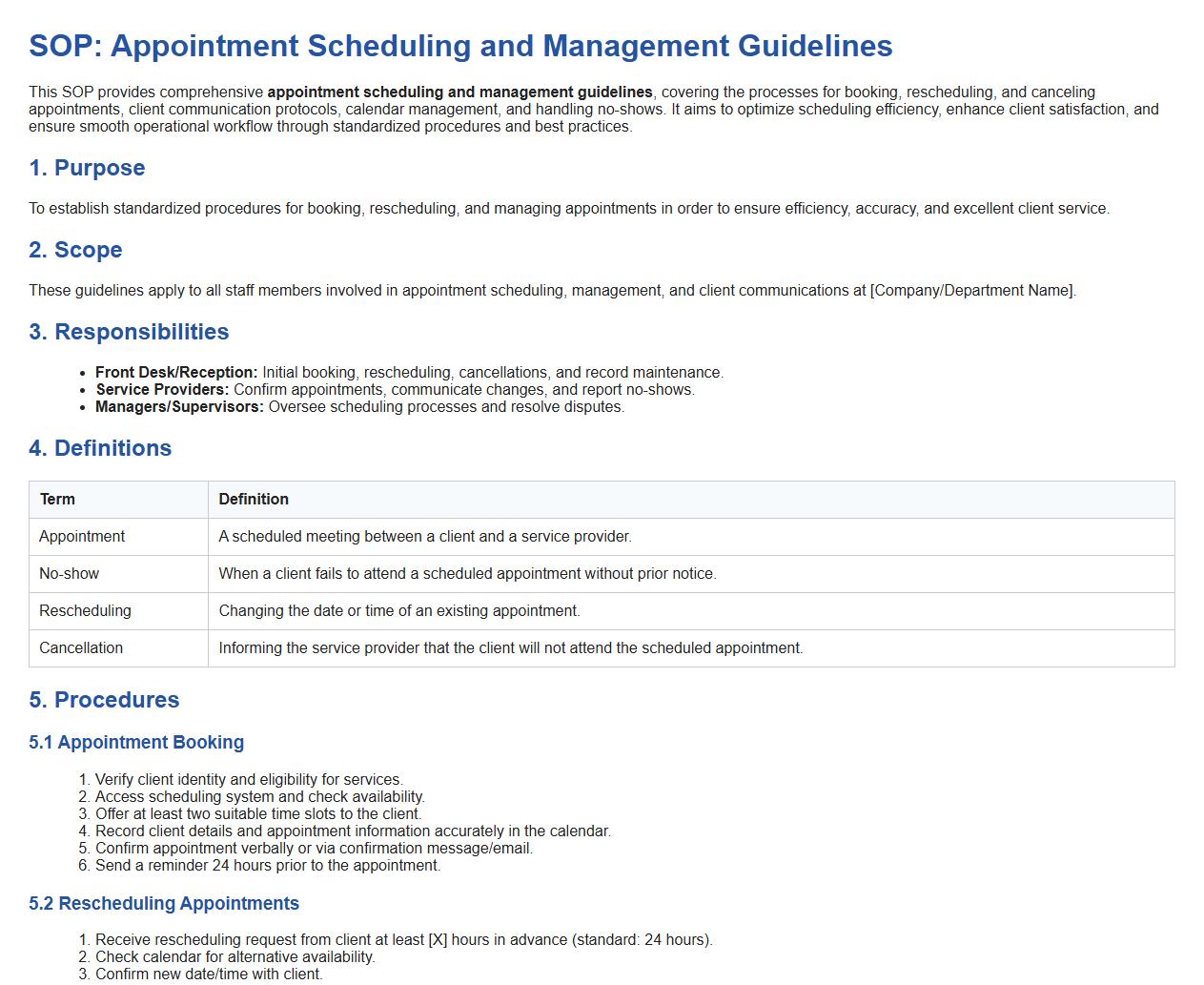
This SOP provides comprehensive appointment scheduling and management guidelines, covering the processes for booking, rescheduling, and canceling appointments, client communication protocols, calendar management, and handling no-shows. It aims to optimize scheduling efficiency, enhance client satisfaction, and ensure smooth operational workflow through standardized procedures and best practices.
Telemedicine platform access and troubleshooting steps.
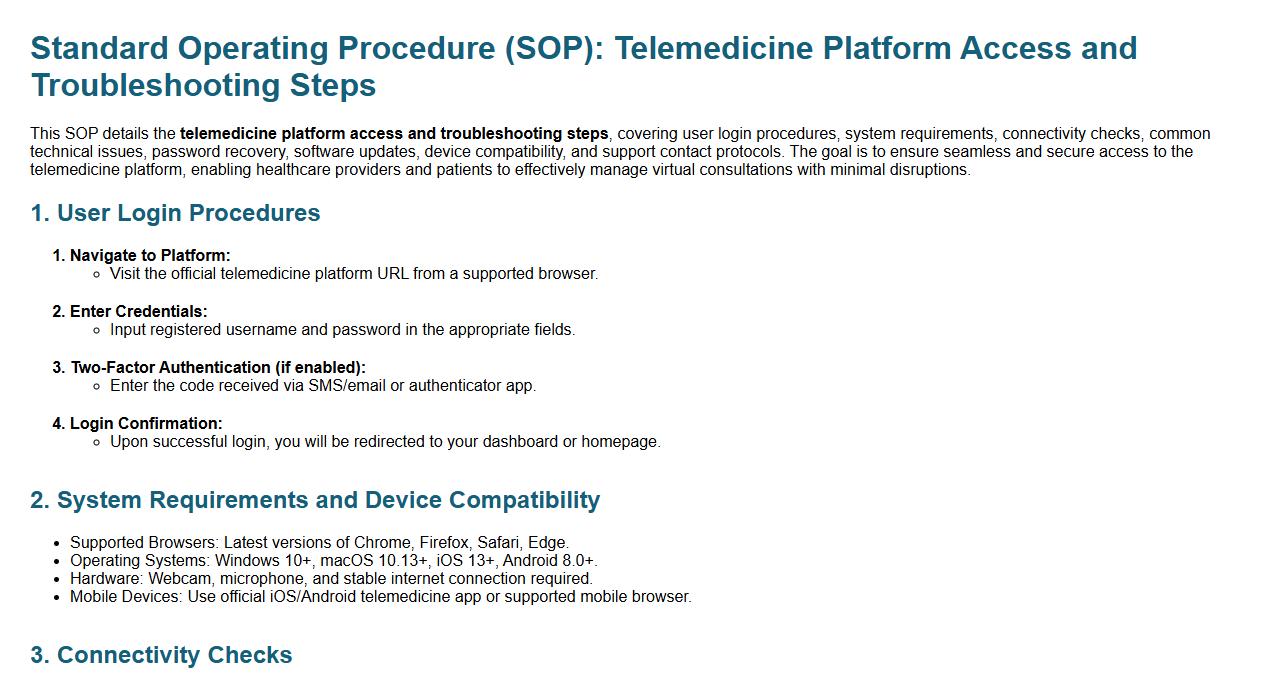
This SOP details the telemedicine platform access and troubleshooting steps, covering user login procedures, system requirements, connectivity checks, common technical issues, password recovery, software updates, device compatibility, and support contact protocols. The goal is to ensure seamless and secure access to the telemedicine platform, enabling healthcare providers and patients to effectively manage virtual consultations with minimal disruptions.
Patient consent acquisition and documentation.
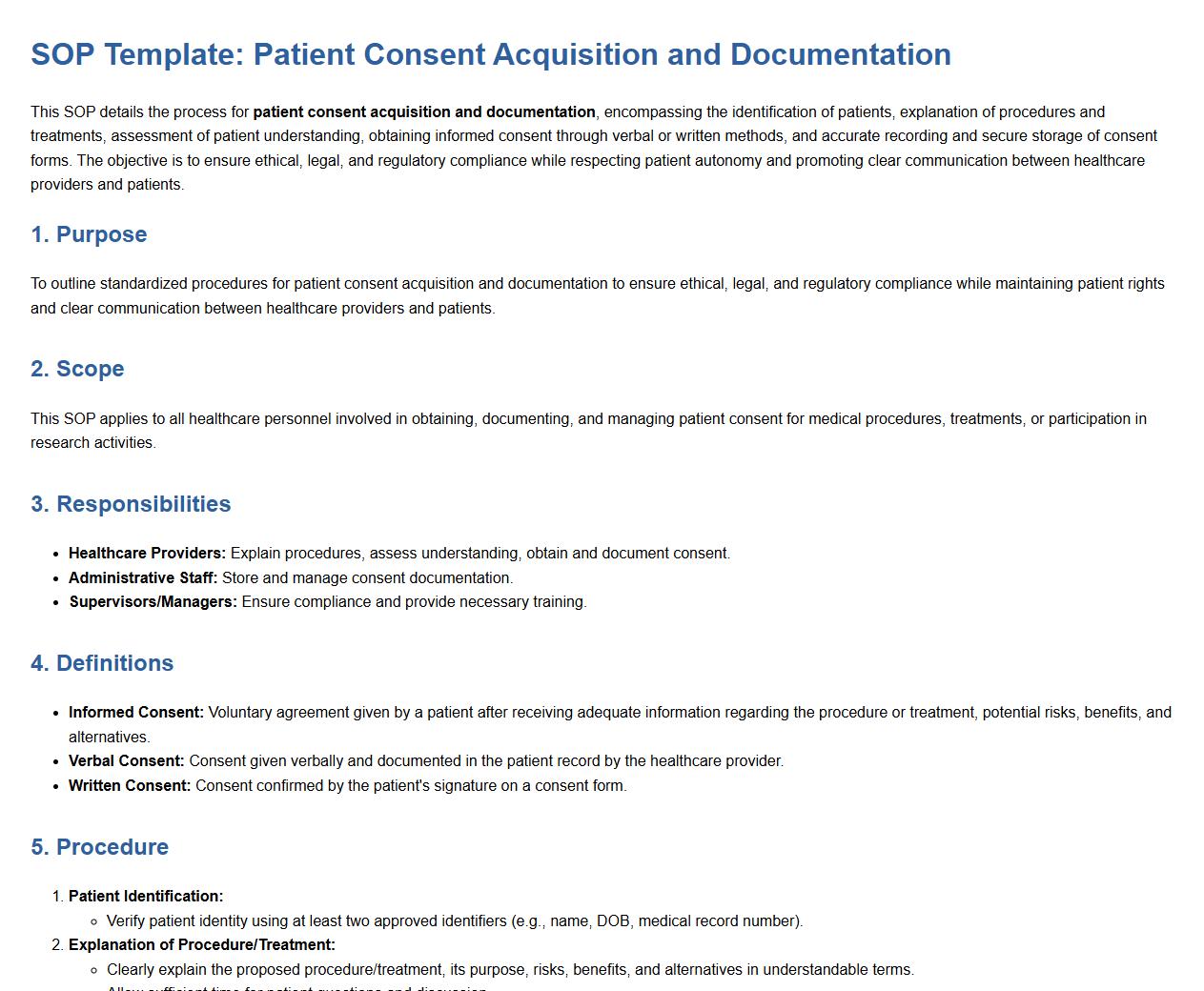
This SOP details the process for patient consent acquisition and documentation, encompassing the identification of patients, explanation of procedures and treatments, assessment of patient understanding, obtaining informed consent through verbal or written methods, and accurate recording and secure storage of consent forms. The objective is to ensure ethical, legal, and regulatory compliance while respecting patient autonomy and promoting clear communication between healthcare providers and patients.
Teleconsultation workflow and physician responsibilities.
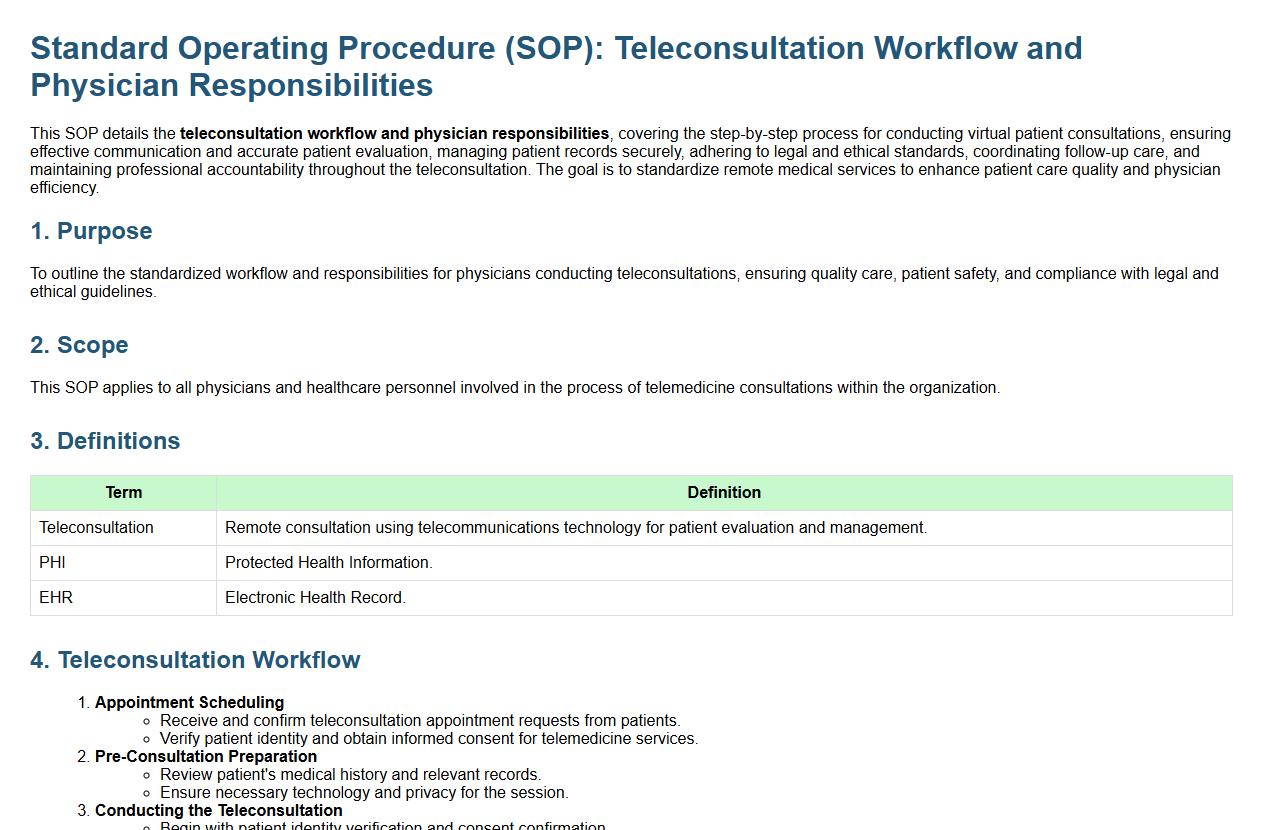
This SOP details the teleconsultation workflow and physician responsibilities, covering the step-by-step process for conducting virtual patient consultations, ensuring effective communication and accurate patient evaluation, managing patient records securely, adhering to legal and ethical standards, coordinating follow-up care, and maintaining professional accountability throughout the teleconsultation. The goal is to standardize remote medical services to enhance patient care quality and physician efficiency.
Electronic medical record (EMR) entry and data security protocols.
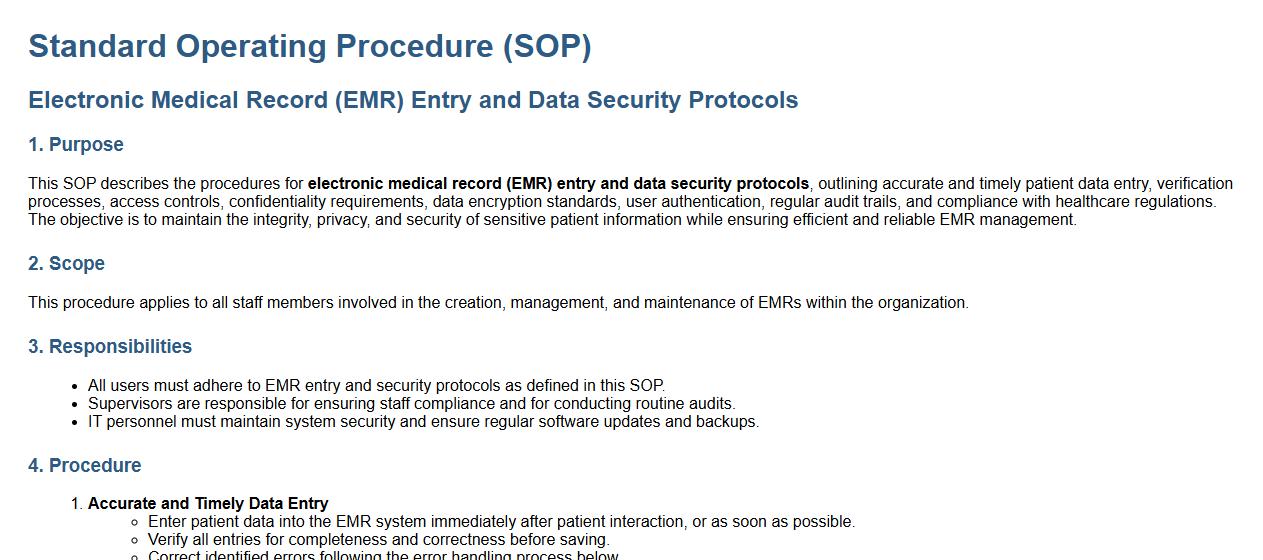
This SOP describes the procedures for electronic medical record (EMR) entry and data security protocols, outlining accurate and timely patient data entry, verification processes, access controls, confidentiality requirements, data encryption standards, user authentication, regular audit trails, and compliance with healthcare regulations. The objective is to maintain the integrity, privacy, and security of sensitive patient information while ensuring efficient and reliable EMR management.
Prescription generation and delivery guidelines.
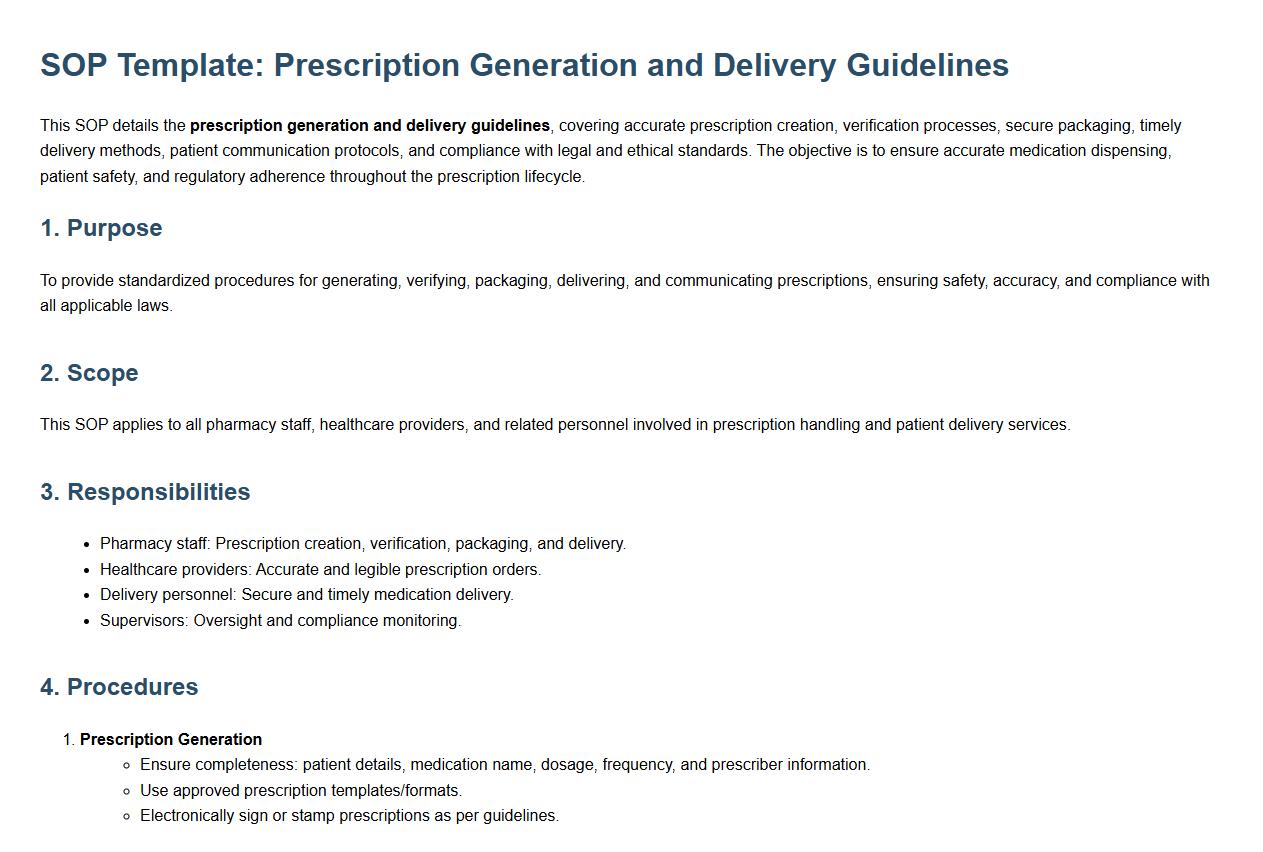
This SOP details the prescription generation and delivery guidelines, covering accurate prescription creation, verification processes, secure packaging, timely delivery methods, patient communication protocols, and compliance with legal and ethical standards. The objective is to ensure accurate medication dispensing, patient safety, and regulatory adherence throughout the prescription lifecycle.
Payment processing and billing procedures.
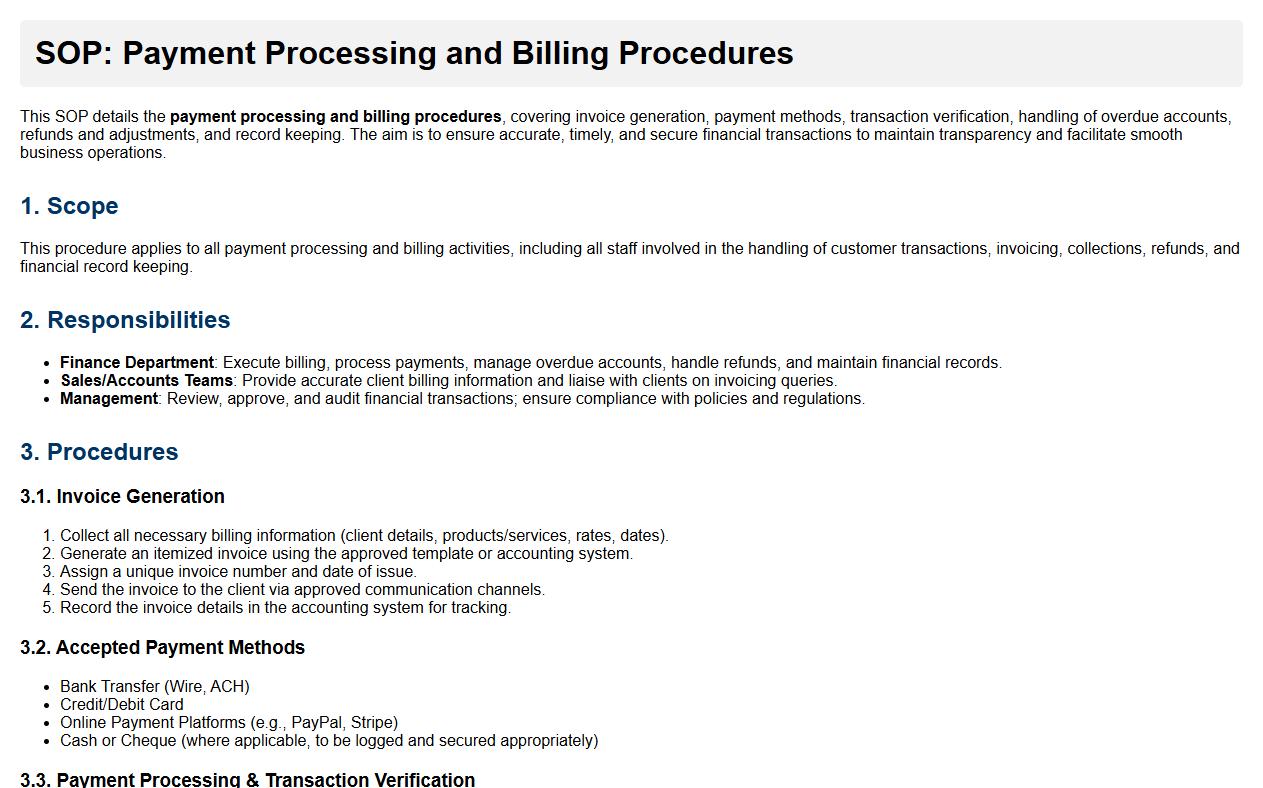
This SOP details the payment processing and billing procedures, covering invoice generation, payment methods, transaction verification, handling of overdue accounts, refunds and adjustments, and record keeping. The aim is to ensure accurate, timely, and secure financial transactions to maintain transparency and facilitate smooth business operations.
Patient follow-up and referral management steps.
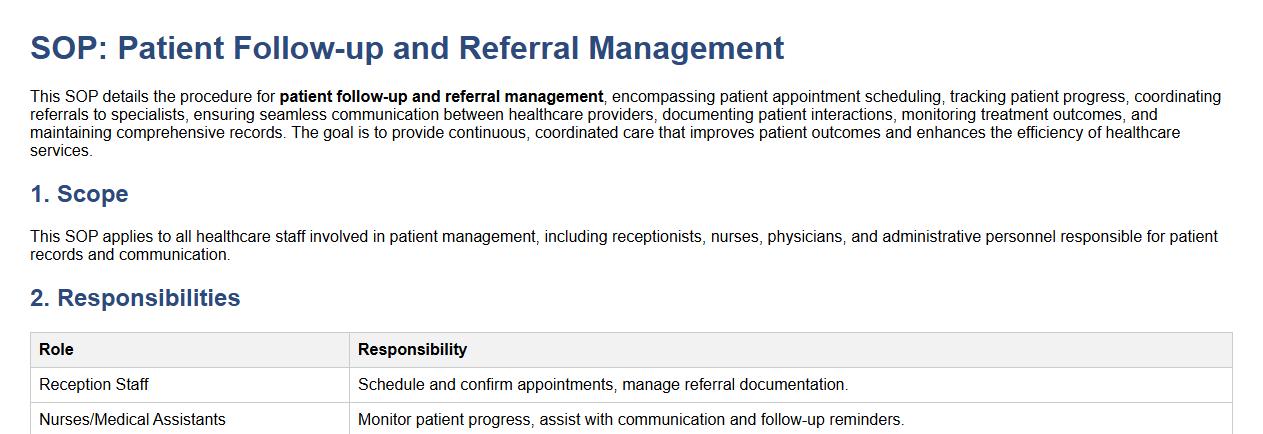
This SOP details the procedure for patient follow-up and referral management, encompassing patient appointment scheduling, tracking patient progress, coordinating referrals to specialists, ensuring seamless communication between healthcare providers, documenting patient interactions, monitoring treatment outcomes, and maintaining comprehensive records. The goal is to provide continuous, coordinated care that improves patient outcomes and enhances the efficiency of healthcare services.
Incident reporting and quality assurance measures.
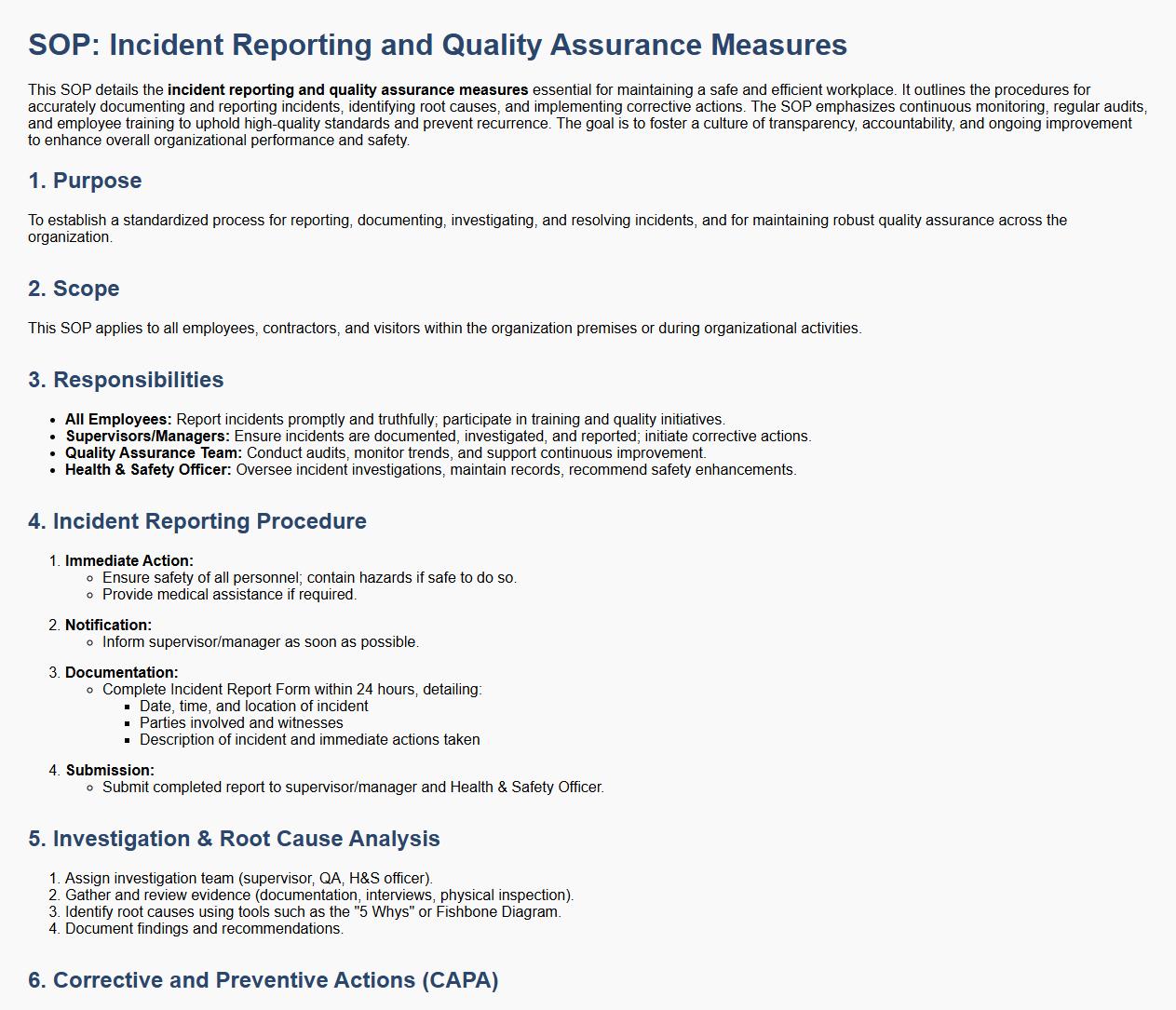
This SOP details the incident reporting and quality assurance measures essential for maintaining a safe and efficient workplace. It outlines the procedures for accurately documenting and reporting incidents, identifying root causes, and implementing corrective actions. The SOP emphasizes continuous monitoring, regular audits, and employee training to uphold high-quality standards and prevent recurrence. The goal is to foster a culture of transparency, accountability, and ongoing improvement to enhance overall organizational performance and safety.
Key Eligibility Criteria for Patients to Access Telemedicine Services
The key eligibility criteria for patients to access telemedicine services include having a stable internet connection and access to compatible devices. Patients must also provide valid identification and consent before the session begins. Additionally, the SOP specifies that telemedicine is suitable primarily for non-emergency cases where a physical examination is not critical.
Approved Communication Platforms and Technologies
The SOP mandates the use of secure and approved communication platforms like encrypted video conferencing tools for telemedicine consultations. Only platforms that comply with healthcare data protection standards are authorized. This ensures seamless, encrypted, and reliable communication between healthcare providers and patients.
Documentation and Consent Requirements
Patients must give informed consent prior to telemedicine consultations, which should be documented and stored securely. The SOP requires detailed recording of the consultation, including patient details, clinical notes, and prescribed treatments. This ensures accountability and legal compliance in telemedicine practices.
Confidentiality and Data Privacy in Telemedicine Consultations
The SOP emphasizes strict adherence to confidentiality and data privacy laws during telemedicine sessions. Patient data must be encrypted and accessible only to authorized personnel. Robust cybersecurity measures are recommended to protect sensitive medical information from unauthorized access or breaches.
Procedures for Handling Emergency Cases During Telemedicine Sessions
The SOP clearly states that telemedicine is not suitable for emergencies but provides guidelines for quick referral to emergency services. Healthcare providers must recognize emergency signs promptly and instruct patients to seek immediate in-person care. The SOP ensures that emergency protocols are followed to protect patient safety during telemedicine interactions.