

A SOP Template for Diagnostic Imaging Procedures provides a standardized framework to ensure consistency and accuracy in imaging tests. It outlines step-by-step protocols for preparing patients, operating equipment, and managing image quality to enhance diagnostic reliability. Following this template helps healthcare professionals maintain compliance with safety regulations and improve overall patient care.
Patient identification and consent verification.
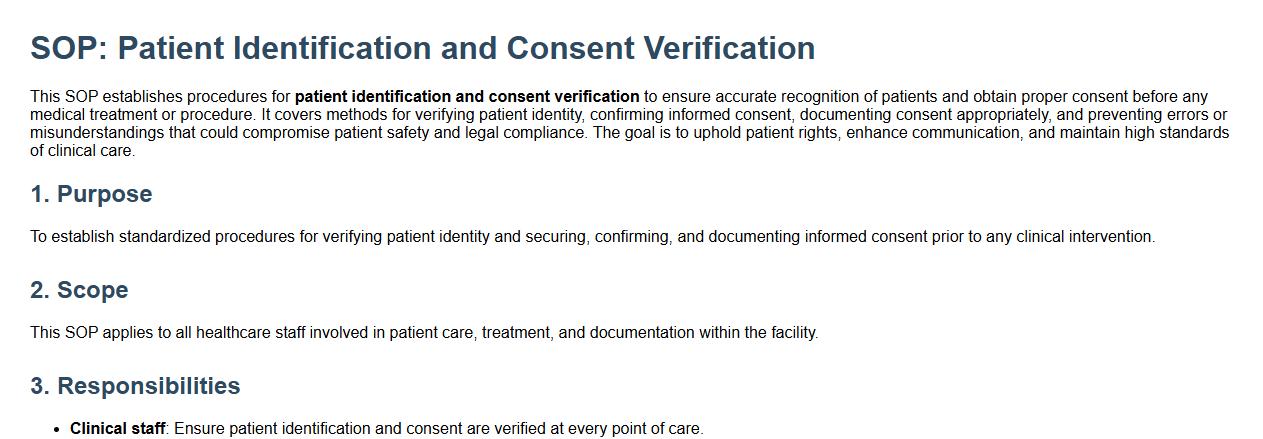
This SOP establishes procedures for patient identification and consent verification to ensure accurate recognition of patients and obtain proper consent before any medical treatment or procedure. It covers methods for verifying patient identity, confirming informed consent, documenting consent appropriately, and preventing errors or misunderstandings that could compromise patient safety and legal compliance. The goal is to uphold patient rights, enhance communication, and maintain high standards of clinical care.
Preparation and calibration of imaging equipment.
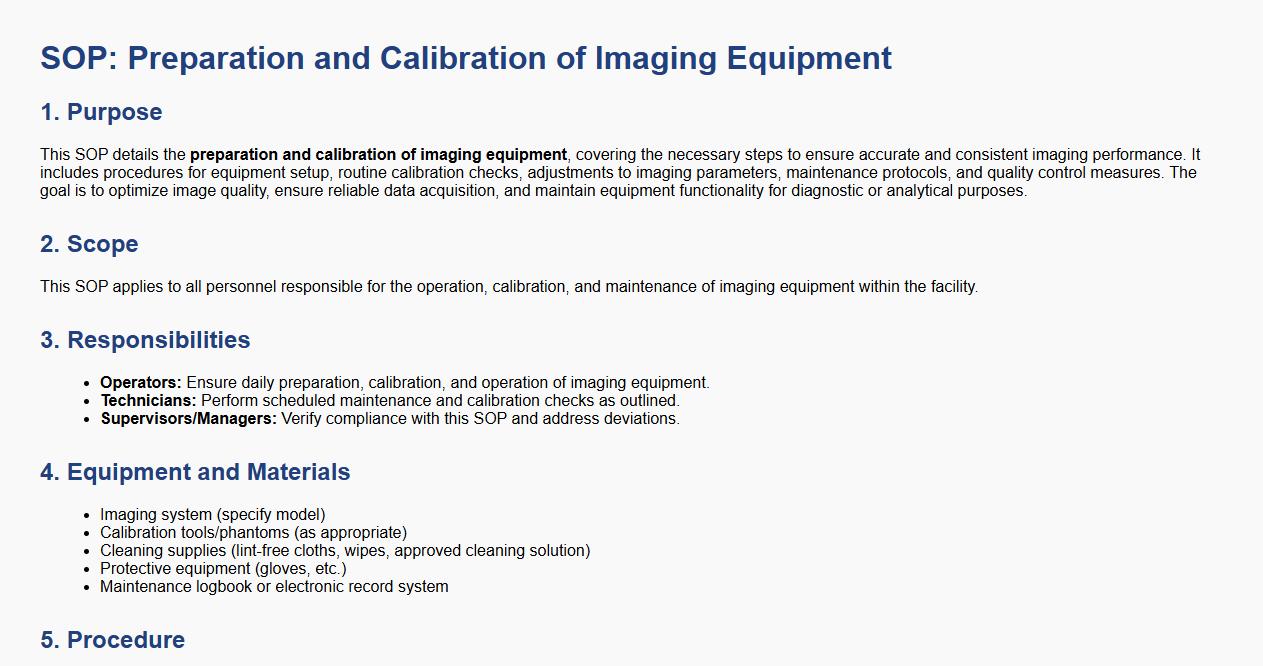
This SOP details the preparation and calibration of imaging equipment, covering the necessary steps to ensure accurate and consistent imaging performance. It includes procedures for equipment setup, routine calibration checks, adjustments to imaging parameters, maintenance protocols, and quality control measures. The goal is to optimize image quality, ensure reliable data acquisition, and maintain equipment functionality for diagnostic or analytical purposes.
Standard patient positioning protocols.
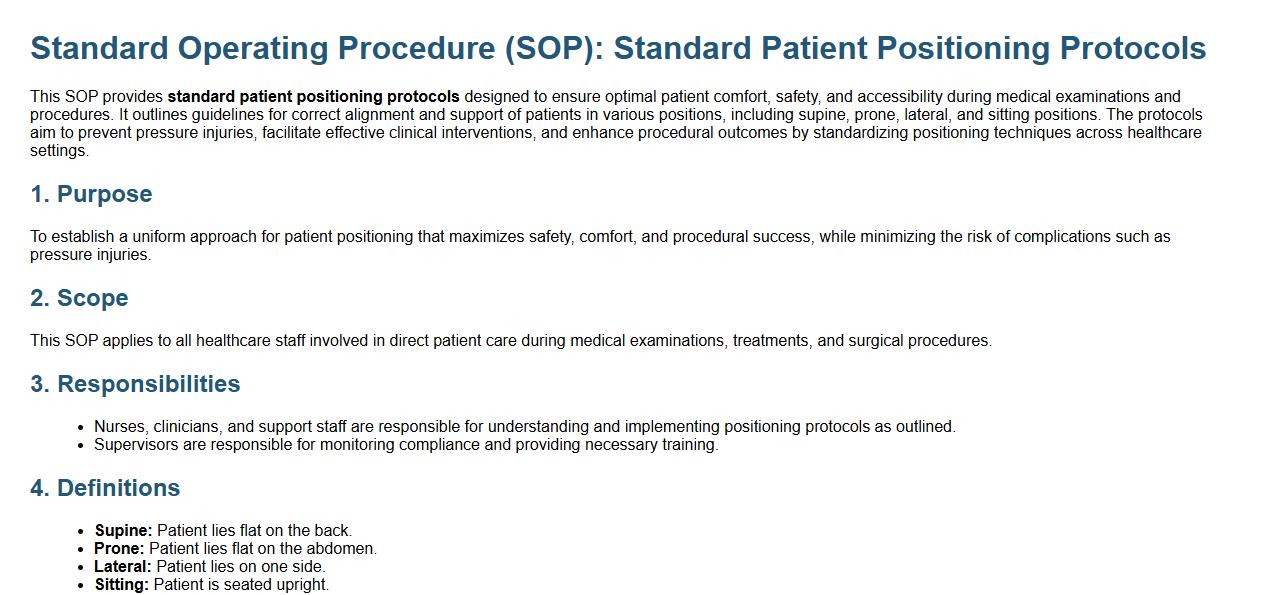
This SOP provides standard patient positioning protocols designed to ensure optimal patient comfort, safety, and accessibility during medical examinations and procedures. It outlines guidelines for correct alignment and support of patients in various positions, including supine, prone, lateral, and sitting positions. The protocols aim to prevent pressure injuries, facilitate effective clinical interventions, and enhance procedural outcomes by standardizing positioning techniques across healthcare settings.
Procedure-specific imaging technique instructions.
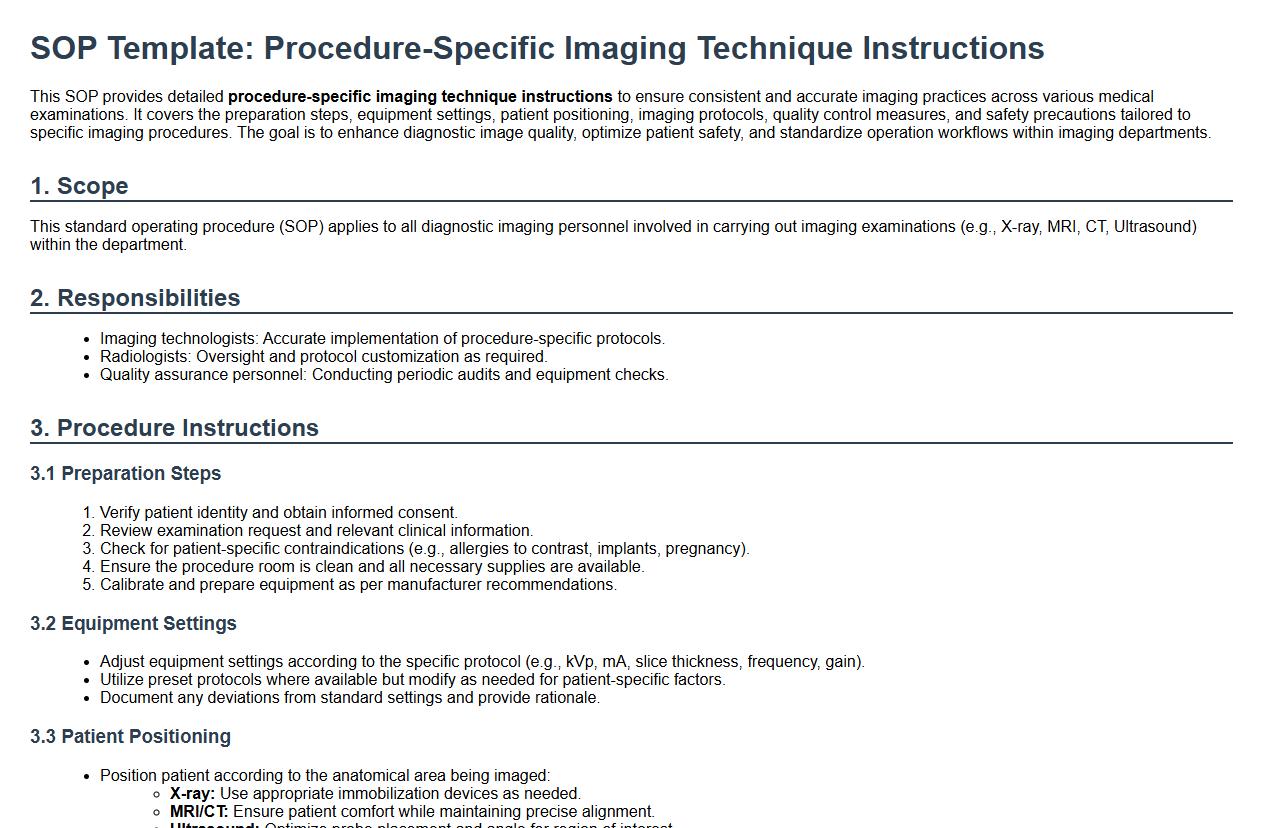
This SOP provides detailed procedure-specific imaging technique instructions to ensure consistent and accurate imaging practices across various medical examinations. It covers the preparation steps, equipment settings, patient positioning, imaging protocols, quality control measures, and safety precautions tailored to specific imaging procedures. The goal is to enhance diagnostic image quality, optimize patient safety, and standardize operation workflows within imaging departments.
Infection control and hygiene practices.
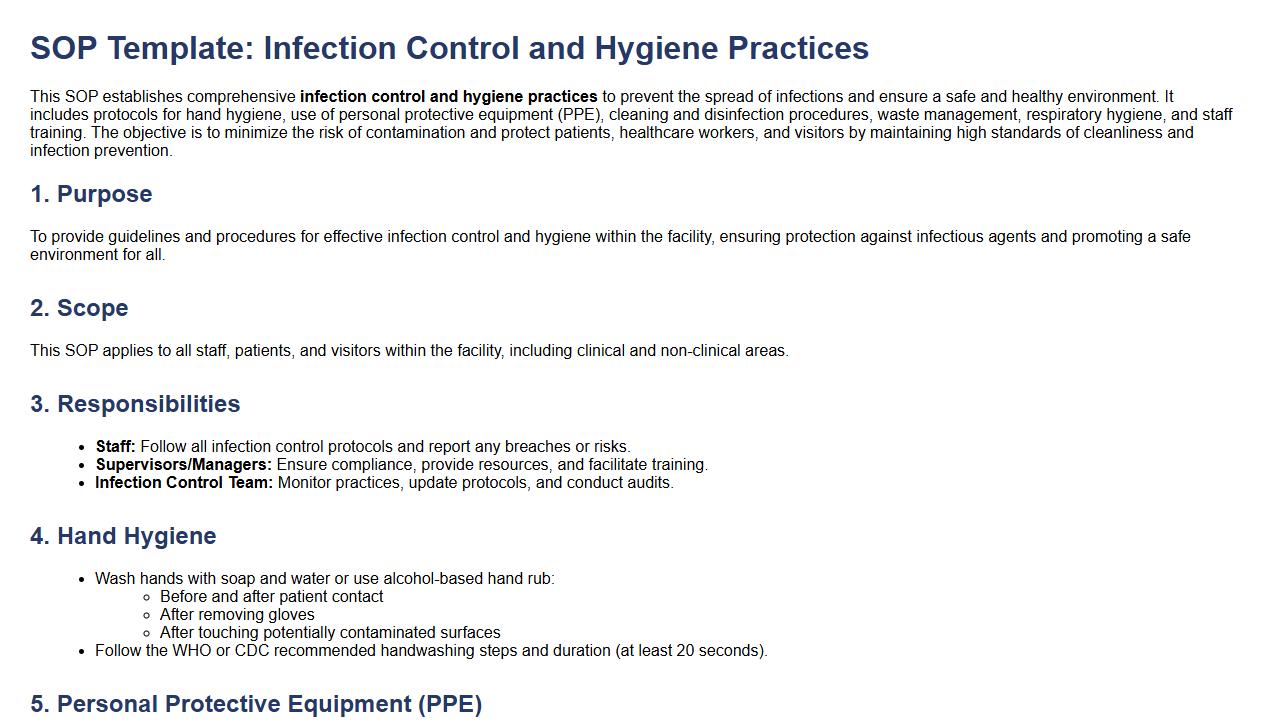
This SOP establishes comprehensive infection control and hygiene practices to prevent the spread of infections and ensure a safe and healthy environment. It includes protocols for hand hygiene, use of personal protective equipment (PPE), cleaning and disinfection procedures, waste management, respiratory hygiene, and staff training. The objective is to minimize the risk of contamination and protect patients, healthcare workers, and visitors by maintaining high standards of cleanliness and infection prevention.
Radiation safety and dose management guidelines.
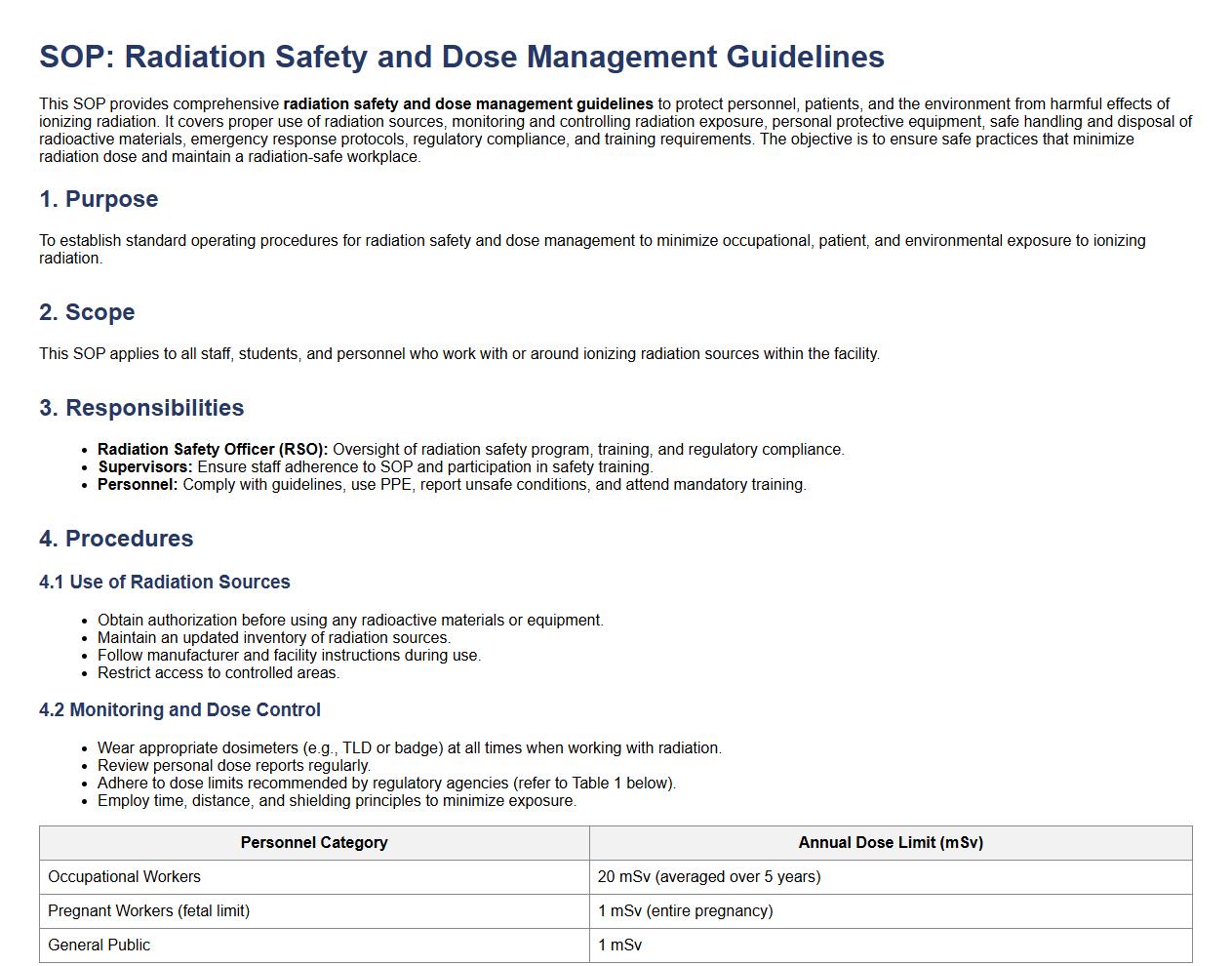
This SOP provides comprehensive radiation safety and dose management guidelines to protect personnel, patients, and the environment from harmful effects of ionizing radiation. It covers proper use of radiation sources, monitoring and controlling radiation exposure, personal protective equipment, safe handling and disposal of radioactive materials, emergency response protocols, regulatory compliance, and training requirements. The objective is to ensure safe practices that minimize radiation dose and maintain a radiation-safe workplace.
Image quality assurance and evaluation steps.
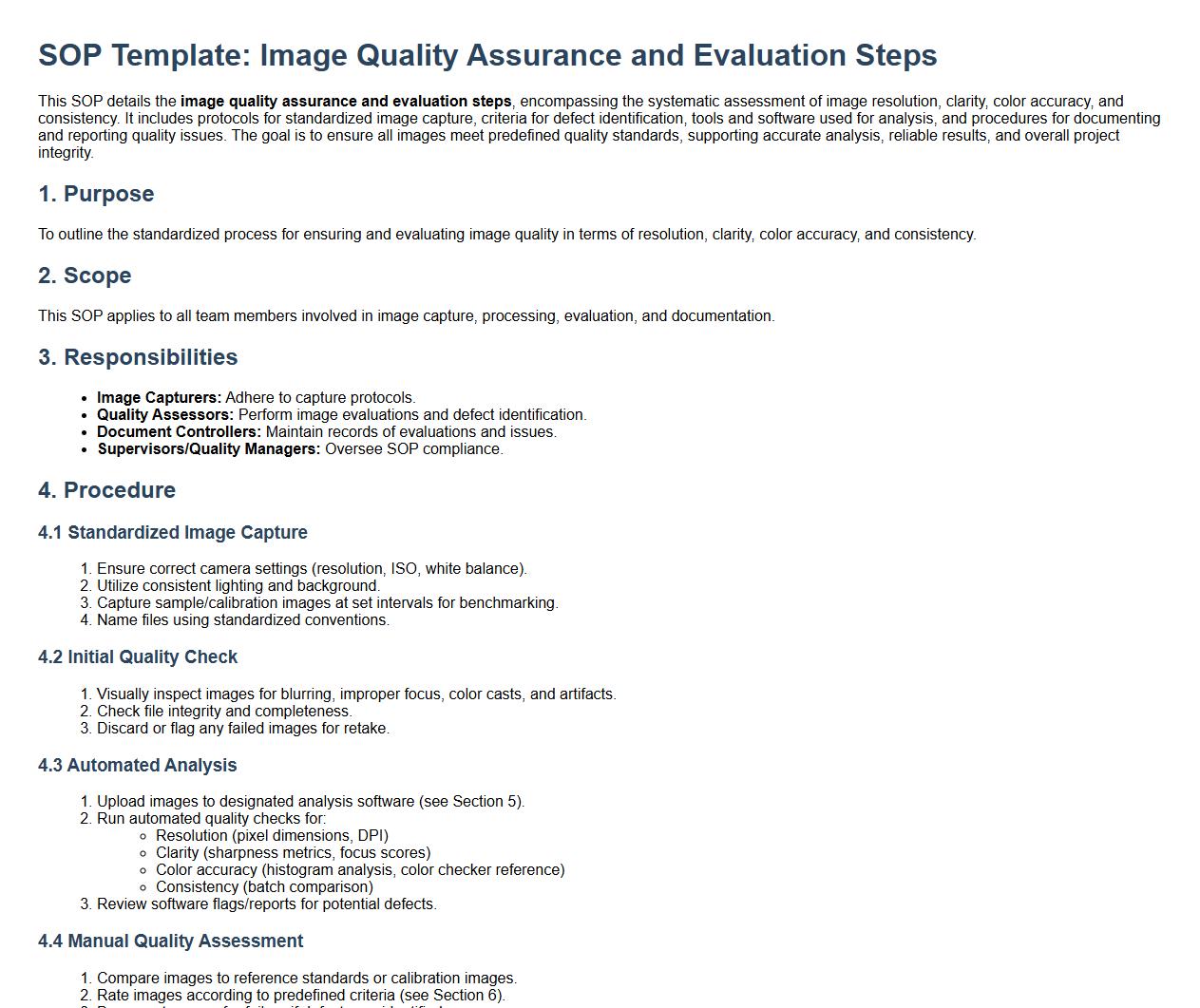
This SOP details the image quality assurance and evaluation steps, encompassing the systematic assessment of image resolution, clarity, color accuracy, and consistency. It includes protocols for standardized image capture, criteria for defect identification, tools and software used for analysis, and procedures for documenting and reporting quality issues. The goal is to ensure all images meet predefined quality standards, supporting accurate analysis, reliable results, and overall project integrity.
Data storage and backup procedures.
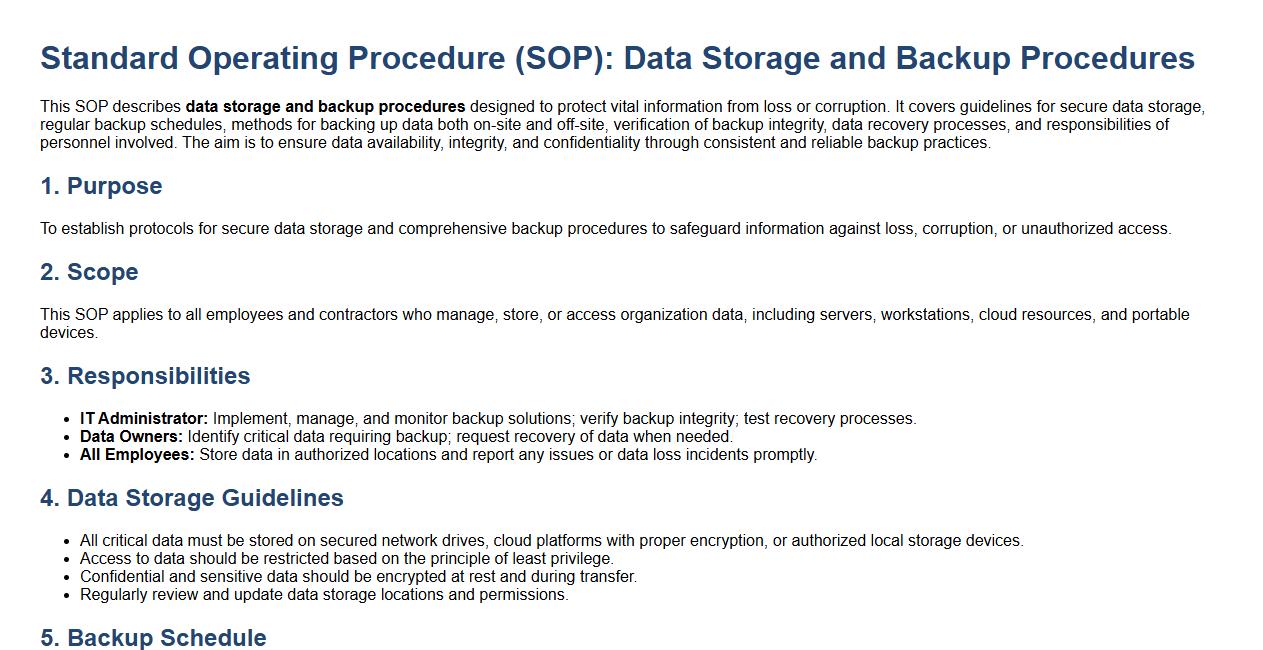
This SOP describes data storage and backup procedures designed to protect vital information from loss or corruption. It covers guidelines for secure data storage, regular backup schedules, methods for backing up data both on-site and off-site, verification of backup integrity, data recovery processes, and responsibilities of personnel involved. The aim is to ensure data availability, integrity, and confidentiality through consistent and reliable backup practices.
Reporting and documentation requirements.
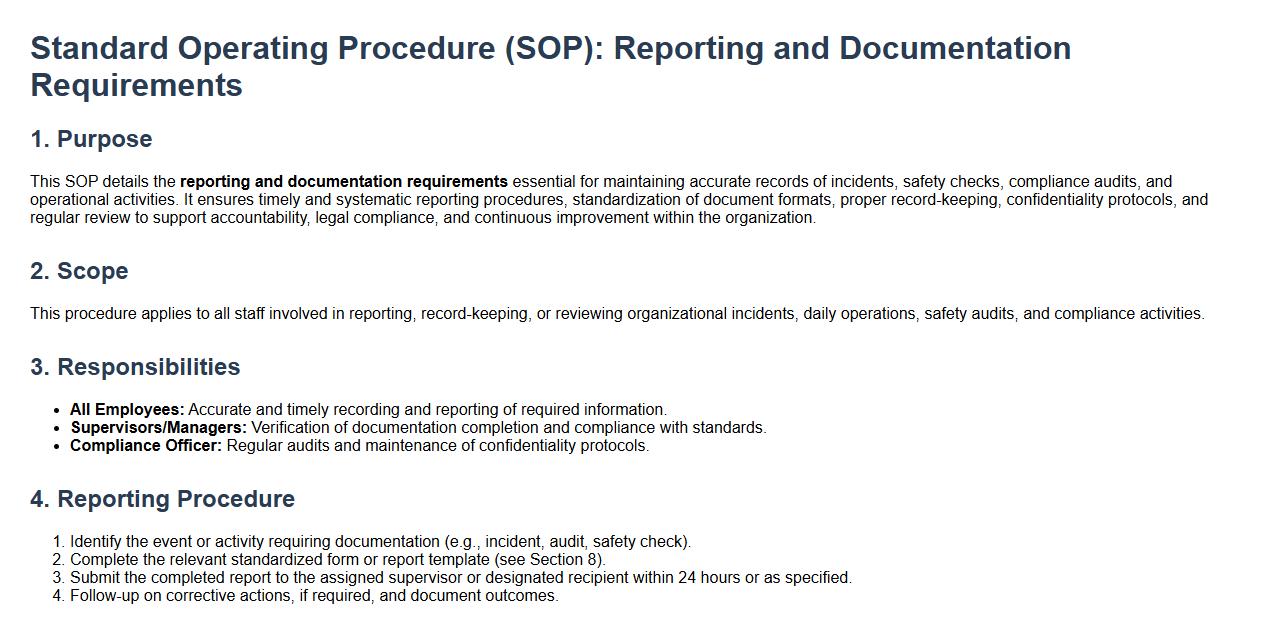
This SOP details the reporting and documentation requirements essential for maintaining accurate records of incidents, safety checks, compliance audits, and operational activities. It ensures timely and systematic reporting procedures, standardization of document formats, proper record-keeping, confidentiality protocols, and regular review to support accountability, legal compliance, and continuous improvement within the organization.
Equipment maintenance and troubleshooting protocols.
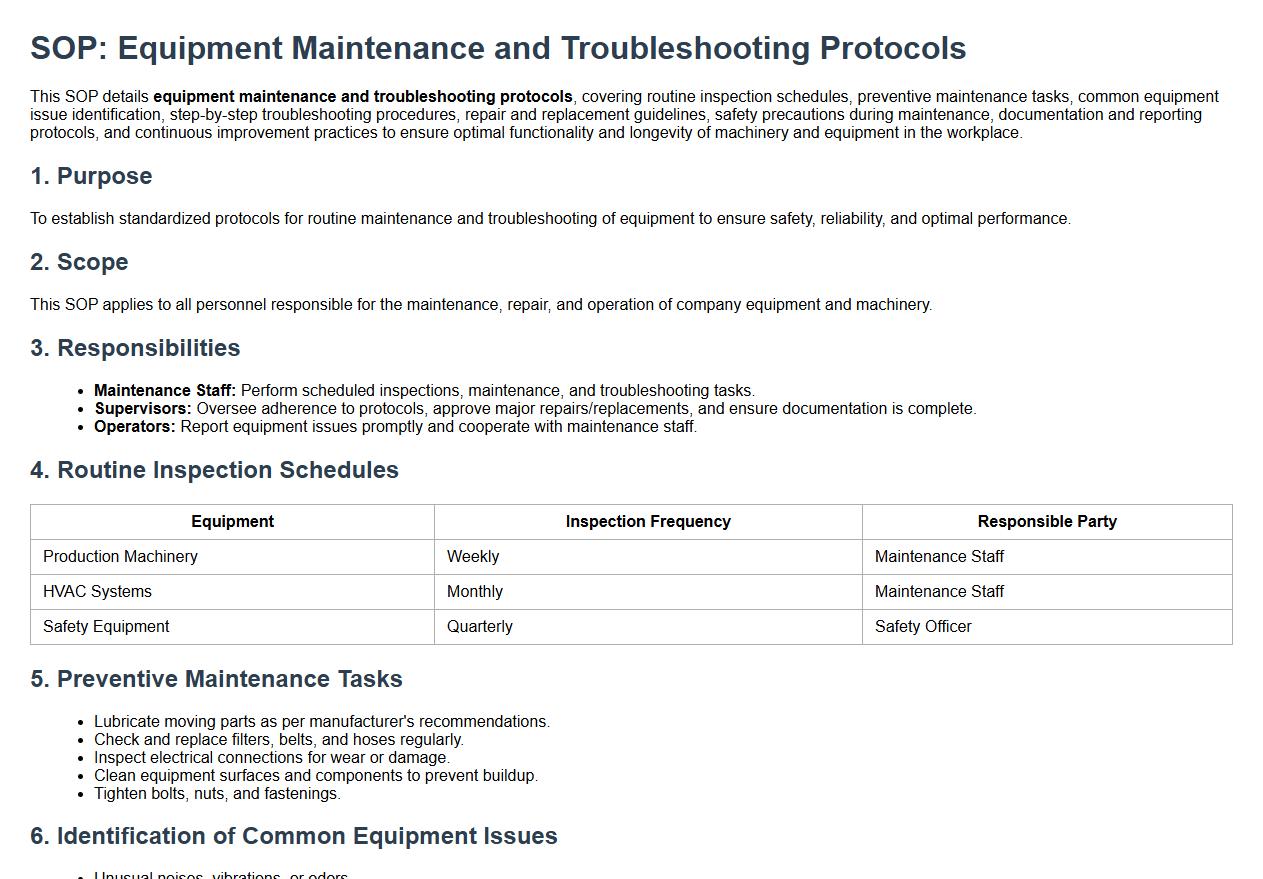
This SOP details equipment maintenance and troubleshooting protocols, covering routine inspection schedules, preventive maintenance tasks, common equipment issue identification, step-by-step troubleshooting procedures, repair and replacement guidelines, safety precautions during maintenance, documentation and reporting protocols, and continuous improvement practices to ensure optimal functionality and longevity of machinery and equipment in the workplace.
What is the primary objective of the SOP for Diagnostic Imaging Procedures?
The primary objective of the SOP for Diagnostic Imaging Procedures is to ensure standardized and safe imaging processes. It aims to optimize image quality while minimizing patient exposure to radiation. This SOP also ensures compliance with regulatory requirements and maintains consistent diagnostic accuracy.
Which personnel are authorized to operate diagnostic imaging equipment according to the SOP?
Only qualified and trained personnel are authorized to operate diagnostic imaging equipment under the SOP. This includes licensed radiologic technologists and certified imaging specialists. The SOP mandates ongoing training and competency assessments for all operators to maintain safety standards.
What pre-procedural patient safety checks are included in the SOP?
The SOP requires comprehensive pre-procedural patient safety checks including patient identification verification and review of medical history. It also mandates assessing potential contraindications to the imaging procedure. Additionally, obtaining informed consent and explaining the procedure to the patient are critical safety steps.
How does the SOP outline infection control measures during imaging procedures?
The SOP enforces strict infection control measures such as sterilizing equipment and using disposable protective covers. Personnel must follow hand hygiene protocols before and after each procedure. It also includes guidelines for managing and disposing of contaminated materials safely.
What is the protocol for documenting and reporting imaging results, as per the SOP?
The SOP mandates accurate documentation and timely reporting of all imaging results. Images and interpretations must be recorded into the patient's medical record clearly and securely. Furthermore, any abnormal findings require prompt communication to the referring physician for appropriate follow-up.