

A SOP Template for Medication Administration provides a standardized procedure to ensure safe and accurate delivery of medications to patients. It outlines clear steps for dosage verification, timing, and record-keeping to minimize errors. Staff training and compliance tracking are integral components of this template to maintain high-quality care.
Patient identification and verification procedures.
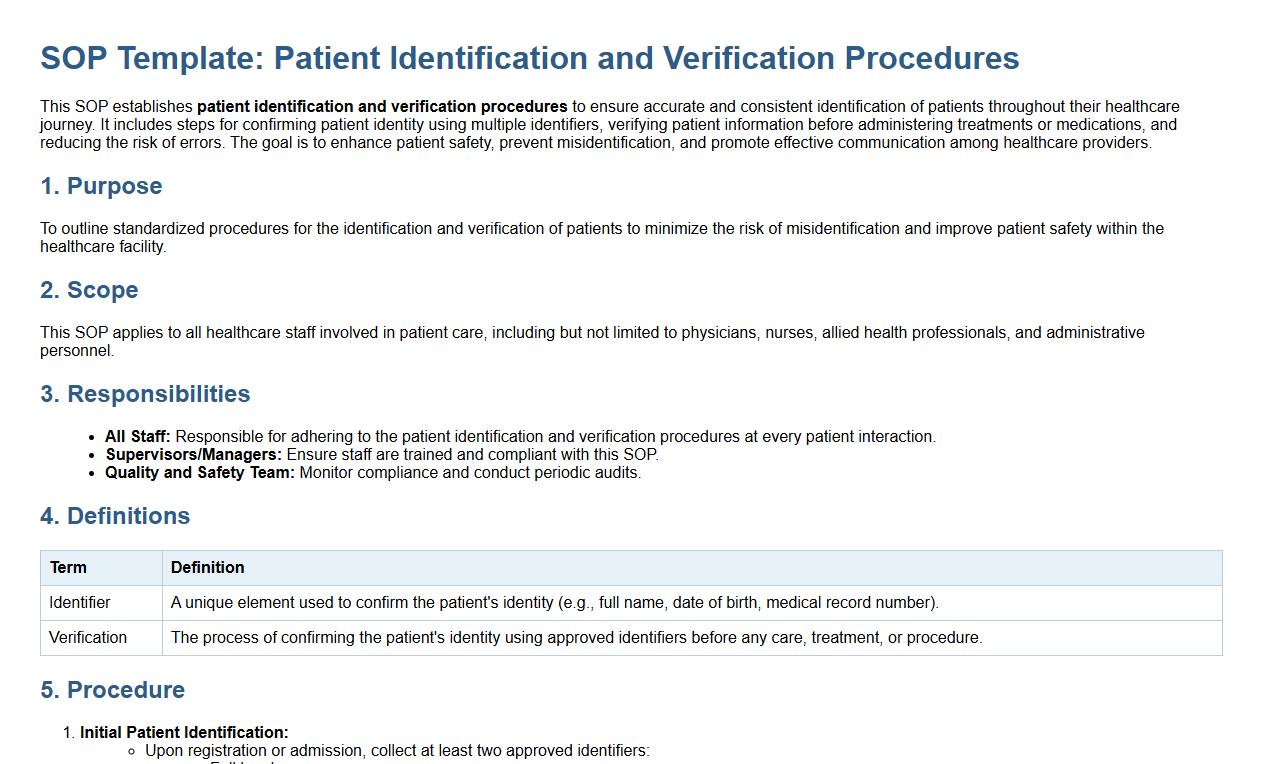
This SOP establishes patient identification and verification procedures to ensure accurate and consistent identification of patients throughout their healthcare journey. It includes steps for confirming patient identity using multiple identifiers, verifying patient information before administering treatments or medications, and reducing the risk of errors. The goal is to enhance patient safety, prevent misidentification, and promote effective communication among healthcare providers.
Prescription verification and medication review.
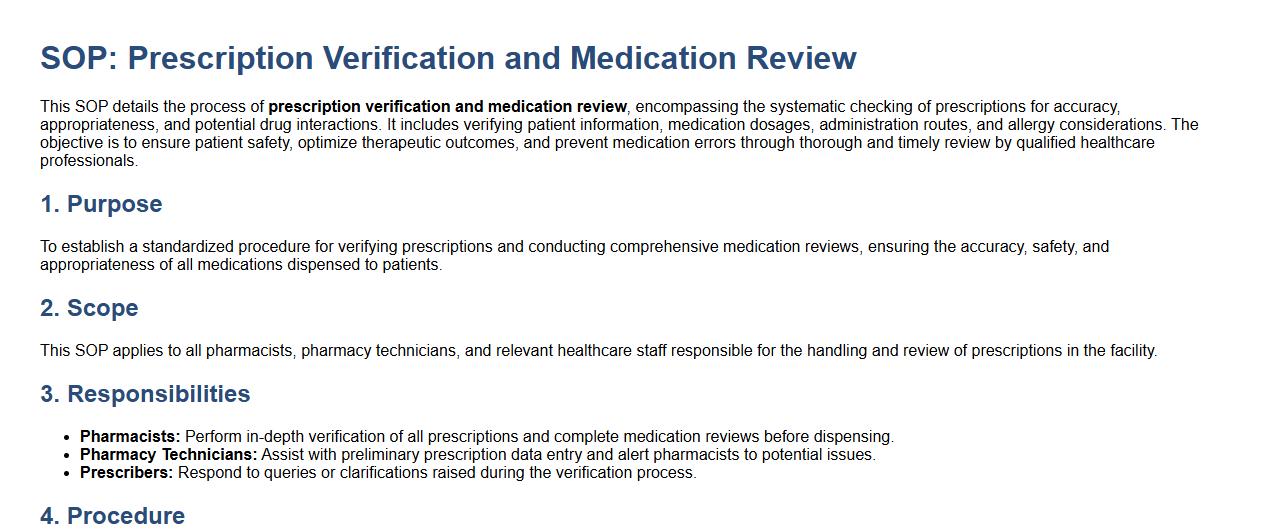
This SOP details the process of prescription verification and medication review, encompassing the systematic checking of prescriptions for accuracy, appropriateness, and potential drug interactions. It includes verifying patient information, medication dosages, administration routes, and allergy considerations. The objective is to ensure patient safety, optimize therapeutic outcomes, and prevent medication errors through thorough and timely review by qualified healthcare professionals.
Hand hygiene and personal protective equipment guidelines.
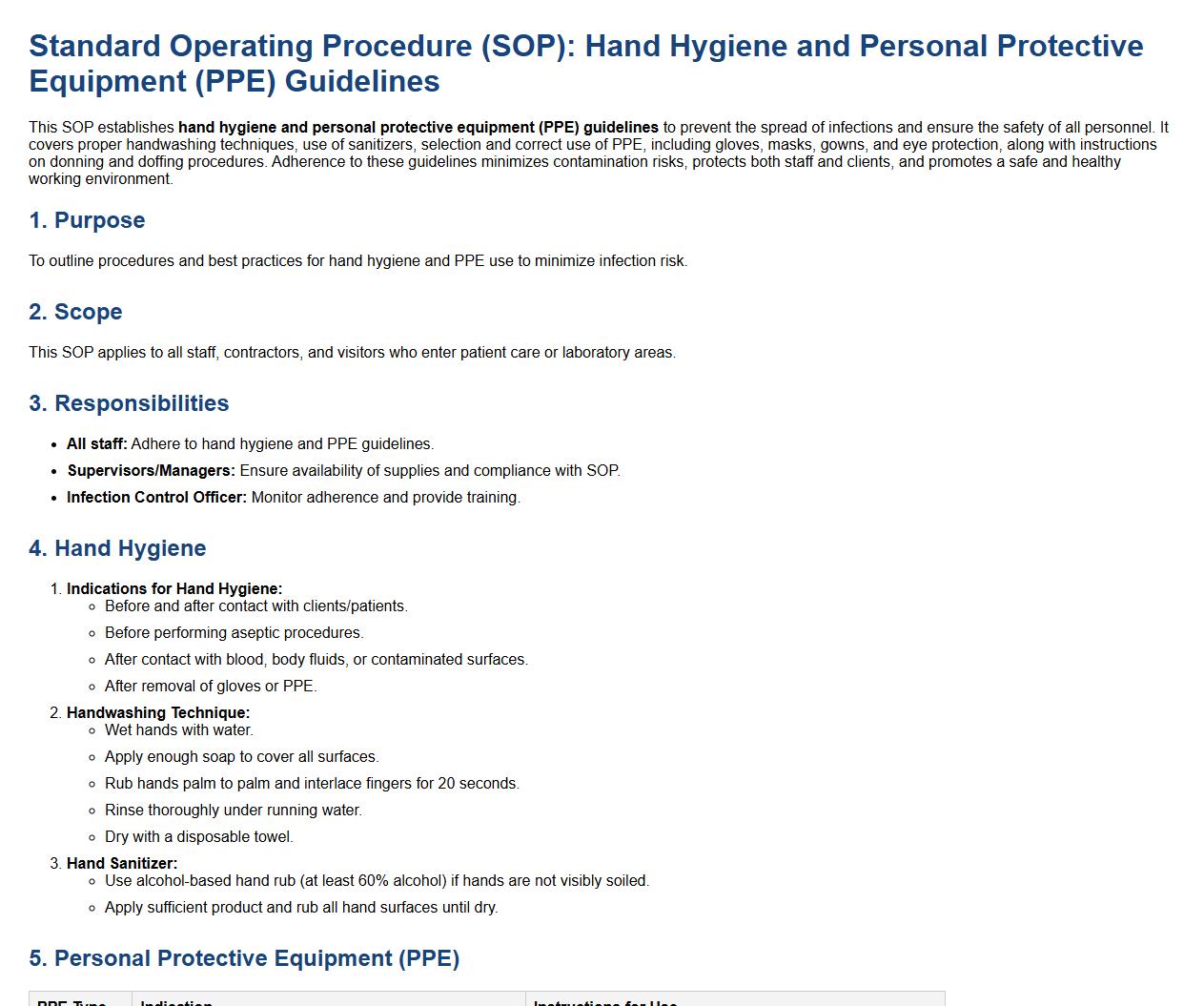
This SOP establishes hand hygiene and personal protective equipment (PPE) guidelines to prevent the spread of infections and ensure the safety of all personnel. It covers proper handwashing techniques, use of sanitizers, selection and correct use of PPE, including gloves, masks, gowns, and eye protection, along with instructions on donning and doffing procedures. Adherence to these guidelines minimizes contamination risks, protects both staff and clients, and promotes a safe and healthy working environment.
Medication preparation and dosage calculation steps.
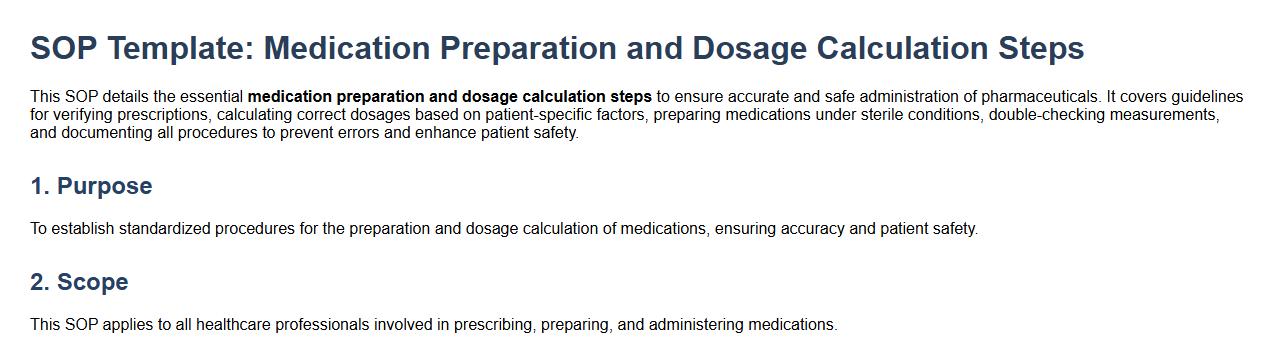
This SOP details the essential medication preparation and dosage calculation steps to ensure accurate and safe administration of pharmaceuticals. It covers guidelines for verifying prescriptions, calculating correct dosages based on patient-specific factors, preparing medications under sterile conditions, double-checking measurements, and documenting all procedures to prevent errors and enhance patient safety.
Documentation of medication administration record (MAR).
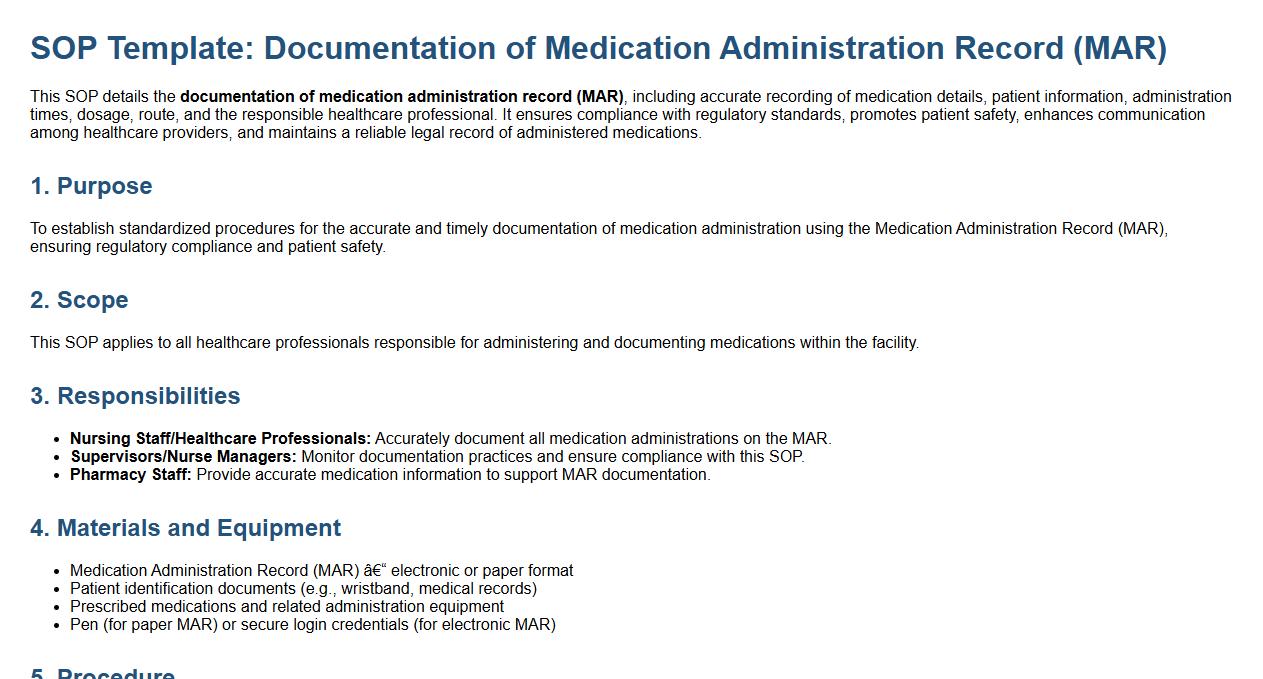
This SOP details the documentation of medication administration record (MAR), including accurate recording of medication details, patient information, administration times, dosage, route, and the responsible healthcare professional. It ensures compliance with regulatory standards, promotes patient safety, enhances communication among healthcare providers, and maintains a reliable legal record of administered medications.
Patient education and consent protocols.
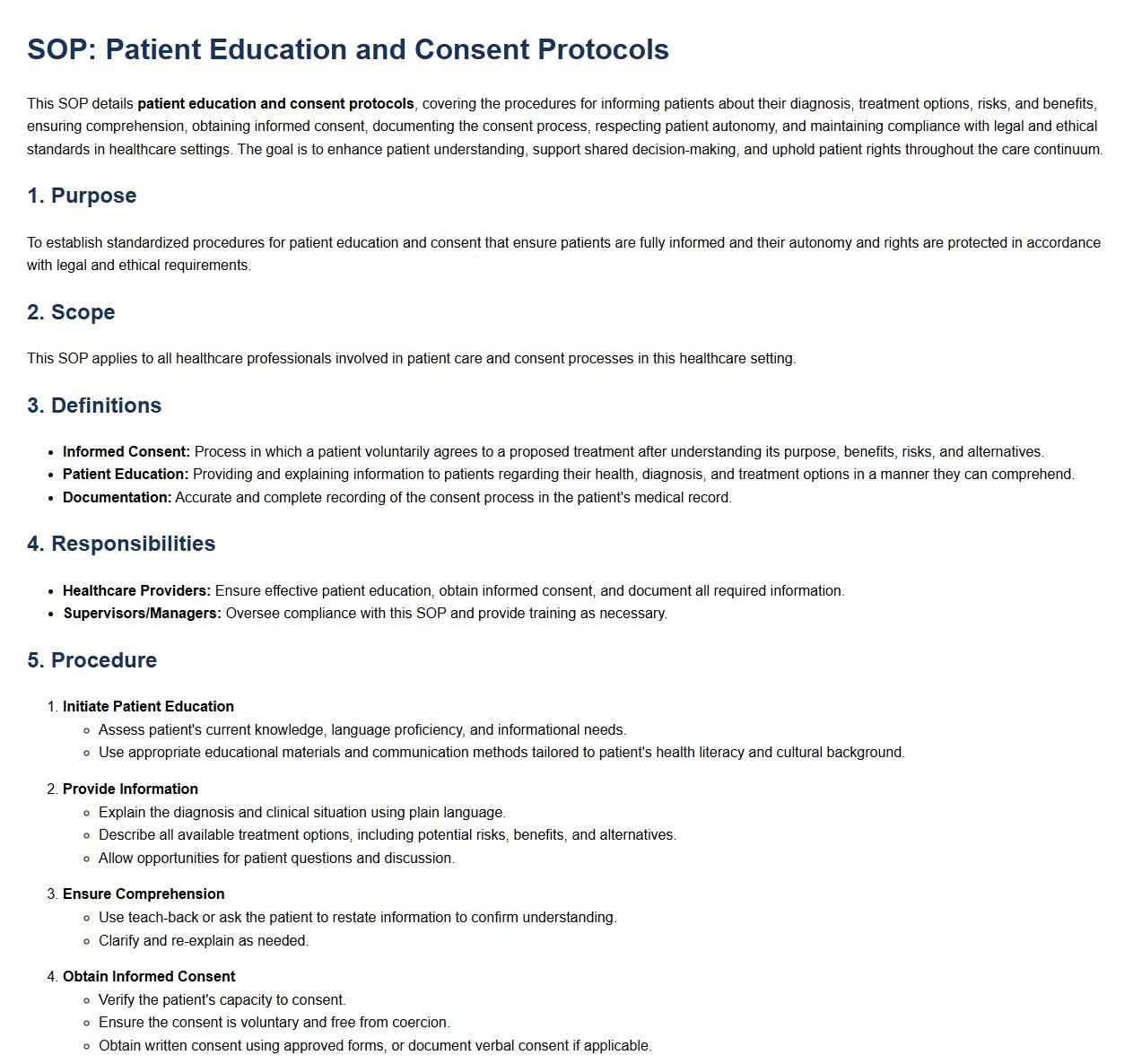
This SOP details patient education and consent protocols, covering the procedures for informing patients about their diagnosis, treatment options, risks, and benefits, ensuring comprehension, obtaining informed consent, documenting the consent process, respecting patient autonomy, and maintaining compliance with legal and ethical standards in healthcare settings. The goal is to enhance patient understanding, support shared decision-making, and uphold patient rights throughout the care continuum.
Administration route-specific procedures (oral, IV, IM, etc.).
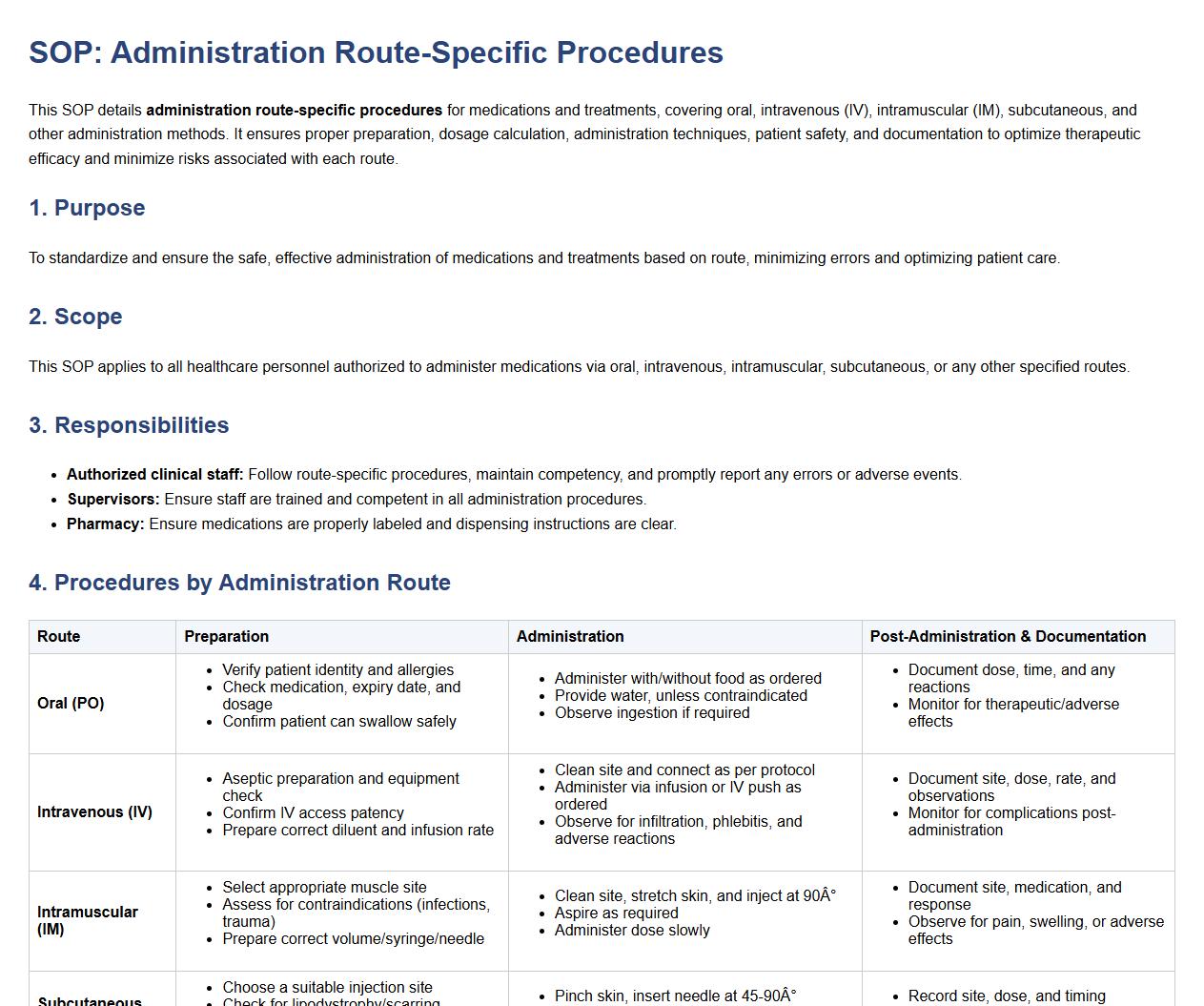
This SOP details administration route-specific procedures for medications and treatments, covering oral, intravenous (IV), intramuscular (IM), subcutaneous, and other administration methods. It ensures proper preparation, dosage calculation, administration techniques, patient safety, and documentation to optimize therapeutic efficacy and minimize risks associated with each route.
Monitoring for adverse reactions and response documentation.
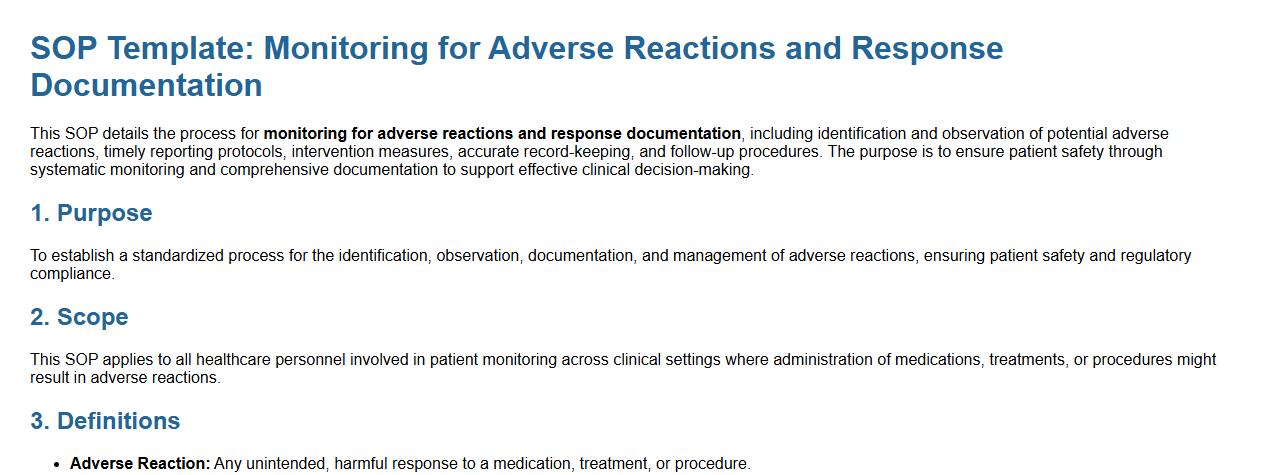
This SOP details the process for monitoring for adverse reactions and response documentation, including identification and observation of potential adverse reactions, timely reporting protocols, intervention measures, accurate record-keeping, and follow-up procedures. The purpose is to ensure patient safety through systematic monitoring and comprehensive documentation to support effective clinical decision-making.
Protocols for medication errors and incident reporting.
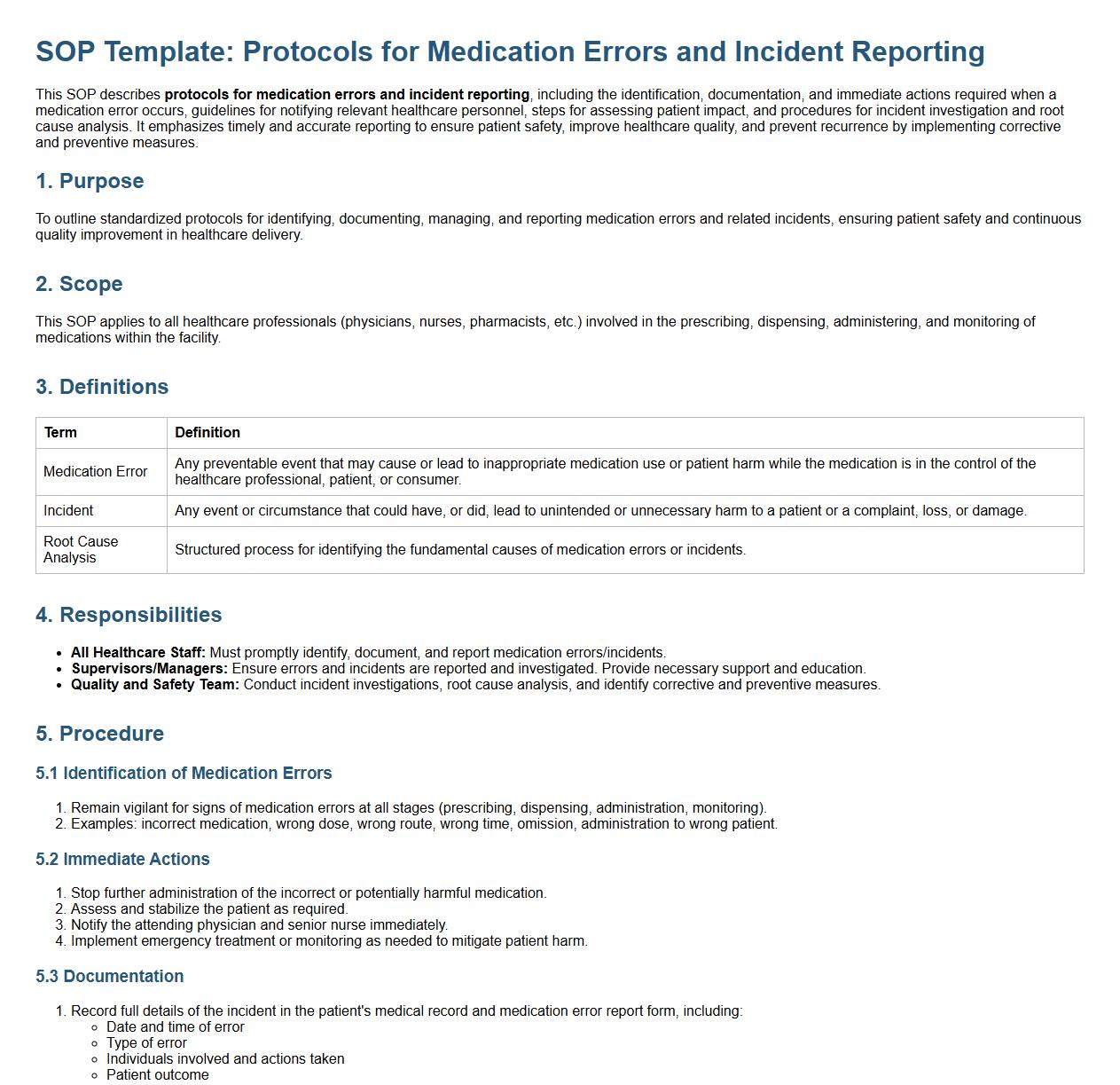
This SOP describes protocols for medication errors and incident reporting, including the identification, documentation, and immediate actions required when a medication error occurs, guidelines for notifying relevant healthcare personnel, steps for assessing patient impact, and procedures for incident investigation and root cause analysis. It emphasizes timely and accurate reporting to ensure patient safety, improve healthcare quality, and prevent recurrence by implementing corrective and preventive measures.
Storage, security, and disposal of medications.
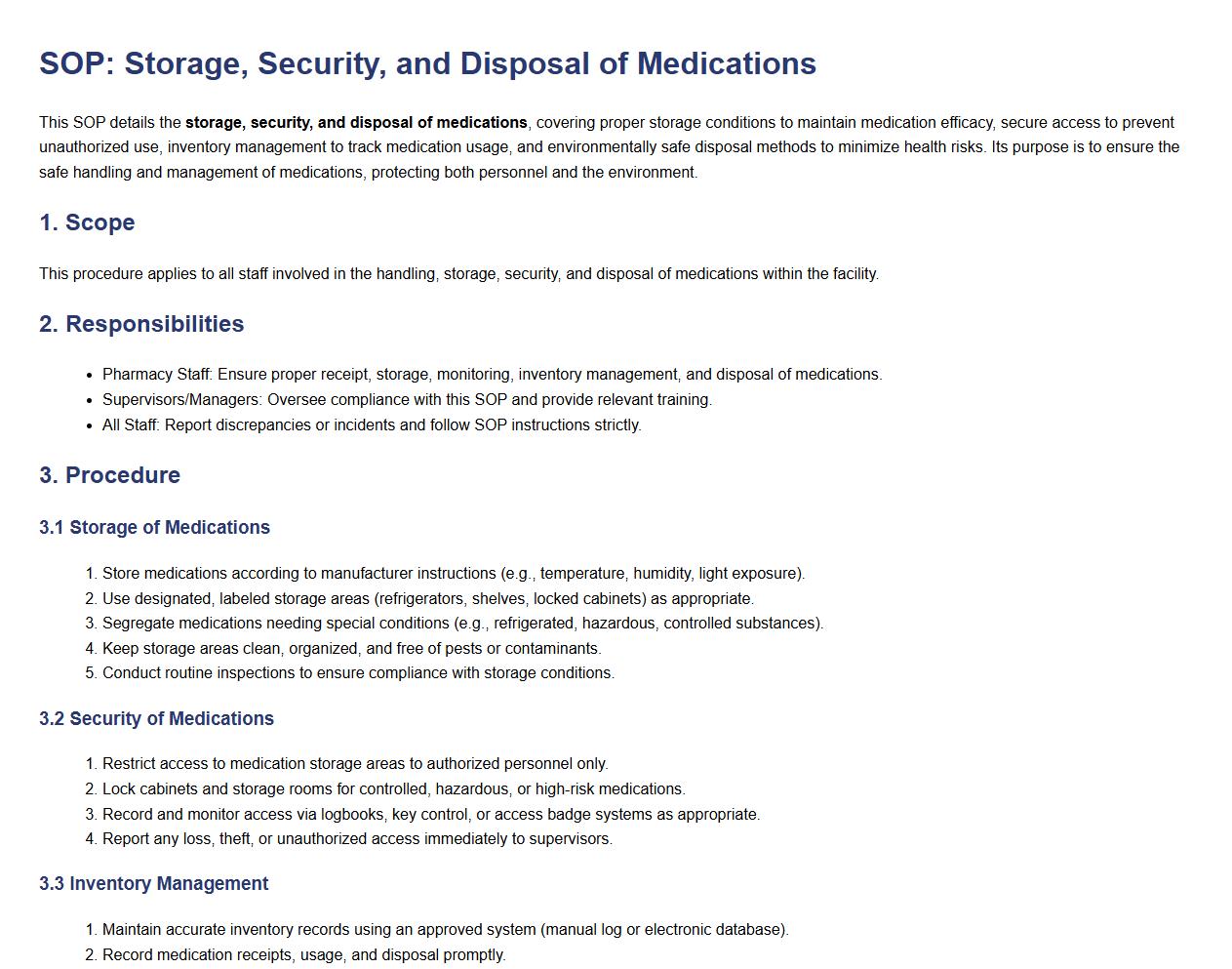
This SOP details the storage, security, and disposal of medications, covering proper storage conditions to maintain medication efficacy, secure access to prevent unauthorized use, inventory management to track medication usage, and environmentally safe disposal methods to minimize health risks. Its purpose is to ensure the safe handling and management of medications, protecting both personnel and the environment.
What is the primary objective of the Medication Administration SOP?
The primary objective of the Medication Administration SOP is to ensure safe and accurate delivery of medications to patients. It aims to minimize medication errors and enhance patient safety. This standard operating procedure establishes clear guidelines and accountability for all healthcare professionals involved.
Which personnel are authorized to administer medication according to the SOP?
Only licensed healthcare professionals such as nurses, pharmacists, and physicians are authorized to administer medication. The SOP specifies that personnel must have appropriate training and certification. Unauthorized staff are strictly prohibited from administering any medication.
What steps must be followed to verify patient identity prior to medication administration?
The SOP mandates verifying patient identity using at least two identifiers, such as name and date of birth. Healthcare workers must compare the patient's ID band with the medication order before administration. This step is critical to preventing medication errors and ensuring safety.
How does the SOP require documentation of administered medications?
The SOP requires timely and accurate documentation of all administered medications in the patient's medical record. Documentation must include the drug name, dose, route, time, and administrator's initials. Proper record-keeping supports continuity of care and legal compliance.
What protocols are outlined in the SOP for handling medication errors or adverse reactions?
In case of medication errors or adverse reactions, the SOP instructs immediate reporting to a supervisor and completion of an incident report. Patient safety measures must be enacted to mitigate harm, including monitoring and treatment. The SOP emphasizes learning from errors to improve future practices.