

A SOP Template for Handling Patient Records ensures consistent procedures for managing sensitive healthcare information securely and efficiently. This template outlines clear steps for data entry, storage, access, and confidentiality compliance with regulatory standards. Implementing this SOP reduces errors and enhances patient privacy protection across medical facilities.
Patient identification and registration procedures.
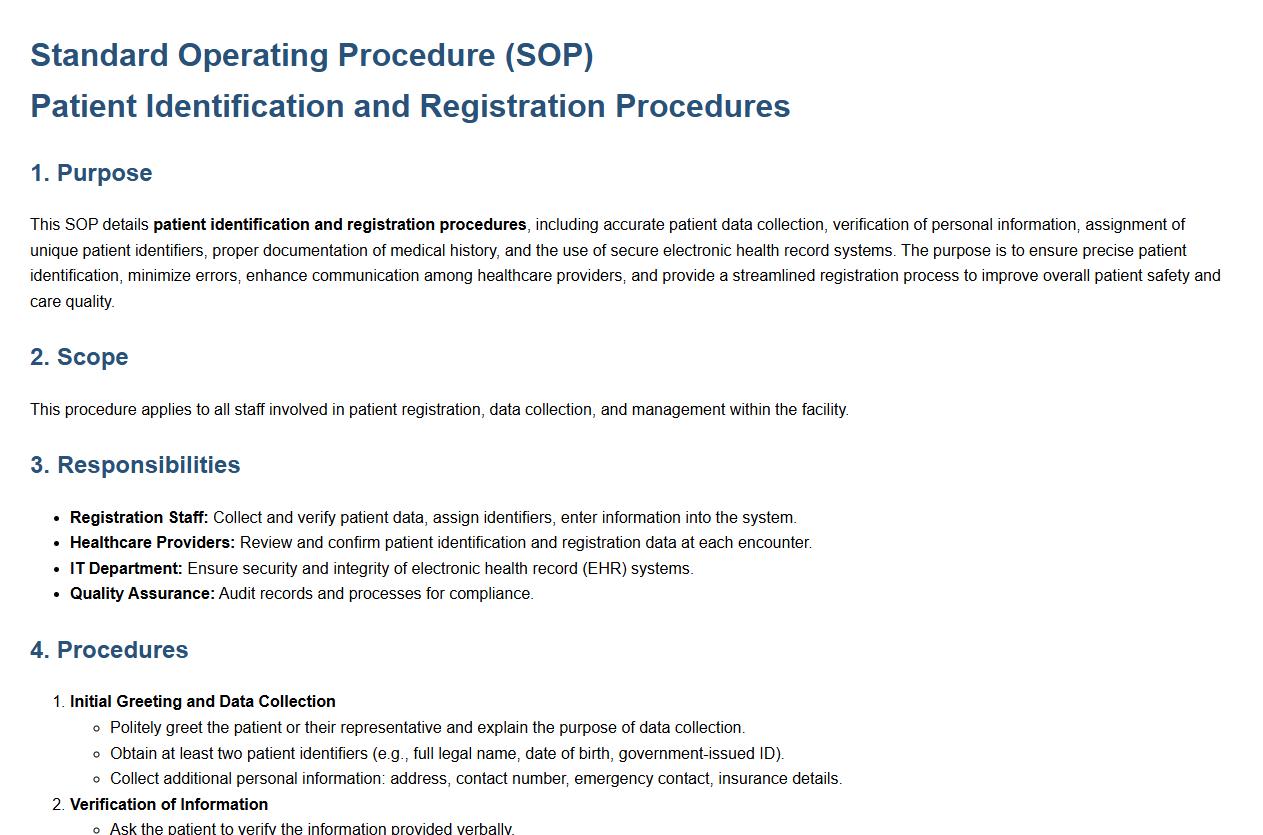
This SOP details patient identification and registration procedures, including accurate patient data collection, verification of personal information, assignment of unique patient identifiers, proper documentation of medical history, and the use of secure electronic health record systems. The purpose is to ensure precise patient identification, minimize errors, enhance communication among healthcare providers, and provide a streamlined registration process to improve overall patient safety and care quality.
Verification of patient information accuracy.
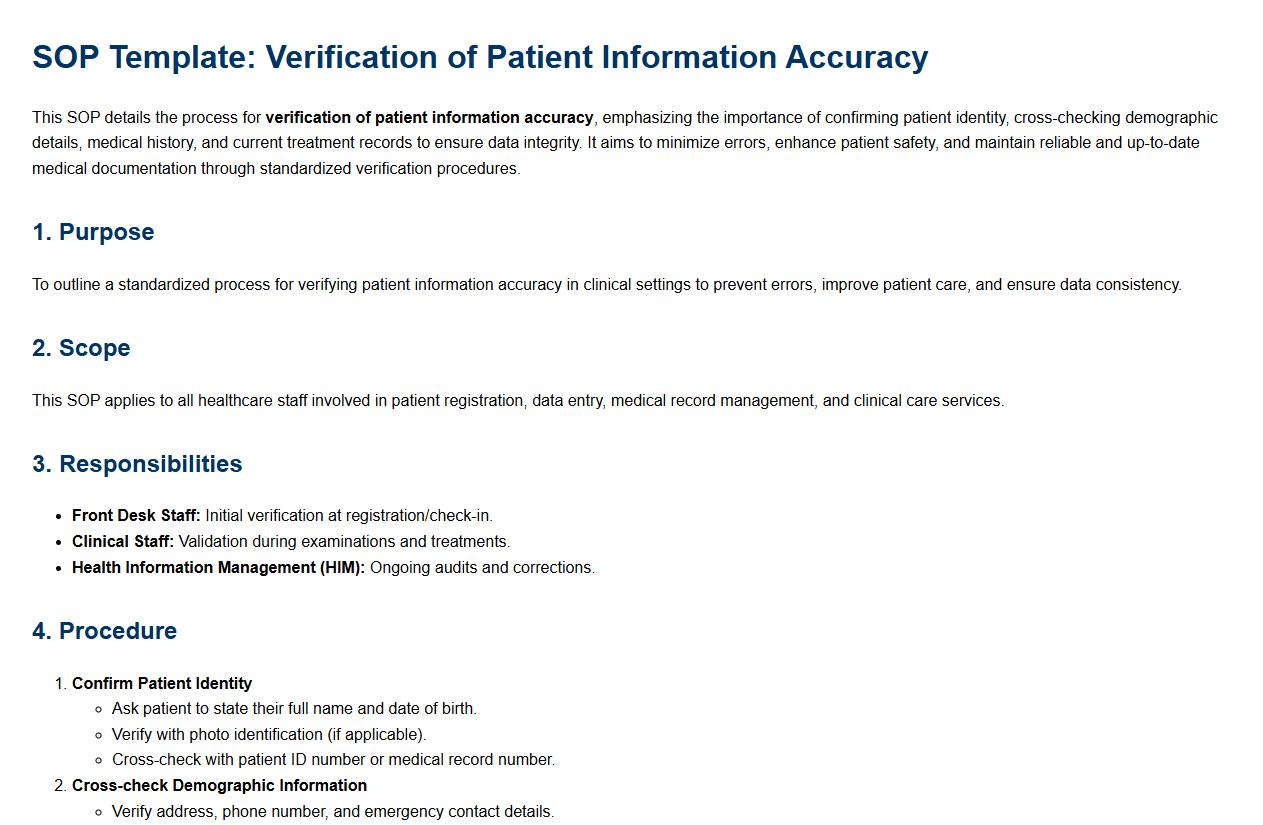
This SOP details the process for verification of patient information accuracy, emphasizing the importance of confirming patient identity, cross-checking demographic details, medical history, and current treatment records to ensure data integrity. It aims to minimize errors, enhance patient safety, and maintain reliable and up-to-date medical documentation through standardized verification procedures.
Secure creation, labeling, and filing of new patient records.
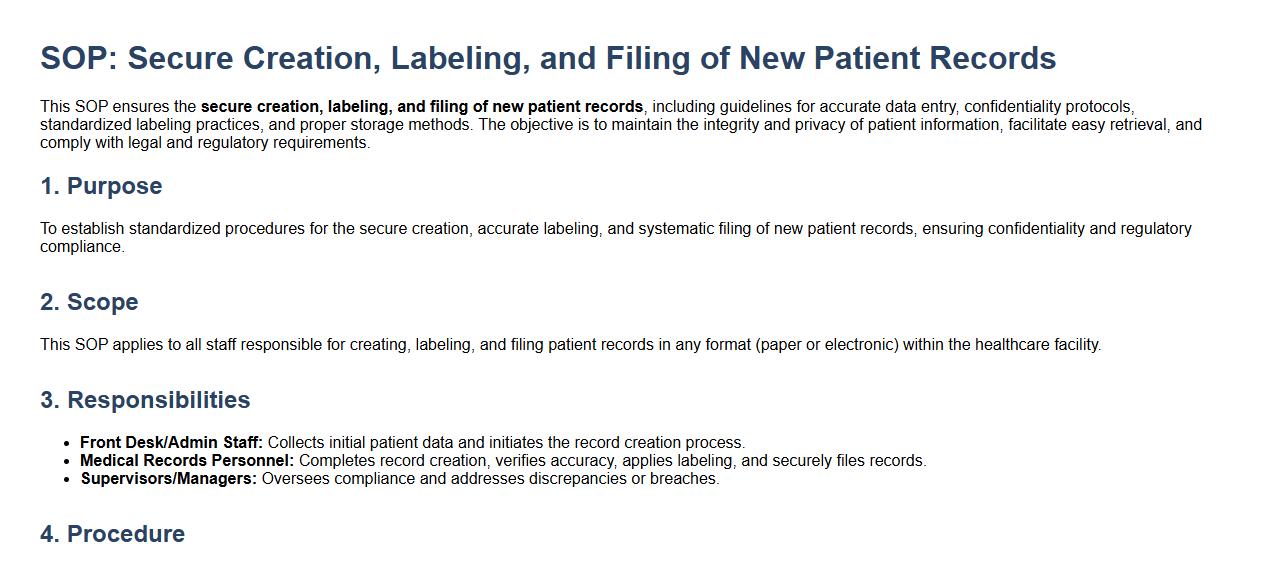
This SOP ensures the secure creation, labeling, and filing of new patient records, including guidelines for accurate data entry, confidentiality protocols, standardized labeling practices, and proper storage methods. The objective is to maintain the integrity and privacy of patient information, facilitate easy retrieval, and comply with legal and regulatory requirements.
Guidelines for authorized access and retrieval of records.
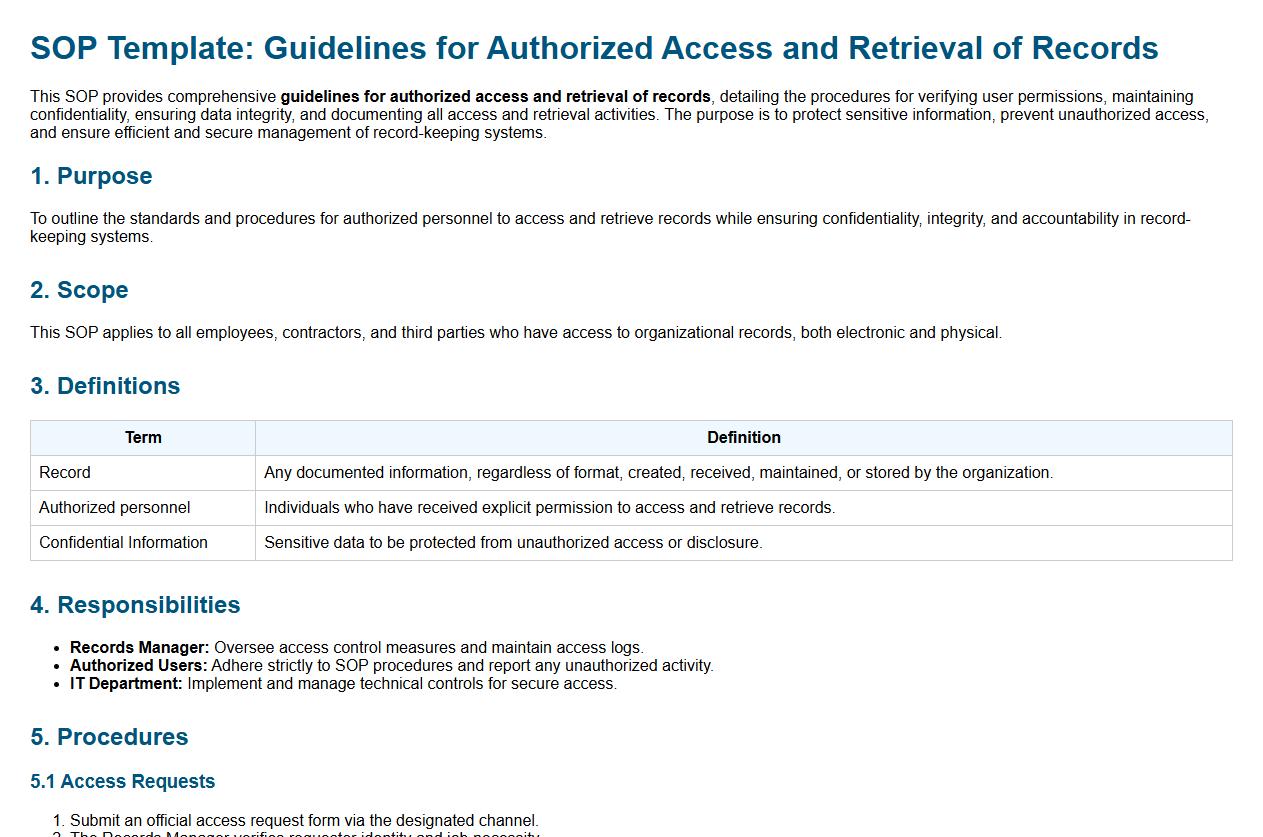
This SOP provides comprehensive guidelines for authorized access and retrieval of records, detailing the procedures for verifying user permissions, maintaining confidentiality, ensuring data integrity, and documenting all access and retrieval activities. The purpose is to protect sensitive information, prevent unauthorized access, and ensure efficient and secure management of record-keeping systems.
Procedures for documentation and updating of medical notes.
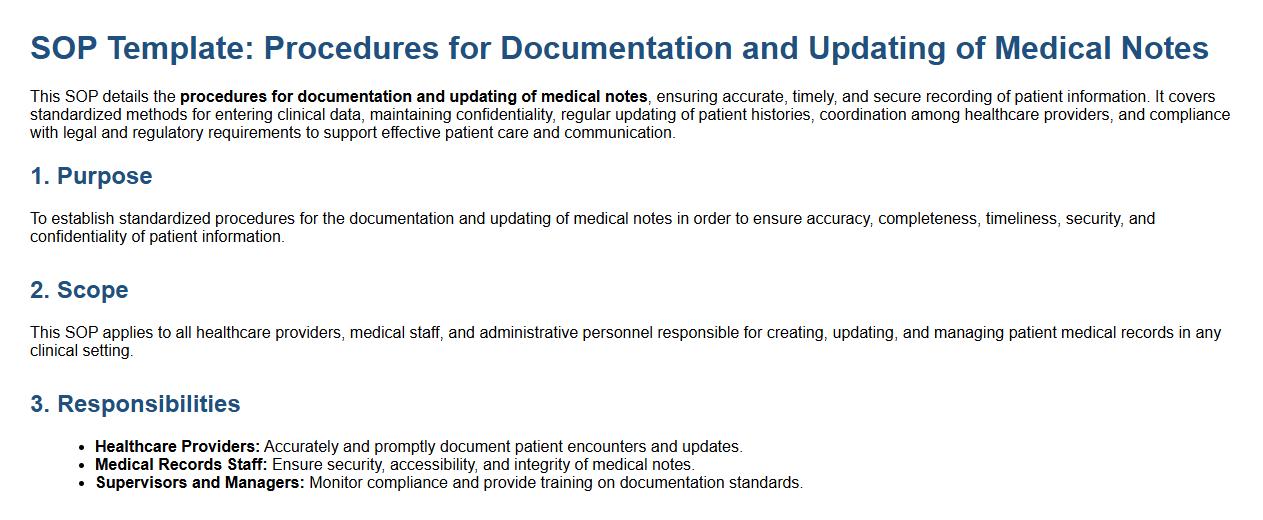
This SOP details the procedures for documentation and updating of medical notes, ensuring accurate, timely, and secure recording of patient information. It covers standardized methods for entering clinical data, maintaining confidentiality, regular updating of patient histories, coordination among healthcare providers, and compliance with legal and regulatory requirements to support effective patient care and communication.
Protocols for correcting errors in patient records.
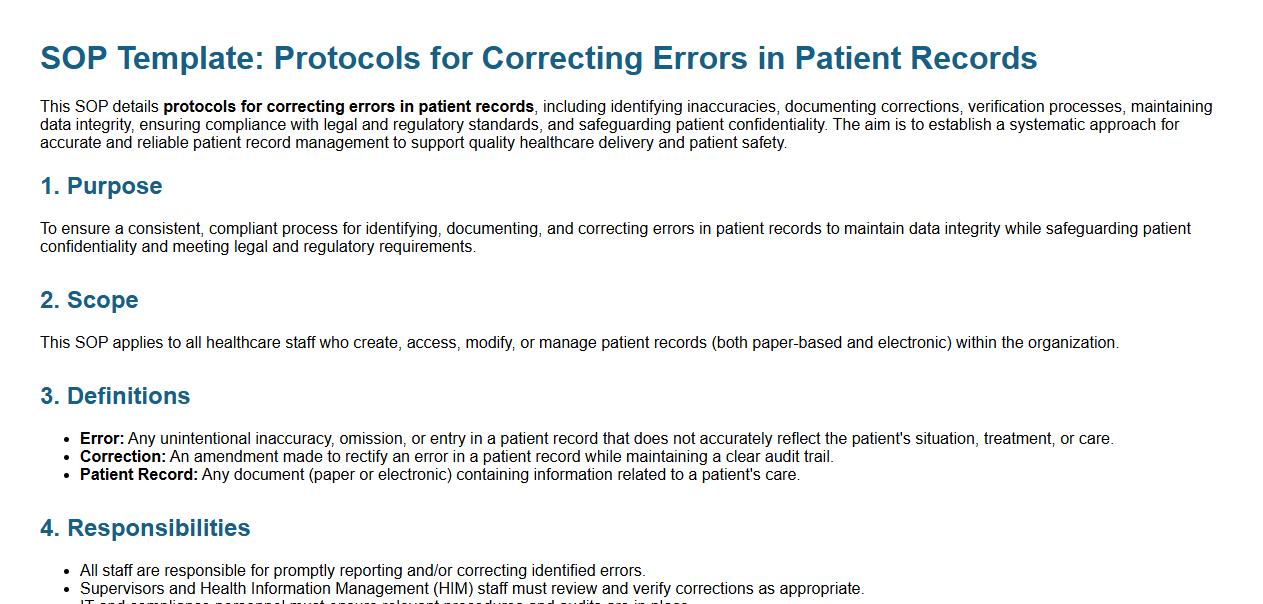
This SOP details protocols for correcting errors in patient records, including identifying inaccuracies, documenting corrections, verification processes, maintaining data integrity, ensuring compliance with legal and regulatory standards, and safeguarding patient confidentiality. The aim is to establish a systematic approach for accurate and reliable patient record management to support quality healthcare delivery and patient safety.
Confidentiality and privacy protection measures.
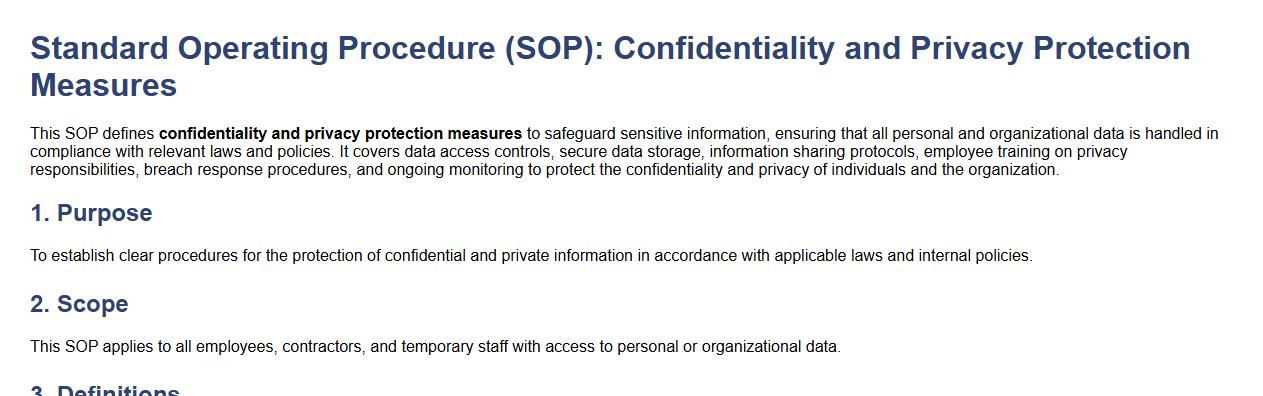
This SOP defines confidentiality and privacy protection measures to safeguard sensitive information, ensuring that all personal and organizational data is handled in compliance with relevant laws and policies. It covers data access controls, secure data storage, information sharing protocols, employee training on privacy responsibilities, breach response procedures, and ongoing monitoring to protect the confidentiality and privacy of individuals and the organization.
Electronic Health Records (EHR) entry and backup process.
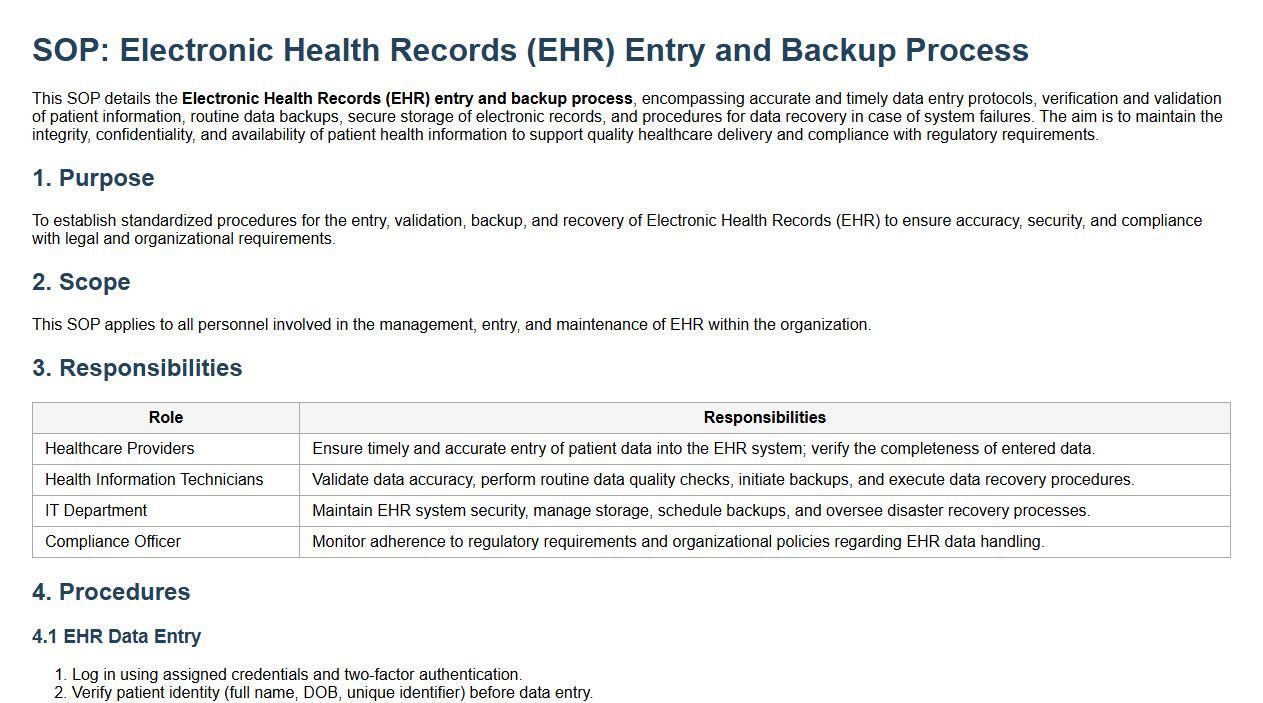
This SOP details the Electronic Health Records (EHR) entry and backup process, encompassing accurate and timely data entry protocols, verification and validation of patient information, routine data backups, secure storage of electronic records, and procedures for data recovery in case of system failures. The aim is to maintain the integrity, confidentiality, and availability of patient health information to support quality healthcare delivery and compliance with regulatory requirements.
Record retention, archiving, and disposal schedules.
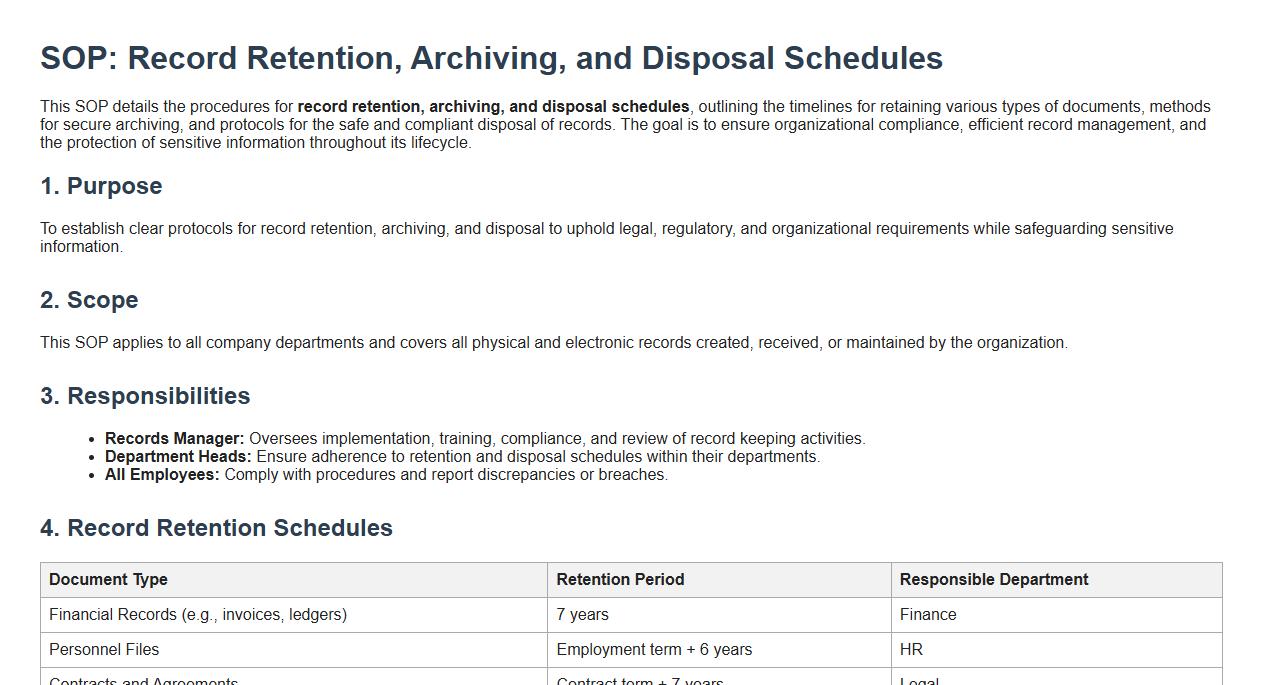
This SOP details the procedures for record retention, archiving, and disposal schedules, outlining the timelines for retaining various types of documents, methods for secure archiving, and protocols for the safe and compliant disposal of records. The goal is to ensure organizational compliance, efficient record management, and the protection of sensitive information throughout its lifecycle.
Incident reporting and breach response protocols.
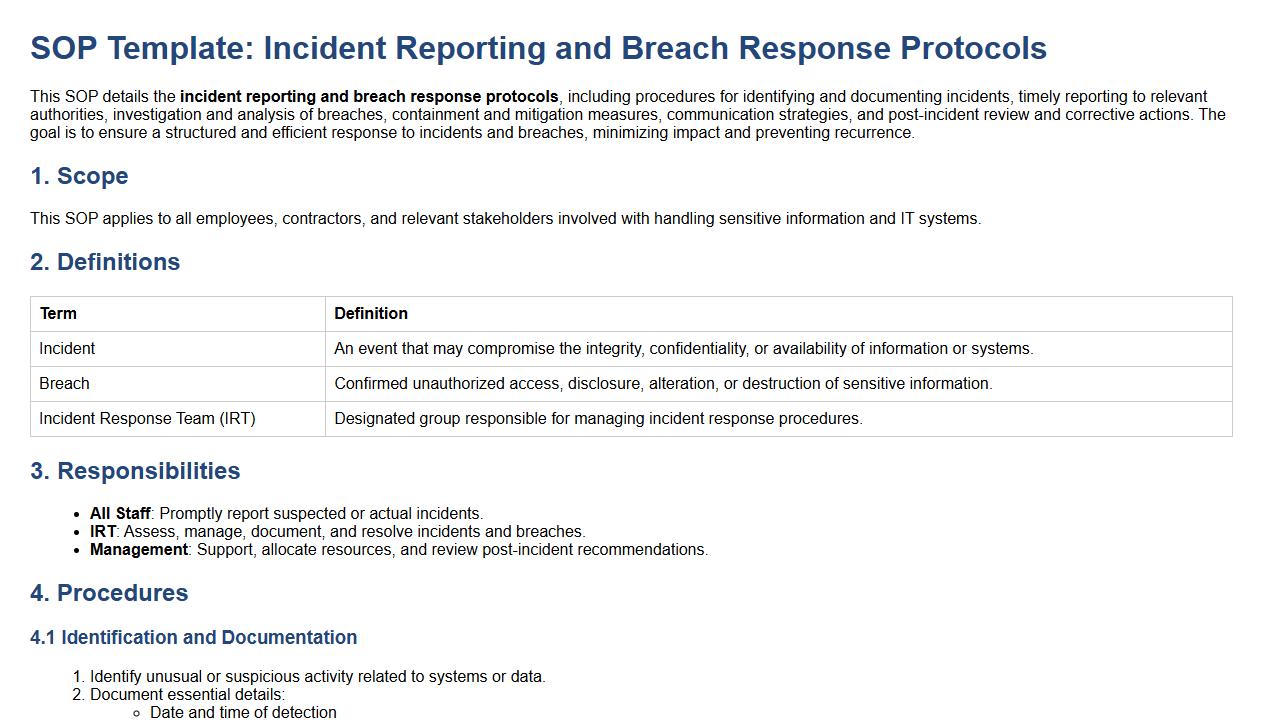
This SOP details the incident reporting and breach response protocols, including procedures for identifying and documenting incidents, timely reporting to relevant authorities, investigation and analysis of breaches, containment and mitigation measures, communication strategies, and post-incident review and corrective actions. The goal is to ensure a structured and efficient response to incidents and breaches, minimizing impact and preventing recurrence.
Key Steps for Secure Access to Patient Records
The SOP emphasizes the importance of authentication and authorization as primary steps for accessing patient records securely. Users must log in using unique credentials and multi-factor authentication to verify their identity. Additionally, access is granted strictly on a need-to-know basis to minimize unauthorized exposure.
Definition of Authorized Personnel for Handling Patient Records
The SOP clearly outlines that only authorized personnel, such as medical staff and administrative employees with proper clearance, can handle patient records. These individuals undergo rigorous training on confidentiality and data protection protocols. Unauthorized individuals are strictly prohibited from accessing or managing patient information.
Procedures for Updating or Correcting Patient Information
The SOP requires that any updates or corrections to patient records must be documented and verified by authorized healthcare professionals. Changes must follow a formal request and approval process to ensure accuracy. Audit trails are maintained to track all modifications for accountability and legal compliance.
Guidelines for Storing and Archiving Patient Records
According to the SOP, physical records must be stored in secure, locked facilities with controlled access, while electronic records require encrypted storage solutions. Both types of records are to be archived according to retention policies that comply with legal and institutional requirements. Regular backups and secure disposal methods are mandated to prevent data loss or unauthorized access.
Management of Data Breaches or Unauthorized Access
The SOP provides a comprehensive framework for immediate reporting and management of data breaches or unauthorized access incidents. Staff must report suspicious activities to the designated security officer promptly. A formal investigation process ensues, coupled with mitigation steps and notification to affected parties as required by law.