
A SOP Template for Infection Control in Healthcare Facilities provides a structured framework to standardize procedures aimed at minimizing infection risks among patients and staff. This template outlines essential protocols such as hand hygiene, sterilization methods, and isolation precautions to ensure compliance with health regulations and enhance safety. Implementing a clear and comprehensive SOP helps healthcare facilities maintain consistent infection control practices and improve overall patient care quality.
Infection prevention and surveillance protocols.
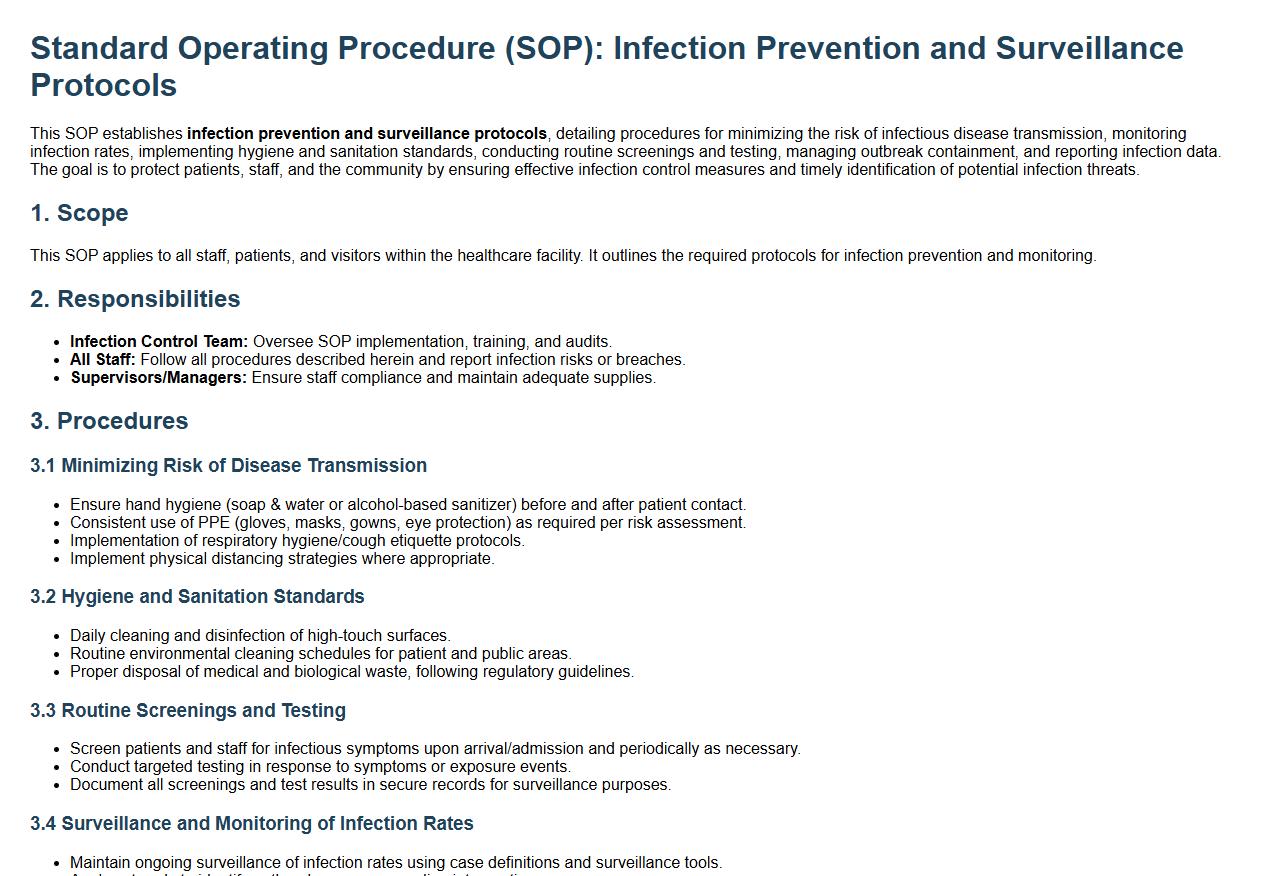
This SOP establishes infection prevention and surveillance protocols, detailing procedures for minimizing the risk of infectious disease transmission, monitoring infection rates, implementing hygiene and sanitation standards, conducting routine screenings and testing, managing outbreak containment, and reporting infection data. The goal is to protect patients, staff, and the community by ensuring effective infection control measures and timely identification of potential infection threats.
Hand hygiene and sanitization procedures.
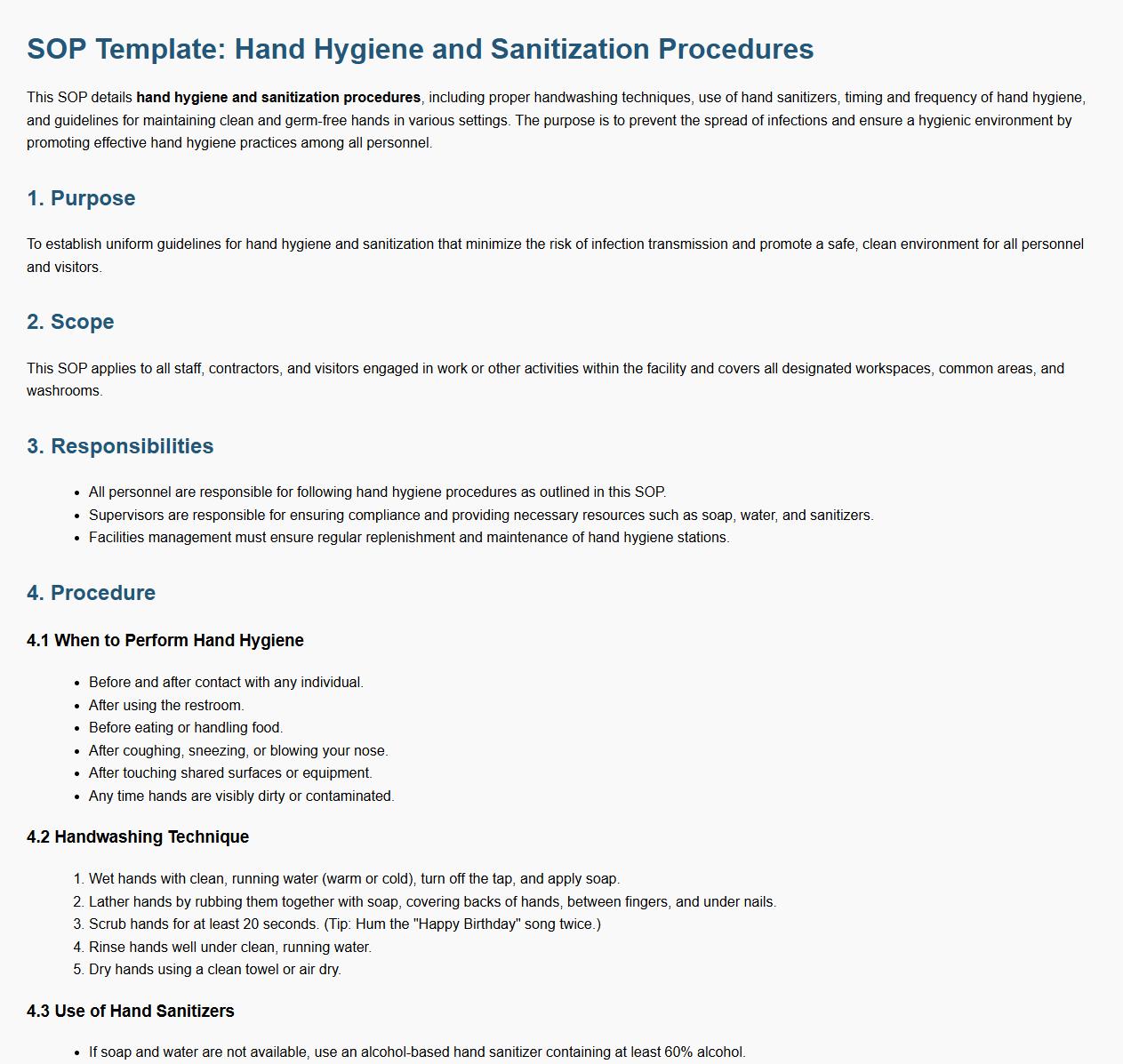
This SOP details hand hygiene and sanitization procedures, including proper handwashing techniques, use of hand sanitizers, timing and frequency of hand hygiene, and guidelines for maintaining clean and germ-free hands in various settings. The purpose is to prevent the spread of infections and ensure a hygienic environment by promoting effective hand hygiene practices among all personnel.
Personal protective equipment (PPE) usage and disposal.
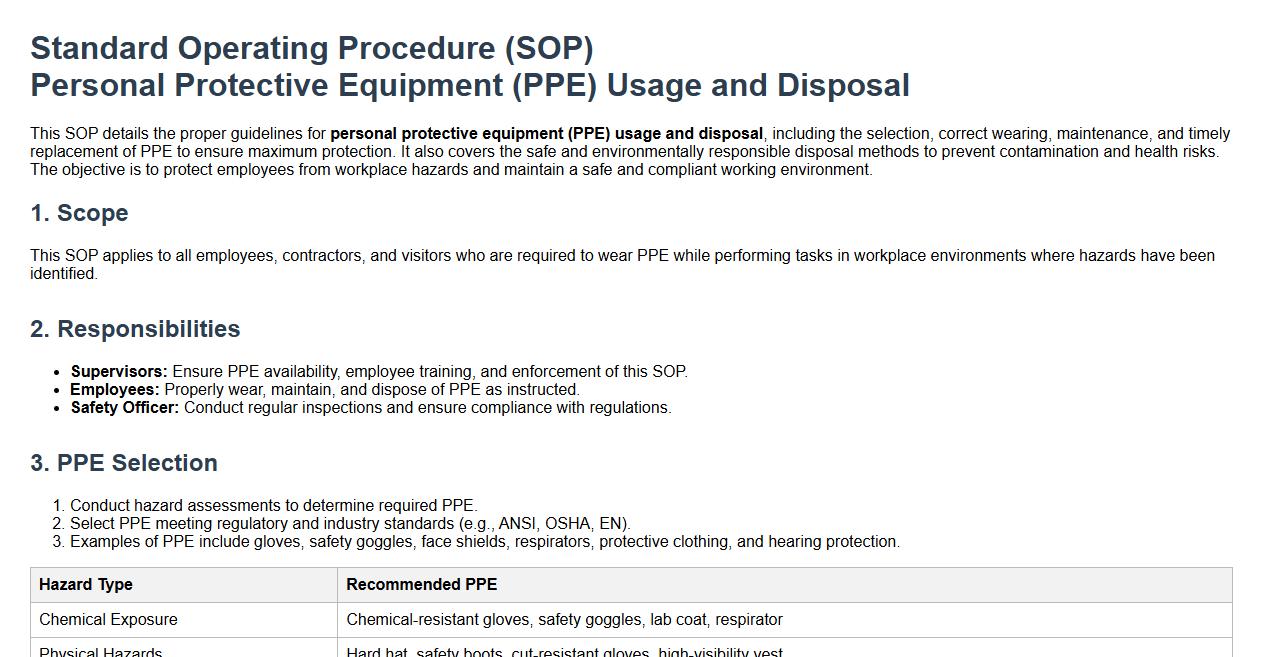
This SOP details the proper guidelines for personal protective equipment (PPE) usage and disposal, including the selection, correct wearing, maintenance, and timely replacement of PPE to ensure maximum protection. It also covers the safe and environmentally responsible disposal methods to prevent contamination and health risks. The objective is to protect employees from workplace hazards and maintain a safe and compliant working environment.
Environmental cleaning and disinfection guidelines.
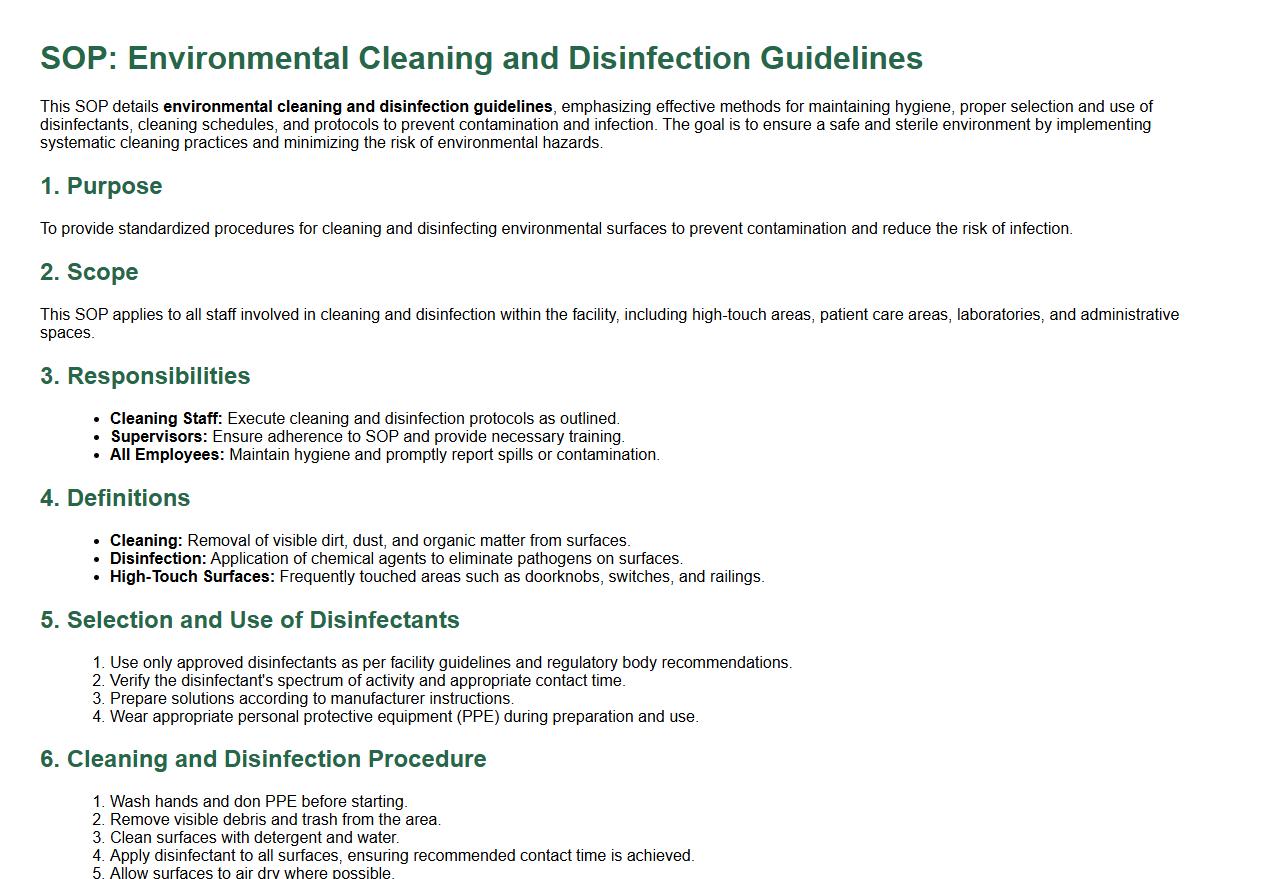
This SOP details environmental cleaning and disinfection guidelines, emphasizing effective methods for maintaining hygiene, proper selection and use of disinfectants, cleaning schedules, and protocols to prevent contamination and infection. The goal is to ensure a safe and sterile environment by implementing systematic cleaning practices and minimizing the risk of environmental hazards.
Isolation precautions for infectious patients.
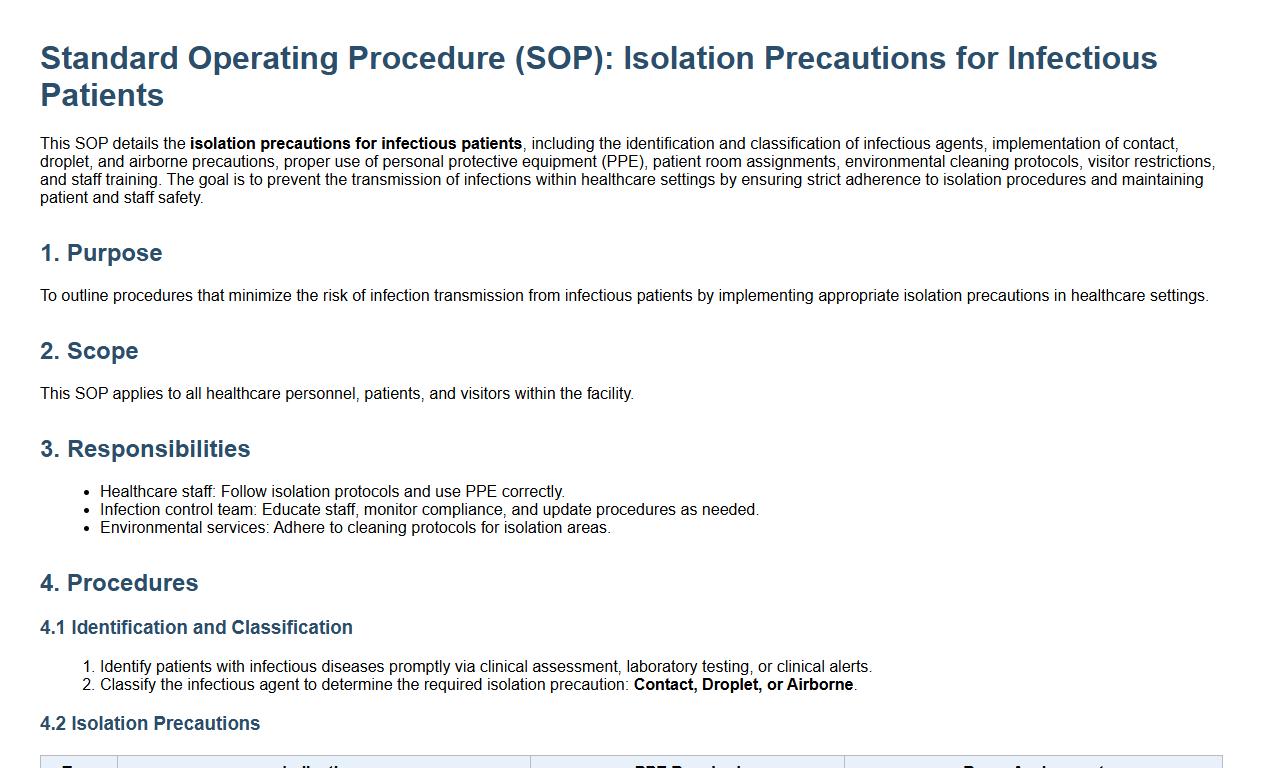
This SOP details the isolation precautions for infectious patients, including the identification and classification of infectious agents, implementation of contact, droplet, and airborne precautions, proper use of personal protective equipment (PPE), patient room assignments, environmental cleaning protocols, visitor restrictions, and staff training. The goal is to prevent the transmission of infections within healthcare settings by ensuring strict adherence to isolation procedures and maintaining patient and staff safety.
Waste management of biohazard materials.
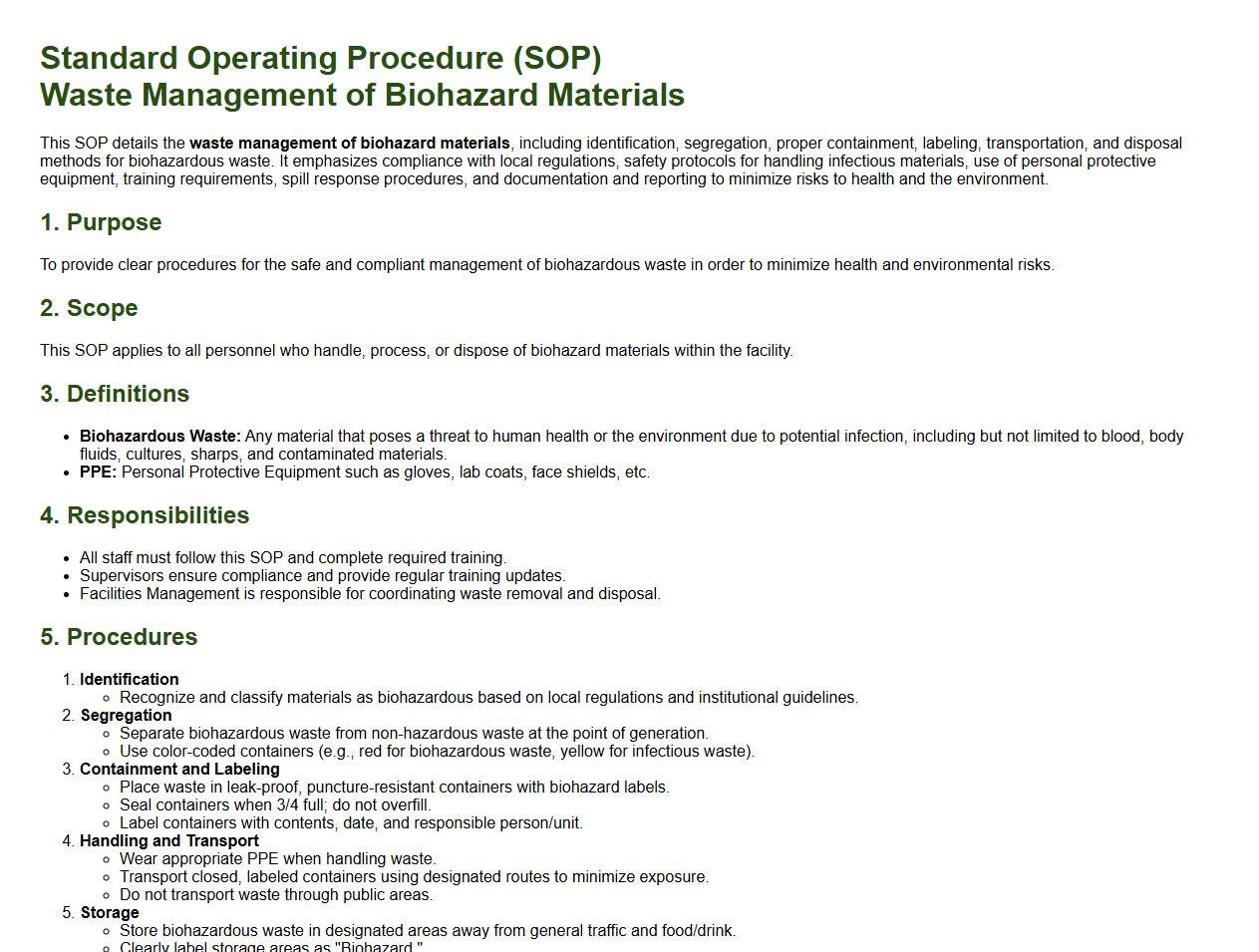
This SOP details the waste management of biohazard materials, including identification, segregation, proper containment, labeling, transportation, and disposal methods for biohazardous waste. It emphasizes compliance with local regulations, safety protocols for handling infectious materials, use of personal protective equipment, training requirements, spill response procedures, and documentation and reporting to minimize risks to health and the environment.
Laundry and linen handling procedures.
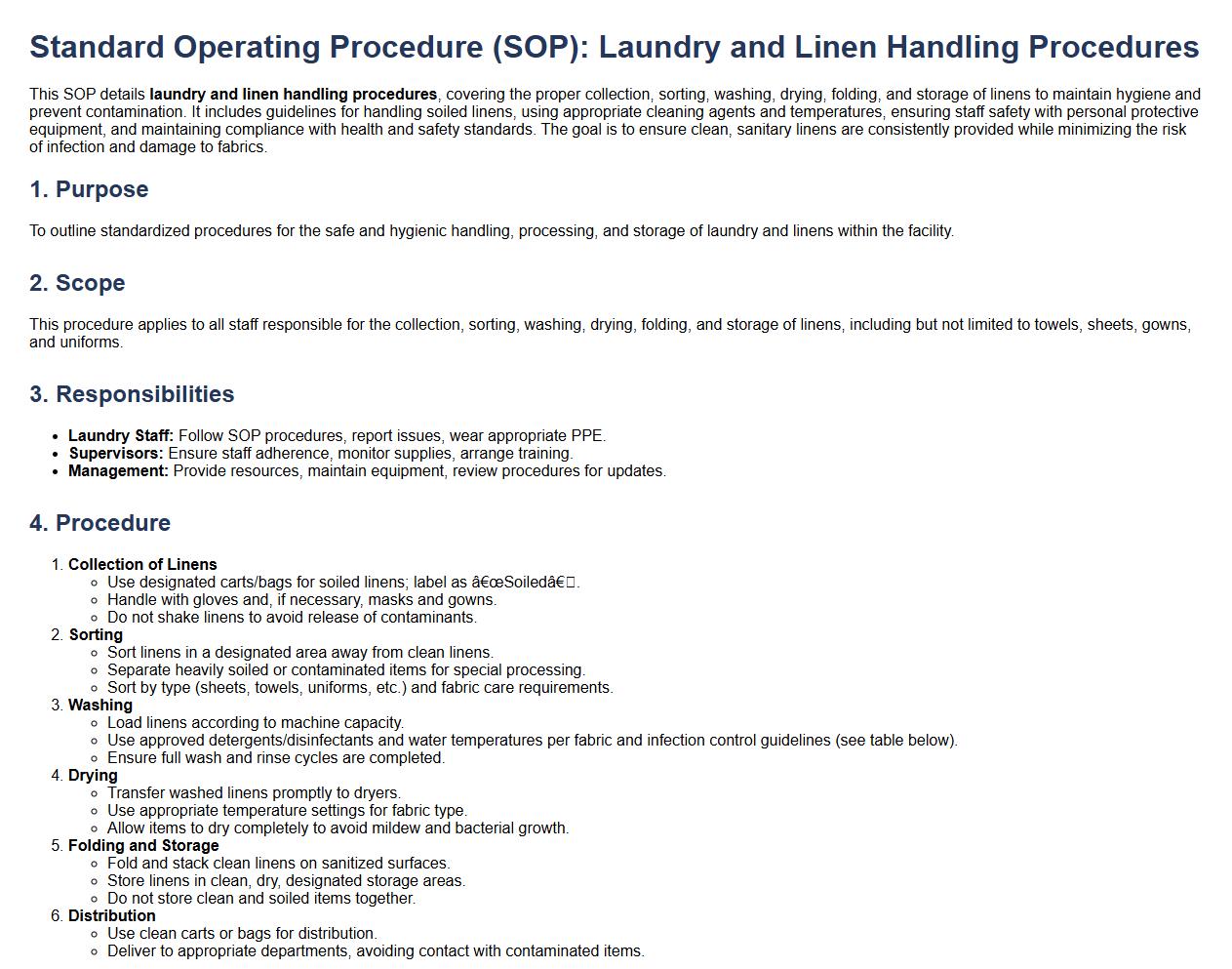
This SOP details laundry and linen handling procedures, covering the proper collection, sorting, washing, drying, folding, and storage of linens to maintain hygiene and prevent contamination. It includes guidelines for handling soiled linens, using appropriate cleaning agents and temperatures, ensuring staff safety with personal protective equipment, and maintaining compliance with health and safety standards. The goal is to ensure clean, sanitary linens are consistently provided while minimizing the risk of infection and damage to fabrics.
Employee health screening and immunization tracking.
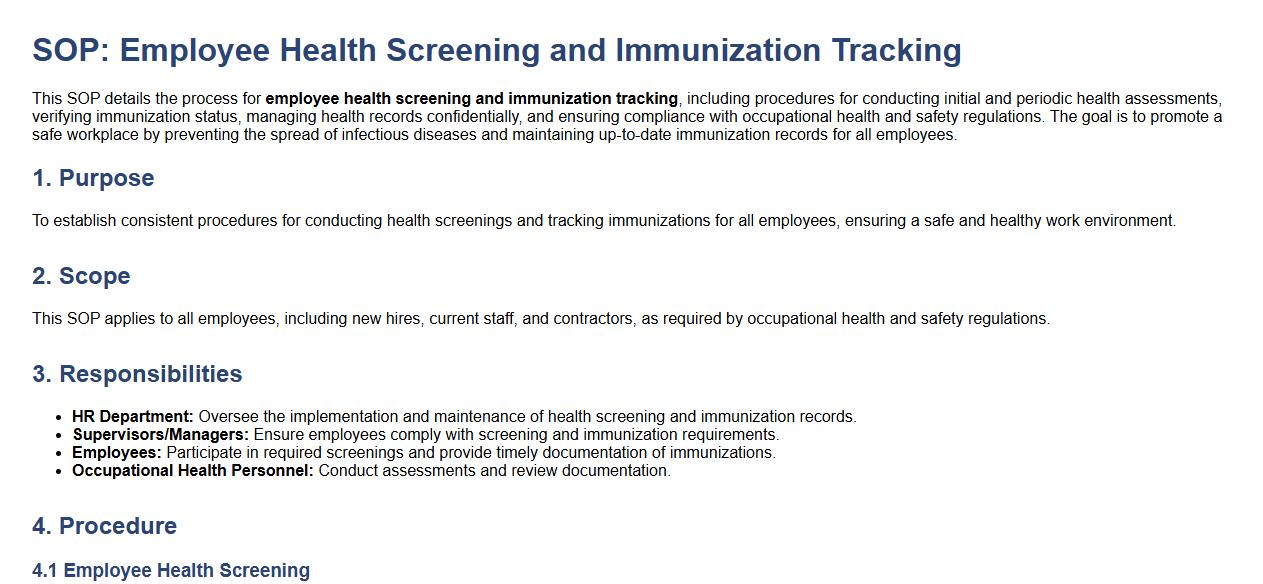
This SOP details the process for employee health screening and immunization tracking, including procedures for conducting initial and periodic health assessments, verifying immunization status, managing health records confidentially, and ensuring compliance with occupational health and safety regulations. The goal is to promote a safe workplace by preventing the spread of infectious diseases and maintaining up-to-date immunization records for all employees.
Visitor restrictions and screening measures.
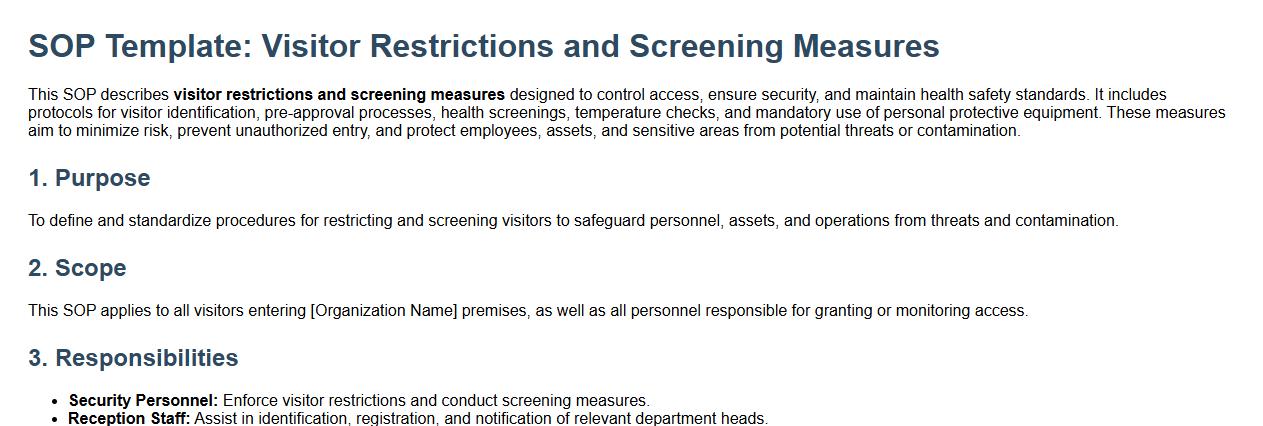
This SOP describes visitor restrictions and screening measures designed to control access, ensure security, and maintain health safety standards. It includes protocols for visitor identification, pre-approval processes, health screenings, temperature checks, and mandatory use of personal protective equipment. These measures aim to minimize risk, prevent unauthorized entry, and protect employees, assets, and sensitive areas from potential threats or contamination.
Incident reporting and outbreak response procedures.
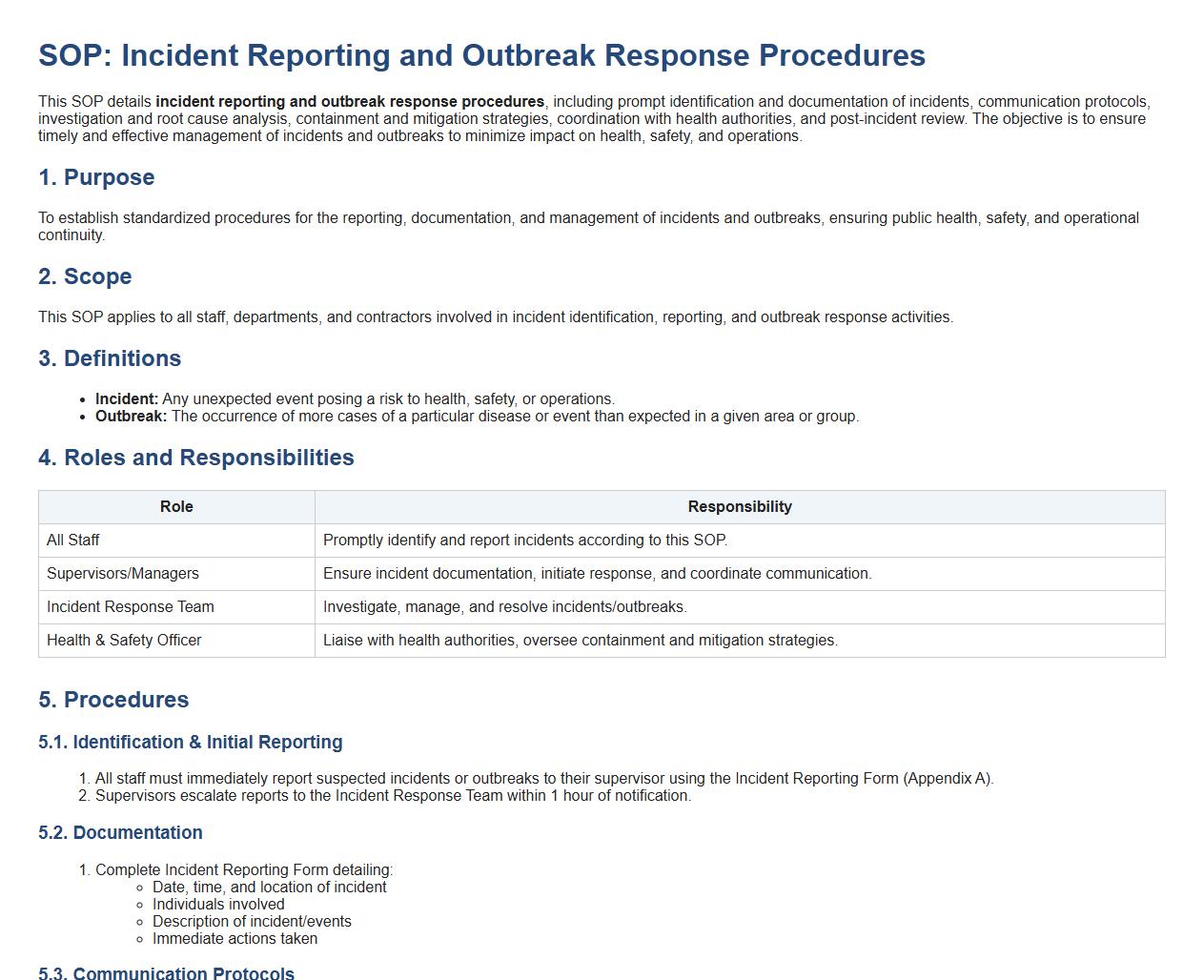
This SOP details incident reporting and outbreak response procedures, including prompt identification and documentation of incidents, communication protocols, investigation and root cause analysis, containment and mitigation strategies, coordination with health authorities, and post-incident review. The objective is to ensure timely and effective management of incidents and outbreaks to minimize impact on health, safety, and operations.
What are the key objectives outlined in the SOP for Infection Control in Healthcare Facilities?
The key objectives focus on minimizing infection risks to patients, staff, and visitors within healthcare facilities. It aims to establish standardized practices that ensure a safe and sterile environment. Continuous improvement in infection prevention and control measures is also a critical goal outlined in the SOP.
Which standard precautions are mandated by the SOP for all patient interactions?
The SOP mandates standard precautions such as proper hand hygiene, use of personal protective equipment (PPE), and safe injection practices during all patient interactions. These precautions aim to prevent the transmission of infectious agents. Following these measures consistently is essential to protect both healthcare personnel and patients.
How does the SOP define the roles and responsibilities of healthcare staff regarding infection control?
The SOP clearly delineates the roles and responsibilities of all healthcare staff to ensure effective infection control. It requires staff to adhere to protocols, participate in training, and report any breaches immediately. Accountability at every level is emphasized to maintain a culture of safety and compliance.
What procedures does the SOP require for the handling and disposal of infectious materials?
The SOP requires strict procedures for the handling and disposal of infectious waste to prevent contamination and exposure. This includes proper segregation, use of appropriate containers, and safe transportation for disposal. Adhering to these protocols ensures environmental safety and regulatory compliance.
Which monitoring and audit processes are included in the SOP to ensure compliance with infection control measures?
The SOP includes regular monitoring and audit processes such as routine inspections, infection surveillance, and compliance assessments. These activities help identify gaps in practice and enable timely corrective actions. Maintaining detailed records and reporting findings supports continuous improvement in infection control standards.