
A SOP Template for Medical Equipment Sterilization provides a standardized procedure to ensure the thorough cleaning, disinfection, and sterilization of medical instruments. This template helps maintain compliance with healthcare regulations and minimizes the risk of infection transmission. Proper use of the template guarantees consistent and effective sterilization practices in medical settings.
Pre-cleaning and removal of visible debris from equipment.
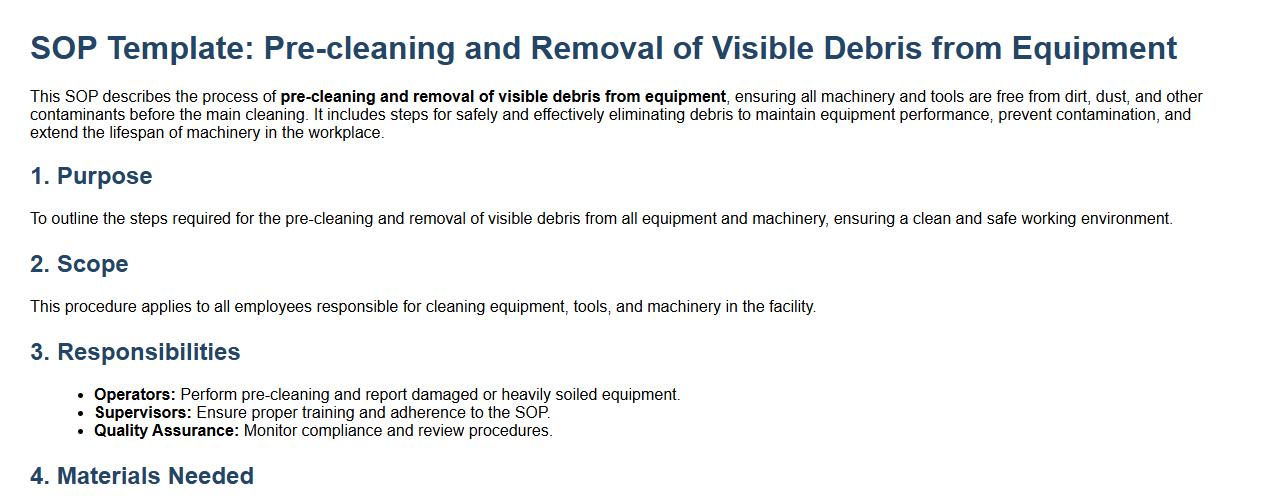
This SOP describes the process of pre-cleaning and removal of visible debris from equipment, ensuring all machinery and tools are free from dirt, dust, and other contaminants before the main cleaning. It includes steps for safely and effectively eliminating debris to maintain equipment performance, prevent contamination, and extend the lifespan of machinery in the workplace.
Disassembly of multi-component medical instruments.
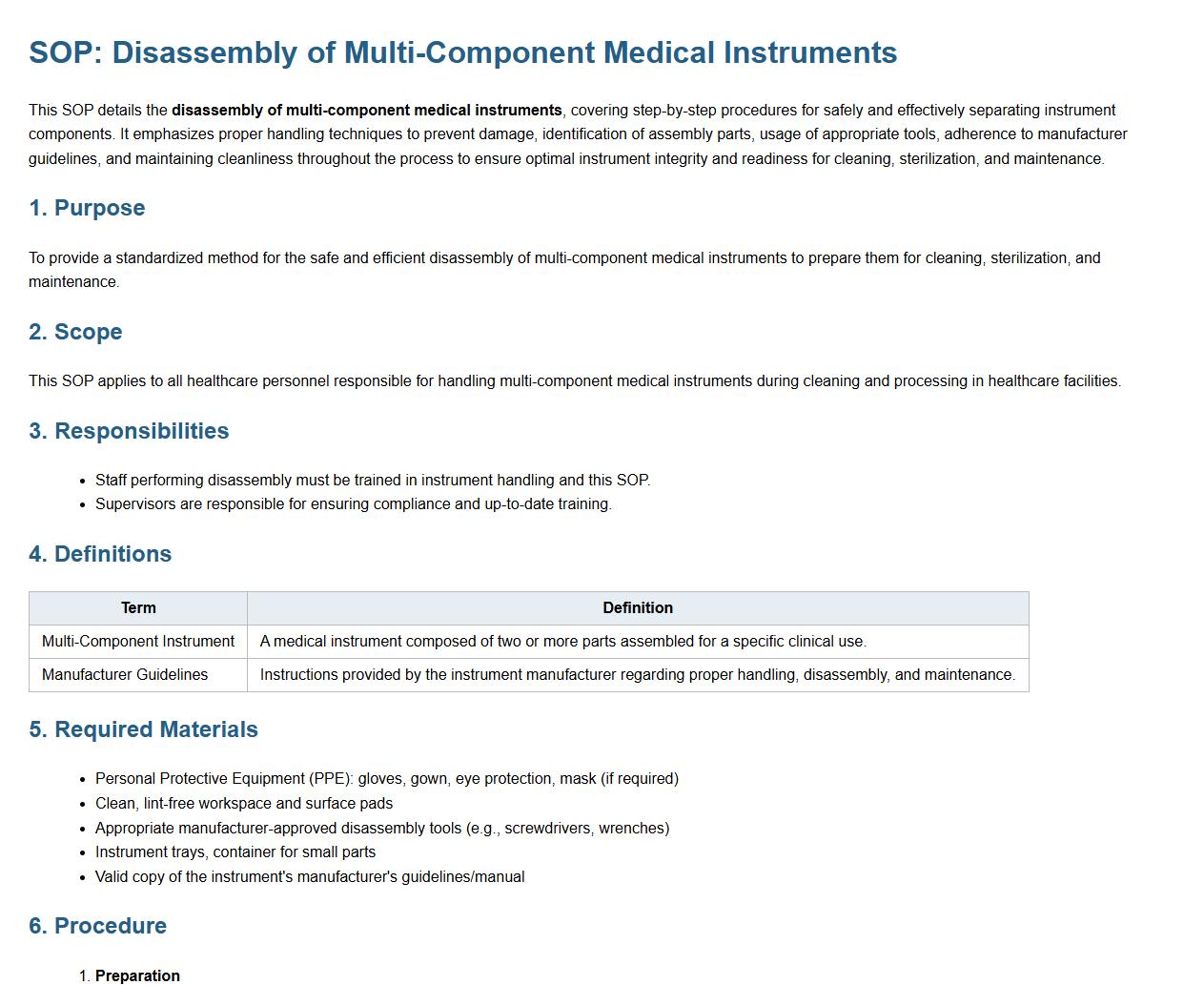
This SOP details the disassembly of multi-component medical instruments, covering step-by-step procedures for safely and effectively separating instrument components. It emphasizes proper handling techniques to prevent damage, identification of assembly parts, usage of appropriate tools, adherence to manufacturer guidelines, and maintaining cleanliness throughout the process to ensure optimal instrument integrity and readiness for cleaning, sterilization, and maintenance.
Selection and validation of appropriate cleaning agents.
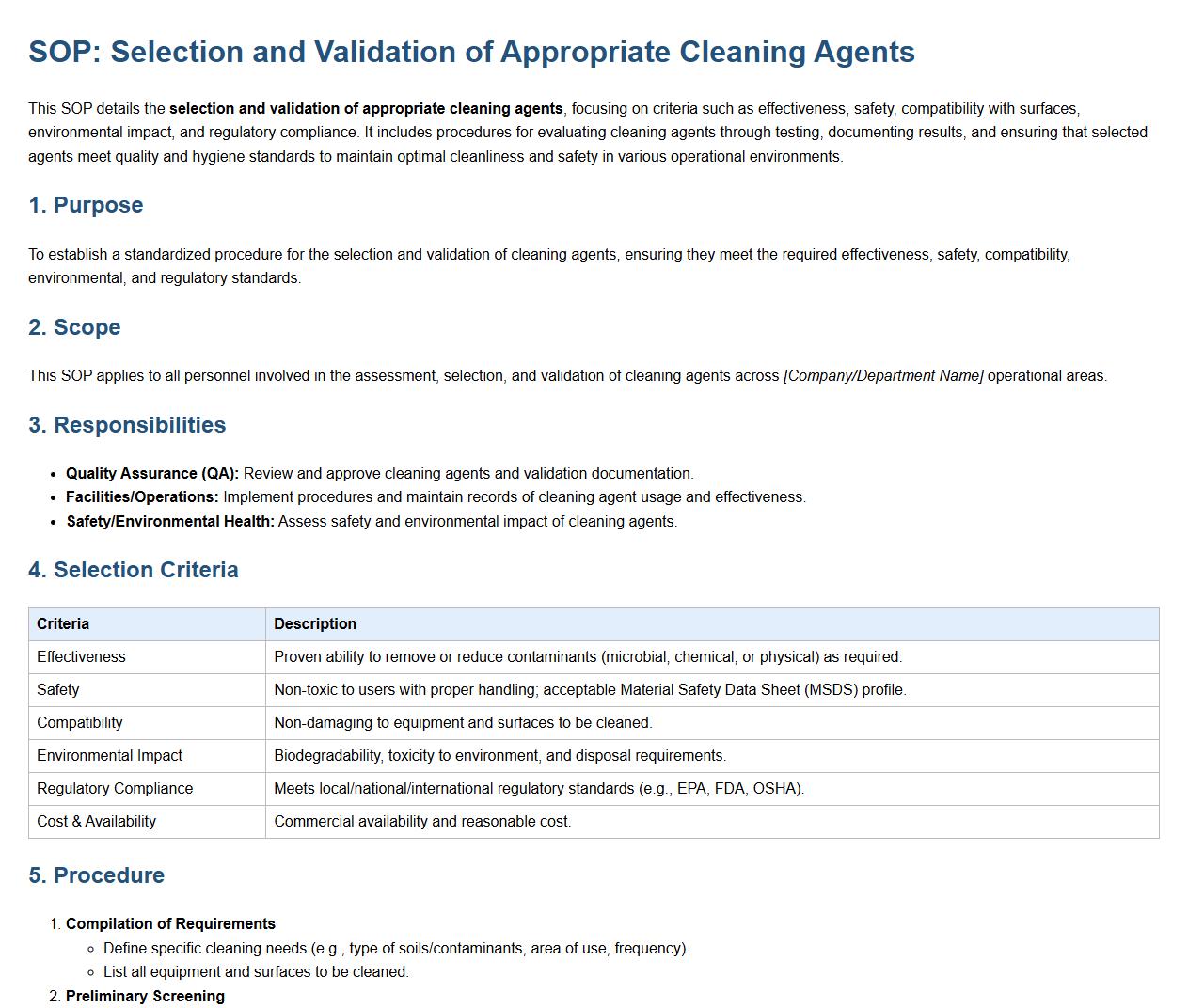
This SOP details the selection and validation of appropriate cleaning agents, focusing on criteria such as effectiveness, safety, compatibility with surfaces, environmental impact, and regulatory compliance. It includes procedures for evaluating cleaning agents through testing, documenting results, and ensuring that selected agents meet quality and hygiene standards to maintain optimal cleanliness and safety in various operational environments.
Manual and/or automated washing and rinsing procedures.
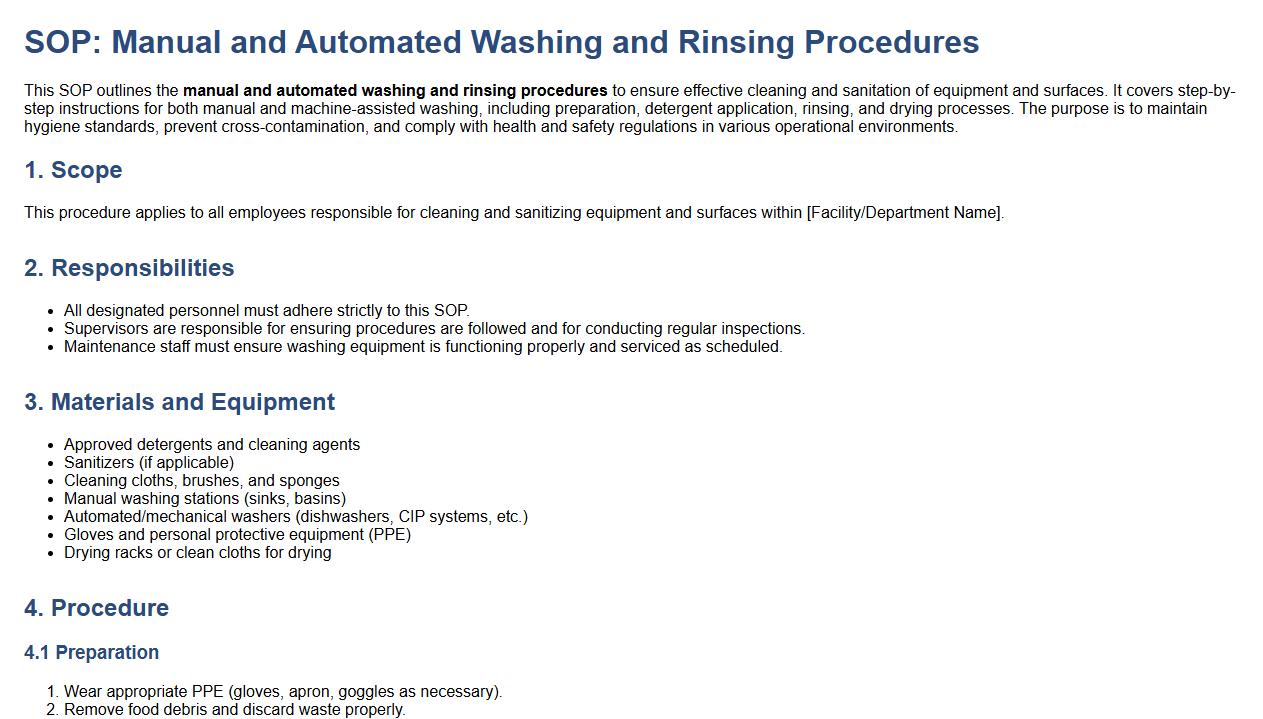
This SOP outlines the manual and automated washing and rinsing procedures to ensure effective cleaning and sanitation of equipment and surfaces. It covers step-by-step instructions for both manual and machine-assisted washing, including preparation, detergent application, rinsing, and drying processes. The purpose is to maintain hygiene standards, prevent cross-contamination, and comply with health and safety regulations in various operational environments.
Inspection of equipment for cleanliness and function post-cleaning.
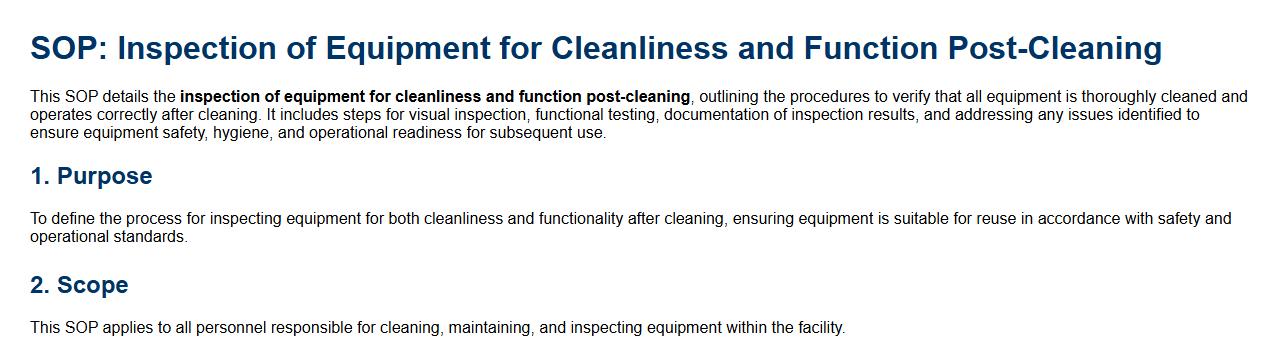
This SOP details the inspection of equipment for cleanliness and function post-cleaning, outlining the procedures to verify that all equipment is thoroughly cleaned and operates correctly after cleaning. It includes steps for visual inspection, functional testing, documentation of inspection results, and addressing any issues identified to ensure equipment safety, hygiene, and operational readiness for subsequent use.
Preparation of equipment for sterilization (packaging, wrapping, labeling).
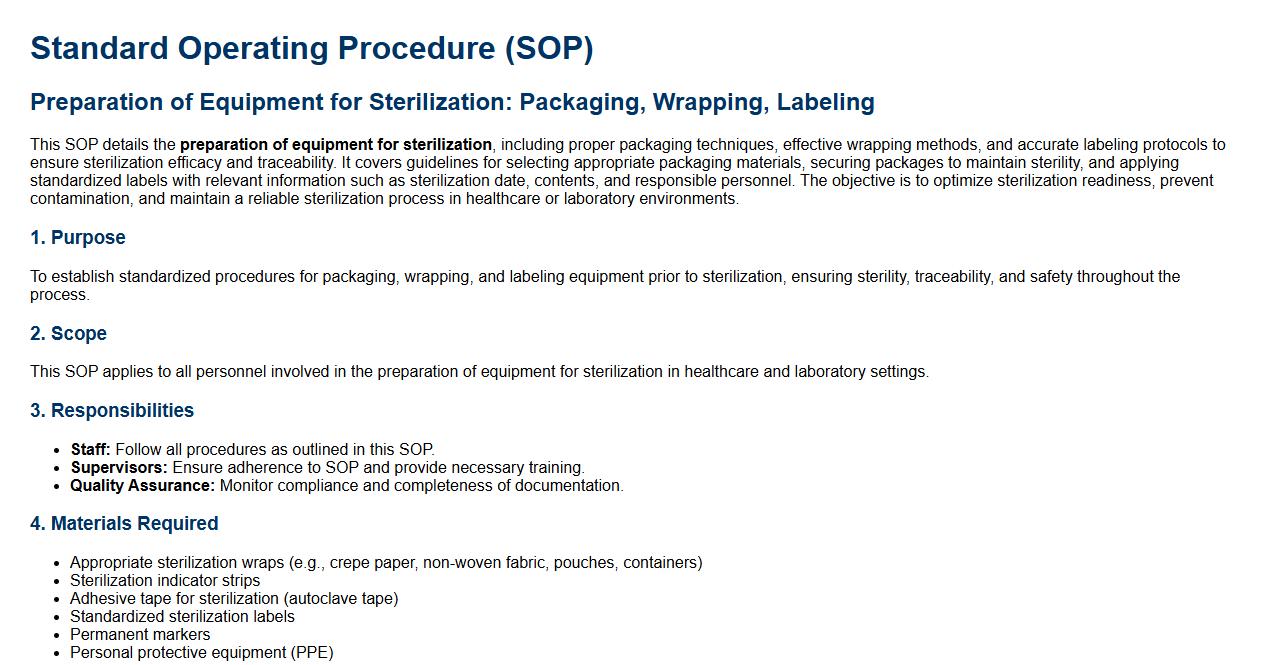
This SOP details the preparation of equipment for sterilization, including proper packaging techniques, effective wrapping methods, and accurate labeling protocols to ensure sterilization efficacy and traceability. It covers guidelines for selecting appropriate packaging materials, securing packages to maintain sterility, and applying standardized labels with relevant information such as sterilization date, contents, and responsible personnel. The objective is to optimize sterilization readiness, prevent contamination, and maintain a reliable sterilization process in healthcare or laboratory environments.
Sterilizer loading, cycle selection, and operation protocols.
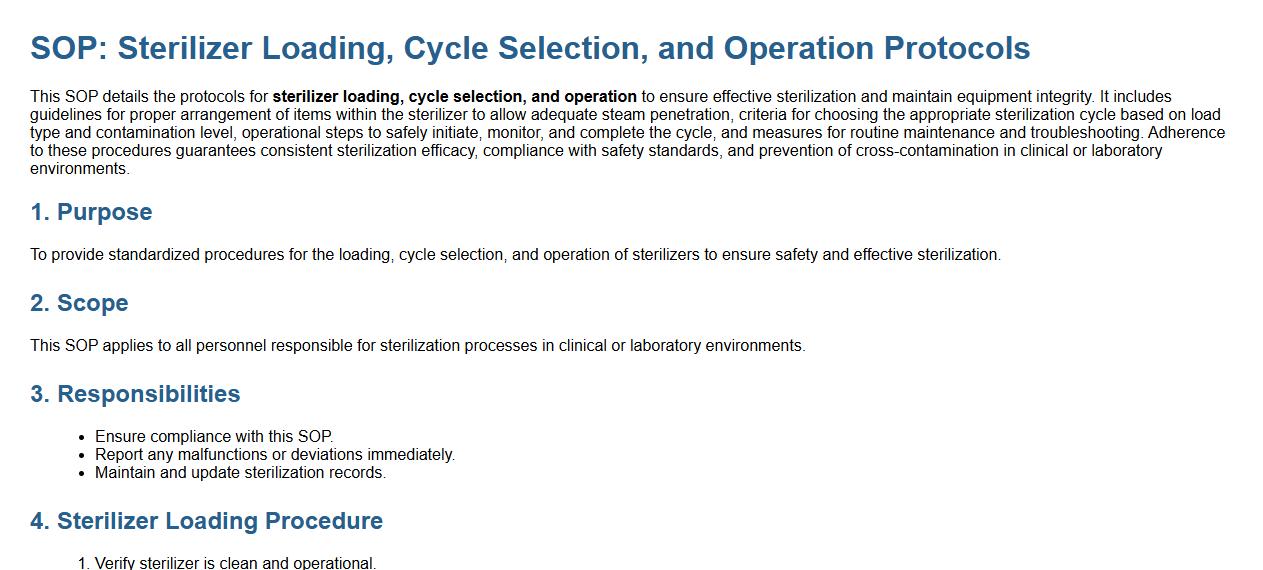
This SOP details the protocols for sterilizer loading, cycle selection, and operation to ensure effective sterilization and maintain equipment integrity. It includes guidelines for proper arrangement of items within the sterilizer to allow adequate steam penetration, criteria for choosing the appropriate sterilization cycle based on load type and contamination level, operational steps to safely initiate, monitor, and complete the cycle, and measures for routine maintenance and troubleshooting. Adherence to these procedures guarantees consistent sterilization efficacy, compliance with safety standards, and prevention of cross-contamination in clinical or laboratory environments.
Monitoring and validation of sterilization process (biological/chemical indicators).
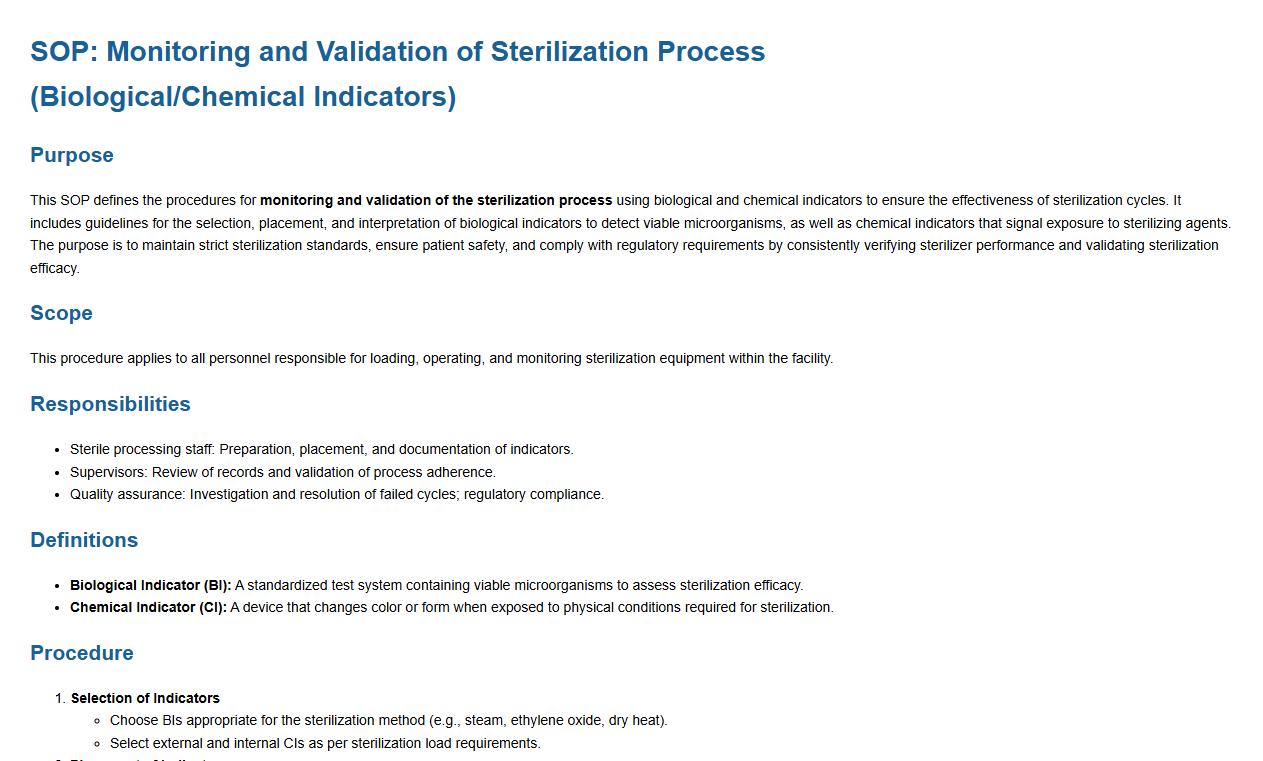
This SOP defines the procedures for monitoring and validation of the sterilization process using biological and chemical indicators to ensure the effectiveness of sterilization cycles. It includes guidelines for the selection, placement, and interpretation of biological indicators to detect viable microorganisms, as well as chemical indicators that signal exposure to sterilizing agents. The purpose is to maintain strict sterilization standards, ensure patient safety, and comply with regulatory requirements by consistently verifying sterilizer performance and validating sterilization efficacy.
Proper cooling, drying, and safe unloading of sterilized equipment.
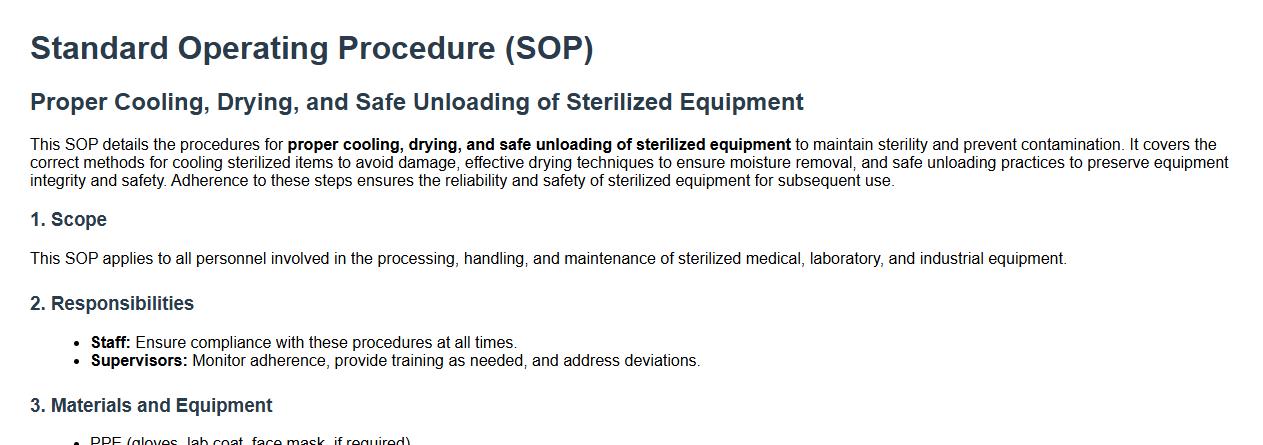
This SOP details the procedures for proper cooling, drying, and safe unloading of sterilized equipment to maintain sterility and prevent contamination. It covers the correct methods for cooling sterilized items to avoid damage, effective drying techniques to ensure moisture removal, and safe unloading practices to preserve equipment integrity and safety. Adherence to these steps ensures the reliability and safety of sterilized equipment for subsequent use.
Documentation, traceability, and storage of sterilized medical equipment.
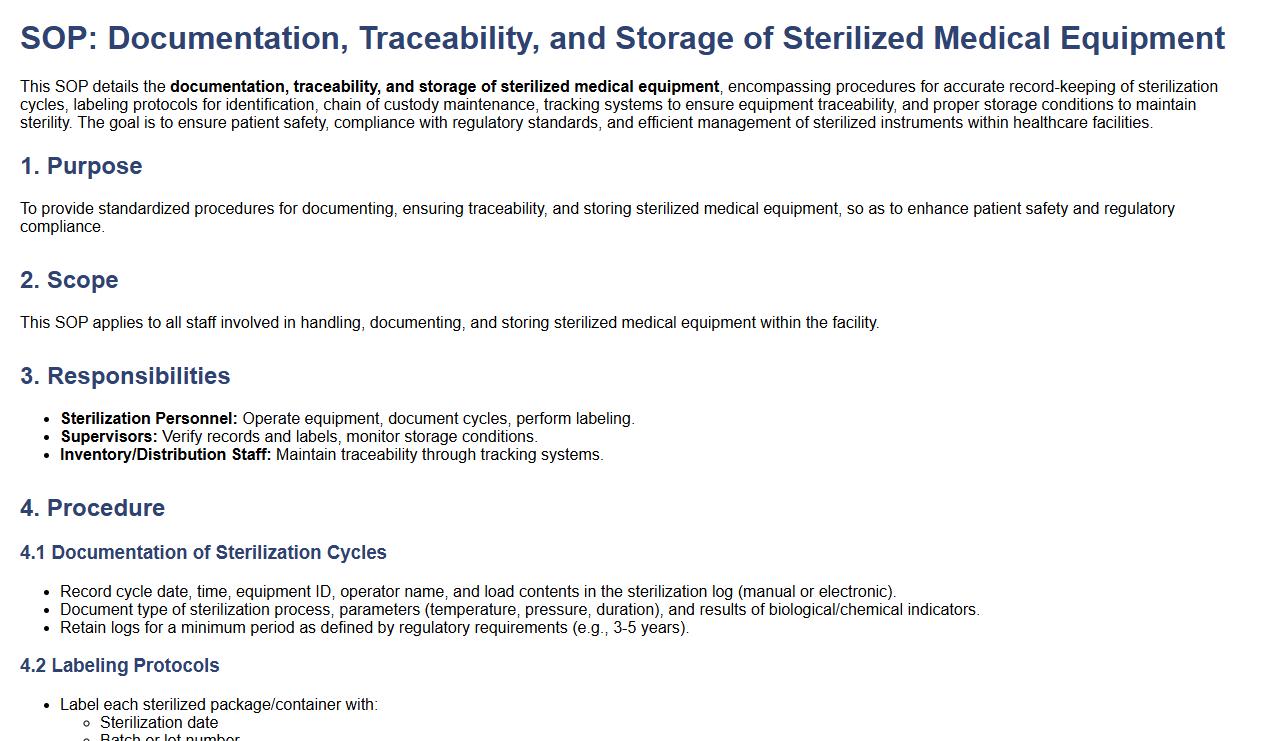
This SOP details the documentation, traceability, and storage of sterilized medical equipment, encompassing procedures for accurate record-keeping of sterilization cycles, labeling protocols for identification, chain of custody maintenance, tracking systems to ensure equipment traceability, and proper storage conditions to maintain sterility. The goal is to ensure patient safety, compliance with regulatory standards, and efficient management of sterilized instruments within healthcare facilities.
Key Steps in SOP for Medical Equipment Sterilization to Ensure Patient Safety
The SOP mandates thorough cleaning and disinfection prior to sterilization to eliminate all contaminants. It requires strict adherence to sterilization protocols for each equipment type to prevent cross-contamination. Regular training sessions ensure staff competence in maintaining patient safety standards throughout the process.
Types of Sterilization Methods Detailed in the SOP and Their Selection Process
The SOP outlines common sterilization methods including autoclaving, ethylene oxide gas, and chemical sterilants. The selection depends on equipment sensitivity, material compatibility, and required sterilization level. Detailed guidelines assist in choosing the most appropriate method to guarantee effectiveness without damaging instruments.
Required Documentation and Record-Keeping Procedures in the SOP
The SOP requires detailed sterilization logs documenting date, method, cycle parameters, and operator details for traceability. It emphasizes maintaining records for audits and regulatory compliance. Electronic or manual recording systems must be consistently updated to ensure accuracy and accountability.
Handling and Transportation of Sterilized Medical Equipment as Specified in the SOP
The SOP specifies using sterile packaging and secure containers during transport to maintain sterility. Staff must follow protocols for careful handling to avoid contamination upon removal from sterilization units. Clear labeling and timely delivery to clinical areas are crucial for preserving equipment integrity.
Quality Control Measures Mandated by the SOP to Verify Effective Sterilization
The SOP enforces routine use of biological indicators and chemical integrators to confirm sterilization efficacy. Periodic equipment calibration and validation procedures ensure consistent performance. Any failures trigger immediate corrective actions to uphold the highest safety standards.