

A SOP Template for Patient Communication Protocols ensures consistent and clear interactions between healthcare providers and patients. This template outlines standardized procedures for conveying information, managing inquiries, and addressing patient concerns effectively. Implementing such protocols enhances patient satisfaction and improves overall healthcare outcomes.
Patient appointment scheduling and confirmation procedures.
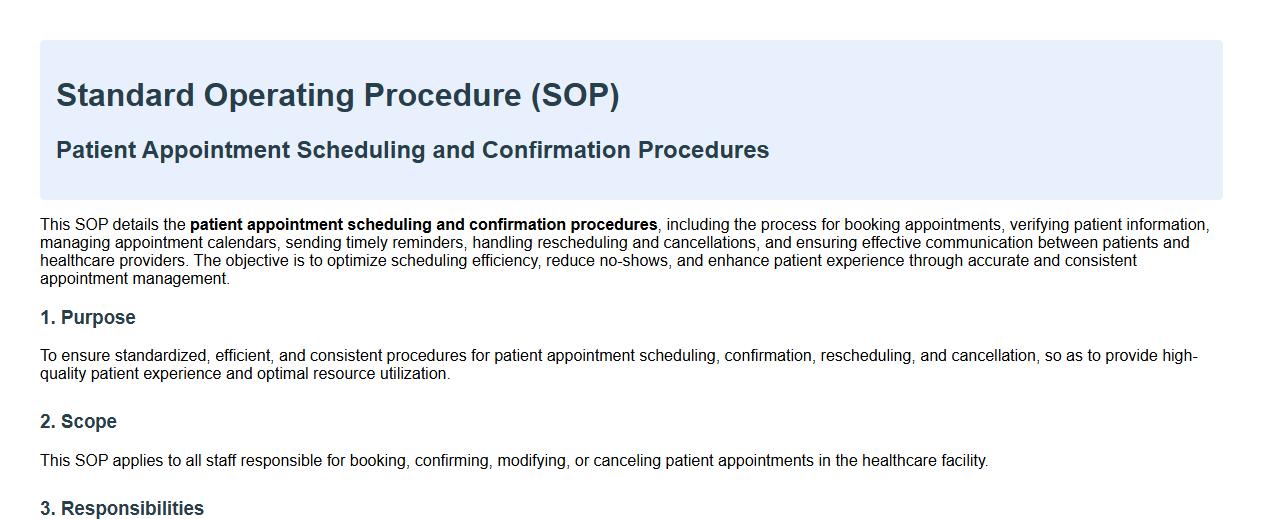
This SOP details the patient appointment scheduling and confirmation procedures, including the process for booking appointments, verifying patient information, managing appointment calendars, sending timely reminders, handling rescheduling and cancellations, and ensuring effective communication between patients and healthcare providers. The objective is to optimize scheduling efficiency, reduce no-shows, and enhance patient experience through accurate and consistent appointment management.
Patient check-in and identification verification steps.
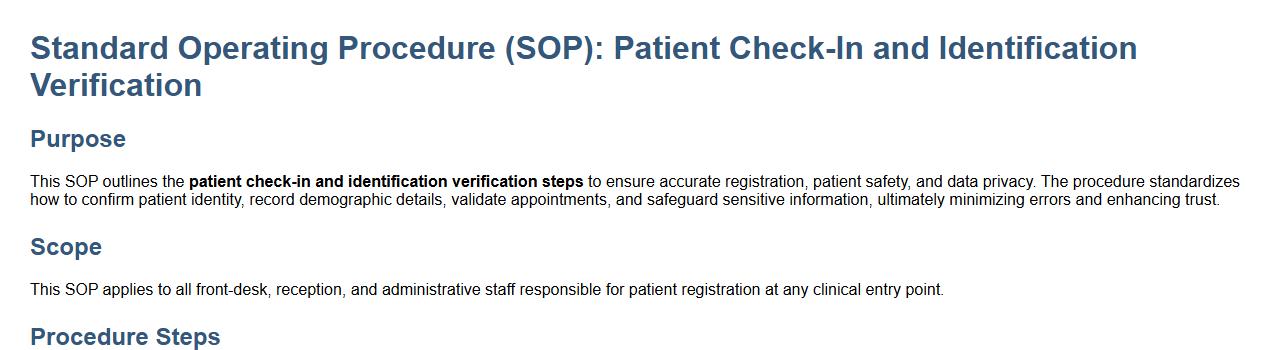
This SOP details the patient check-in and identification verification steps to ensure accurate patient registration and safety. It covers procedures for verifying patient identity using multiple identifiers, recording demographic information, confirming appointment details, and safeguarding patient data privacy. The goal is to streamline the check-in process while minimizing errors and enhancing patient trust and compliance.
Standardized phone and email communication scripts.
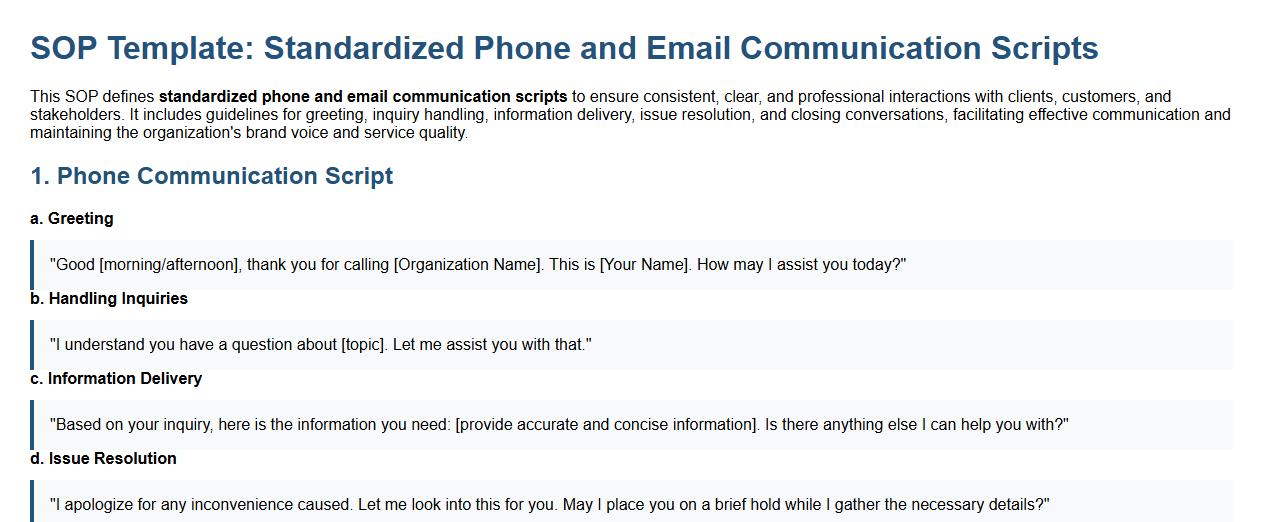
This SOP defines standardized phone and email communication scripts to ensure consistent, clear, and professional interactions with clients, customers, and stakeholders. It includes guidelines for greeting, inquiry handling, information delivery, issue resolution, and closing conversations, facilitating effective communication and maintaining the organization's brand voice and service quality.
Protocols for handling patient inquiries and concerns.
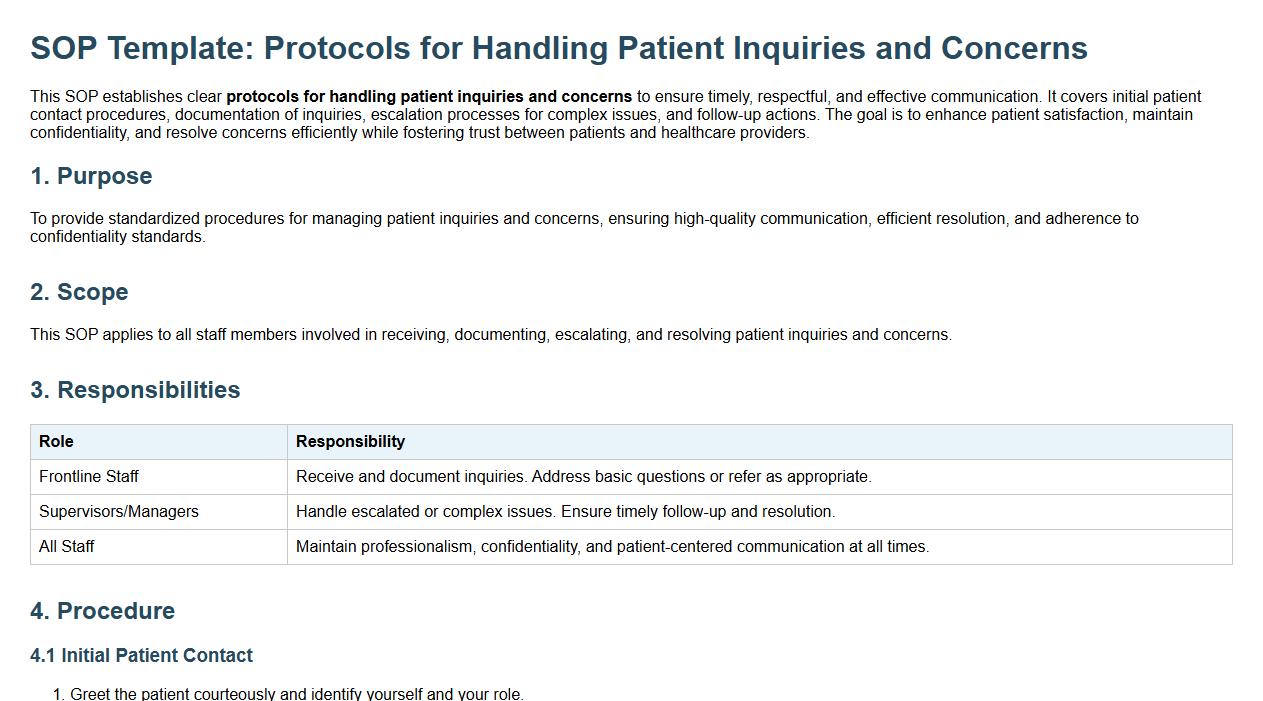
This SOP establishes clear protocols for handling patient inquiries and concerns to ensure timely, respectful, and effective communication. It covers initial patient contact procedures, documentation of inquiries, escalation processes for complex issues, and follow-up actions. The goal is to enhance patient satisfaction, maintain confidentiality, and resolve concerns efficiently while fostering trust between patients and healthcare providers.
Guidelines for providing medical information and instructions.
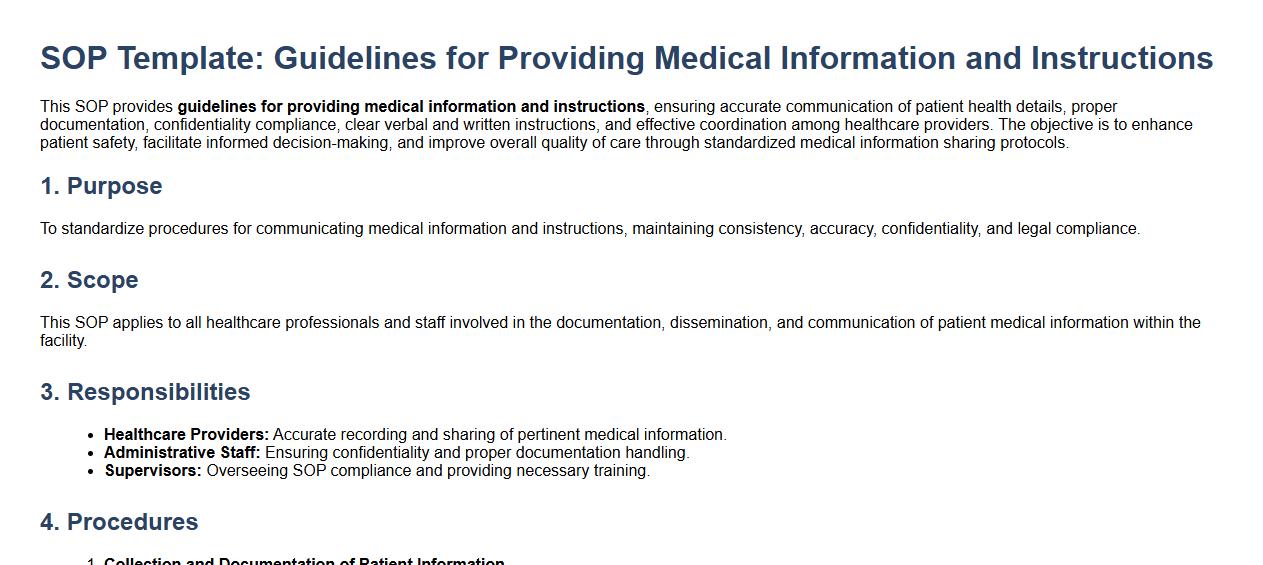
This SOP provides guidelines for providing medical information and instructions, ensuring accurate communication of patient health details, proper documentation, confidentiality compliance, clear verbal and written instructions, and effective coordination among healthcare providers. The objective is to enhance patient safety, facilitate informed decision-making, and improve overall quality of care through standardized medical information sharing protocols.
Procedure for documenting patient interactions in records.
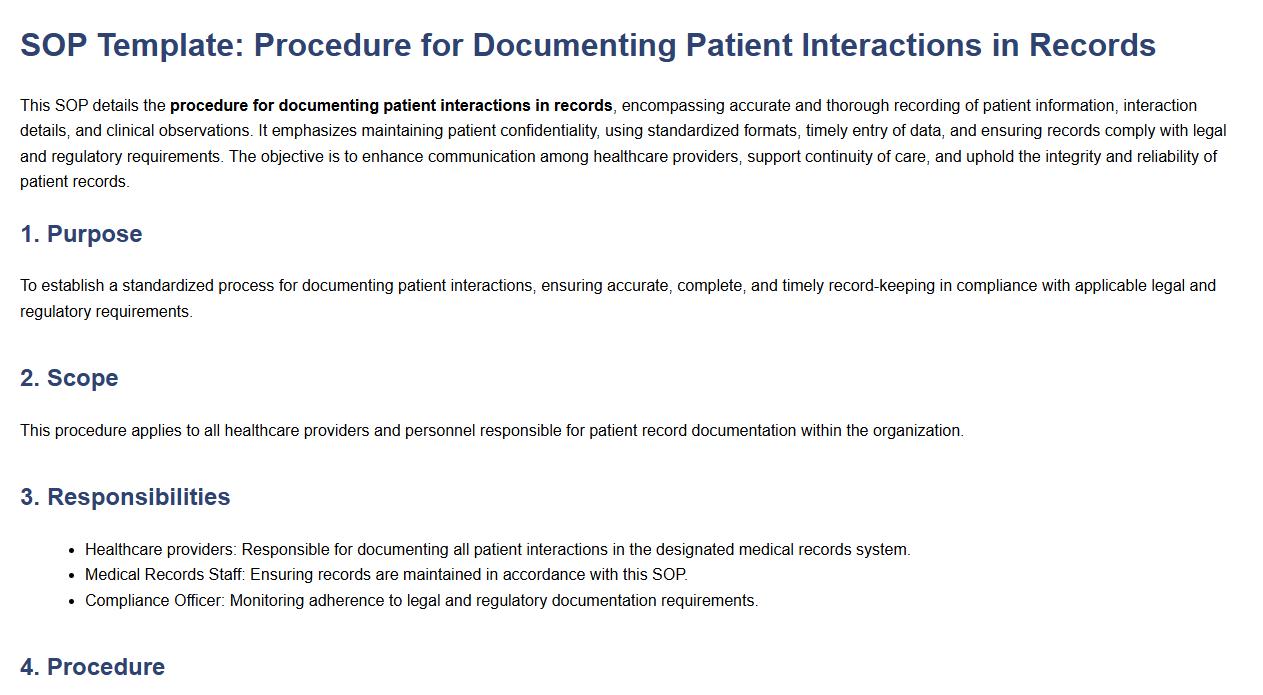
This SOP details the procedure for documenting patient interactions in records, encompassing accurate and thorough recording of patient information, interaction details, and clinical observations. It emphasizes maintaining patient confidentiality, using standardized formats, timely entry of data, and ensuring records comply with legal and regulatory requirements. The objective is to enhance communication among healthcare providers, support continuity of care, and uphold the integrity and reliability of patient records.
Communication protocol for delivering test results.
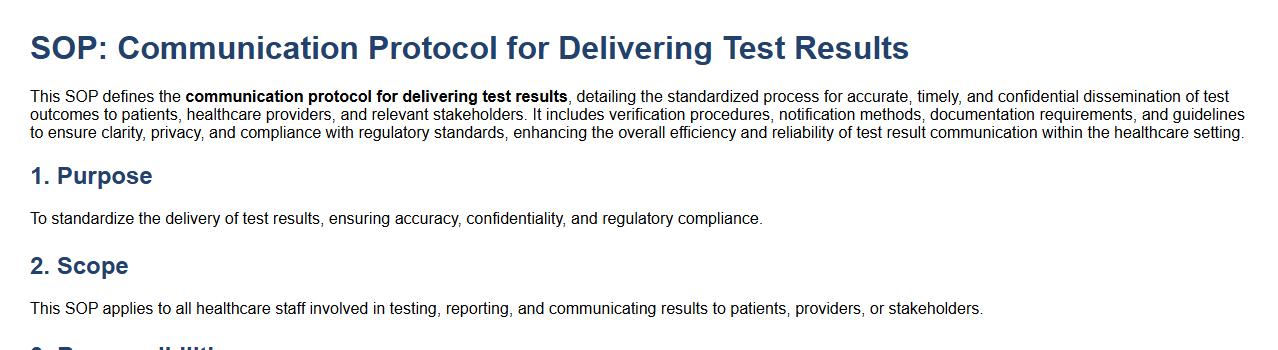
This SOP defines the communication protocol for delivering test results, detailing the standardized process for accurate, timely, and confidential dissemination of test outcomes to patients, healthcare providers, and relevant stakeholders. It includes verification procedures, notification methods, documentation requirements, and guidelines to ensure clarity, privacy, and compliance with regulatory standards, enhancing the overall efficiency and reliability of test result communication within the healthcare setting.
Escalation process for urgent or emergency situations.
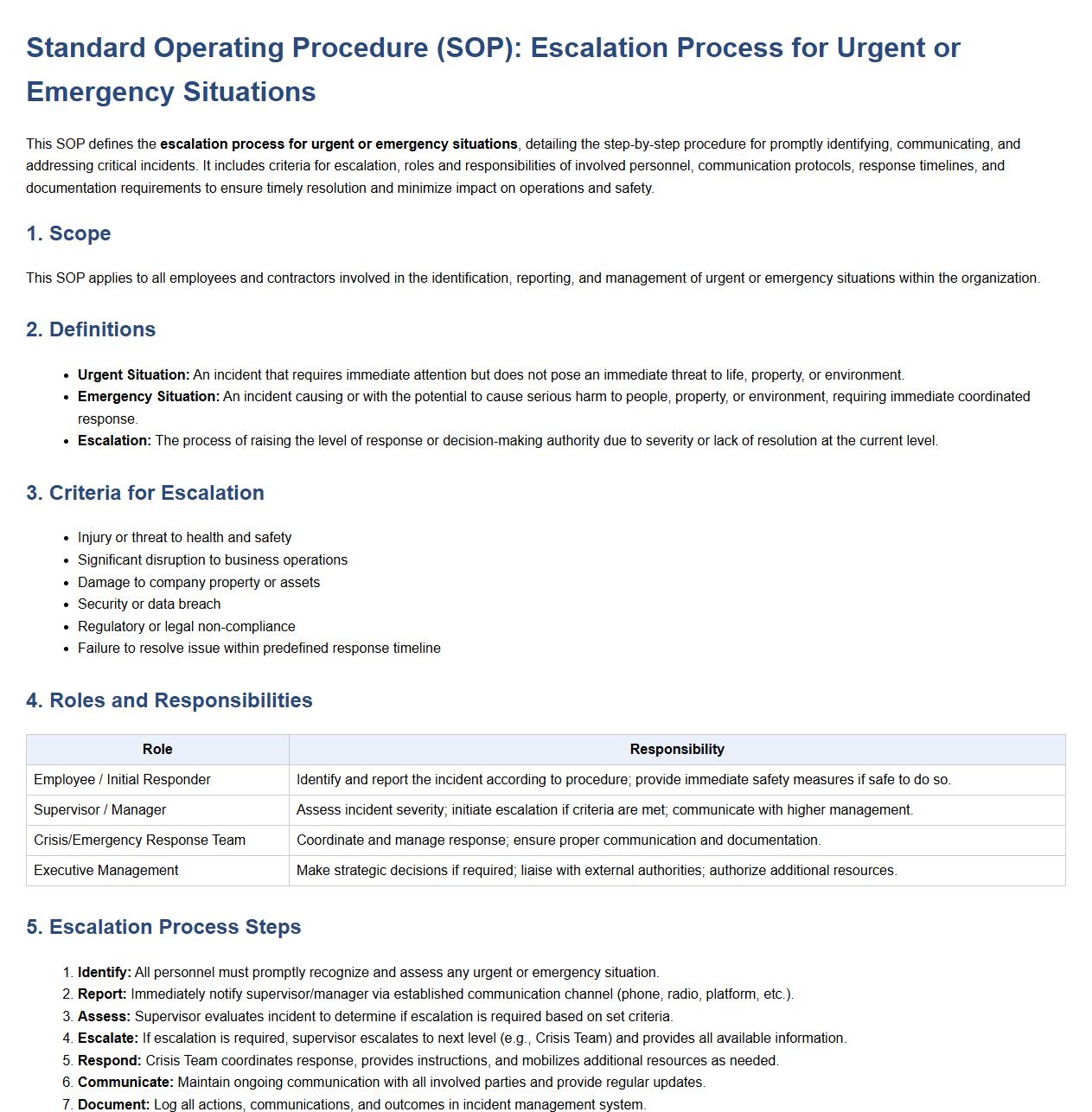
This SOP defines the escalation process for urgent or emergency situations, detailing the step-by-step procedure for promptly identifying, communicating, and addressing critical incidents. It includes criteria for escalation, roles and responsibilities of involved personnel, communication protocols, response timelines, and documentation requirements to ensure timely resolution and minimize impact on operations and safety.
Confidentiality and HIPAA compliance in communication.
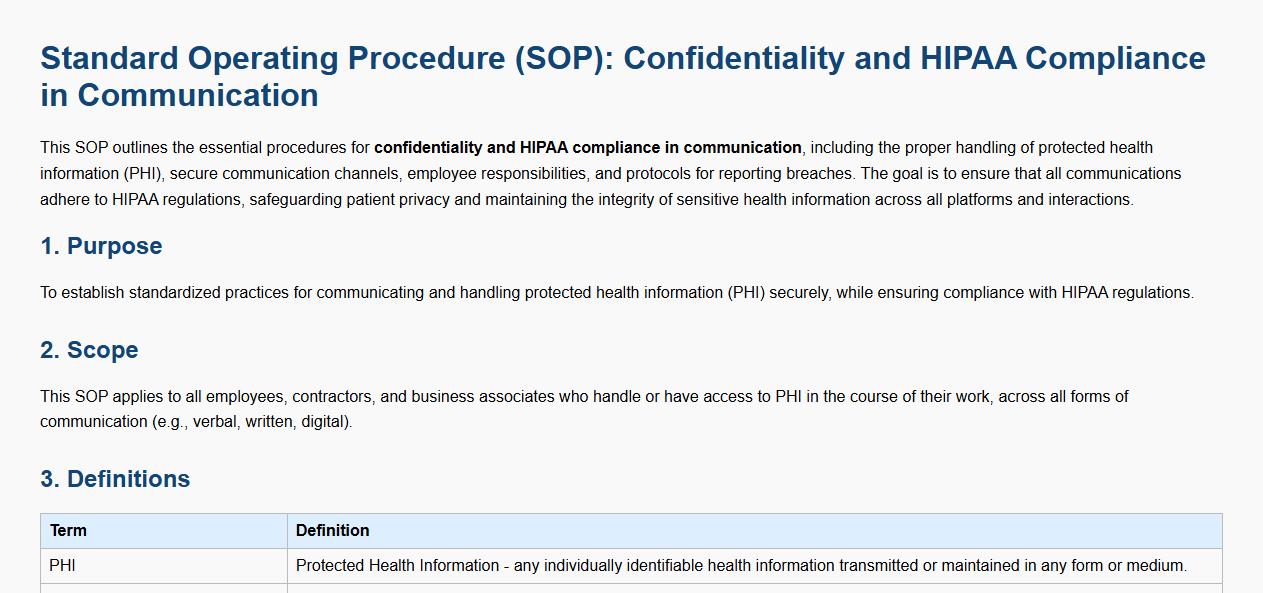
This SOP outlines the essential procedures for confidentiality and HIPAA compliance in communication, including the proper handling of protected health information (PHI), secure communication channels, employee responsibilities, and protocols for reporting breaches. The goal is to ensure that all communications adhere to HIPAA regulations, safeguarding patient privacy and maintaining the integrity of sensitive health information across all platforms and interactions.
Patient feedback collection and follow-up process.
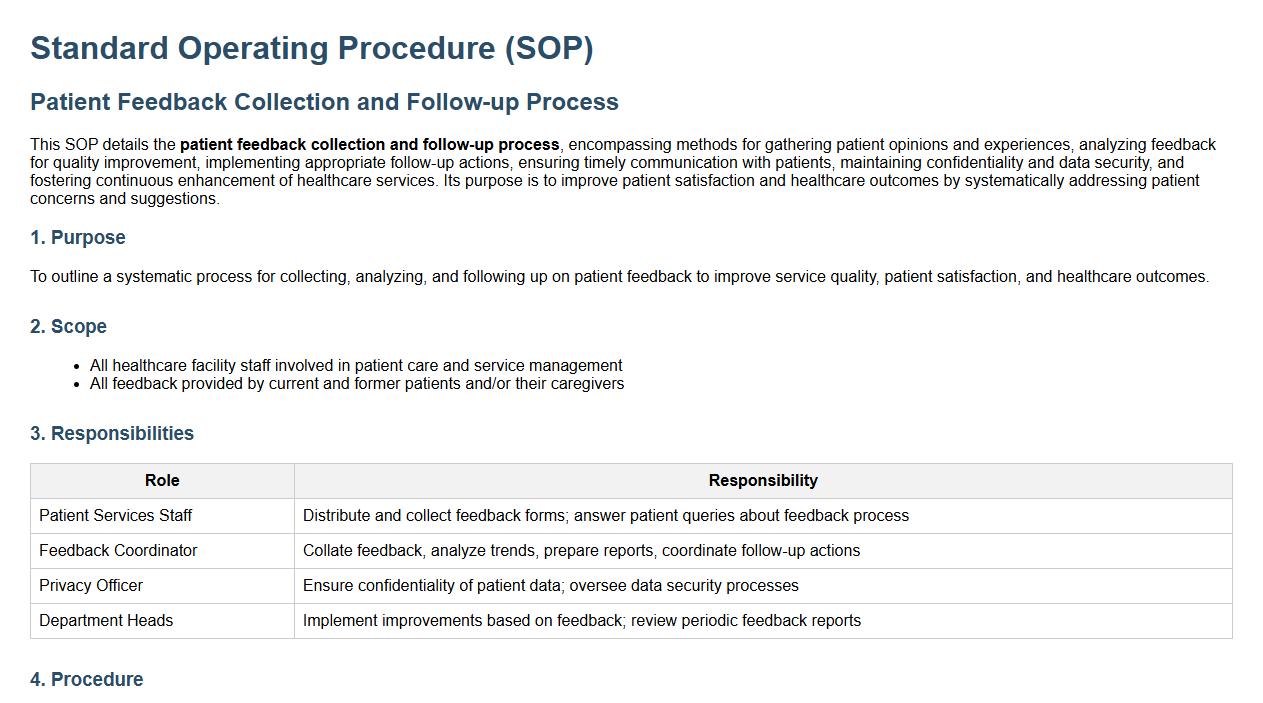
This SOP details the patient feedback collection and follow-up process, encompassing methods for gathering patient opinions and experiences, analyzing feedback for quality improvement, implementing appropriate follow-up actions, ensuring timely communication with patients, maintaining confidentiality and data security, and fostering continuous enhancement of healthcare services. Its purpose is to improve patient satisfaction and healthcare outcomes by systematically addressing patient concerns and suggestions.
What are the essential components outlined in the SOP for initial patient communication?
The SOP emphasizes the importance of introducing oneself clearly to establish trust during initial patient communication. It outlines specific guidelines to verify patient identity to ensure accuracy and confidentiality. Additionally, the SOP stresses the need to provide clear information about the purpose of the communication to set proper expectations.
How does the SOP define appropriate channels for follow-up communication with patients?
The SOP specifies approved channels for follow-up communication such as secure emails, phone calls, and patient portals. It mandates using these secure methods to protect patient privacy and ensure reliable information delivery. The chosen channels must comply with organizational policies and regulatory standards to maintain consistent patient engagement.
What confidentiality measures are specified in the SOP for patient information exchange?
The SOP requires strict adherence to confidentiality measures including data encryption and secure login protocols. It stresses limiting access to sensitive patient information only to authorized personnel. The document also mandates clear communication instructions to avoid inadvertent disclosure during exchanges.
How does the SOP instruct staff to handle patient complaints or concerns during communication?
The SOP instructs staff to respond promptly and empathetically to all patient complaints or concerns. It provides a structured approach to document the issue and escalate it to appropriate departments when necessary. Staff are trained to maintain professionalism and ensure patient satisfaction throughout the resolution process.
What documentation requirements are mandated by the SOP for all patient interactions?
The SOP mandates detailed documentation requirements including date, time, participants, and summary of each patient interaction. It requires secure storage of all records in compliance with privacy regulations. Proper documentation ensures accountability, continuity of care, and legal protection for both patients and staff.