

A SOP Template for Patient Consent Collection provides a standardized procedure to ensure patients are fully informed and voluntarily agree to medical treatments or procedures. This template outlines clear steps for obtaining, documenting, and managing patient consent to maintain compliance with legal and ethical standards. Proper use of the SOP helps healthcare providers protect patient rights and supports effective communication.
Patient identification and verification procedure.
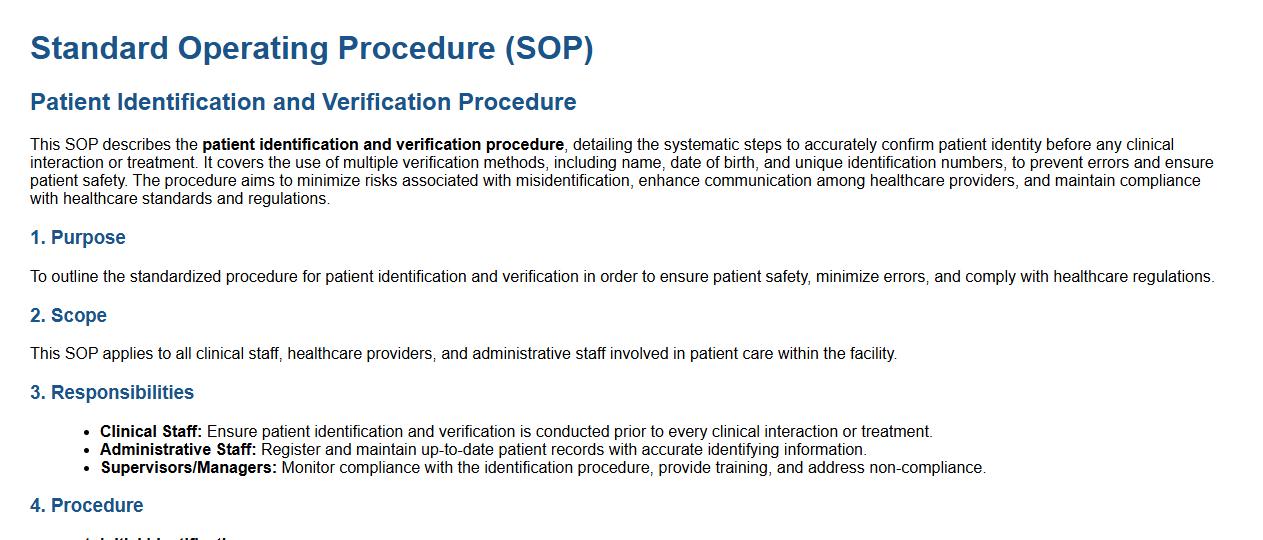
This SOP describes the patient identification and verification procedure, detailing the systematic steps to accurately confirm patient identity before any clinical interaction or treatment. It covers the use of multiple verification methods, including name, date of birth, and unique identification numbers, to prevent errors and ensure patient safety. The procedure aims to minimize risks associated with misidentification, enhance communication among healthcare providers, and maintain compliance with healthcare standards and regulations.
Explanation of procedure/treatment to patient.
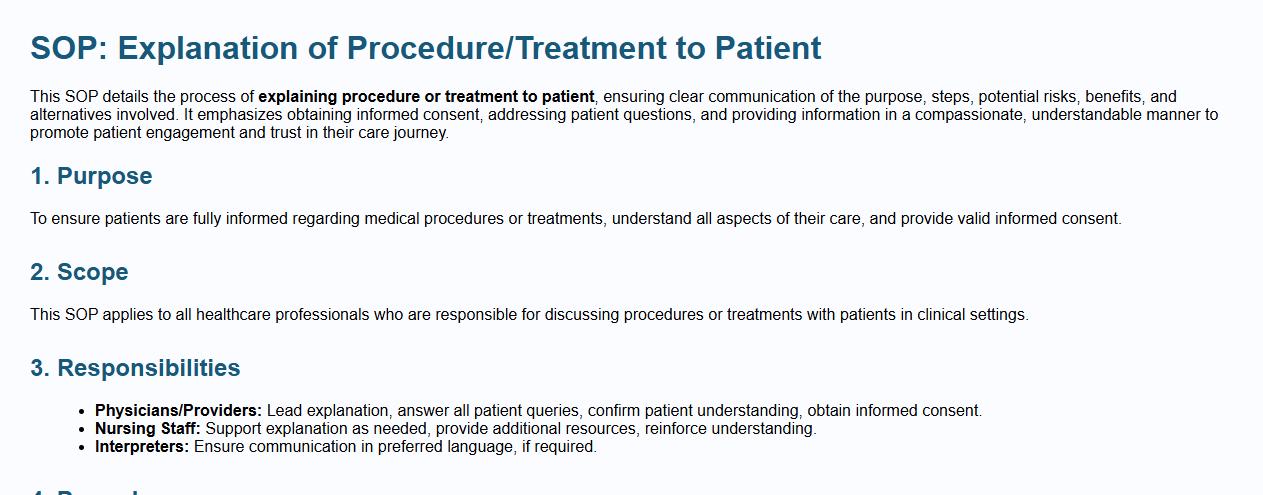
This SOP details the process of explaining procedure or treatment to patient, ensuring clear communication of the purpose, steps, potential risks, benefits, and alternatives involved. It emphasizes obtaining informed consent, addressing patient questions, and providing information in a compassionate, understandable manner to promote patient engagement and trust in their care journey.
Disclosure of risks, benefits, and alternatives.
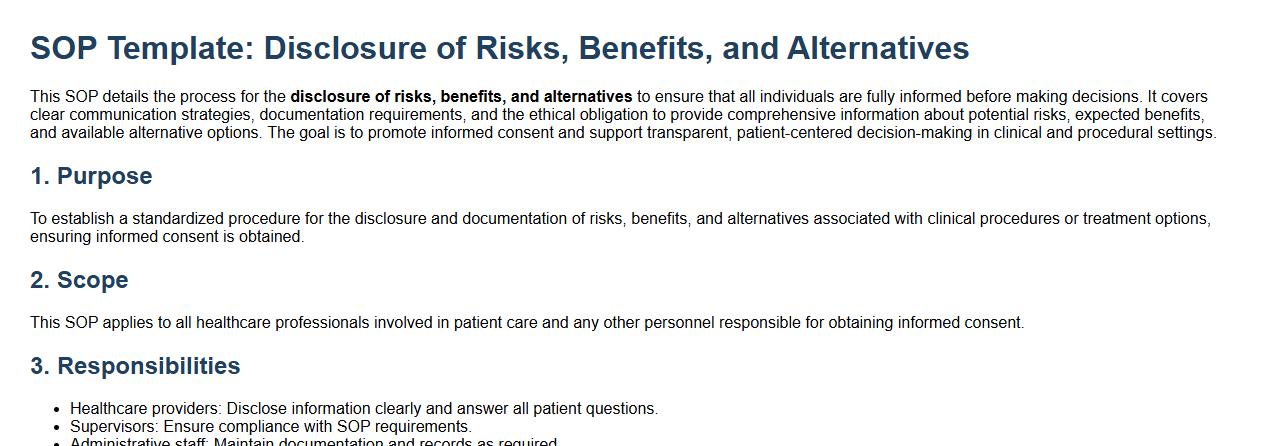
This SOP details the process for the disclosure of risks, benefits, and alternatives to ensure that all individuals are fully informed before making decisions. It covers clear communication strategies, documentation requirements, and the ethical obligation to provide comprehensive information about potential risks, expected benefits, and available alternative options. The goal is to promote informed consent and support transparent, patient-centered decision-making in clinical and procedural settings.
Assessment of patient understanding and competency.
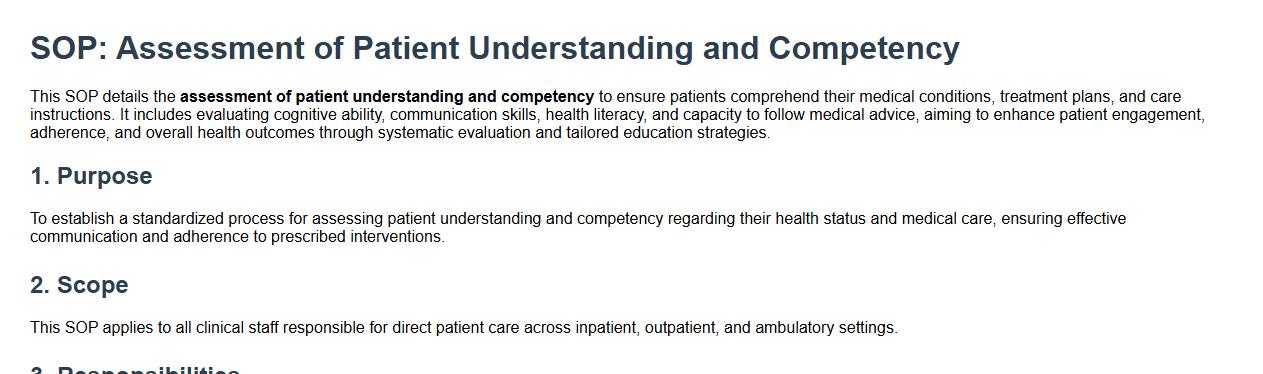
This SOP details the assessment of patient understanding and competency to ensure patients comprehend their medical conditions, treatment plans, and care instructions. It includes evaluating cognitive ability, communication skills, health literacy, and capacity to follow medical advice, aiming to enhance patient engagement, adherence, and overall health outcomes through systematic evaluation and tailored education strategies.
Instructions for obtaining verbal or written consent.
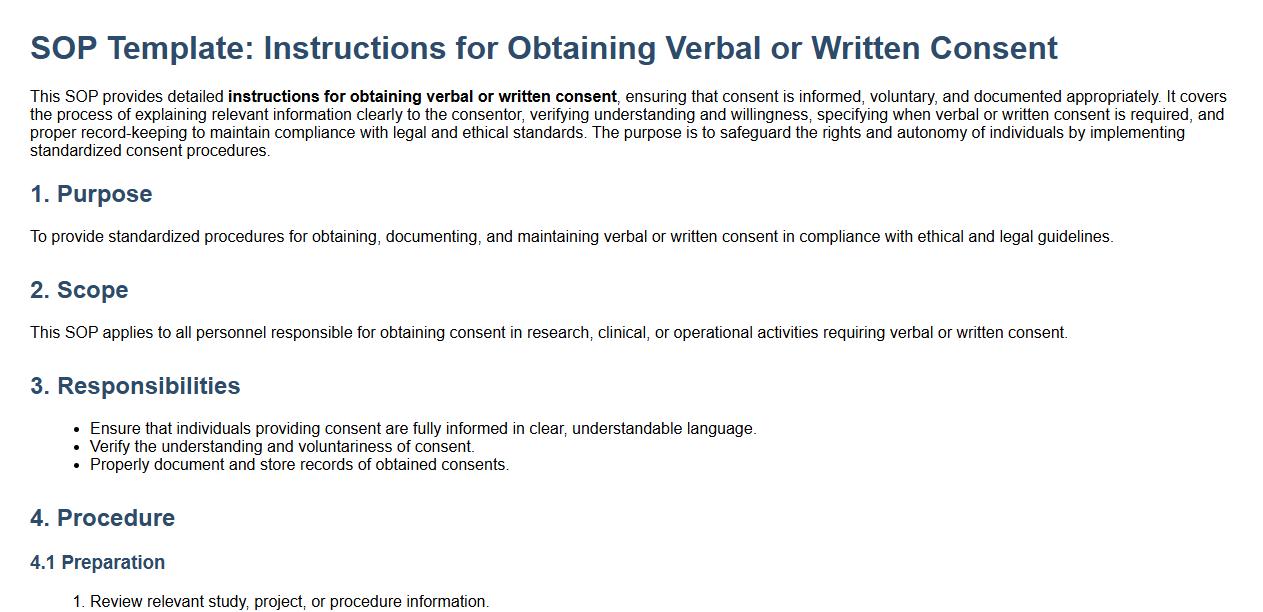
This SOP provides detailed instructions for obtaining verbal or written consent, ensuring that consent is informed, voluntary, and documented appropriately. It covers the process of explaining relevant information clearly to the consentor, verifying understanding and willingness, specifying when verbal or written consent is required, and proper record-keeping to maintain compliance with legal and ethical standards. The purpose is to safeguard the rights and autonomy of individuals by implementing standardized consent procedures.
Documentation and secure storage of consent forms.
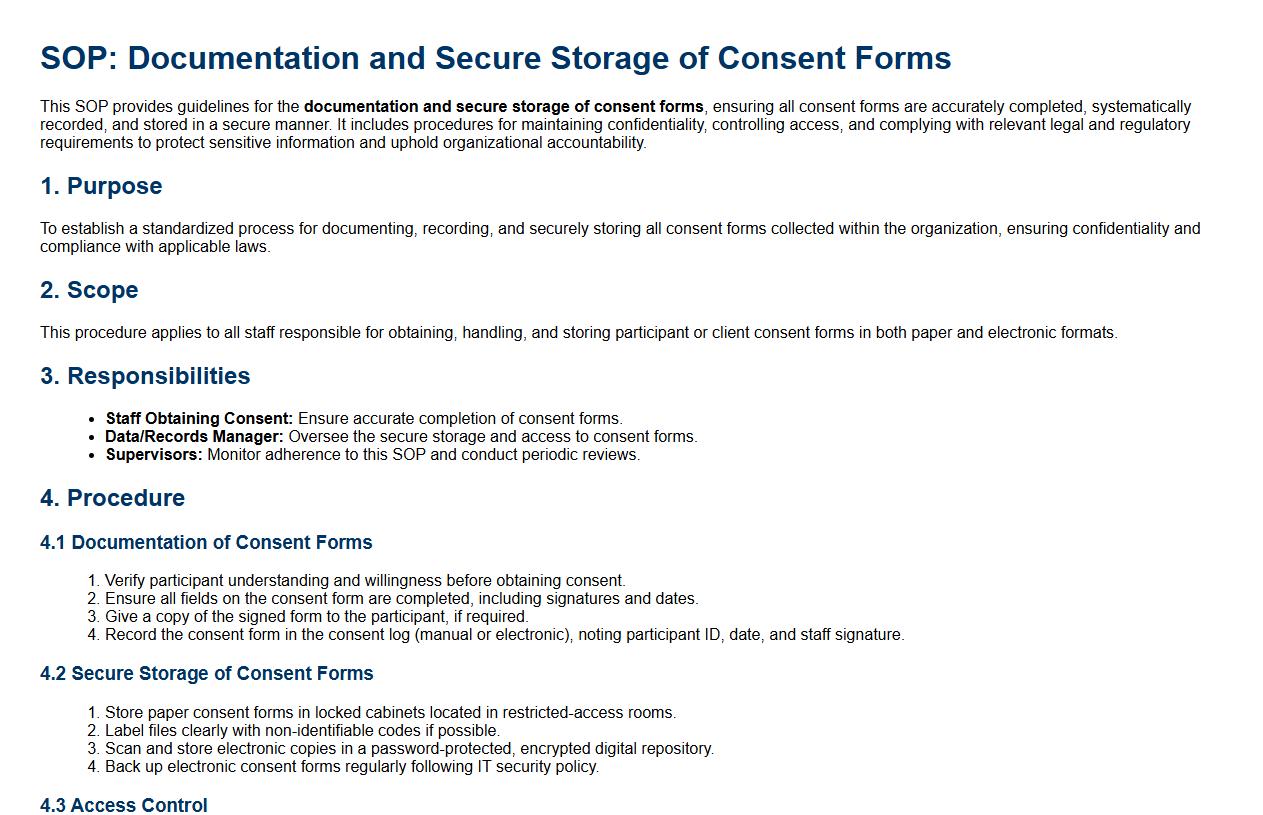
This SOP provides guidelines for the documentation and secure storage of consent forms, ensuring all consent forms are accurately completed, systematically recorded, and stored in a secure manner. It includes procedures for maintaining confidentiality, controlling access, and complying with relevant legal and regulatory requirements to protect sensitive information and uphold organizational accountability.
Process for addressing patient questions and concerns.
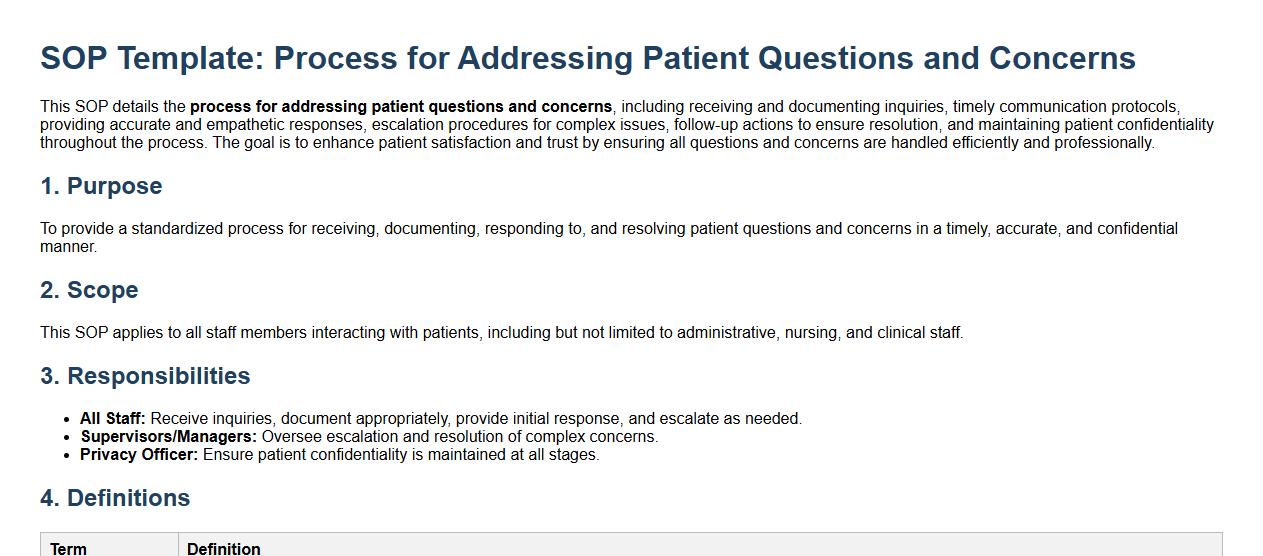
This SOP details the process for addressing patient questions and concerns, including receiving and documenting inquiries, timely communication protocols, providing accurate and empathetic responses, escalation procedures for complex issues, follow-up actions to ensure resolution, and maintaining patient confidentiality throughout the process. The goal is to enhance patient satisfaction and trust by ensuring all questions and concerns are handled efficiently and professionally.
Steps for withdrawal or refusal of consent.
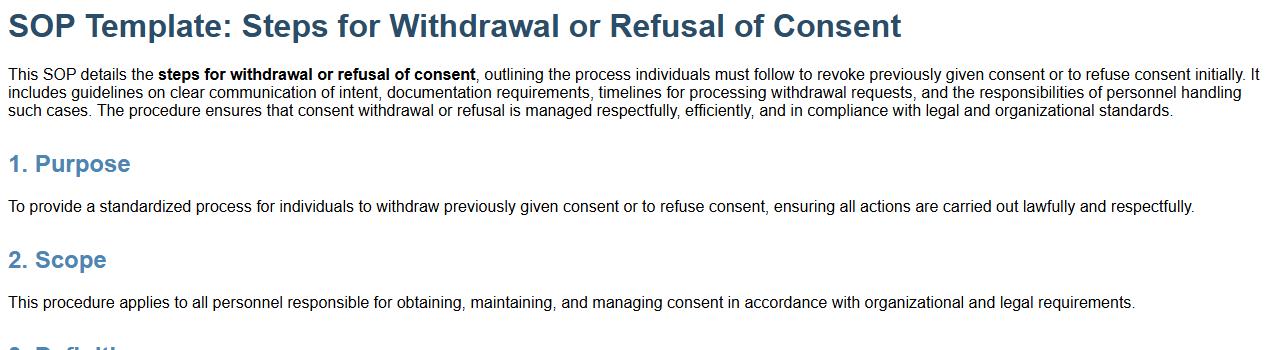
This SOP details the steps for withdrawal or refusal of consent, outlining the process individuals must follow to revoke previously given consent or to refuse consent initially. It includes guidelines on clear communication of intent, documentation requirements, timelines for processing withdrawal requests, and the responsibilities of personnel handling such cases. The procedure ensures that consent withdrawal or refusal is managed respectfully, efficiently, and in compliance with legal and organizational standards.
Protocol for witness or third-party involvement (if needed).
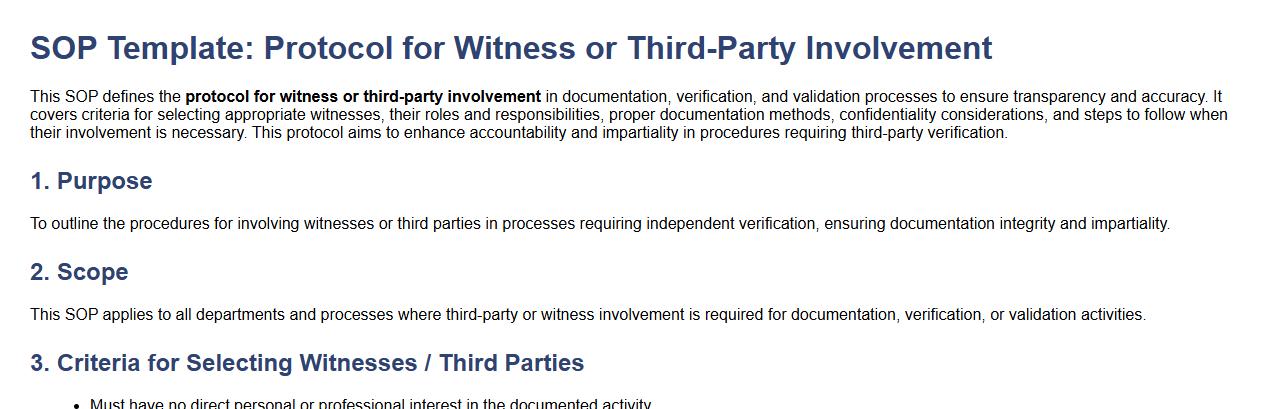
This SOP defines the protocol for witness or third-party involvement in documentation, verification, and validation processes to ensure transparency and accuracy. It covers criteria for selecting appropriate witnesses, their roles and responsibilities, proper documentation methods, confidentiality considerations, and steps to follow when their involvement is necessary. This protocol aims to enhance accountability and impartiality in procedures requiring third-party verification.
Regular review and audit of consent collection practices.
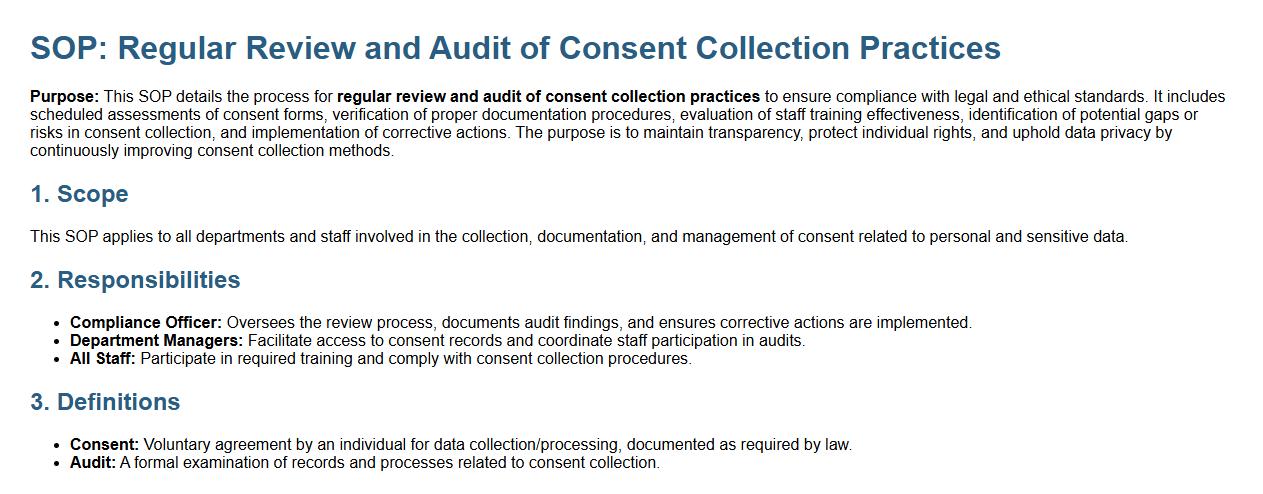
This SOP details the process for regular review and audit of consent collection practices to ensure compliance with legal and ethical standards. It includes scheduled assessments of consent forms, verification of proper documentation procedures, evaluation of staff training effectiveness, identification of potential gaps or risks in consent collection, and implementation of corrective actions. The purpose is to maintain transparency, protect individual rights, and uphold data privacy by continuously improving consent collection methods.
What key information must be included in the patient consent form according to the SOP?
The patient consent form must contain clear and detailed information about the procedure, including risks, benefits, and alternatives. It should also specify the patient's rights and the purpose of data collection. Additionally, the form requires the date, patient signature, and healthcare provider's details for legal validity.
Who is authorized to obtain and witness patient consent as per the SOP guidelines?
Only trained and designated healthcare professionals are authorized to obtain patient consent according to the SOP. Consent must be witnessed by an impartial third party, often another healthcare provider or authorized staff member. This ensures the process is transparent and legally binding.
What steps should be followed to verify patient understanding before consent collection?
Healthcare providers must communicate the procedure using clear and simple language suitable for the patient's comprehension level. Providers should encourage questions and confirm understanding through teach-back methods. This step ensures the patient makes an informed decision free from pressure or confusion.
How should consent documents be stored and managed in compliance with the SOP?
Consent documents must be securely stored in a confidential and accessible manner within patient records or designated storage systems. Proper backup and protection against unauthorized access are required. Regular audits ensure adherence to data protection and legal standards outlined in the SOP.
What procedures are outlined for documenting and addressing withdrawal of consent?
The SOP mandates immediate recording of consent withdrawal in the patient's file, including date, time, and reason if provided. Patients should be informed of the implications of withdrawal and alternative options. Healthcare providers must respect the decision and promptly adjust care plans accordingly.