
A SOP Template for Ambulance Service Operations provides clear guidelines to ensure efficient and safe emergency medical response. It outlines standardized procedures for dispatch, patient care, vehicle maintenance, and communication protocols. This template helps maintain compliance with regulatory standards and enhances overall service quality.
Ambulance vehicle maintenance and daily readiness checks.
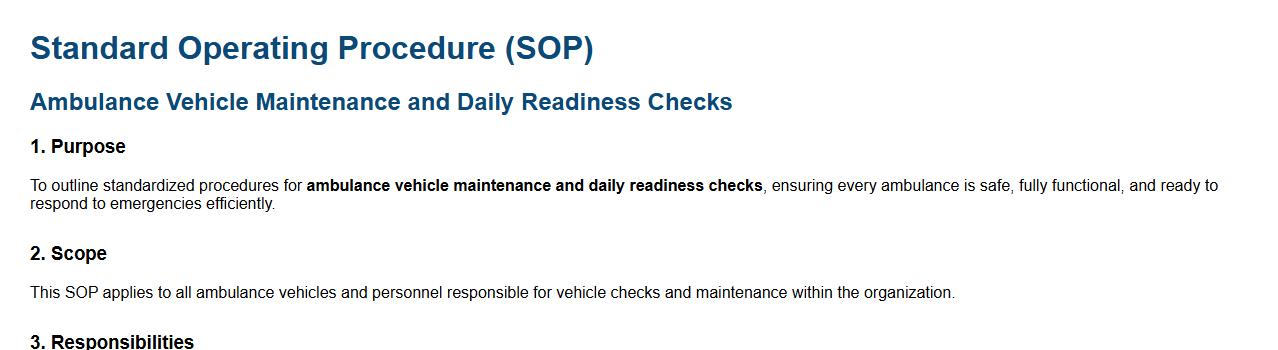
This SOP details the procedures for ambulance vehicle maintenance and daily readiness checks, including routine inspection of vehicle condition, functionality of emergency equipment, cleanliness standards, fuel levels, fluid checks, tire pressure monitoring, and documentation of maintenance activities. The goal is to ensure that all ambulance vehicles are fully operational, safe, and prepared for emergency response at all times, thereby minimizing downtime and enhancing patient care efficiency.
Emergency call triage and dispatch protocols.
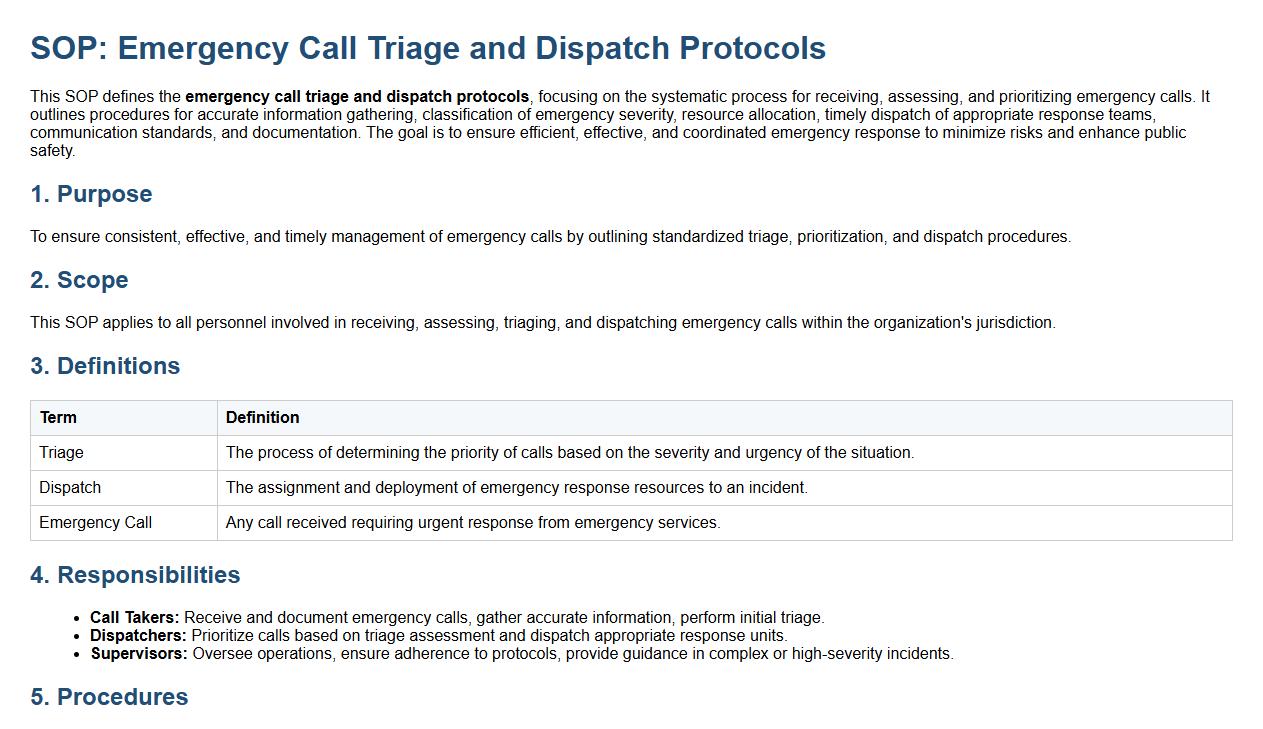
This SOP defines the emergency call triage and dispatch protocols, focusing on the systematic process for receiving, assessing, and prioritizing emergency calls. It outlines procedures for accurate information gathering, classification of emergency severity, resource allocation, timely dispatch of appropriate response teams, communication standards, and documentation. The goal is to ensure efficient, effective, and coordinated emergency response to minimize risks and enhance public safety.
Patient assessment and on-site medical care procedures.
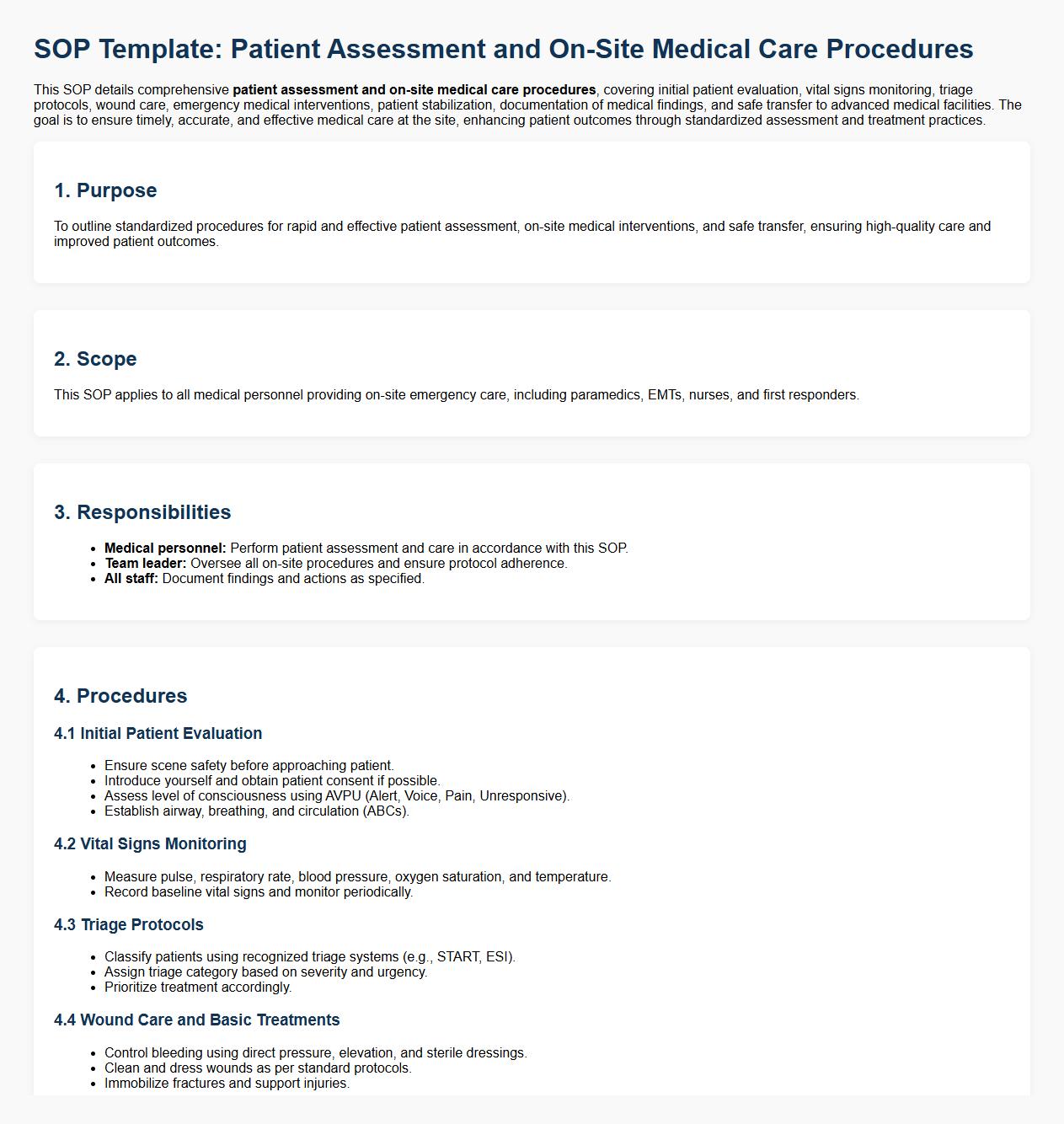
This SOP details comprehensive patient assessment and on-site medical care procedures, covering initial patient evaluation, vital signs monitoring, triage protocols, wound care, emergency medical interventions, patient stabilization, documentation of medical findings, and safe transfer to advanced medical facilities. The goal is to ensure timely, accurate, and effective medical care at the site, enhancing patient outcomes through standardized assessment and treatment practices.
Personal protective equipment (PPE) usage and infection control.
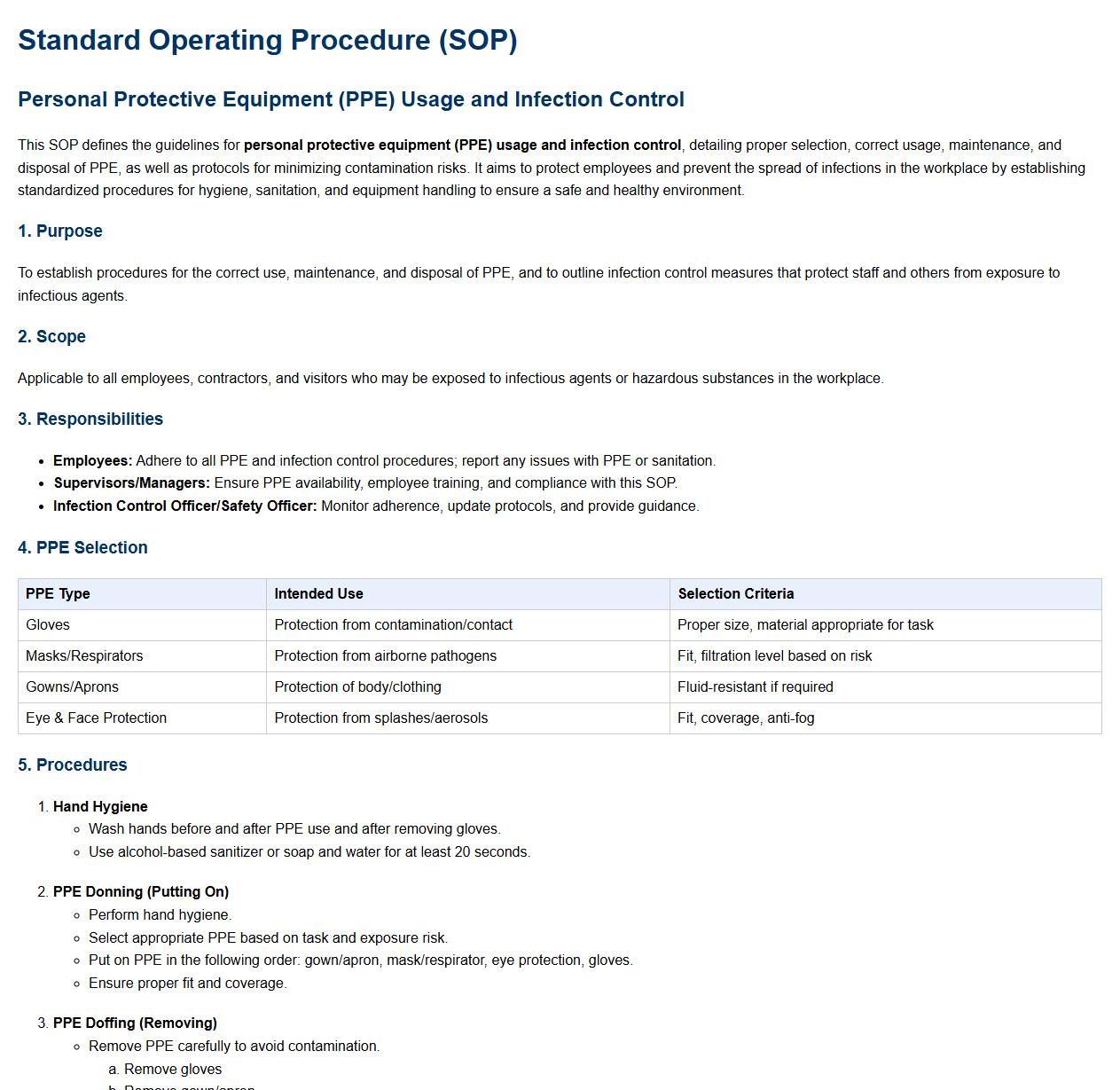
This SOP defines the guidelines for personal protective equipment (PPE) usage and infection control, detailing proper selection, correct usage, maintenance, and disposal of PPE, as well as protocols for minimizing contamination risks. It aims to protect employees and prevent the spread of infections in the workplace by establishing standardized procedures for hygiene, sanitation, and equipment handling to ensure a safe and healthy environment.
Safe patient lifting, handling, and transport guidelines.
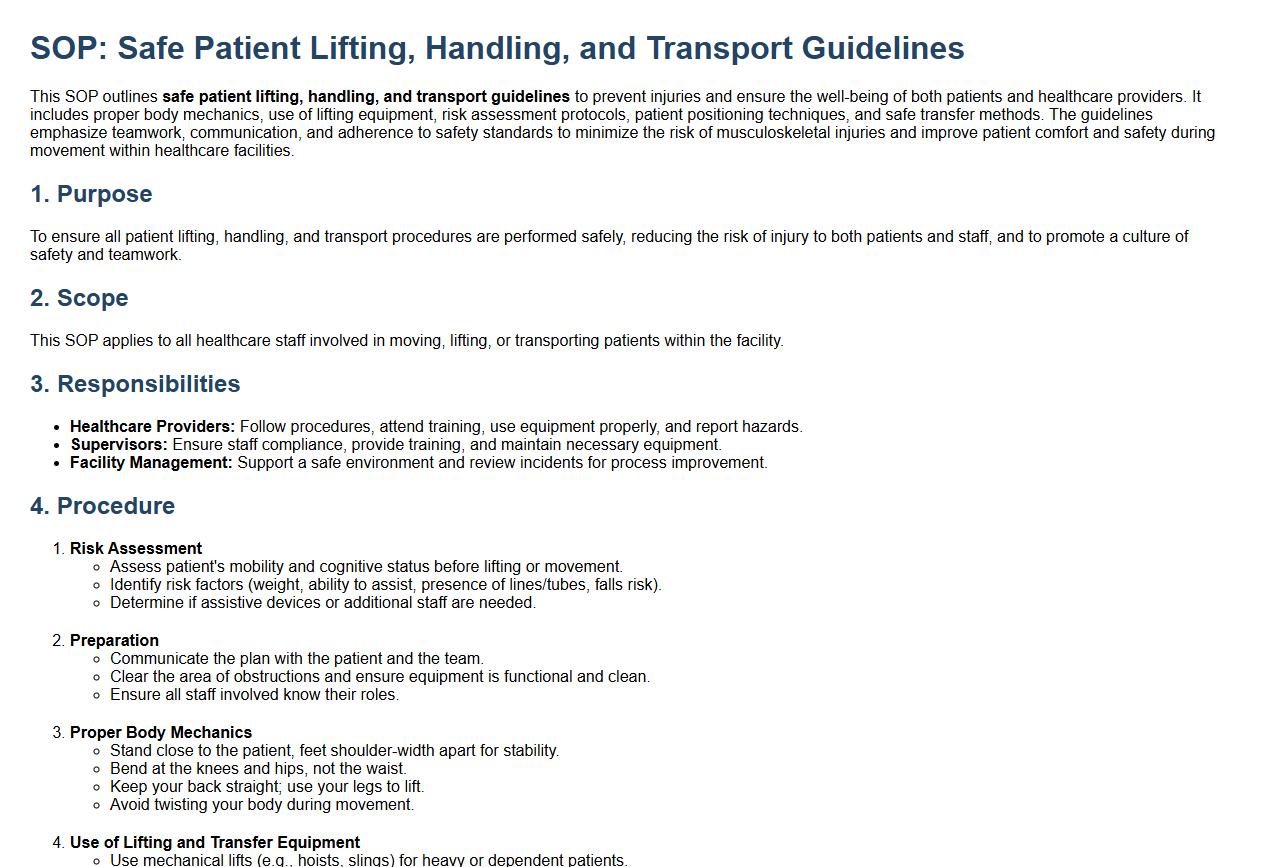
This SOP outlines safe patient lifting, handling, and transport guidelines to prevent injuries and ensure the well-being of both patients and healthcare providers. It includes proper body mechanics, use of lifting equipment, risk assessment protocols, patient positioning techniques, and safe transfer methods. The guidelines emphasize teamwork, communication, and adherence to safety standards to minimize the risk of musculoskeletal injuries and improve patient comfort and safety during movement within healthcare facilities.
Medical equipment inventory and sterilization procedures.
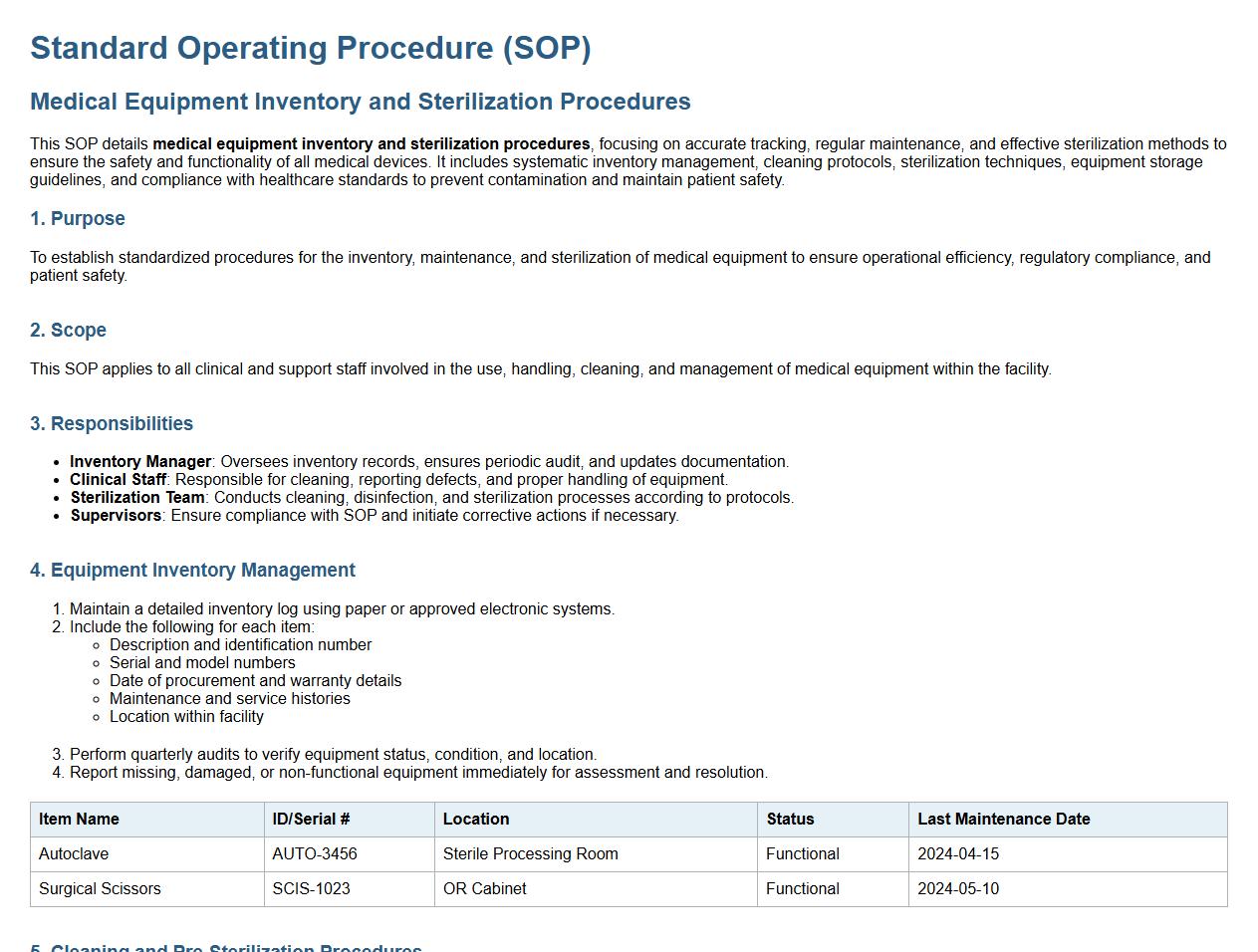
This SOP details medical equipment inventory and sterilization procedures, focusing on accurate tracking, regular maintenance, and effective sterilization methods to ensure the safety and functionality of all medical devices. It includes systematic inventory management, cleaning protocols, sterilization techniques, equipment storage guidelines, and compliance with healthcare standards to prevent contamination and maintain patient safety.
Communication protocols with dispatch, hospitals, and other agencies.
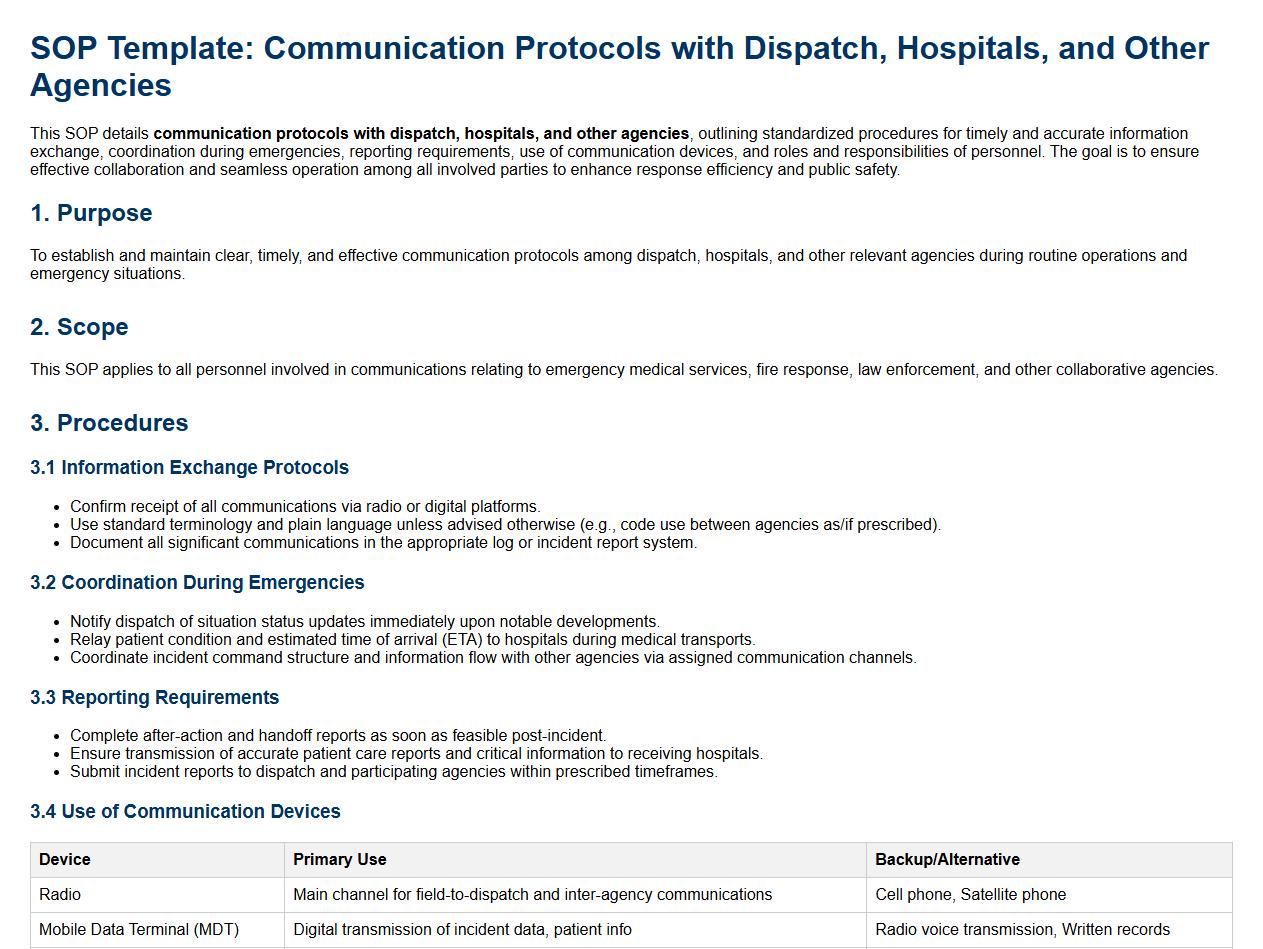
This SOP details communication protocols with dispatch, hospitals, and other agencies, outlining standardized procedures for timely and accurate information exchange, coordination during emergencies, reporting requirements, use of communication devices, and roles and responsibilities of personnel. The goal is to ensure effective collaboration and seamless operation among all involved parties to enhance response efficiency and public safety.
Documentation and patient records management.
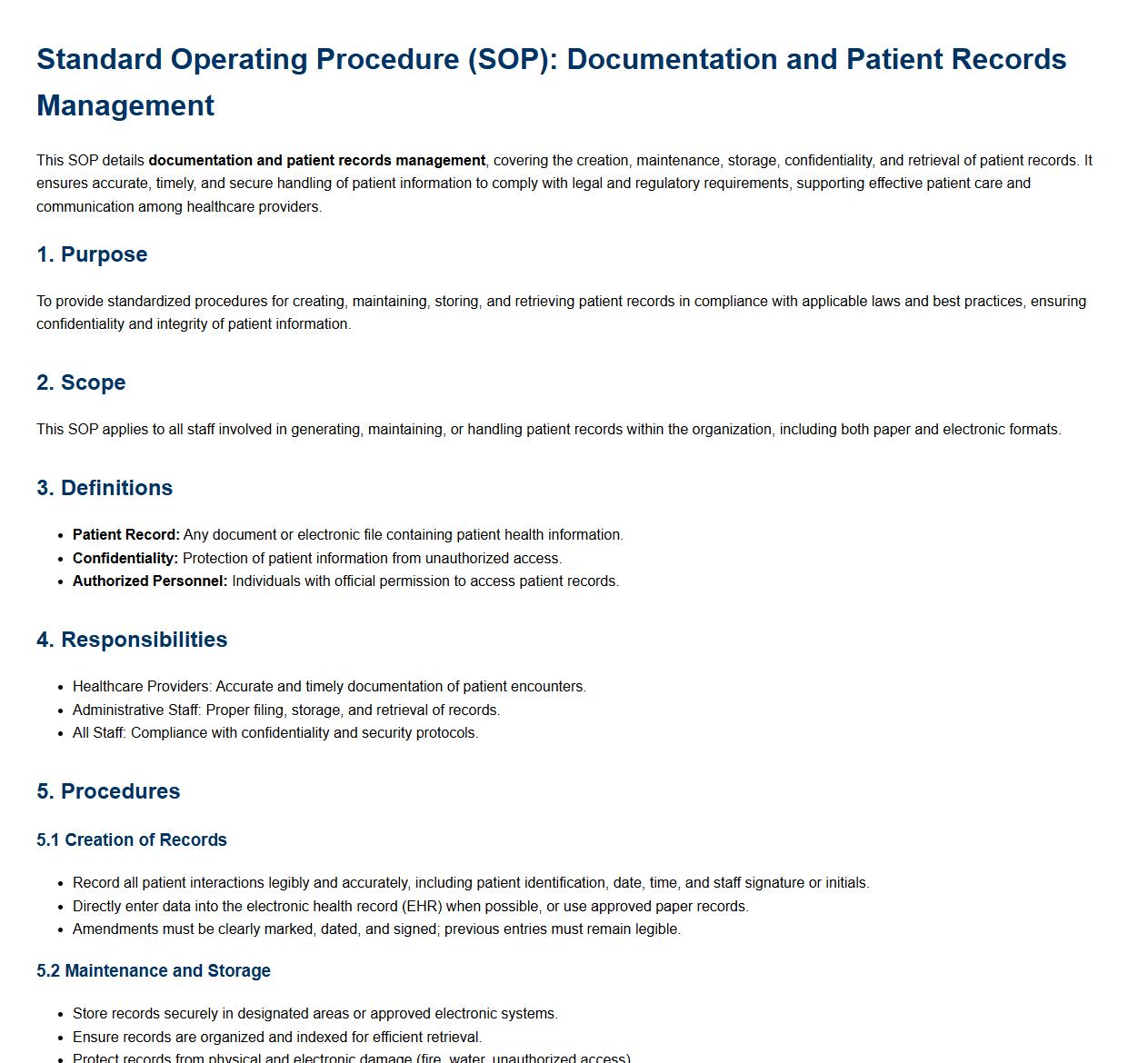
This SOP details documentation and patient records management, covering the creation, maintenance, storage, confidentiality, and retrieval of patient records. It ensures accurate, timely, and secure handling of patient information to comply with legal and regulatory requirements, supporting effective patient care and communication among healthcare providers.
Staff shift handover and debriefing procedures.
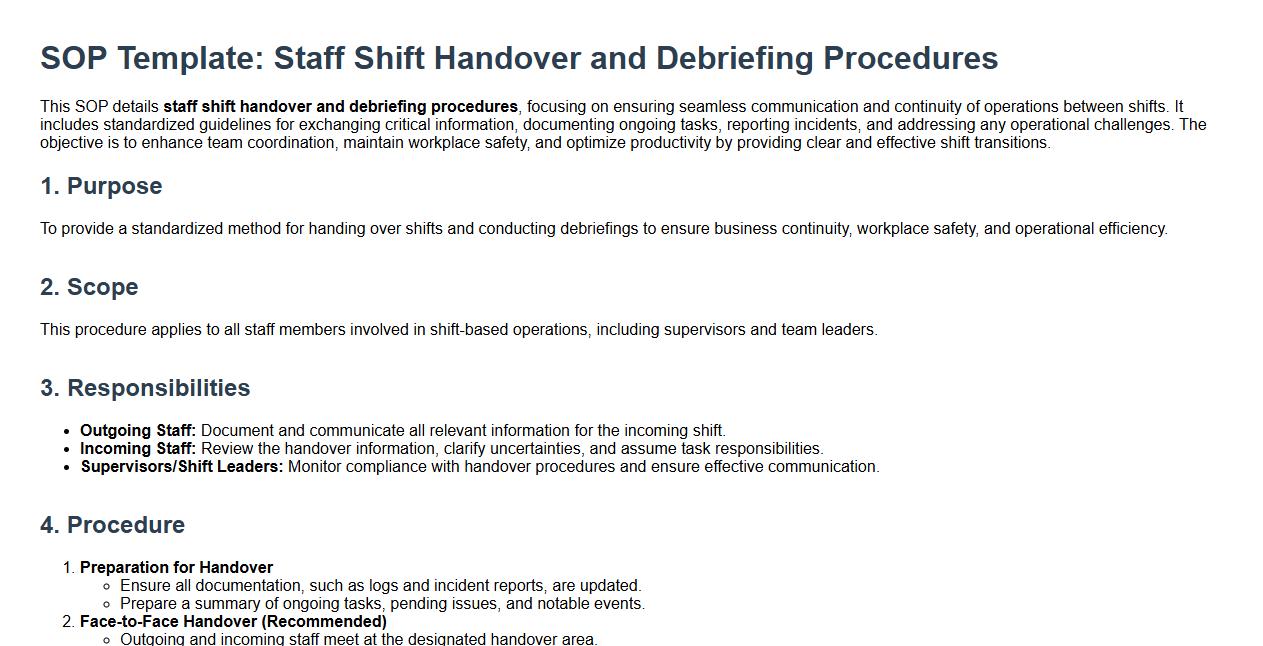
This SOP details staff shift handover and debriefing procedures, focusing on ensuring seamless communication and continuity of operations between shifts. It includes standardized guidelines for exchanging critical information, documenting ongoing tasks, reporting incidents, and addressing any operational challenges. The objective is to enhance team coordination, maintain workplace safety, and optimize productivity by providing clear and effective shift transitions.
Incident reporting and adverse event management.
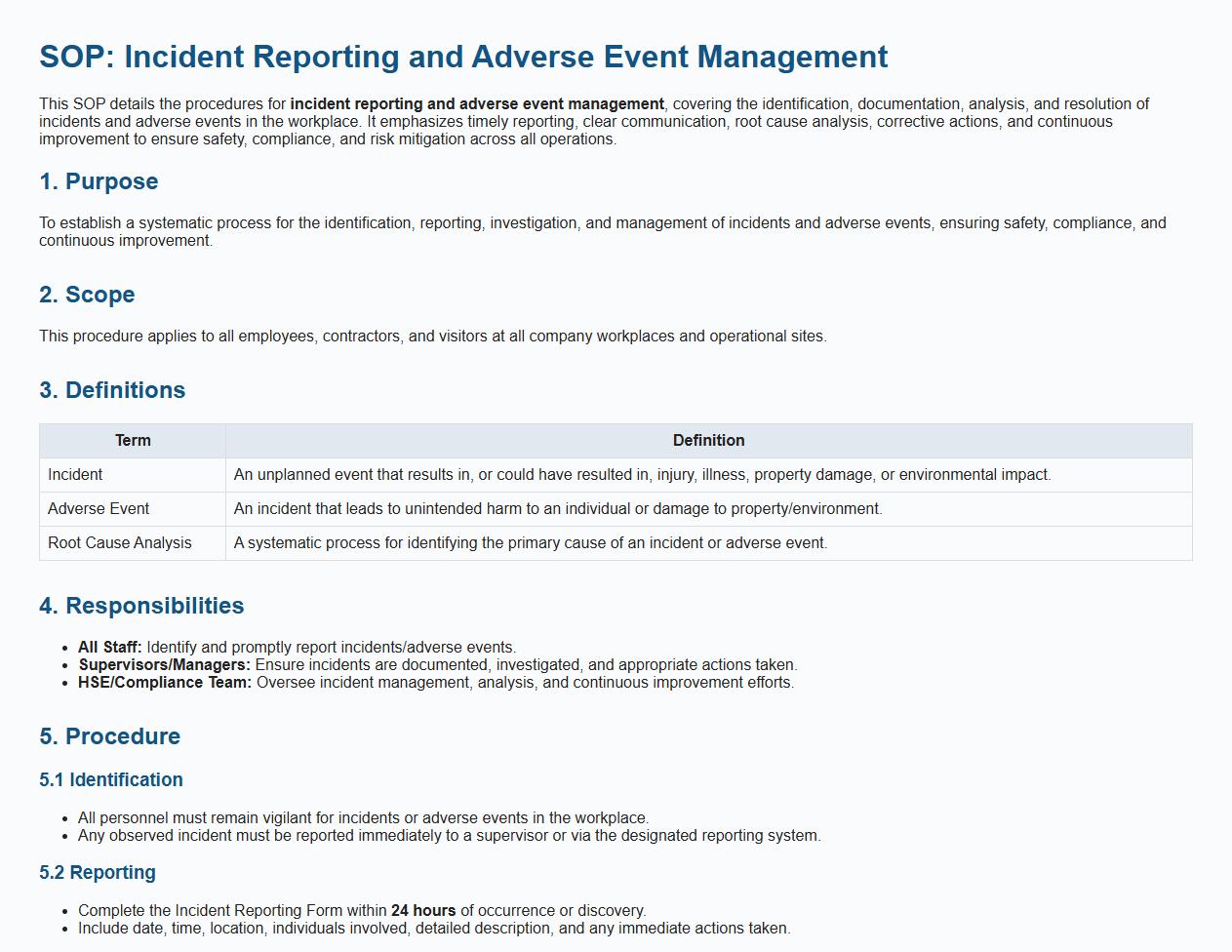
This SOP details the procedures for incident reporting and adverse event management, covering the identification, documentation, analysis, and resolution of incidents and adverse events in the workplace. It emphasizes timely reporting, clear communication, root cause analysis, corrective actions, and continuous improvement to ensure safety, compliance, and risk mitigation across all operations.
What is the primary objective of the SOP for Ambulance Service Operations?
The primary objective of the SOP for Ambulance Service Operations is to ensure consistent and high-quality emergency medical care during patient transport. It aims to establish standardized protocols that enhance patient outcomes and operational efficiency. Additionally, the SOP prioritizes safety for both patients and ambulance personnel throughout all phases of service.
Which personnel roles and responsibilities are defined within the ambulance SOP?
The SOP clearly defines the roles and responsibilities of key personnel such as paramedics, EMTs, drivers, and dispatchers to ensure coordinated ambulance operations. Each role is assigned specific duties related to patient care, communication, and vehicle operation. This clarity promotes accountability and smooth teamwork during emergency responses.
How does the SOP outline the process for emergency call response and dispatch?
The SOP outlines a detailed process for emergency call reception, prioritization, and dispatching of ambulances to the incident location. It includes criteria for triaging calls to allocate resources efficiently and minimize response times. Effective communication channels and protocols are emphasized to support rapid and accurate deployment.
What procedures are specified for infection prevention and patient safety during transport?
The SOP specifies strict infection prevention protocols including use of personal protective equipment (PPE) and regular disinfection of ambulance interiors. Patient safety measures such as secure immobilization and continuous monitoring are detailed to avoid complications. These procedures help maintain a safe environment for both patients and staff during transport.
How is equipment maintenance and readiness addressed in the ambulance operations SOP?
Regular equipment maintenance schedules and pre-shift readiness checks are mandated by the SOP to ensure all medical and emergency apparatus are fully operational. It requires documentation of inspections and timely repairs to prevent equipment failure. This focus on readiness supports reliable emergency medical service delivery at all times.