
A SOP Template for Healthcare Waste Disposal provides a standardized framework to ensure safe and compliant handling of medical waste. It outlines specific procedures for segregation, collection, transportation, and final disposal to minimize health risks and environmental impact. Following this template helps healthcare facilities maintain regulatory compliance and protect staff and patient safety.
Waste segregation procedures by waste category.
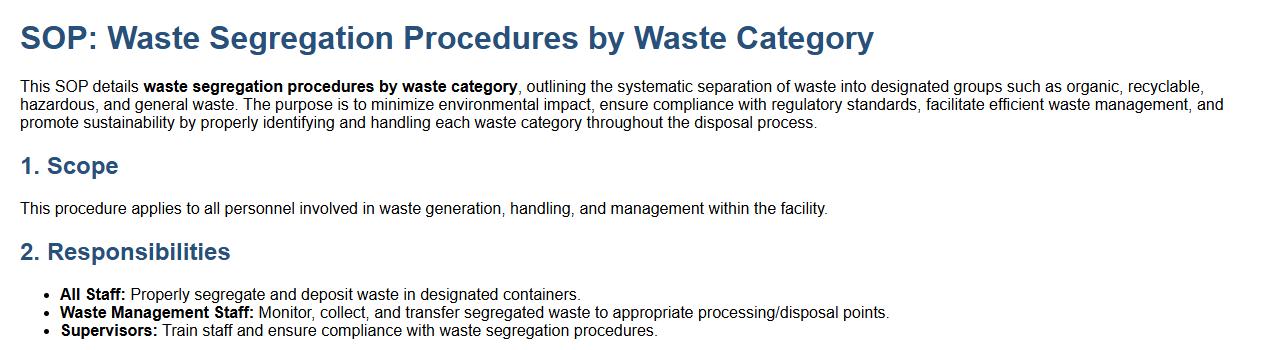
This SOP details waste segregation procedures by waste category, outlining the systematic separation of waste into designated groups such as organic, recyclable, hazardous, and general waste. The purpose is to minimize environmental impact, ensure compliance with regulatory standards, facilitate efficient waste management, and promote sustainability by properly identifying and handling each waste category throughout the disposal process.
Proper labeling and color-coding of waste containers.
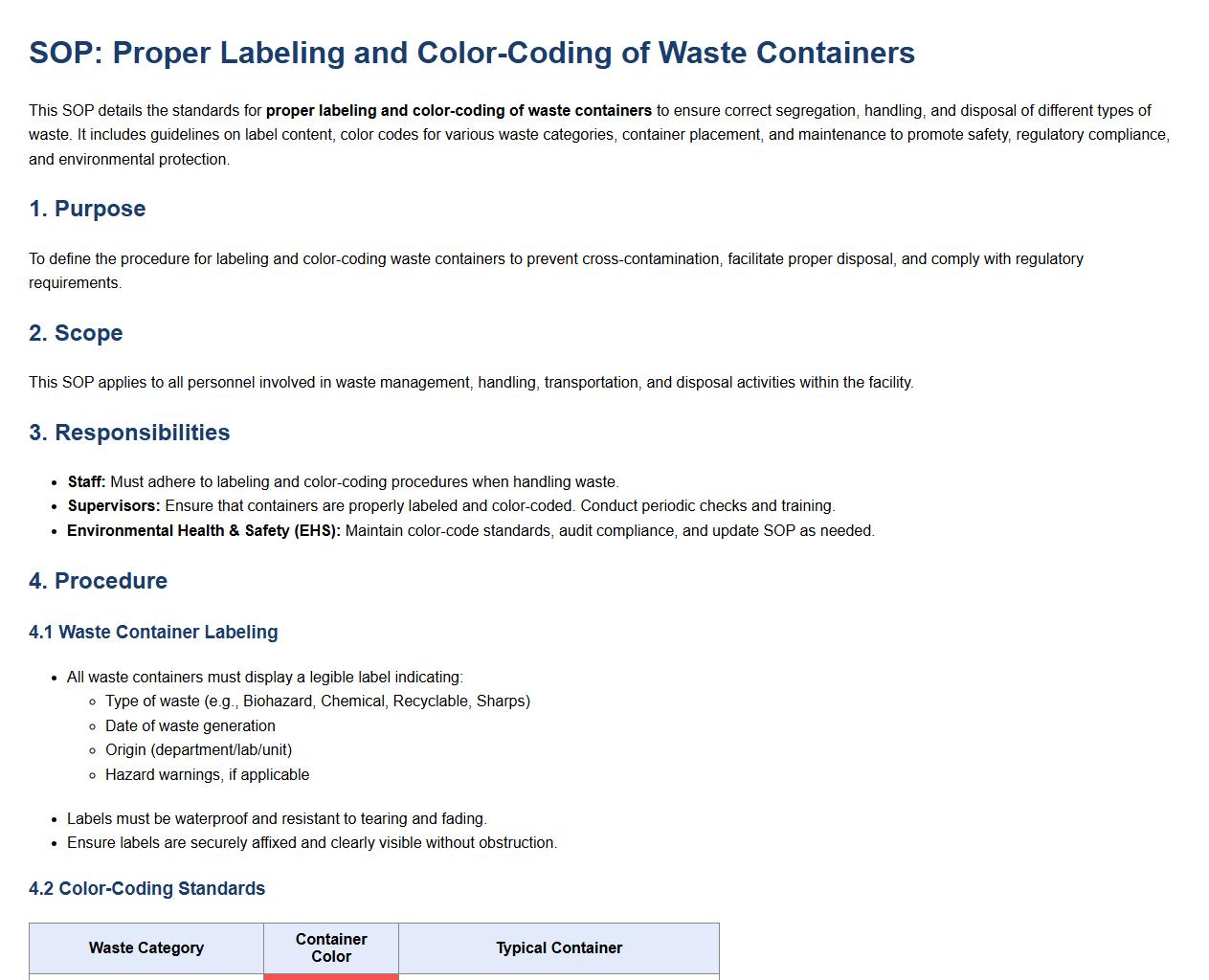
This SOP details the standards for proper labeling and color-coding of waste containers to ensure correct segregation, handling, and disposal of different types of waste. It includes guidelines on label content, color codes for various waste categories, container placement, and maintenance to promote safety, regulatory compliance, and environmental protection.
Personal protective equipment (PPE) requirements for handlers.
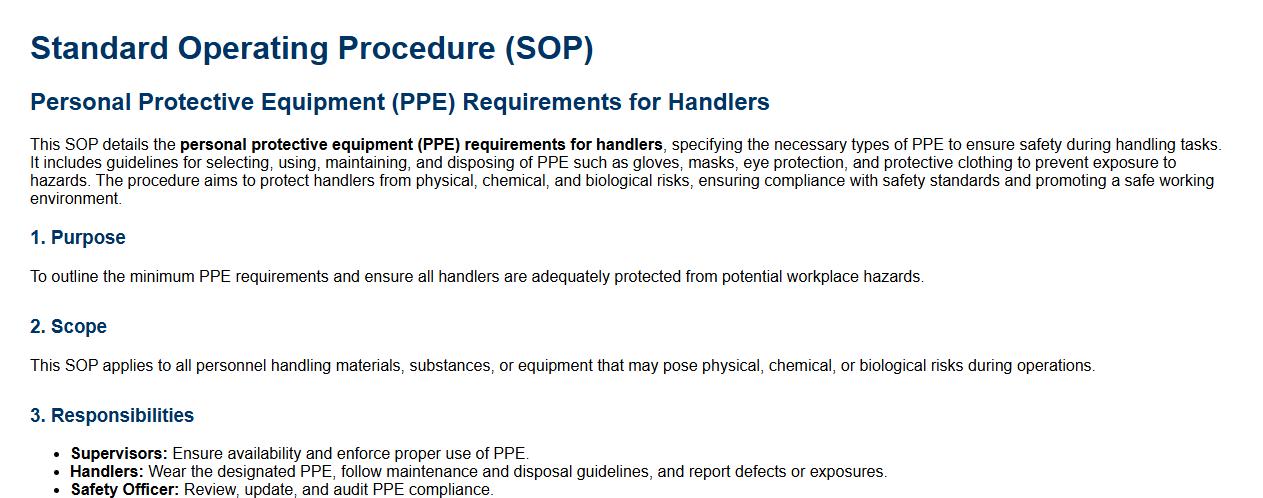
This SOP details the personal protective equipment (PPE) requirements for handlers, specifying the necessary types of PPE to ensure safety during handling tasks. It includes guidelines for selecting, using, maintaining, and disposing of PPE such as gloves, masks, eye protection, and protective clothing to prevent exposure to hazards. The procedure aims to protect handlers from physical, chemical, and biological risks, ensuring compliance with safety standards and promoting a safe working environment.
Collection and internal transport protocols within facility.
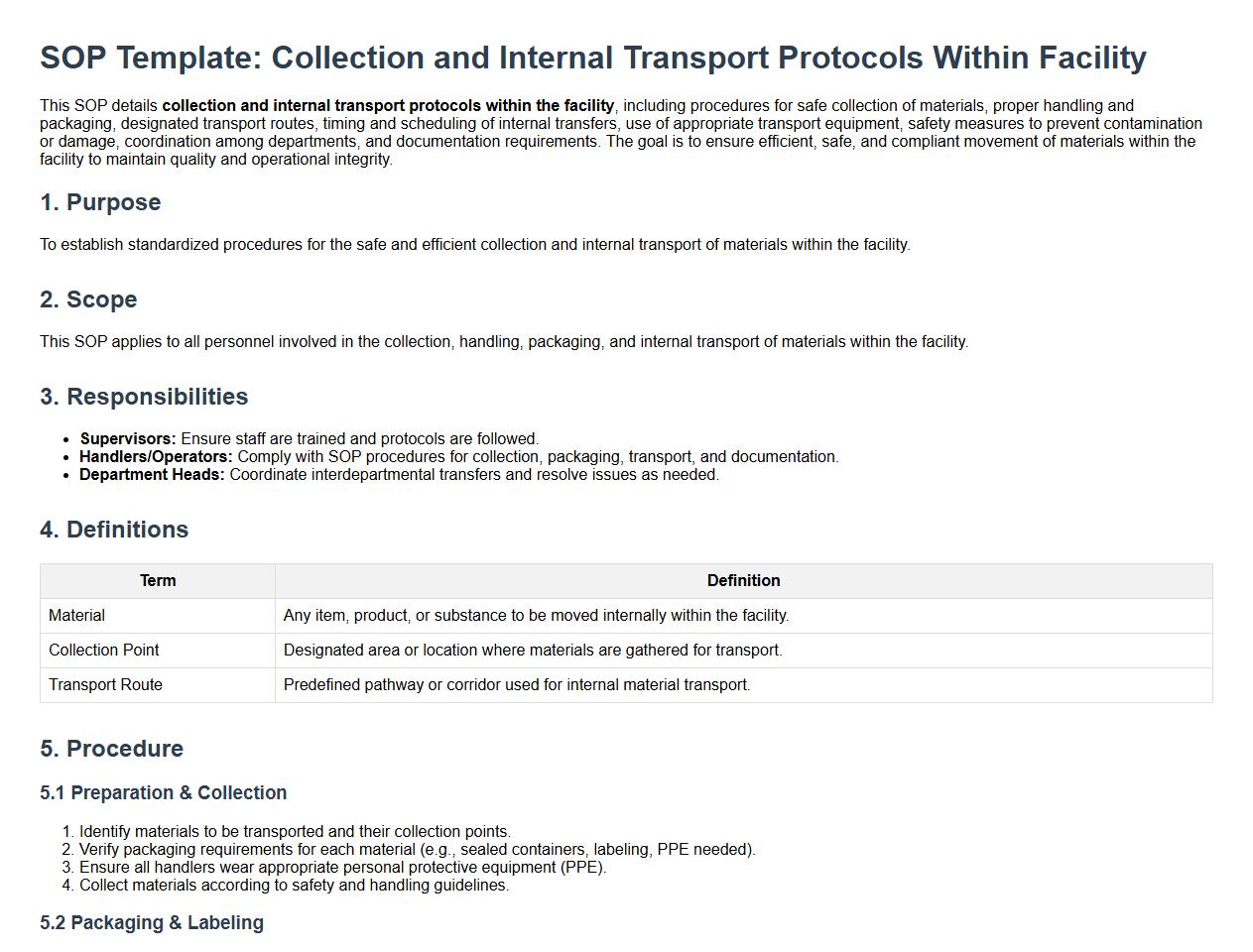
This SOP details collection and internal transport protocols within the facility, including procedures for safe collection of materials, proper handling and packaging, designated transport routes, timing and scheduling of internal transfers, use of appropriate transport equipment, safety measures to prevent contamination or damage, coordination among departments, and documentation requirements. The goal is to ensure efficient, safe, and compliant movement of materials within the facility to maintain quality and operational integrity.
Temporary storage guidelines for different waste types.
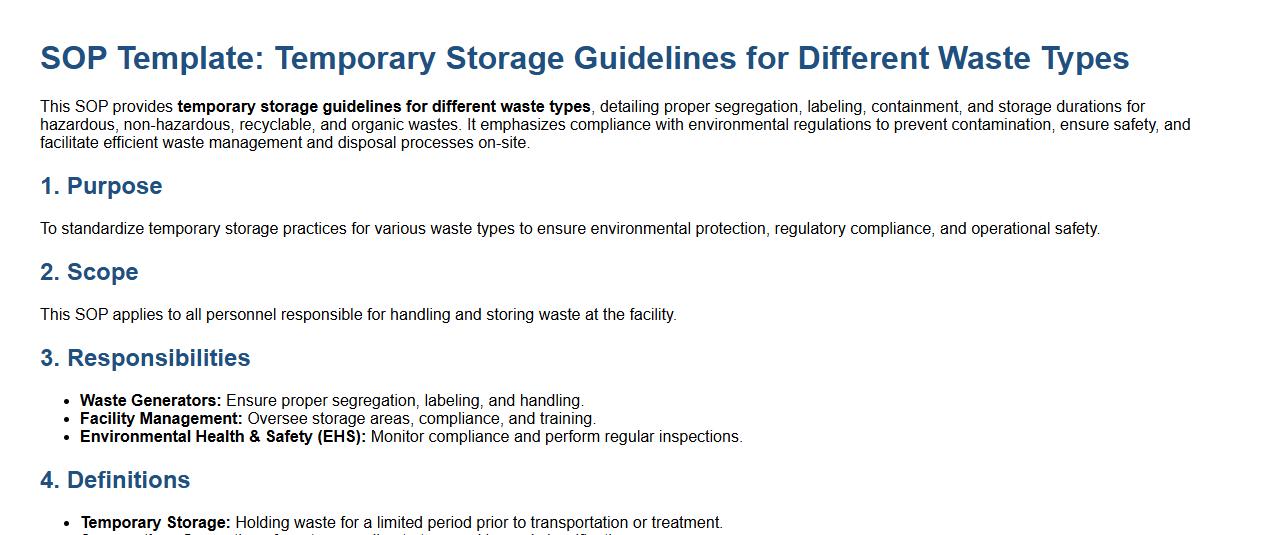
This SOP provides temporary storage guidelines for different waste types, detailing proper segregation, labeling, containment, and storage durations for hazardous, non-hazardous, recyclable, and organic wastes. It emphasizes compliance with environmental regulations to prevent contamination, ensure safety, and facilitate efficient waste management and disposal processes on-site.
Sharps disposal and handling instructions.
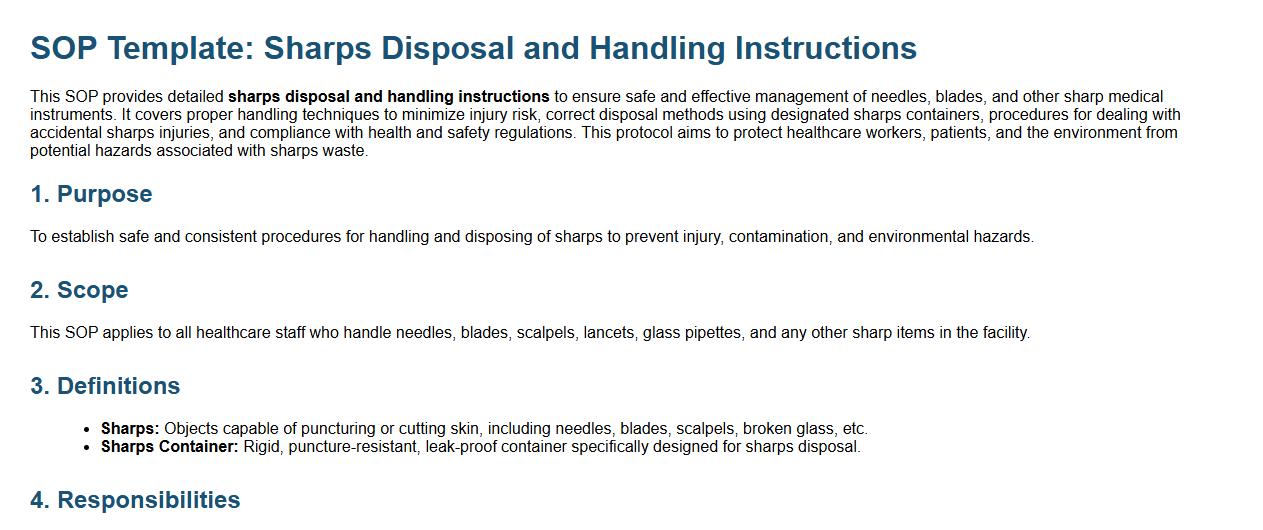
This SOP provides detailed sharps disposal and handling instructions to ensure safe and effective management of needles, blades, and other sharp medical instruments. It covers proper handling techniques to minimize injury risk, correct disposal methods using designated sharps containers, procedures for dealing with accidental sharps injuries, and compliance with health and safety regulations. This protocol aims to protect healthcare workers, patients, and the environment from potential hazards associated with sharps waste.
Chemical, pharmaceutical, and infectious waste management steps.
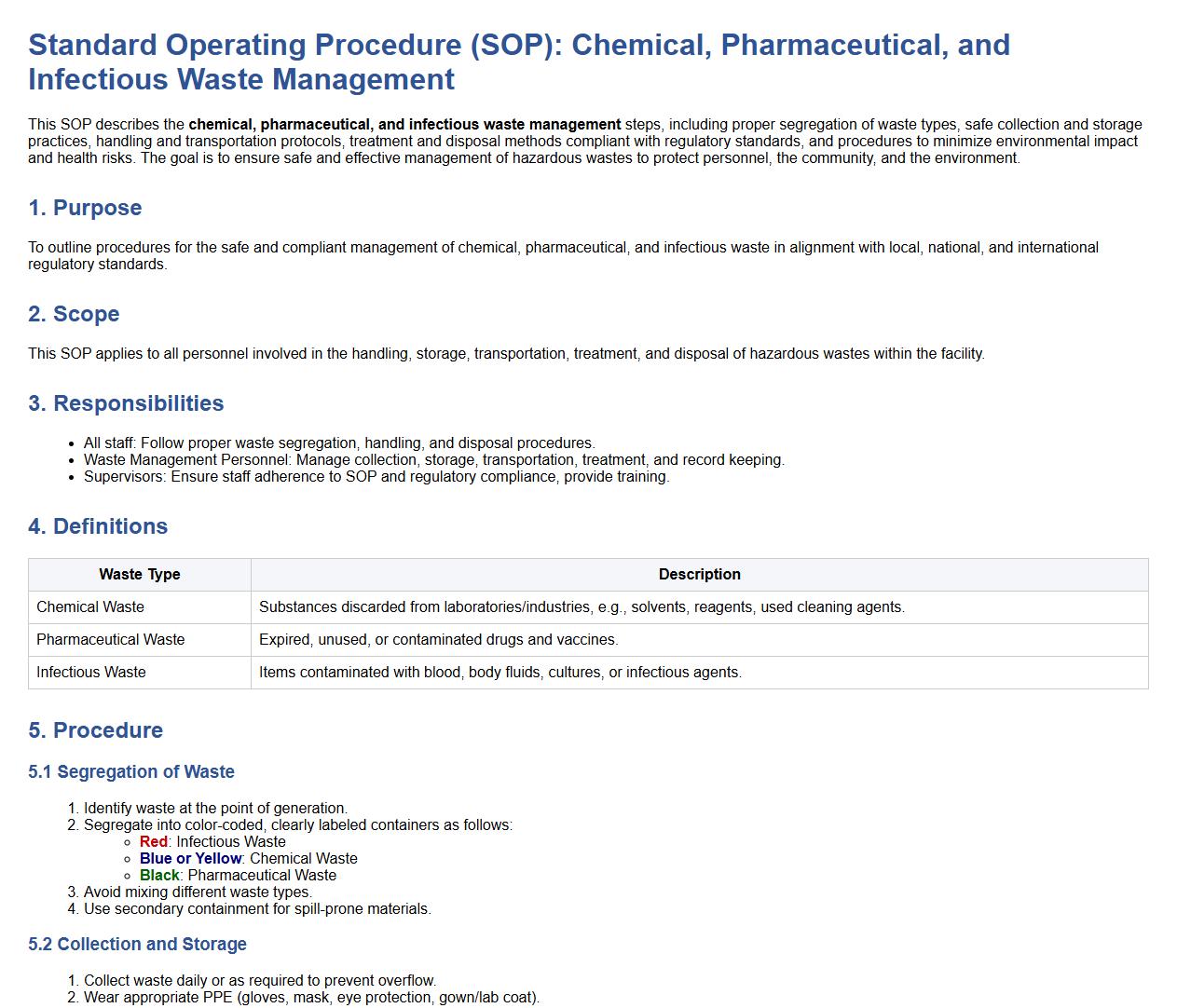
This SOP describes the chemical, pharmaceutical, and infectious waste management steps, including proper segregation of waste types, safe collection and storage practices, handling and transportation protocols, treatment and disposal methods compliant with regulatory standards, and procedures to minimize environmental impact and health risks. The goal is to ensure safe and effective management of hazardous wastes to protect personnel, the community, and the environment.
Disinfection and cleaning protocols for waste areas and equipment.
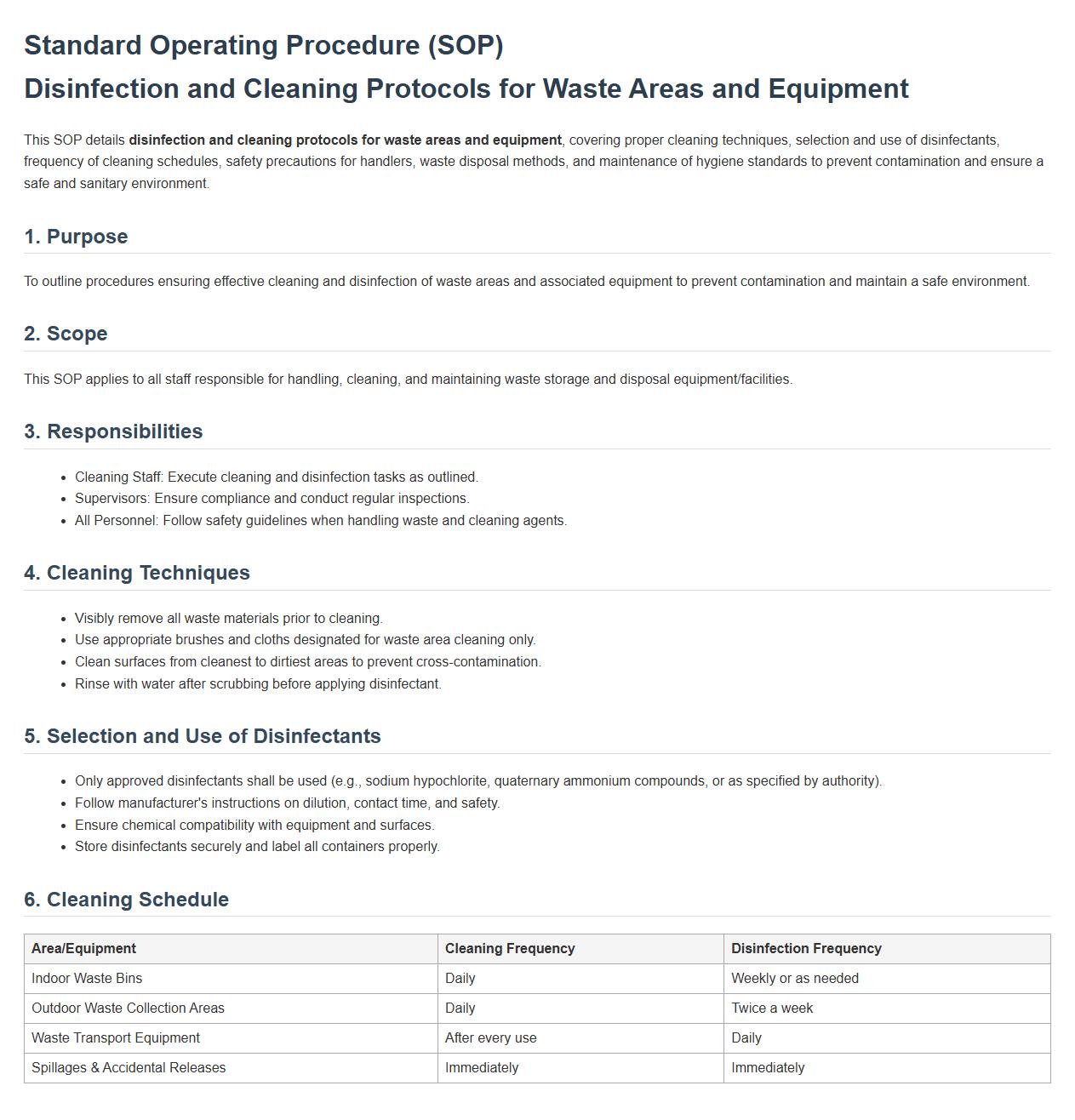
This SOP details disinfection and cleaning protocols for waste areas and equipment, covering proper cleaning techniques, selection and use of disinfectants, frequency of cleaning schedules, safety precautions for handlers, waste disposal methods, and maintenance of hygiene standards to prevent contamination and ensure a safe and sanitary environment.
External transport procedures to licensed disposal facilities.
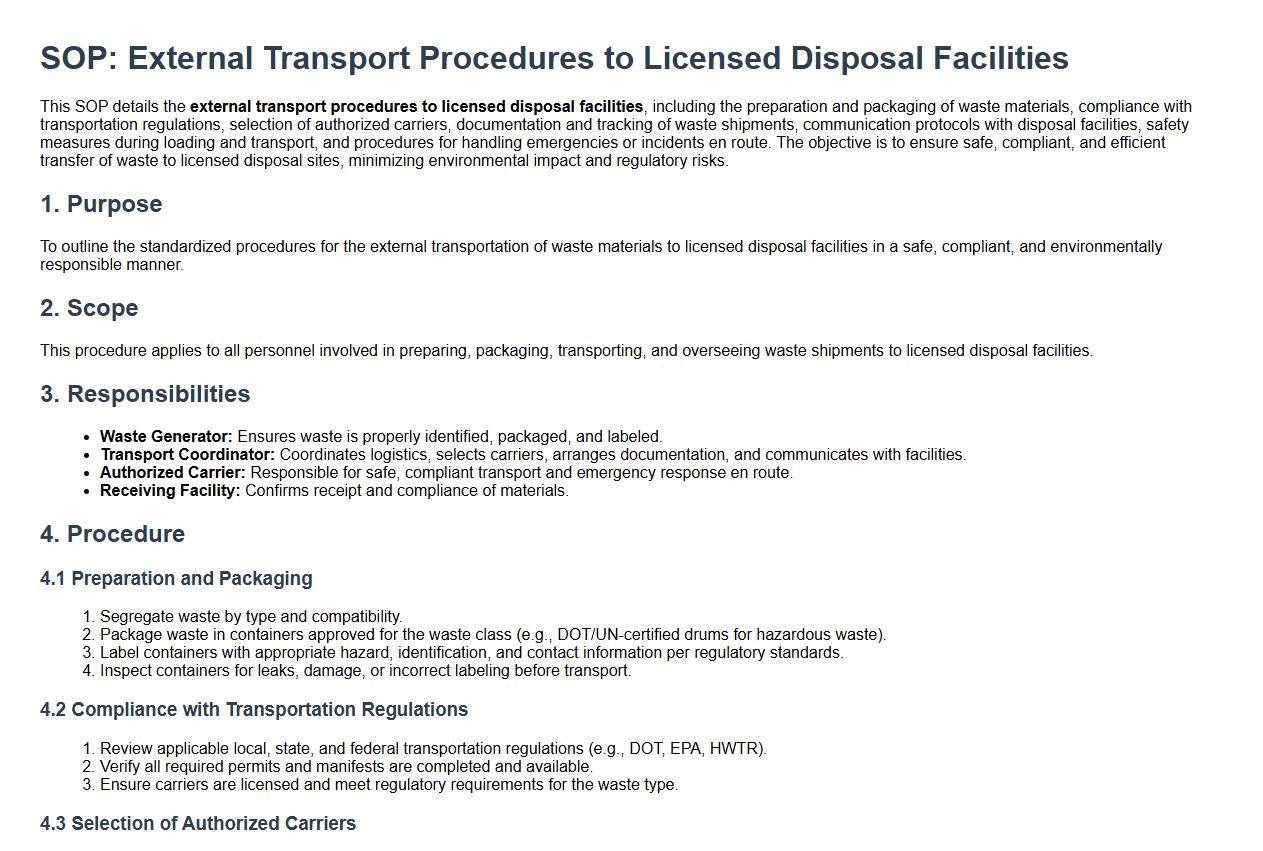
This SOP details the external transport procedures to licensed disposal facilities, including the preparation and packaging of waste materials, compliance with transportation regulations, selection of authorized carriers, documentation and tracking of waste shipments, communication protocols with disposal facilities, safety measures during loading and transport, and procedures for handling emergencies or incidents en route. The objective is to ensure safe, compliant, and efficient transfer of waste to licensed disposal sites, minimizing environmental impact and regulatory risks.
Documentation, record-keeping, and incident reporting procedures.
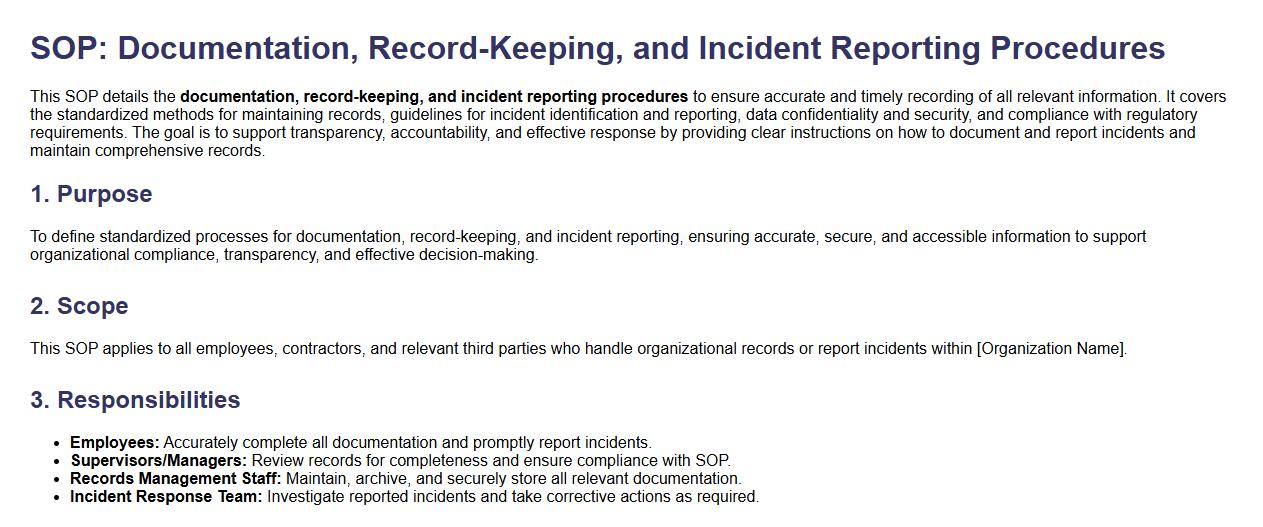
This SOP details the documentation, record-keeping, and incident reporting procedures to ensure accurate and timely recording of all relevant information. It covers the standardized methods for maintaining records, guidelines for incident identification and reporting, data confidentiality and security, and compliance with regulatory requirements. The goal is to support transparency, accountability, and effective response by providing clear instructions on how to document and report incidents and maintain comprehensive records.
What are the key classification categories for healthcare waste as defined in the SOP?
The SOP defines healthcare waste categories to ensure safe disposal and management practices. These categories include infectious waste, pathological waste, sharps, pharmaceutical waste, chemical waste, and general waste. Proper classification helps minimize risks to healthcare workers and the environment.
Which color-coding system is specified for different types of healthcare waste in this SOP?
The SOP specifies a color-coded system for easy identification of healthcare waste types. For example, red bags are used for infectious waste, yellow for pathological waste, and blue for pharmaceutical waste. This standardized system promotes compliance and enhances safety across all waste handling stages.
What are the step-by-step procedures for segregating, collecting, and labeling waste containers?
The SOP mandates segregation at the point of generation to prevent cross-contamination. Waste must be collected in designated containers, each clearly labeled with the waste type, date, and source. Following these steps ensures effective waste management and regulatory compliance.
What personal protective equipment (PPE) is required for each stage of waste handling, according to the SOP?
The SOP requires the use of PPE such as gloves, masks, gowns, and eye protection during waste segregation and handling. Different levels of PPE are mandated based on the risk associated with each waste category. This protocol helps protect workers from potential biological and chemical hazards.
What are the documented methods and frequency for the transport and final disposal of healthcare waste?
The SOP outlines specific methods like autoclaving, incineration, and chemical treatment for final waste disposal. Transport of waste must occur daily or as per facility needs using sealed and labeled containers. Regular transport and disposal prevent waste accumulation and environmental contamination.