

A SOP Template for Nurse Shift Handover ensures a standardized and efficient transfer of critical patient information between nursing shifts. It includes essential sections such as patient status, medication updates, care plans, and any incidents requiring attention. This template helps maintain continuity of care and reduces errors during nurse transitions.
Patient status summary and primary diagnosis documentation.
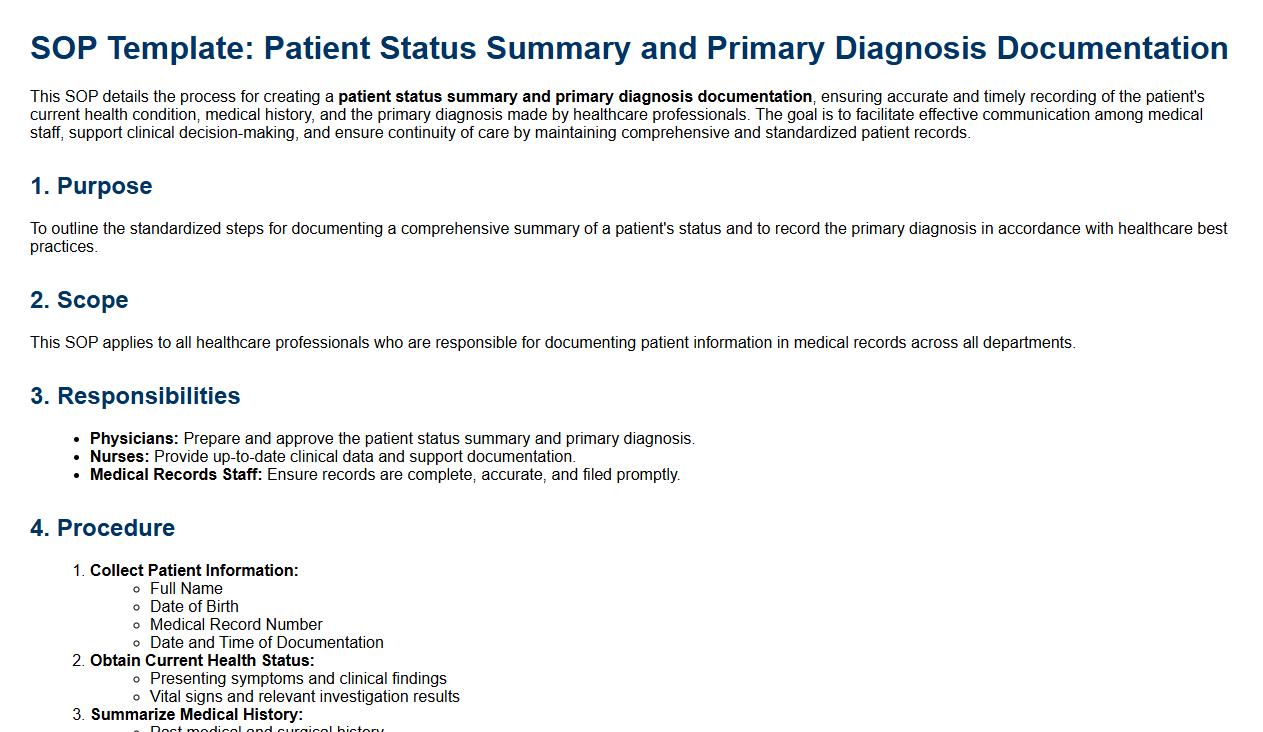
This SOP details the process for creating a patient status summary and primary diagnosis documentation, ensuring accurate and timely recording of the patient's current health condition, medical history, and the primary diagnosis made by healthcare professionals. The goal is to facilitate effective communication among medical staff, support clinical decision-making, and ensure continuity of care by maintaining comprehensive and standardized patient records.
Vital signs record and notable changes during shift.
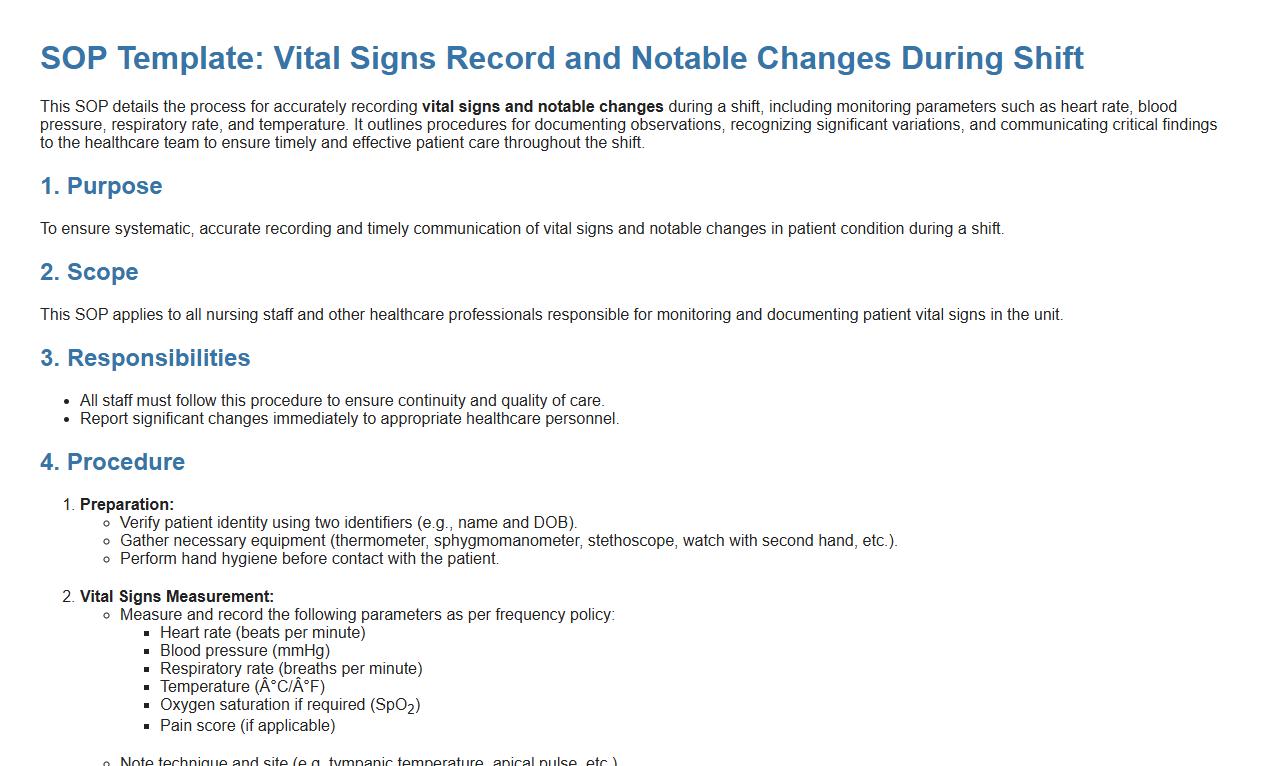
This SOP details the process for accurately recording vital signs and notable changes during a shift, including monitoring parameters such as heart rate, blood pressure, respiratory rate, and temperature. It outlines procedures for documenting observations, recognizing significant variations, and communicating critical findings to the healthcare team to ensure timely and effective patient care throughout the shift.
Medication administration report — including pending and PRN doses.
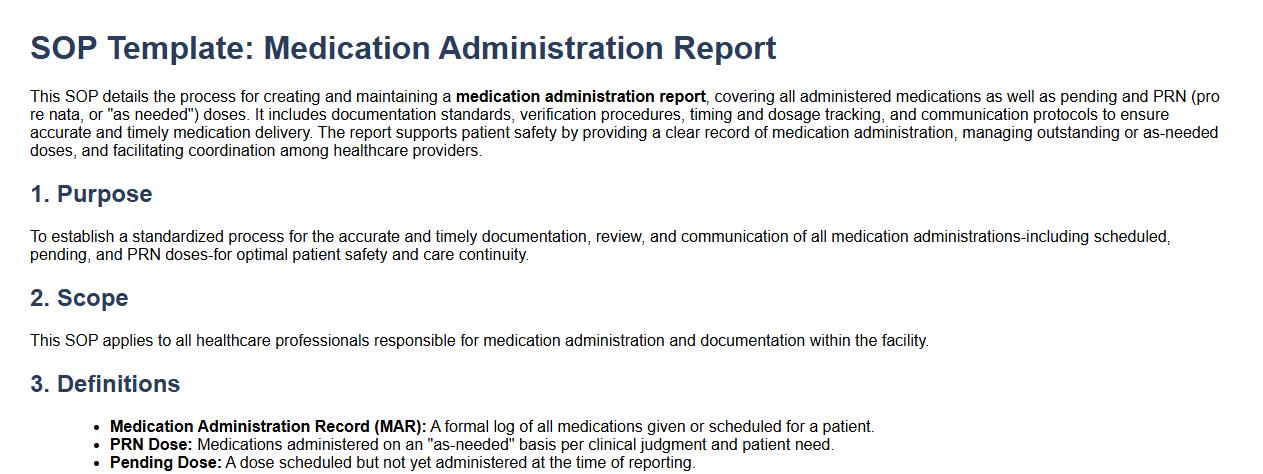
This SOP details the process for creating and maintaining a medication administration report, covering all administered medications as well as pending and PRN (pro re nata) doses. It includes documentation standards, verification procedures, timing and dosage tracking, and communication protocols to ensure accurate and timely medication delivery. The report supports patient safety by providing a clear record of medication administration, managing outstanding or as-needed doses, and facilitating coordination among healthcare providers.
Outstanding laboratory and diagnostic results.
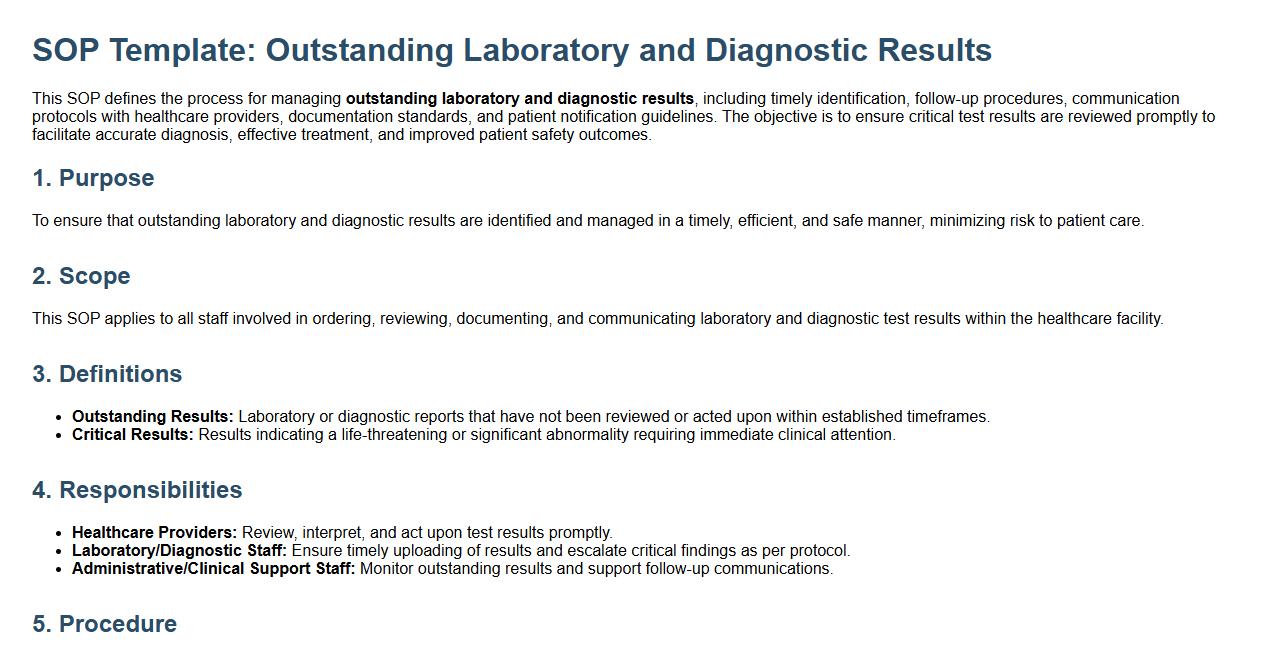
This SOP defines the process for managing outstanding laboratory and diagnostic results, including timely identification, follow-up procedures, communication protocols with healthcare providers, documentation standards, and patient notification guidelines. The objective is to ensure critical test results are reviewed promptly to facilitate accurate diagnosis, effective treatment, and improved patient safety outcomes.
Ongoing treatments or procedures to continue.
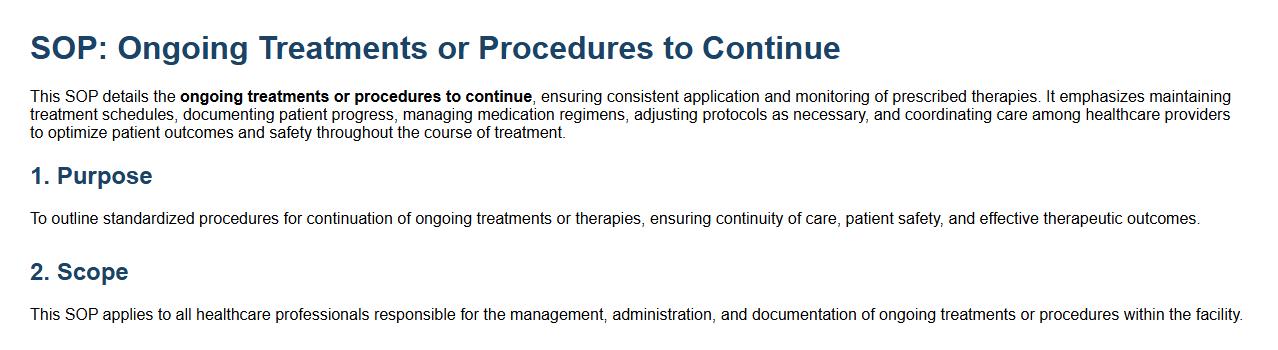
This SOP details the ongoing treatments or procedures to continue, ensuring consistent application and monitoring of prescribed therapies. It emphasizes maintaining treatment schedules, documenting patient progress, managing medication regimens, adjusting protocols as necessary, and coordinating care among healthcare providers to optimize patient outcomes and safety throughout the course of treatment.
Special needs, isolation protocols, or infection control measures.
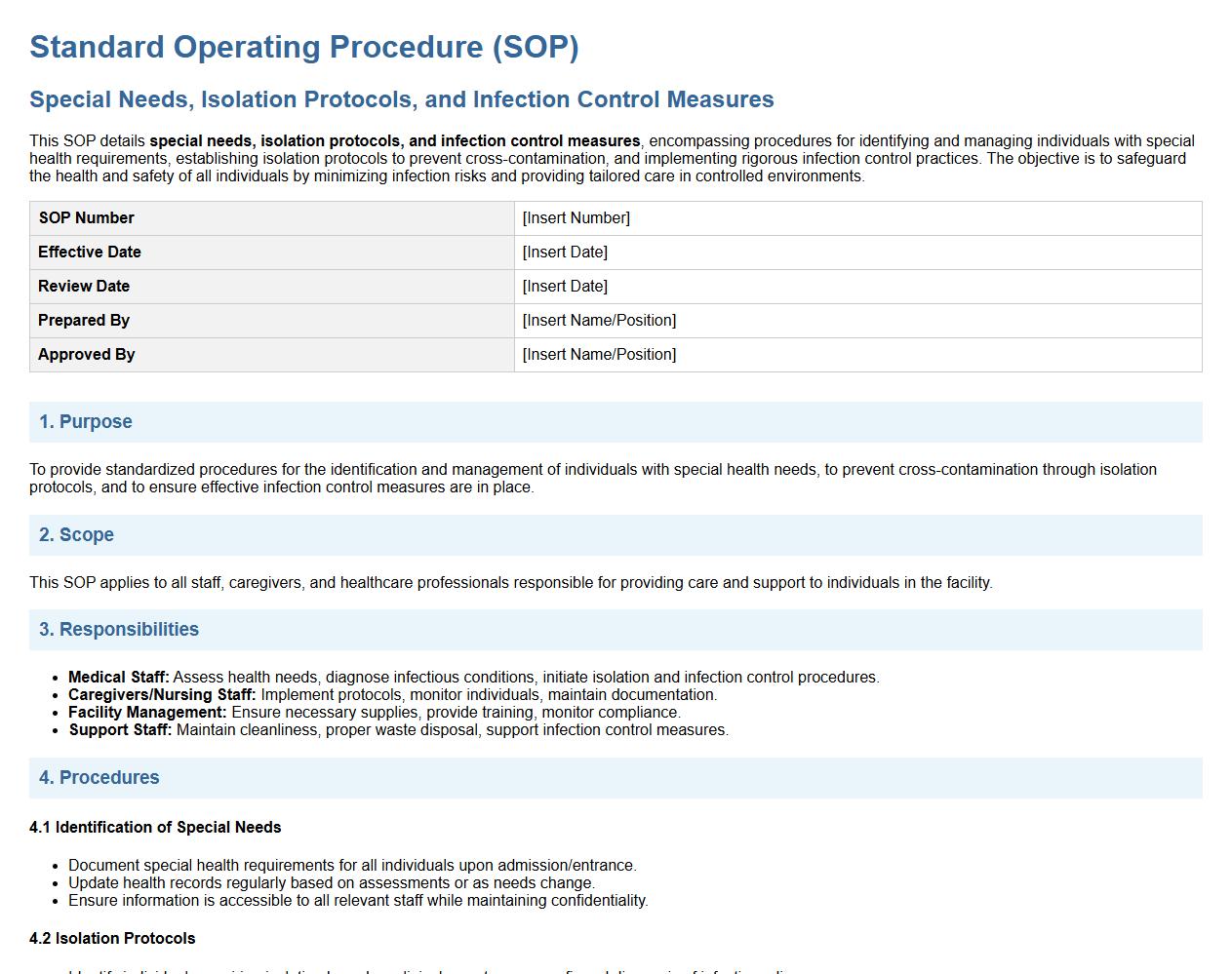
This SOP details special needs, isolation protocols, and infection control measures, encompassing procedures for identifying and managing individuals with special health requirements, establishing isolation protocols to prevent cross-contamination, and implementing rigorous infection control practices. The objective is to safeguard the health and safety of all individuals by minimizing infection risks and providing tailored care in controlled environments.
Updates on care plans, physician notes, and recent consultations.
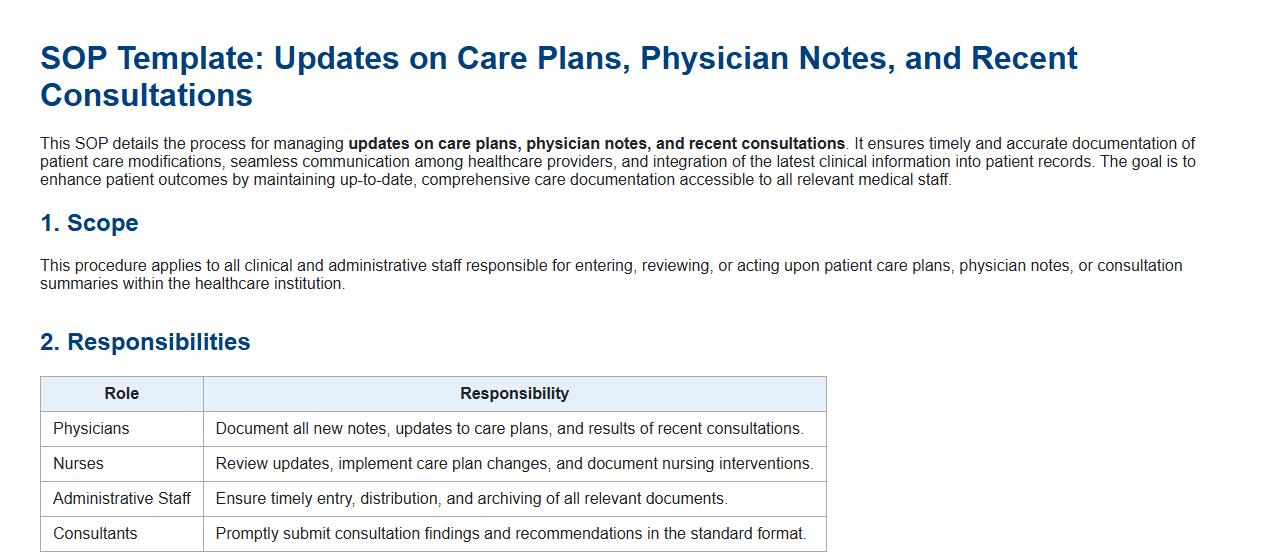
This SOP details the process for managing updates on care plans, physician notes, and recent consultations. It ensures timely and accurate documentation of patient care modifications, seamless communication among healthcare providers, and integration of the latest clinical information into patient records. The goal is to enhance patient outcomes by maintaining up-to-date, comprehensive care documentation accessible to all relevant medical staff.
Relevant patient/family communications that occurred.
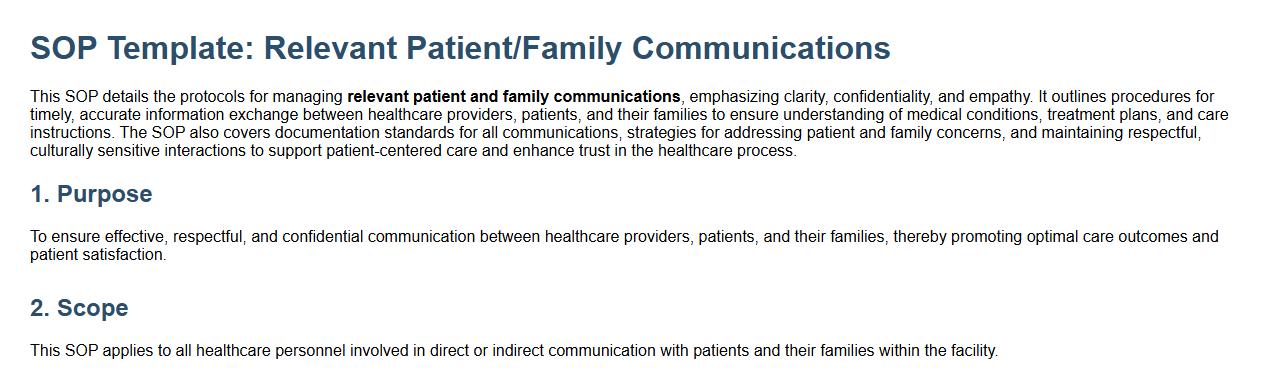
This SOP details the protocols for managing relevant patient and family communications, emphasizing clarity, confidentiality, and empathy. It outlines procedures for timely, accurate information exchange between healthcare providers, patients, and their families to ensure understanding of medical conditions, treatment plans, and care instructions. The SOP also covers documentation standards for all communications, strategies for addressing patient and family concerns, and maintaining respectful, culturally sensitive interactions to support patient-centered care and enhance trust in the healthcare process.
Equipment checklist — IV lines, drains, and monitoring devices status.
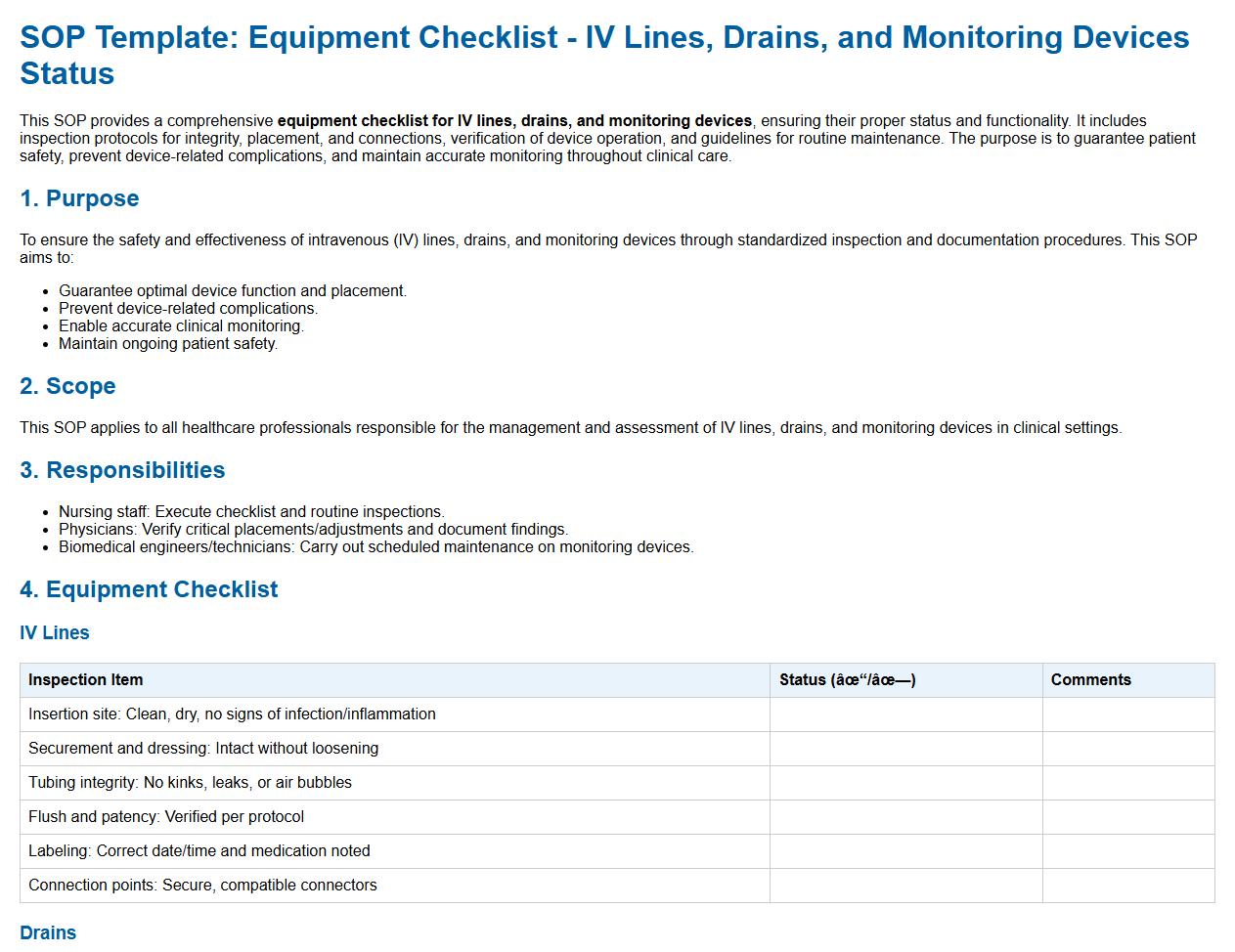
This SOP provides a comprehensive equipment checklist for IV lines, drains, and monitoring devices, ensuring their proper status and functionality. It includes inspection protocols for integrity, placement, and connections, verification of device operation, and guidelines for routine maintenance. The purpose is to guarantee patient safety, prevent device-related complications, and maintain accurate monitoring throughout clinical care.
Critical incidents or adverse event reporting and escalation status.
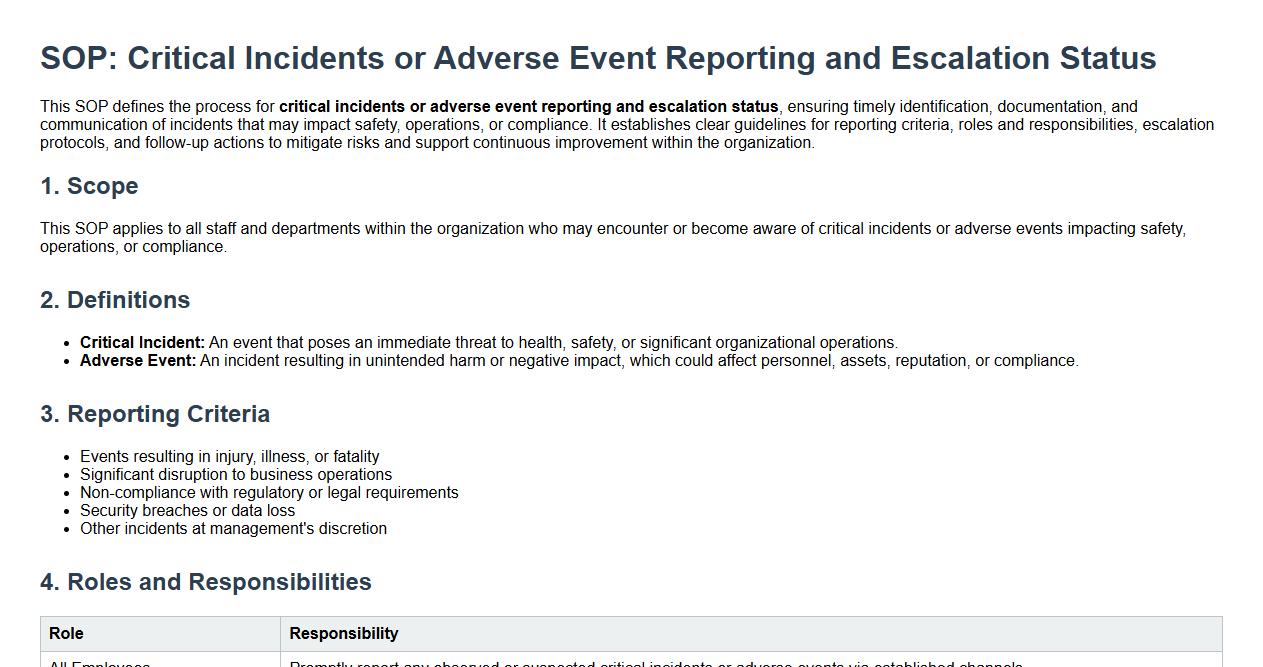
This SOP defines the process for critical incidents or adverse event reporting and escalation status, ensuring timely identification, documentation, and communication of incidents that may impact safety, operations, or compliance. It establishes clear guidelines for reporting criteria, roles and responsibilities, escalation protocols, and follow-up actions to mitigate risks and support continuous improvement within the organization.
Essential Elements in Nurse Shift Handover According to SOP
The essential elements during each nurse shift handover include the patient's current condition, ongoing treatment plans, and upcoming care needs. Accurate updates on medication administration, vital signs, and any recent changes must be communicated clearly. This ensures continuity of care and maintains patient safety throughout the shift transition.
Proper Communication Method and Environment for Handover
The SOP specifies that handovers should be conducted in a quiet, private environment to minimize distractions. Communication must be clear, concise, and structured, often utilizing standardized tools like SBAR (Situation, Background, Assessment, Recommendation). This approach promotes effective information transfer and reduces the risk of errors.
Required Documentation Process During and After Shift Handover
The SOP mandates that all handover details be documented accurately in the patient's medical records during and immediately after the shift transition. This includes updates on care plans, medication schedules, and any incidents reported during the previous shift. Proper documentation ensures accountability and provides a reliable reference for future care.
Addressing High-Risk Patients or Critical Incidents
High-risk patients and critical incidents must be highlighted explicitly during the handover process. The SOP requires detailed communication about the patient's risk factors, recent observations, and any urgent interventions needed. This focused attention ensures prompt response and continuous monitoring throughout the next shift.
Actions for Incomplete or Inaccurate Handover Information
If the handover information is found to be incomplete or inaccurate, the SOP instructs immediate clarification and correction. Nurses must verify details with the previous shift or appropriate healthcare team members before proceeding. This protocol helps prevent errors and maintains the integrity of patient care.