

A SOP Template for Handling Patient Complaints provides a clear and standardized process to effectively address and resolve concerns raised by patients. It ensures consistent documentation, timely responses, and follow-up actions to improve patient satisfaction and healthcare quality. Implementing this template helps healthcare facilities maintain compliance with regulatory requirements while fostering trust and transparency.
Intake and acknowledgment of patient complaints.
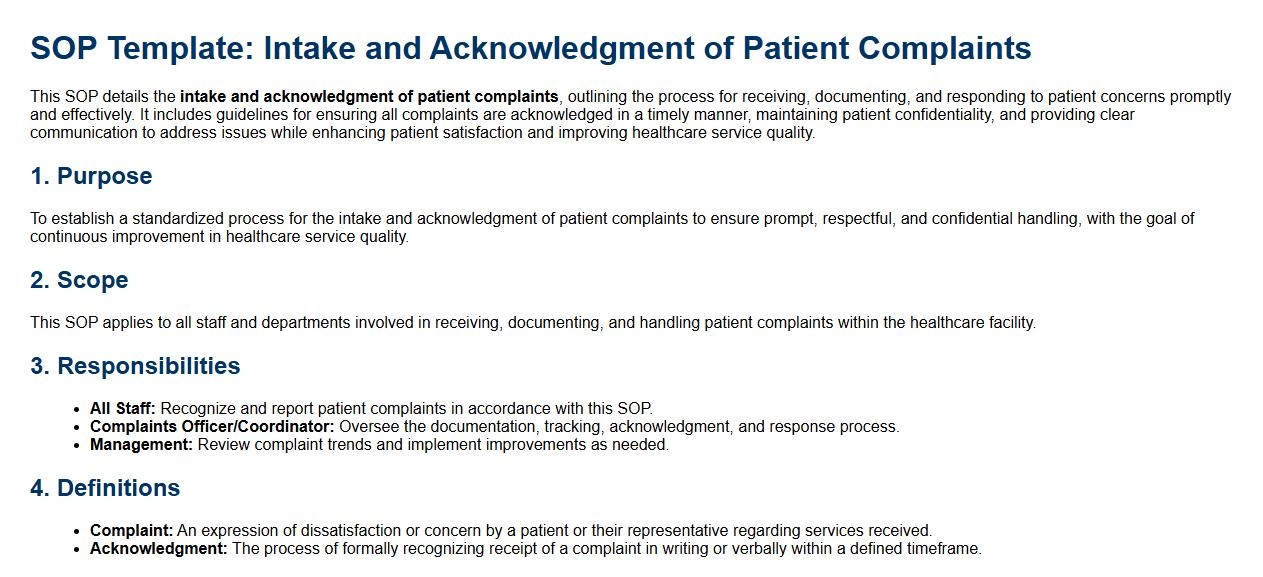
This SOP details the intake and acknowledgment of patient complaints, outlining the process for receiving, documenting, and responding to patient concerns promptly and effectively. It includes guidelines for ensuring all complaints are acknowledged in a timely manner, maintaining patient confidentiality, and providing clear communication to address issues while enhancing patient satisfaction and improving healthcare service quality.
Initial documentation and logging of complaint details.
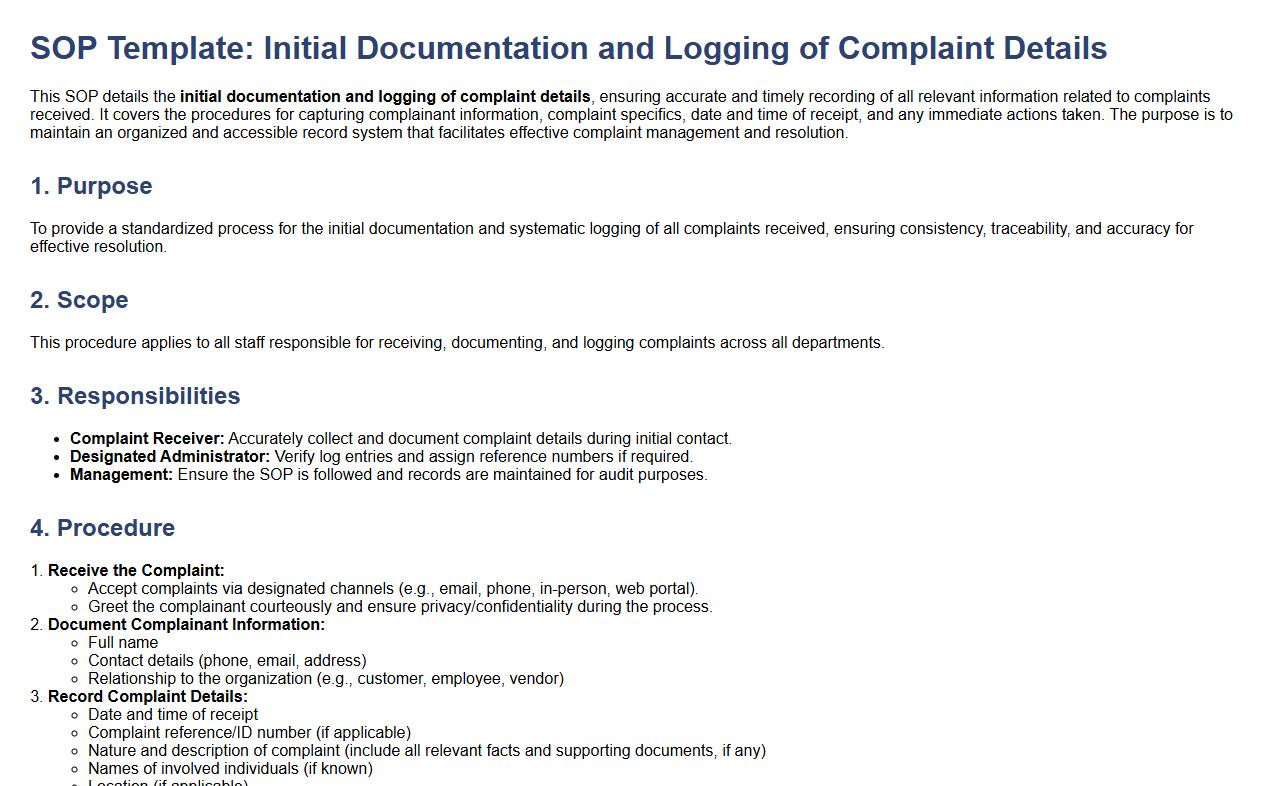
This SOP details the initial documentation and logging of complaint details, ensuring accurate and timely recording of all relevant information related to complaints received. It covers the procedures for capturing complainant information, complaint specifics, date and time of receipt, and any immediate actions taken. The purpose is to maintain an organized and accessible record system that facilitates effective complaint management and resolution.
Assignment of complaint to responsible staff or department.
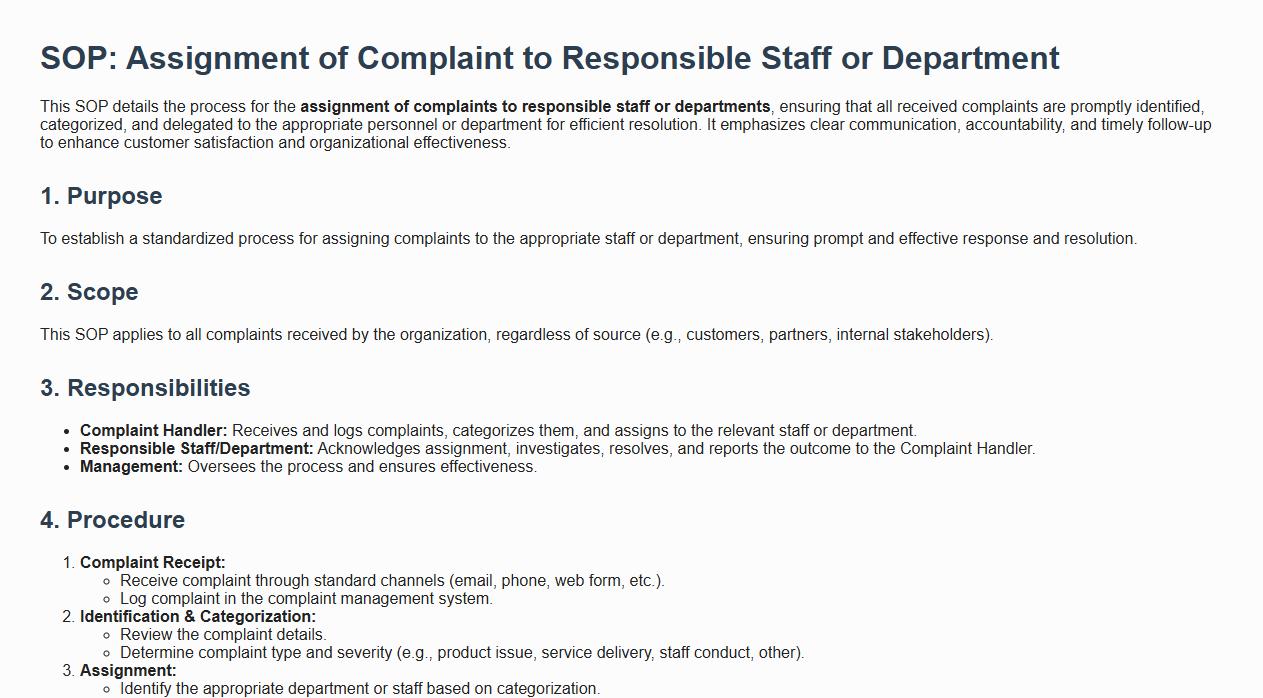
This SOP details the process for the assignment of complaints to responsible staff or departments, ensuring that all received complaints are promptly identified, categorized, and delegated to the appropriate personnel or department for efficient resolution. It emphasizes clear communication, accountability, and timely follow-up to enhance customer satisfaction and organizational effectiveness.
Timely communication and acknowledgment to the patient.
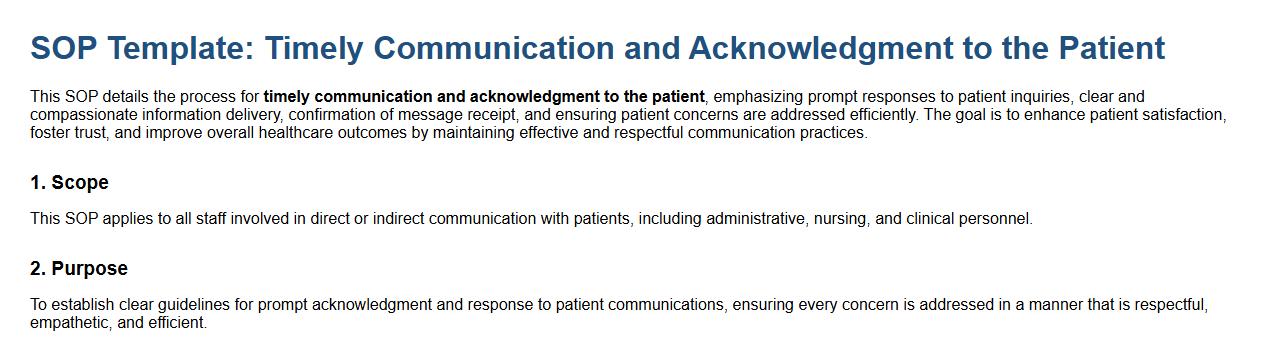
This SOP details the process for timely communication and acknowledgment to the patient, emphasizing prompt responses to patient inquiries, clear and compassionate information delivery, confirmation of message receipt, and ensuring patient concerns are addressed efficiently. The goal is to enhance patient satisfaction, foster trust, and improve overall healthcare outcomes by maintaining effective and respectful communication practices.
Investigation and fact-finding procedures.
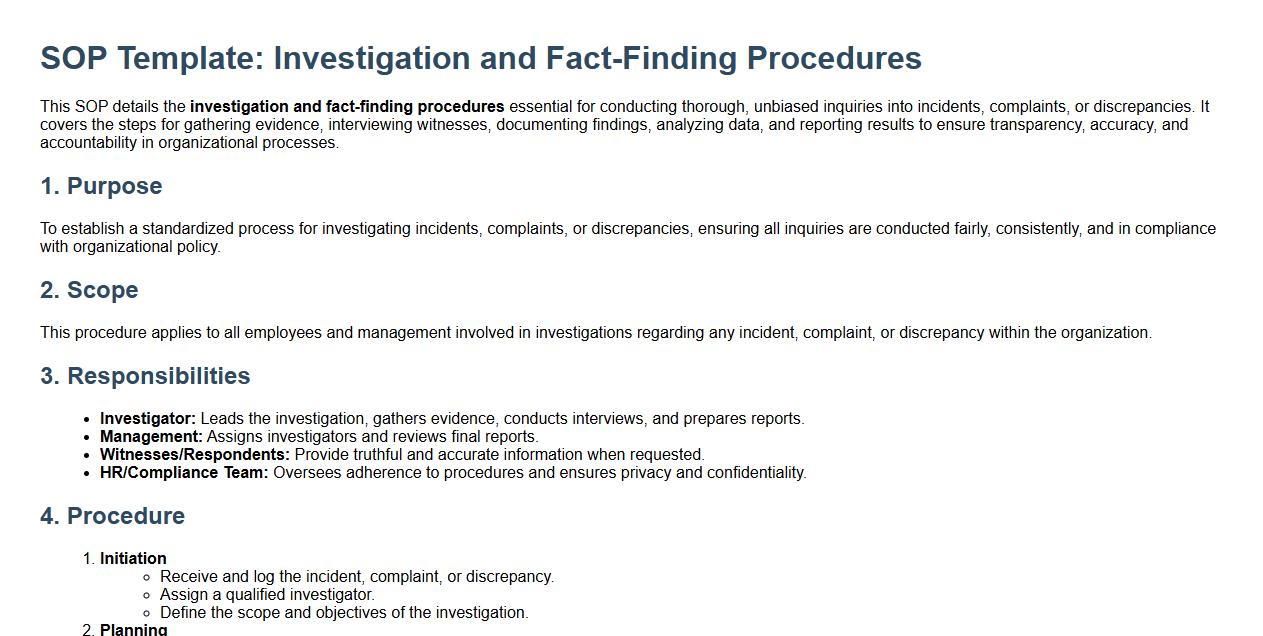
This SOP details the investigation and fact-finding procedures essential for conducting thorough, unbiased inquiries into incidents, complaints, or discrepancies. It covers the steps for gathering evidence, interviewing witnesses, documenting findings, analyzing data, and reporting results to ensure transparency, accuracy, and accountability in organizational processes.
Root cause analysis and evaluation.
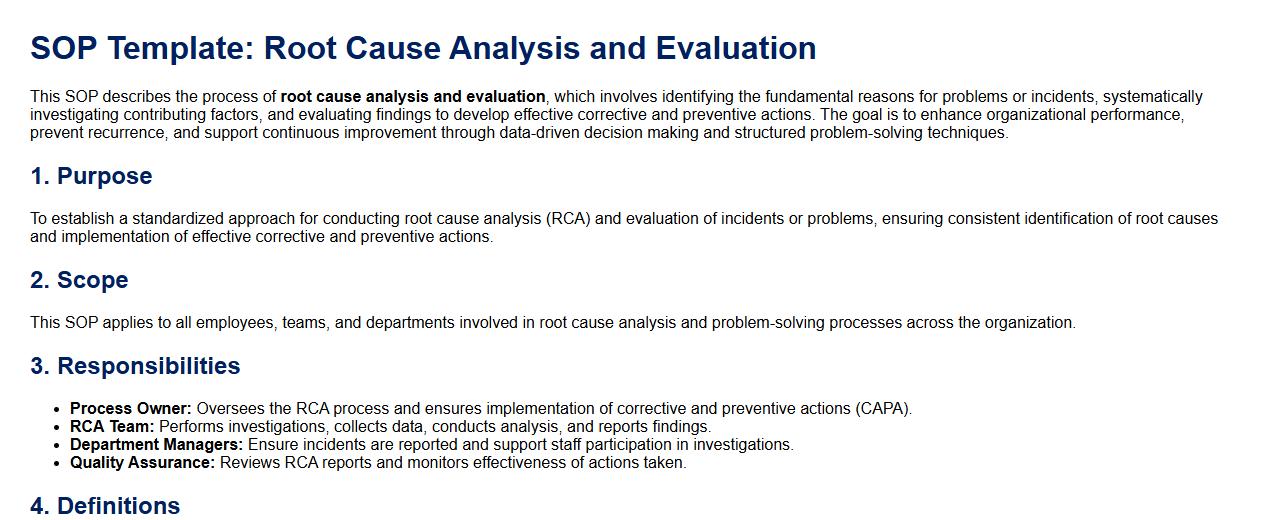
This SOP describes the process of root cause analysis and evaluation, which involves identifying the fundamental reasons for problems or incidents, systematically investigating contributing factors, and evaluating findings to develop effective corrective and preventive actions. The goal is to enhance organizational performance, prevent recurrence, and support continuous improvement through data-driven decision making and structured problem-solving techniques.
Development and documentation of action plan or resolution.
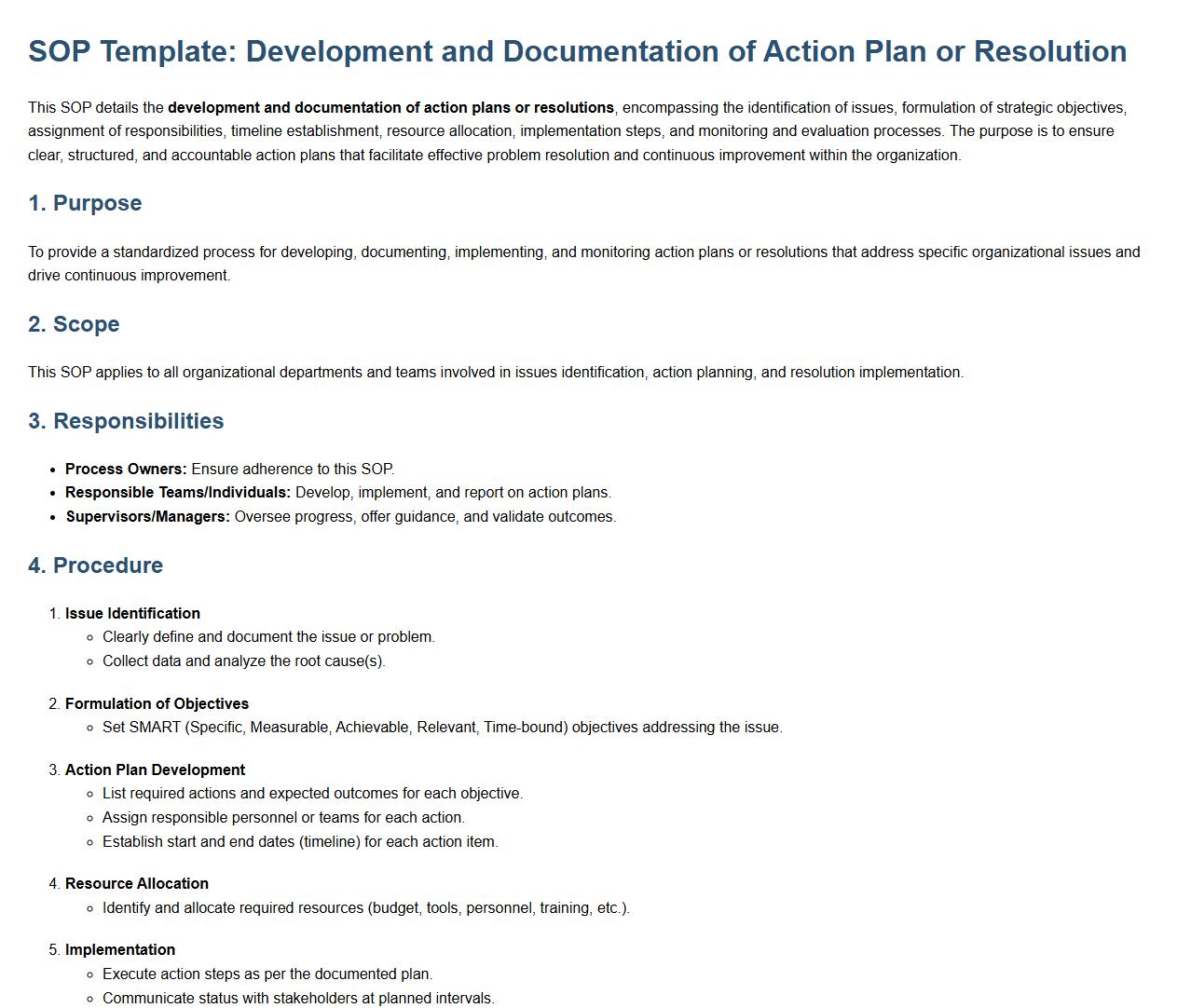
This SOP details the development and documentation of action plans or resolutions, encompassing the identification of issues, formulation of strategic objectives, assignment of responsibilities, timeline establishment, resource allocation, implementation steps, and monitoring and evaluation processes. The purpose is to ensure clear, structured, and accountable action plans that facilitate effective problem resolution and continuous improvement within the organization.
Corrective actions and implementation tracking.
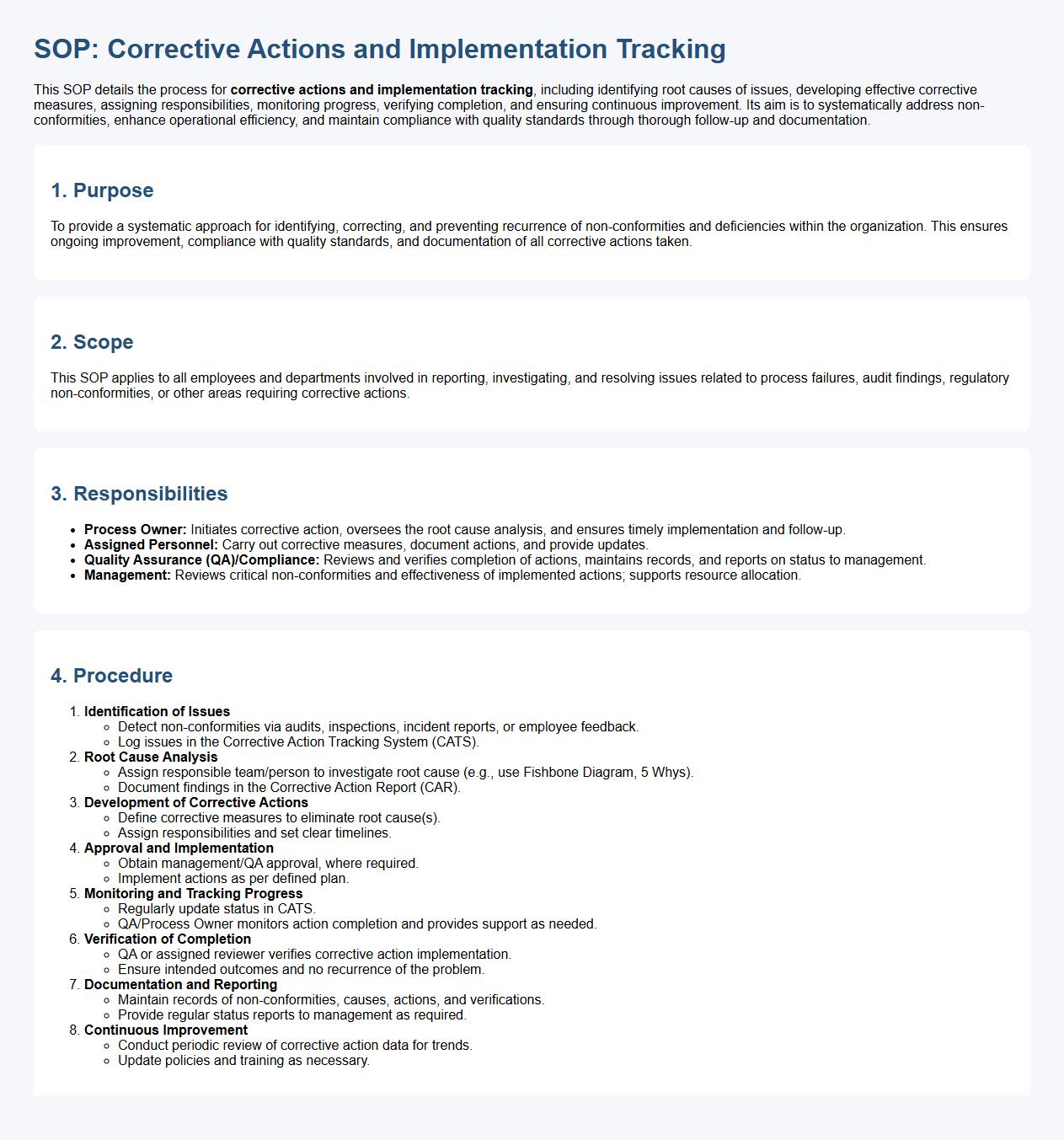
This SOP details the process for corrective actions and implementation tracking, including identifying root causes of issues, developing effective corrective measures, assigning responsibilities, monitoring progress, verifying completion, and ensuring continuous improvement. Its aim is to systematically address non-conformities, enhance operational efficiency, and maintain compliance with quality standards through thorough follow-up and documentation.
Notification to the patient of findings and resolution steps.
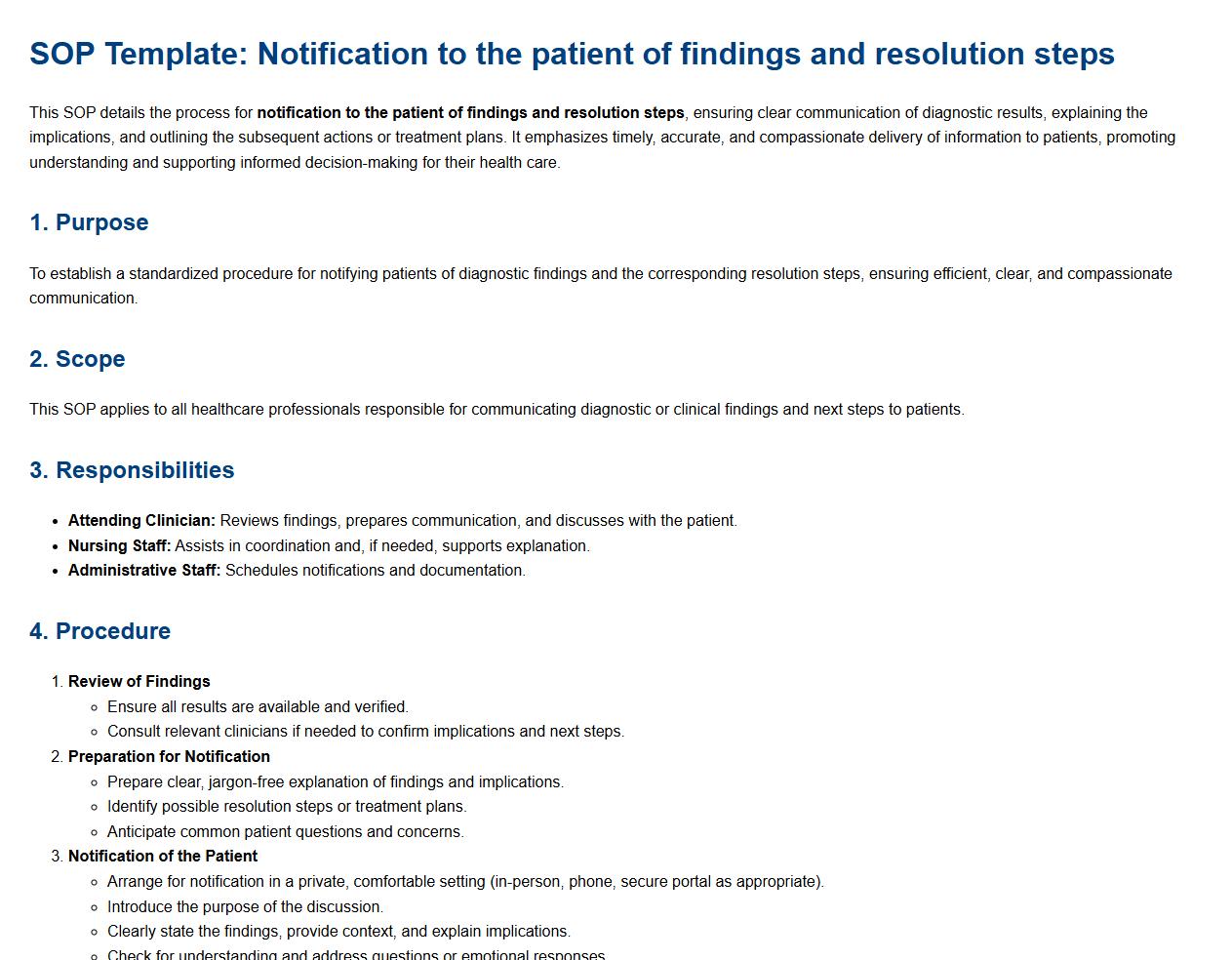
This SOP details the process for notification to the patient of findings and resolution steps, ensuring clear communication of diagnostic results, explaining the implications, and outlining the subsequent actions or treatment plans. It emphasizes timely, accurate, and compassionate delivery of information to patients, promoting understanding and supporting informed decision-making for their health care.
Complaint closure, feedback collection, and record archiving.
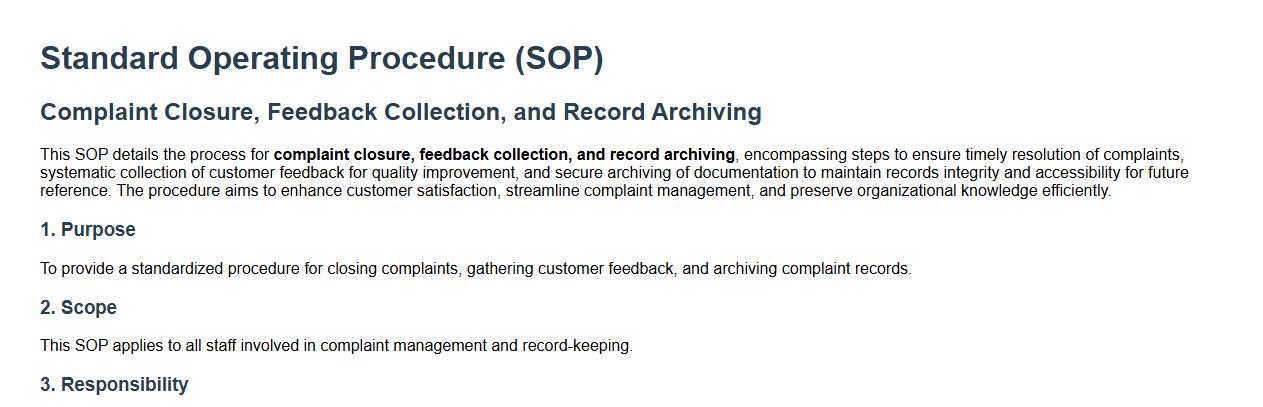
This SOP details the process for complaint closure, feedback collection, and record archiving, encompassing steps to ensure timely resolution of complaints, systematic collection of customer feedback for quality improvement, and secure archiving of documentation to maintain records integrity and accessibility for future reference. The procedure aims to enhance customer satisfaction, streamline complaint management, and preserve organizational knowledge efficiently.
What is the defined procedure for receiving and documenting patient complaints according to the SOP?
The SOP mandates that all patient complaints must be received courteously and documented immediately upon receipt. Complaints should be recorded using standardized forms to ensure consistency and accuracy. This documentation is critical for tracking and further investigation.
Who is responsible for investigating and resolving patient complaints as outlined in the SOP?
The complaint investigation and resolution responsibility lies with designated staff members, typically the patient relations officer or quality assurance team. These individuals must conduct a thorough and unbiased investigation to address the issues raised. They are also tasked with implementing corrective actions to prevent recurrence.
What are the required timelines for acknowledging and responding to patient complaints in the SOP?
The SOP specifies strict timelines to ensure timely communication with patients. Complaints must be acknowledged within 24 to 48 hours of receipt. A detailed response or resolution should be provided within a maximum of 7 to 10 business days.
How are confidentiality and patient privacy maintained during the complaint-handling process according to the SOP?
The SOP requires strict adherence to privacy regulations by restricting complaint details to authorized personnel only. All documentation is securely stored to protect patient identity and sensitive information. Confidentiality agreements must be signed by staff involved in complaint handling.
What follow-up actions and documentation are mandated after resolution of a patient complaint in the SOP?
After complaint resolution, the SOP requires follow-up communication with the patient to confirm satisfaction with the outcome. Detailed records of the investigation, resolution, and follow-up must be maintained. These documents serve as evidence for quality improvement and future reference.