

A SOP Template for Medical Staff Shift Handover ensures a standardized and clear communication process between outgoing and incoming healthcare professionals. It outlines essential details such as patient status, ongoing treatments, and critical incidents to maintain continuity of care. This structured approach minimizes errors and enhances patient safety during shift changes.
Patient information verification and identification procedures.
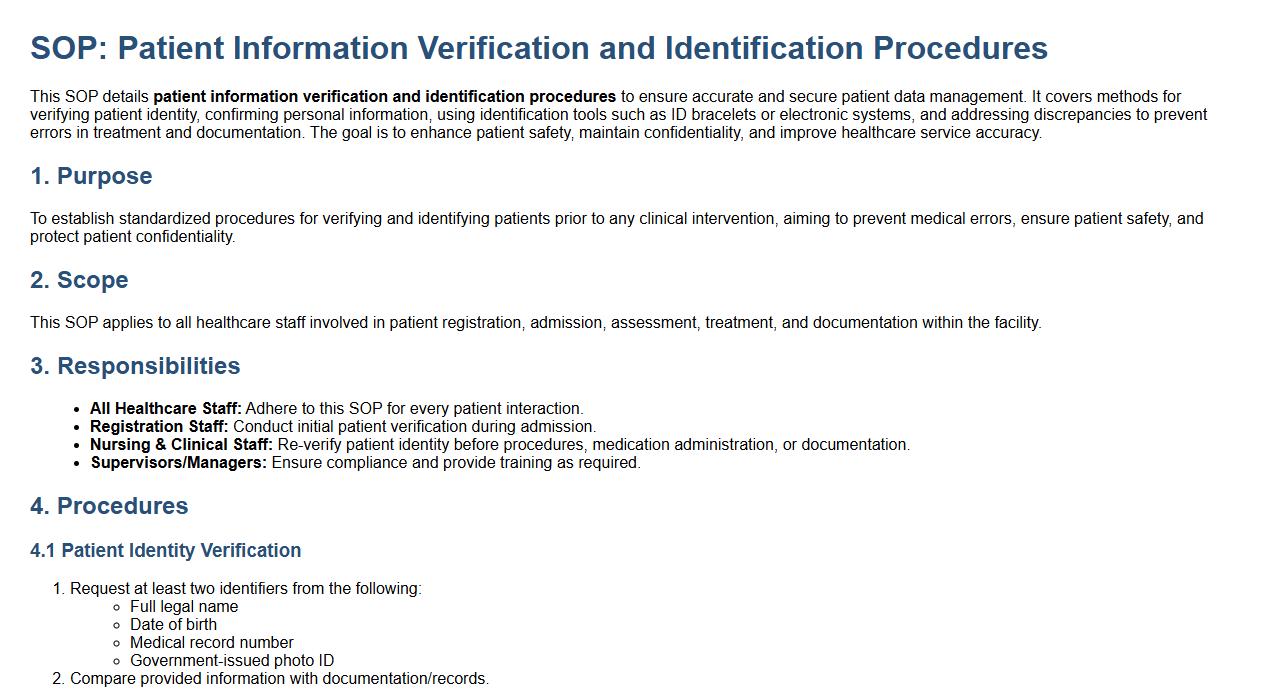
This SOP details patient information verification and identification procedures to ensure accurate and secure patient data management. It covers methods for verifying patient identity, confirming personal information, using identification tools such as ID bracelets or electronic systems, and addressing discrepancies to prevent errors in treatment and documentation. The goal is to enhance patient safety, maintain confidentiality, and improve healthcare service accuracy.
Review of current patient status and vital signs.
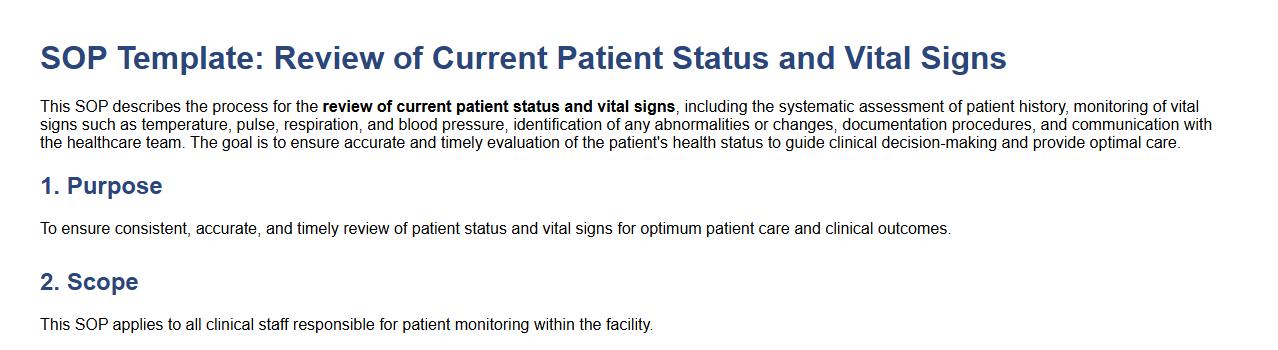
This SOP describes the process for the review of current patient status and vital signs, including the systematic assessment of patient history, monitoring of vital signs such as temperature, pulse, respiration, and blood pressure, identification of any abnormalities or changes, documentation procedures, and communication with the healthcare team. The goal is to ensure accurate and timely evaluation of the patient's health status to guide clinical decision-making and provide optimal care.
Medication administration updates and pending dosages.
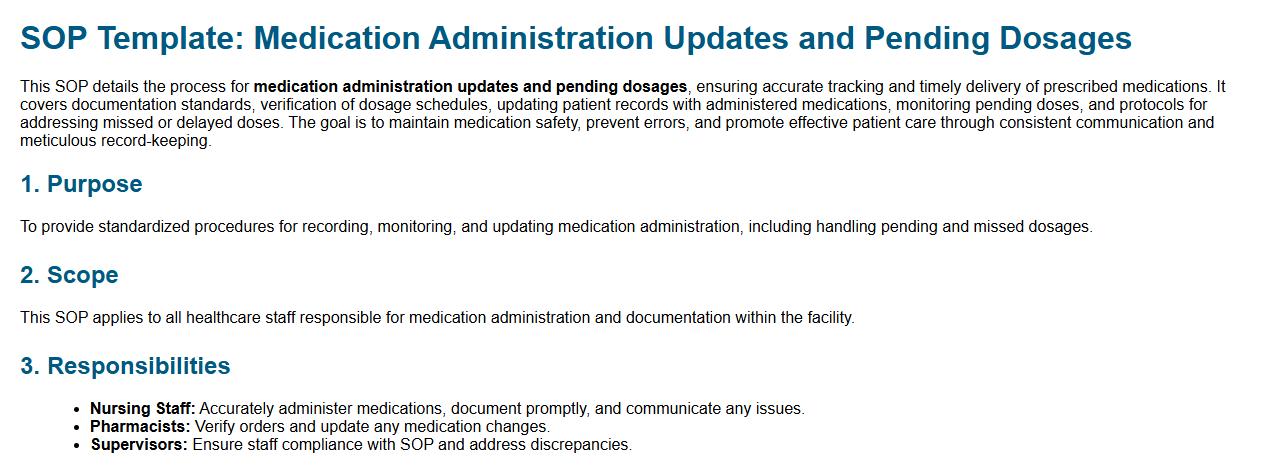
This SOP details the process for medication administration updates and pending dosages, ensuring accurate tracking and timely delivery of prescribed medications. It covers documentation standards, verification of dosage schedules, updating patient records with administered medications, monitoring pending doses, and protocols for addressing missed or delayed doses. The goal is to maintain medication safety, prevent errors, and promote effective patient care through consistent communication and meticulous record-keeping.
Summary of ongoing treatments and procedures.
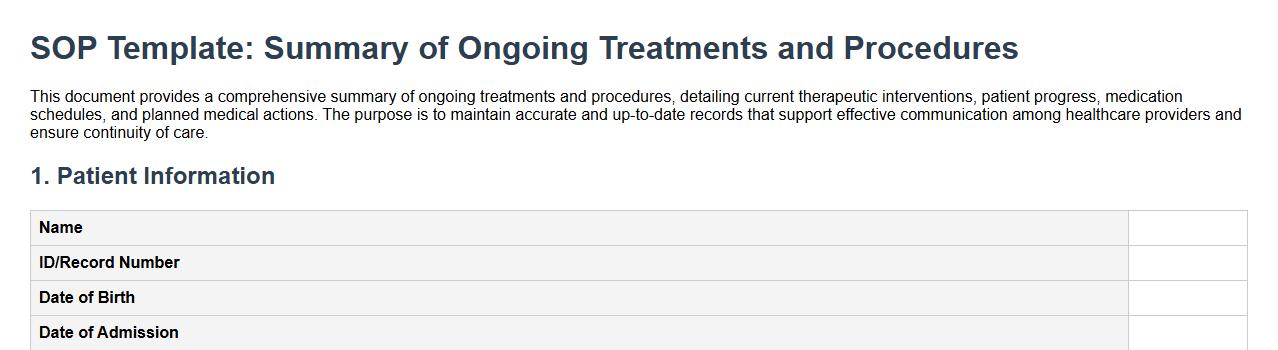
This document provides a comprehensive summary of ongoing treatments and procedures, detailing current therapeutic interventions, patient progress, medication schedules, and planned medical actions. The purpose is to maintain accurate and up-to-date records that support effective communication among healthcare providers and ensure continuity of care.
Documentation of recent test results and clinical findings.
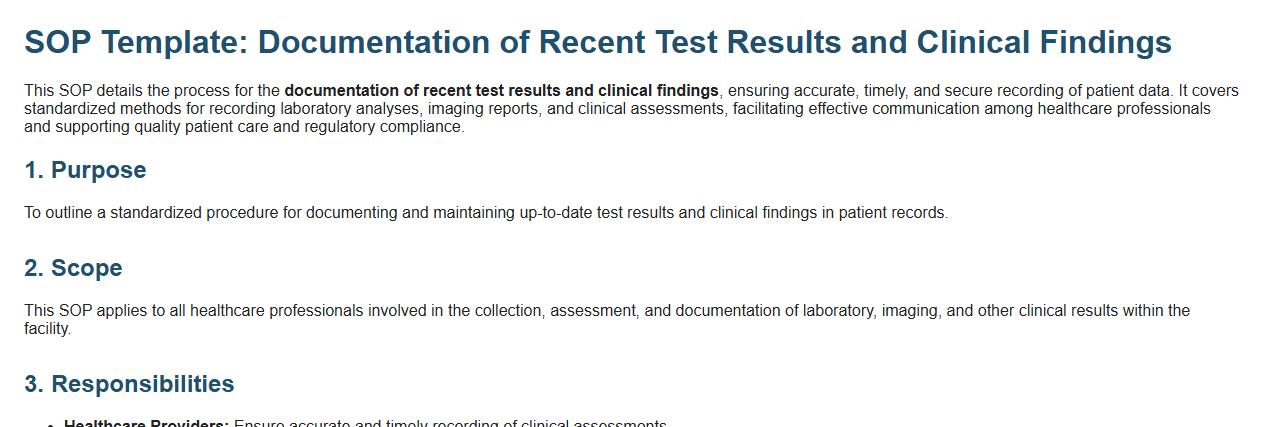
This SOP details the process for the documentation of recent test results and clinical findings, ensuring accurate, timely, and secure recording of patient data. It covers standardized methods for recording laboratory analyses, imaging reports, and clinical assessments, facilitating effective communication among healthcare professionals and supporting quality patient care and regulatory compliance.
Handoff of outstanding tasks and upcoming interventions.
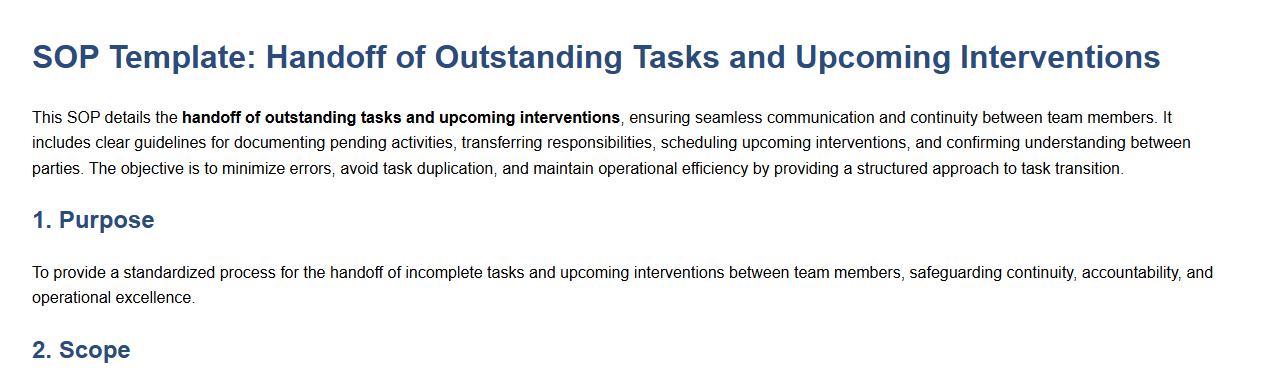
This SOP details the handoff of outstanding tasks and upcoming interventions, ensuring seamless communication and continuity between team members. It includes clear guidelines for documenting pending activities, transferring responsibilities, scheduling upcoming interventions, and confirming understanding between parties. The objective is to minimize errors, avoid task duplication, and maintain operational efficiency by providing a structured approach to task transition.
Communication of any patient safety or infection control issues.
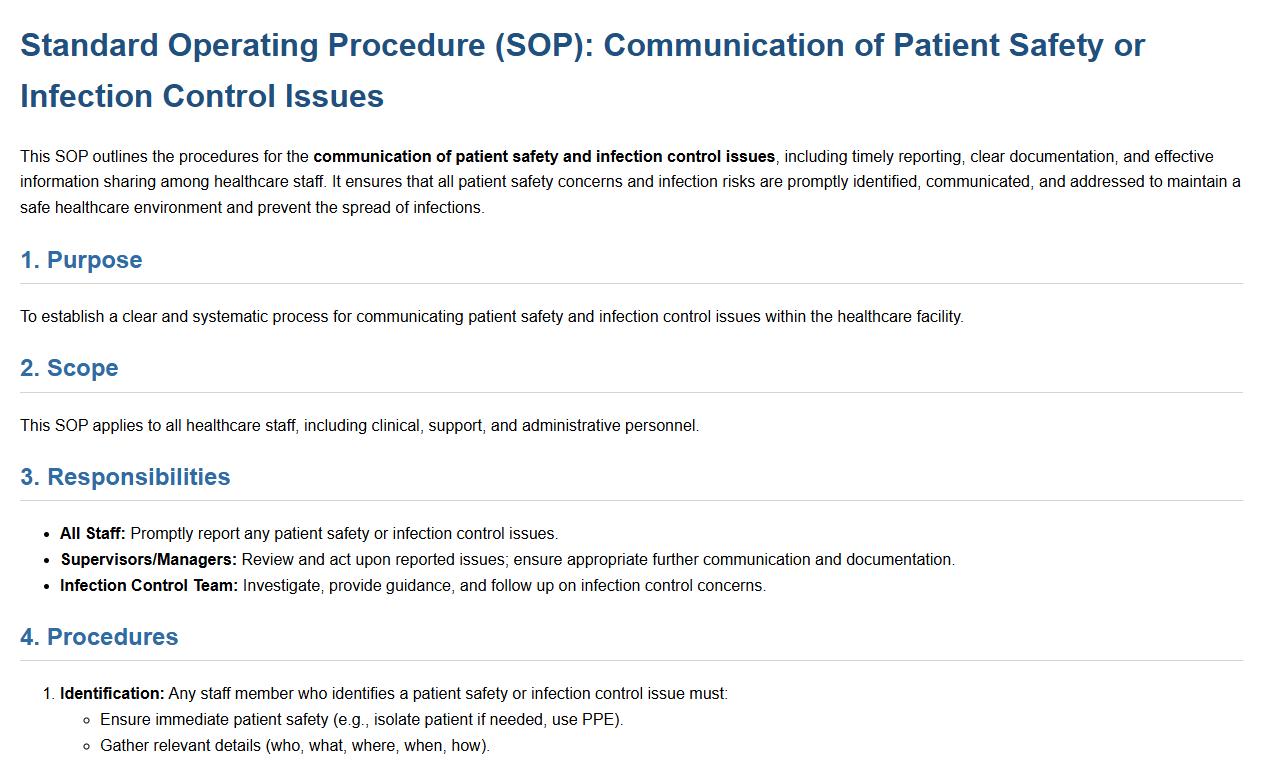
This SOP outlines the procedures for the communication of patient safety and infection control issues, including timely reporting, clear documentation, and effective information sharing among healthcare staff. It ensures that all patient safety concerns and infection risks are promptly identified, communicated, and addressed to maintain a safe healthcare environment and prevent the spread of infections.
Transfer of important patient family or visitor information.
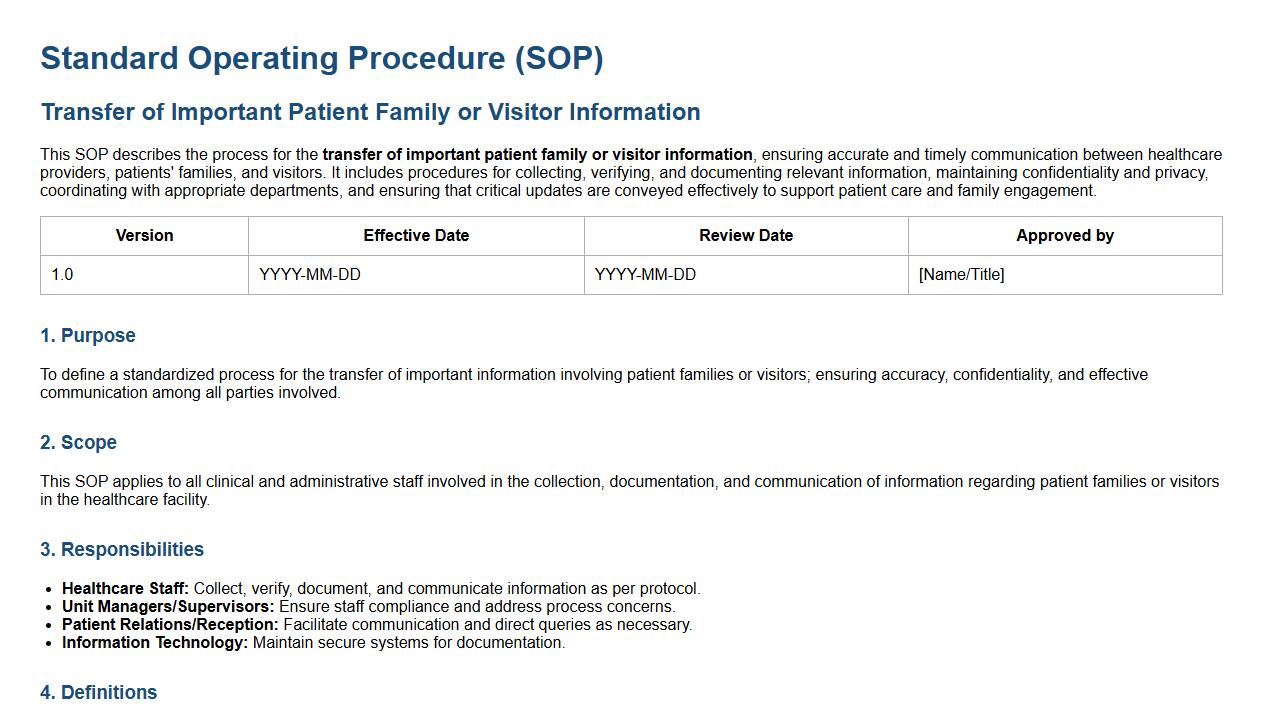
This SOP describes the process for the transfer of important patient family or visitor information, ensuring accurate and timely communication between healthcare providers, patients' families, and visitors. It includes procedures for collecting, verifying, and documenting relevant information, maintaining confidentiality and privacy, coordinating with appropriate departments, and ensuring that critical updates are conveyed effectively to support patient care and family engagement.
Clarification of special care instructions and precaution alerts.
This SOP details the process for clarification of special care instructions and precaution alerts, ensuring accurate communication and understanding of critical care requirements. It covers identification of special care needs, documentation protocols, staff training and awareness, verification procedures, and timely updates to precaution alerts. The objective is to maintain the highest standards of safety and care by preventing misunderstandings and errors in handling sensitive or high-risk situations.
Confirmation and signing of handover completion in official records.
This SOP details the process for confirmation and signing of handover completion in official records, ensuring accurate documentation and accountability. It includes steps for verifying handover details, obtaining necessary approvals and signatures, updating official records promptly, and maintaining transparent communication between involved parties. This procedure guarantees smooth transitions, reduces miscommunication, and preserves integrity in record-keeping for organizational operations.
What is the primary objective of the SOP for Medical Staff Shift Handover?
The primary objective of the SOP for Medical Staff Shift Handover is to ensure seamless communication between outgoing and incoming staff. This process aims to maintain patient safety and continuity of care throughout shift changes. It establishes a standardized protocol to minimize errors and information loss.
Which key information must be communicated during a shift handover according to the SOP?
The SOP mandates that critical patient data, current treatment plans, and any significant changes during the shift must be communicated clearly. Additionally, pending investigations and potential risks should be highlighted. This ensures all important details are effectively transferred for ongoing patient management.
Who are the authorized personnel responsible for conducting and receiving shift handovers as outlined in the SOP?
Authorized personnel include qualified medical staff assigned to the specific department or unit on duty. Typically, the outgoing nurse or physician conducts the handover, while the incoming staff are responsible for receiving and acknowledging the information. The SOP clearly defines these roles to maintain accountability.
What documentation procedures are mandated in the SOP during each shift handover?
The SOP requires that all handover information be documented in the official patient care records or electronic health systems. Documentation must include time, personnel involved, and detailed information exchanges. This creates a verified record that supports transparency and traceability of care actions.
What are the required steps for verifying patient safety and continuity of care during handover, as per the SOP?
The SOP outlines verification steps such as cross-checking patient identifiers, confirming treatment plans, and reviewing alerts or warnings. Staff must also confirm understanding through verbal acknowledgment or read-back techniques. These measures safeguard patient safety and ensure ongoing, consistent care delivery.