

A SOP template for healthcare staff training provides a standardized framework to ensure consistent and effective employee education on clinical procedures and safety protocols. It outlines clear objectives, training schedules, roles, and assessment methods to maintain high standards of patient care. Using this template helps healthcare organizations comply with regulatory requirements and improve overall staff competency.
Training needs assessment and analysis.
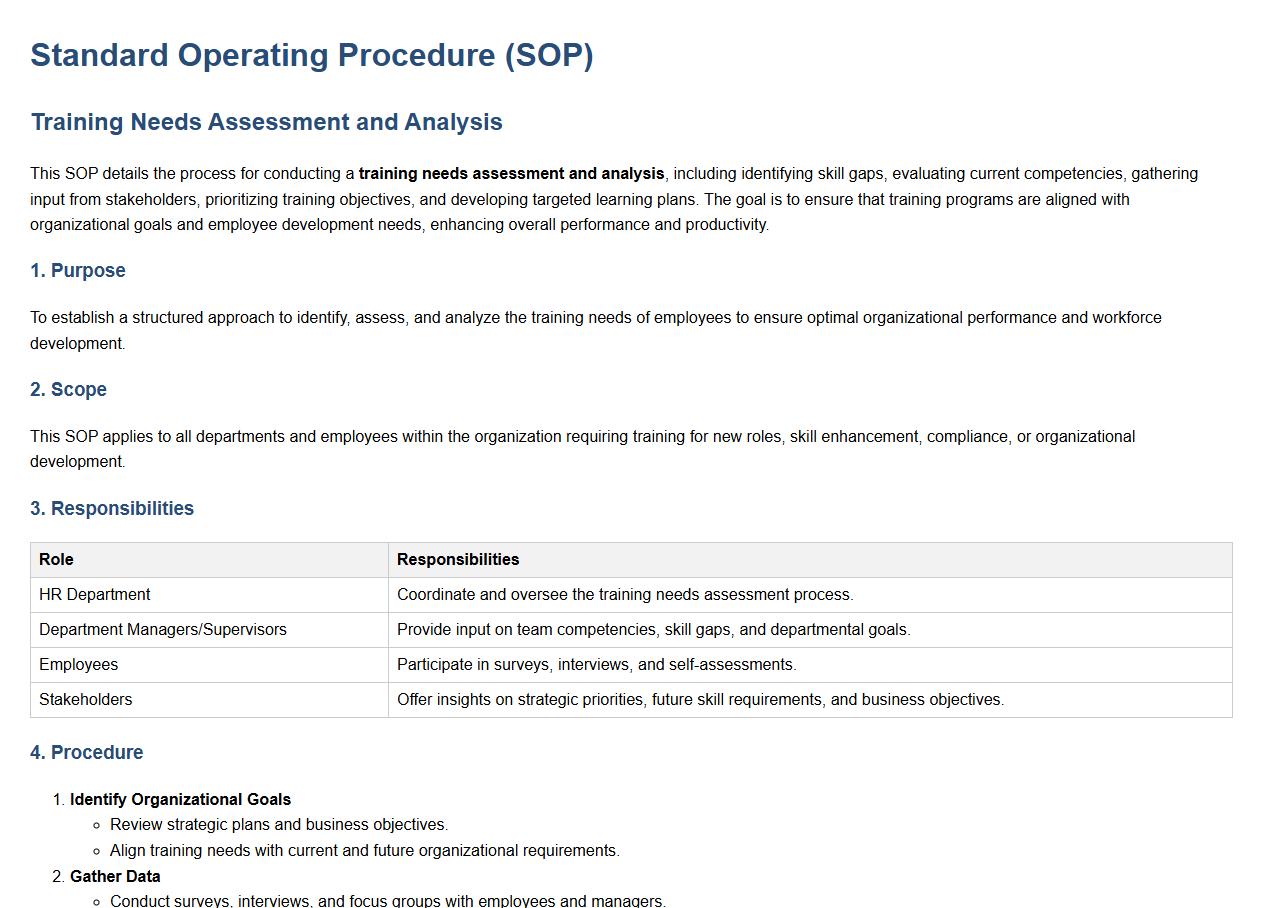
This SOP details the process for conducting a training needs assessment and analysis, including identifying skill gaps, evaluating current competencies, gathering input from stakeholders, prioritizing training objectives, and developing targeted learning plans. The goal is to ensure that training programs are aligned with organizational goals and employee development needs, enhancing overall performance and productivity.
Development of training curriculum and materials.
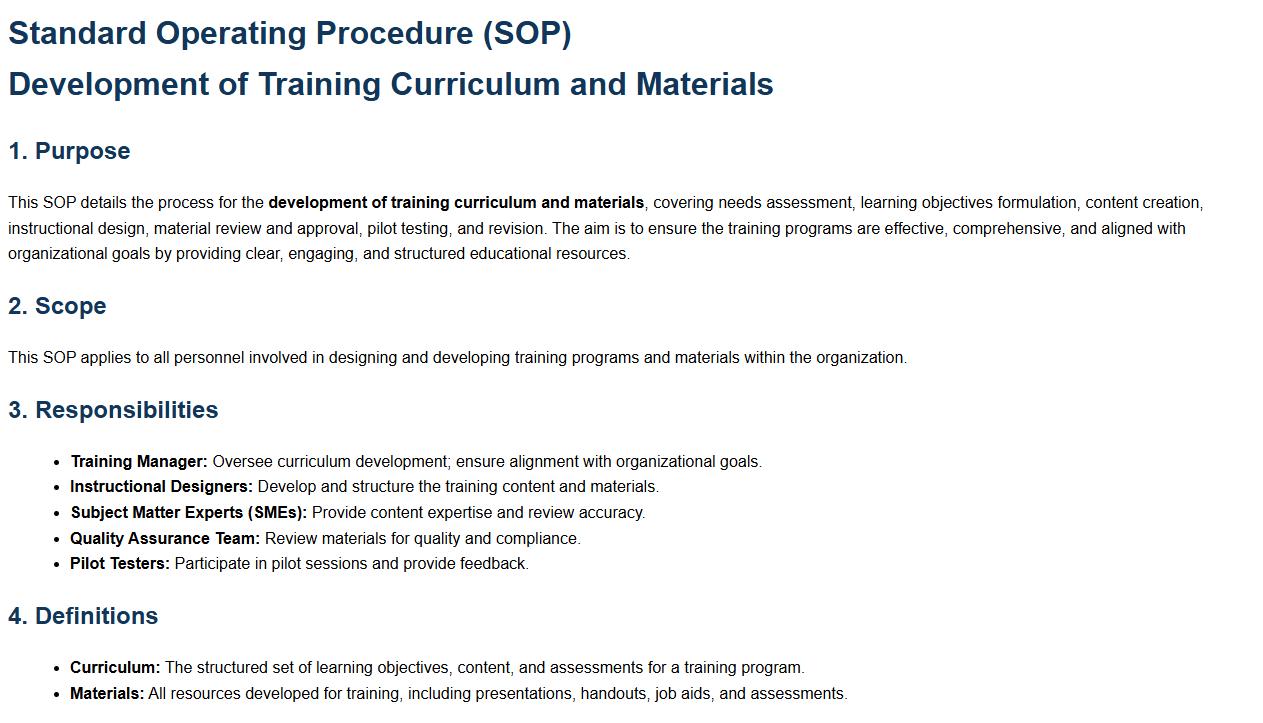
This SOP details the process for the development of training curriculum and materials, covering needs assessment, learning objectives formulation, content creation, instructional design, material review and approval, pilot testing, and revision. The aim is to ensure the training programs are effective, comprehensive, and aligned with organizational goals by providing clear, engaging, and structured educational resources.
Staff orientation and induction procedures.
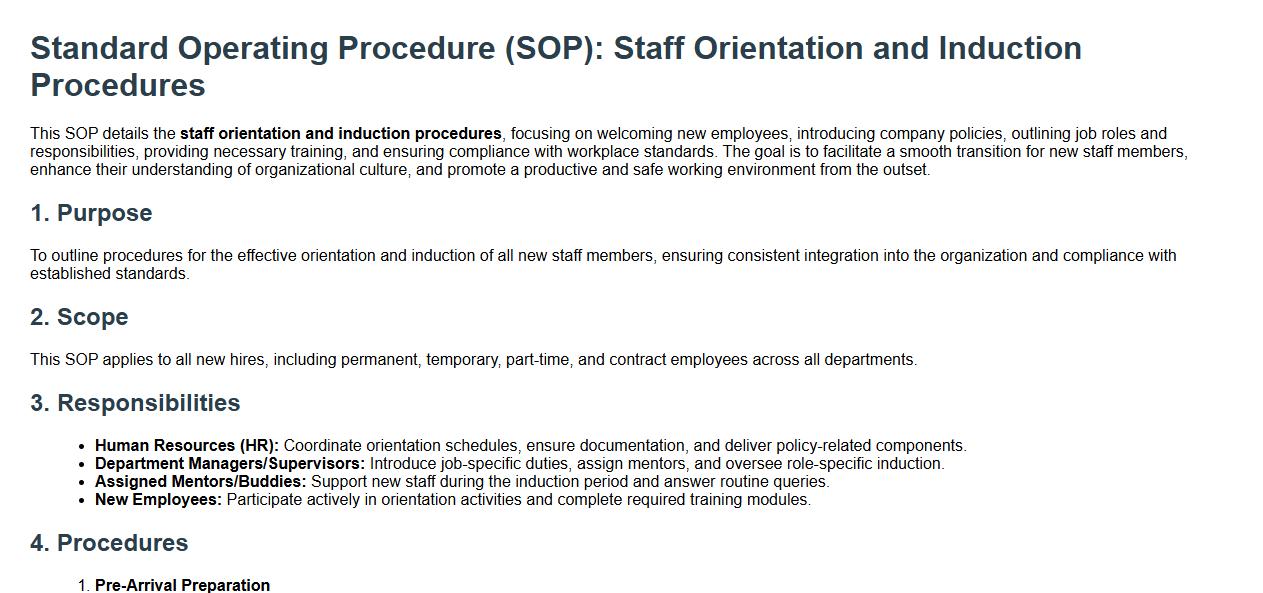
This SOP details the staff orientation and induction procedures, focusing on welcoming new employees, introducing company policies, outlining job roles and responsibilities, providing necessary training, and ensuring compliance with workplace standards. The goal is to facilitate a smooth transition for new staff members, enhance their understanding of organizational culture, and promote a productive and safe working environment from the outset.
Scheduling and notification of training sessions.
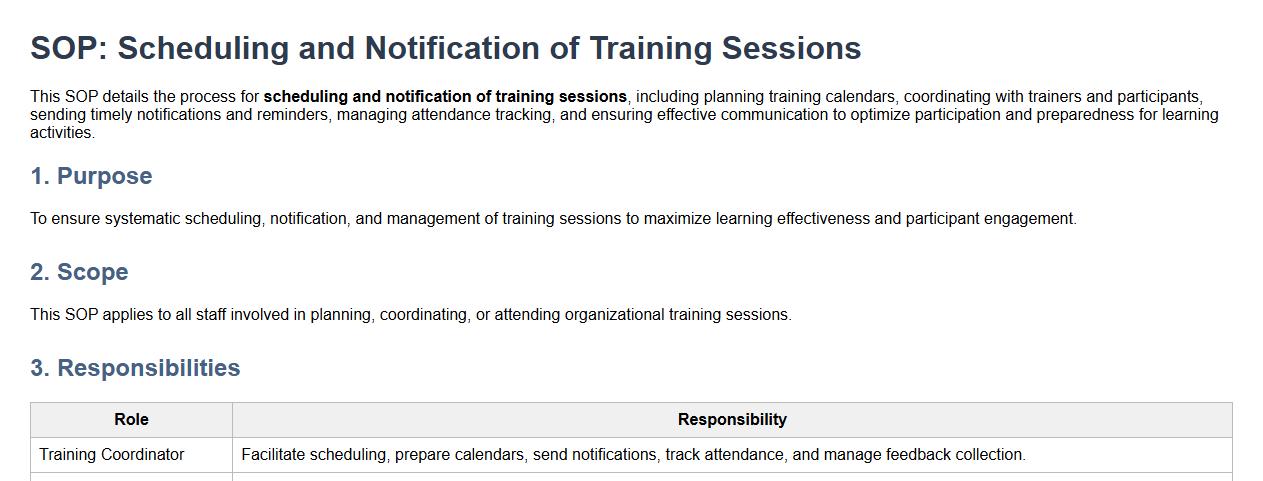
This SOP details the process for scheduling and notification of training sessions, including planning training calendars, coordinating with trainers and participants, sending timely notifications and reminders, managing attendance tracking, and ensuring effective communication to optimize participation and preparedness for learning activities.
Trainer roles and responsibilities.
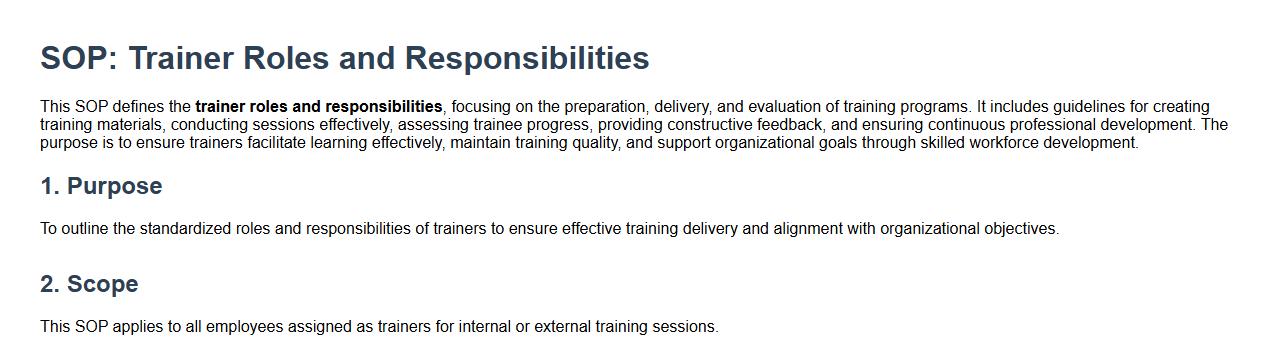
This SOP defines the trainer roles and responsibilities, focusing on the preparation, delivery, and evaluation of training programs. It includes guidelines for creating training materials, conducting sessions effectively, assessing trainee progress, providing constructive feedback, and ensuring continuous professional development. The purpose is to ensure trainers facilitate learning effectively, maintain training quality, and support organizational goals through skilled workforce development.
Training delivery methods and protocols.
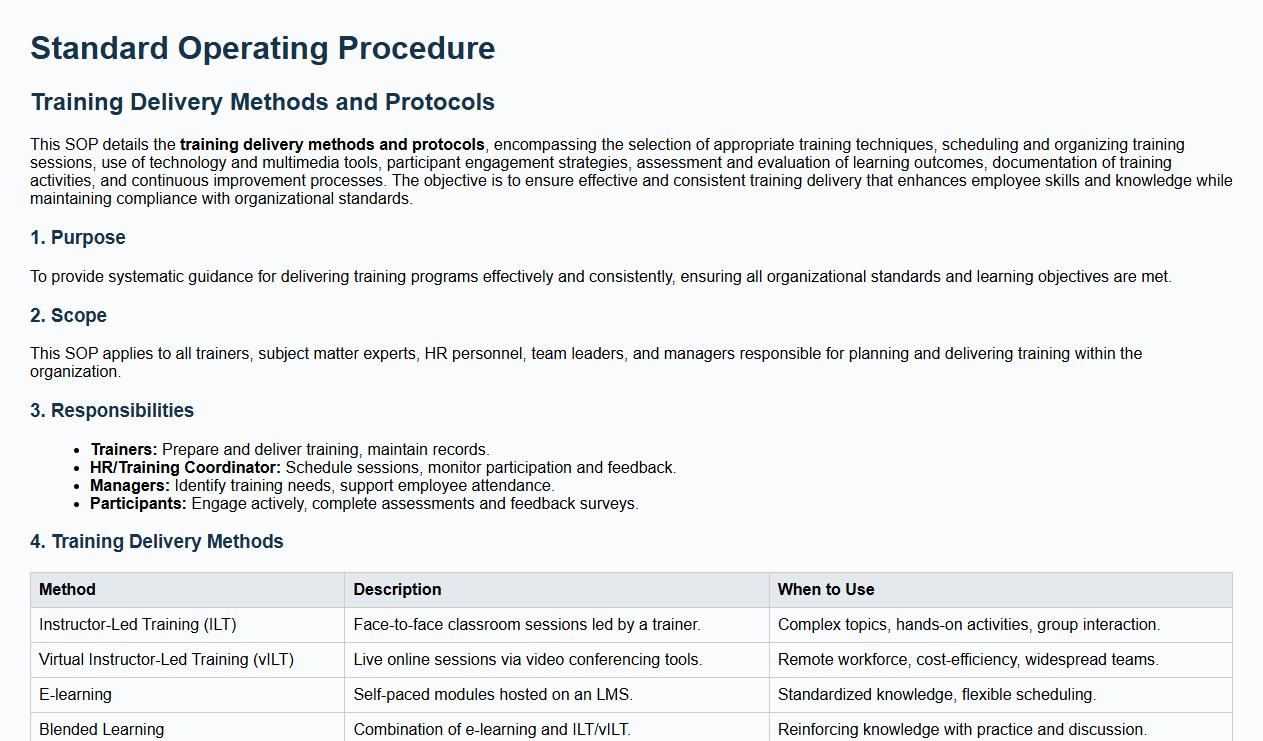
This SOP details the training delivery methods and protocols, encompassing the selection of appropriate training techniques, scheduling and organizing training sessions, use of technology and multimedia tools, participant engagement strategies, assessment and evaluation of learning outcomes, documentation of training activities, and continuous improvement processes. The objective is to ensure effective and consistent training delivery that enhances employee skills and knowledge while maintaining compliance with organizational standards.
Assessment and evaluation of staff competencies.
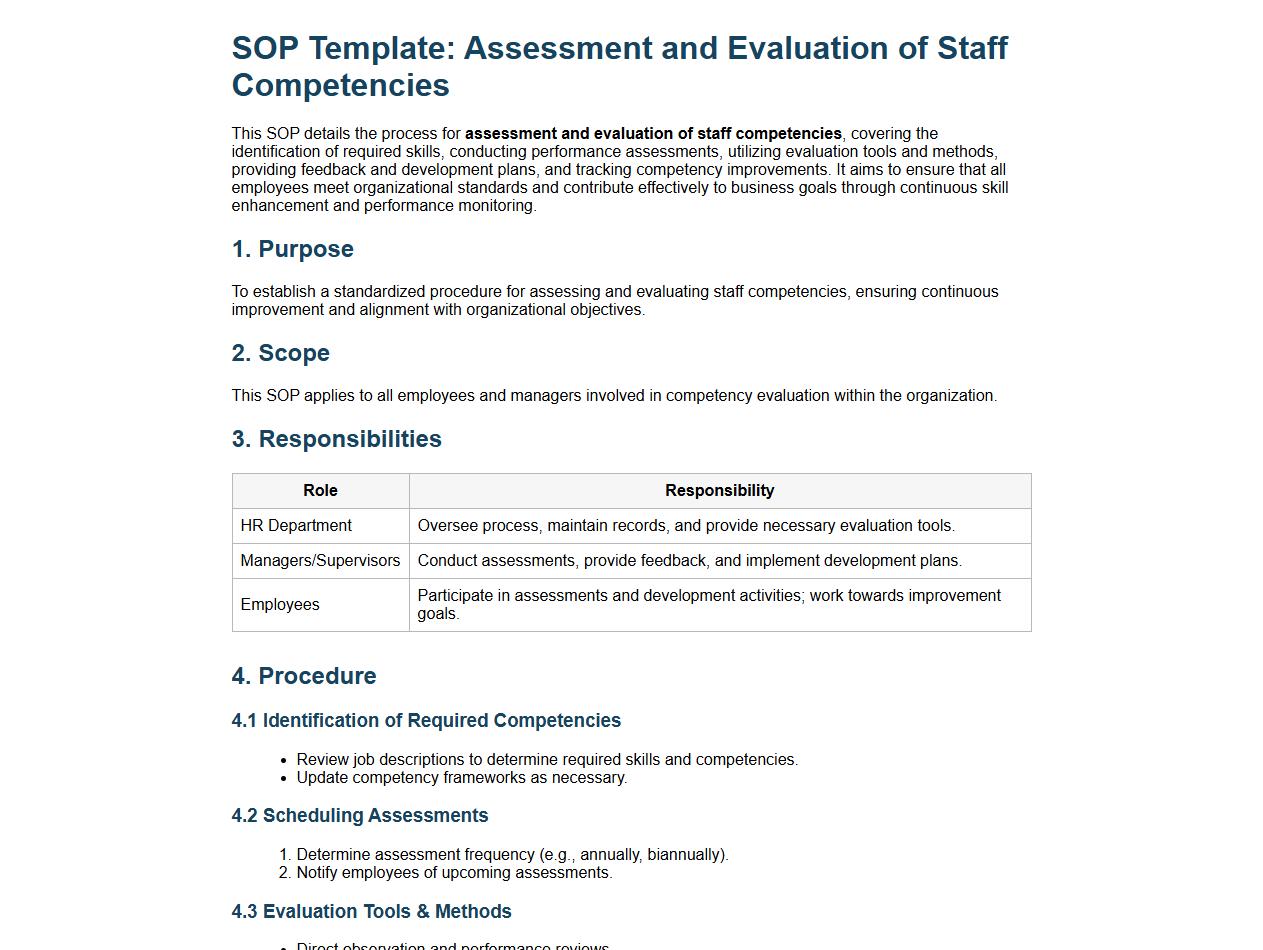
This SOP details the process for assessment and evaluation of staff competencies, covering the identification of required skills, conducting performance assessments, utilizing evaluation tools and methods, providing feedback and development plans, and tracking competency improvements. It aims to ensure that all employees meet organizational standards and contribute effectively to business goals through continuous skill enhancement and performance monitoring.
Documentation and record-keeping of training activities.
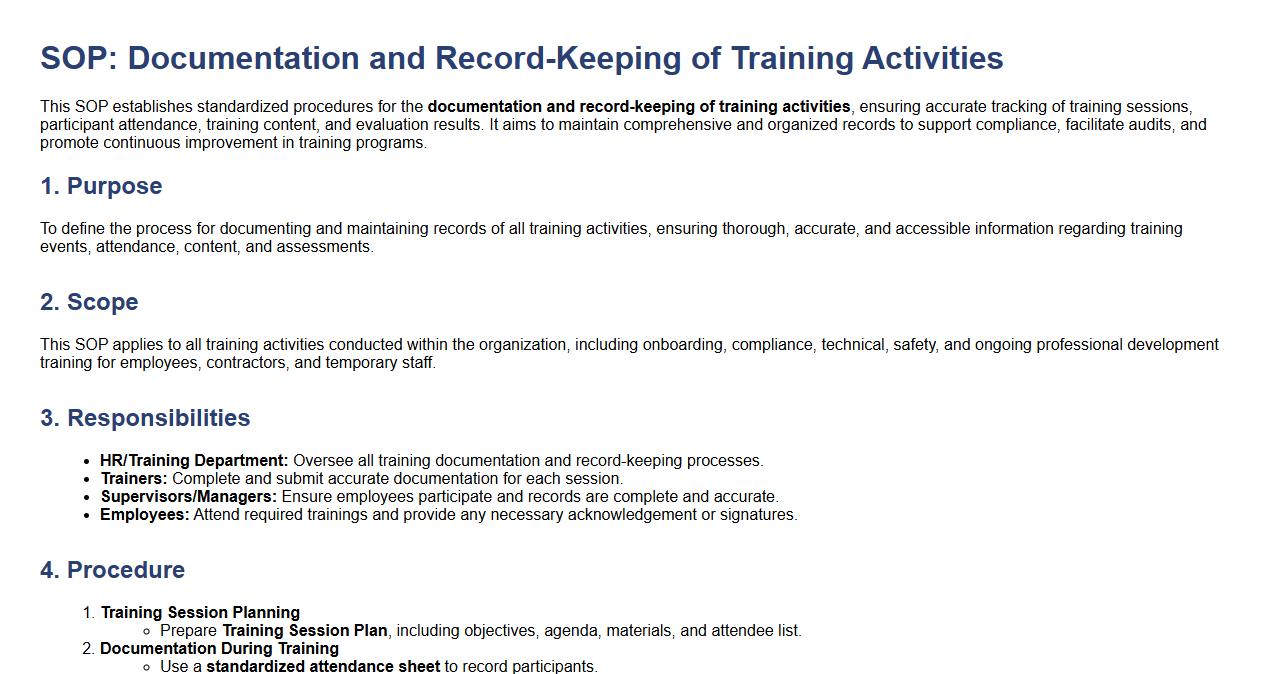
This SOP establishes standardized procedures for the documentation and record-keeping of training activities, ensuring accurate tracking of training sessions, participant attendance, training content, and evaluation results. It aims to maintain comprehensive and organized records to support compliance, facilitate audits, and promote continuous improvement in training programs.
Feedback collection and continuous improvement process.
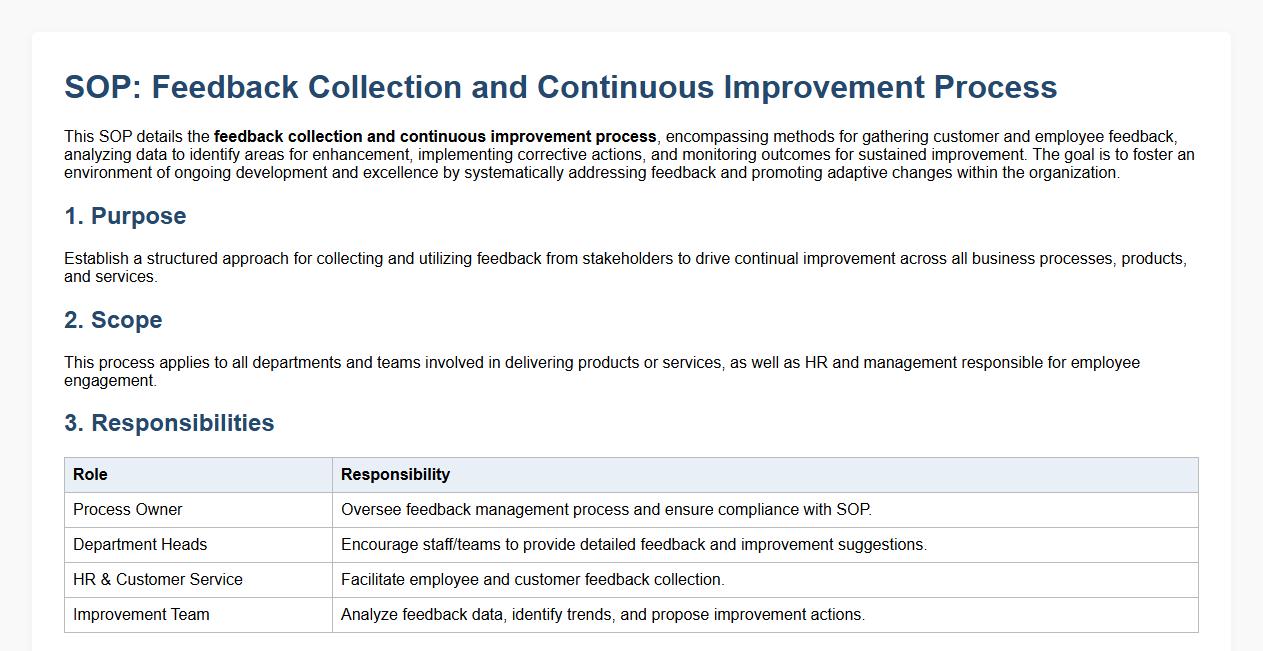
This SOP details the feedback collection and continuous improvement process, encompassing methods for gathering customer and employee feedback, analyzing data to identify areas for enhancement, implementing corrective actions, and monitoring outcomes for sustained improvement. The goal is to foster an environment of ongoing development and excellence by systematically addressing feedback and promoting adaptive changes within the organization.
Compliance with regulatory and accreditation requirements.
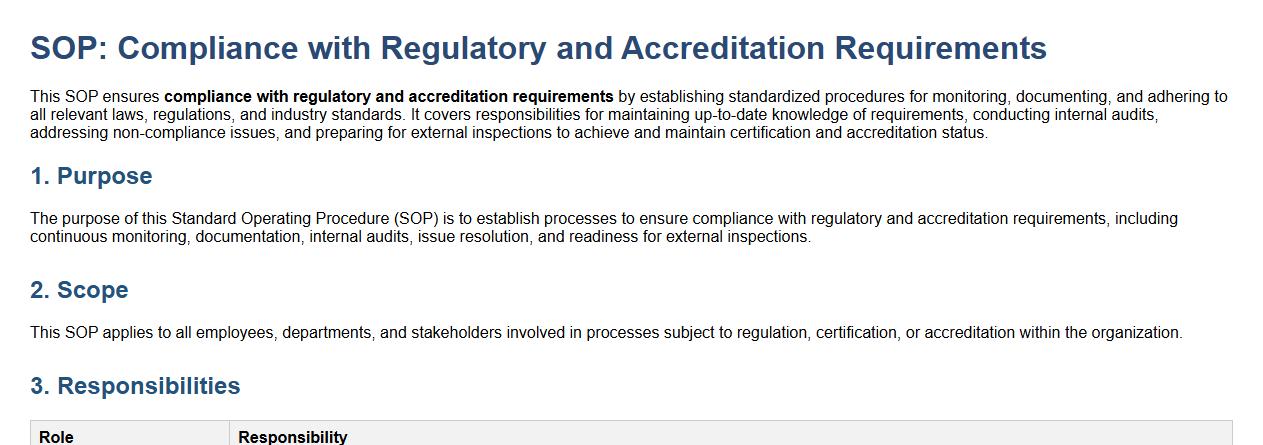
This SOP ensures compliance with regulatory and accreditation requirements by establishing standardized procedures for monitoring, documenting, and adhering to all relevant laws, regulations, and industry standards. It covers responsibilities for maintaining up-to-date knowledge of requirements, conducting internal audits, addressing non-compliance issues, and preparing for external inspections to achieve and maintain certification and accreditation status.
What key competencies must healthcare staff acquire according to the SOP for Training?
The SOP emphasizes that healthcare staff must acquire clinical skills relevant to their roles to ensure patient safety and high-quality care. Additionally, staff should develop strong communication abilities to effectively interact with patients and colleagues. The SOP also highlights the importance of compliance with healthcare regulations as a fundamental competency.
How does the SOP outline the procedures for documenting completed staff training sessions?
The SOP specifies that all completed training sessions must be logged in a centralized training database accessible to management. Documentation should include the date, content, and completion status of each training event. This ensures accountability and easy tracking for audits and future references.
Which evaluation methods are specified in the SOP to assess training effectiveness for healthcare personnel?
The SOP mandates the use of pre- and post-training assessments to measure knowledge gain and skill development. It also encourages feedback surveys from participants to evaluate training relevance and quality. Additionally, practical skill demonstrations are required to confirm competency application in clinical settings.
What frequency and refresher requirements are mandated in the SOP for staff training updates?
The SOP requires mandatory refresher training for all healthcare staff at least annually to maintain competency levels. It specifies that critical skills may need more frequent updates based on the latest clinical guidelines or regulatory changes. Regular updates ensure that staff stay current with evolving healthcare standards and practices.
How does the SOP define roles and responsibilities for trainers and trainees within the healthcare training process?
The SOP outlines that trainers are responsible for designing, delivering, and evaluating effective training programs tailored to staff needs. Trainees are expected to actively participate, apply learned skills, and provide feedback to improve training quality. Both parties share a commitment to fostering a continuous learning environment within the healthcare setting.