

A SOP Template for Patient Transportation Services ensures standardized procedures for safely and efficiently transporting patients between healthcare facilities. It outlines key steps such as vehicle preparation, patient identification, and emergency protocols to maintain quality care. This template helps healthcare providers enhance operational consistency and compliance with safety regulations.
Patient transport request and scheduling procedures.
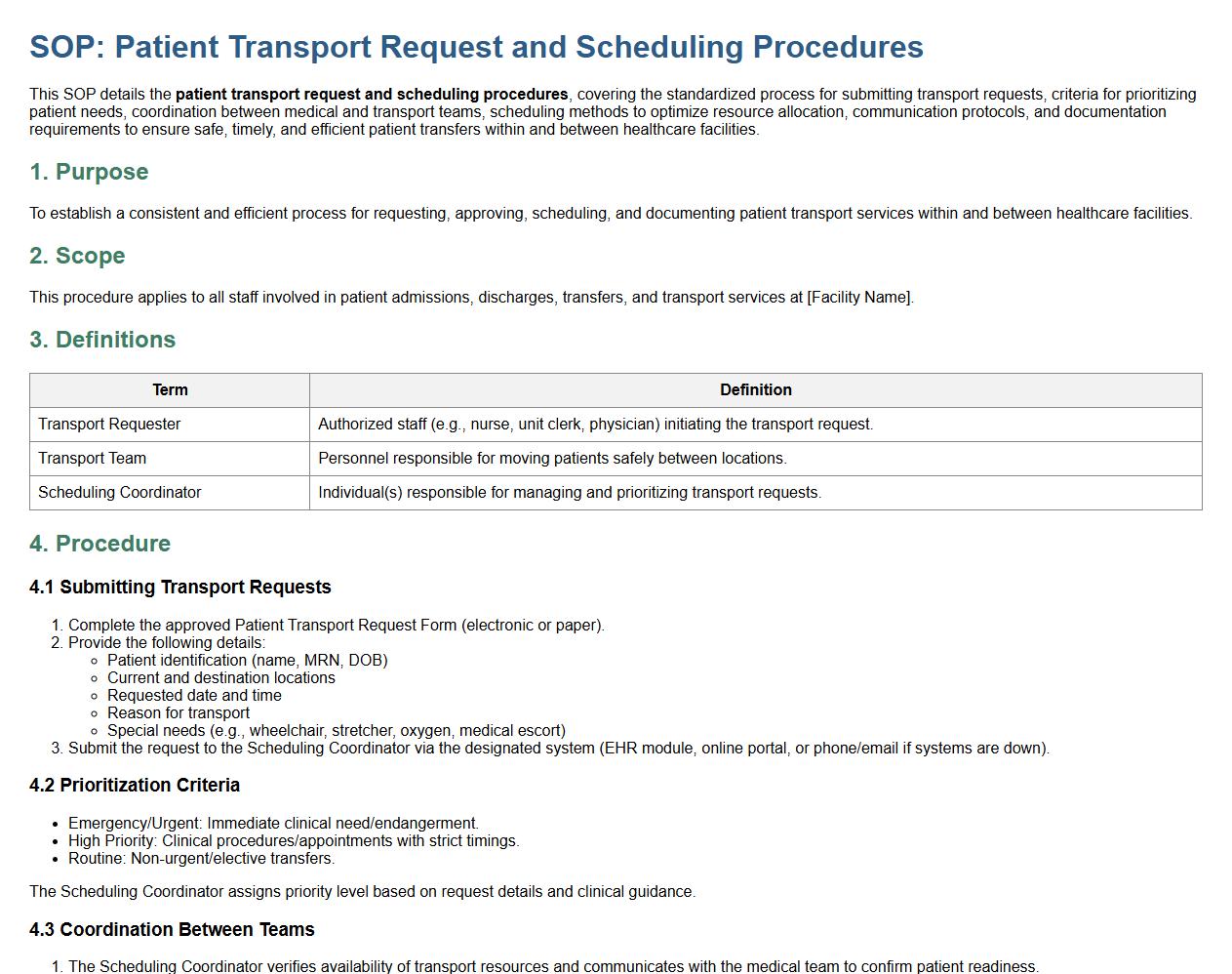
This SOP details the patient transport request and scheduling procedures, covering the standardized process for submitting transport requests, criteria for prioritizing patient needs, coordination between medical and transport teams, scheduling methods to optimize resource allocation, communication protocols, and documentation requirements to ensure safe, timely, and efficient patient transfers within and between healthcare facilities.
Patient identification and verification protocols.
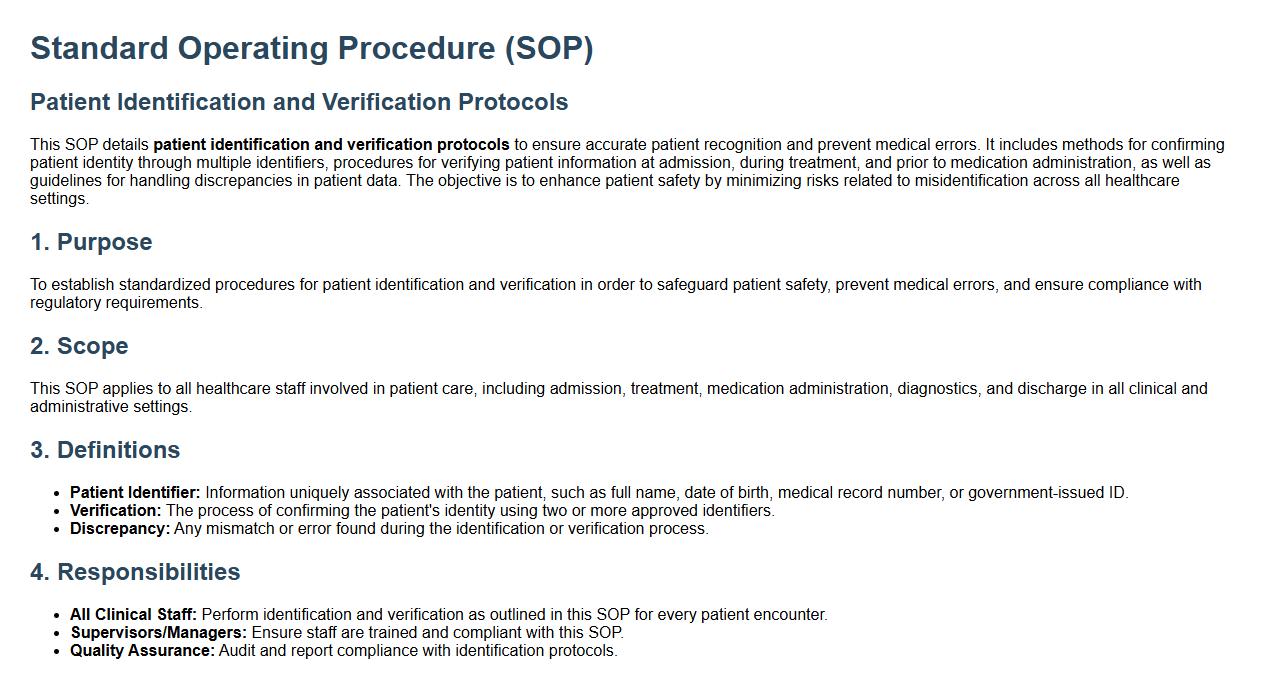
This SOP details patient identification and verification protocols to ensure accurate patient recognition and prevent medical errors. It includes methods for confirming patient identity through multiple identifiers, procedures for verifying patient information at admission, during treatment, and prior to medication administration, as well as guidelines for handling discrepancies in patient data. The objective is to enhance patient safety by minimizing risks related to misidentification across all healthcare settings.
Pre-transport patient assessment and documentation.
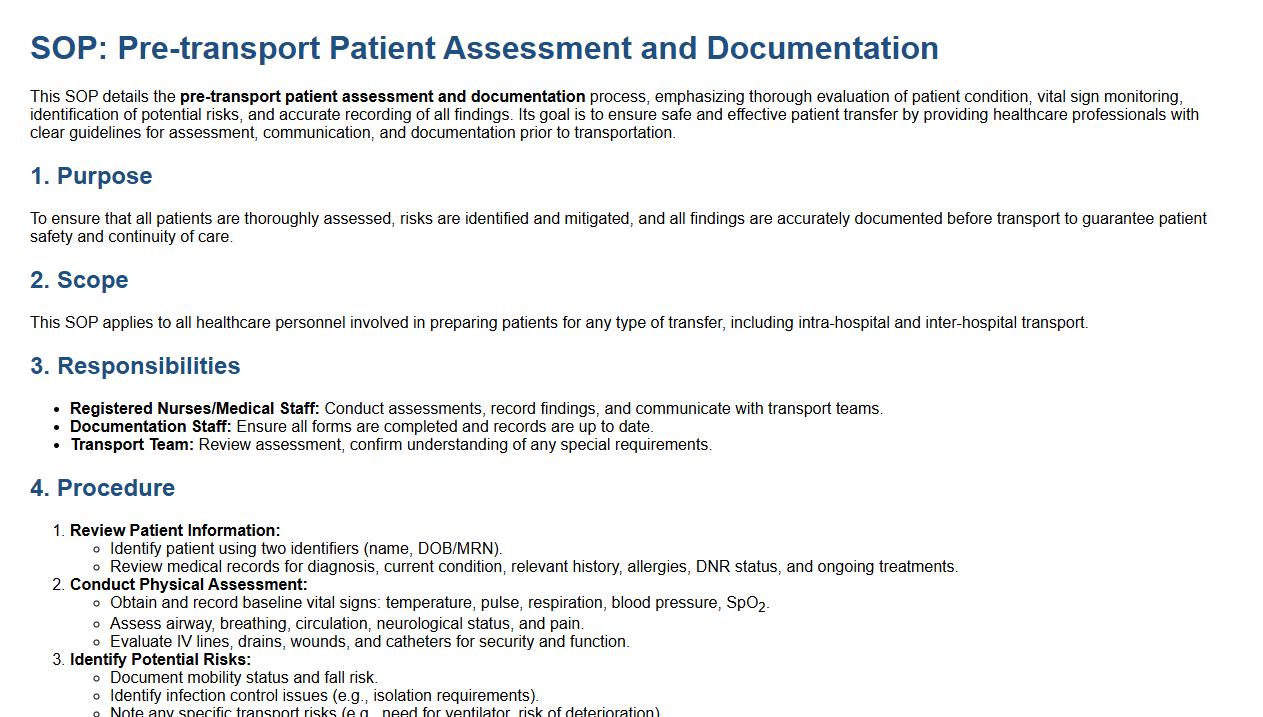
This SOP details the pre-transport patient assessment and documentation process, emphasizing thorough evaluation of patient condition, vital sign monitoring, identification of potential risks, and accurate recording of all findings. Its goal is to ensure safe and effective patient transfer by providing healthcare professionals with clear guidelines for assessment, communication, and documentation prior to transportation.
Infection control and hygiene measures during transport.
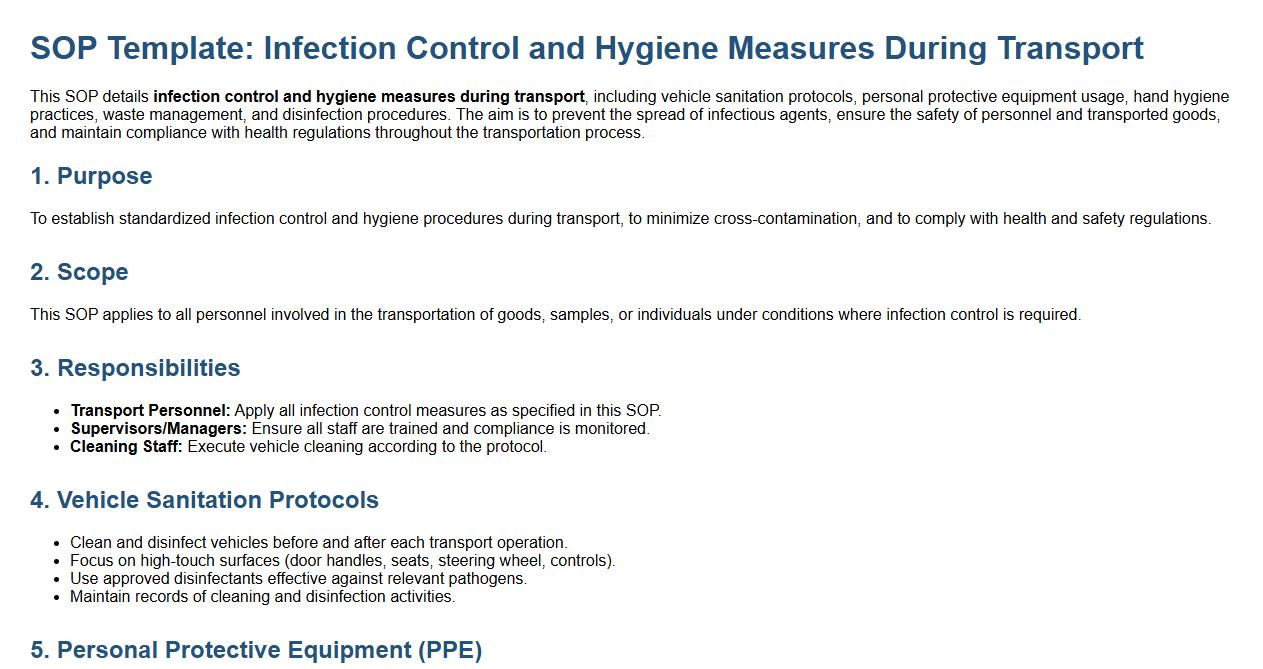
This SOP details infection control and hygiene measures during transport, including vehicle sanitation protocols, personal protective equipment usage, hand hygiene practices, waste management, and disinfection procedures. The aim is to prevent the spread of infectious agents, ensure the safety of personnel and transported goods, and maintain compliance with health regulations throughout the transportation process.
Patient handling and transfer techniques.
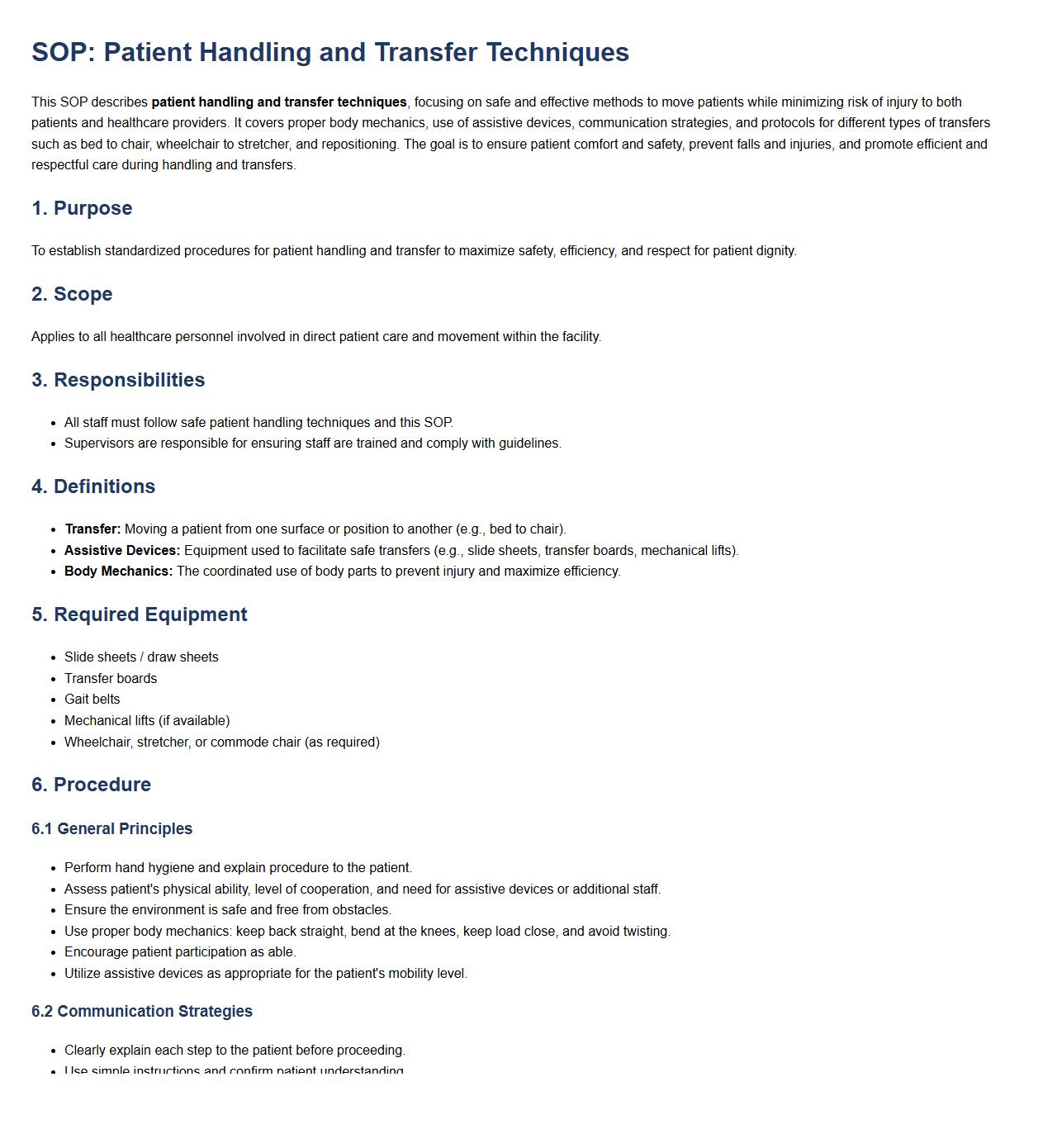
This SOP describes patient handling and transfer techniques, focusing on safe and effective methods to move patients while minimizing risk of injury to both patients and healthcare providers. It covers proper body mechanics, use of assistive devices, communication strategies, and protocols for different types of transfers such as bed to chair, wheelchair to stretcher, and repositioning. The goal is to ensure patient comfort and safety, prevent falls and injuries, and promote efficient and respectful care during handling and transfers.
Medical equipment and medication checks.
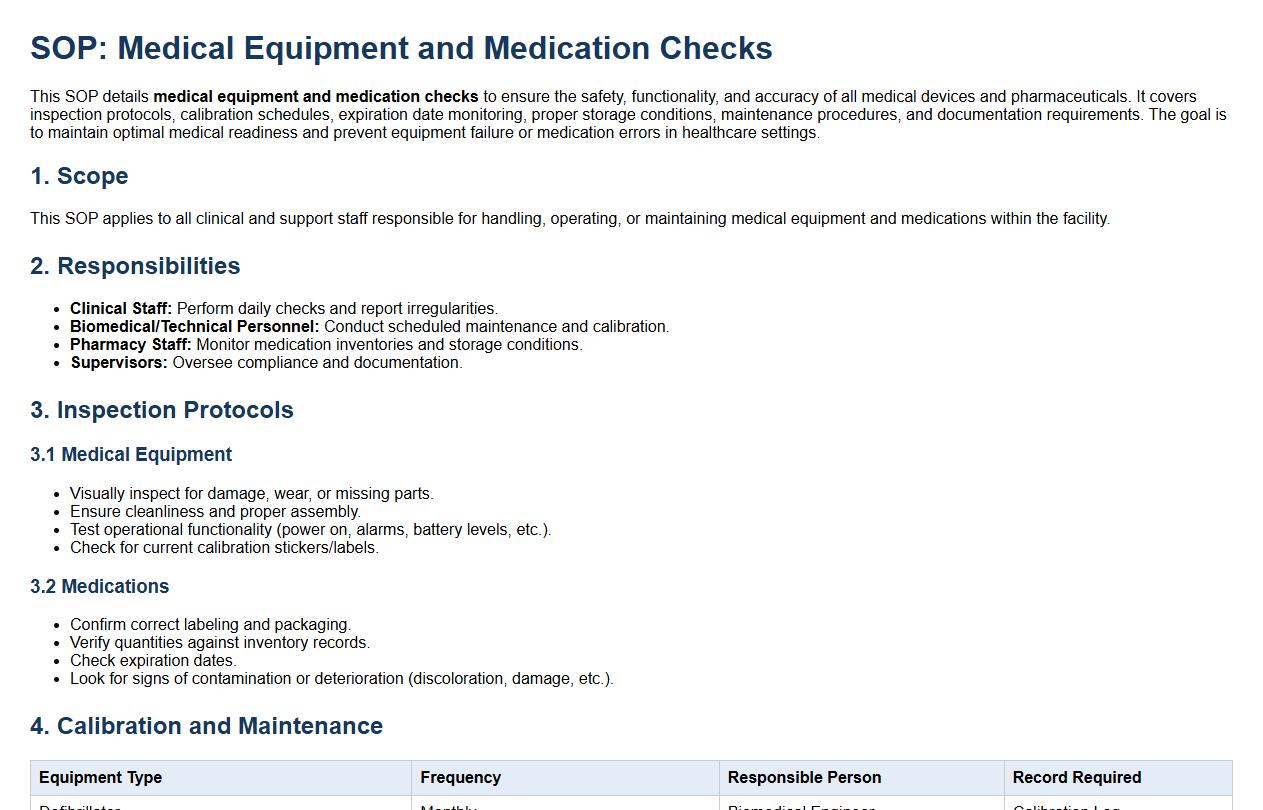
This SOP details medical equipment and medication checks to ensure the safety, functionality, and accuracy of all medical devices and pharmaceuticals. It covers inspection protocols, calibration schedules, expiration date monitoring, proper storage conditions, maintenance procedures, and documentation requirements. The goal is to maintain optimal medical readiness and prevent equipment failure or medication errors in healthcare settings.
Communication and handover process between departments.
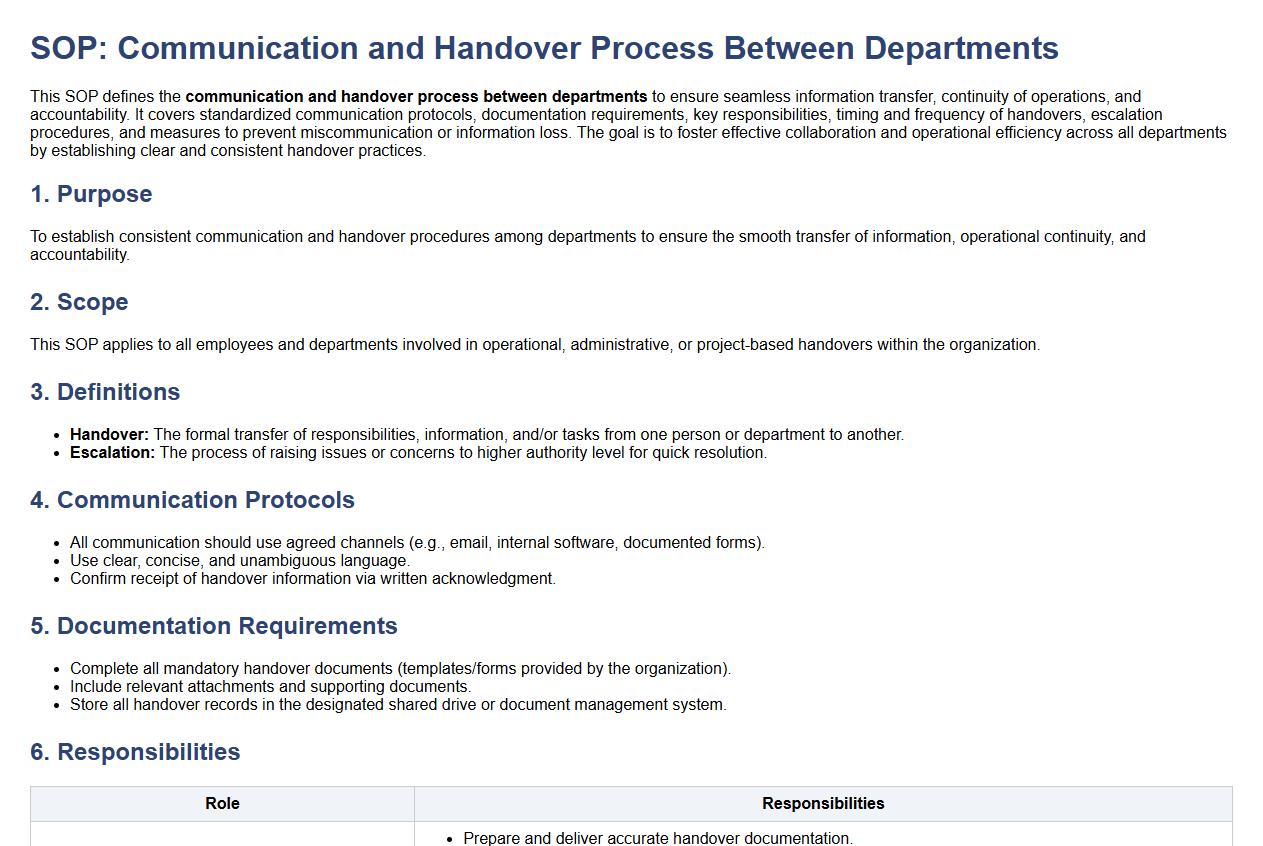
This SOP defines the communication and handover process between departments to ensure seamless information transfer, continuity of operations, and accountability. It covers standardized communication protocols, documentation requirements, key responsibilities, timing and frequency of handovers, escalation procedures, and measures to prevent miscommunication or information loss. The goal is to foster effective collaboration and operational efficiency across all departments by establishing clear and consistent handover practices.
Emergency procedures during transport.
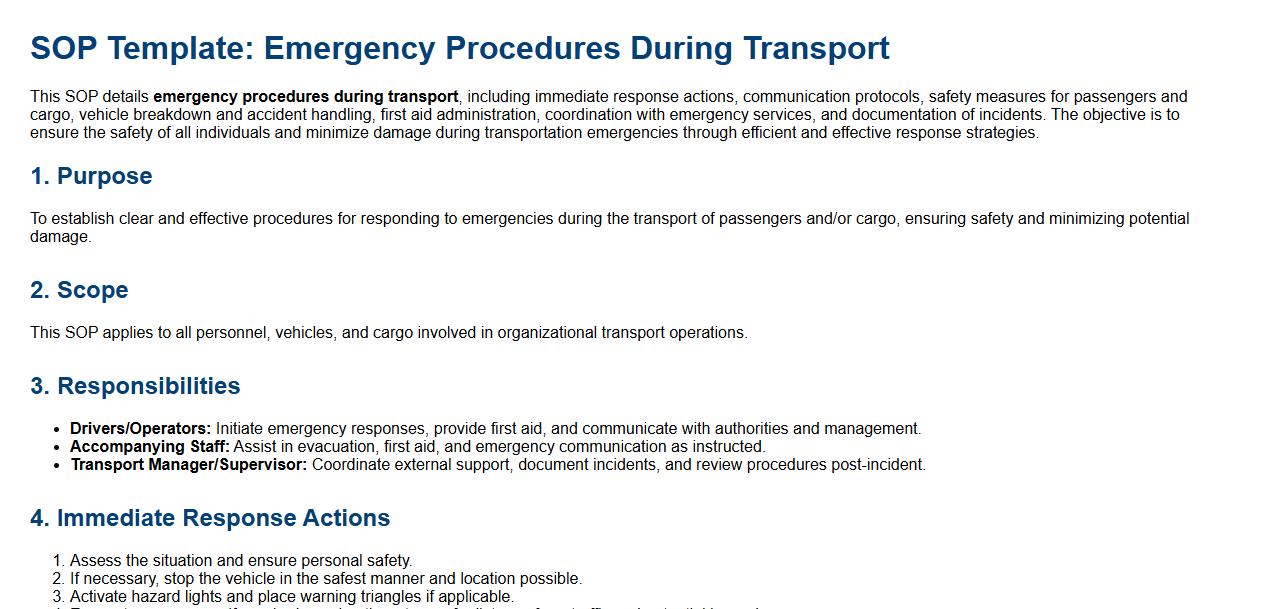
This SOP details emergency procedures during transport, including immediate response actions, communication protocols, safety measures for passengers and cargo, vehicle breakdown and accident handling, first aid administration, coordination with emergency services, and documentation of incidents. The objective is to ensure the safety of all individuals and minimize damage during transportation emergencies through efficient and effective response strategies.
Vehicle cleaning and maintenance routines.
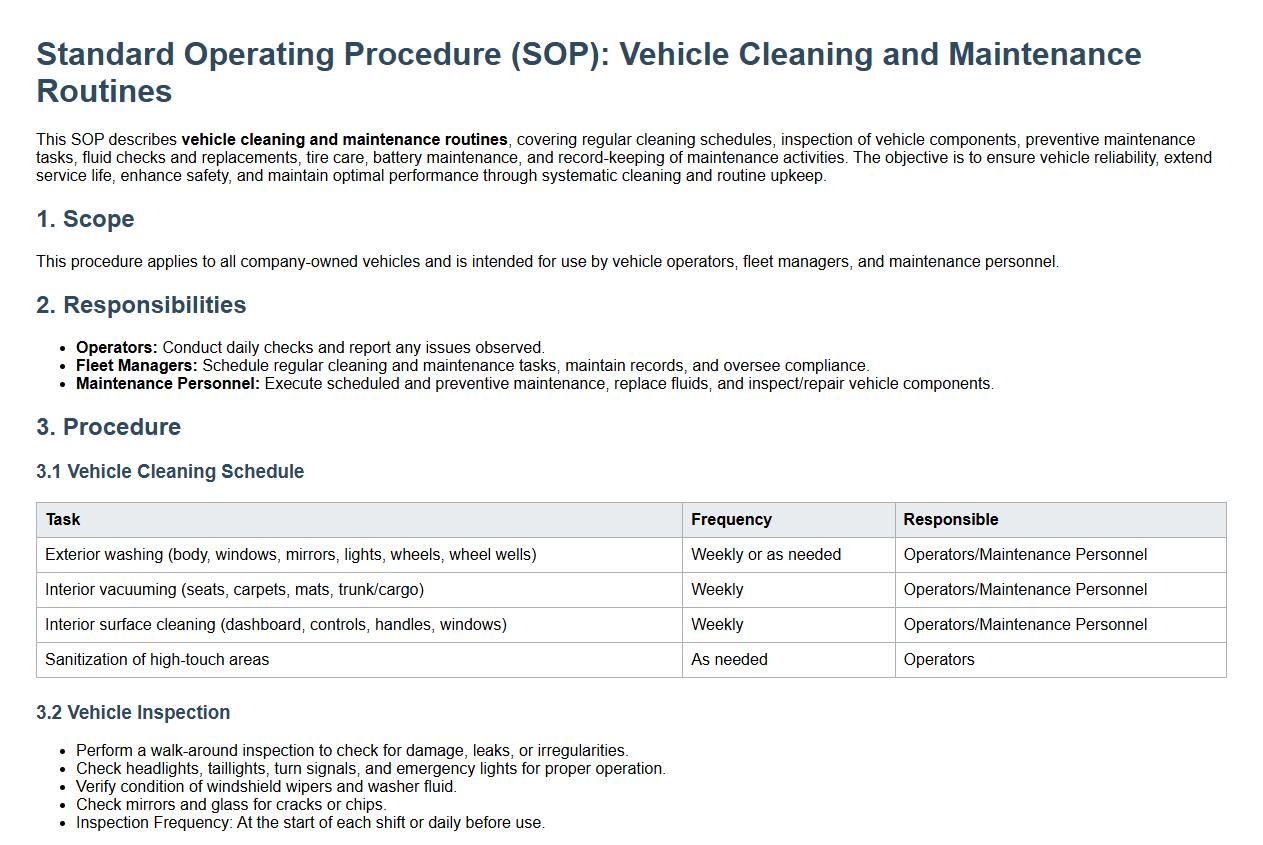
This SOP describes vehicle cleaning and maintenance routines, covering regular cleaning schedules, inspection of vehicle components, preventive maintenance tasks, fluid checks and replacements, tire care, battery maintenance, and record-keeping of maintenance activities. The objective is to ensure vehicle reliability, extend service life, enhance safety, and maintain optimal performance through systematic cleaning and routine upkeep.
Transport completion documentation and incident reporting.
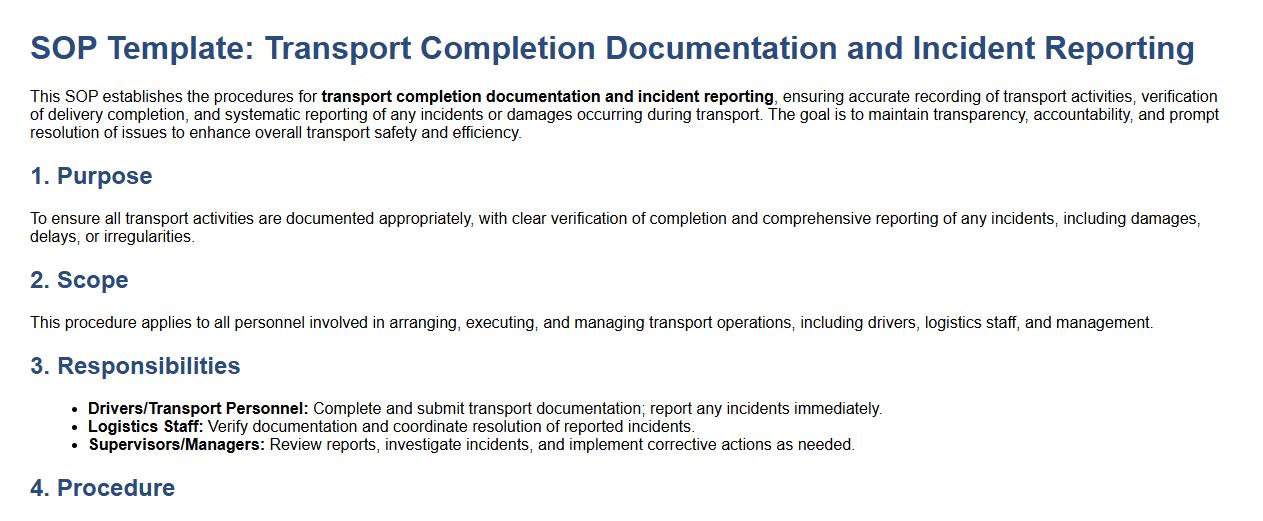
This SOP establishes the procedures for transport completion documentation and incident reporting, ensuring accurate recording of transport activities, verification of delivery completion, and systematic reporting of any incidents or damages occurring during transport. The goal is to maintain transparency, accountability, and prompt resolution of issues to enhance overall transport safety and efficiency.
What are the key safety checks required before initiating patient transportation as per the SOP?
Before starting patient transportation, the SOP mandates conducting a thorough safety assessment to ensure the vehicle and equipment are in optimal condition. It is essential to verify the patient's medical status and the availability of necessary medical support during transit. Additionally, confirming the route and coordinating with receiving facilities are critical for a smooth and secure transport process.
Which staff roles and responsibilities are outlined in the SOP for patient transport?
The SOP clearly defines specific roles and responsibilities for each staff member involved in patient transport, including the transport coordinator, medical staff, and drivers. The transport coordinator oversees the entire process, ensuring compliance with protocols and communication flow. Medical staff are responsible for patient care, while drivers must safely operate the transport vehicle and adhere to safety standards.
What communication protocols must be followed during patient transfers according to the SOP?
Effective and clear communication protocols are essential during patient transfers to ensure safety and coordination. The SOP requires real-time updates between the transport team and receiving units using designated communication tools. All critical information, including patient status changes and transport progress, must be promptly communicated for timely response and support.
How does the SOP define the documentation process for each patient transportation event?
The SOP establishes a detailed documentation process to record every patient transportation event accurately and comprehensively. This includes logging patient details, transport timings, staff involved, and any incidents or observations during transit. Proper documentation supports accountability, legal compliance, and continuous quality improvement in patient transport services.
What emergency procedures are specified in the SOP for handling incidents during patient transportation?
The SOP outlines clear emergency procedures to be followed if incidents occur during patient transportation, emphasizing immediate response and patient safety. Staff must promptly assess the situation, provide necessary first aid, and notify emergency services or relevant medical personnel. The procedures also include protocols for incident reporting and post-incident review to prevent future occurrences.