

A SOP Template for HIPAA Compliance provides a structured framework to ensure healthcare organizations meet the regulatory requirements for protecting patient information. This template outlines clear procedures for managing data privacy, security protocols, and employee responsibilities to maintain compliance. Using a standardized SOP helps streamline audits and minimizes the risk of HIPAA violations.
Patient data access control procedures.
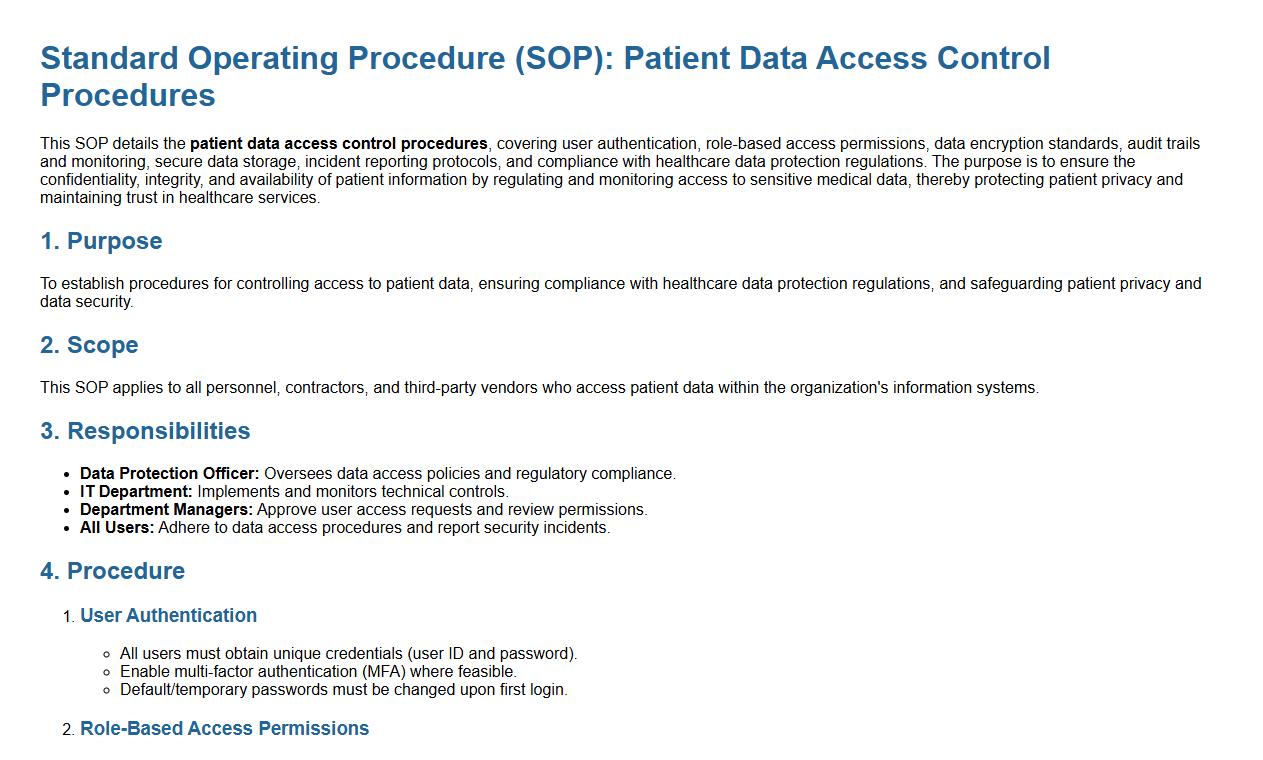
This SOP details the patient data access control procedures, covering user authentication, role-based access permissions, data encryption standards, audit trails and monitoring, secure data storage, incident reporting protocols, and compliance with healthcare data protection regulations. The purpose is to ensure the confidentiality, integrity, and availability of patient information by regulating and monitoring access to sensitive medical data, thereby protecting patient privacy and maintaining trust in healthcare services.
Employee HIPAA training and certification protocols.
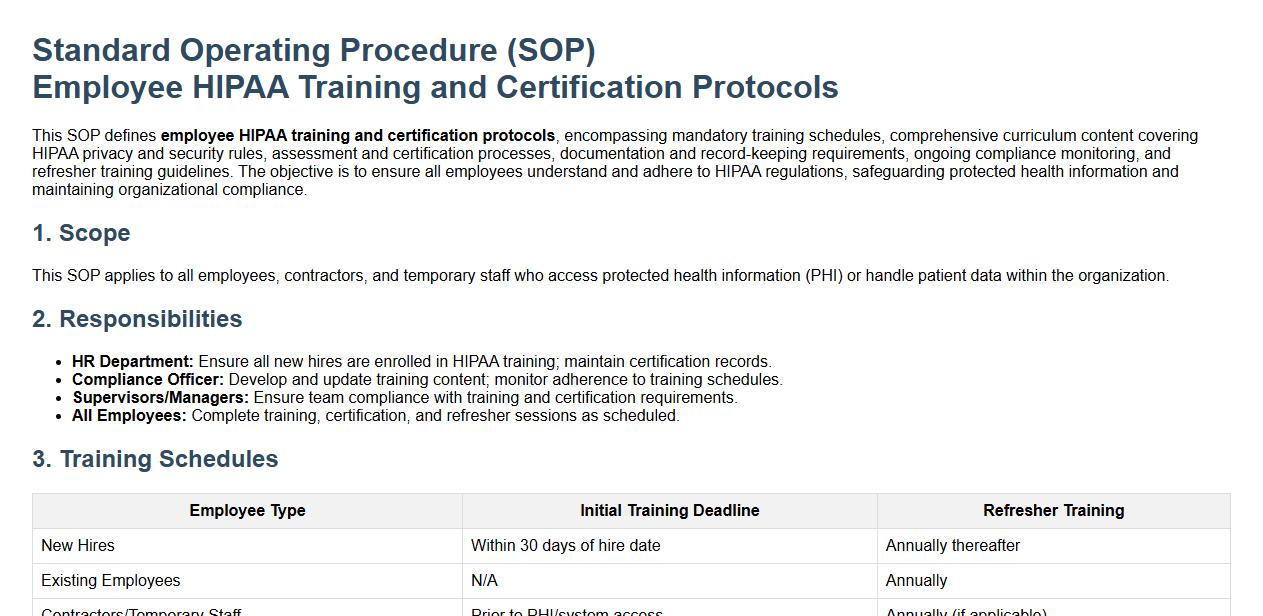
This SOP defines employee HIPAA training and certification protocols, encompassing mandatory training schedules, comprehensive curriculum content covering HIPAA privacy and security rules, assessment and certification processes, documentation and record-keeping requirements, ongoing compliance monitoring, and refresher training guidelines. The objective is to ensure all employees understand and adhere to HIPAA regulations, safeguarding protected health information and maintaining organizational compliance.
Protected Health Information (PHI) storage and encryption standards.
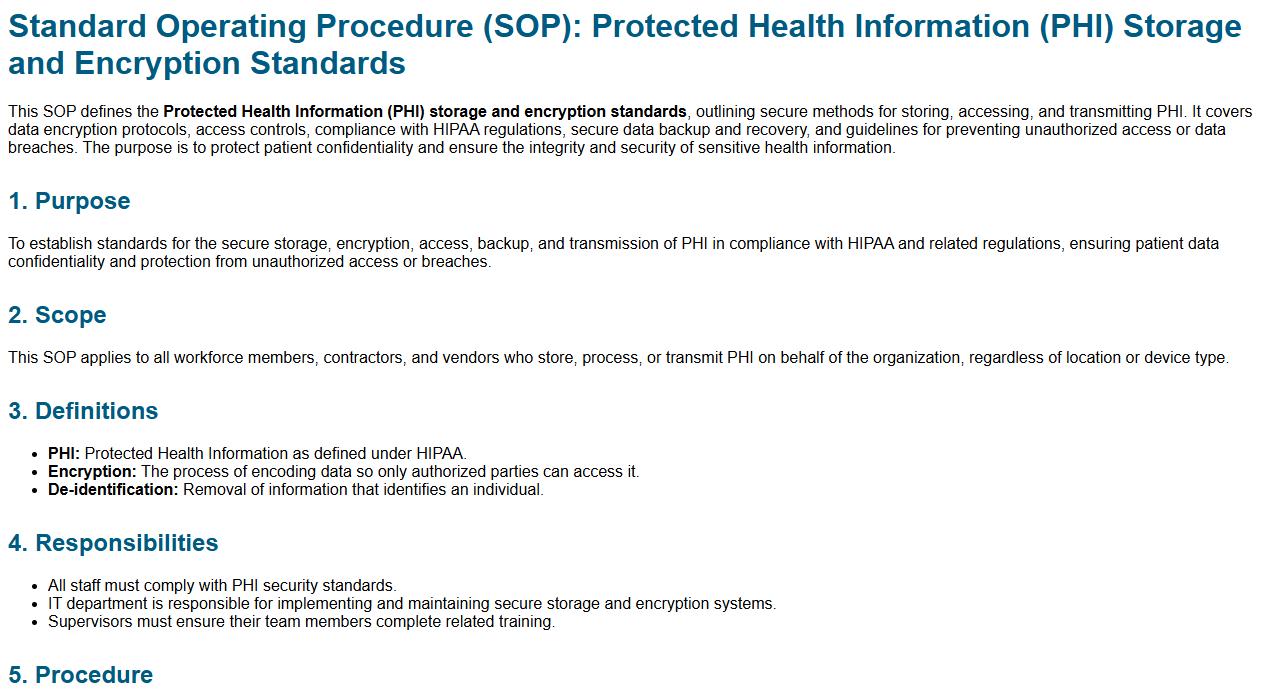
This SOP defines the Protected Health Information (PHI) storage and encryption standards, outlining secure methods for storing, accessing, and transmitting PHI. It covers data encryption protocols, access controls, compliance with HIPAA regulations, secure data backup and recovery, and guidelines for preventing unauthorized access or data breaches. The purpose is to protect patient confidentiality and ensure the integrity and security of sensitive health information.
Procedures for PHI transmission (fax, email, electronic portals).
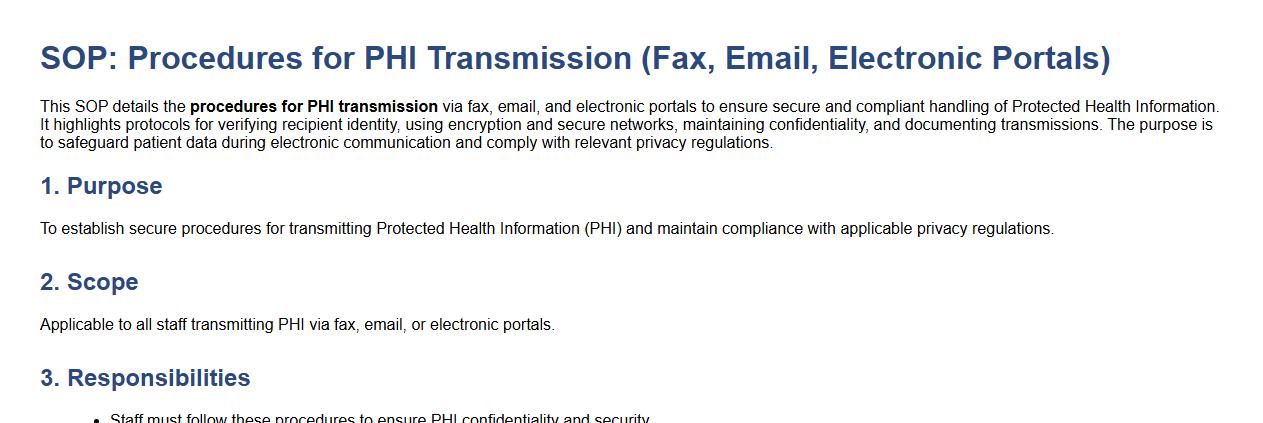
This SOP details the procedures for PHI transmission via fax, email, and electronic portals to ensure secure and compliant handling of Protected Health Information. It highlights protocols for verifying recipient identity, using encryption and secure networks, maintaining confidentiality, and documenting transmissions. The purpose is to safeguard patient data during electronic communication and comply with relevant privacy regulations.
Physical security and workstation privacy requirements.
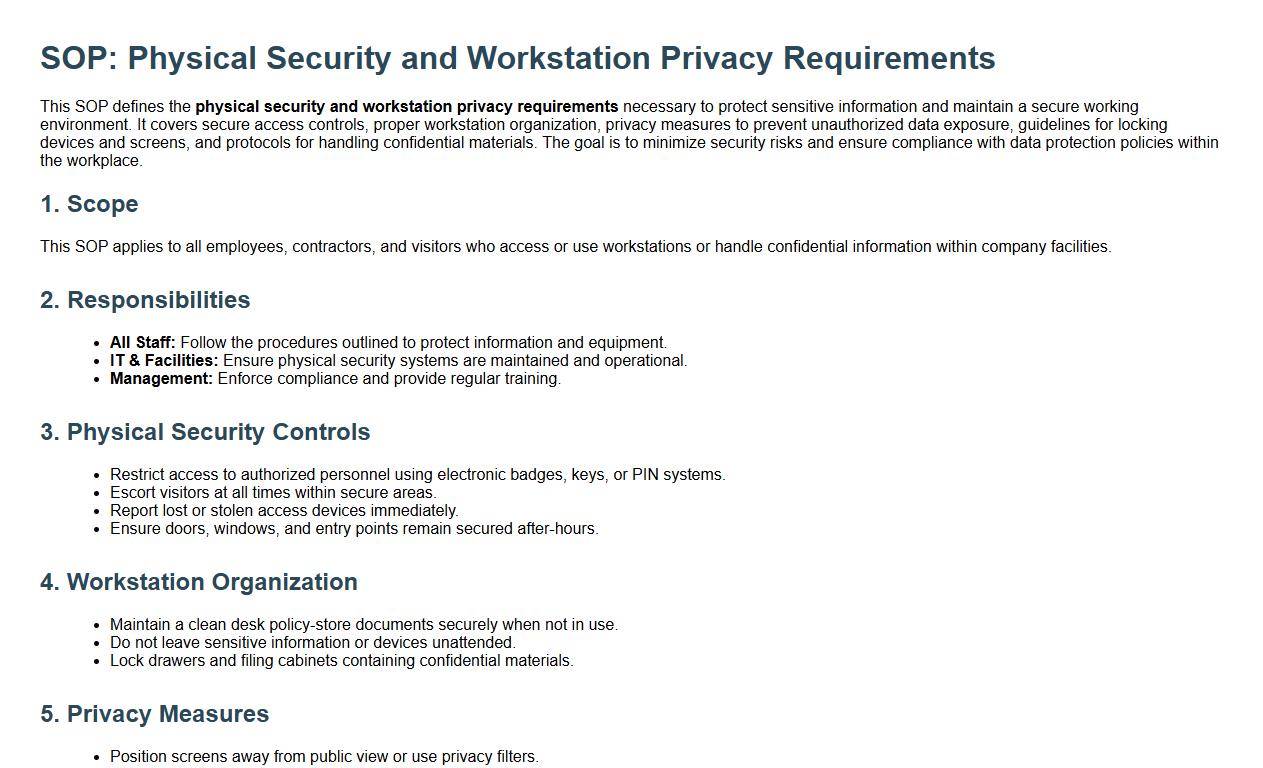
This SOP defines the physical security and workstation privacy requirements necessary to protect sensitive information and maintain a secure working environment. It covers secure access controls, proper workstation organization, privacy measures to prevent unauthorized data exposure, guidelines for locking devices and screens, and protocols for handling confidential materials. The goal is to minimize security risks and ensure compliance with data protection policies within the workplace.
Processes for responding to data breach incidents.
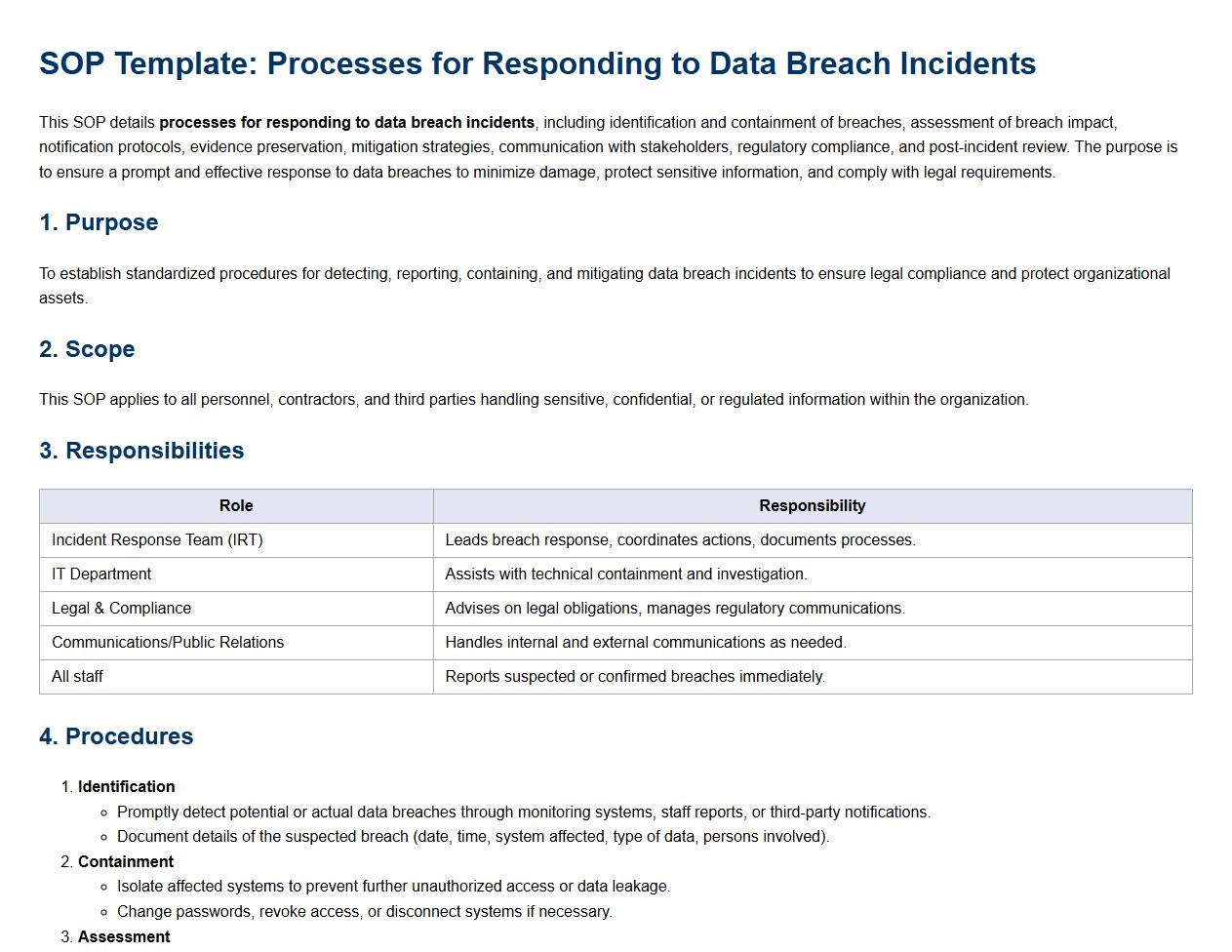
This SOP details processes for responding to data breach incidents, including identification and containment of breaches, assessment of breach impact, notification protocols, evidence preservation, mitigation strategies, communication with stakeholders, regulatory compliance, and post-incident review. The purpose is to ensure a prompt and effective response to data breaches to minimize damage, protect sensitive information, and comply with legal requirements.
Patient consent and authorization documentation.
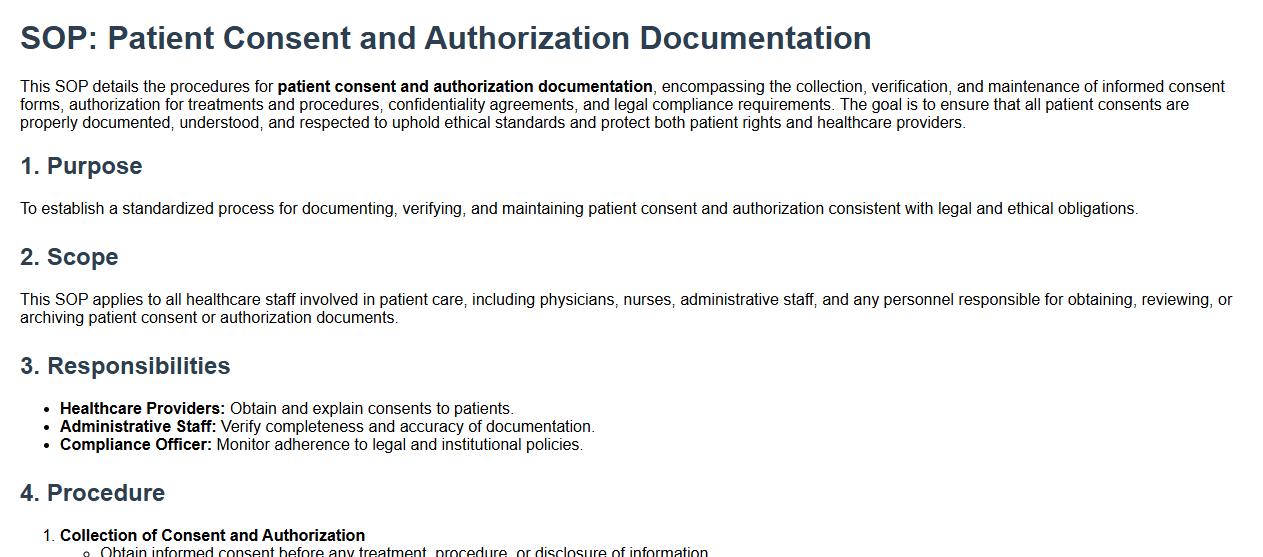
This SOP details the procedures for patient consent and authorization documentation, encompassing the collection, verification, and maintenance of informed consent forms, authorization for treatments and procedures, confidentiality agreements, and legal compliance requirements. The goal is to ensure that all patient consents are properly documented, understood, and respected to uphold ethical standards and protect both patient rights and healthcare providers.
Routine HIPAA compliance audits and risk assessments.
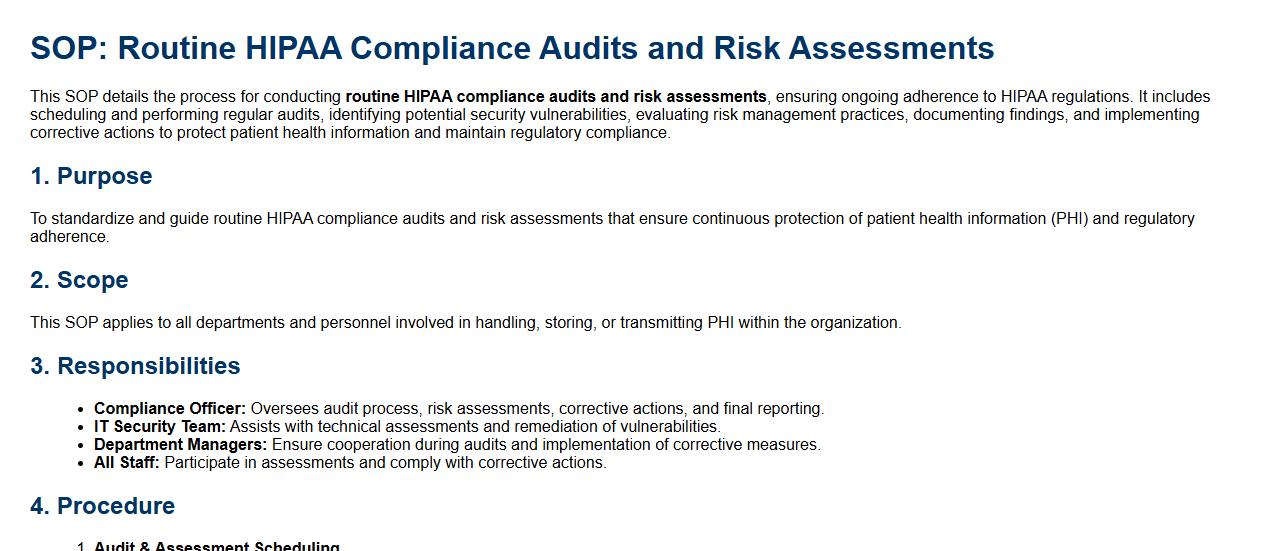
This SOP details the process for conducting routine HIPAA compliance audits and risk assessments, ensuring ongoing adherence to HIPAA regulations. It includes scheduling and performing regular audits, identifying potential security vulnerabilities, evaluating risk management practices, documenting findings, and implementing corrective actions to protect patient health information and maintain regulatory compliance.
Procedures for handling patient record requests and disclosures.
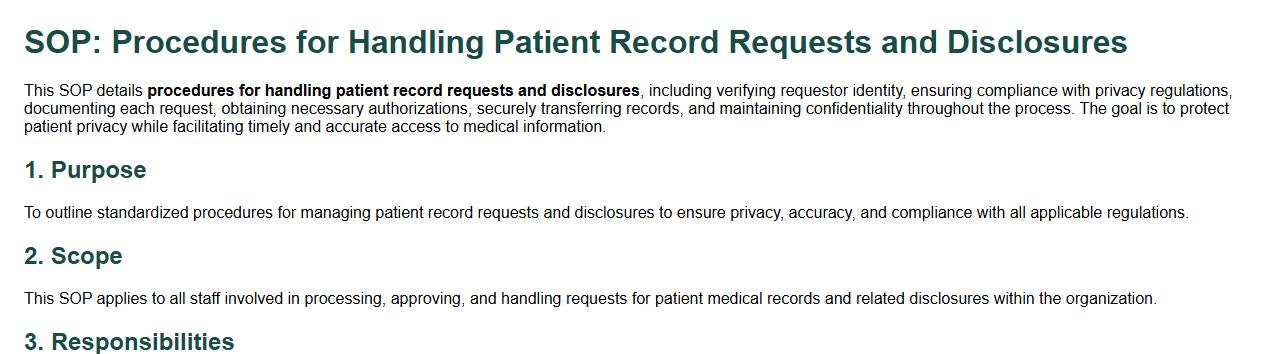
This SOP details procedures for handling patient record requests and disclosures, including verifying requestor identity, ensuring compliance with privacy regulations, documenting each request, obtaining necessary authorizations, securely transferring records, and maintaining confidentiality throughout the process. The goal is to protect patient privacy while facilitating timely and accurate access to medical information.
Policies for employee termination and PHI access revocation.
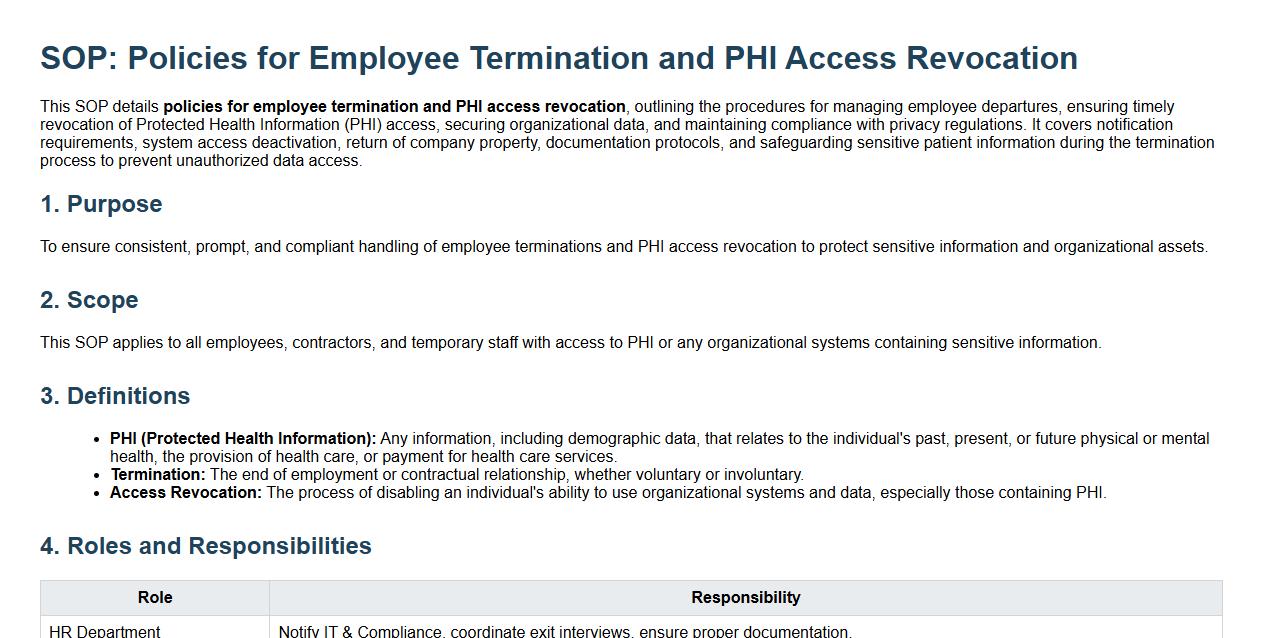
This SOP details policies for employee termination and PHI access revocation, outlining the procedures for managing employee departures, ensuring the timely revocation of Protected Health Information (PHI) access, securing organizational data, and maintaining compliance with privacy regulations. It covers notification requirements, system access deactivation, return of company property, documentation protocols, and safeguarding sensitive patient information during the termination process to prevent unauthorized data access.
What procedures are outlined in the SOP to ensure the protection of Protected Health Information (PHI)?
The SOP establishes stringent procedures to secure Protected Health Information (PHI) from unauthorized access or disclosure. It mandates encryption, access controls, and secure storage to maintain confidentiality and integrity. Regular risk assessments are also conducted to identify and address vulnerabilities promptly.
How does the SOP define staff roles and responsibilities for HIPAA compliance?
The SOP delineates clear roles and responsibilities for all staff members to ensure accountability in HIPAA compliance. Designated personnel are assigned to oversee privacy and security measures, while all employees must adhere to established policies. This structured approach fosters a culture of compliance throughout the organization.
What protocols does the SOP establish for reporting and responding to potential HIPAA violations or breaches?
The SOP requires immediate reporting of any suspected HIPAA violations or breaches to designated compliance officers. A detailed response plan is outlined, including investigation, mitigation, and notification procedures. Timely action ensures compliance with legal requirements and minimizes potential harm.
How does the SOP address training and ongoing education requirements related to HIPAA?
The SOP mandates regular HIPAA training and ongoing education for all employees to maintain awareness of privacy practices. Training programs are updated periodically to reflect changes in laws and organizational policies. Continuous education supports a proactive approach to compliance and risk reduction.
What documentation and audit processes are mandated by the SOP for tracking HIPAA compliance activities?
The SOP requires meticulous documentation and audit processes to track HIPAA compliance efforts comprehensively. Records of training, risk assessments, incident reports, and corrective actions must be maintained. Regular audits ensure adherence to policies and identify areas for improvement.