
A SOP Template for Housekeeping in Hospitals provides standardized guidelines to ensure cleanliness, hygiene, and safety within healthcare facilities. It outlines detailed procedures for daily cleaning tasks, waste management, and infection control to maintain a sterile environment for patients and staff. This template helps streamline operations and ensures compliance with health regulations.
Cleaning and disinfection of patient rooms.
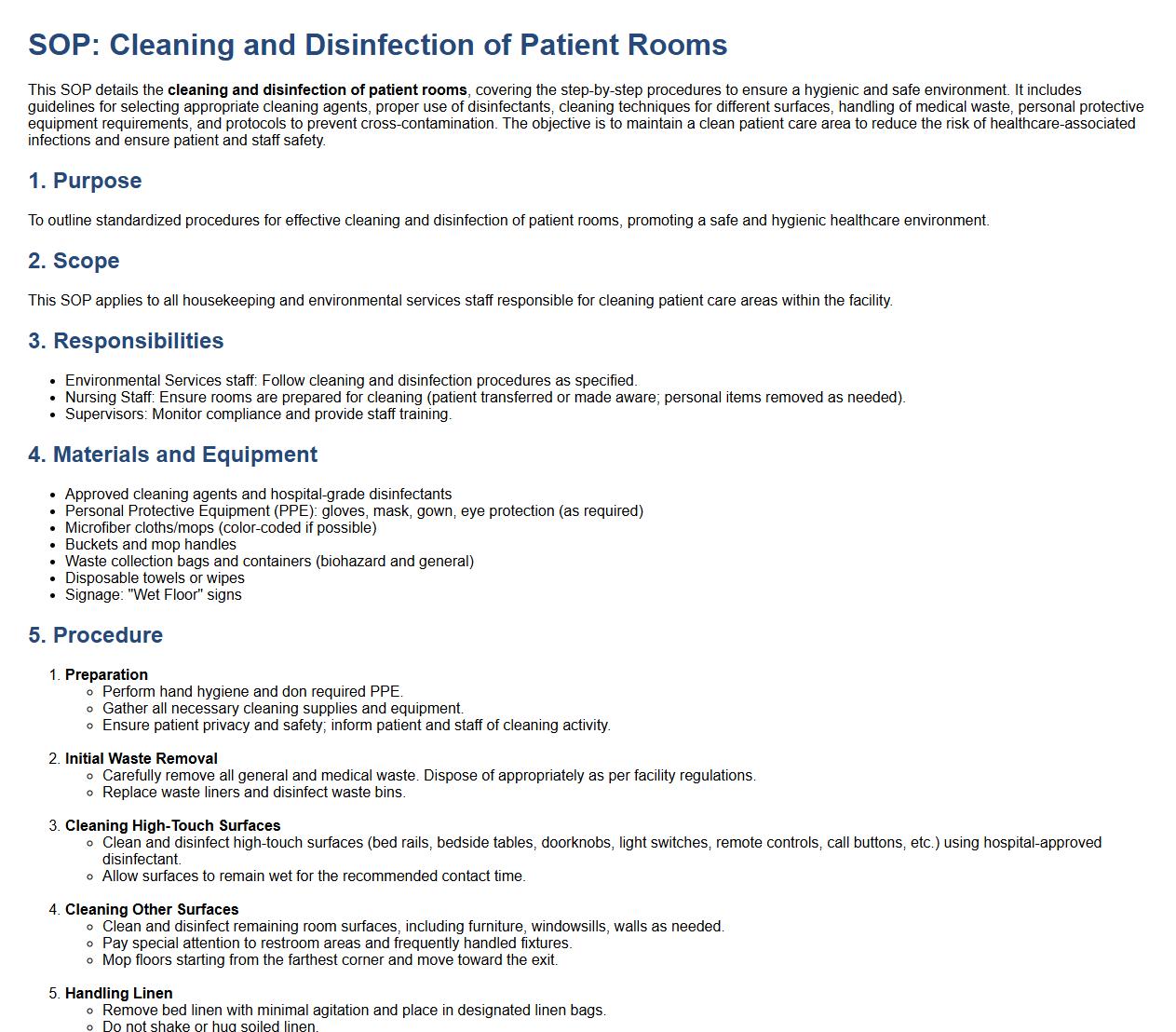
This SOP details the cleaning and disinfection of patient rooms, covering the step-by-step procedures to ensure a hygienic and safe environment. It includes guidelines for selecting appropriate cleaning agents, proper use of disinfectants, cleaning techniques for different surfaces, handling of medical waste, personal protective equipment requirements, and protocols to prevent cross-contamination. The objective is to maintain a clean patient care area to reduce the risk of healthcare-associated infections and ensure patient and staff safety.
Restocking and inventory management of cleaning supplies.
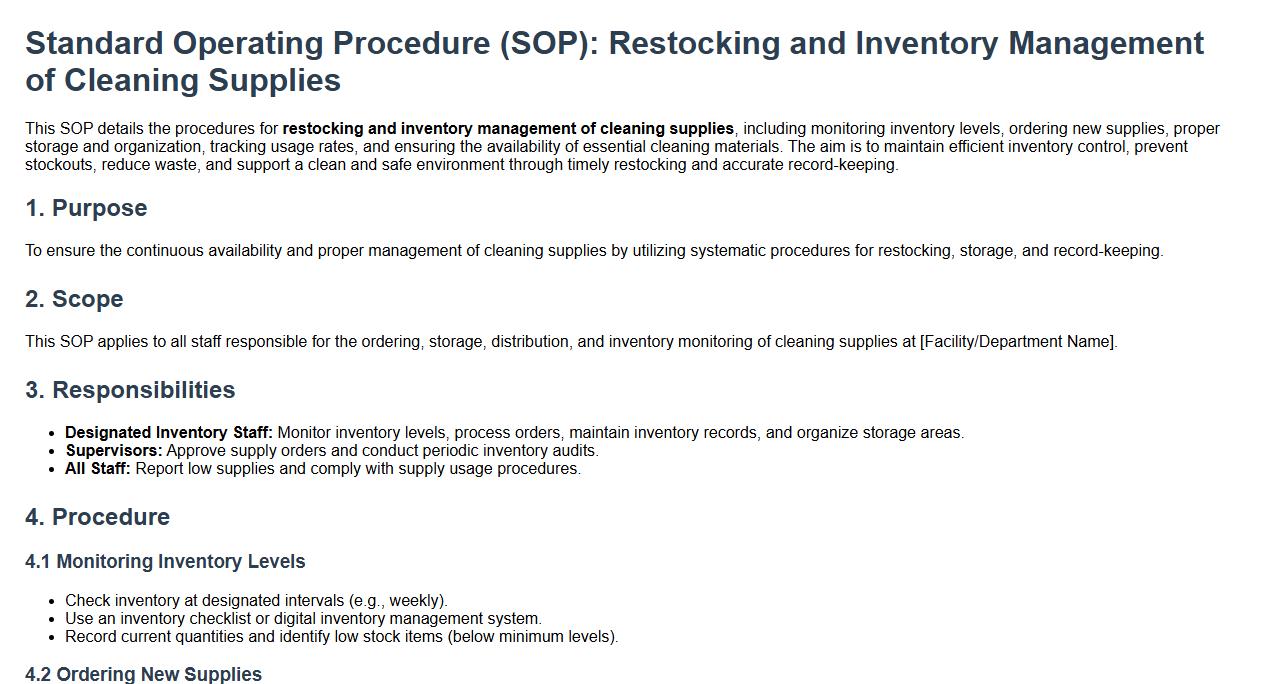
This SOP details the procedures for restocking and inventory management of cleaning supplies, including monitoring inventory levels, ordering new supplies, proper storage and organization, tracking usage rates, and ensuring the availability of essential cleaning materials. The aim is to maintain efficient inventory control, prevent stockouts, reduce waste, and support a clean and safe environment through timely restocking and accurate record-keeping.
Waste segregation and proper biomedical waste disposal.
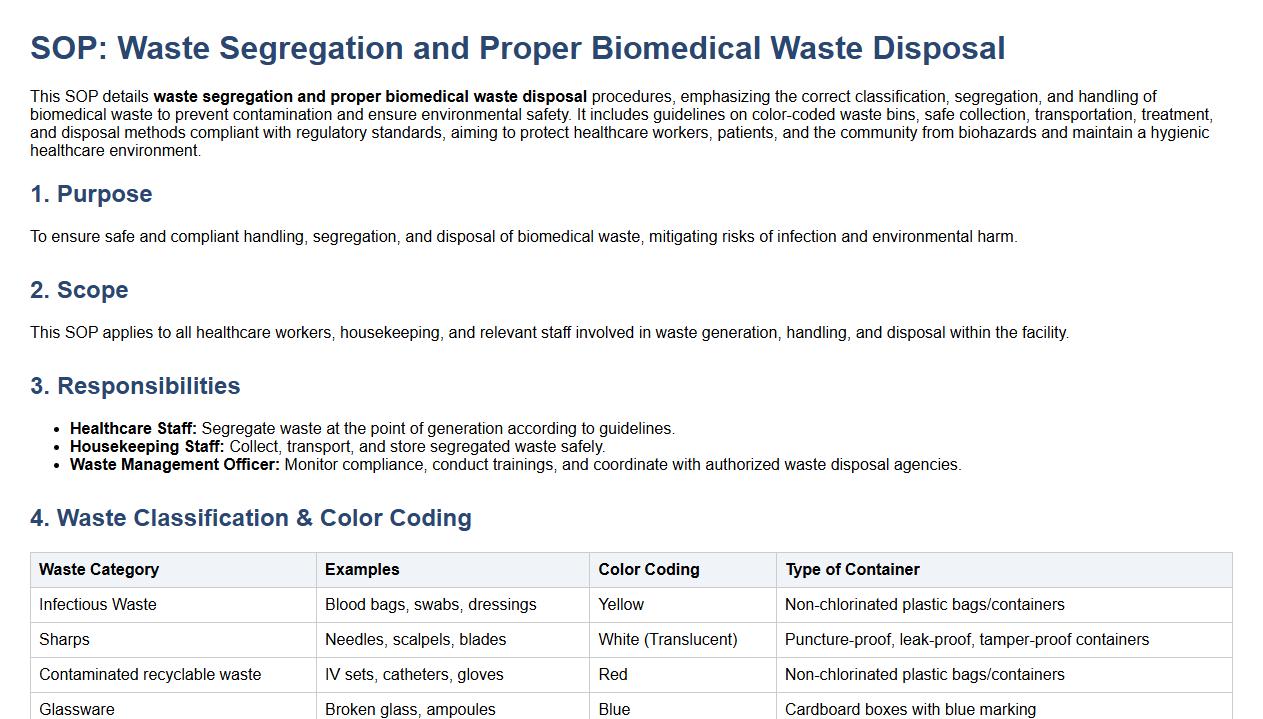
This SOP details waste segregation and proper biomedical waste disposal procedures, emphasizing the correct classification, segregation, and handling of biomedical waste to prevent contamination and ensure environmental safety. It includes guidelines on color-coded waste bins, safe collection, transportation, treatment, and disposal methods compliant with regulatory standards, aiming to protect healthcare workers, patients, and the community from biohazards and maintain a hygienic healthcare environment.
Cleaning and maintenance of public/common areas.
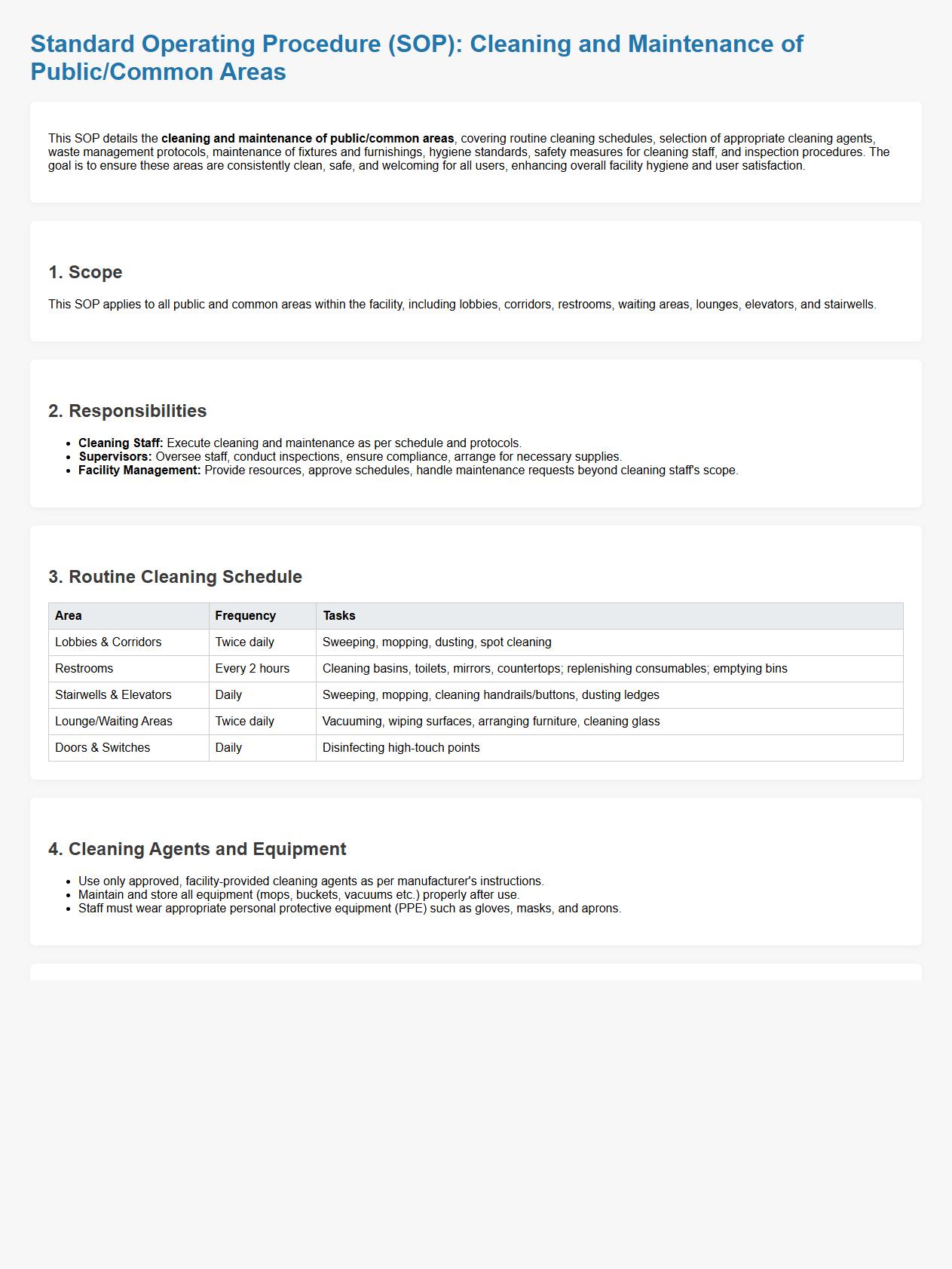
This SOP details the cleaning and maintenance of public/common areas, covering routine cleaning schedules, selection of appropriate cleaning agents, waste management protocols, maintenance of fixtures and furnishings, hygiene standards, safety measures for cleaning staff, and inspection procedures. The goal is to ensure these areas are consistently clean, safe, and welcoming for all users, enhancing overall facility hygiene and user satisfaction.
Linen collection, transport, and distribution procedures.
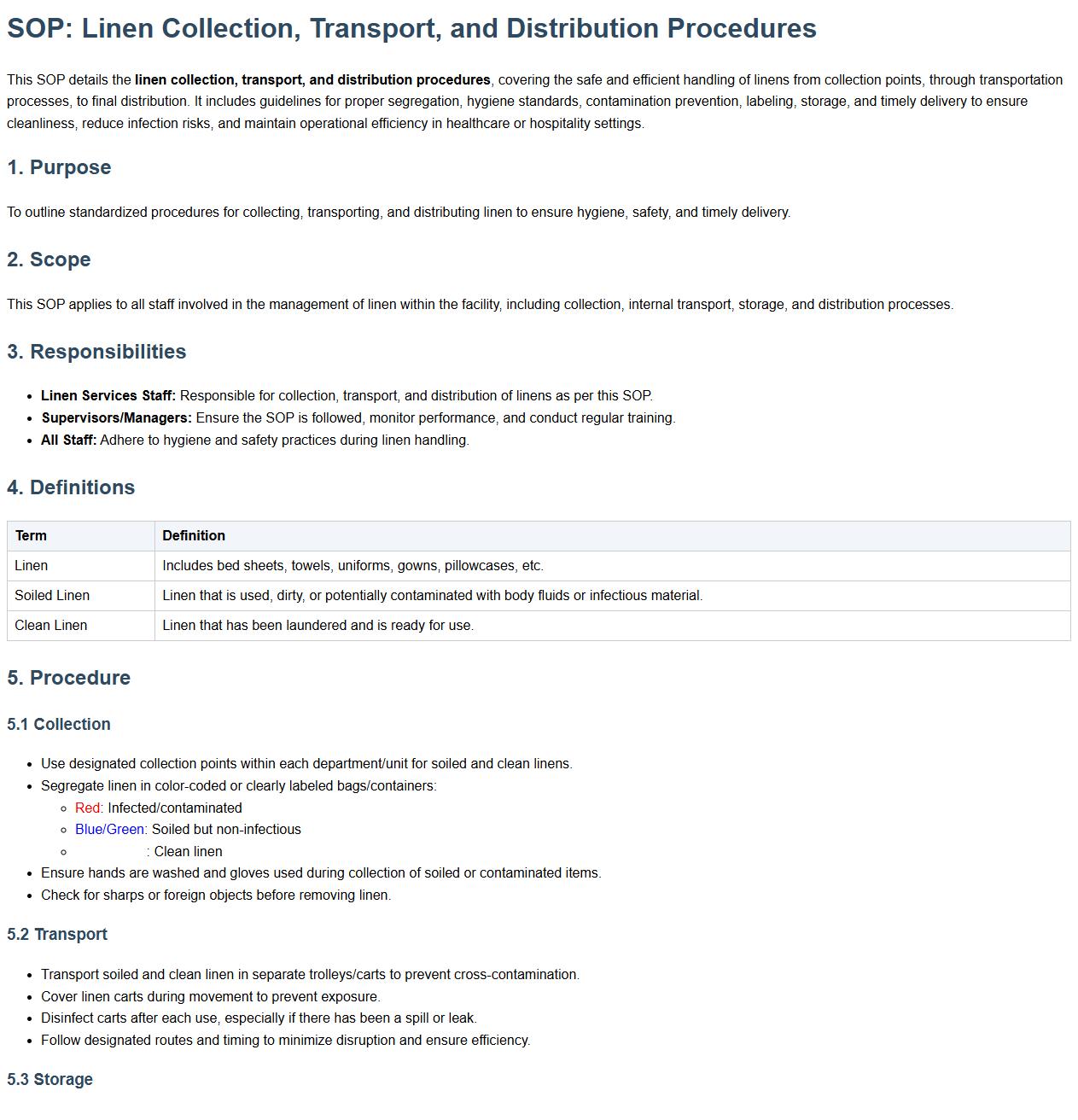
This SOP details the linen collection, transport, and distribution procedures, covering the safe and efficient handling of linens from collection points, through transportation processes, to final distribution. It includes guidelines for proper segregation, hygiene standards, contamination prevention, labeling, storage, and timely delivery to ensure cleanliness, reduce infection risks, and maintain operational efficiency in healthcare or hospitality settings.
Bathroom/toilet sanitization protocols.
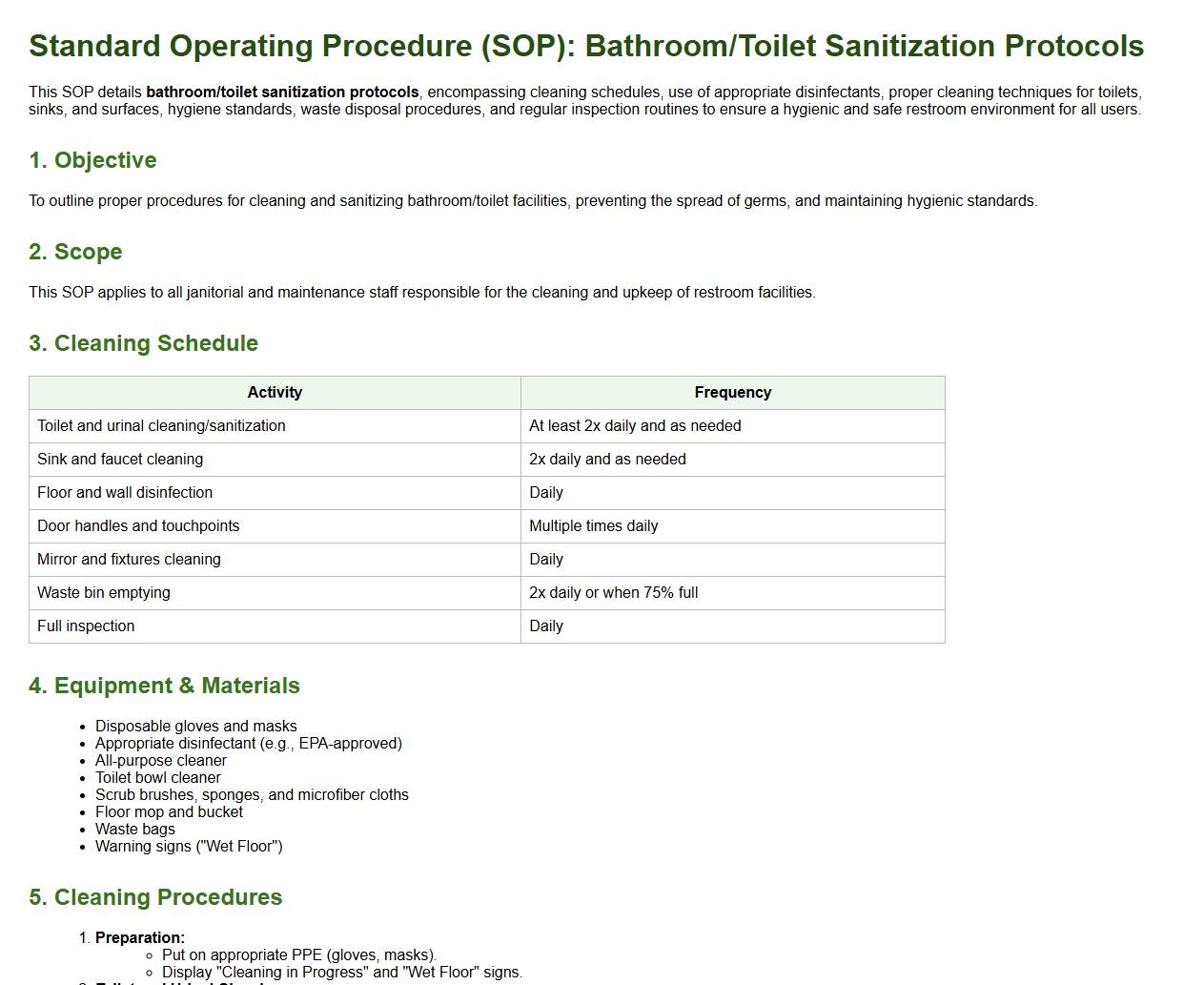
This SOP details bathroom/toilet sanitization protocols, encompassing cleaning schedules, use of appropriate disinfectants, proper cleaning techniques for toilets, sinks, and surfaces, hygiene standards, waste disposal procedures, and regular inspection routines to ensure a hygienic and safe restroom environment for all users.
Daily and periodic deep-cleaning schedules.
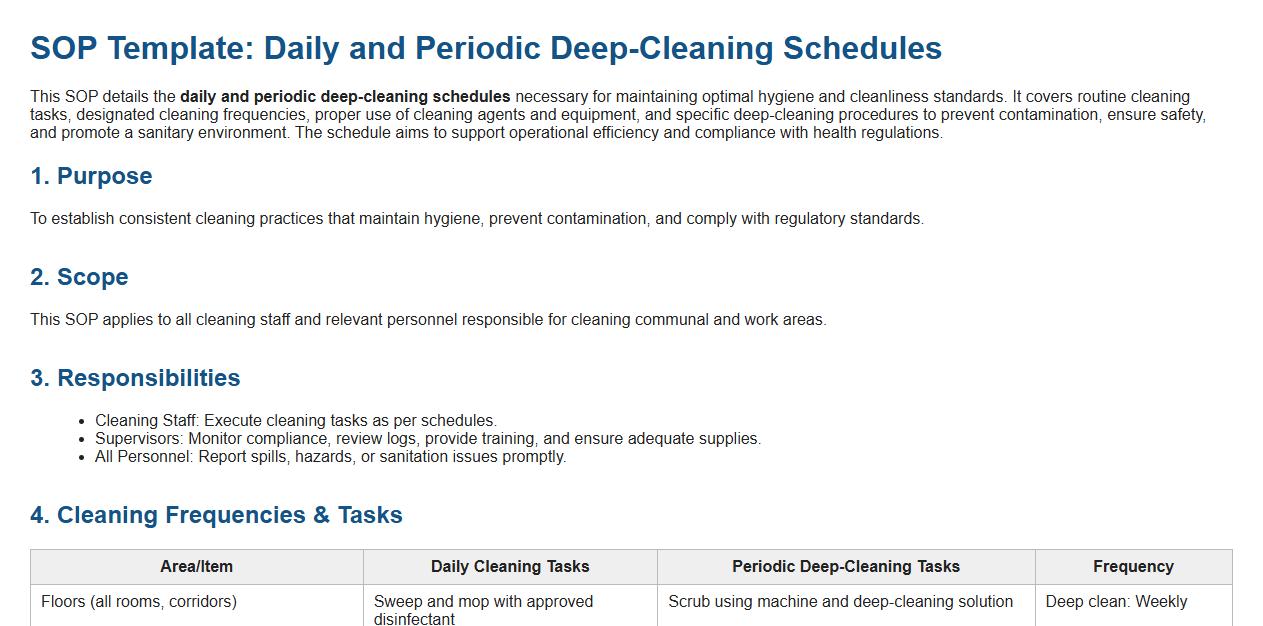
This SOP details the daily and periodic deep-cleaning schedules necessary for maintaining optimal hygiene and cleanliness standards. It covers routine cleaning tasks, designated cleaning frequencies, proper use of cleaning agents and equipment, and specific deep-cleaning procedures to prevent contamination, ensure safety, and promote a sanitary environment. The schedule aims to support operational efficiency and compliance with health regulations.
Spill management and response procedures.
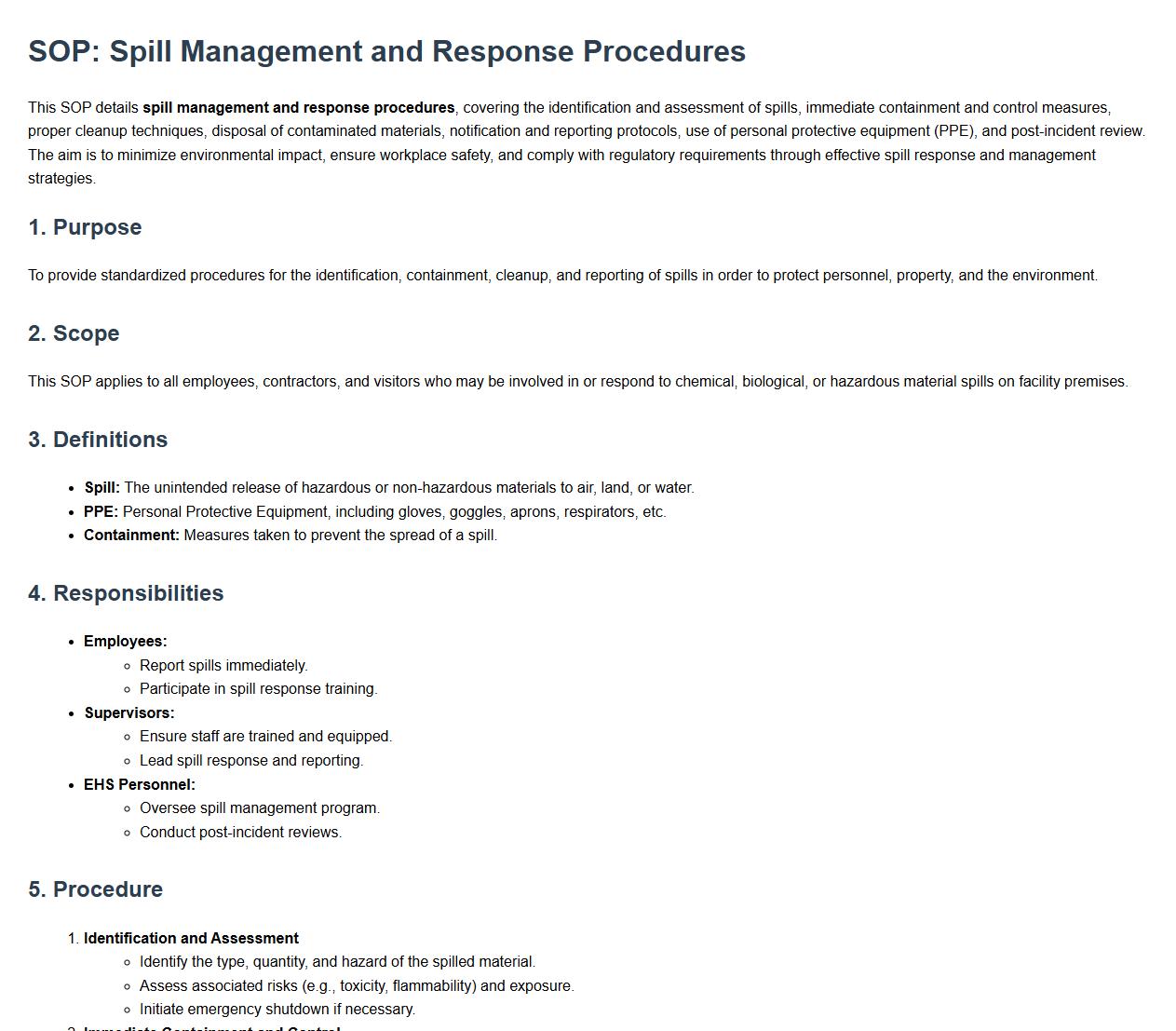
This SOP details spill management and response procedures, covering the identification and assessment of spills, immediate containment and control measures, proper cleanup techniques, disposal of contaminated materials, notification and reporting protocols, use of personal protective equipment (PPE), and post-incident review. The aim is to minimize environmental impact, ensure workplace safety, and comply with regulatory requirements through effective spill response and management strategies.
Personal protective equipment (PPE) usage.
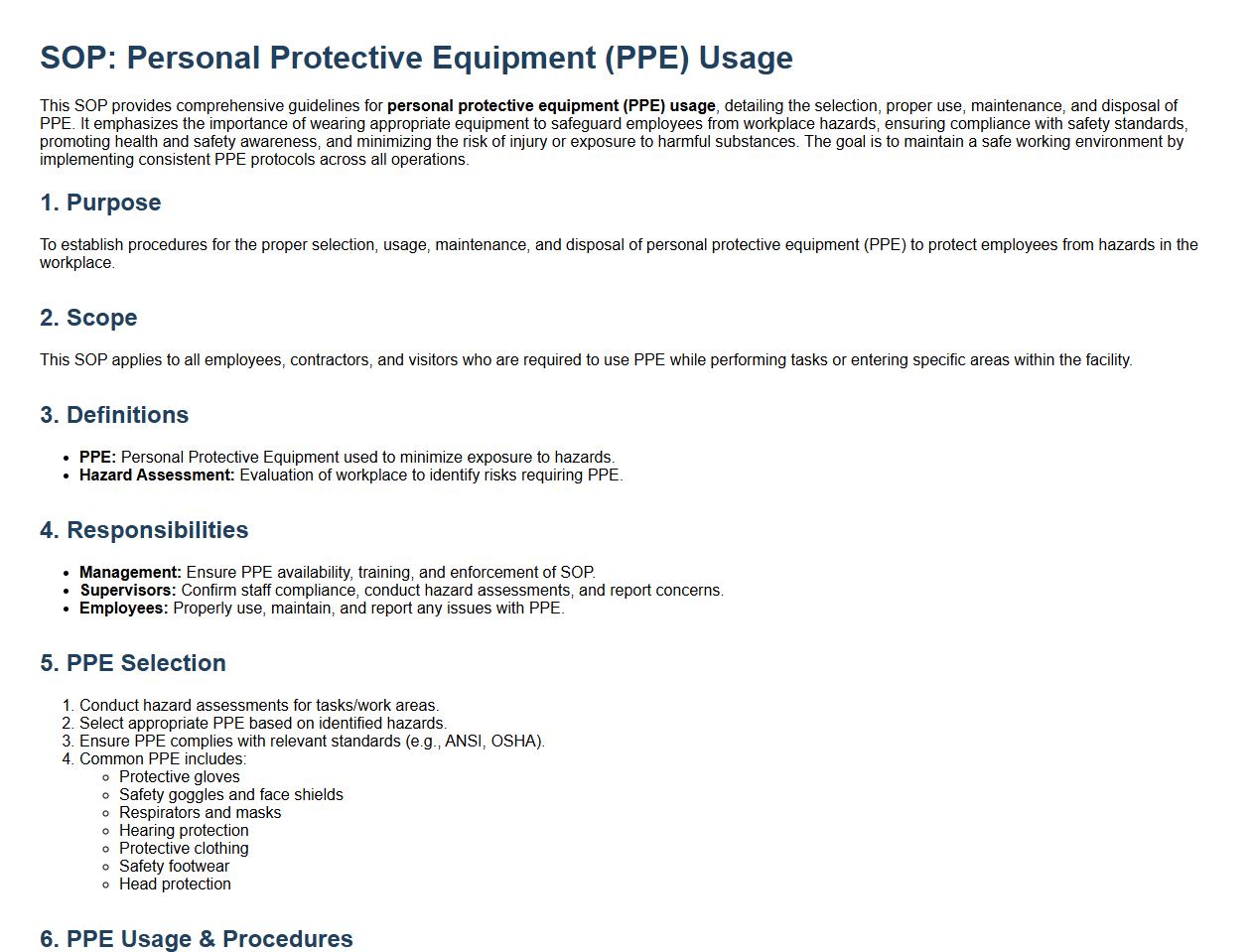
This SOP provides comprehensive guidelines for personal protective equipment (PPE) usage, detailing the selection, proper use, maintenance, and disposal of PPE. It emphasizes the importance of wearing appropriate equipment to safeguard employees from workplace hazards, ensuring compliance with safety standards, promoting health and safety awareness, and minimizing the risk of injury or exposure to harmful substances. The goal is to maintain a safe working environment by implementing consistent PPE protocols across all operations.
Inspection, reporting, and documentation of housekeeping tasks.
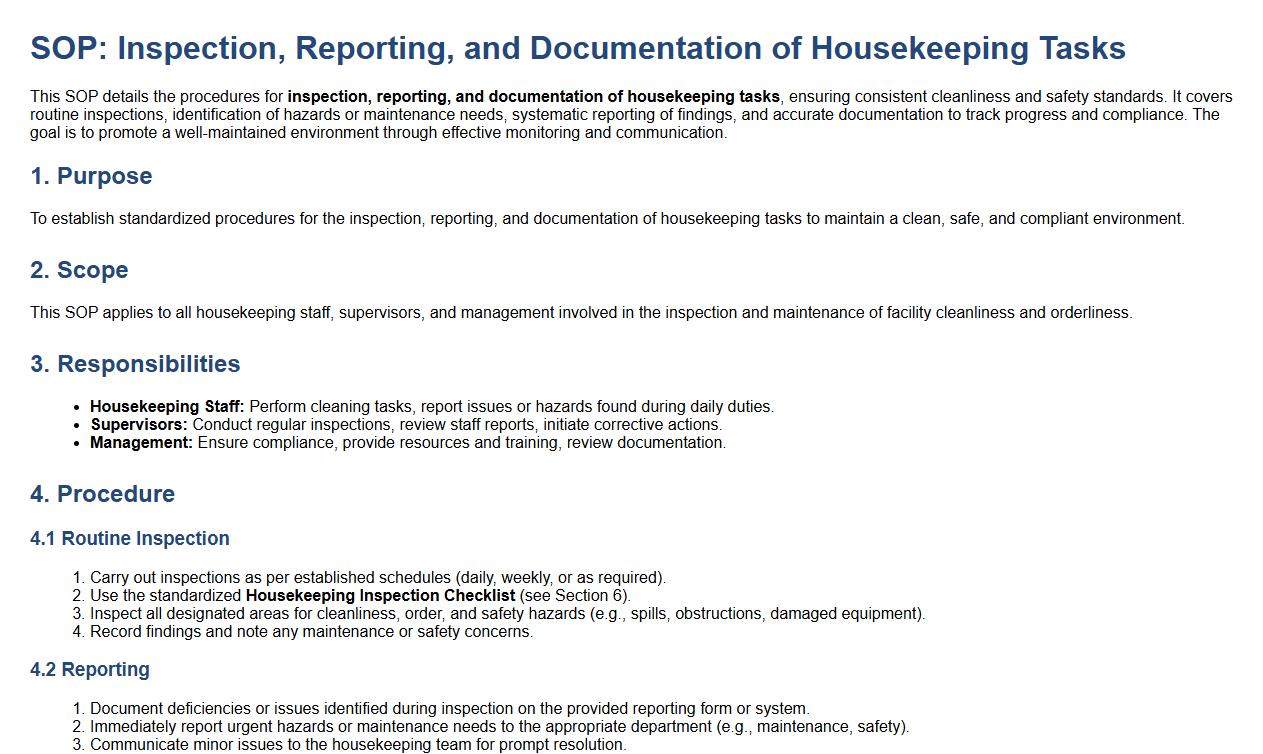
This SOP details the procedures for inspection, reporting, and documentation of housekeeping tasks, ensuring consistent cleanliness and safety standards. It covers routine inspections, identification of hazards or maintenance needs, systematic reporting of findings, and accurate documentation to track progress and compliance. The goal is to promote a well-maintained environment through effective monitoring and communication.
What is the primary objective of implementing a Standard Operating Procedure (SOP) for housekeeping in hospitals?
The primary objective of a Standard Operating Procedure (SOP) for housekeeping in hospitals is to ensure a consistent and high standard of cleanliness. This SOP aims to maintain a safe and hygienic environment for patients, staff, and visitors. It also helps in reducing the risk of infections and promoting overall hospital safety.
Which areas within the hospital are specified as requiring routine cleaning under the SOP?
The SOP specifies routine cleaning of critical areas such as patient rooms, operating theatres, and emergency departments. Additionally, common areas like corridors, waiting rooms, and restrooms are included. These areas are regularly cleaned to minimize contamination and ensure a sterile environment.
What personal protective equipment (PPE) must housekeeping staff use according to the SOP?
Housekeeping staff must wear appropriate personal protective equipment (PPE) including gloves, masks, and gowns when performing cleaning tasks. The use of disposable aprons and eye protection may also be required depending on the cleaning activity. This PPE protects staff from exposure to harmful substances and biological hazards.
How does the SOP address the handling and disposal of biomedical waste?
The SOP outlines strict protocols for the segregation, handling, and disposal of biomedical waste to prevent contamination and infection. Waste must be separated at source into designated bins with color-coded bags. Proper training is provided to ensure safe transport and disposal in compliance with regulatory guidelines.
What are the documented procedures for reporting and managing housekeeping incidents or hazards?
The SOP includes a clear process for reporting any housekeeping incidents or hazards, such as spills, equipment malfunctions, or exposure to hazardous materials. Staff must immediately notify supervisors and document the incident using standard forms. Follow-up actions are taken to investigate, resolve, and prevent recurrence of identified risks.