

A SOP Template for Defect Reporting in Manufacturing streamlines the process of identifying, documenting, and addressing product defects. This template ensures consistent quality control by providing clear guidelines for reporting issues, enabling quick resolution and minimizing production delays. Using this standardized approach improves communication between teams and enhances overall manufacturing efficiency.
Defect identification and initial assessment procedures.
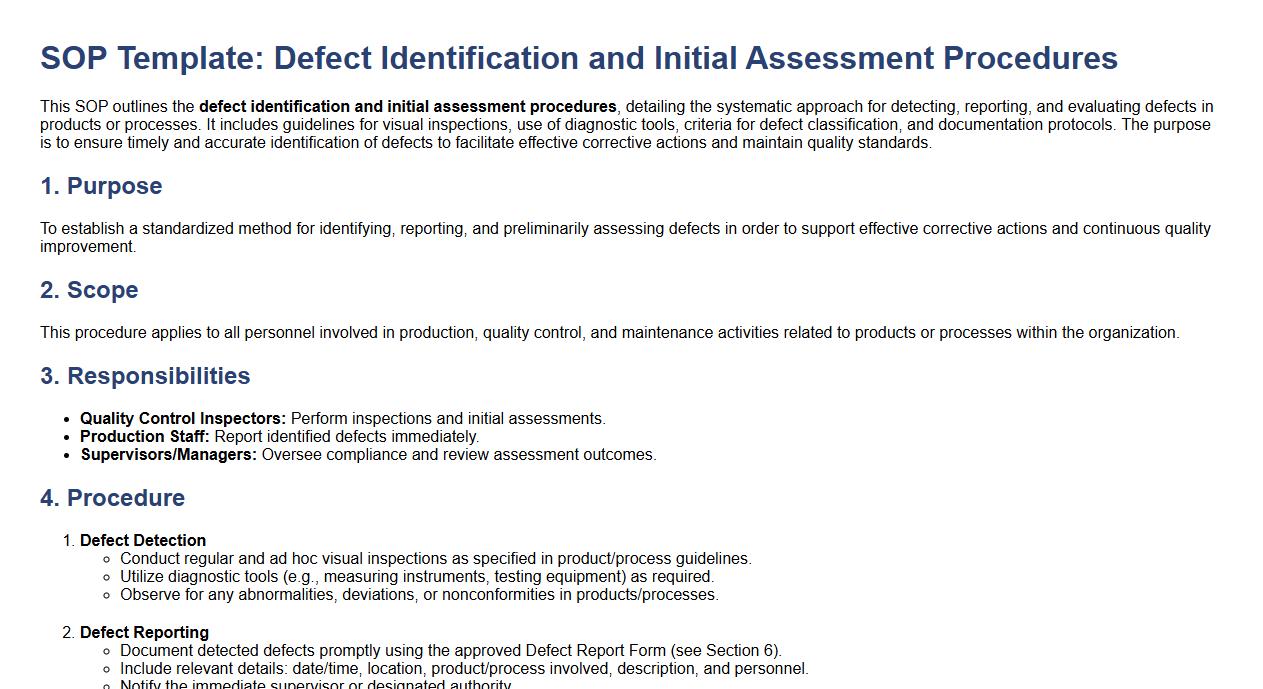
This SOP outlines the defect identification and initial assessment procedures, detailing the systematic approach for detecting, reporting, and evaluating defects in products or processes. It includes guidelines for visual inspections, use of diagnostic tools, criteria for defect classification, and documentation protocols. The purpose is to ensure timely and accurate identification of defects to facilitate effective corrective actions and maintain quality standards.
Documentation of defect details (location, type, severity, date/time).
This SOP details the documentation of defect details, specifying the accurate recording of defect location, type, severity, and date/time. The procedure ensures consistent and precise data collection for effective defect tracking, analysis, and timely resolution to maintain quality standards and operational efficiency.
Immediate containment actions for affected products.
This SOP details immediate containment actions for affected products, outlining essential steps to promptly isolate and control compromised items to prevent further contamination or distribution. It includes procedures for identifying affected products, initiating quarantine measures, notifying relevant personnel, documenting containment activities, and ensuring safe storage until resolution. The aim is to safeguard product quality, protect consumer safety, and maintain regulatory compliance through swift and effective containment responses.
Notification and escalation protocol to supervisors and quality teams.
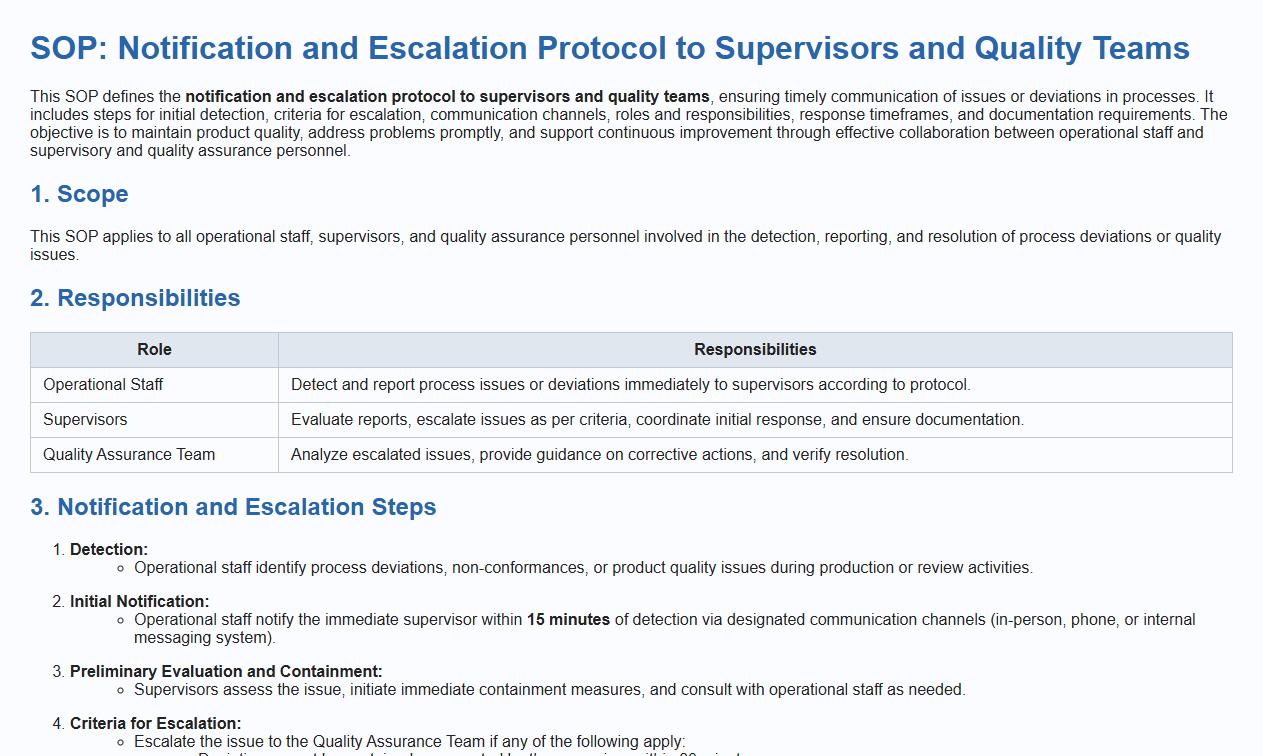
This SOP defines the notification and escalation protocol to supervisors and quality teams, ensuring timely communication of issues or deviations in processes. It includes steps for initial detection, criteria for escalation, communication channels, roles and responsibilities, response timeframes, and documentation requirements. The objective is to maintain product quality, address problems promptly, and support continuous improvement through effective collaboration between operational staff and supervisory and quality assurance personnel.
Defect tagging and segregation guidelines.
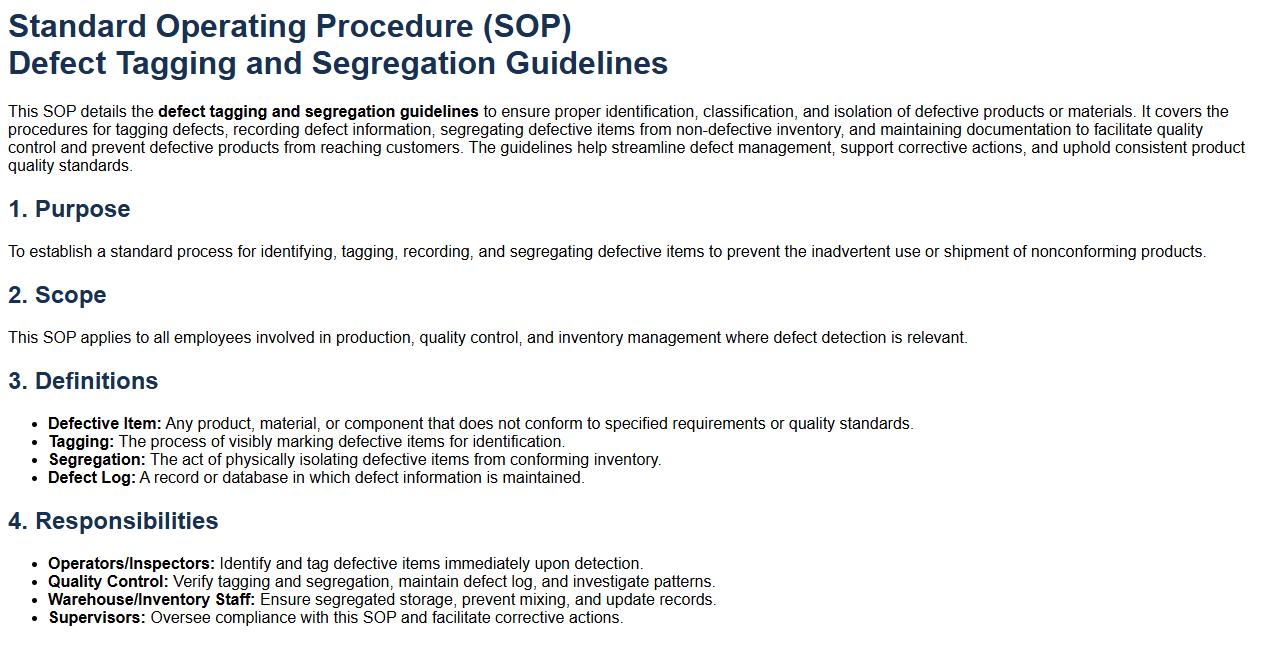
This SOP details the defect tagging and segregation guidelines to ensure proper identification, classification, and isolation of defective products or materials. It covers the procedures for tagging defects, recording defect information, segregating defective items from non-defective inventory, and maintaining documentation to facilitate quality control and prevent defective products from reaching customers. The guidelines help streamline defect management, support corrective actions, and uphold consistent product quality standards.
Root cause analysis initiation process.
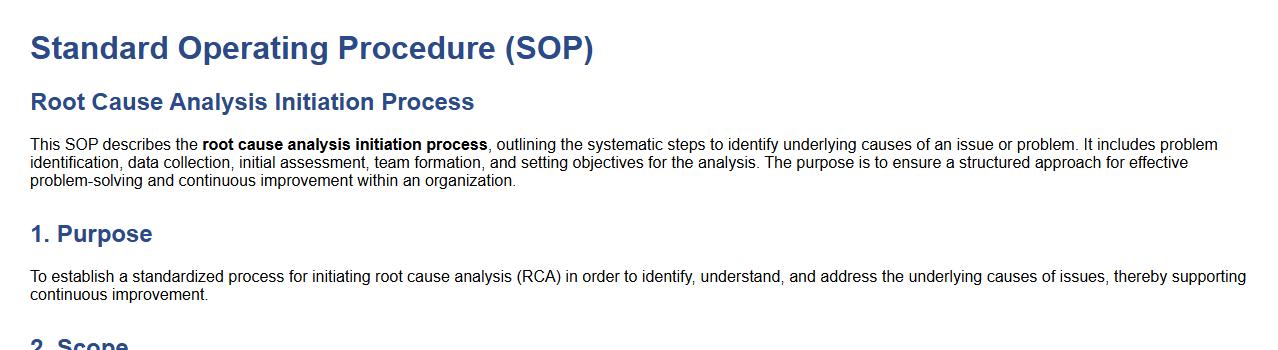
This SOP describes the root cause analysis initiation process, outlining the systematic steps to identify underlying causes of an issue or problem. It includes problem identification, data collection, initial assessment, team formation, and setting objectives for the analysis. The purpose is to ensure a structured approach for effective problem-solving and continuous improvement within an organization.
Corrective and preventive action documentation.
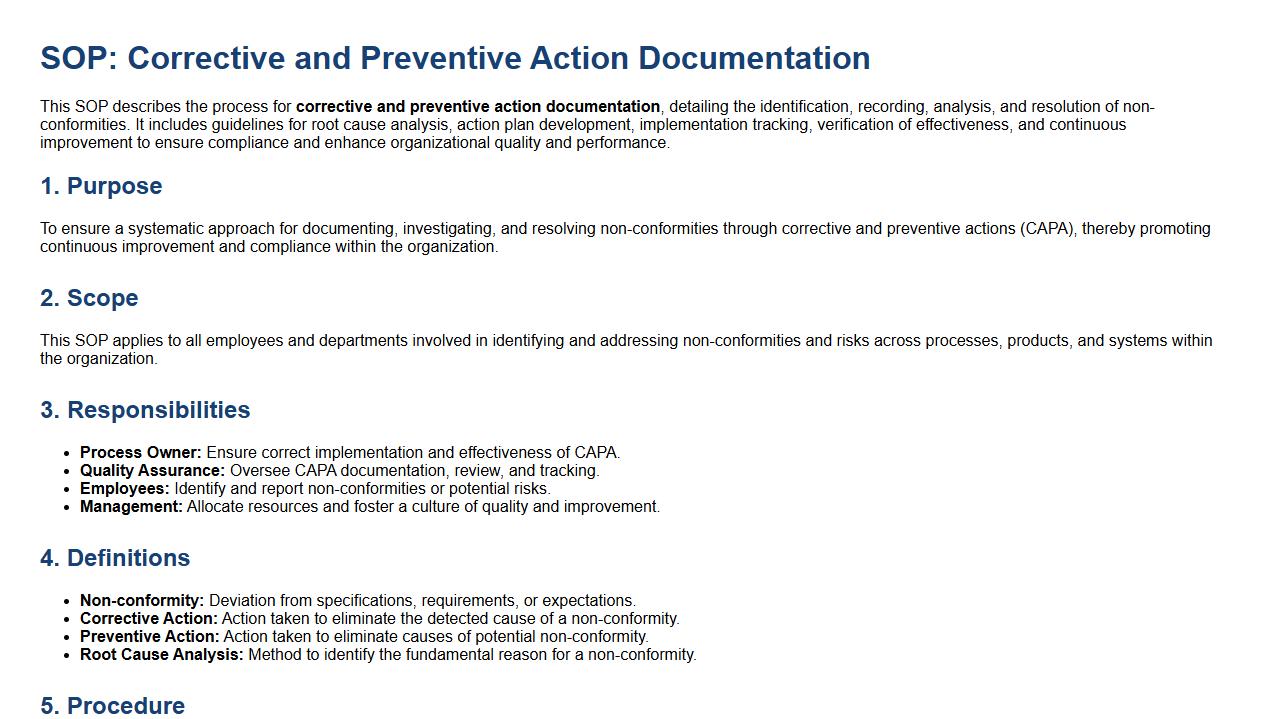
This SOP describes the process for corrective and preventive action documentation, detailing the identification, recording, analysis, and resolution of non-conformities. It includes guidelines for root cause analysis, action plan development, implementation tracking, verification of effectiveness, and continuous improvement to ensure compliance and enhance organizational quality and performance.
Defective sample handling and storage instructions.
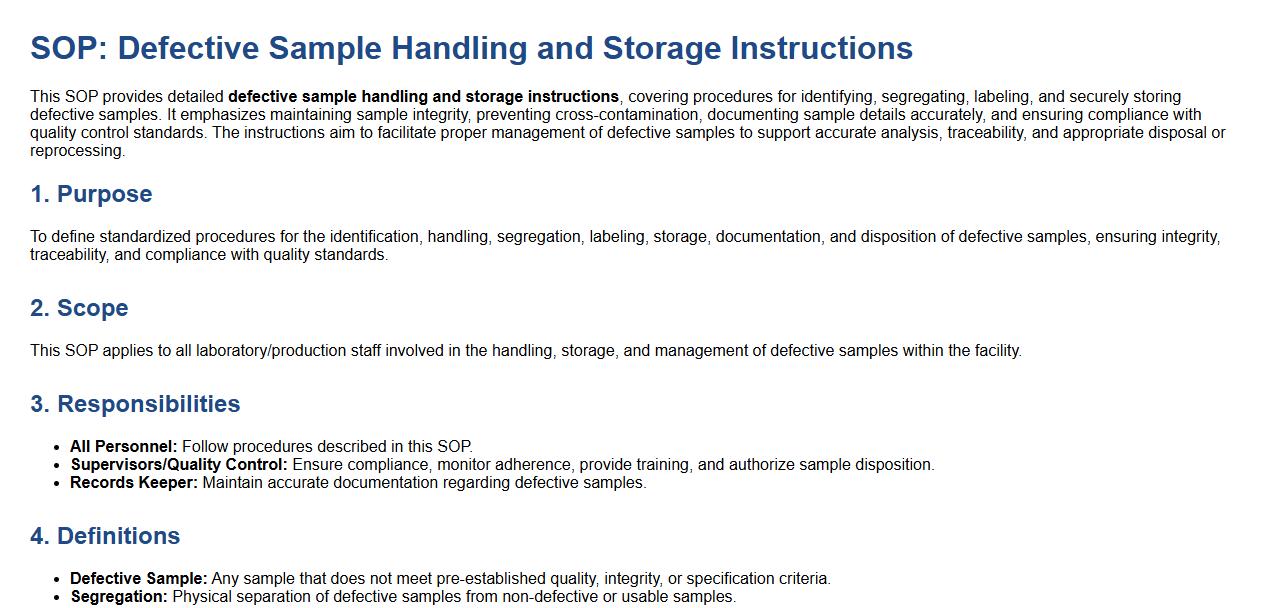
This SOP provides detailed defective sample handling and storage instructions, covering procedures for identifying, segregating, labeling, and securely storing defective samples. It emphasizes maintaining sample integrity, preventing cross-contamination, documenting sample details accurately, and ensuring compliance with quality control standards. The instructions aim to facilitate proper management of defective samples to support accurate analysis, traceability, and appropriate disposal or reprocessing.
Reporting template completion and approval workflow.
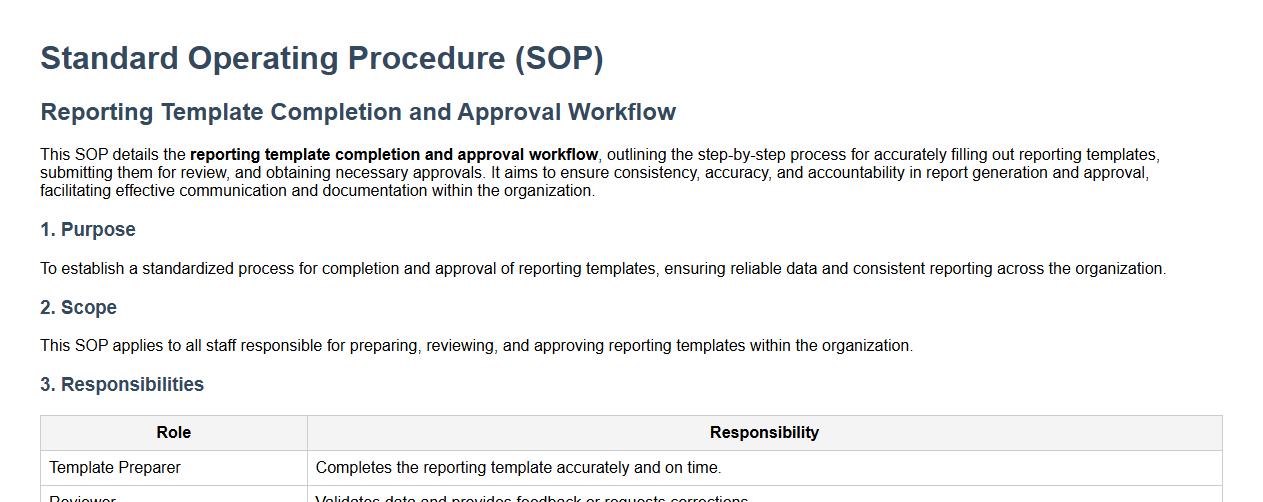
This SOP details the reporting template completion and approval workflow, outlining the step-by-step process for accurately filling out reporting templates, submitting them for review, and obtaining necessary approvals. It aims to ensure consistency, accuracy, and accountability in report generation and approval, facilitating effective communication and documentation within the organization.
Follow-up and closure procedures for defect reports.
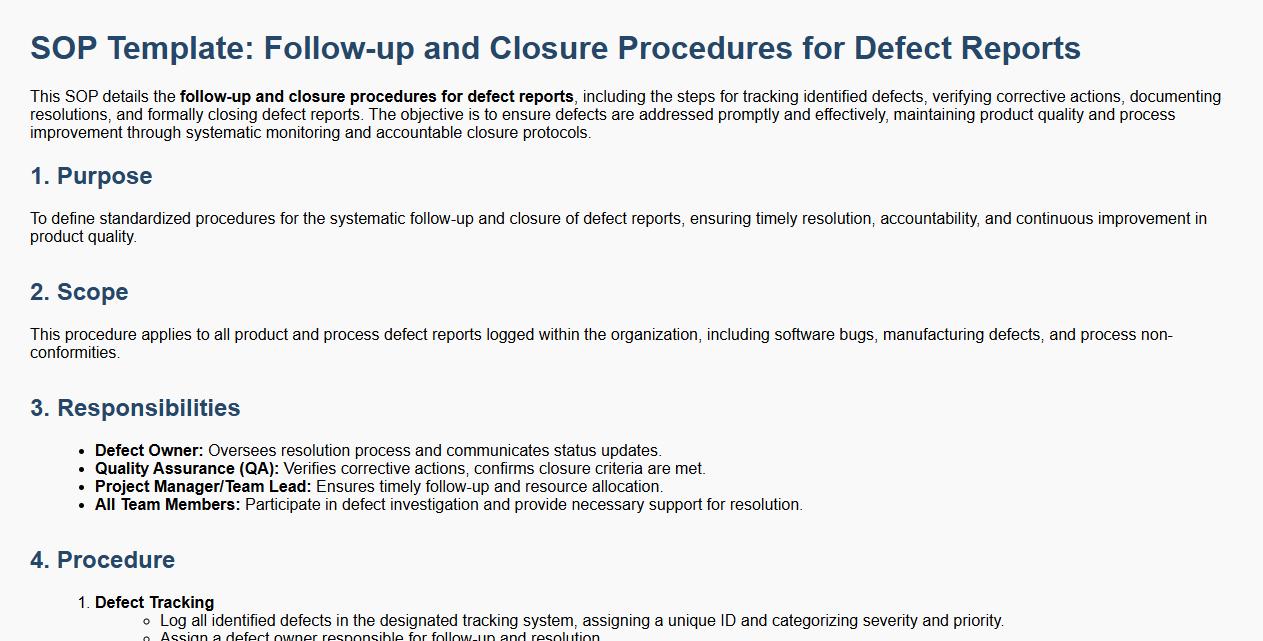
This SOP details the follow-up and closure procedures for defect reports, including the steps for tracking identified defects, verifying corrective actions, documenting resolutions, and formally closing defect reports. The objective is to ensure defects are addressed promptly and effectively, maintaining product quality and process improvement through systematic monitoring and accountable closure protocols.
Key Information in a Defect Report According to the SOP
The defect report must include a detailed description of the defect, its impact, and the environment in which it occurred. It should also specify the steps to reproduce the issue and any relevant screenshots or logs. Accurate and comprehensive information ensures efficient defect resolution and tracking.
Personnel Responsible for Initiating and Approving a Defect Report
The SOP assigns the responsibility of initiating a defect report to the quality assurance or testing team members who identify the defect first. Approval typically rests with the project manager or the quality assurance lead, ensuring proper validation before further action. This division of responsibilities maintains accountability and process integrity.
Steps for Defect Identification and Documentation in the SOP
The SOP outlines a clear process beginning with the identification of the defect during testing or user feedback. Subsequently, the defect is documented with necessary details such as severity, steps to reproduce, and environment specifics. This structured documentation enables efficient tracking and resolution.
Defect Categorization and Prioritization Procedures in the SOP
According to the SOP, defects must be categorized based on their severity and impact on the system or user experience. Prioritization is determined through evaluating the urgency of the defect and its effect on project timelines. This ensures resources are allocated effectively towards critical issues.
Required Timeline for Reporting and Escalating Defects Under SOP Guidelines
The SOP mandates that all defects be reported immediately upon discovery, typically within 24 hours. Escalation procedures require that high-priority defects be communicated to senior management or stakeholders within a defined timeframe. Timely reporting and escalation are crucial for minimizing project delays and ensuring quality control.