
A SOP Template for Manufacturing Material Handling provides a clear framework for standardized procedures in the efficient movement, storage, and control of materials within a manufacturing facility. This template ensures consistent safety practices, reduces errors, and improves workflow optimization. Implementing this document helps maintain regulatory compliance and enhances overall productivity in material handling operations.
Material receiving and verification procedures.
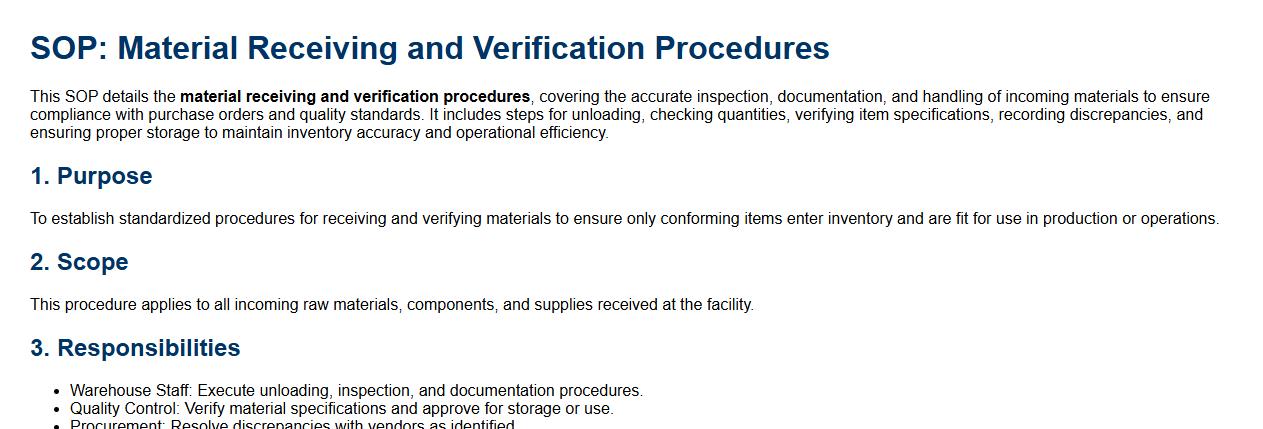
This SOP details the material receiving and verification procedures, covering the accurate inspection, documentation, and handling of incoming materials to ensure compliance with purchase orders and quality standards. It includes steps for unloading, checking quantities, verifying item specifications, recording discrepancies, and ensuring proper storage to maintain inventory accuracy and operational efficiency.
Inspection and quality check of incoming materials.
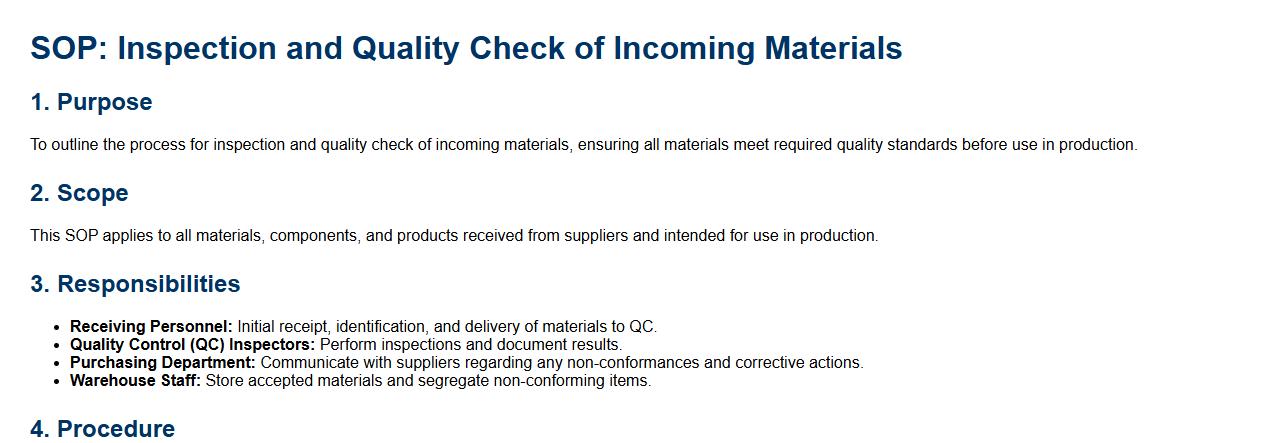
This SOP details the process for inspection and quality check of incoming materials, including verification of material specifications, visual and dimensional inspections, testing for compliance with quality standards, documentation of inspection results, handling of non-conforming materials, and coordination with suppliers for corrective actions. The purpose is to ensure that all incoming materials meet the required quality standards to maintain product integrity and support efficient production processes.
Documentation and labeling of materials.
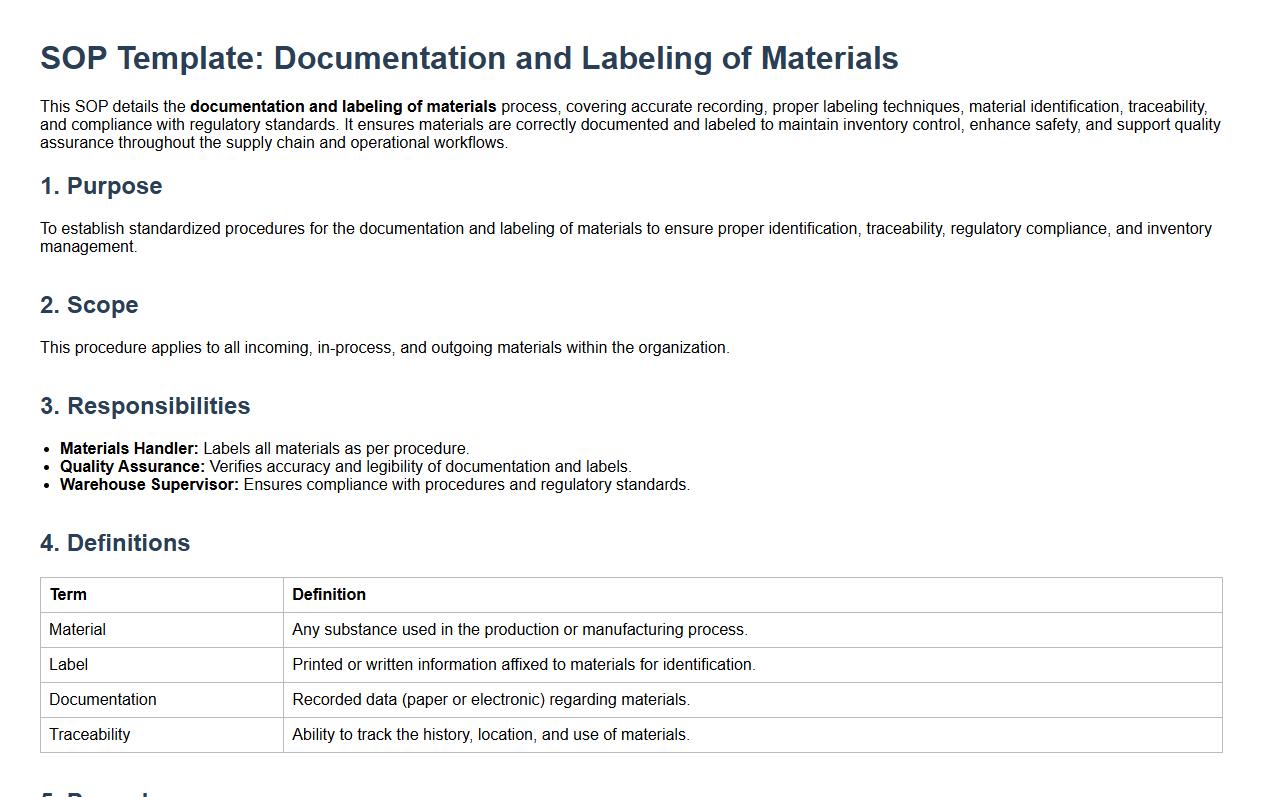
This SOP details the documentation and labeling of materials process, covering accurate recording, proper labeling techniques, material identification, traceability, and compliance with regulatory standards. It ensures materials are correctly documented and labeled to maintain inventory control, enhance safety, and support quality assurance throughout the supply chain and operational workflows.
Safe unloading and storage protocols.
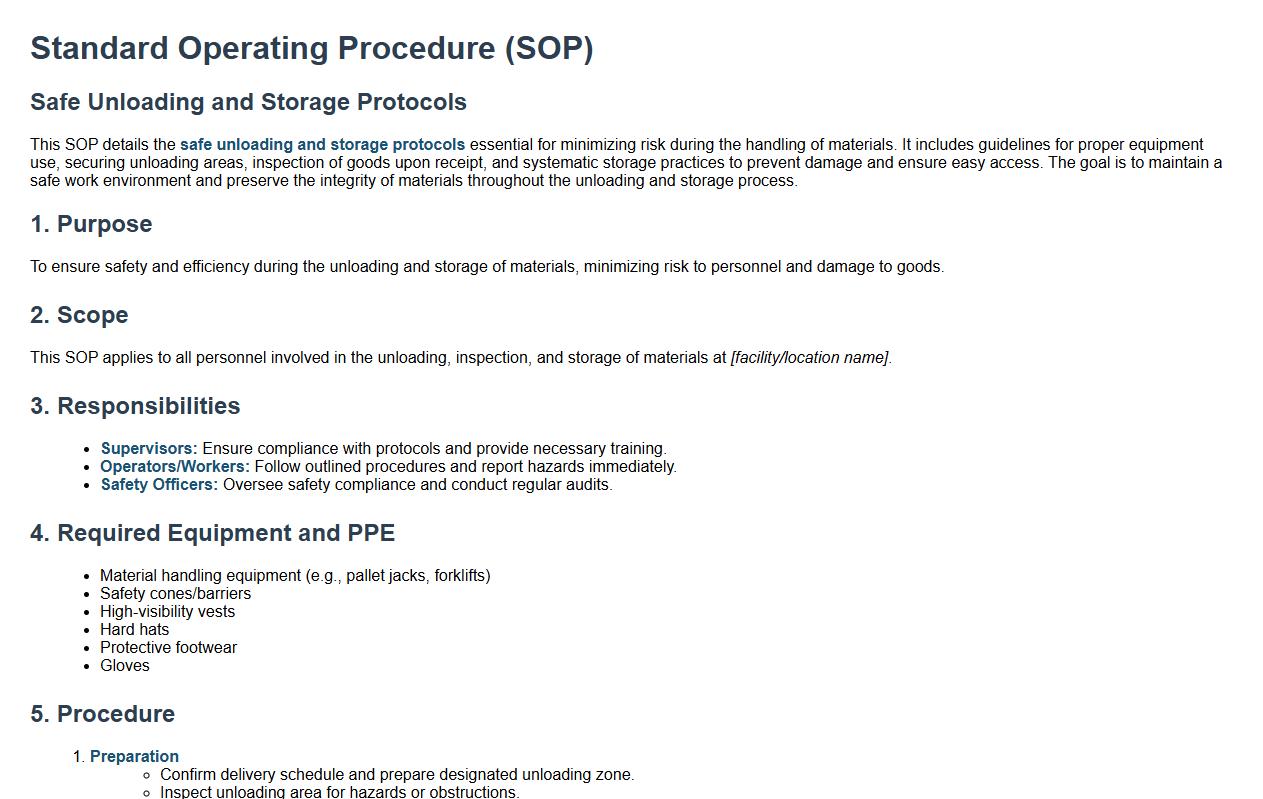
This SOP details the safe unloading and storage protocols essential for minimizing risk during the handling of materials. It includes guidelines for proper equipment use, securing unloading areas, inspection of goods upon receipt, and systematic storage practices to prevent damage and ensure easy access. The goal is to maintain a safe work environment and preserve the integrity of materials throughout the unloading and storage process.
Material movement within the facility guidelines.
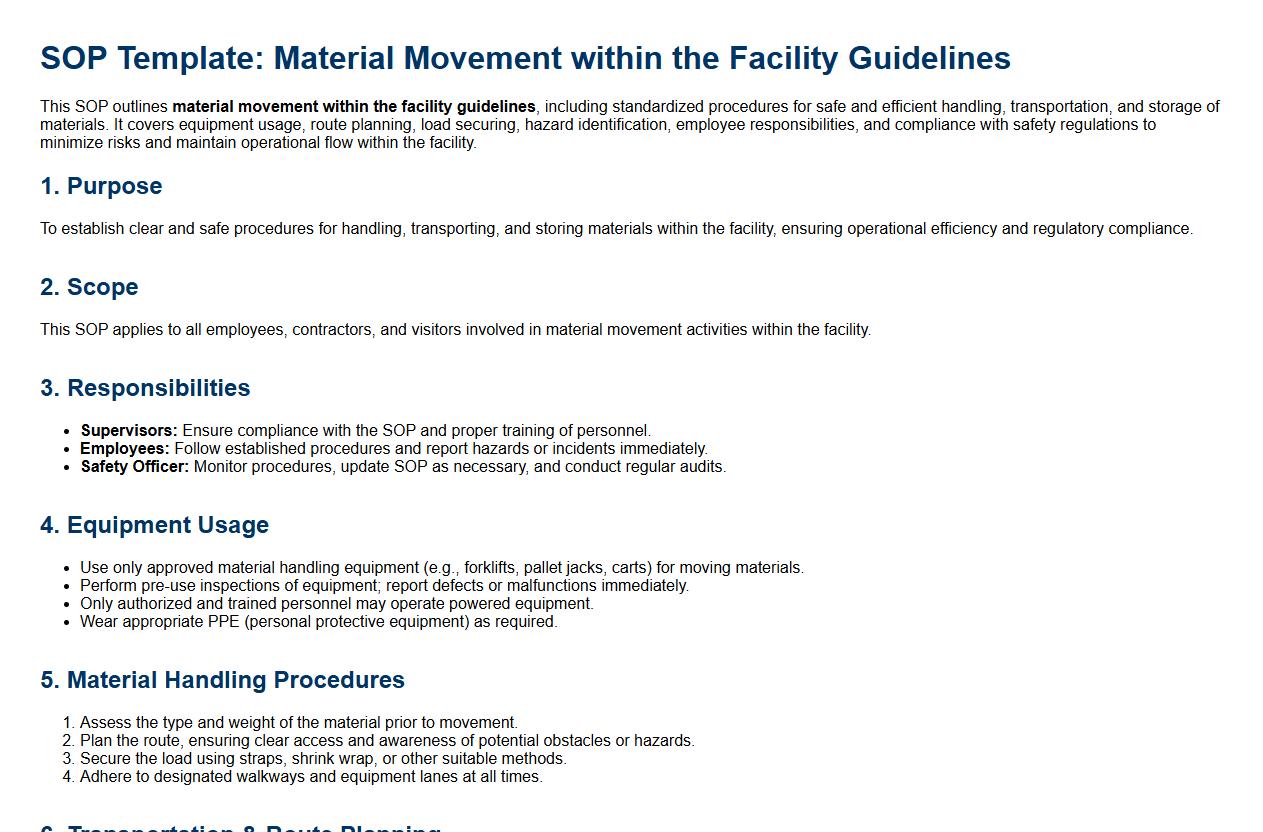
This SOP outlines material movement within the facility guidelines, including standardized procedures for safe and efficient handling, transportation, and storage of materials. It covers equipment usage, route planning, load securing, hazard identification, employee responsibilities, and compliance with safety regulations to minimize risks and maintain operational flow within the facility.
Use and maintenance of material handling equipment.
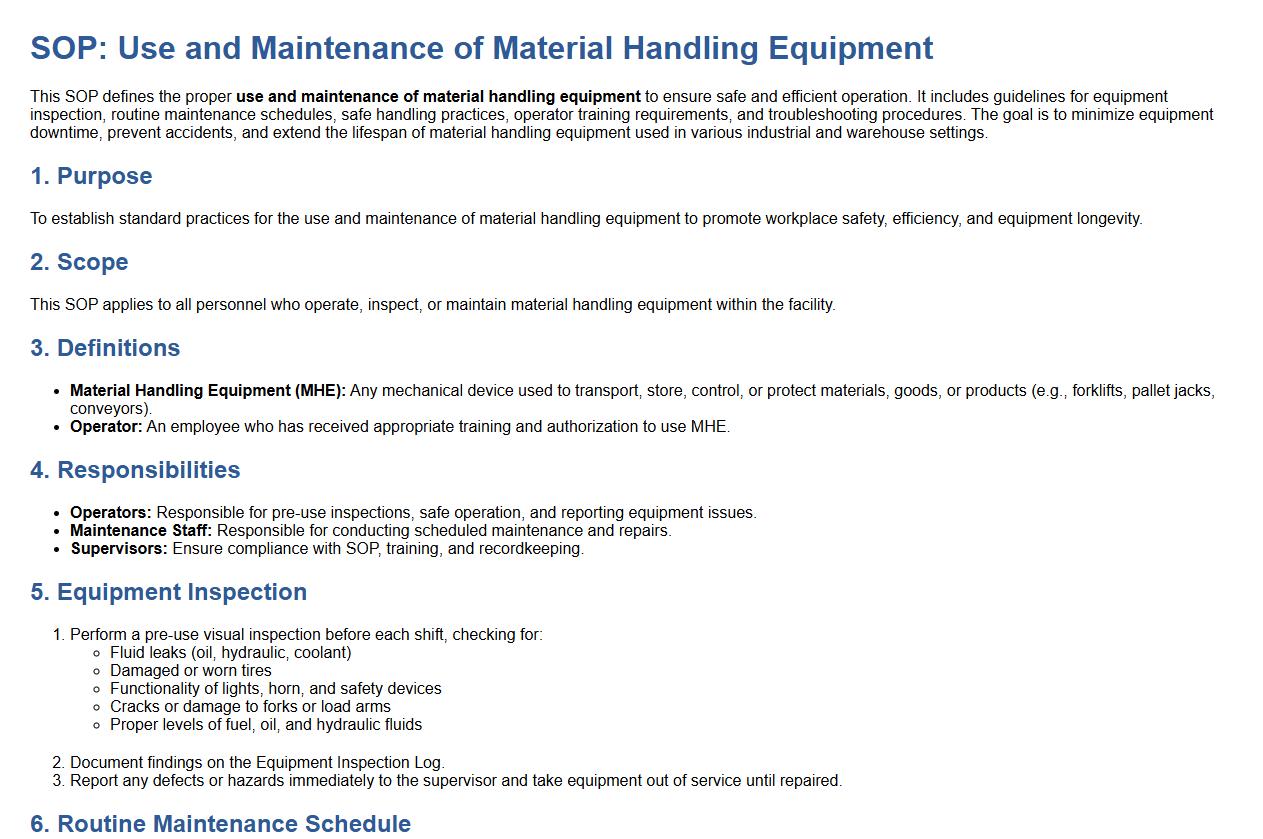
This SOP defines the proper use and maintenance of material handling equipment to ensure safe and efficient operation. It includes guidelines for equipment inspection, routine maintenance schedules, safe handling practices, operator training requirements, and troubleshooting procedures. The goal is to minimize equipment downtime, prevent accidents, and extend the lifespan of material handling equipment used in various industrial and warehouse settings.
Inventory tracking and stock rotation methods.
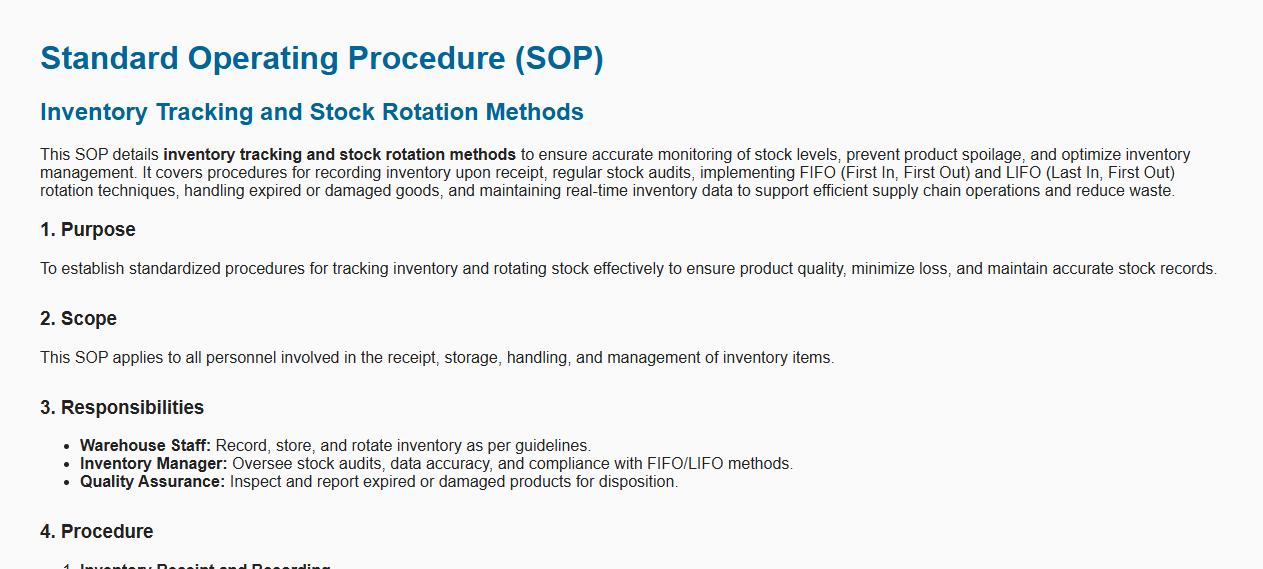
This SOP details inventory tracking and stock rotation methods to ensure accurate monitoring of stock levels, prevent product spoilage, and optimize inventory management. It covers procedures for recording inventory upon receipt, regular stock audits, implementing FIFO (First In, First Out) and LIFO (Last In, First Out) rotation techniques, handling expired or damaged goods, and maintaining real-time inventory data to support efficient supply chain operations and reduce waste.
Hazardous material handling and storage instructions.
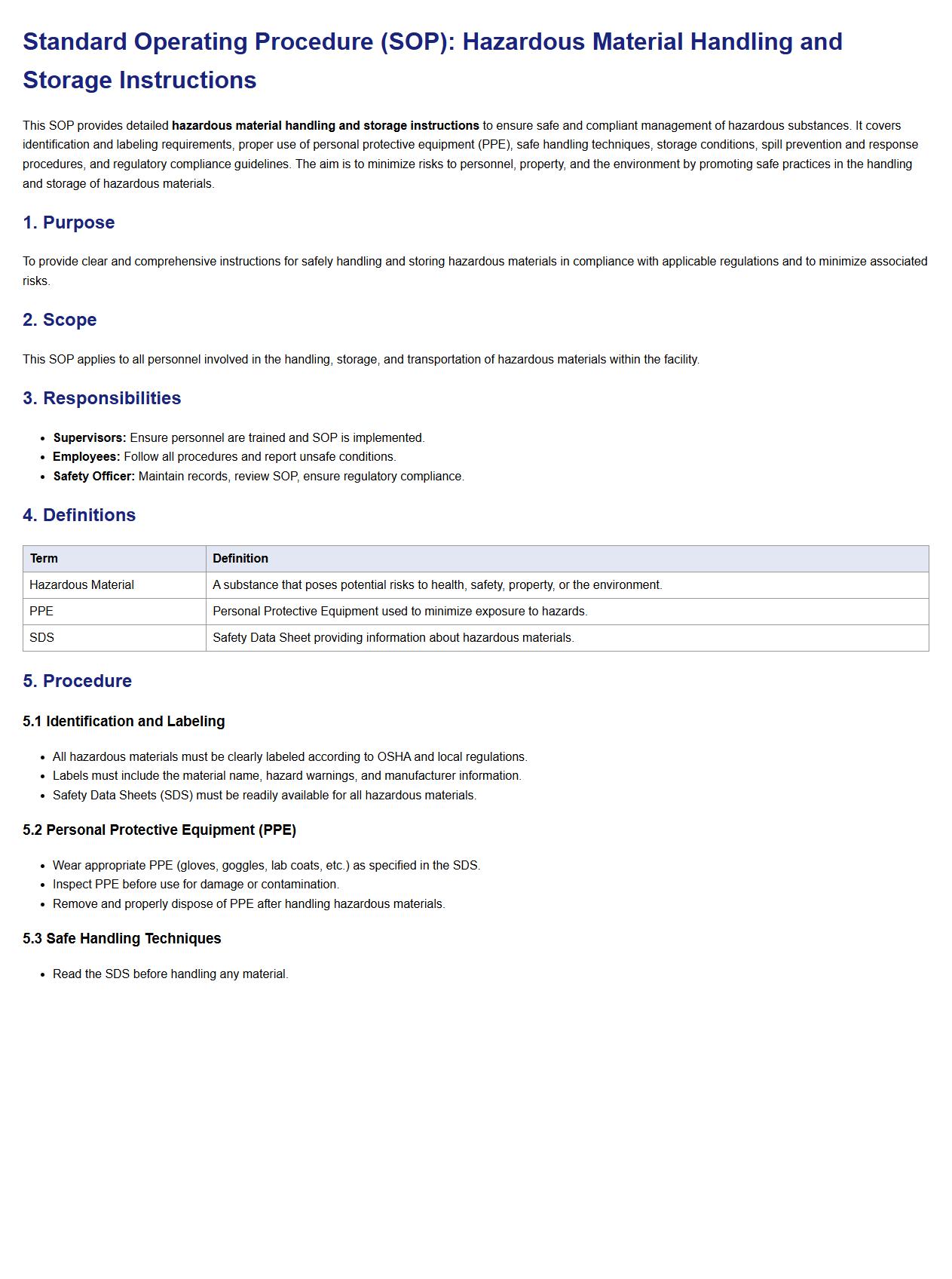
This SOP provides detailed hazardous material handling and storage instructions to ensure safe and compliant management of hazardous substances. It covers identification and labeling requirements, proper use of personal protective equipment (PPE), safe handling techniques, storage conditions, spill prevention and response procedures, and regulatory compliance guidelines. The aim is to minimize risks to personnel, property, and the environment by promoting safe practices in the handling and storage of hazardous materials.
Waste and scrap material management processes.
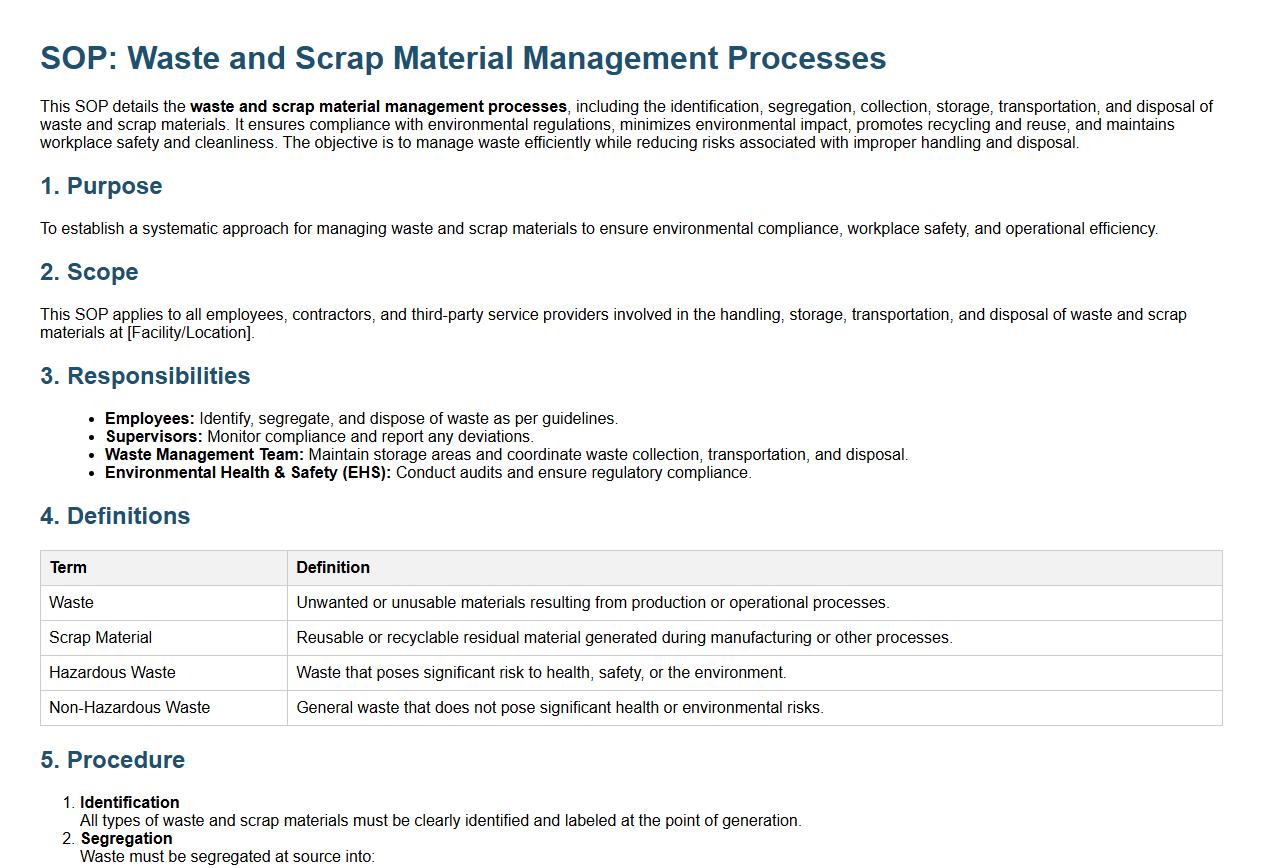
This SOP details the waste and scrap material management processes, including the identification, segregation, collection, storage, transportation, and disposal of waste and scrap materials. It ensures compliance with environmental regulations, minimizes environmental impact, promotes recycling and reuse, and maintains workplace safety and cleanliness. The objective is to manage waste efficiently while reducing risks associated with improper handling and disposal.
Incident reporting and escalation procedures.
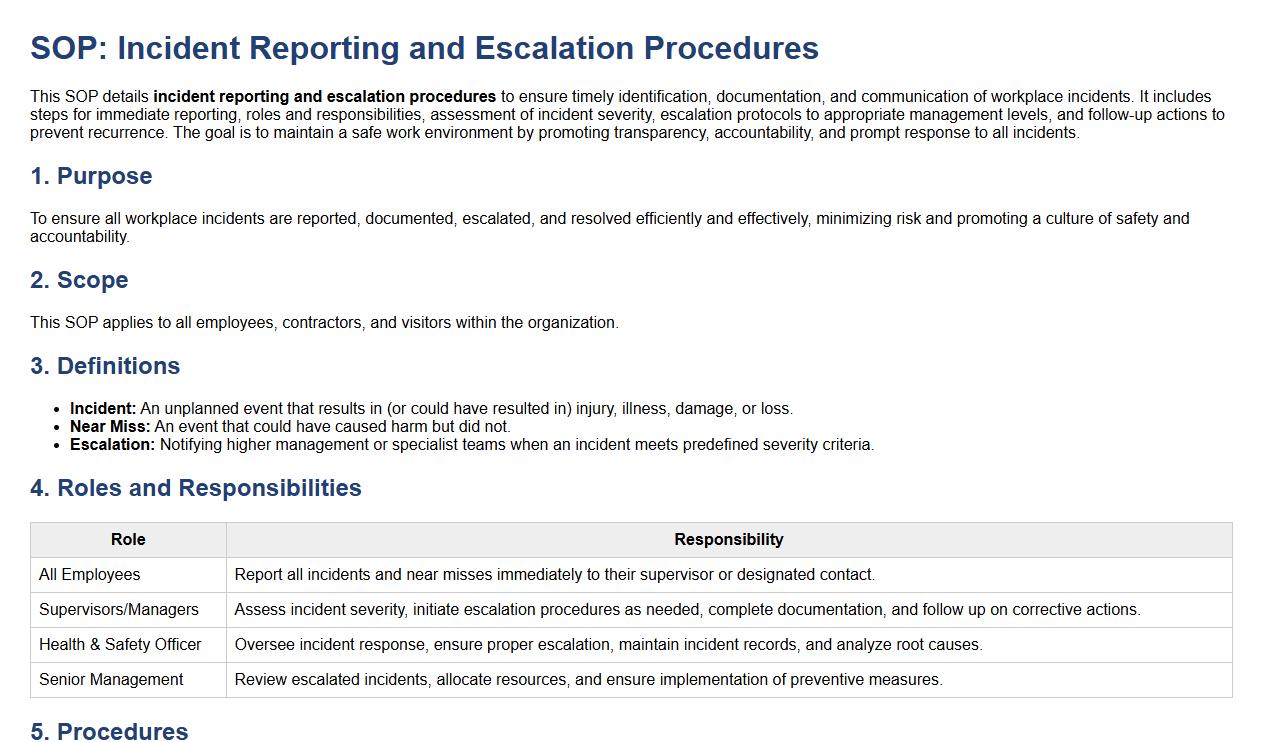
This SOP details incident reporting and escalation procedures to ensure timely identification, documentation, and communication of workplace incidents. It includes steps for immediate reporting, roles and responsibilities, assessment of incident severity, escalation protocols to appropriate management levels, and follow-up actions to prevent recurrence. The goal is to maintain a safe work environment by promoting transparency, accountability, and prompt response to all incidents.
Key Steps in SOP for Safe and Efficient Material Handling
The SOP emphasizes proper training of personnel to ensure safe handling practices. It requires adherence to standardized methods for lifting, moving, and storing materials to prevent accidents. Regular equipment inspections and maintenance are also crucial to maintain operational efficiency and safety.
Mandatory Personal Protective Equipment (PPE) in the SOP
The SOP mandates the use of gloves, safety goggles, and steel-toed boots when handling materials to protect workers from injuries. Depending on the material type, respirators or face shields may be required for additional safety. It ensures that PPE is properly maintained and replaced as needed to maintain its effectiveness.
Procedure for Labeling and Transferring Raw Materials
The SOP specifies that all raw materials must be clearly labeled with identification codes, batch numbers, and handling instructions. Transfer processes must include verification steps to maintain traceability and prevent mixing of materials. Documentation of the transfer must be completed immediately to ensure accountability within the facility.
Documentation and Record-Keeping Requirements
Each stage of material handling requires detailed record-keeping to track material movement and condition. The SOP calls for logging inspection results, transfer details, and any deviations from standard procedures. Proper documentation supports compliance audits and continuous improvement efforts within manufacturing operations.
Handling and Storage of Hazardous or Sensitive Materials
The SOP outlines specific protocols for the safe handling and secure storage of hazardous or sensitive materials. It requires segregation from other materials and compliance with regulatory guidelines to minimize risks. Personnel must receive specialized training and use appropriate PPE to ensure safety during handling.