
A SOP Template for Preventive Maintenance in Manufacturing ensures systematic scheduling and execution of equipment inspections to minimize downtime and extend machinery lifespan. This template outlines step-by-step procedures, safety protocols, and documentation requirements for technicians. Consistent use of the template enhances operational efficiency and reduces unexpected failures in production processes.
Preventive maintenance scheduling and planning.
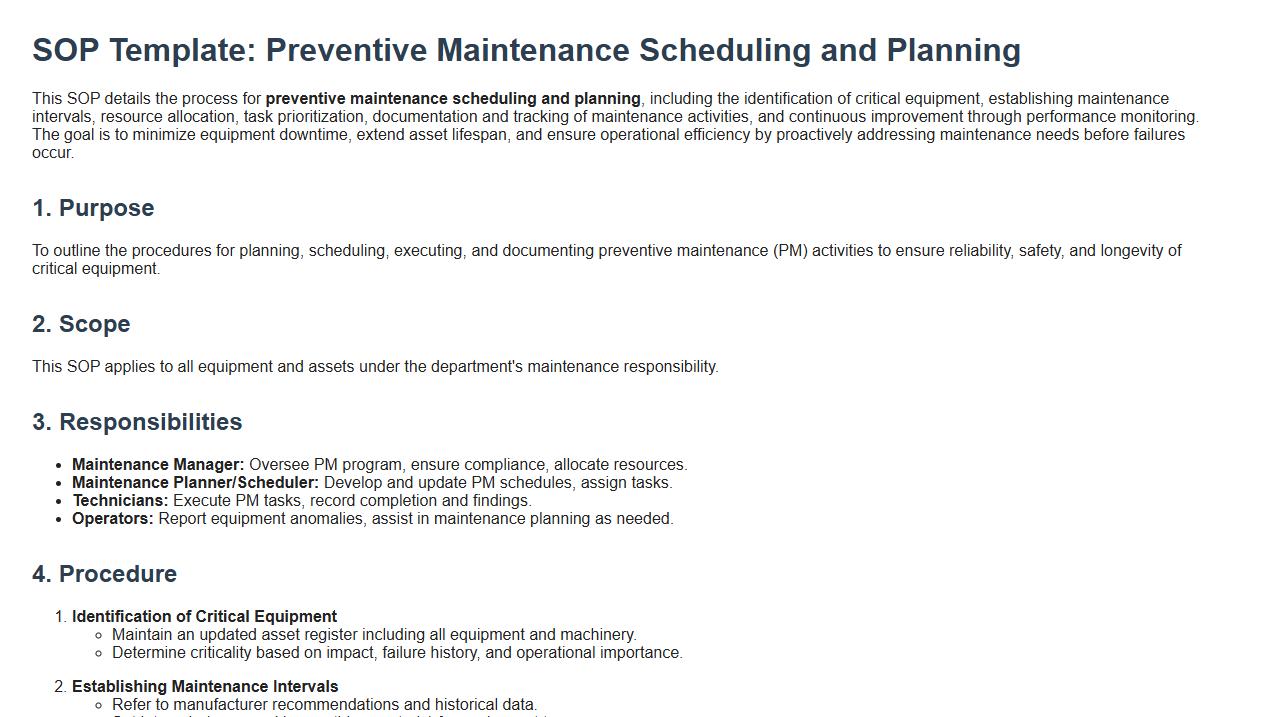
This SOP details the process for preventive maintenance scheduling and planning, including the identification of critical equipment, establishing maintenance intervals, resource allocation, task prioritization, documentation and tracking of maintenance activities, and continuous improvement through performance monitoring. The goal is to minimize equipment downtime, extend asset lifespan, and ensure operational efficiency by proactively addressing maintenance needs before failures occur.
Equipment inspection and checklist procedures.
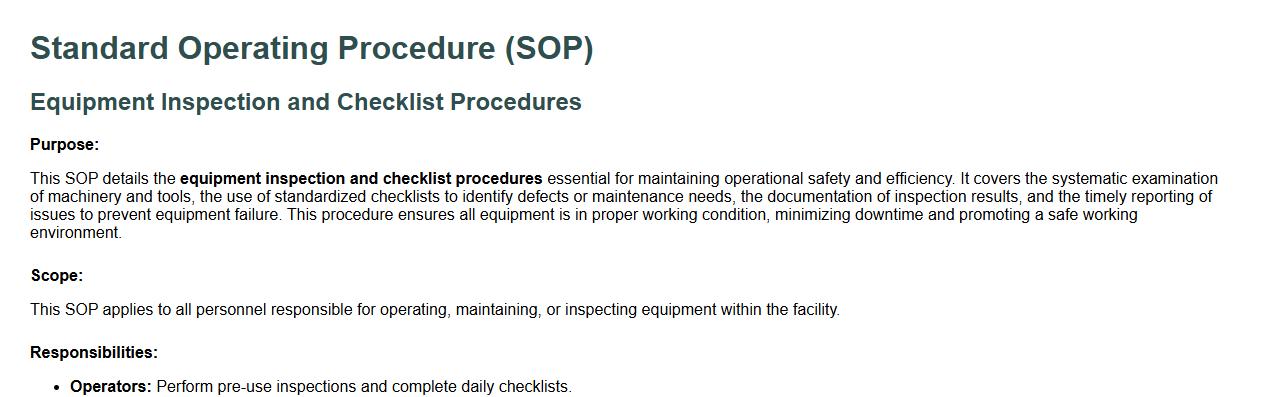
This SOP details the equipment inspection and checklist procedures essential for maintaining operational safety and efficiency. It covers the systematic examination of machinery and tools, the use of standardized checklists to identify defects or maintenance needs, the documentation of inspection results, and the timely reporting of issues to prevent equipment failure. This procedure ensures all equipment is in proper working condition, minimizing downtime and promoting a safe working environment.
Lubrication and cleaning routines.
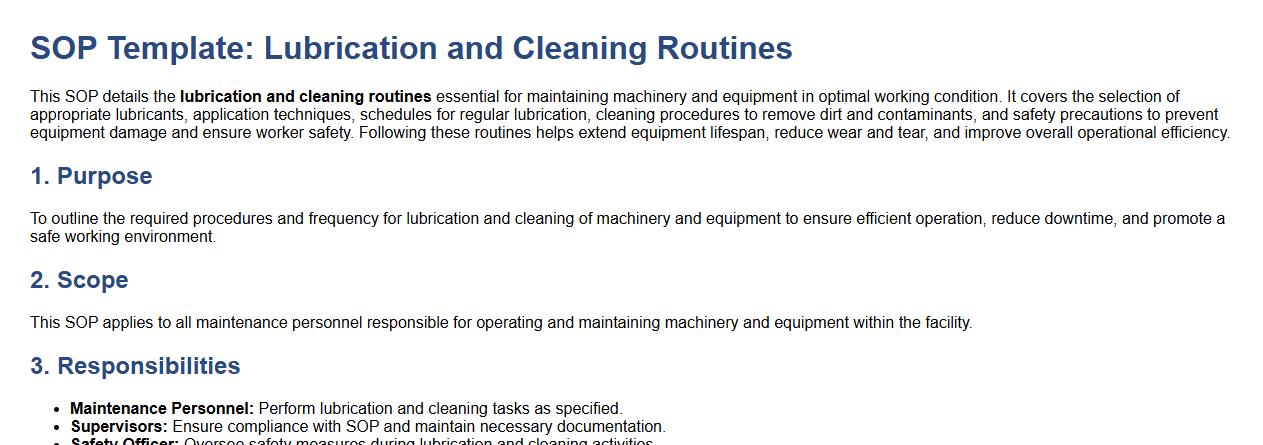
This SOP details the lubrication and cleaning routines essential for maintaining machinery and equipment in optimal working condition. It covers the selection of appropriate lubricants, application techniques, schedules for regular lubrication, cleaning procedures to remove dirt and contaminants, and safety precautions to prevent equipment damage and ensure worker safety. Following these routines helps extend equipment lifespan, reduce wear and tear, and improve overall operational efficiency.
Calibration and adjustment protocols.
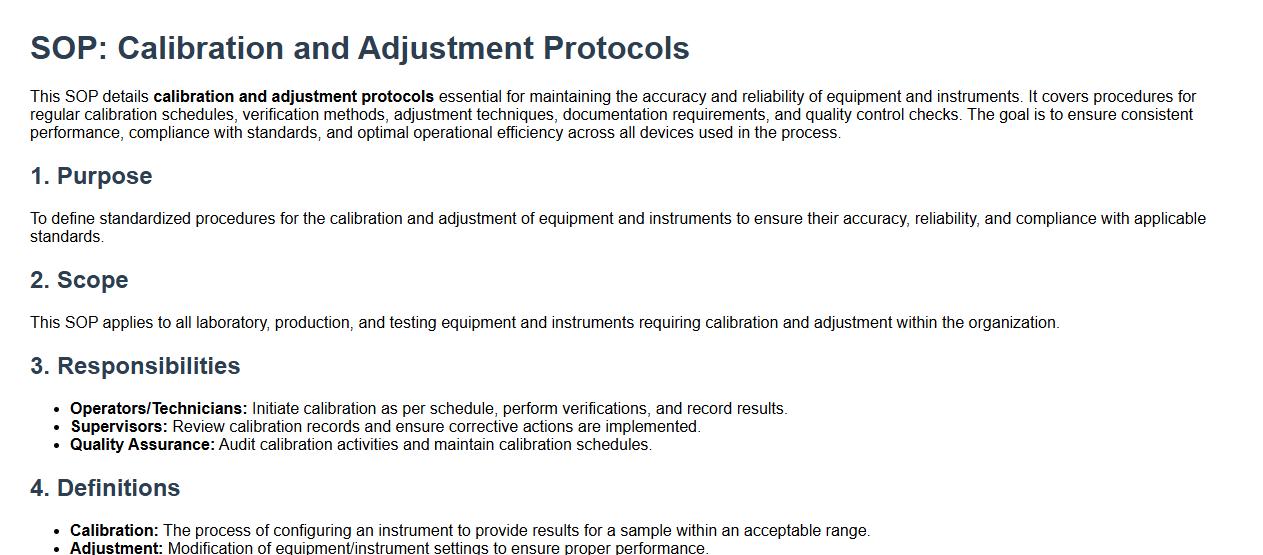
This SOP details calibration and adjustment protocols essential for maintaining the accuracy and reliability of equipment and instruments. It covers procedures for regular calibration schedules, verification methods, adjustment techniques, documentation requirements, and quality control checks. The goal is to ensure consistent performance, compliance with standards, and optimal operational efficiency across all devices used in the process.
Parts replacement and consumables management.
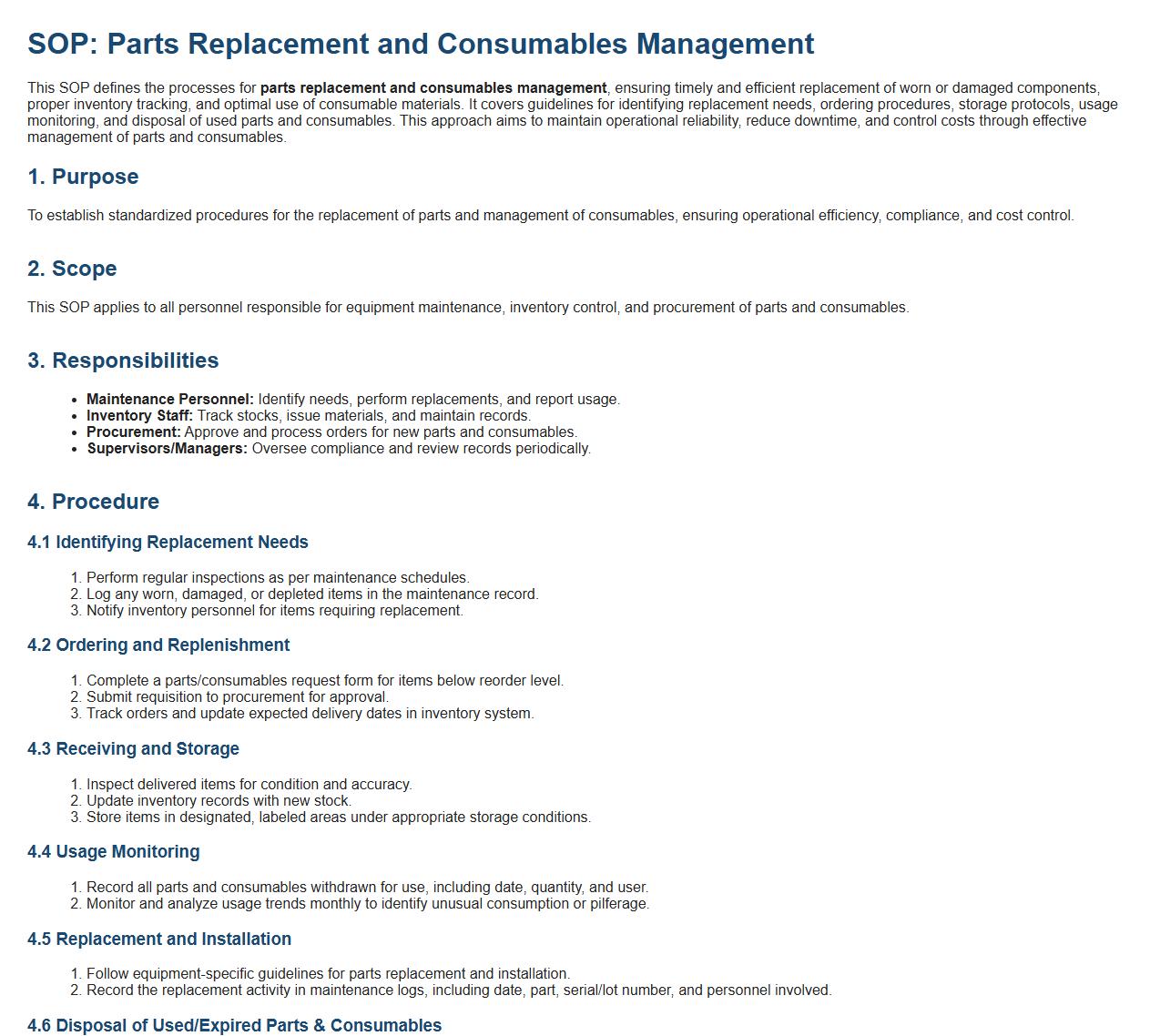
This SOP defines the processes for parts replacement and consumables management, ensuring timely and efficient replacement of worn or damaged components, proper inventory tracking, and optimal use of consumable materials. It covers guidelines for identifying replacement needs, ordering procedures, storage protocols, usage monitoring, and disposal of used parts and consumables. This approach aims to maintain operational reliability, reduce downtime, and control costs through effective management of parts and consumables.
Documentation and maintenance record keeping.
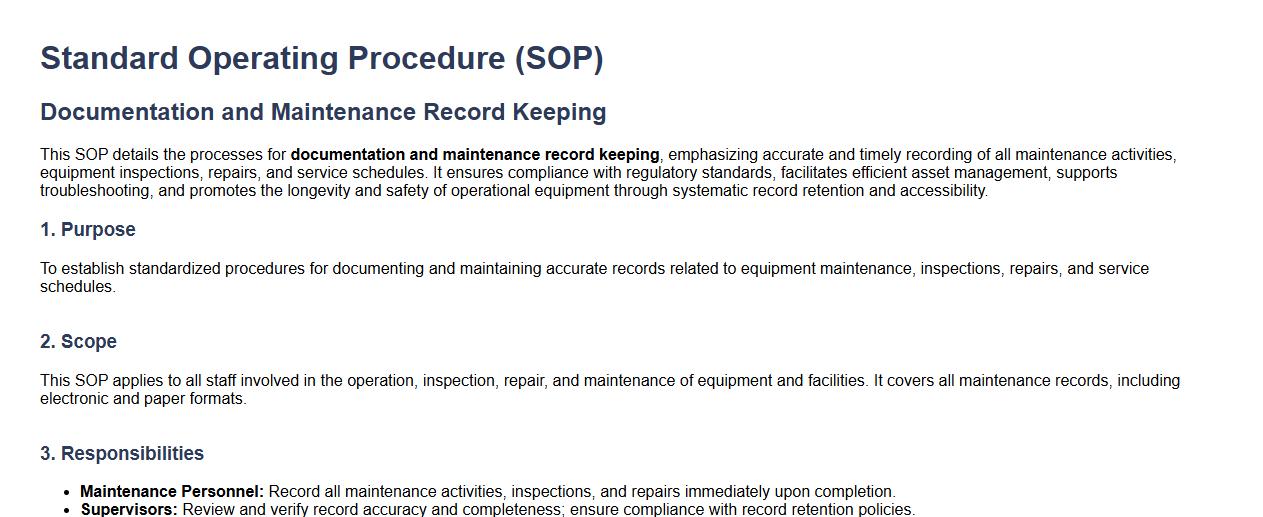
This SOP details the processes for documentation and maintenance record keeping, emphasizing accurate and timely recording of all maintenance activities, equipment inspections, repairs, and service schedules. It ensures compliance with regulatory standards, facilitates efficient asset management, supports troubleshooting, and promotes the longevity and safety of operational equipment through systematic record retention and accessibility.
Safety lockout/tagout (LOTO) procedures.
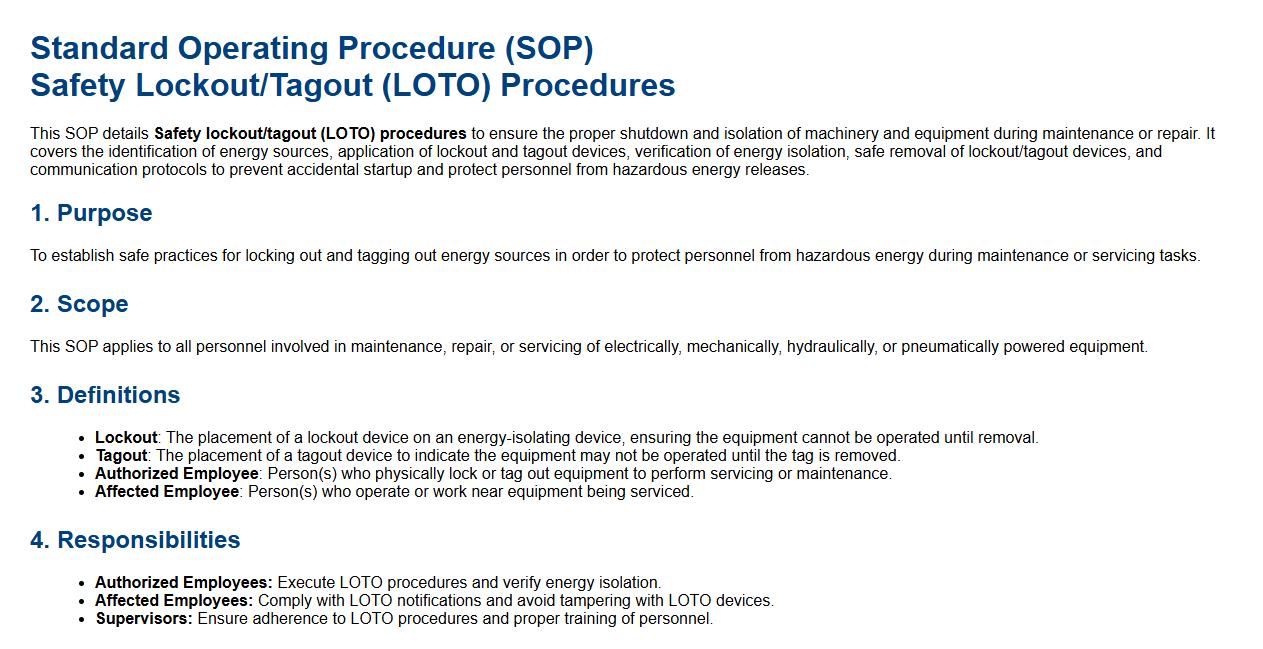
This SOP details Safety lockout/tagout (LOTO) procedures to ensure the proper shutdown and isolation of machinery and equipment during maintenance or repair. It covers the identification of energy sources, application of lockout and tagout devices, verification of energy isolation, safe removal of lockout/tagout devices, and communication protocols to prevent accidental startup and protect personnel from hazardous energy releases.
Tools and spare parts inventory control.
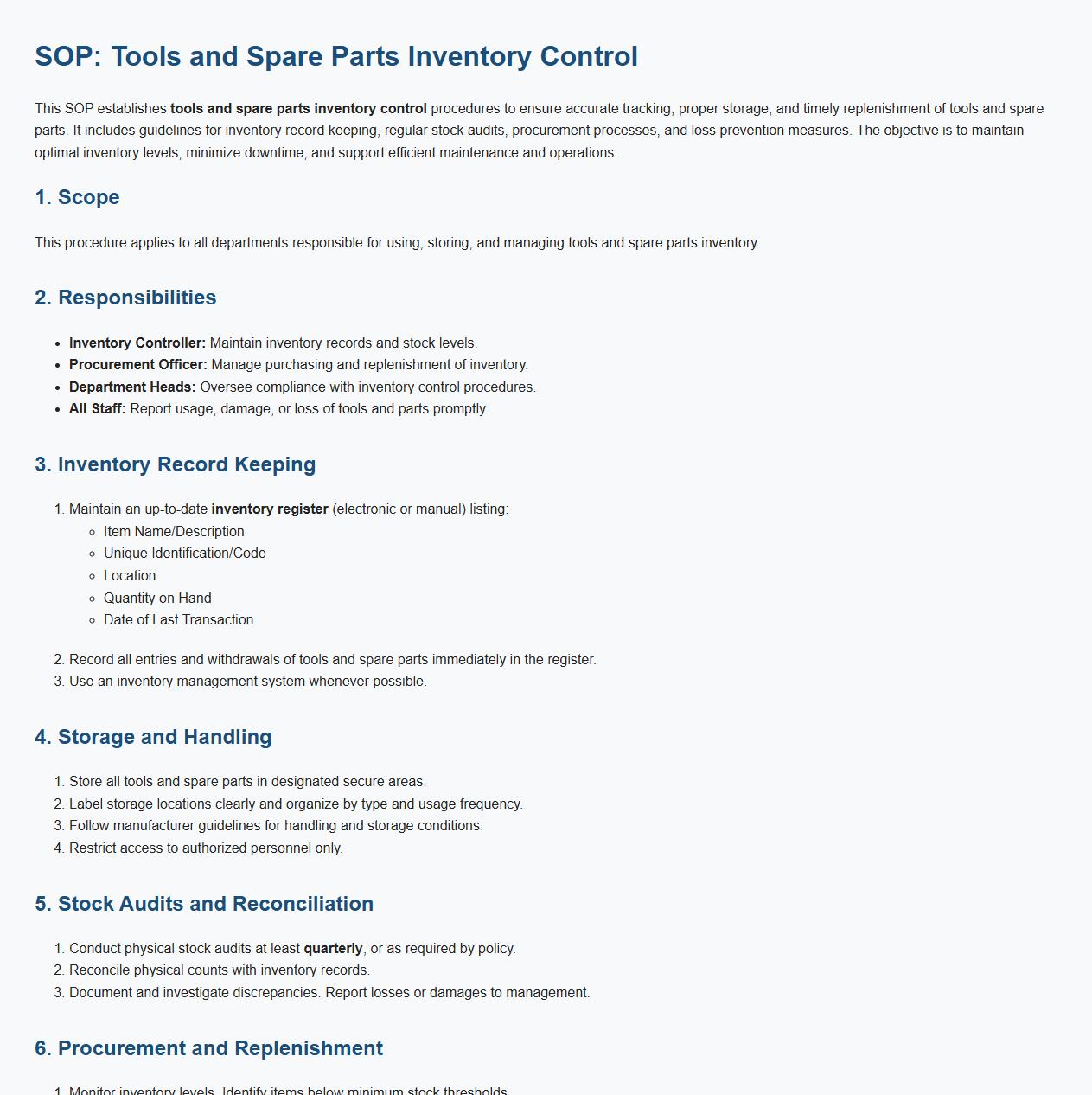
This SOP establishes tools and spare parts inventory control procedures to ensure accurate tracking, proper storage, and timely replenishment of tools and spare parts. It includes guidelines for inventory record keeping, regular stock audits, procurement processes, and loss prevention measures. The objective is to maintain optimal inventory levels, minimize downtime, and support efficient maintenance and operations.
Reporting and escalation of equipment issues.
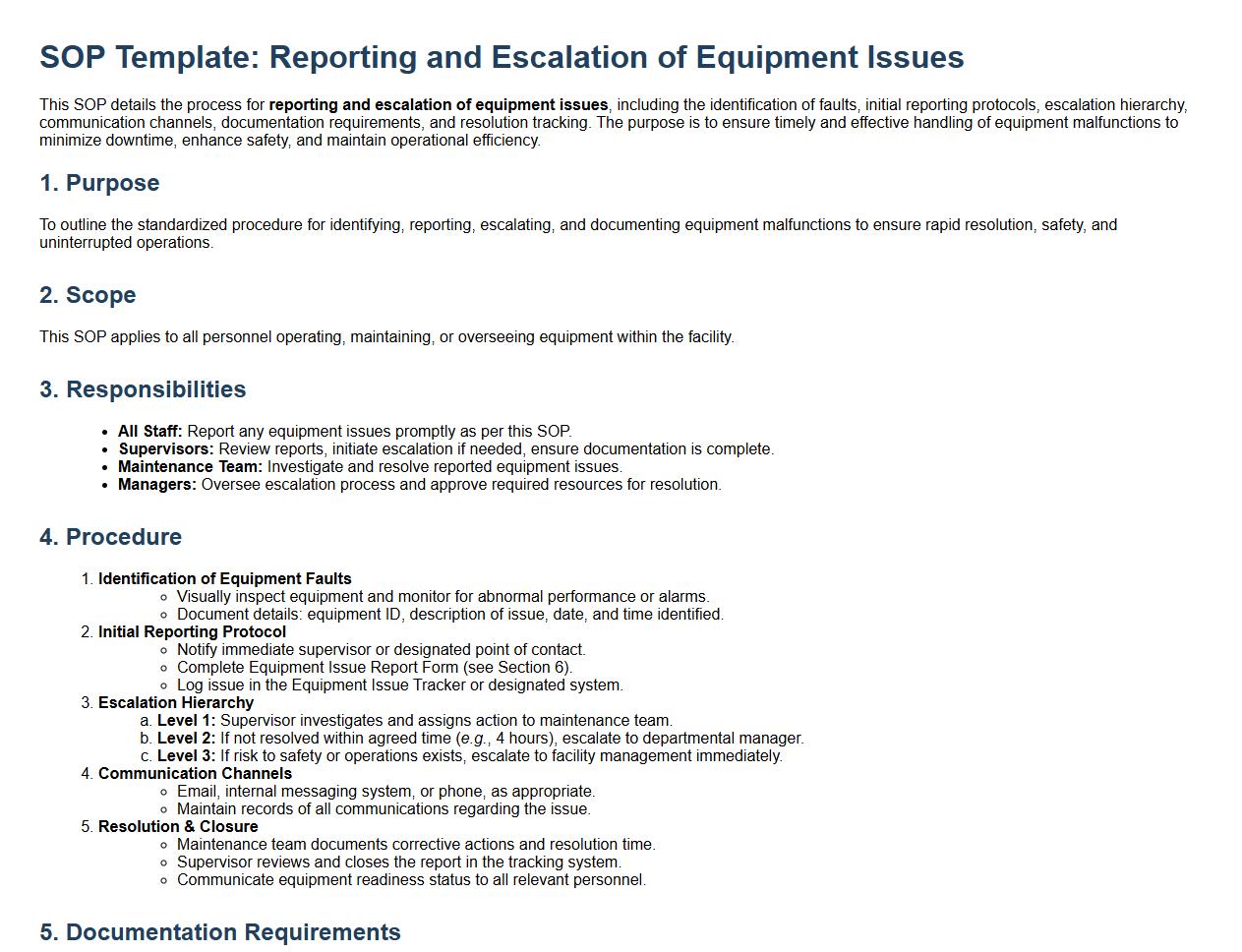
This SOP details the process for reporting and escalation of equipment issues, including the identification of faults, initial reporting protocols, escalation hierarchy, communication channels, documentation requirements, and resolution tracking. The purpose is to ensure timely and effective handling of equipment malfunctions to minimize downtime, enhance safety, and maintain operational efficiency.
Staff training and competency verification.
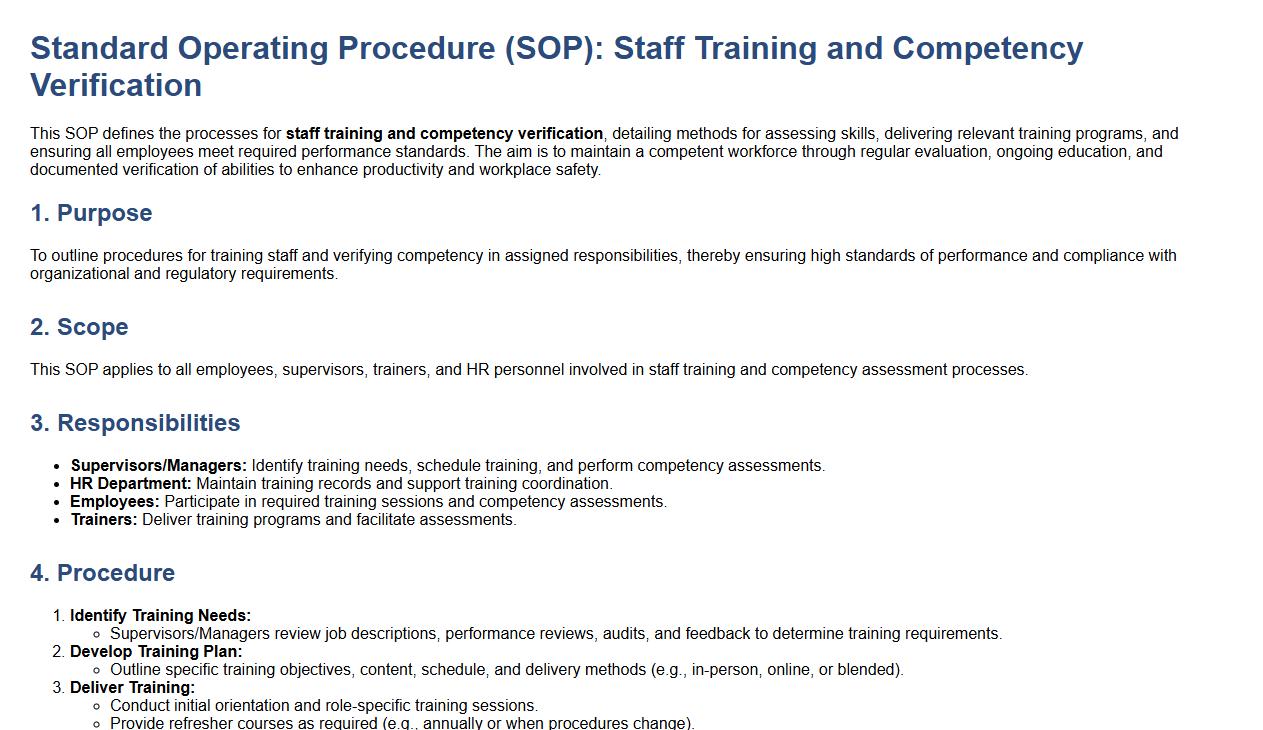
This SOP defines the processes for staff training and competency verification, detailing methods for assessing skills, delivering relevant training programs, and ensuring all employees meet required performance standards. The aim is to maintain a competent workforce through regular evaluation, ongoing education, and documented verification of abilities to enhance productivity and workplace safety.
What is the primary objective of the Preventive Maintenance SOP in manufacturing operations?
The primary objective of the Preventive Maintenance SOP is to ensure the reliability and efficiency of manufacturing equipment. It aims to reduce unexpected breakdowns and extend the lifespan of machinery. This approach helps maintain continuous production and minimizes downtime.
Which equipment or machinery is covered under this Preventive Maintenance SOP?
The SOP covers all critical manufacturing equipment and machinery essential for production processes. This includes conveyors, CNC machines, motors, and HVAC systems. Ensuring comprehensive coverage helps safeguard all operational areas against failures.
What are the standard intervals and criteria for scheduling preventive maintenance tasks?
Preventive maintenance tasks are scheduled based on operating hours, usage cycles, and manufacturer recommendations. Standard intervals may include daily, weekly, monthly, or annual checks. Adhering to these ensures optimal timing to prevent equipment malfunction.
What documentation and records must be maintained according to the Preventive Maintenance SOP?
Detailed maintenance logs, inspection reports, and repair records are essential documentation. These records provide traceability and accountability for all maintenance activities performed. Proper documentation supports continuous improvement and regulatory compliance.
What are the defined roles and responsibilities for personnel involved in the preventive maintenance process?
Roles include maintenance technicians, supervisors, and operators with clearly defined responsibilities for task execution, monitoring, and reporting. Maintenance staff perform inspections and repairs, while supervisors ensure schedule adherence. Proper role definition improves efficiency and communication within the team.