
A SOP Template for Equipment Calibration ensures consistent and accurate calibration procedures across all instruments, minimizing errors and maintaining quality standards. It outlines step-by-step instructions, responsibilities, and documentation requirements to guarantee compliance with regulatory guidelines. This template streamlines calibration processes, enhancing operational efficiency and equipment reliability.
Purpose and scope of equipment calibration.
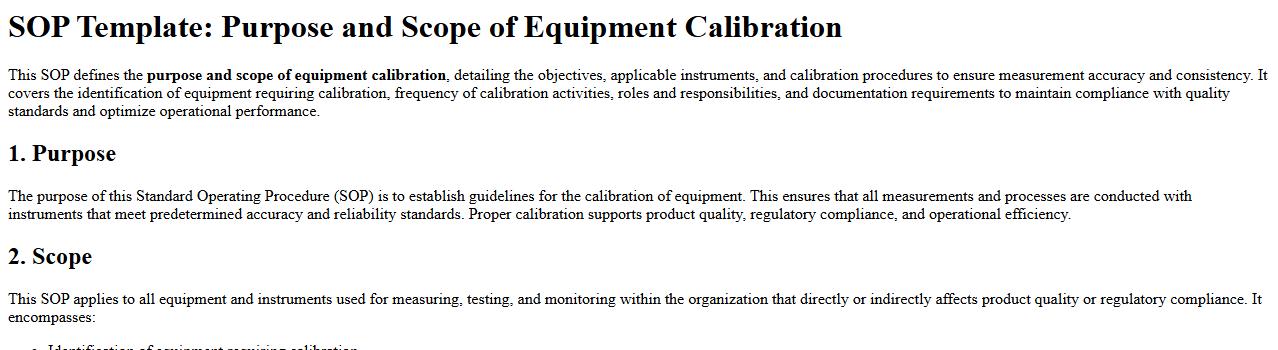
This SOP defines the purpose and scope of equipment calibration, detailing the objectives, applicable instruments, and calibration procedures to ensure measurement accuracy and consistency. It covers the identification of equipment requiring calibration, frequency of calibration activities, roles and responsibilities, and documentation requirements to maintain compliance with quality standards and optimize operational performance.
Roles and responsibilities of personnel involved.
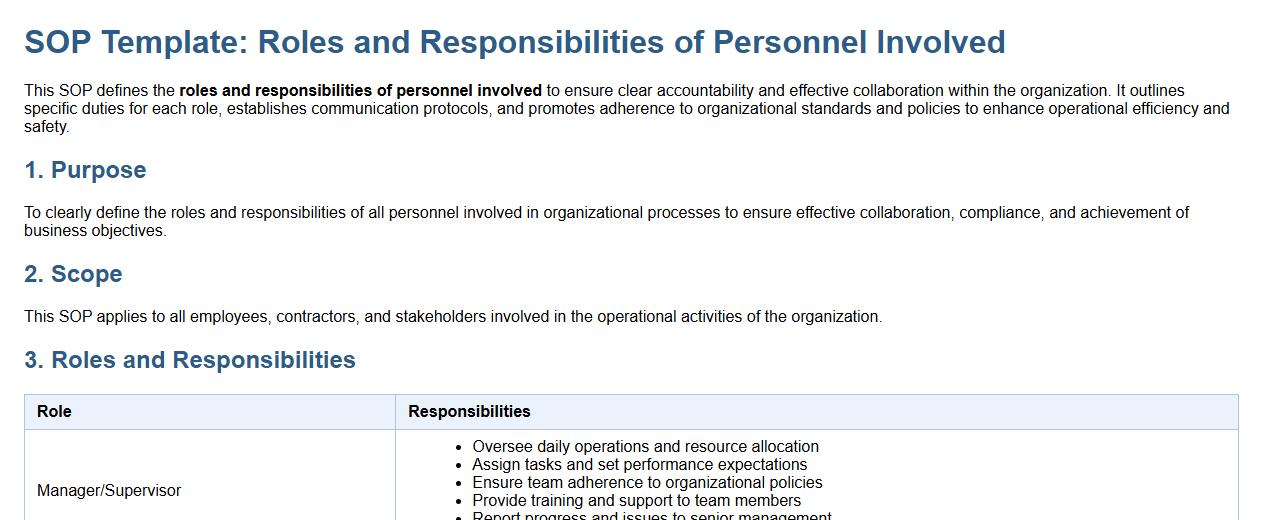
This SOP defines the roles and responsibilities of personnel involved to ensure clear accountability and effective collaboration within the organization. It outlines specific duties for each role, establishes communication protocols, and promotes adherence to organizational standards and policies to enhance operational efficiency and safety.
List of equipment and instruments requiring calibration.
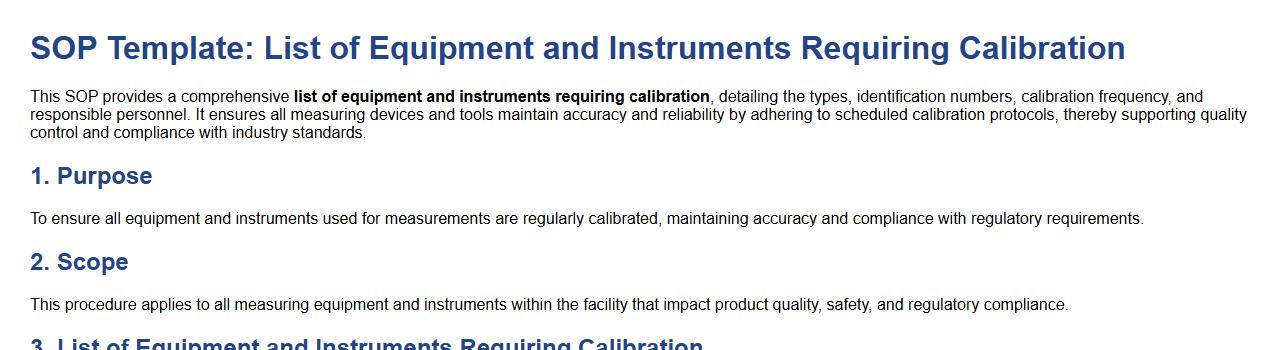
This SOP provides a comprehensive list of equipment and instruments requiring calibration, detailing the types, identification numbers, calibration frequency, and responsible personnel. It ensures all measuring devices and tools maintain accuracy and reliability by adhering to scheduled calibration protocols, thereby supporting quality control and compliance with industry standards.
Frequency and scheduling of calibration activities.
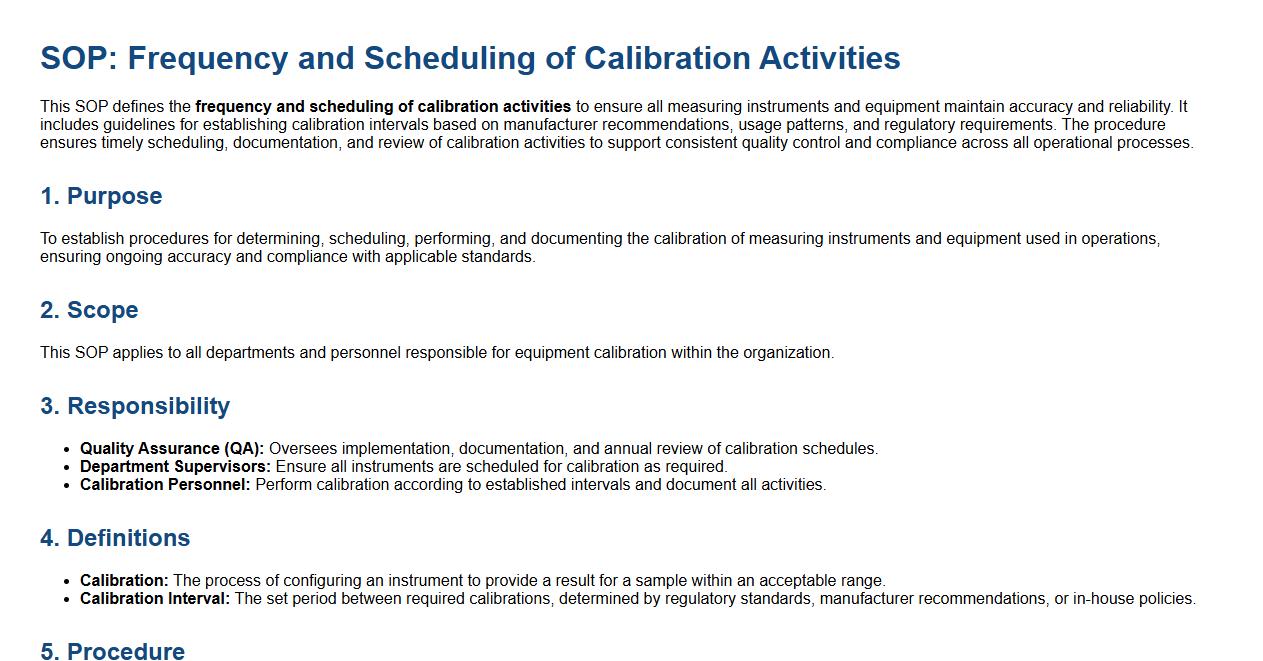
This SOP defines the frequency and scheduling of calibration activities to ensure all measuring instruments and equipment maintain accuracy and reliability. It includes guidelines for establishing calibration intervals based on manufacturer recommendations, usage patterns, and regulatory requirements. The procedure ensures timely scheduling, documentation, and review of calibration activities to support consistent quality control and compliance across all operational processes.
Pre-calibration inspection and cleaning procedures.
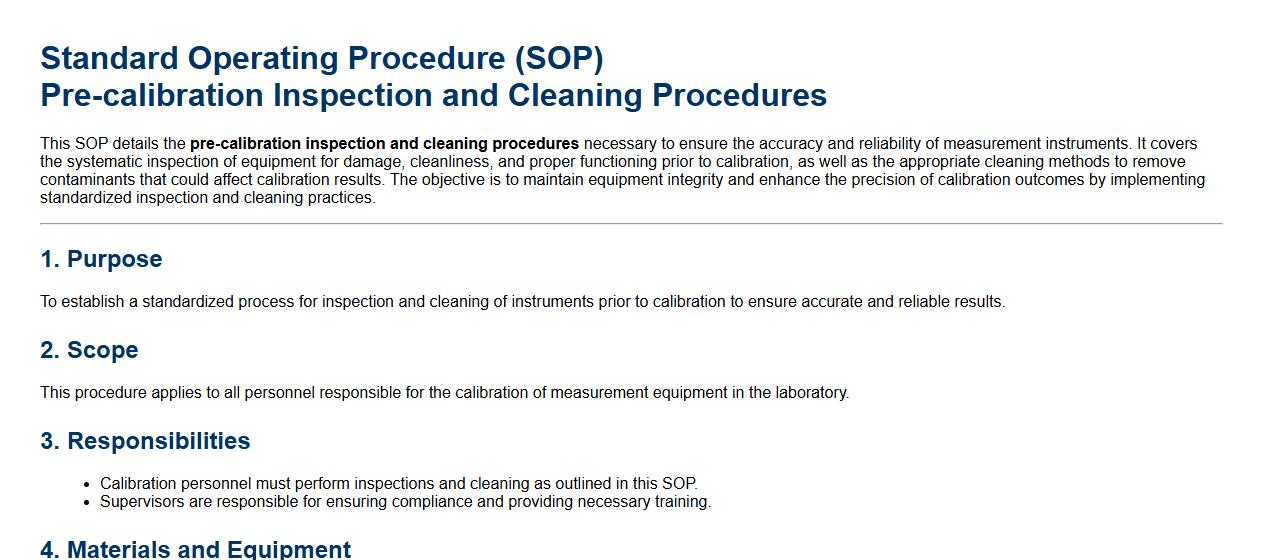
This SOP details the pre-calibration inspection and cleaning procedures necessary to ensure the accuracy and reliability of measurement instruments. It covers the systematic inspection of equipment for damage, cleanliness, and proper functioning prior to calibration, as well as the appropriate cleaning methods to remove contaminants that could affect calibration results. The objective is to maintain equipment integrity and enhance the precision of calibration outcomes by implementing standardized inspection and cleaning practices.
Step-by-step calibration procedures for each equipment type.
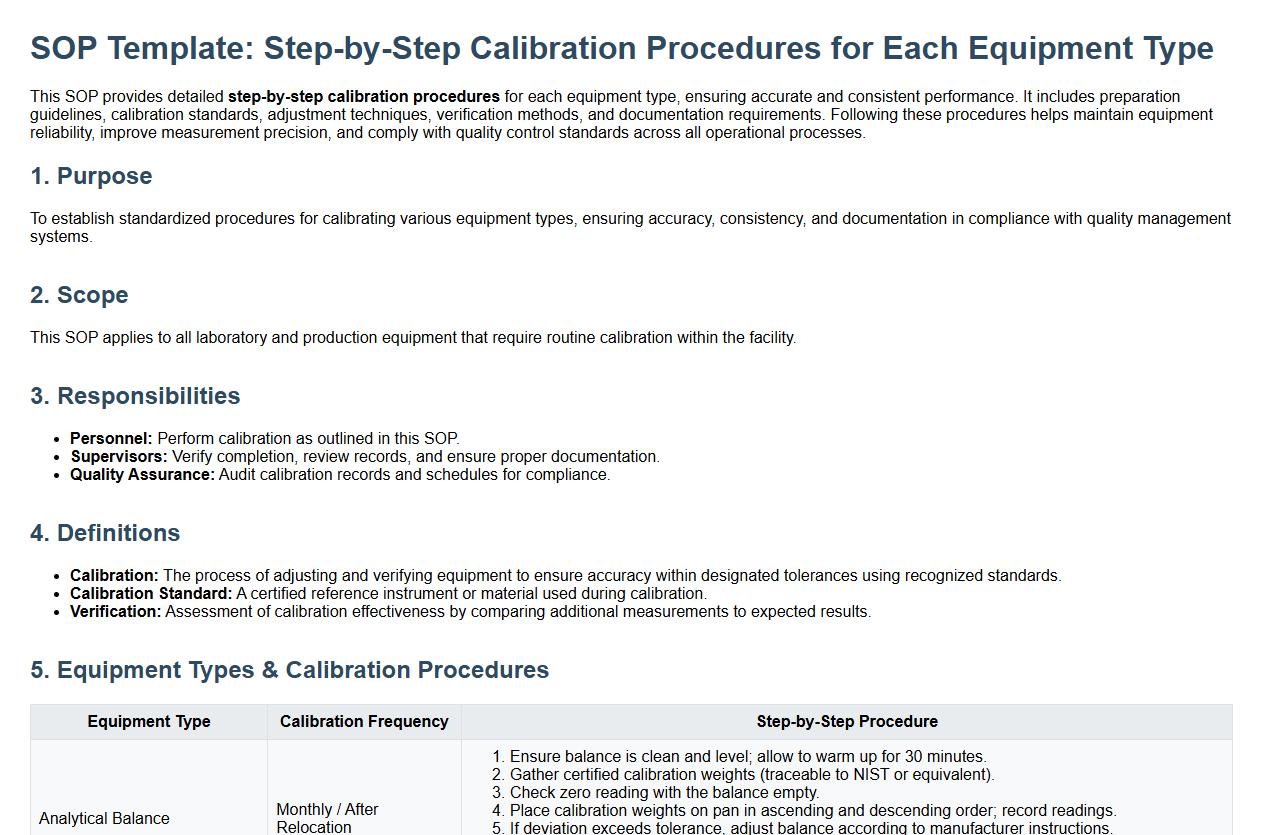
This SOP provides detailed step-by-step calibration procedures for each equipment type, ensuring accurate and consistent performance. It includes preparation guidelines, calibration standards, adjustment techniques, verification methods, and documentation requirements. Following these procedures helps maintain equipment reliability, improve measurement precision, and comply with quality control standards across all operational processes.
Documentation and record-keeping requirements.
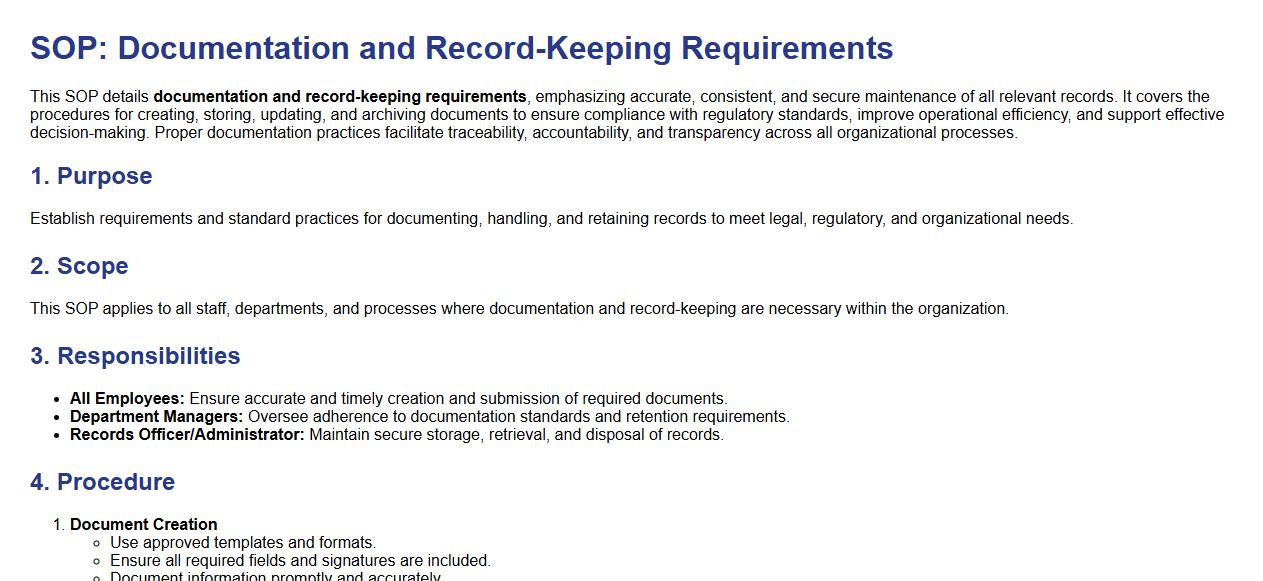
This SOP details documentation and record-keeping requirements, emphasizing accurate, consistent, and secure maintenance of all relevant records. It covers the procedures for creating, storing, updating, and archiving documents to ensure compliance with regulatory standards, improve operational efficiency, and support effective decision-making. Proper documentation practices facilitate traceability, accountability, and transparency across all organizational processes.
Criteria for acceptable calibration results and action for out-of-tolerance equipment.
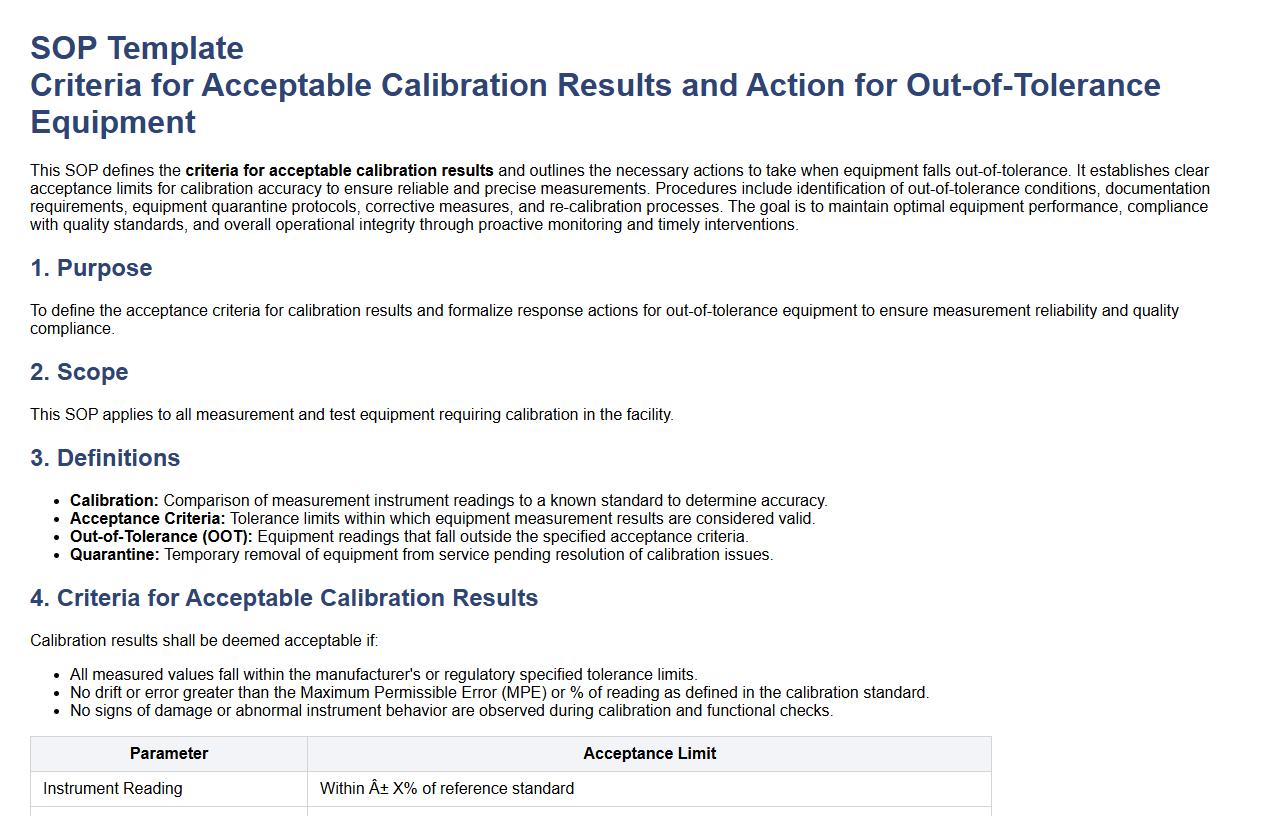
This SOP defines the criteria for acceptable calibration results and outlines the necessary actions to take when equipment falls out-of-tolerance. It establishes clear acceptance limits for calibration accuracy to ensure reliable and precise measurements. Procedures include identification of out-of-tolerance conditions, documentation requirements, equipment quarantine protocols, corrective measures, and re-calibration processes. The goal is to maintain optimal equipment performance, compliance with quality standards, and overall operational integrity through proactive monitoring and timely interventions.
Post-calibration equipment labeling and status indication.
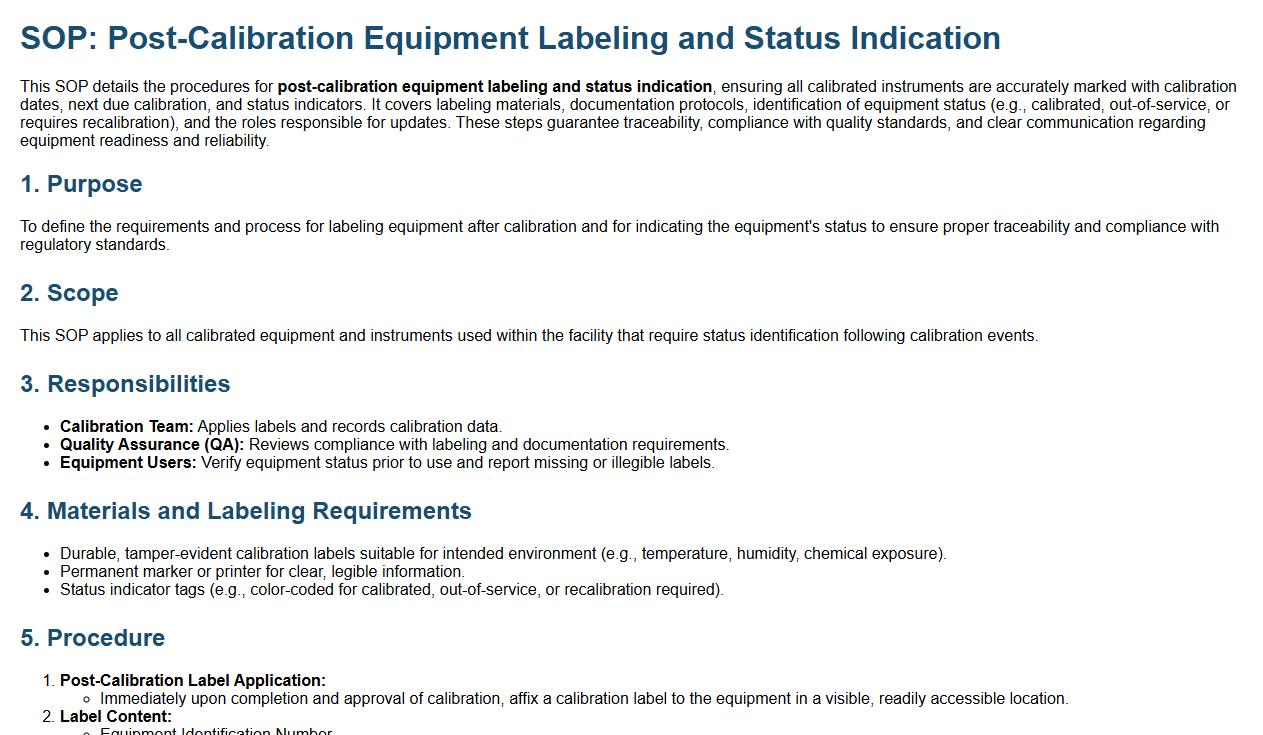
This SOP details the procedures for post-calibration equipment labeling and status indication, ensuring all calibrated instruments are accurately marked with calibration dates, next due calibration, and status indicators. It covers labeling materials, documentation protocols, identification of equipment status (e.g., calibrated, out-of-service, or requires recalibration), and the roles responsible for updates. These steps guarantee traceability, compliance with quality standards, and clear communication regarding equipment readiness and reliability.
Review, approval, and continuous improvement process for the SOP.
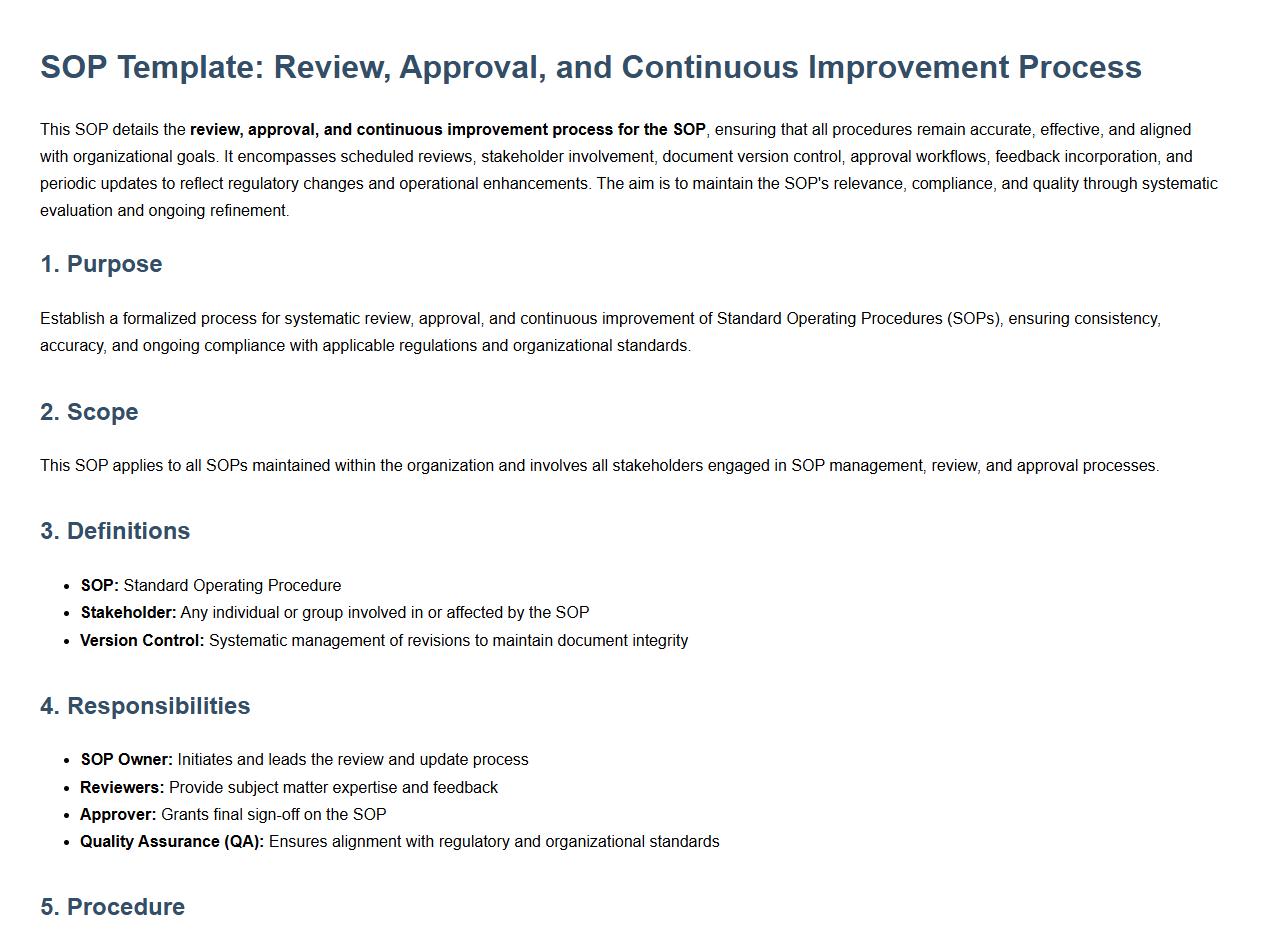
This SOP details the review, approval, and continuous improvement process for the SOP, ensuring that all procedures remain accurate, effective, and aligned with organizational goals. It encompasses scheduled reviews, stakeholder involvement, document version control, approval workflows, feedback incorporation, and periodic updates to reflect regulatory changes and operational enhancements. The aim is to maintain the SOP's relevance, compliance, and quality through systematic evaluation and ongoing refinement.
What is the purpose and scope of the equipment calibration SOP?
The purpose of the equipment calibration SOP is to establish standardized procedures to ensure all measuring instruments provide accurate and reliable results. It defines the scope by covering all critical equipment impacting product quality and compliance. This SOP ensures consistency and traceability in calibration practices across the organization.
Which specific equipment requires calibration according to this SOP?
The SOP specifies that all measuring and testing instruments affecting product specifications require calibration. This includes but is not limited to pressure gauges, temperature sensors, balances, and volumetric equipment. Only calibrated equipment is authorized for use in production and quality control processes.
What are the frequency and intervals for calibrating each type of equipment?
Calibration frequency varies depending on the equipment type, usage, and manufacturer recommendations. Common intervals range from monthly, quarterly to annually, based on risk assessments and industry standards. The SOP mandates strict adherence to scheduled calibration dates to maintain compliance.
What procedures and documentation are required during the calibration process?
The calibration process requires following detailed procedures including equipment preparation, execution of tests, and adjustment if necessary. Proper documentation such as calibration certificates, logs, and traceability records must be accurately maintained. This documentation supports audit readiness and provides evidence of compliance.
How are out-of-tolerance or failed calibrations handled and reported per the SOP?
When calibrations fall out-of-tolerance, the SOP mandates immediate quarantine of affected equipment to prevent use. A root cause analysis and corrective actions must be documented and reported to the quality management team. The equipment cannot be returned to service until it passes a successful recalibration and approval process.