
A SOP Template for Waste Disposal in Manufacturing provides a structured framework to ensure safe and compliant handling of industrial waste. It outlines step-by-step procedures to minimize environmental impact while adhering to regulatory standards. This template helps manufacturers maintain consistency and accountability in their waste management practices.
Waste segregation and identification procedures.
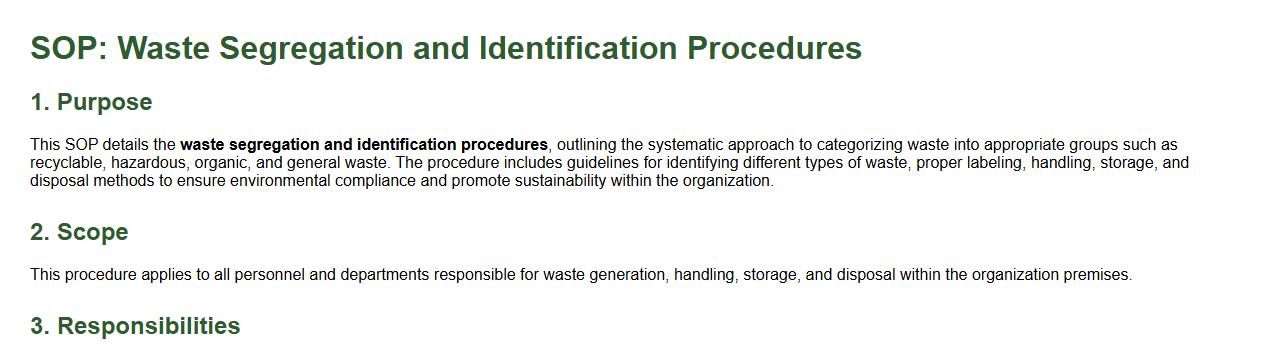
This SOP details the waste segregation and identification procedures, outlining the systematic approach to categorizing waste into appropriate groups such as recyclable, hazardous, organic, and general waste. The procedure includes guidelines for identifying different types of waste, proper labeling, handling, storage, and disposal methods to ensure environmental compliance and promote sustainability within the organization.
Collection and labeling of waste materials.
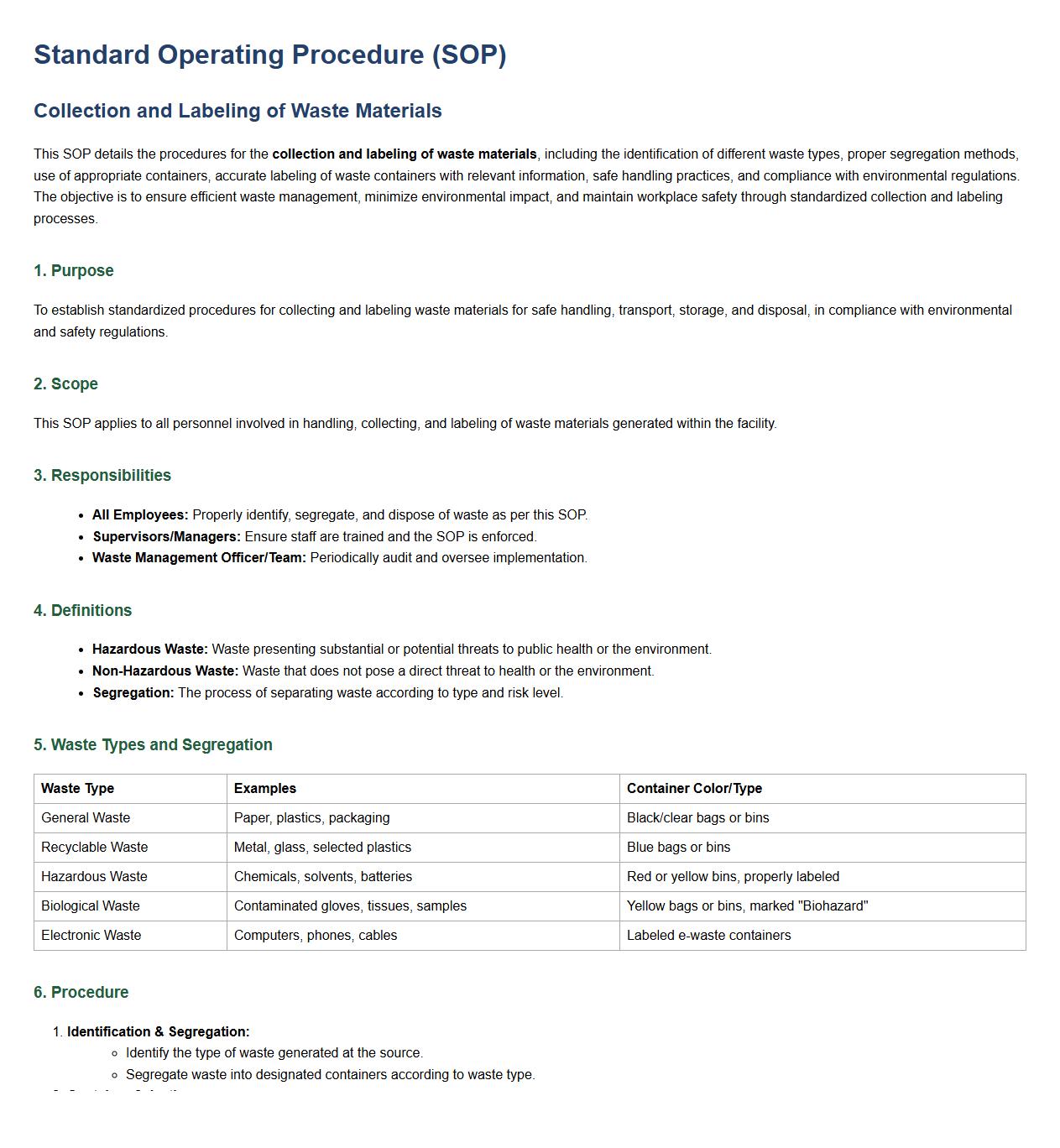
This SOP details the procedures for the collection and labeling of waste materials, including the identification of different waste types, proper segregation methods, use of appropriate containers, accurate labeling of waste containers with relevant information, safe handling practices, and compliance with environmental regulations. The objective is to ensure efficient waste management, minimize environmental impact, and maintain workplace safety through standardized collection and labeling processes.
Safe handling and storage of hazardous waste.
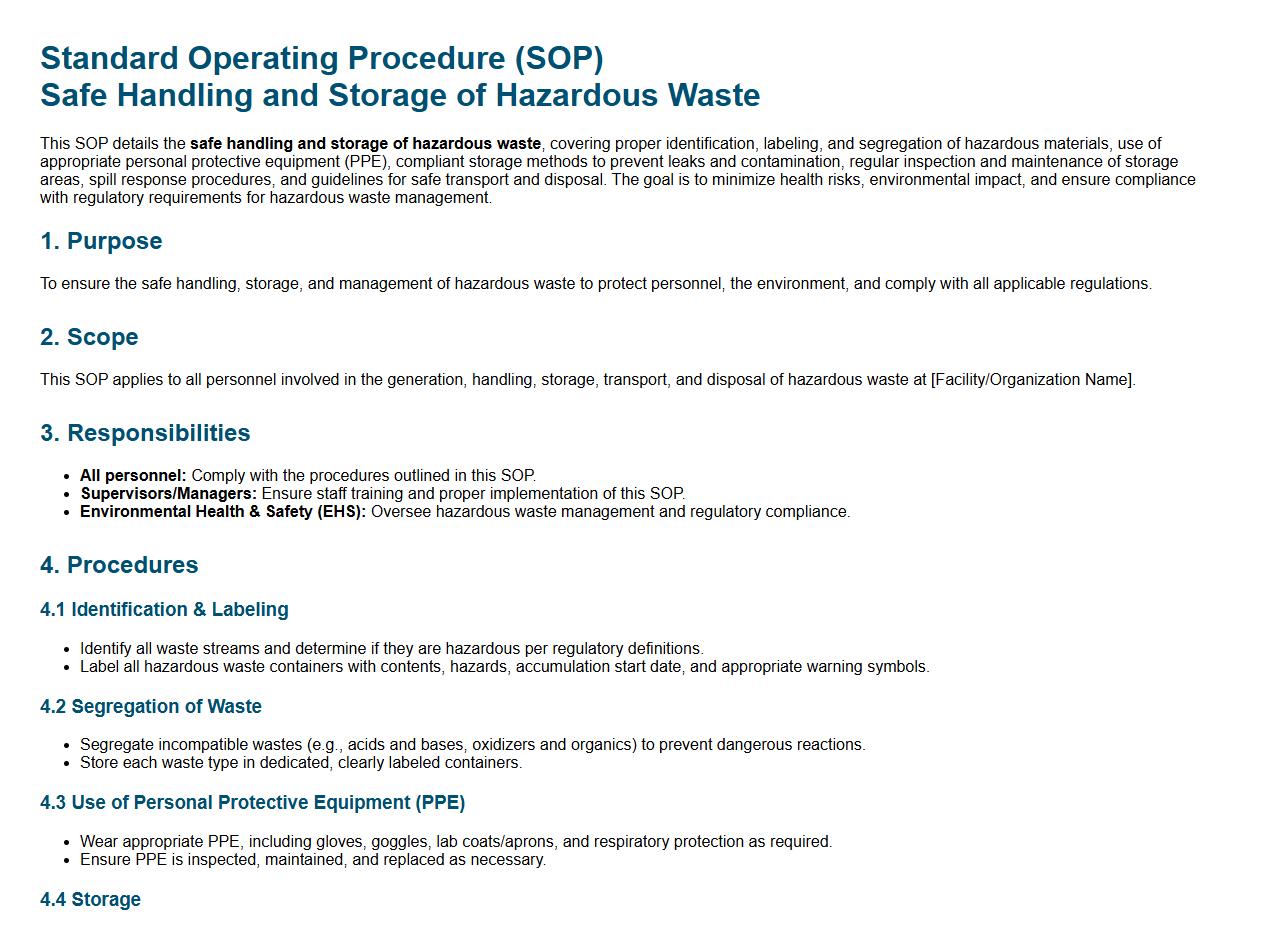
This SOP details the safe handling and storage of hazardous waste, covering proper identification, labeling, and segregation of hazardous materials, use of appropriate personal protective equipment (PPE), compliant storage methods to prevent leaks and contamination, regular inspection and maintenance of storage areas, spill response procedures, and guidelines for safe transport and disposal. The goal is to minimize health risks, environmental impact, and ensure compliance with regulatory requirements for hazardous waste management.
Non-hazardous waste disposal methods.
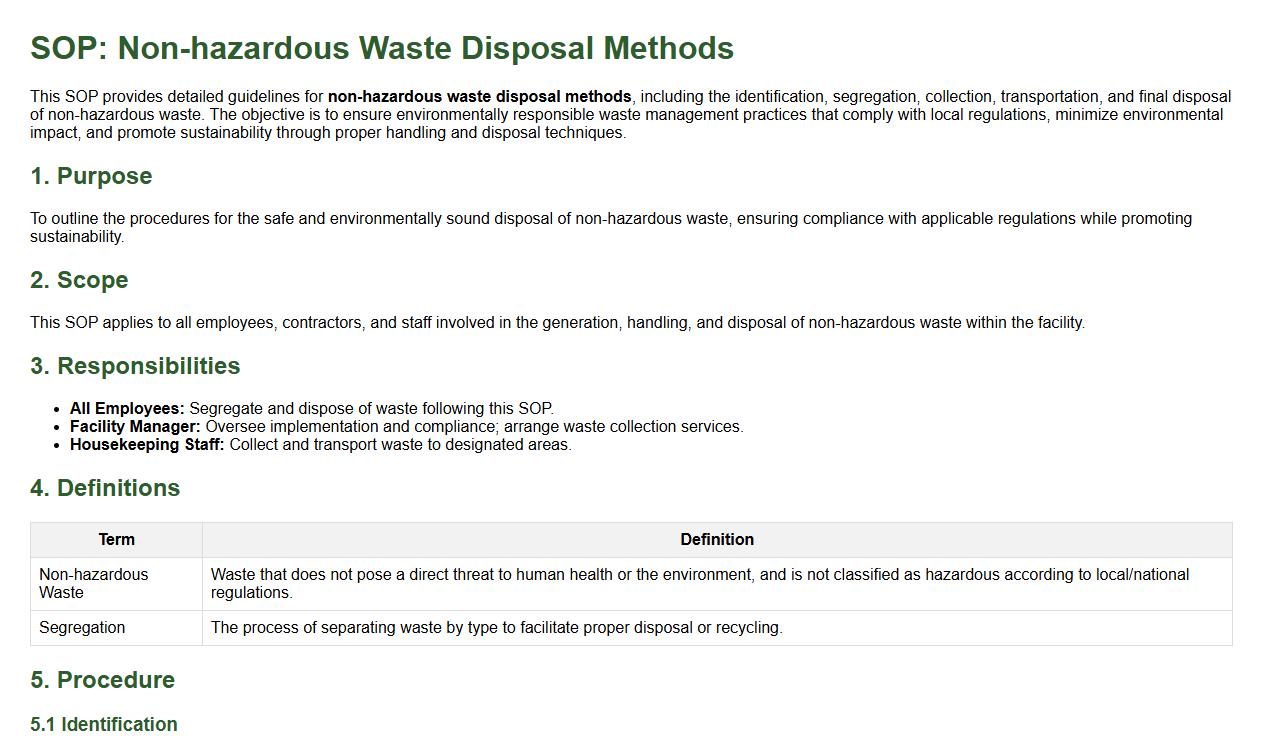
This SOP provides detailed guidelines for non-hazardous waste disposal methods, including the identification, segregation, collection, transportation, and final disposal of non-hazardous waste. The objective is to ensure environmentally responsible waste management practices that comply with local regulations, minimize environmental impact, and promote sustainability through proper handling and disposal techniques.
Designated disposal area maintenance.
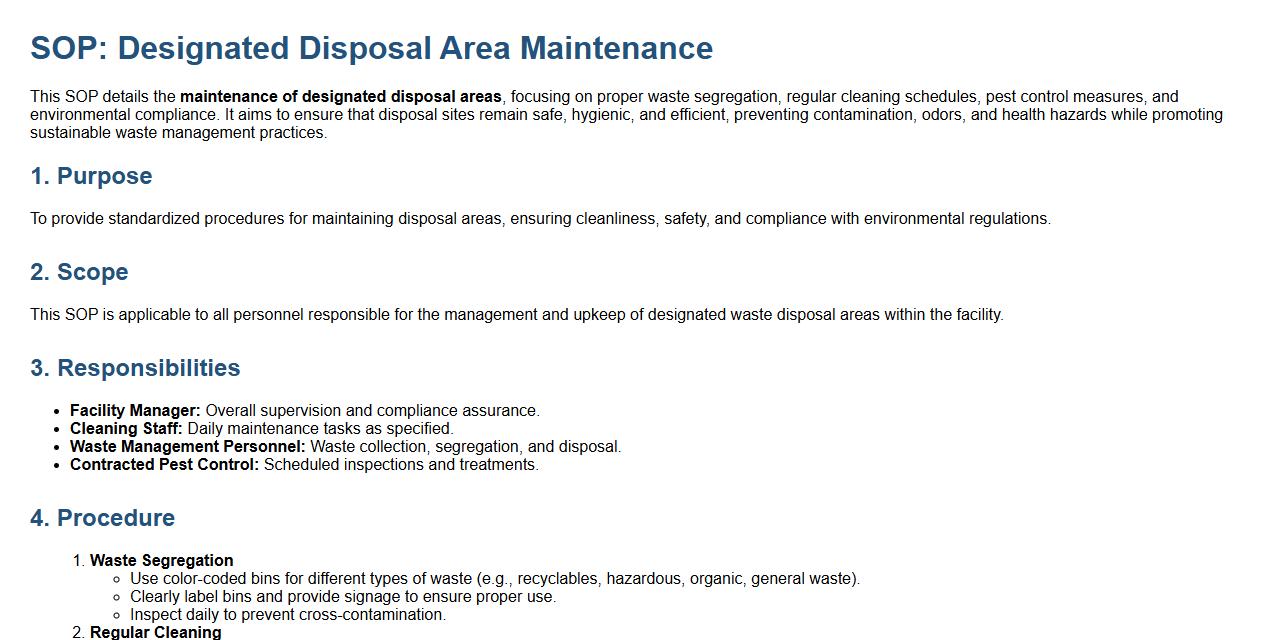
This SOP details the maintenance of designated disposal areas, focusing on proper waste segregation, regular cleaning schedules, pest control measures, and environmental compliance. It aims to ensure that disposal sites remain safe, hygienic, and efficient, preventing contamination, odors, and health hazards while promoting sustainable waste management practices.
Documentation and tracking of waste disposal activities.
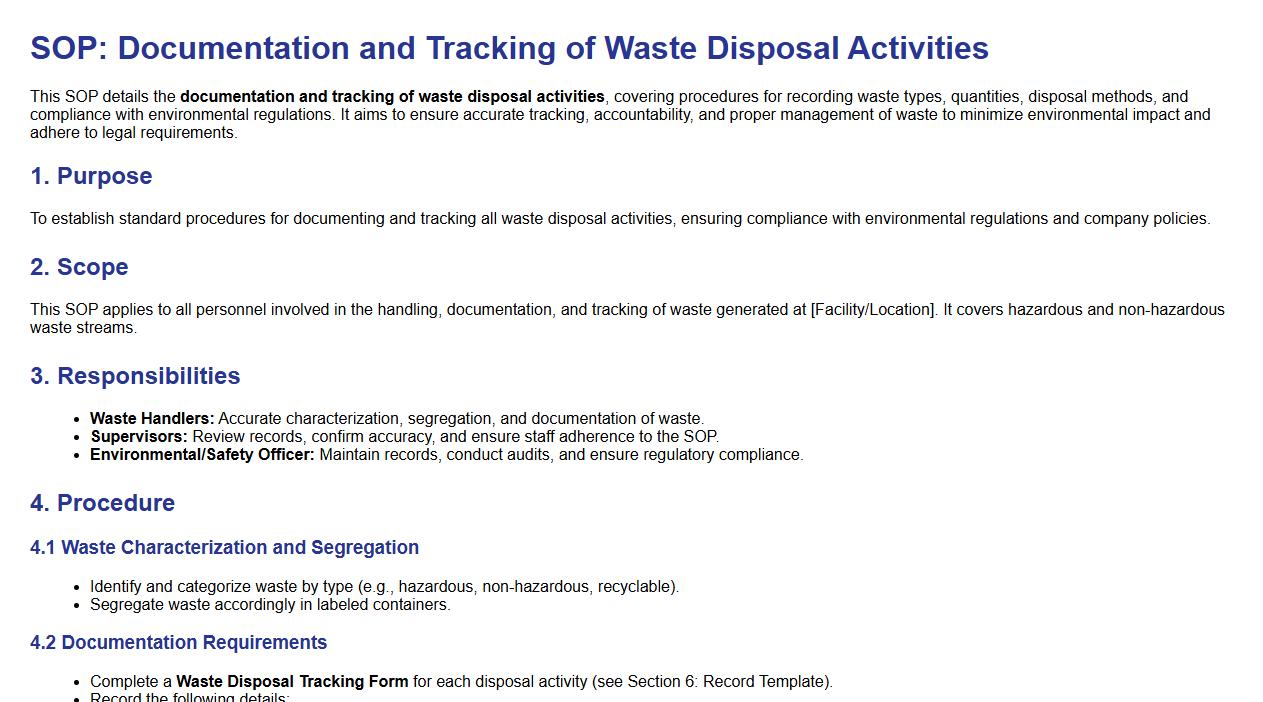
This SOP details the documentation and tracking of waste disposal activities, covering procedures for recording waste types, quantities, disposal methods, and compliance with environmental regulations. It aims to ensure accurate tracking, accountability, and proper management of waste to minimize environmental impact and adhere to legal requirements.
Personal protective equipment (PPE) requirements for handling waste.
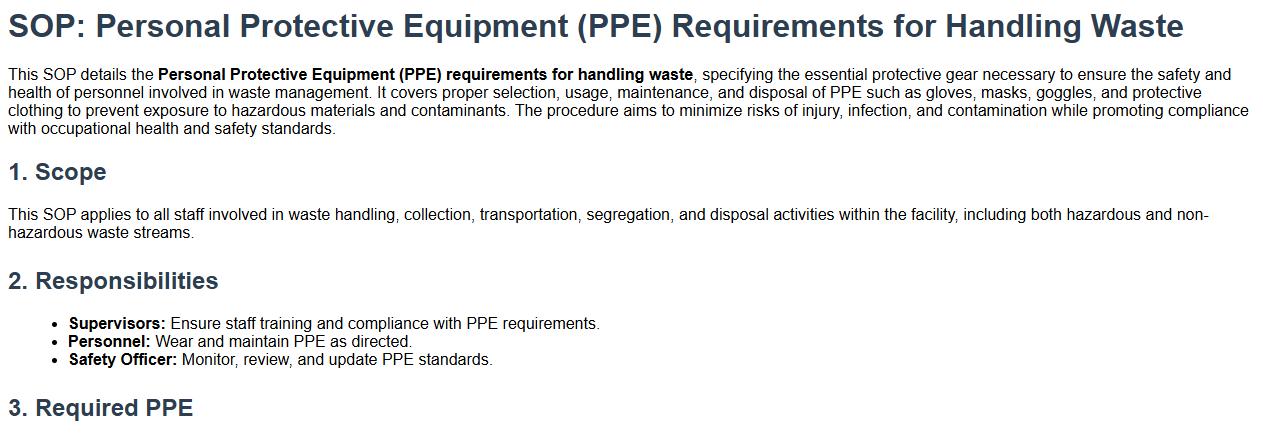
This SOP details the Personal Protective Equipment (PPE) requirements for handling waste, specifying the essential protective gear necessary to ensure the safety and health of personnel involved in waste management. It covers proper selection, usage, maintenance, and disposal of PPE such as gloves, masks, goggles, and protective clothing to prevent exposure to hazardous materials and contaminants. The procedure aims to minimize risks of injury, infection, and contamination while promoting compliance with occupational health and safety standards.
Spill response and clean-up protocols.
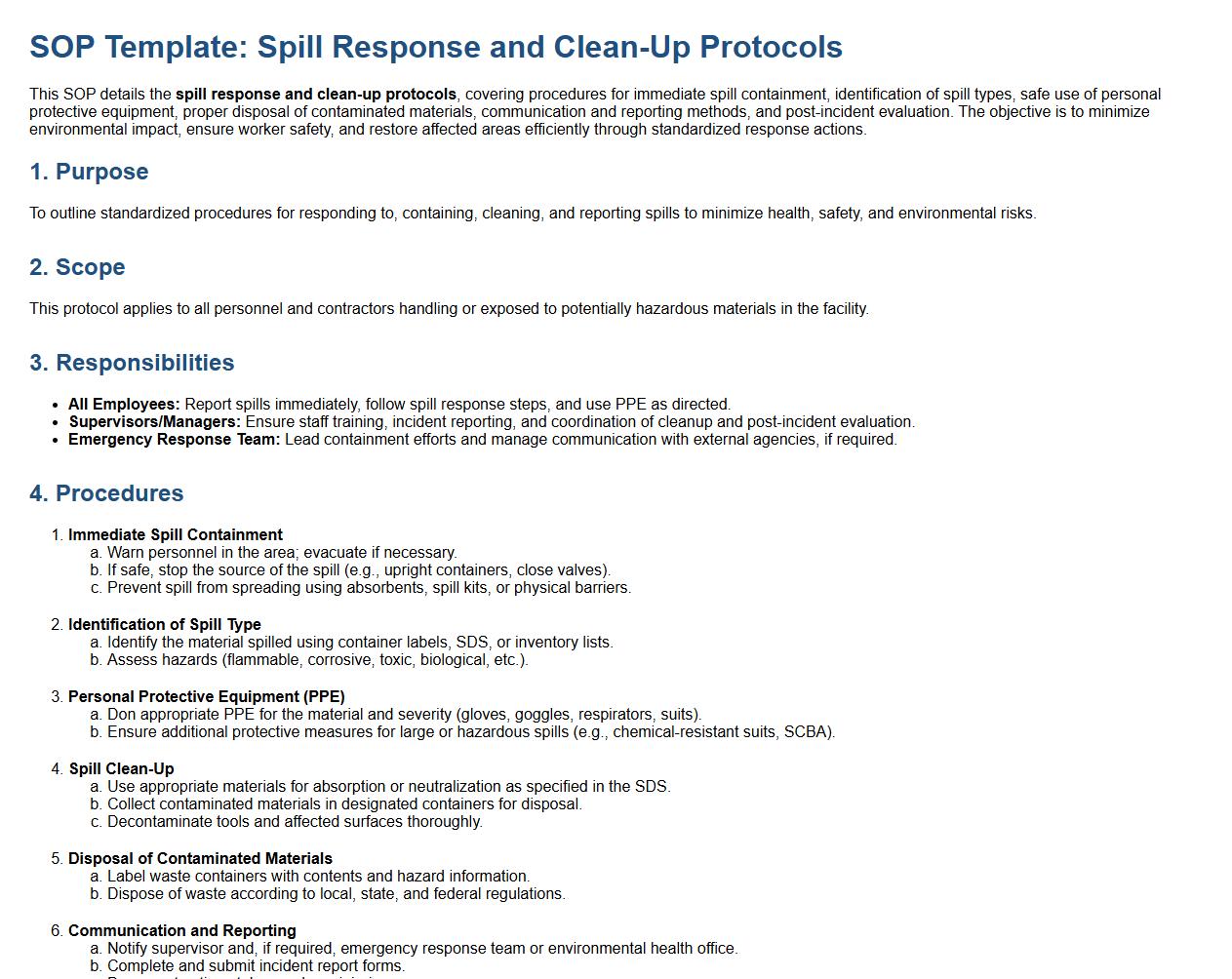
This SOP details the spill response and clean-up protocols, covering procedures for immediate spill containment, identification of spill types, safe use of personal protective equipment, proper disposal of contaminated materials, communication and reporting methods, and post-incident evaluation. The objective is to minimize environmental impact, ensure worker safety, and restore affected areas efficiently through standardized response actions.
Scheduling and coordination with certified waste disposal vendors.
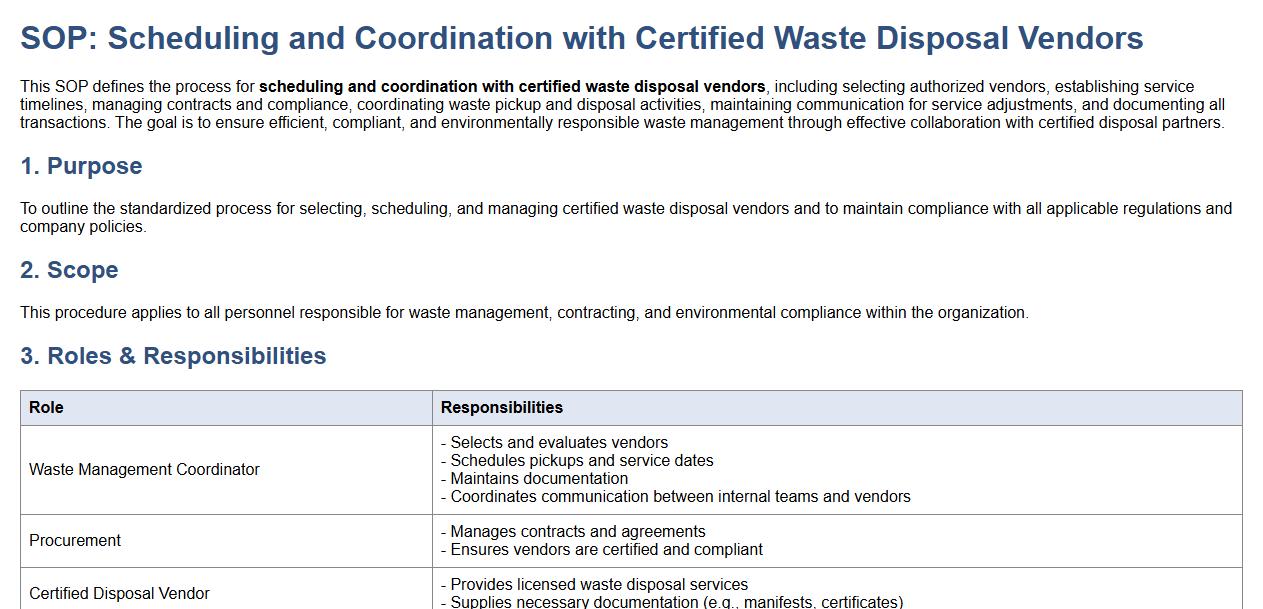
This SOP defines the process for scheduling and coordination with certified waste disposal vendors, including selecting authorized vendors, establishing service timelines, managing contracts and compliance, coordinating waste pickup and disposal activities, maintaining communication for service adjustments, and documenting all transactions. The goal is to ensure efficient, compliant, and environmentally responsible waste management through effective collaboration with certified disposal partners.
Routine inspection and compliance with environmental regulations.
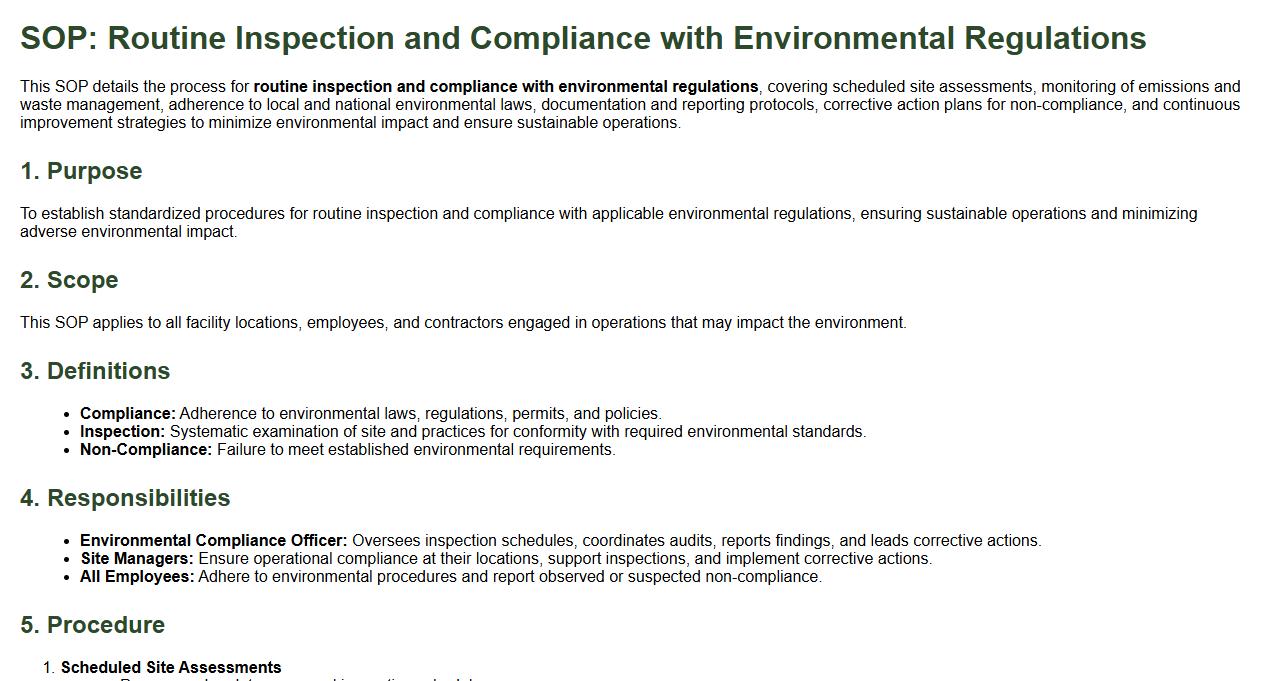
This SOP details the process for routine inspection and compliance with environmental regulations, covering scheduled site assessments, monitoring of emissions and waste management, adherence to local and national environmental laws, documentation and reporting protocols, corrective action plans for non-compliance, and continuous improvement strategies to minimize environmental impact and ensure sustainable operations.
Defined Categories of Waste in the SOP
The waste disposal SOP for this manufacturing facility categorizes waste into hazardous, non-hazardous, recyclable, and biodegradable waste. Each category has specific handling and disposal protocols to ensure safety and compliance. Proper identification of these categories is crucial for effective waste management.
Required PPE for Handling Hazardous Waste
The SOP mandates the use of specific Personal Protective Equipment (PPE) when handling hazardous waste. Required PPE includes gloves, safety goggles, respirators, and protective clothing to prevent exposure. Using the correct PPE minimizes health risks and ensures workplace safety.
Step-by-Step Waste Segregation and Labeling Procedures
Waste segregation involves sorting waste into the defined categories using designated bins as outlined in the SOP. Each waste container must be clearly labeled with the type of waste, date, and handling instructions. This labeling process ensures traceability and adherence to disposal regulations.
Documentation and Record-Keeping Process
The SOP requires meticulous documentation of waste generation, segregation, transportation, and disposal activities. Records must include waste type, quantities, dates, and responsible personnel to maintain accountability. Accurate record-keeping supports regulatory compliance and audit readiness.
Immediate Actions for Accidental Spillage
In case of accidental spillage, the SOP mandates immediate containment and notification of supervisors. The area must be isolated, and cleanup conducted using appropriate PPE and spill kits to minimize risks. Prompt action is critical to preventing environmental contamination and health hazards.