
A SOP Template for Waste Management in Manufacturing provides a structured framework to ensure consistent and efficient handling of waste materials. It outlines step-by-step procedures for waste segregation, disposal, and recycling to minimize environmental impact and comply with regulatory standards. Implementing this template helps manufacturing facilities maintain sustainability and improve operational safety.
Waste segregation and categorization procedures.
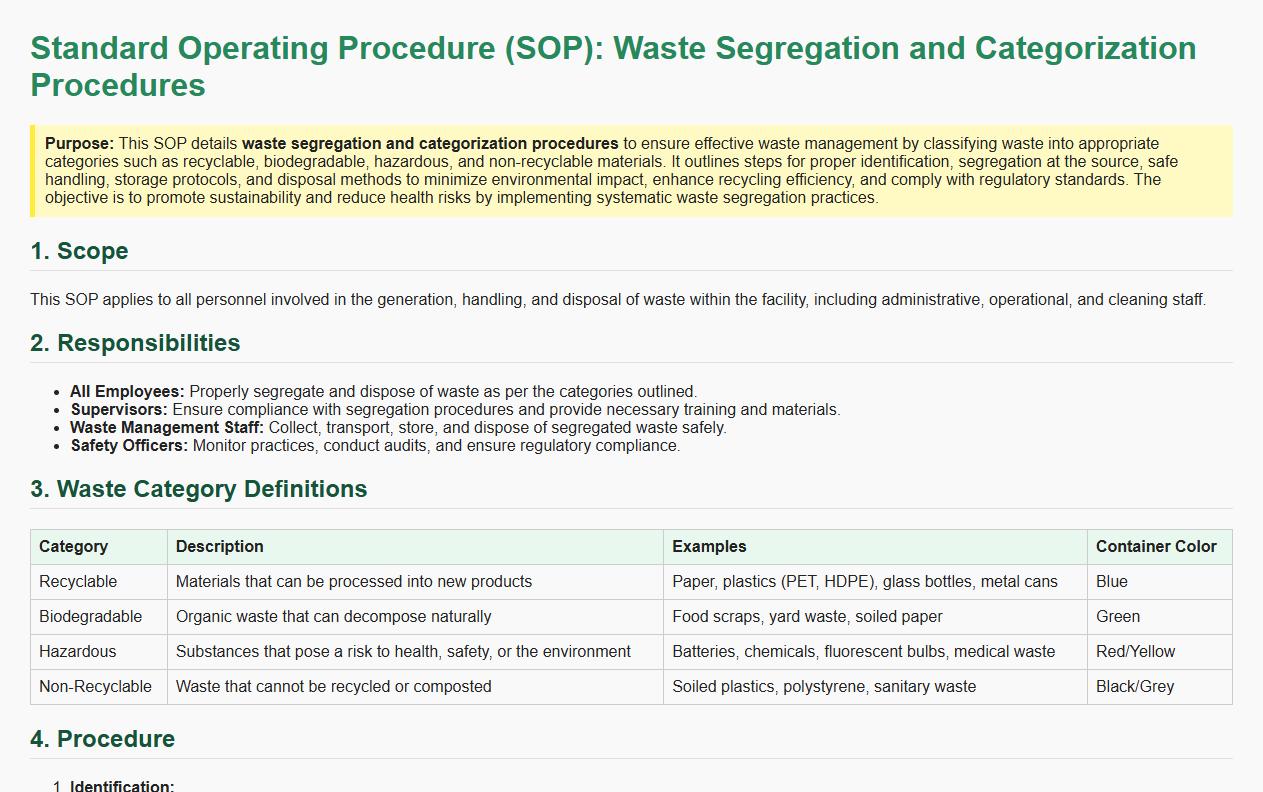
This SOP details waste segregation and categorization procedures to ensure effective waste management by classifying waste into appropriate categories such as recyclable, biodegradable, hazardous, and non-recyclable materials. It outlines steps for proper identification, segregation at the source, safe handling, storage protocols, and disposal methods to minimize environmental impact, enhance recycling efficiency, and comply with regulatory standards. The objective is to promote sustainability and reduce health risks by implementing systematic waste segregation practices.
Collection, storage, and labeling of waste materials.
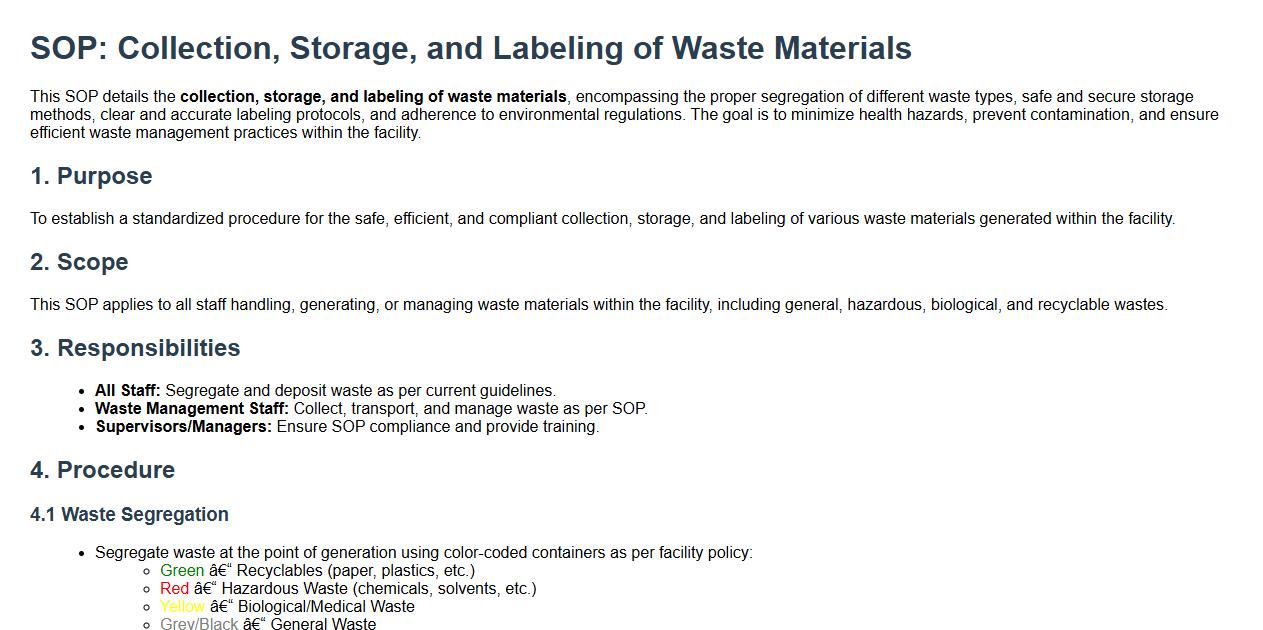
This SOP details the collection, storage, and labeling of waste materials, encompassing the proper segregation of different waste types, safe and secure storage methods, clear and accurate labeling protocols, and adherence to environmental regulations. The goal is to minimize health hazards, prevent contamination, and ensure efficient waste management practices within the facility.
Handling and transportation of hazardous and non-hazardous waste.
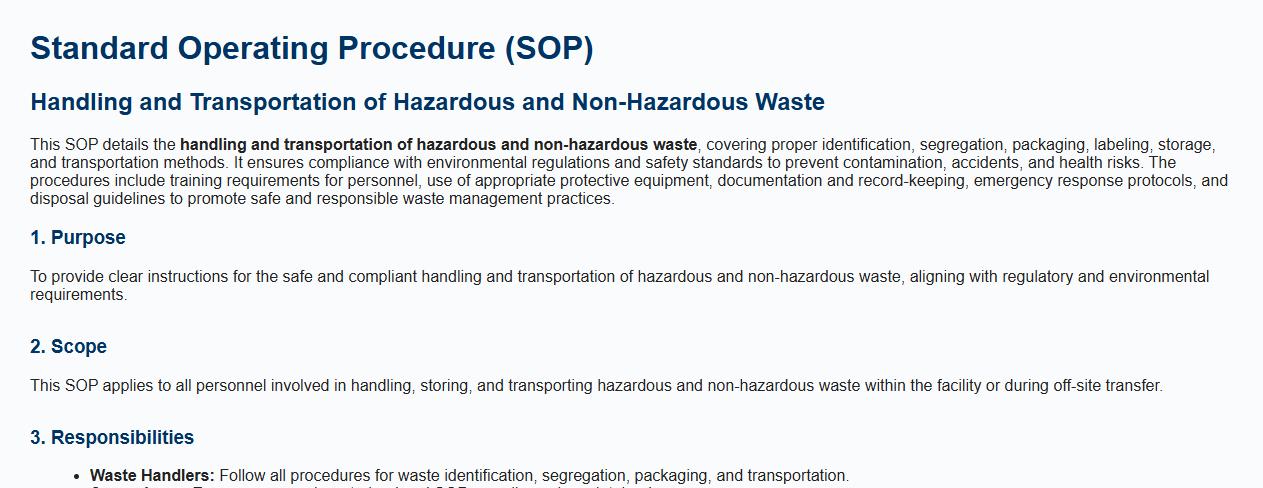
This SOP details the handling and transportation of hazardous and non-hazardous waste, covering proper identification, segregation, packaging, labeling, storage, and transportation methods. It ensures compliance with environmental regulations and safety standards to prevent contamination, accidents, and health risks. The procedures include training requirements for personnel, use of appropriate protective equipment, documentation and record-keeping, emergency response protocols, and disposal guidelines to promote safe and responsible waste management practices.
Personal protective equipment (PPE) requirements for waste handling.
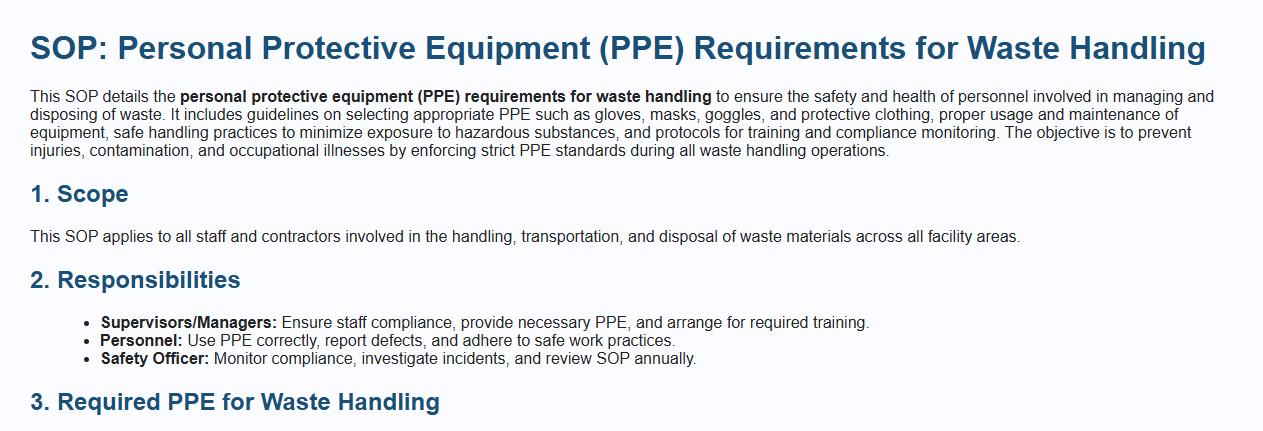
This SOP details the personal protective equipment (PPE) requirements for waste handling to ensure the safety and health of personnel involved in managing and disposing of waste. It includes guidelines on selecting appropriate PPE such as gloves, masks, goggles, and protective clothing, proper usage and maintenance of equipment, safe handling practices to minimize exposure to hazardous substances, and protocols for training and compliance monitoring. The objective is to prevent injuries, contamination, and occupational illnesses by enforcing strict PPE standards during all waste handling operations.
Inspection and maintenance of waste storage areas.
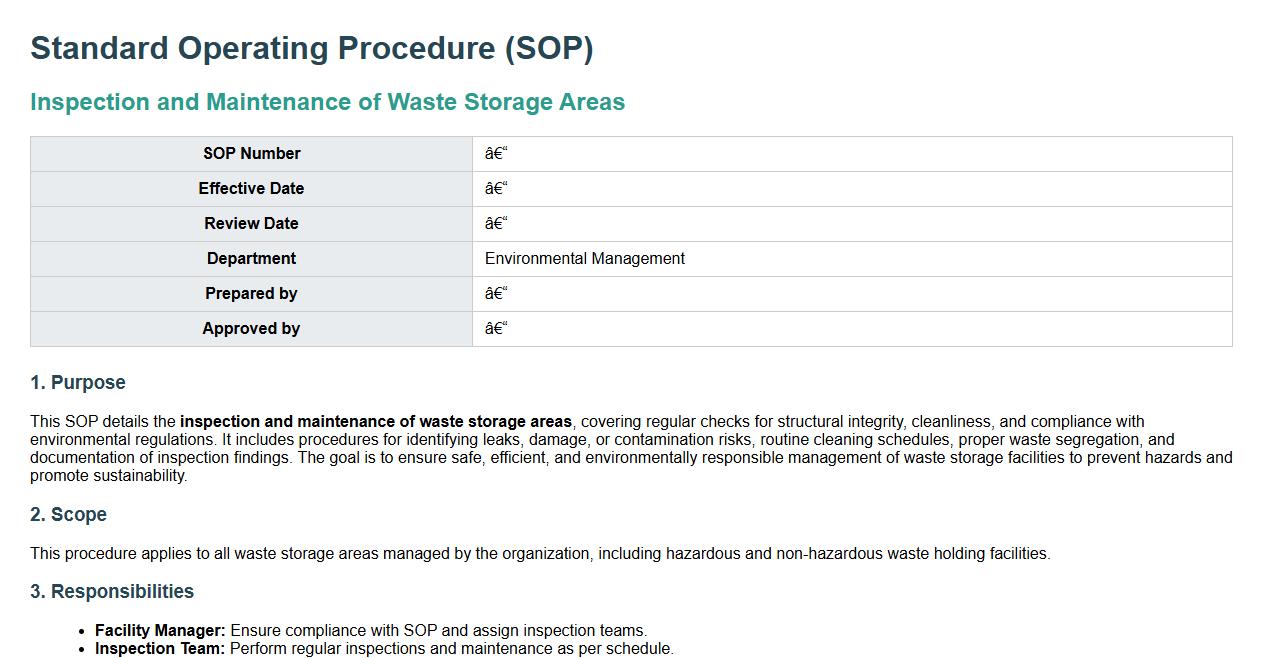
This SOP details the inspection and maintenance of waste storage areas, covering regular checks for structural integrity, cleanliness, and compliance with environmental regulations. It includes procedures for identifying leaks, damage, or contamination risks, routine cleaning schedules, proper waste segregation, and documentation of inspection findings. The goal is to ensure safe, efficient, and environmentally responsible management of waste storage facilities to prevent hazards and promote sustainability.
Waste minimization and recycling protocols.
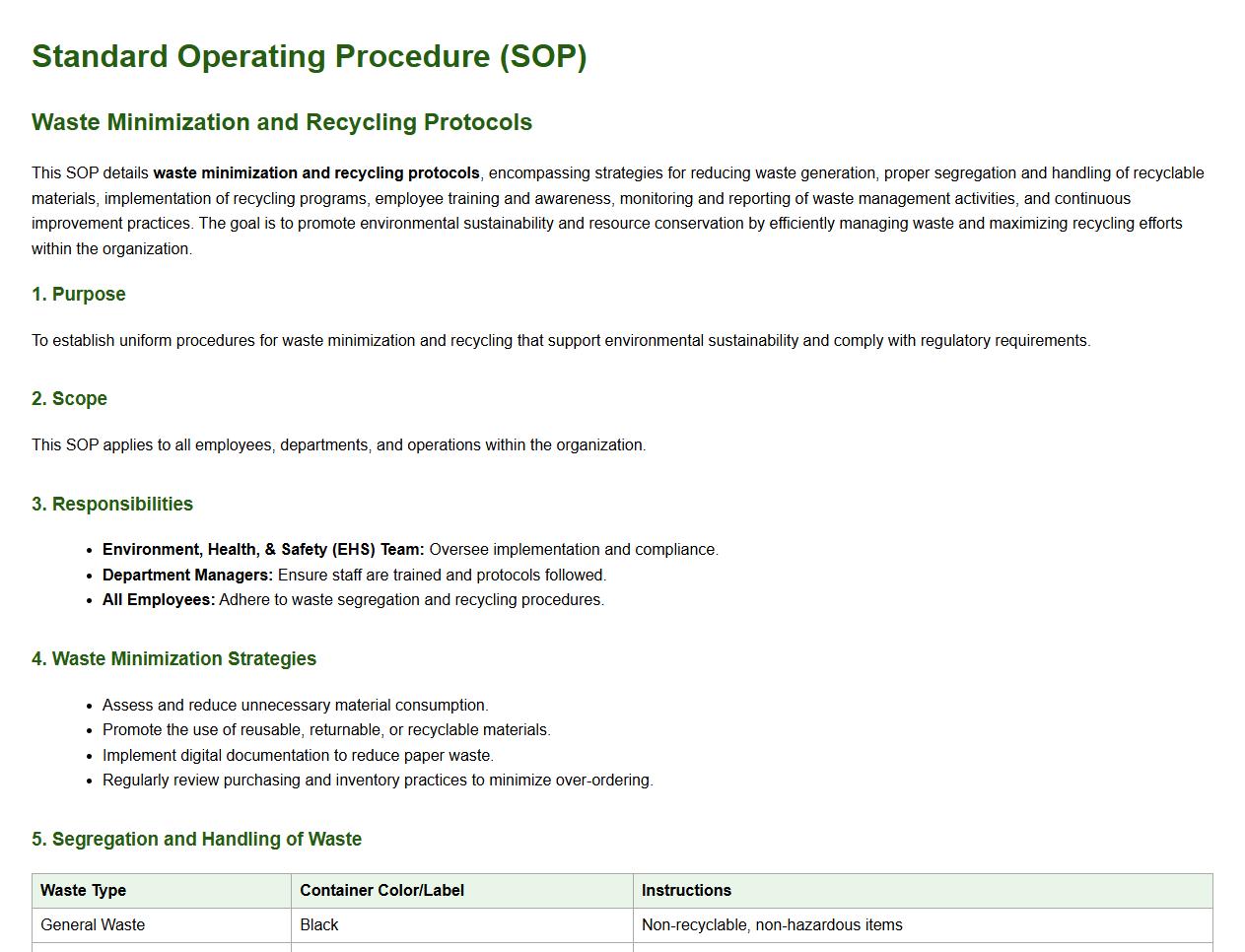
This SOP details waste minimization and recycling protocols, encompassing strategies for reducing waste generation, proper segregation and handling of recyclable materials, implementation of recycling programs, employee training and awareness, monitoring and reporting of waste management activities, and continuous improvement practices. The goal is to promote environmental sustainability and resource conservation by efficiently managing waste and maximizing recycling efforts within the organization.
Spill response and emergency cleanup instructions.
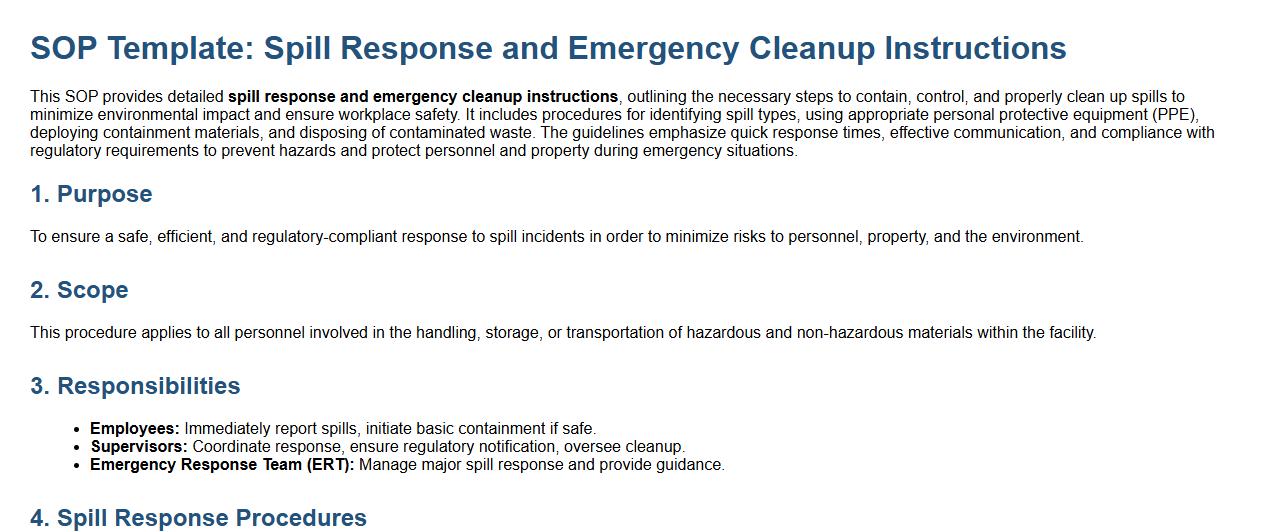
This SOP provides detailed spill response and emergency cleanup instructions, outlining the necessary steps to contain, control, and properly clean up spills to minimize environmental impact and ensure workplace safety. It includes procedures for identifying spill types, using appropriate personal protective equipment (PPE), deploying containment materials, and disposing of contaminated waste. The guidelines emphasize quick response times, effective communication, and compliance with regulatory requirements to prevent hazards and protect personnel and property during emergency situations.
Documentation and record-keeping of waste disposal activities.
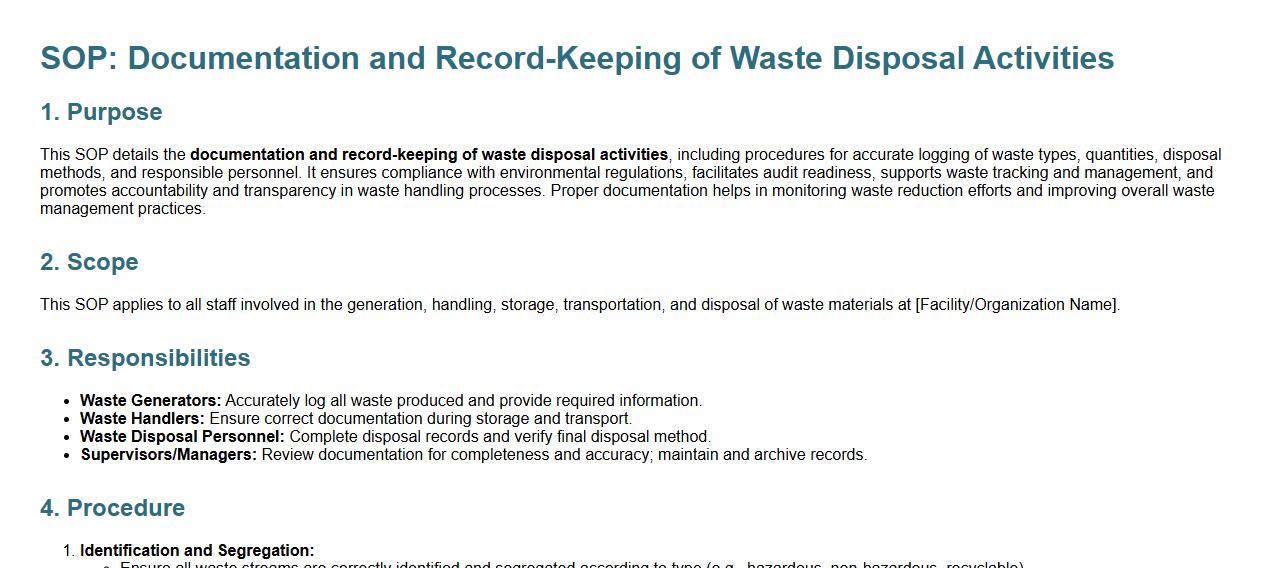
This SOP details the documentation and record-keeping of waste disposal activities, including procedures for accurate logging of waste types, quantities, disposal methods, and responsible personnel. It ensures compliance with environmental regulations, facilitates audit readiness, supports waste tracking and management, and promotes accountability and transparency in waste handling processes. Proper documentation helps in monitoring waste reduction efforts and improving overall waste management practices.
Contractor and third-party waste handling procedures.
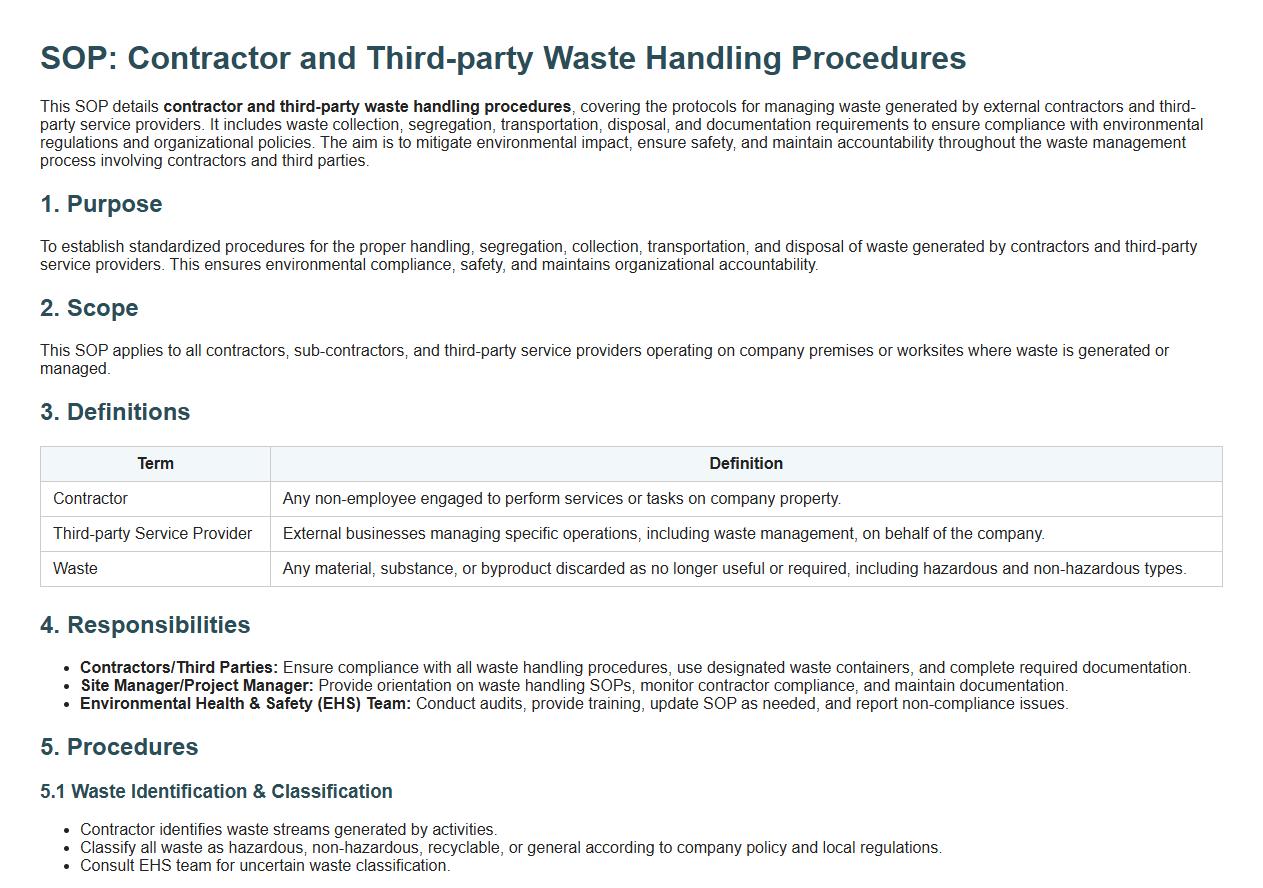
This SOP details contractor and third-party waste handling procedures, covering the protocols for managing waste generated by external contractors and third-party service providers. It includes waste collection, segregation, transportation, disposal, and documentation requirements to ensure compliance with environmental regulations and organizational policies. The aim is to mitigate environmental impact, ensure safety, and maintain accountability throughout the waste management process involving contractors and third parties.
Environmental compliance and regulatory reporting guidelines.
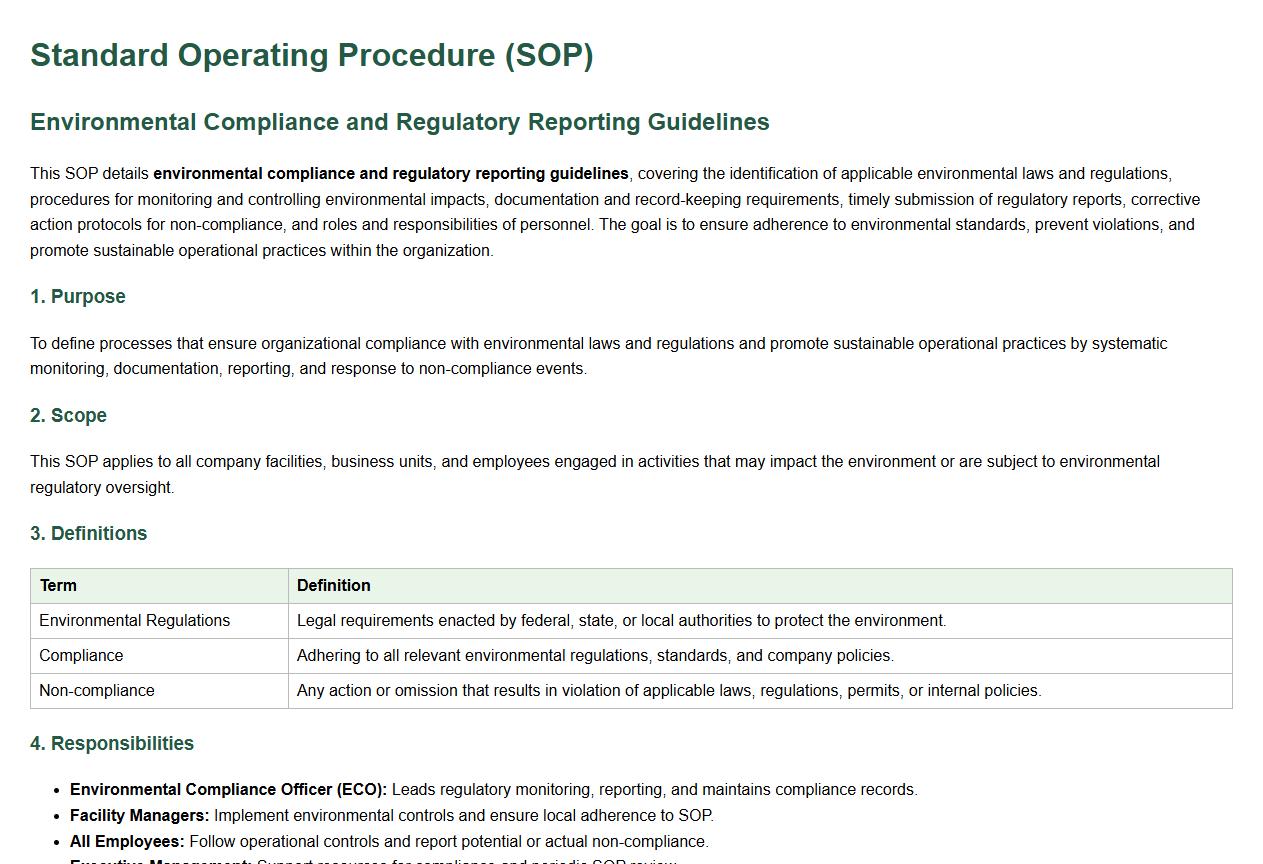
This SOP details environmental compliance and regulatory reporting guidelines, covering the identification of applicable environmental laws and regulations, procedures for monitoring and controlling environmental impacts, documentation and record-keeping requirements, timely submission of regulatory reports, corrective action protocols for non-compliance, and roles and responsibilities of personnel. The goal is to ensure adherence to environmental standards, prevent violations, and promote sustainable operational practices within the organization.
What are the primary objectives of the SOP for Waste Management in Manufacturing?
The primary objectives of the SOP for Waste Management in Manufacturing focus on minimizing environmental impact through effective waste handling. It ensures compliance with legal regulations and promotes sustainable practices within the manufacturing process. Ultimately, the SOP aims to protect worker safety and enhance operational efficiency.
Which types of waste are specifically addressed in this SOP?
This SOP specifically addresses hazardous waste, non-hazardous waste, and recyclable materials generated during manufacturing. It also covers chemical, biological, and general solid waste categories. Each waste type has distinct handling and disposal procedures outlined for safety and regulatory compliance.
What are the key steps outlined for segregation and disposal of waste?
The key steps involve systematic waste segregation at the source to prevent contamination. Proper labeling, storage, and use of designated disposal containers are mandated. The SOP also describes approved methods for safe transportation and disposal by licensed waste management facilities.
What documentation and record-keeping requirements are mandated by the SOP?
The SOP mandates detailed documentation of waste types, quantities, and disposal dates. Records must be maintained to track compliance and audit trails for regulatory inspections. Proper forms and digital logs are utilized to ensure transparency and accountability.
Which personnel are responsible for implementing and monitoring compliance with this SOP?
Environmental officers and waste management supervisors are primarily responsible for implementation and monitoring compliance. Production staff and health and safety teams play supporting roles in adhering to procedures. Continuous training ensures that all personnel understand their responsibilities regarding waste management.